
Is Sedation Dentistry an Option for Dental Implant Treatment?
For plenty of people, the obstacle between them and a restored smile is not the dental implant. It is the appointment. Dental anxiety is common, rational to its owner, and very effective at postponing treatment for years.
So let us answer the question directly: yes, sedation dentistry is an option for implant treatment at Elite Prosthetic Dentistry, at every scale from a single implant to full-mouth reconstruction. Sedation is considered safe and effective for qualified patients [1], and Dr. Marlin tailors the level to your needs rather than applying a default.
What Sedation Does, and What It Does Not Need to Do
A useful distinction: pain control during implant placement comes from local anesthesia, which you receive regardless of sedation. Sedation’s job is different. It manages anxiety, time perception, and the experience of being worked on, which for many patients is the real barrier.
That division of labor means sedation is purely a choice about comfort. Some patients breeze through implant surgery with local anesthesia and a podcast. Others want the appointment to compress into a hazy few minutes. Both are reasonable, and the gentleness of the underlying procedure stays the same either way.
The Three Levels We Offer
Nitrous oxide. Laughing gas takes effect instantly and wears off within minutes of the mask coming off. You stay fully conscious, pleasantly relaxed, and can typically drive yourself home. This is the lightest option and a good fit for mild nerves.
Oral sedation. A prescribed pill taken when you arrive leaves you awake and responsive but deeply calm, and most patients remember little of the procedure afterward. The level is customizable, and you will need a ride home.
IV sedation. The deepest option we offer: medication delivered through an IV eases you into a sleep-like twilight state [2]. It is not general anesthesia; it is the “conscious sedation” familiar from colonoscopies, and you will likely remember almost nothing. IV sedation suits significant anxiety, long reconstructive appointments, and patients who want maximum distance from the experience.
Who Is a Candidate?
More people than assume so. Sedation benefits patients with dental fear or phobia, needle anxiety, strong gag reflexes, difficulty sitting for long periods, sensitivity to someone working in close personal space, and special needs, and candidacy is broad because the approach is personalized [3].
Qualification is individual, not assumed. Before any sedated procedure, we review your medical history and medications closely, coordinating with your physician where appropriate, so the plan is safe as well as comfortable. And this is a judgment-free practice: whatever brought you to sedation, including years of avoiding dental care entirely, you will find no lectures here.
Comfort Is Part of the Engineering
Our approach to implant treatment controls every variable we can: precision placement, an in-house laboratory, timed anti-inflammatory protocols, and, when you want it, sedation matched to your temperament. Patients are often surprised how little the sedation ends up needing to do, because the procedure itself hurts far less than its reputation. But knowing the option exists is frequently what gets someone through the door after years of waiting.
If anxiety has been deciding your dental timeline, take the decision back. Call 202-244-2101 or book a consultation with Dr. Gerald Marlin to talk through implant treatment and the sedation level that fits you. Elite Prosthetic Dentistry, Friendship Heights, Washington, DC.
Sources
See How We Resolve These Problems
Our patient success stories show real cases and real results. Browse outcomes from a specialist prosthodontist with decades of experience and 3,900+ implants placed.
Key Takeaways
- ✓ Yes. Sedation is available for any implant procedure, from a single implant to full-mouth reconstruction, and research supports its safety for qualified patients.
- ✓ Three levels are offered: nitrous oxide for light relaxation, oral sedation for a deeper calm with little memory, and IV sedation for a sleep-like twilight state.
- ✓ Local anesthesia keeps you pain-free regardless of sedation level. Sedation manages anxiety, not pain.
- ✓ Candidacy is reviewed against your medical history and medications before anything is scheduled.
- ✓ Anxiety is a valid reason to choose sedation. So is simply wanting a long appointment to pass quickly.
Frequently Asked Questions
Can I be sedated for dental implant surgery?
Yes. Sedation dentistry is fully compatible with implant treatment, whether you are receiving one implant or undergoing comprehensive reconstruction. Options range from nitrous oxide through IV sedation, chosen with you based on your anxiety level, the length of the procedure, and your medical history.
What kind of sedation is used for implants?
Three levels: nitrous oxide (laughing gas), which relaxes you while fully conscious and wears off quickly; oral sedation, a pill that leaves you awake but deeply calm, often with little memory of the visit; and IV sedation, a sleep-like twilight state comparable to what is used for a colonoscopy. Local anesthesia handles pain at every level.
Is sedation dentistry safe?
For qualified patients, yes, and the research supports this. Your medical history and medications are reviewed beforehand, coordinated with your physician when appropriate, and you are monitored throughout the procedure. Qualification is determined individually, not assumed.
Do I need sedation for a single implant?
Most patients do not, strictly speaking. With modern anesthesia and gentle technique, single-implant placement is a comfortable procedure under local anesthesia alone. Sedation is a comfort choice: valuable for anxiety, long appointments, strong gag reflexes, or patients who simply prefer to remember less of the visit.
Will I remember my implant procedure under sedation?
It depends on the level. With nitrous oxide you remain aware throughout. With oral sedation you may remember fragments. With IV sedation most patients recall very little. Many find that not remembering is exactly what they were paying for.
Related Patient Success Stories
Explore similar patient success stories demonstrating our expertise in advanced prosthetic dentistry.
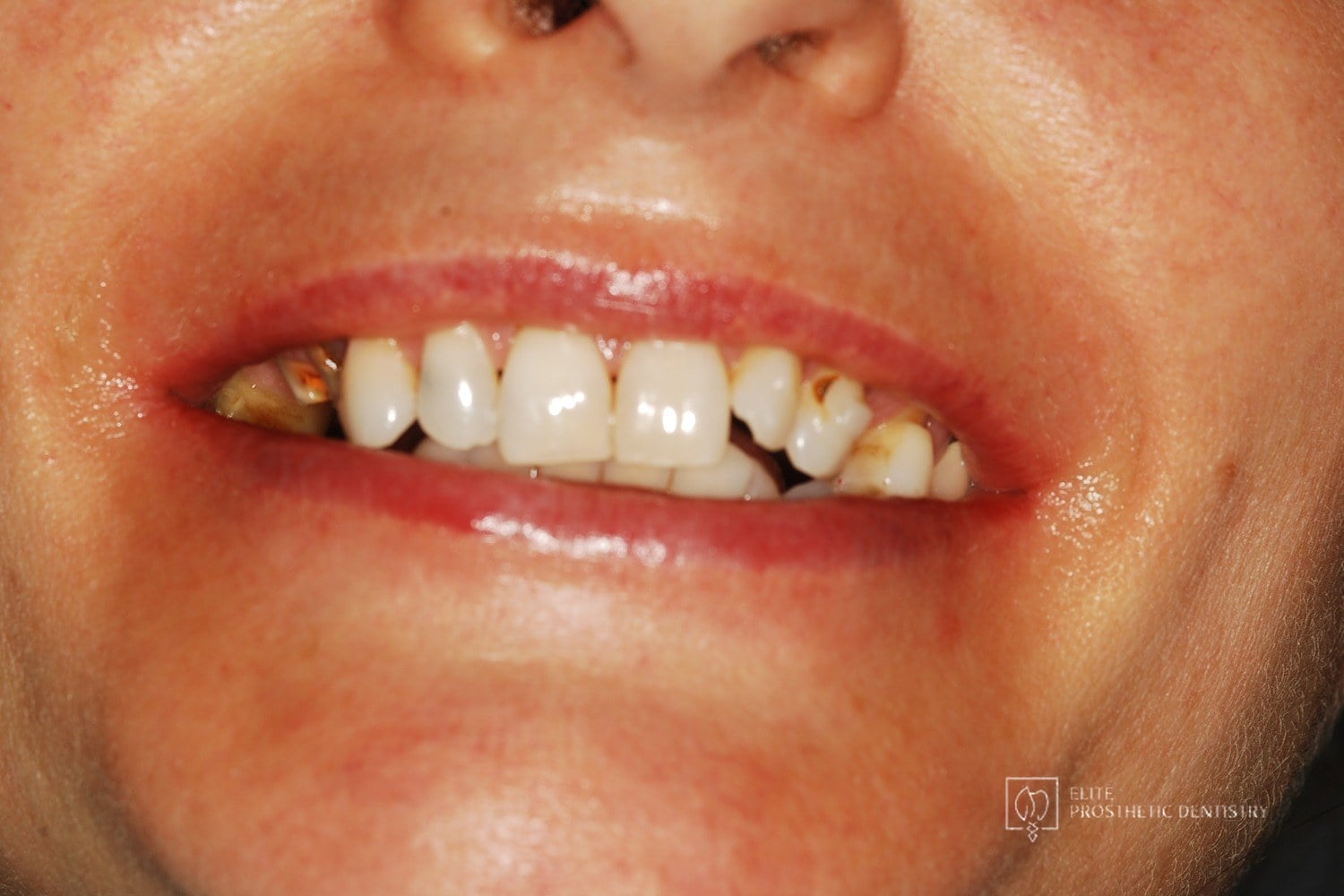 Before
 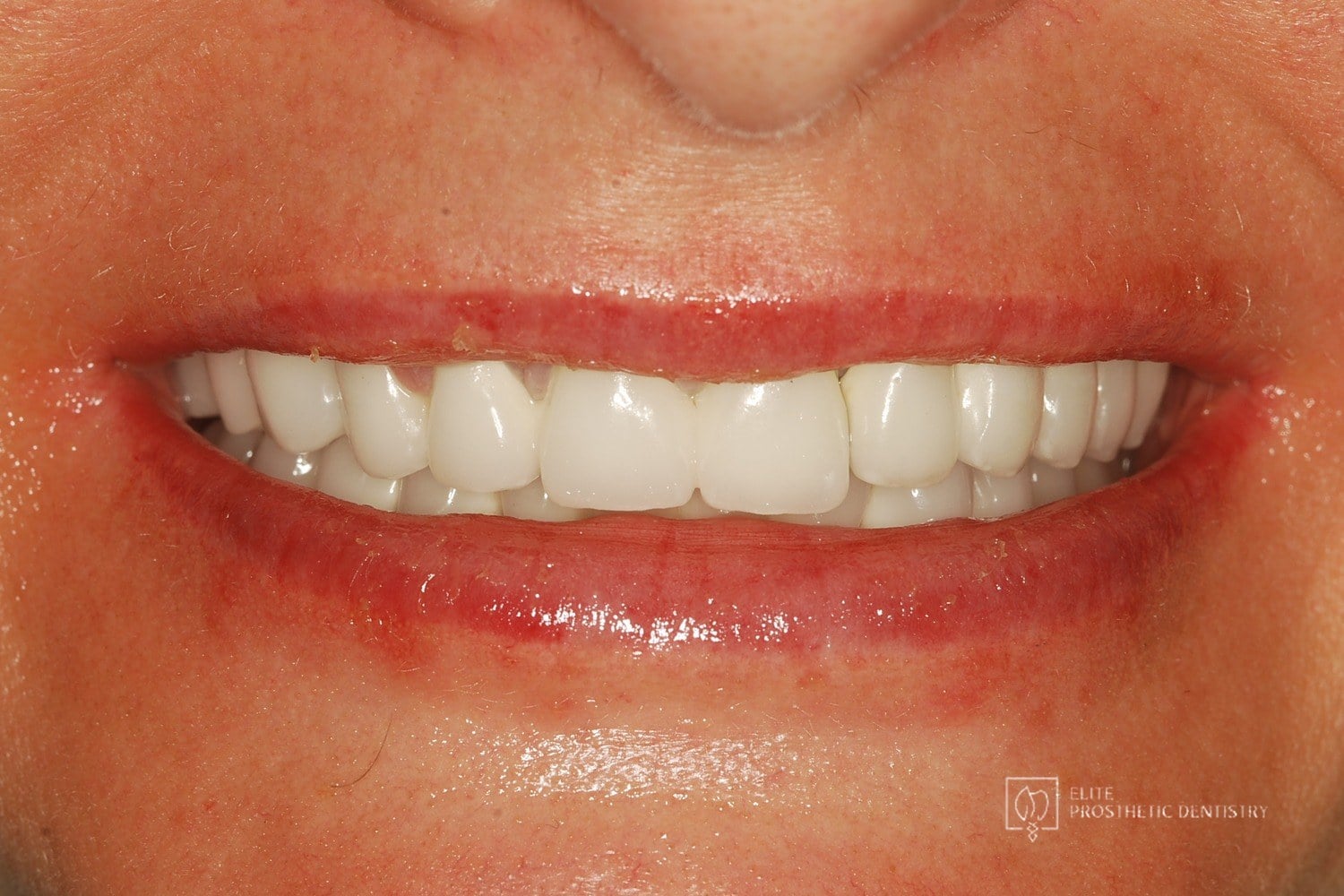 After
After How Aging, Failing Dentistry Was Replaced with a Coordinated Full-Mouth Implant and Crown Reconstruction
The patient presented with throbbing upper-molar pain, long-standing infections, multiple root canals and unfinished prior treatment, generalized sensitivity, and several hopeless teeth.
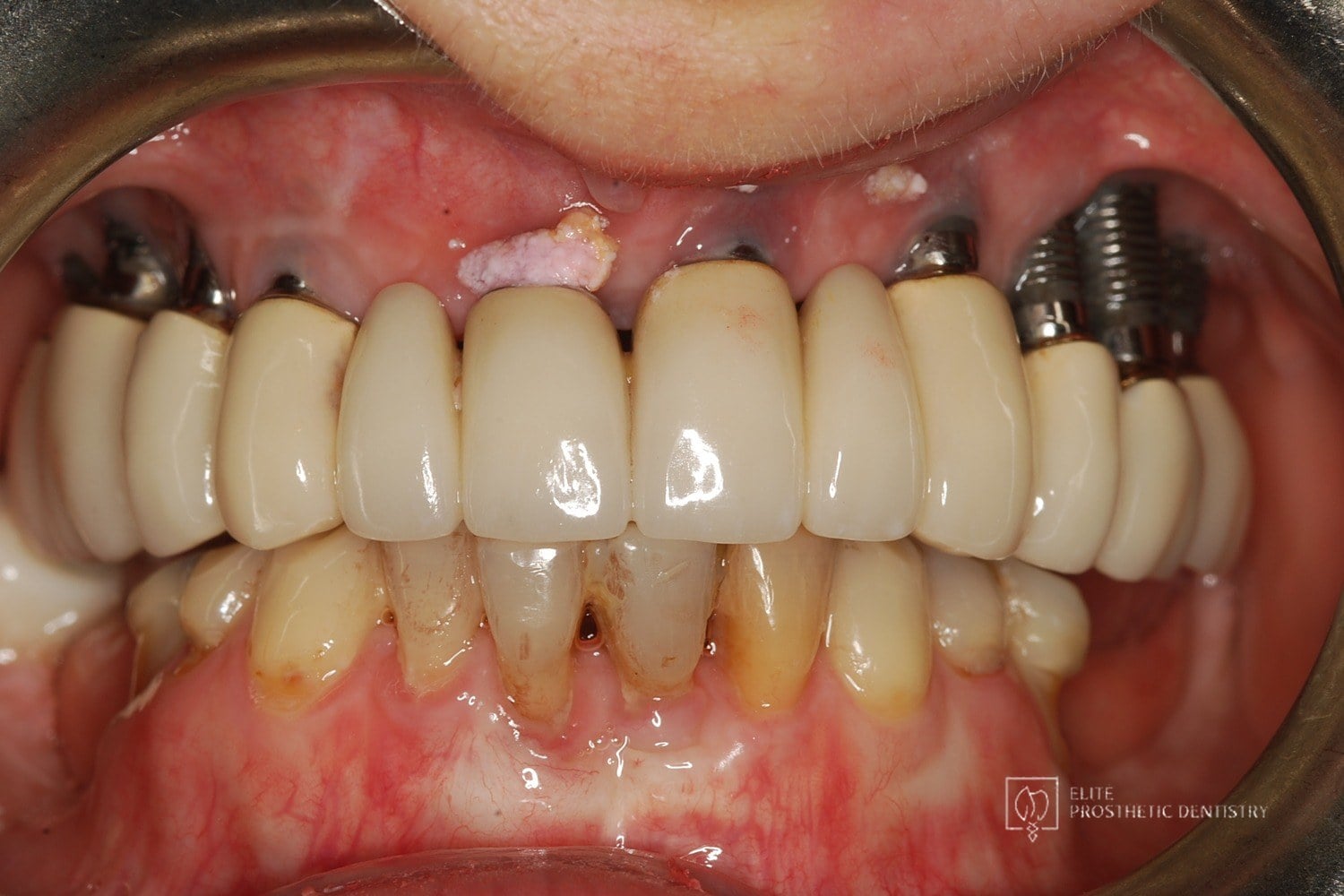 Before
 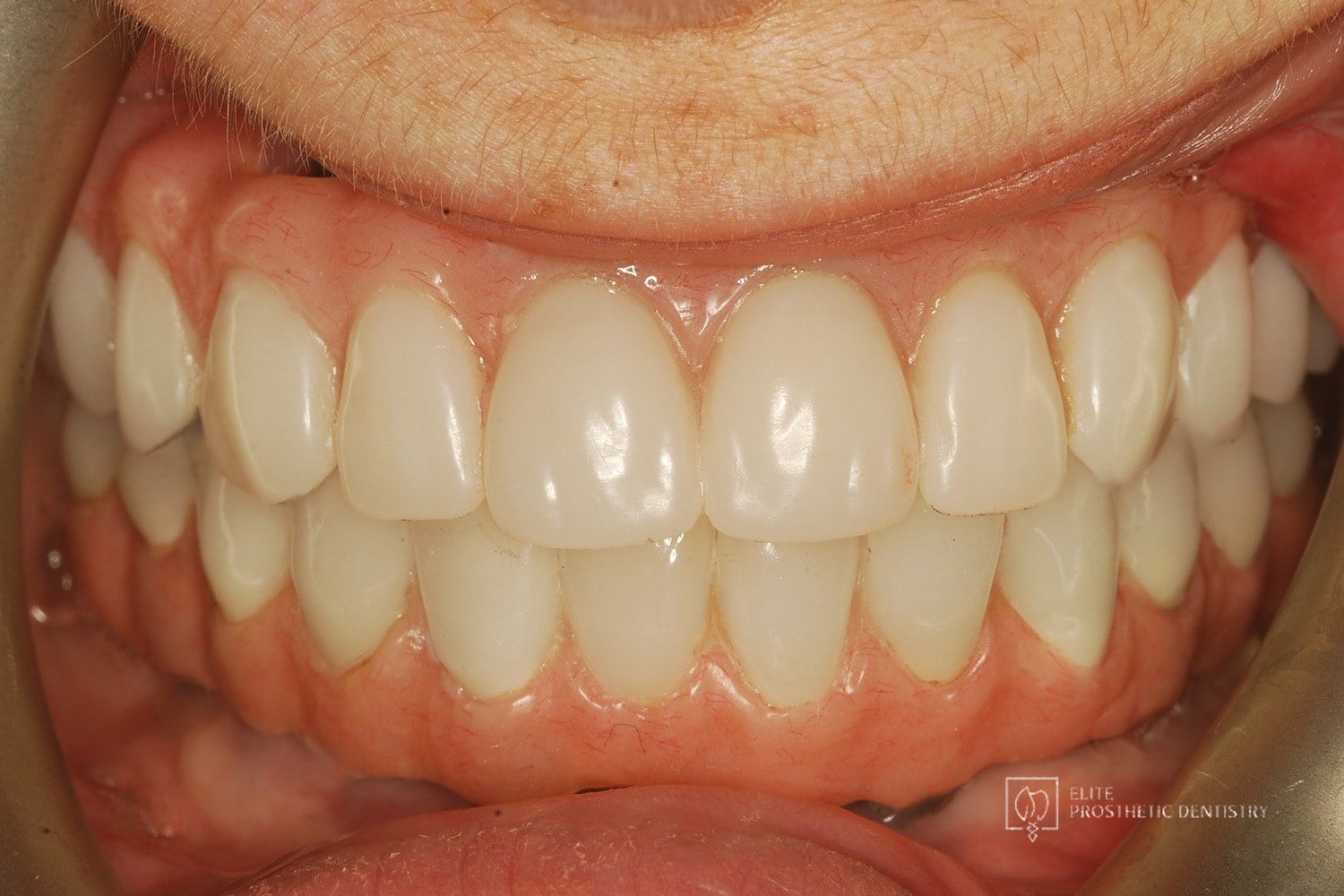 After
After How Failing Implants and Severe Bone Loss Were Rebuilt Into a Stable Full-Arch Implant Reconstruction
The patient presented with significant complications from previously placed implants, severe bone loss, failing posterior implants, and an unesthetic full-arch bridge. Both arches required full reconstruction, with the upper arch showing the most advanced bone loss and instability.
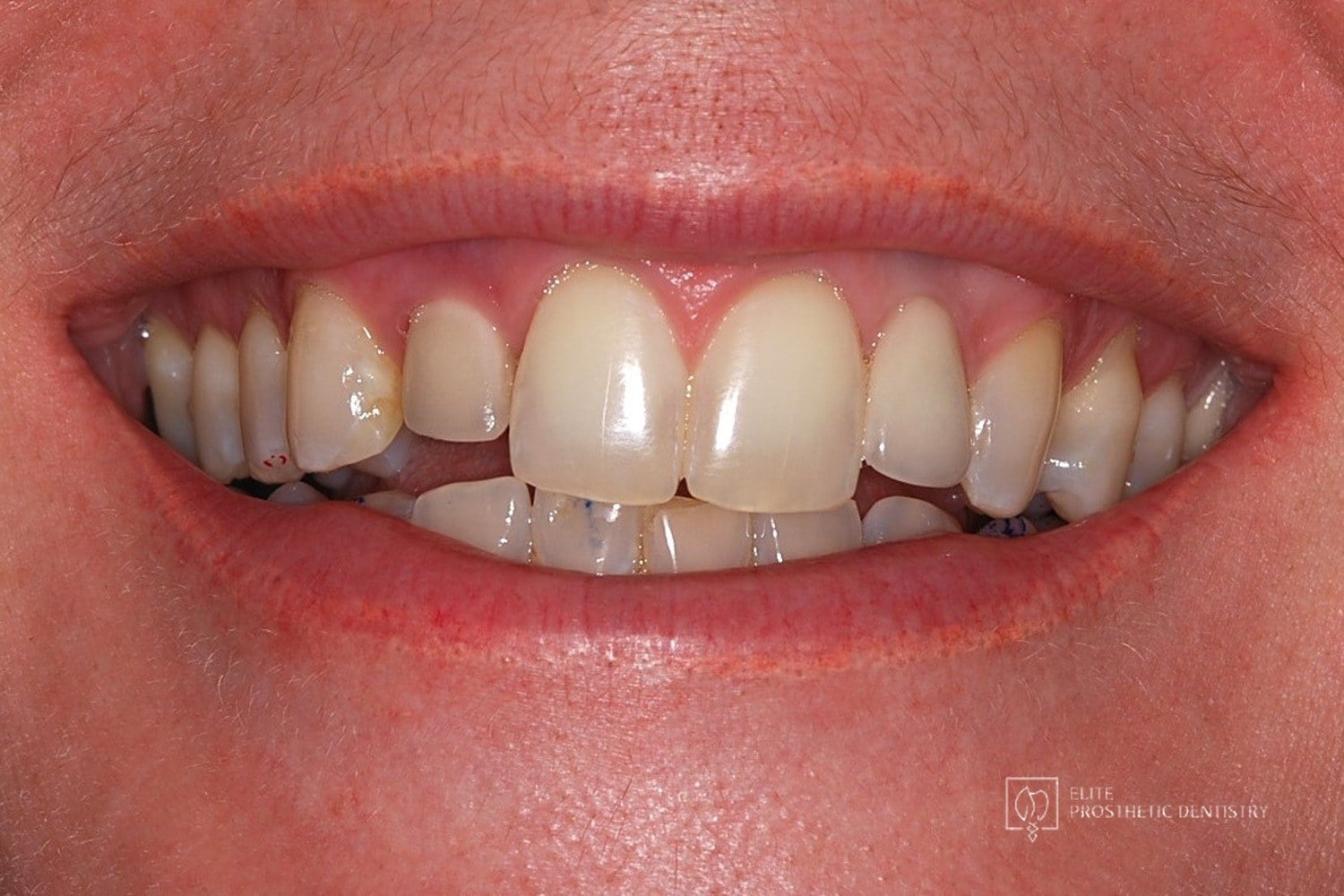 Before
 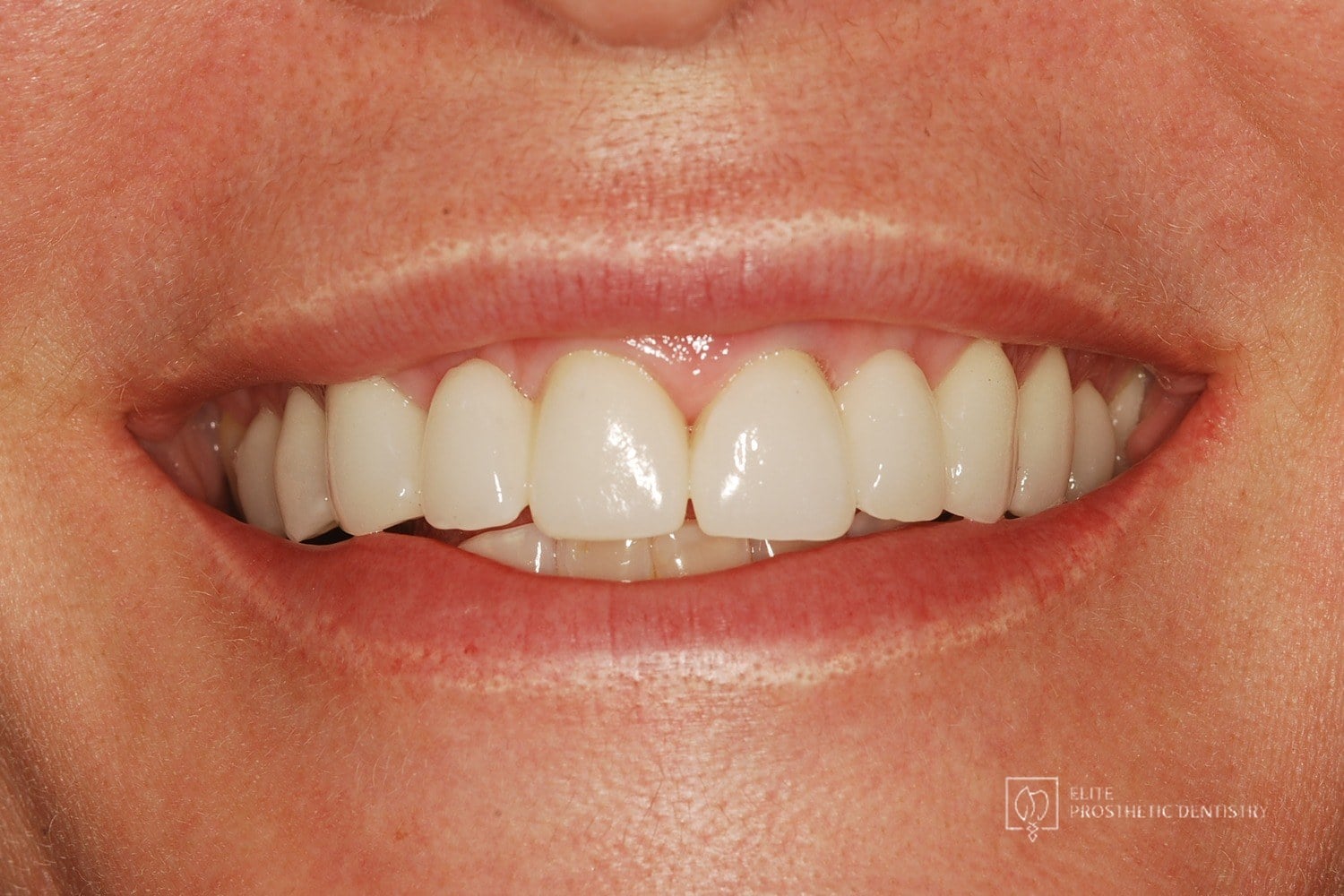 After
After How Failing Lateral Incisor Implants Were Replaced with Custom Zirconia Bridges After Severe Bone Loss Made Replacement Implants Impossible
Comprehensive examination including CBCT imaging revealed significant bone loss surrounding implants that were placed outside the buccal plate, most likely due to placement without a CBCT-generated surgical guide. The implants were determined non-salvageable, and the alveolar ridge was too narrow to support replacement implants without extensive reconstruction.
Related Articles
Deepen your knowledge with additional insights on this topic.
 Dental Implants
 If a Single Front Tooth Is Replaced with an Implant, Can It Look Natural?
Yes. See the four steps, with real case photos, that make a single front tooth implant indistinguishable from the natural tooth beside it. Washington, DC.
 Dental Implants
 What Is Precision Implant Placement (PIP)?
Precision Implant Placement plans each implant virtually on a CBCT scan, then delivers it with a custom surgical guide. See the three steps with real images.
 Dental Implants
 What Is the Ideal Surgical Guide for Precision Implant Placement?
Not all surgical guides are equal. The gold standard is CBCT-based: planned virtually in 3D, 3D printed, and seated on your teeth. A DC prosthodontist explains.