
What Happens During a Prosthodontic Consultation and Treatment Process in Great Falls
Understand what a typical prosthodontic consultation, planning, and treatment looks like for Great Falls patients with complex restorative...
A Great Falls patient considering prosthodontic treatment often benefits from understanding what the process actually involves. This page walks through a typical consultation and treatment sequence, describing what happens at each clinical milestone and what the patient experiences along the way.
Prosthodontic treatment is sequential. Each phase builds on the previous one. The sequence matters because biological healing, integration, and adaptation require time that cannot be compressed. Understanding the actual sequence helps patients set realistic expectations and plan their schedules accordingly.
Initial Assessment and Diagnostic Consultation
The first appointment with a prosthodontist differs from a routine general dentistry exam. The time allocation is longer, typically 60 to 90 minutes, allowing thorough assessment without rushing. The patient arrives and completes a detailed medical history, describing current medications, prior surgeries, medical conditions, and any health factors affecting dental treatment such as healing capacity or bleeding disorders.
The dentist then conducts a comprehensive clinical examination. Every tooth is assessed for the health of the tooth structure, the integrity of any existing restorations, and the health of supporting bone. The gum tissue is evaluated for signs of inflammation, recession, or disease. The relationship between upper and lower jaws is assessed when the patient bites naturally and at rest. The temporomandibular joints are palpated and assessed for tenderness or dysfunction.
Intraoral photographs are taken documenting the current state of the dentition. High-resolution digital images capture tooth color, gum contour, and bite relationships for comparison as treatment progresses. These photographs become visual references for restoration design and esthetic outcomes.
Radiographs are ordered based on clinical findings. Panoramic radiographs provide a broad overview of the teeth and bone structure. Periapical radiographs zoom in on specific teeth and their supporting bone. When the case involves implant planning or assessment of bone volume, cone-beam computed tomography (CBCT) is ordered, providing three-dimensional imaging essential for detailed surgical and restorative planning.
Impressions are taken, either digital scans or traditional impressions of both upper and lower teeth and the relationship between them. These impressions document the current state and become the baseline for comparing changes as treatment progresses.
The conversation throughout this appointment covers the patient’s chief complaint: what prompted them to seek treatment? What problems are they experiencing? What are their goals for treatment? Are there esthetic concerns or functional concerns? What has previous treatment taught them about their preferences?
For a Great Falls patient traveling 30 to 40 minutes to reach the office, this comprehensive initial appointment consolidates diagnostic information and establishes a clear understanding of the case before any treatment begins.
Treatment Planning and Design Phase
Between the initial consultation and the treatment planning appointment, the dentist synthesizes the examination findings, imaging results, and patient goals into a comprehensive written treatment plan. For straightforward cases, this analysis may take one to two weeks. For complex cases, it may require two to four weeks and possibly consultation with other specialists.
The treatment plan documents the diagnosis, the recommended treatment sequence, alternative options and why certain options are preferred over others, the timeline for each phase, the specific materials to be used, the anticipated costs, and projected outcomes.
For cases with esthetic demands, digital smile design software may be used to create a digital preview of the planned restorations. This gives the patient a visual representation of the intended outcome before any irreversible treatment begins.
At the treatment planning appointment, the dentist reviews the plan with the patient in detail. Visual aids including radiographs, photographs, and digital designs help the patient understand the plan. The dentist explains why specific treatment sequences are recommended, what biological factors govern the timeline, and what the patient’s role is in achieving optimal outcomes.
The patient asks questions and discusses preferences. If the plan requires coordination with other specialists such as an oral surgeon for implant placement or a periodontist for gum disease control, those coordination details are explained. The patient departs with a complete understanding of the treatment plan and with written documentation they can review at home and discuss with other doctors if they choose.
Pre-Surgical Preparation and Coordination
When surgical procedures are part of the treatment plan, a pre-surgical appointment typically precedes surgery. For cases involving implant placement, this appointment reviews the surgical approach, confirms that the patient understands what will happen, and addresses any concerns.
If the patient requested sedation, a pre-sedation appointment includes assessment of medical appropriateness for the chosen sedation level, discussion of fasting requirements, and clarification of transportation arrangements. For local anesthesia alone, instructions are reviewed about postoperative care, activity restrictions, and when to contact the office if unexpected problems arise.
For cases requiring bone grafting before implant placement, the pre-surgical appointment may be a separate appointment for the grafting procedure, or bone grafting may be planned simultaneously with implant placement depending on the surgical approach chosen.
Surgical Execution and Implant Placement
The appointment where implants are placed varies in duration depending on how many implants are being placed. A single-tooth implant case typically takes 60 to 90 minutes. Multiple implant cases take longer proportional to the number of implants.
The patient arrives and is seated in the treatment room. Local anesthesia is administered, and if sedation was elected, the sedation protocol is initiated. The surgical team places the patient in the optimal position for the planned surgery. A surgical guide may be used to ensure precise implant positioning if one was fabricated during the planning phase.
For each implant, a small access is created in the gum tissue if a flap is to be elevated, or the implant site is prepared directly if a flapless approach is being used. Using sequential drilling instruments, the site is precisely prepared to the planned depth and angulation. The implant body is then inserted into the prepared site, typically with initial torque values confirming good engagement in bone.
A healing abutment is placed on the implant, creating a slight protrusion through the gum. The surgical site is closed with sutures that dissolve over several weeks. The patient receives detailed postoperative instructions, including what to expect in terms of discomfort and swelling, activity restrictions, diet modifications, and when to contact the office if unexpected problems arise.
For Great Falls patients, post-surgical follow-up appointments to remove sutures and assess healing typically occur about one week and two weeks after surgery. These can often be consolidated with the initial consultation when scheduling is planned in advance.
Integration Period and Provisional Restoration
After implant placement, the implants undergo osseointegration, a biological process where bone grows into and around the implant surface, anchoring it permanently. This integration period typically lasts three to six months in the lower jaw and four to six months in the upper jaw, with grafted sites sometimes requiring longer periods.
During the integration period, the patient wears a provisional tooth replacement that fills the visible gap. For a single-tooth case, this may be a removable temporary or a temporary cemented to adjacent teeth. For multiple-tooth cases, the provisional strategy is designed to match the eventual esthetic intent while allowing proper healing.
The provisional restoration serves multiple purposes: it allows the patient to function and maintain appearance during healing, it guides soft tissue contour around the eventual restoration, and it allows the patient to adapt to the new tooth position and bite.
During the integration period, the patient maintains excellent home care around the implant sites, avoiding trauma and maintaining cleanliness. Clinical follow-up appointments are minimal during this phase because active healing is progressing and no restorative work is underway. For Great Falls patients, this integration period is convenient because fewer appointments are required, reducing the travel burden during a phase when the case cannot progress to restoration anyway.
Restorative Phase: Impression to Provisional Try-In
Once integration is confirmed, the restorative phase begins. The first appointment involves obtaining a detailed impression of the integrated implants and their position relative to adjacent teeth and to the opposite arch. This impression is the foundation for designing the abutment, the component connecting the implant to the visible crown, and the crown itself.
The impression is sent to the on-site laboratory at Elite Prosthetic Dentistry, where the restoration design process begins. The laboratory designs the abutment and crown, considering the implant’s position, the relationship to adjacent teeth, the bite, and for cosmetic cases, the esthetic principles that govern natural appearance.
For cases with esthetic demands, a try-in appointment follows where the abutment and provisional crown are tested for fit and appearance. The dentist and patient evaluate the design: is the tooth position correct? Is the shade appropriate? Is the contour correct? Any adjustments needed are made before the final restoration is fabricated.
For straightforward non-cosmetic cases, this try-in step may be abbreviated or combined with the final placement appointment.
Final Restoration Fabrication and Placement
Once the try-in design is approved, the final restoration is fabricated. Using the approved design and high-quality materials, the laboratory creates the final restoration. For a single crown case, this typically takes one to two weeks. For complex cases with multiple restorations, fabrication may take two to four weeks.
The final restoration is then placed in a final appointment where the crown is seated on the abutment, tested for fit, and checked for proper contact with the opposite arch and proper contact with adjacent teeth. Any minor adjustments needed are made. The restoration is then cemented or screw-retained depending on which retention method was chosen during planning.
The patient receives detailed care instructions: how to clean around the restoration, what habits to avoid, and when to contact the office if any problems arise.
Long-Term Maintenance and Monitoring
After restoration placement, the patient enters the long-term maintenance phase. The restored implant requires ongoing care similar to a natural tooth: daily home care including brushing and interdental cleaning, professional cleaning appointments on a regular schedule, and periodic radiographic monitoring to ensure bone levels remain stable around the implant.
For Great Falls patients, maintenance can be coordinated locally with their general dentist or with Dr. Marlin’s office, depending on patient preference. The key is that someone monitoring the restoration ensures early detection of any problems and that the long-term performance is sustained.
Coordinating Multiple Appointments for Great Falls Patients
Great Falls patients face a 30 to 40-minute drive to reach the office. Recognizing this, treatment planning can sometimes consolidate appointments. An initial consultation and treatment planning can occasionally be combined into a single longer appointment if the case is straightforward. Suture removal and healing check appointments can be scheduled together. For patients taking time off work, longer consolidated appointments sometimes work better than multiple shorter appointments spread over time.
Frequently Asked Questions
How long does a typical first consultation appointment take?
An initial prosthodontic consultation typically lasts 60 to 90 minutes. This allows adequate time for a thorough examination, discussion of the patient's concerns and goals, review of existing dental records if available, and often the acquisition of baseline diagnostic imaging. The appointment includes a comprehensive clinical assessment of all existing teeth, gum tissues, bone structure, bite, and the relationship between upper and lower jaws. For patients traveling from Great Falls, a longer initial appointment consolidates diagnostic information and avoids the need for multiple trips early in the treatment planning process.
What imaging does a prosthodontist typically order, and why?
Prosthodontists order imaging based on the specific case requirements. Panoramic radiographs provide a broad overview of the teeth, bone, and jaw structure. Periapical radiographs zoom in on specific teeth and their supporting bone. Cone-beam computed tomography (CBCT) provides three-dimensional imaging of bone structure, essential for implant planning, assessment of bone volume, and evaluation of complex cases. CBCT is ordered when the case involves implants, significant bone loss, or when surgical planning requires three-dimensional detail. Digital photographs document the current condition of the dentition and smile for comparison during and after treatment.
What does the treatment planning phase involve after the initial consultation?
After the consultation, the dentist synthesizes the examination findings, imaging, and patient goals into a comprehensive treatment plan. For straightforward cases this may take one to two weeks. For complex cases it may require two to four weeks of analysis, possibly including consultation with other specialists, digital smile design if esthetic cases are involved, and consideration of multiple treatment options. The plan documents the recommended sequence, the timeline, the materials to be used, the cost, and the projected outcomes. Great Falls patients review the plan at a separate appointment and ask questions until they are confident in the approach.
Do prosthodontists place implants themselves, or do they always refer that part to an oral surgeon?
Prosthodontists complete surgical training as part of the three-year graduate program and are qualified to place implants. Some prosthodontists place all or most of their implants directly. Others refer implant placement to oral surgeons with whom they coordinate closely. The choice depends on the prosthodontist's preferences, the complexity of the case, and whether the oral surgeon brings specialized expertise that improves outcomes. The key is that implant position is determined by the prosthodontic plan, not by where the surgeon finds it convenient to place them.
How often does a patient need to come in during treatment, and can appointments be consolidated?
Appointment frequency depends on the phase of treatment. Initial consultations and planning typically involve one to two appointments. Surgical phases may be one or multiple appointments depending on whether multiple procedures are performed in the same appointment. Integration phases involve minimal appointments because the patient is healing rather than having active treatment. Restorative phases typically involve impression, try-in, and placement appointments. For Great Falls patients with significant travel requirements, appointments can often be consolidated. Longer appointments in a single visit sometimes work better than multiple shorter visits spread over weeks.
Related Patient Success Stories
Explore similar patient success stories demonstrating our expertise in advanced prosthetic dentistry.
 Before
  After
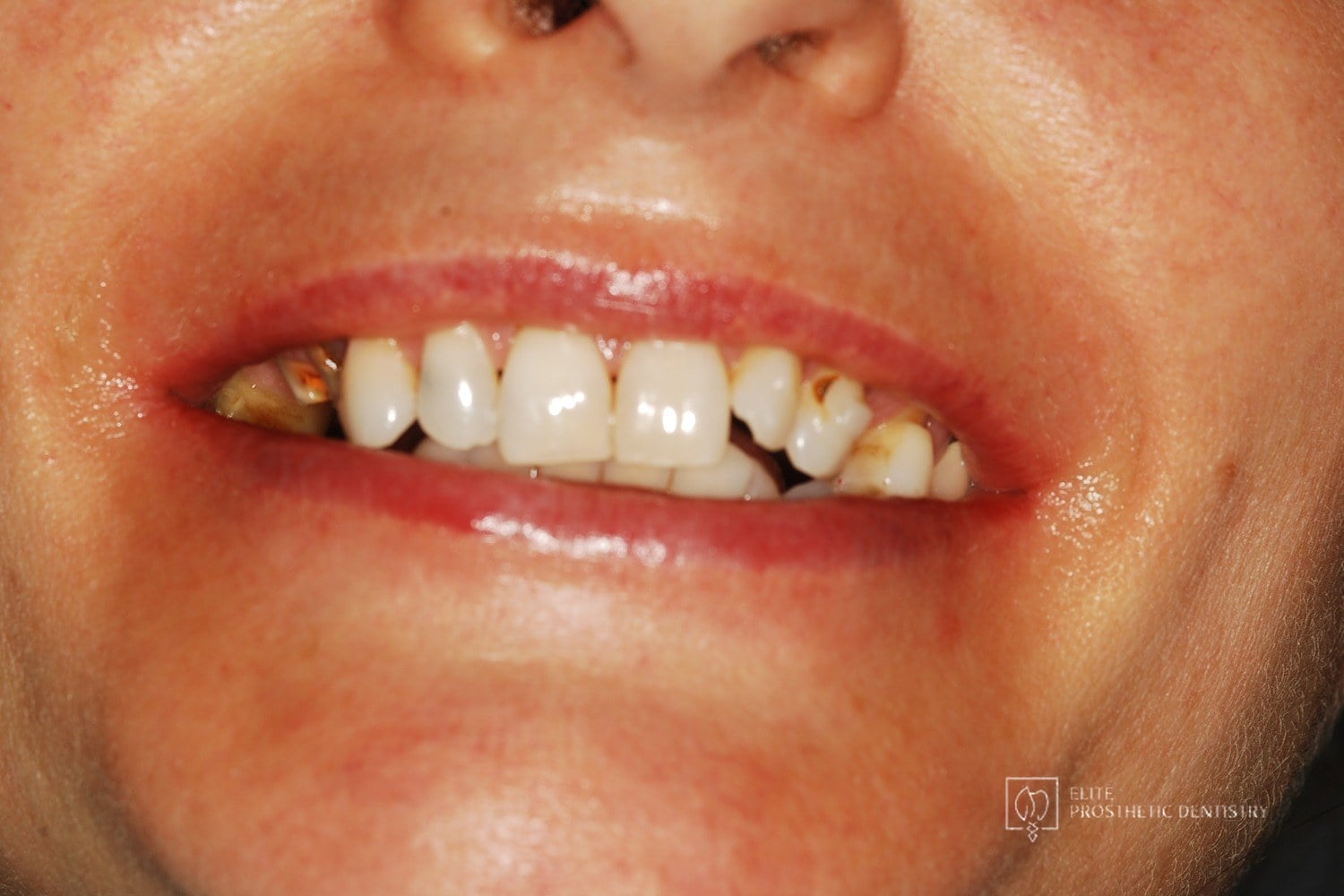
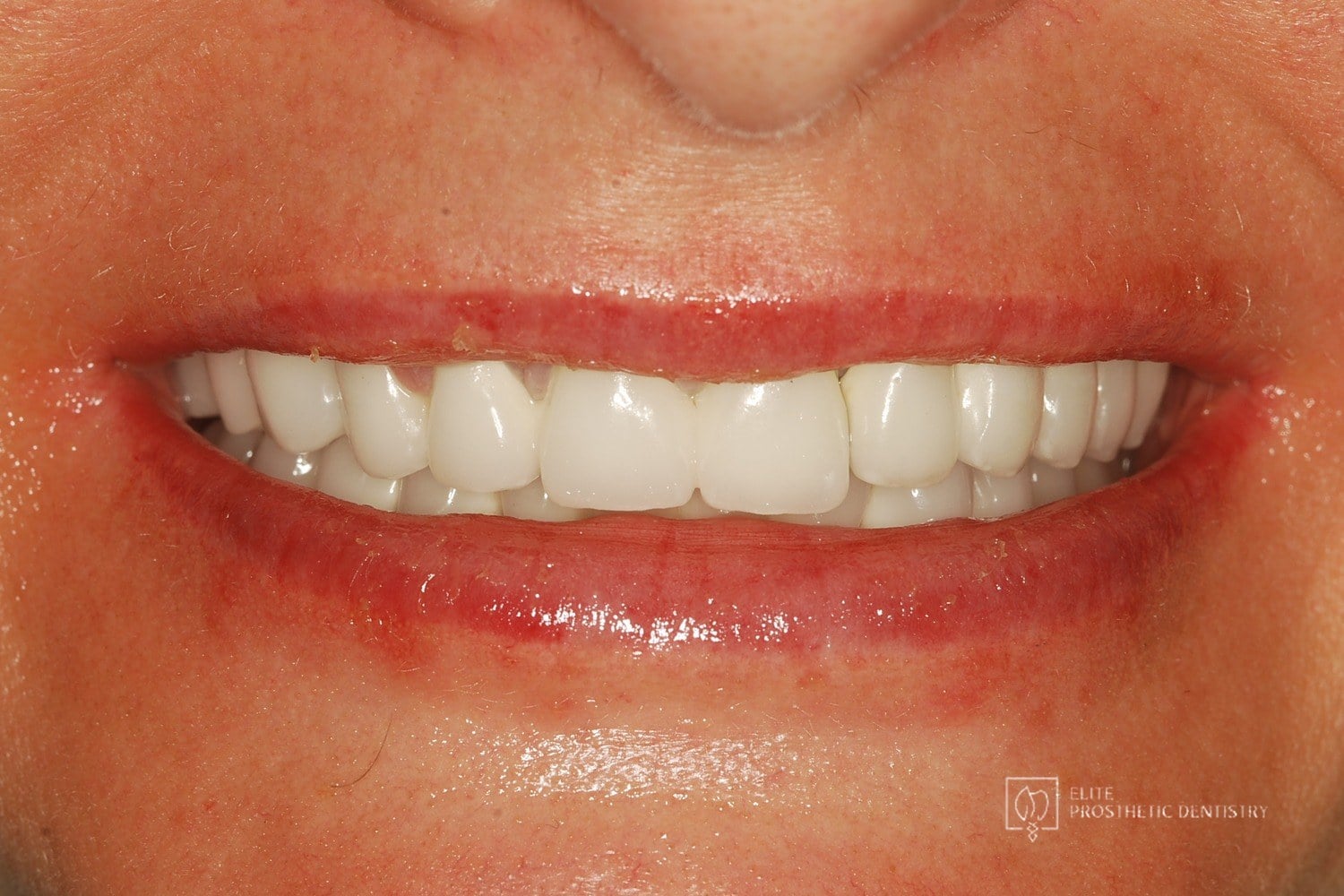
After How Aging, Failing Dentistry Was Replaced with a Coordinated Full-Mouth Implant and Crown Reconstruction
The patient presented with throbbing upper-molar pain, long-standing infections, multiple root canals and unfinished prior treatment, generalized sensitivity, and several hopeless teeth.
 Before
  After
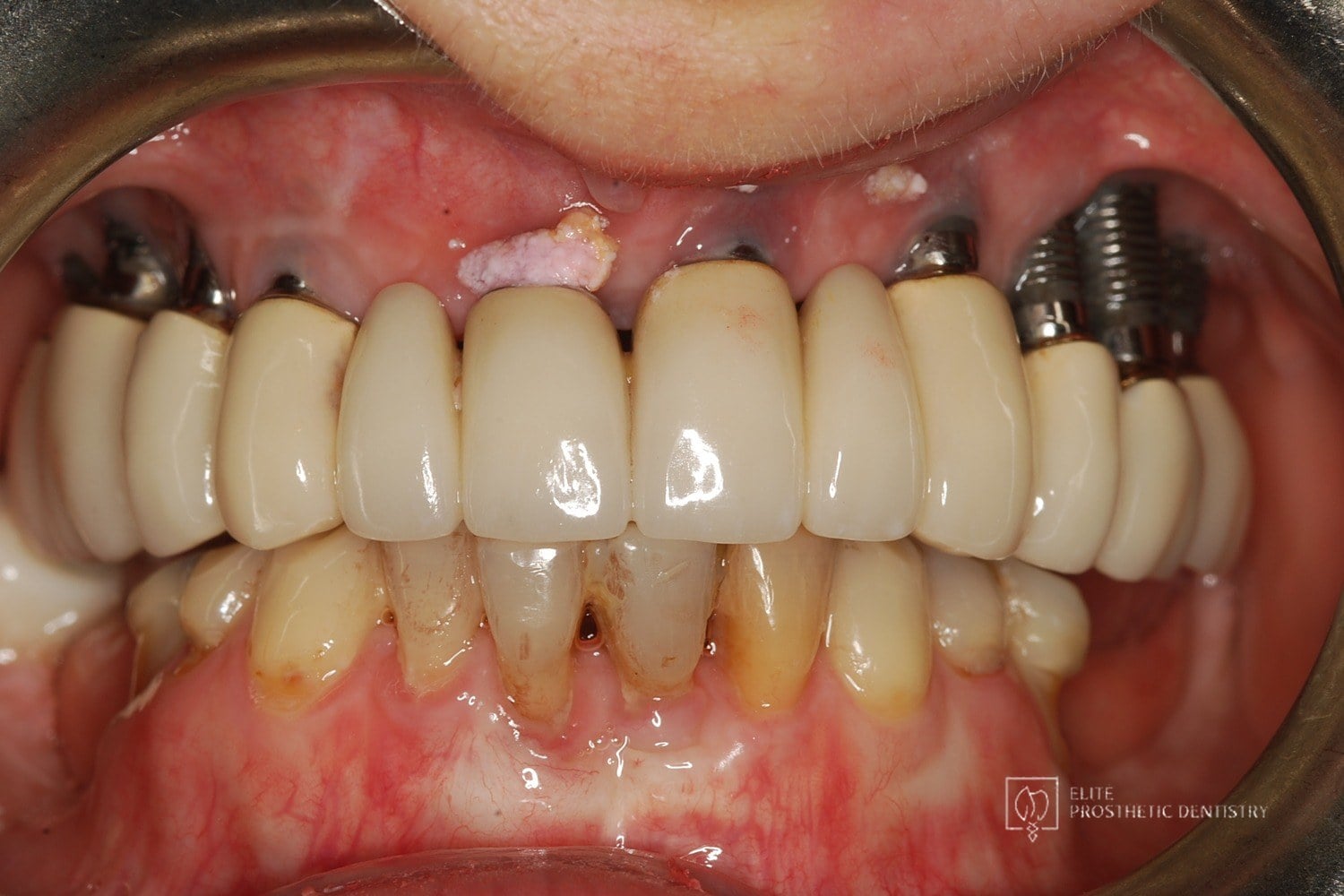
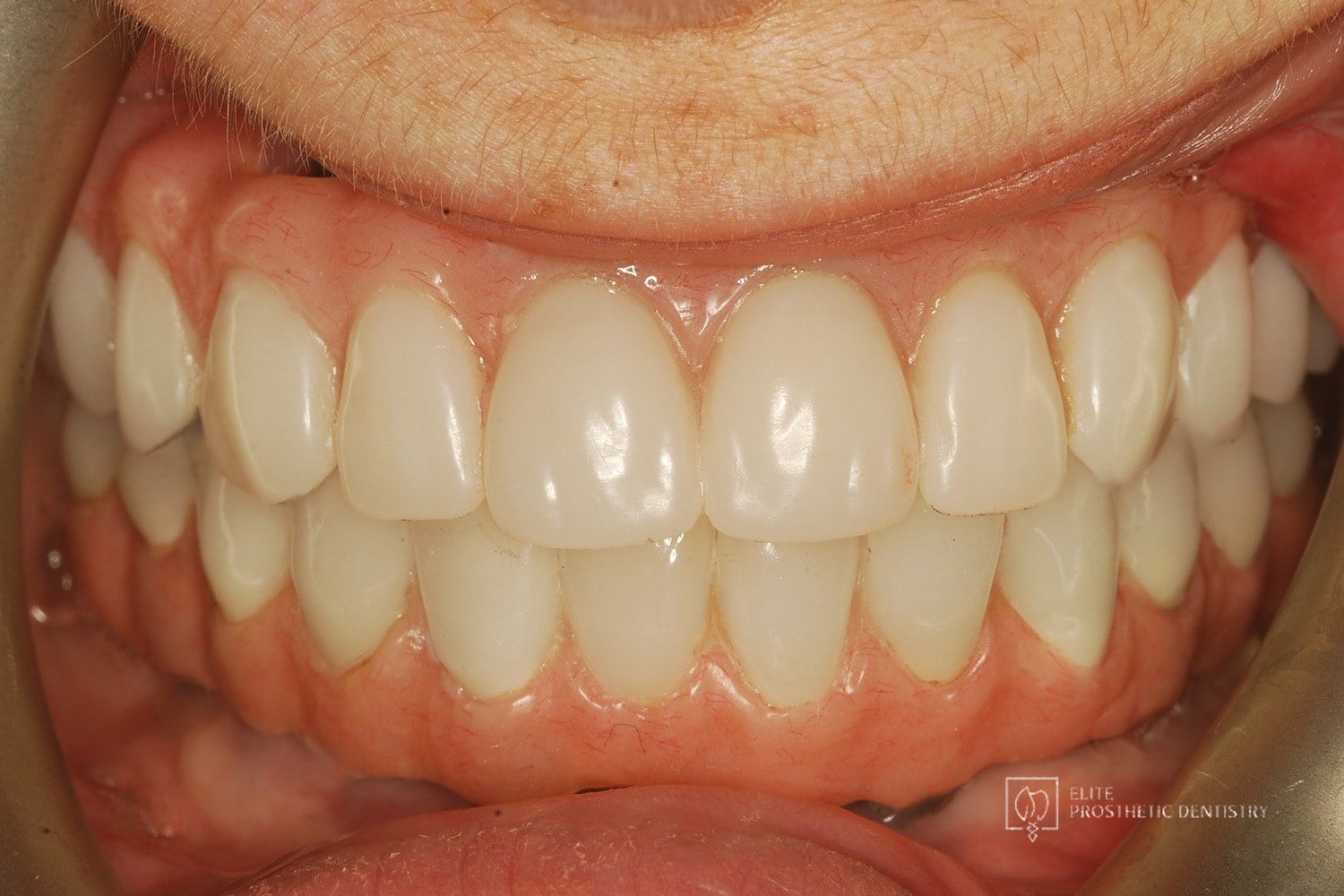
After How Failing Implants and Severe Bone Loss Were Rebuilt Into a Stable Full-Arch Implant Reconstruction
The patient presented with significant complications from previously placed implants, severe bone loss, failing posterior implants, and an unesthetic full-arch bridge. Both arches required full reconstruction, with the upper arch showing the most advanced bone loss and instability.
 Before
  After
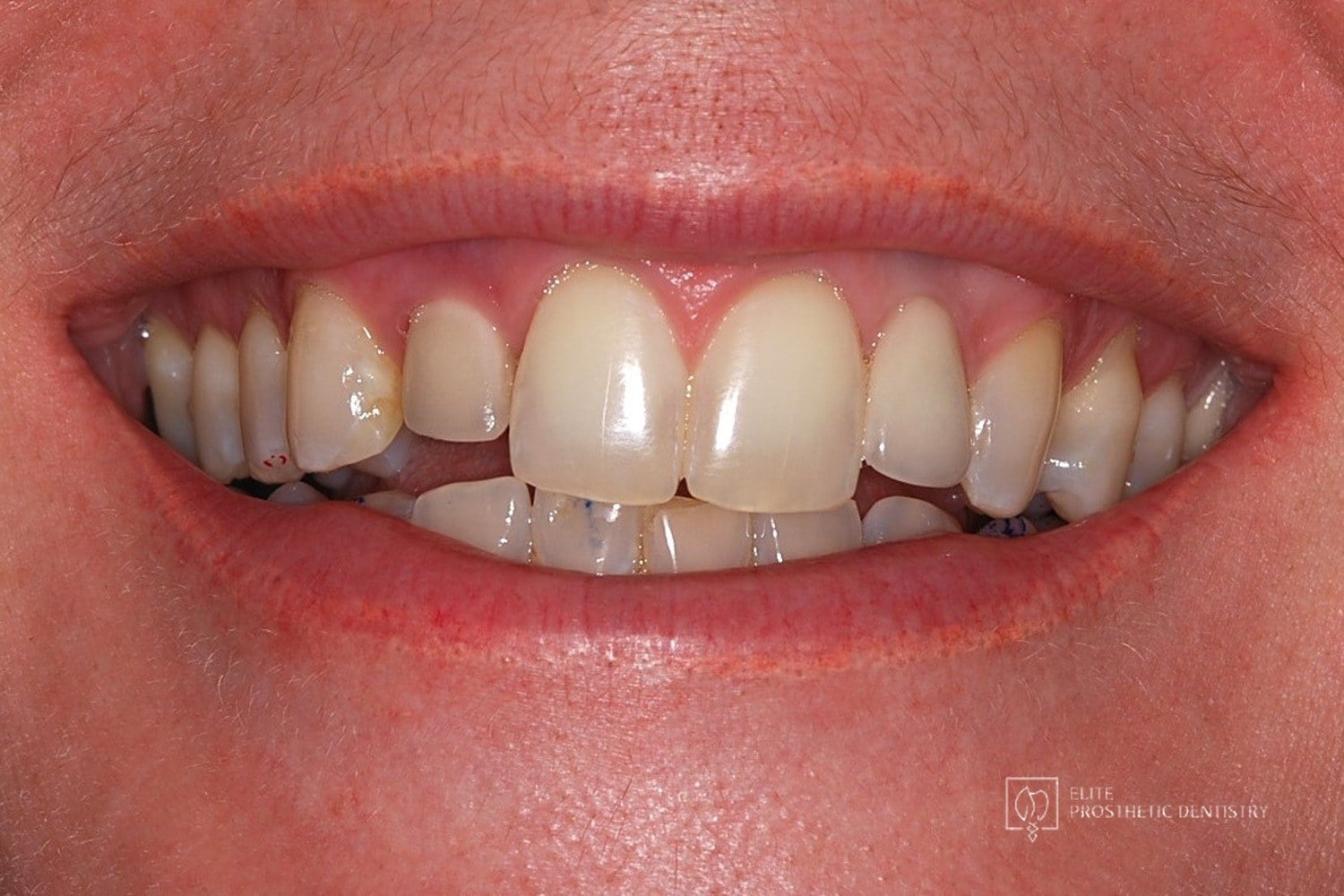
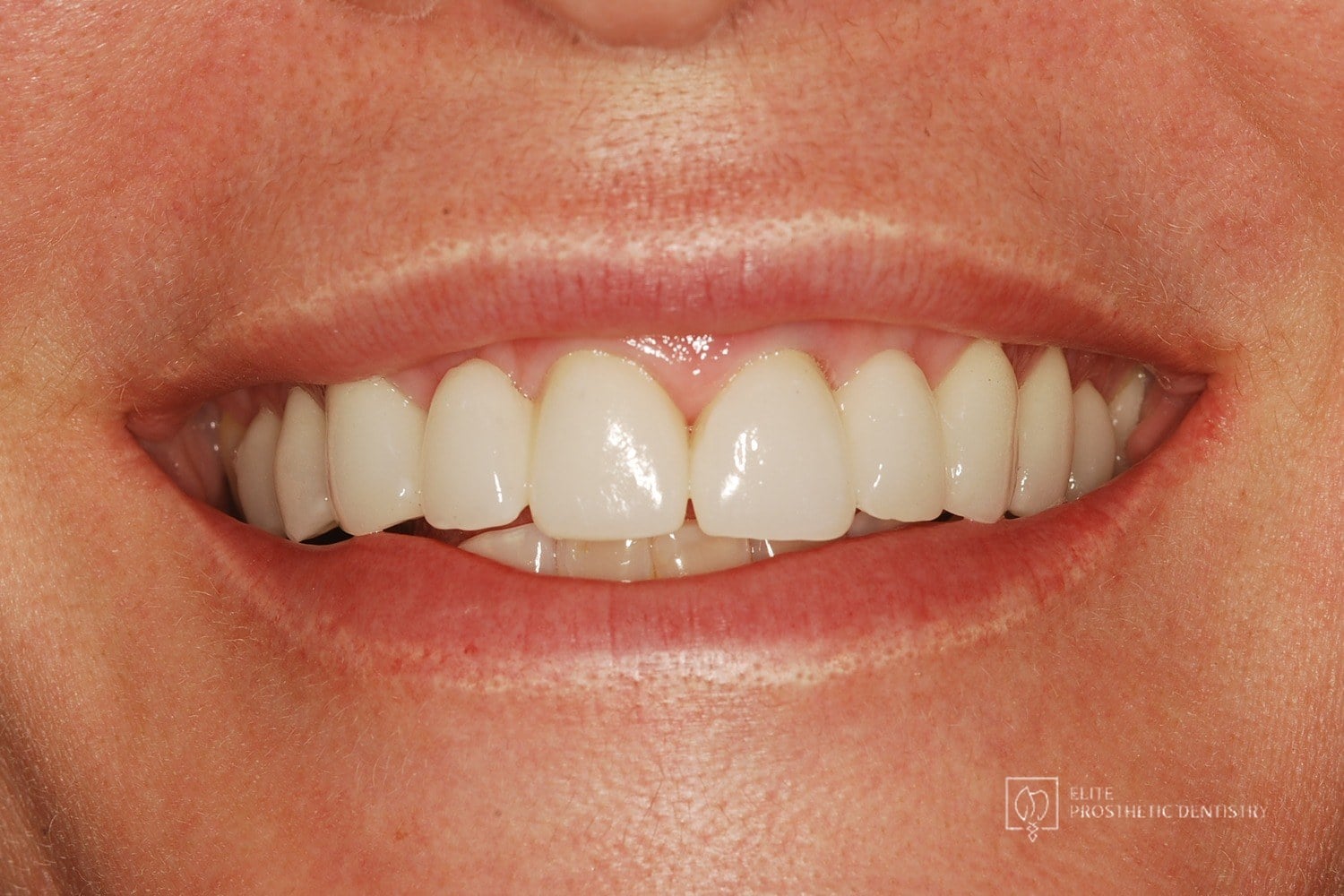
After How Failing Lateral Incisor Implants Were Replaced with Custom Zirconia Bridges After Severe Bone Loss Made Replacement Implants Impossible
Comprehensive examination including CBCT imaging revealed significant bone loss surrounding implants that were placed outside the buccal plate, most likely due to placement without a CBCT-generated surgical guide. The implants were determined non-salvageable, and the alveolar ridge was too narrow to support replacement implants without extensive reconstruction.
 Before
  After
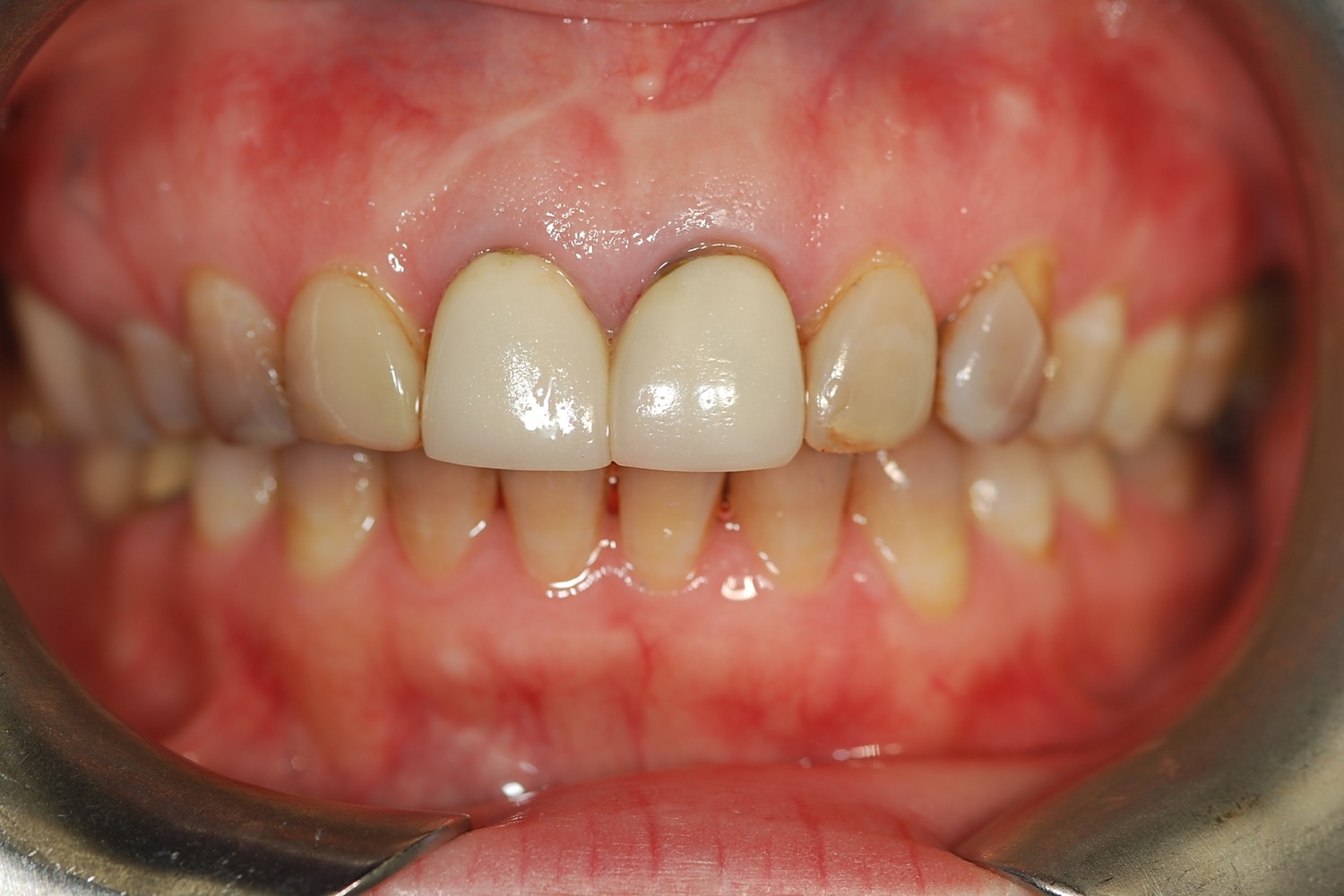
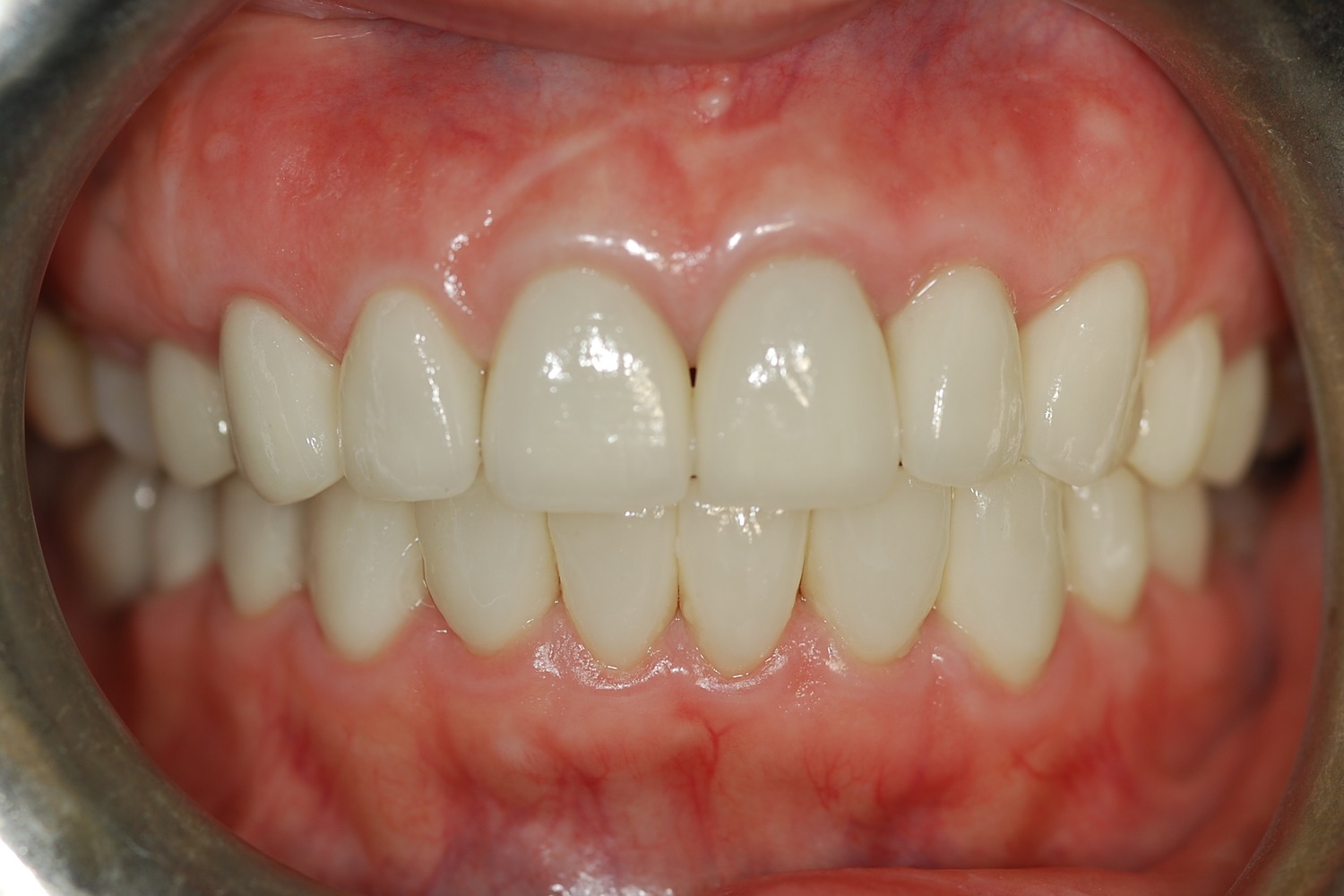
After How Aging, Opaque Restorations Were Replaced with Customized Ceramic Restorations Designed for Long-Term Natural Esthetics
The existing restorations appeared opaque, worn, and unnatural over time, affecting both confidence and overall smile harmony.
 Before
  After
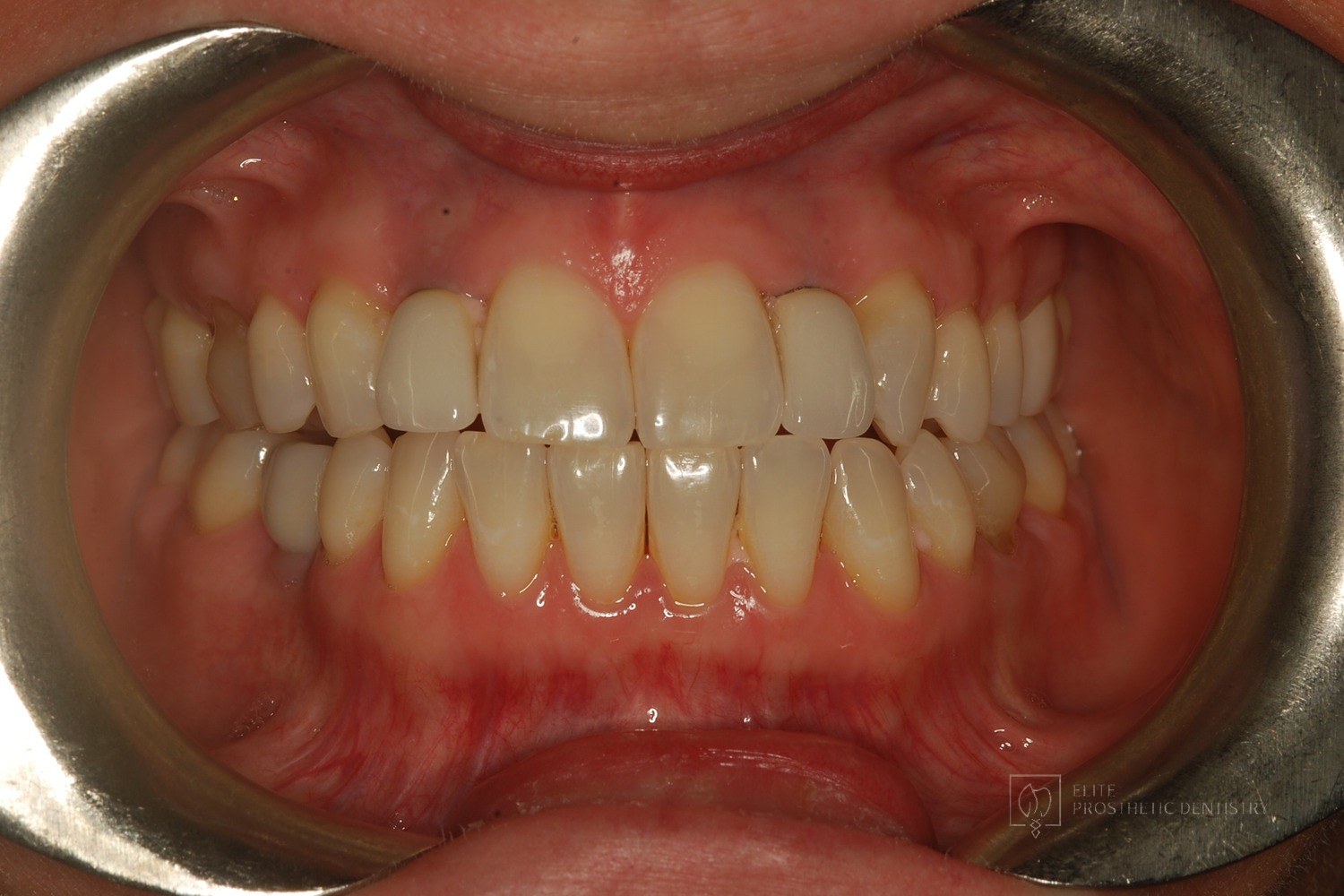
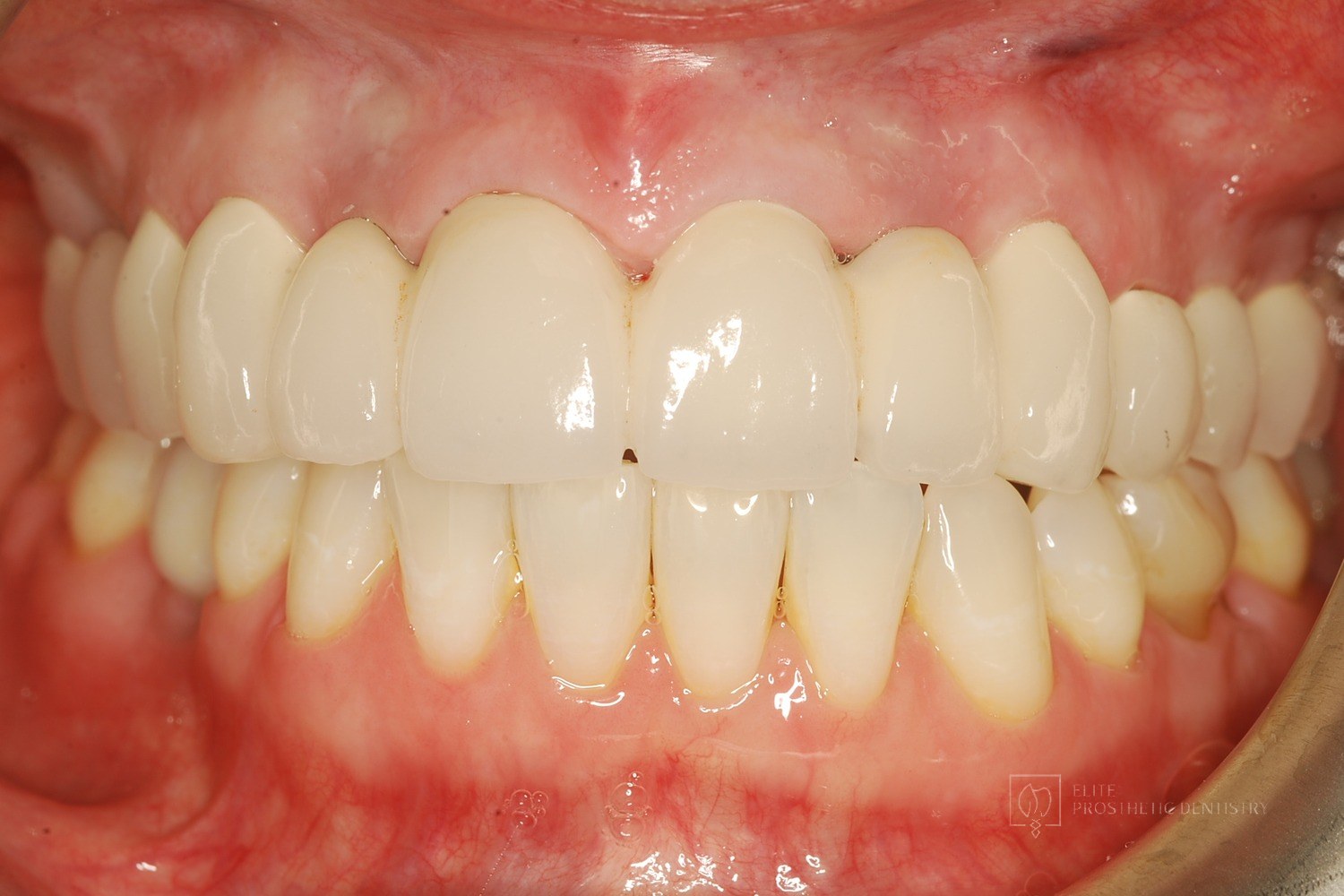
After How Older Implant Crowns Were Redesigned for a Better Bite and More Natural Appearance
The patient came in after years of living with implant-supported crowns placed more than twenty years earlier that no longer looked or functioned well. CBCT evaluation, reviewed with a radiologist colleague, showed the implants had been placed too far to the buccal in very thin bone and could not support a healthy long-term restoration.
 Before
 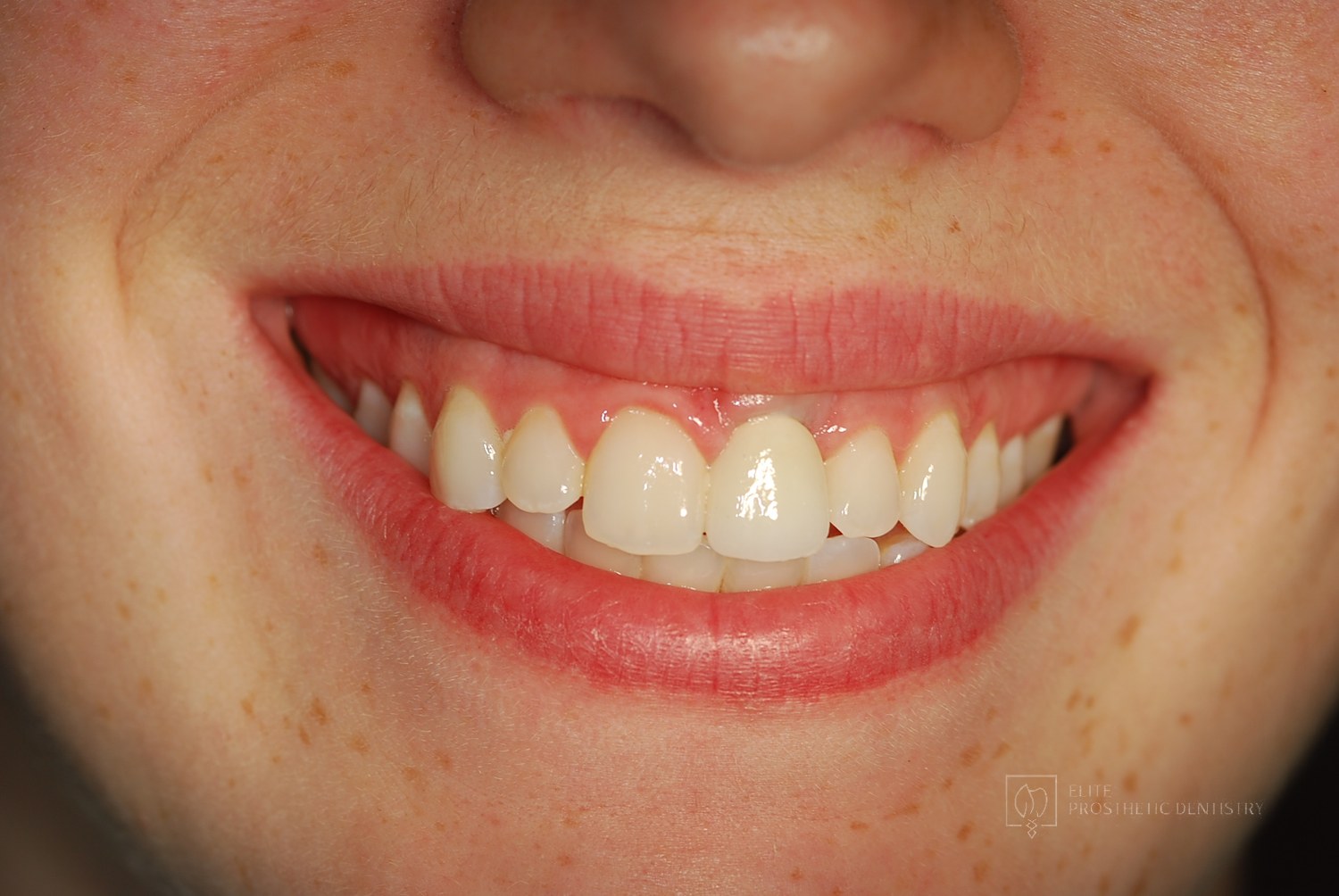 After
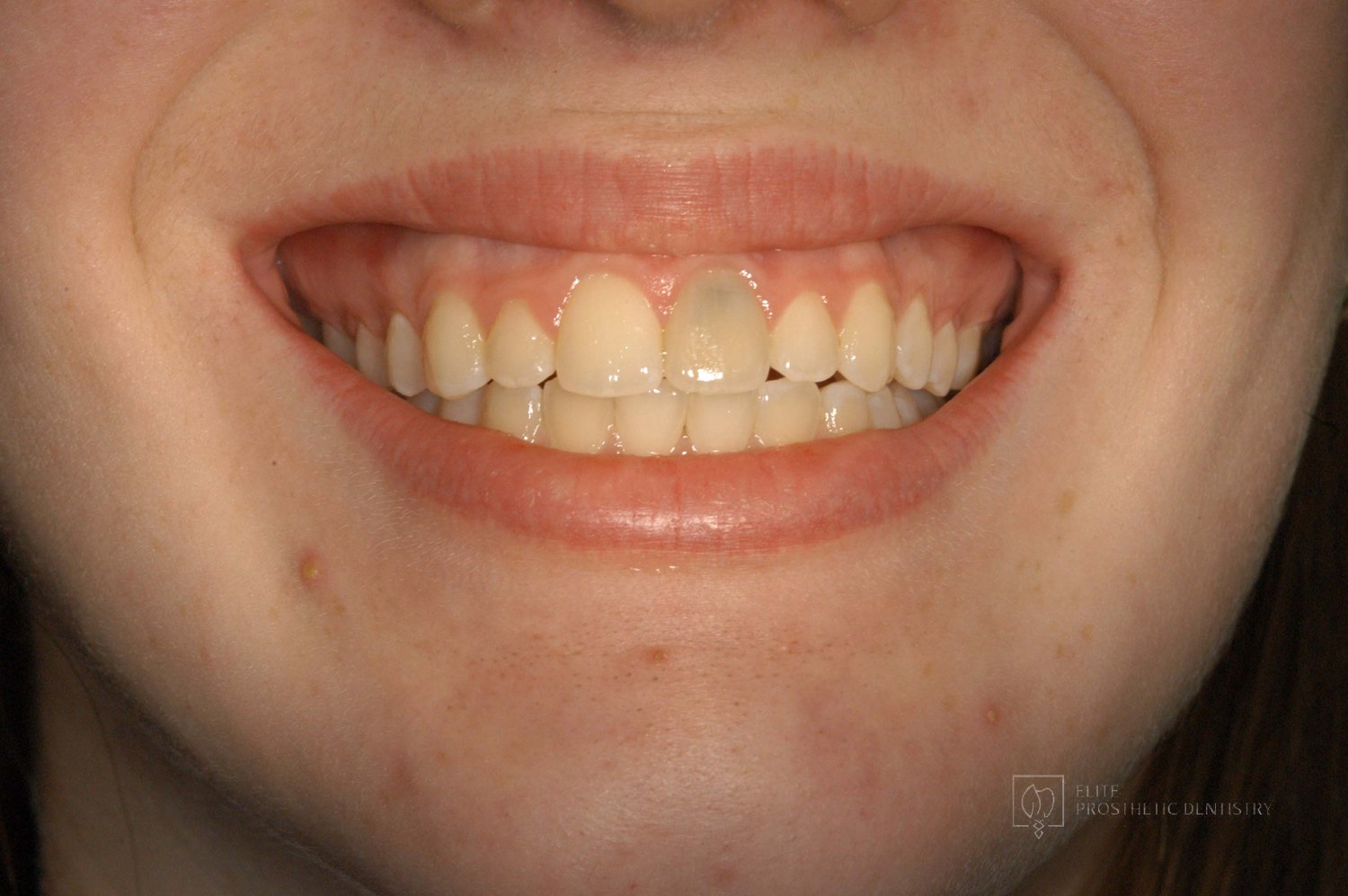
After How a Front Tooth Lost to Childhood Trauma Was Rebuilt with Bone Grafting and a Long-Lasting Implant
A teenager was referred by her father after earlier trauma left her upper left front tooth slowly failing from root resorption. She was still growing, so an immediate implant was the wrong move. The tooth had to be maintained to buy time, then replaced correctly once she reached skeletal maturity.
Related Articles
Deepen your knowledge with additional insights on this topic.
 Choosing a Prosthodontist
 The Patient's Guide to Implant, Cosmetic and Restorative Dentistry
How to judge quality in implant, cosmetic, and restorative dentistry: choosing a practitioner, why the lab matters, financing, and the questions to ask.
 Choosing a Prosthodontist
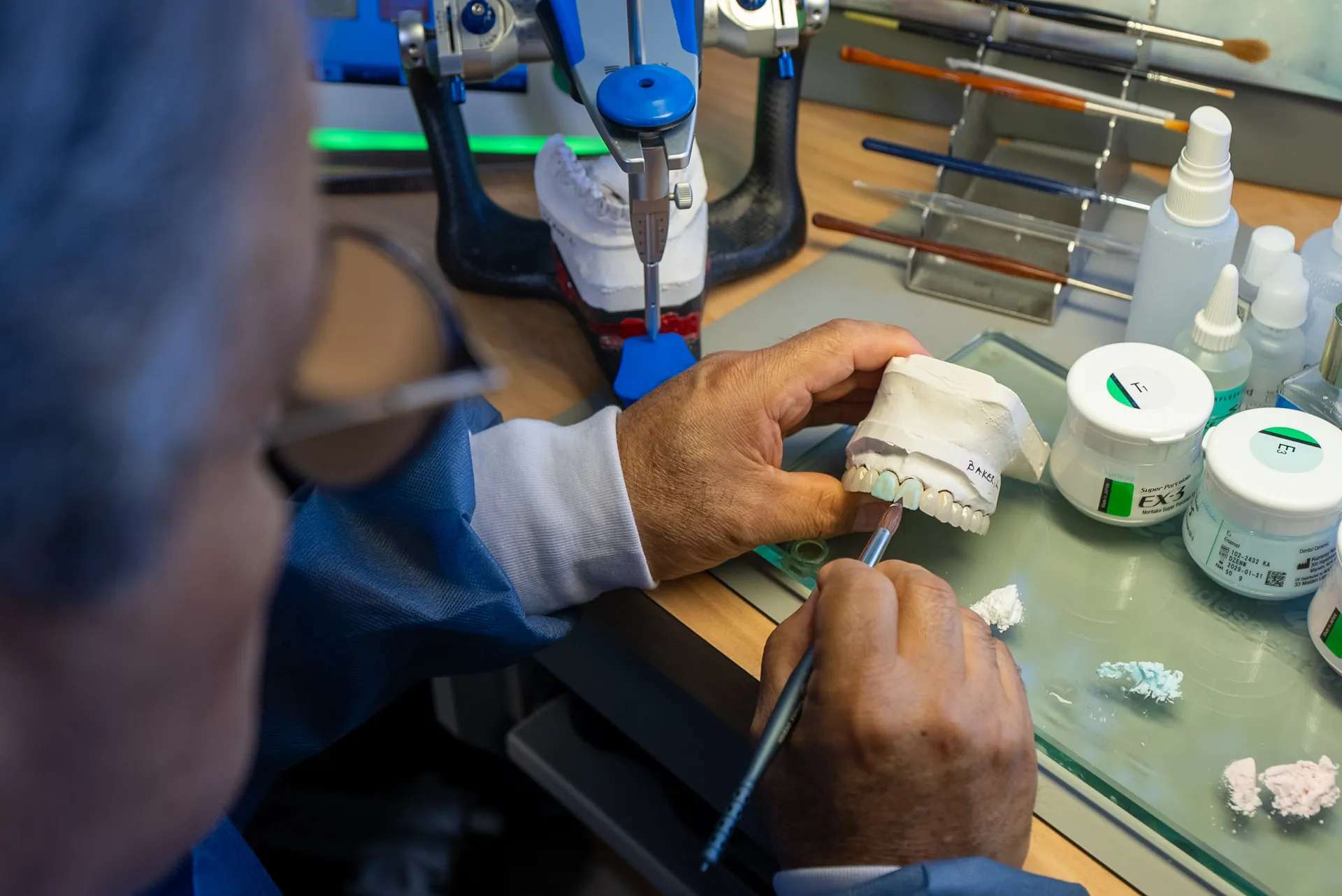
 What is a Prosthodontist?
A prosthodontist is a dental specialist with advanced training in crowns, implants, dentures, and complex restorations. Washington, DC specialist.
 Choosing a Prosthodontist
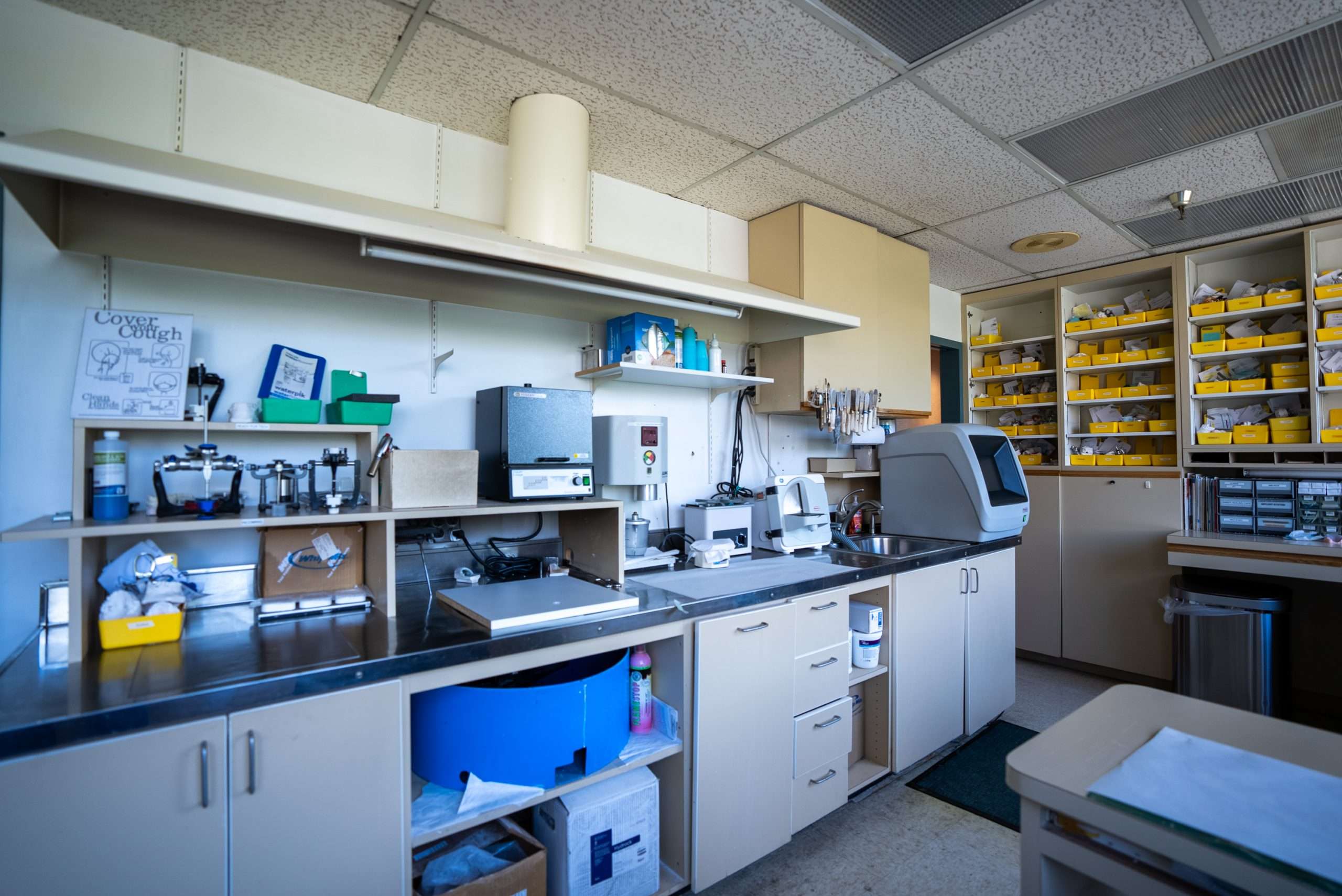
 4 Ways You Can Benefit from Our In-House Dental Lab
Custom aesthetics, precision fit, shorter waits, and fast repairs: four ways an in-house dental laboratory changes both your experience and your results.
 Choosing a Prosthodontist
 What Is the Difference Between a Dentist and a Prosthodontist?
Every prosthodontist is a dentist, but with years of extra specialty training in restoring and replacing teeth. A DC prosthodontist explains who does what.
 Choosing a Prosthodontist
 Don't Wait 'Til It's Too Late: Start with a Virtual Dental Consultation
A virtual consultation is a convenient first step: discuss your concerns, share records, and hear options from a DC prosthodontist before an in-person exam.
 Choosing a Prosthodontist
 Emergency Dentistry: The Benefits of an In-House Laboratory
When a tooth or restoration breaks, an on-site dental lab can mean a natural-looking repair in a day instead of a week. How emergency fabrication works in DC.
Deciding Who Should Treat You?
Our decision guide for Great Falls patients explains when implants, full mouth reconstruction, cosmetic work, or aging crowns and bridges call for a prosthodontist, and when another setting may serve you better.
Read the Great Falls decision guide →Our Services in Great Falls
Beyond prosthodontics, Great Falls patients rely on Dr. Marlin for a full range of advanced dental care.
More services available in Great Falls:
prosthodontics Near Great Falls
Dr. Marlin also provides prosthodontics services for patients in these neighboring communities.
Getting Here from Great Falls
Elite Prosthetic Dentistry is conveniently located near Great Falls, VA.
Great Falls patients drive to our Friendship Heights office at 4400 Jenifer Street NW, Suite 220, via the Capital Beltway (I-495) or Georgetown Pike. Building parking is available for longer appointments.
Address:
4400 Jenifer Street NW, Suite 220
Washington, DC 20015
Phone: (202) 244-2101
Request a ConsultationRequest a Specialist Consultation from Great Falls
Great Falls residents come to Dr. Marlin for specialist prosthodontic care. With 3,900+ implants placed over 40+ years, evaluation, planning, and execution are handled with the depth complex cases require.