
What Can Patients Expect for Their Dental Implant Treatment?
A dental implant is the most complete tooth replacement available today: secure, functional, natural in look and feel, and capable of lasting decades with proper placement and care. But most patients arrive at their first consultation with the same practical questions. What actually happens? In what order? How much will it hurt, and how long will it take?
Here is the honest walkthrough of implant treatment at Elite Prosthetic Dentistry, stage by stage.
Consultation and Presurgical Planning
Everything begins with measurement. At your consultation, we take a CBCT scan and an intraoral scan, building a 3D picture of your jaw that shows bone quality, volume, and every relevant anatomical structure. These images determine whether you are an implant candidate and allow treatment to be planned with precision rather than optimism [1].
Using Precision Implant Placement (PIP), Dr. Marlin virtually simulates your implant on the CBCT scan, optimizing its position before surgery is ever scheduled. This is also where your options take shape: a single implant, an implant-supported bridge, mini dental implants in select situations, or our version of full-arch All-on-X therapy, reviewed against your goals and budget. For complex full-arch cases, the choice between four- and six-implant configurations has real consequences for load distribution, covered in our comparison of All-on-4 and All-on-6.
Bone Grafting (If Necessary)
About half of all patients seeking implant treatment need a bone graft before or at the time of placement, because the site lacks bone volume or quality. This step is sometimes bypassed elsewhere to expedite treatment; doing so compromises the long-term prognosis, which is exactly backward. The graft is the foundation work.
Grafting restores and strengthens the site, and it typically adds a few months of healing to the overall timeline [2]. Dr. Marlin will tell you at the consultation, from the scan, whether your case needs it and what to expect.
Placing the Dental Implant
By surgery day, the hard thinking is already done: your procedure has been planned in imaging software, and surgical guides generated from the scan are used where bone anatomy, esthetic demands, or proximity to nerves and sinuses call for them, transferring that plan into your mouth exactly. Precision at this stage is a large part of why our documented in-practice implant success rate is above 97% for implants placed more than 20 years ago.
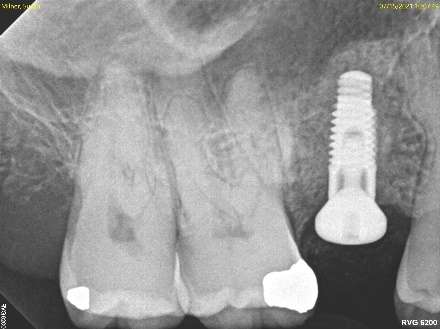
Expect the placement appointment to take up to 90 minutes. You will be completely numb throughout, with sedation dentistry available if anxiety is a factor [3]. Once the implant is placed, impressions are taken so our in-house team can begin crafting your crown. The implant then integrates with the surrounding bone, generally for a minimum of four months, before the final restoration is seated.
Post-Operative Care and Comfort
Recovery is more manageable than most patients fear. You will eat soft foods at first, brush gently with a soft-bristled brush, and chew on the opposite side while the site heals. Some discomfort for a few days is normal [4], and most of our patients need only Advil, Tylenol, or Motrin for one to two days.
That comfort is engineered, not lucky: pre-medication with anti-inflammatories, CBCT-planned surgery that keeps the procedure minimally invasive, and careful technique all reduce trauma to the tissues. We map the healing arc week by week in dental implants: the recovery.
The Porcelain Crown, Crafted In-House
The final step is where our practice differs most visibly. Your crown and abutment (the connector between crown and implant) are created in our own laboratory, on site, under direct quality control. The customization accounts for your gum architecture and the character of your neighboring teeth, and we custom-stain the crown to match while you wait, so you usually do not need an extra visit for delivery.
Before you leave, Dr. Marlin adjusts the crown as needed and takes X-rays to verify that implant, abutment, and crown fit together seamlessly. The result is a tooth that looks real, functions as intended, and was built to be the last version of itself.
Ready to See What Your Treatment Would Look Like?
Whether you are replacing one tooth, several, or planning ahead to renew failing dental work before it becomes an emergency, the process starts with a scan and an honest conversation. Call 202-244-2101 or schedule a consultation with Dr. Gerald Marlin at Elite Prosthetic Dentistry in Friendship Heights, Washington, DC.
Sources:
See How We Resolve These Problems
Our patient success stories show real cases and real results. Browse outcomes from a specialist prosthodontist with decades of experience and 3,900+ implants placed.
Key Takeaways
- ✓ Implant treatment follows a predictable arc: consultation and 3D planning, bone grafting if needed, precise placement, healing, and the custom crown.
- ✓ Roughly half of implant patients need some bone grafting before or during placement; it adds months to the timeline and decades to the prognosis.
- ✓ Surgery itself typically takes up to 90 minutes under local anesthesia, with sedation available, and most patients manage afterward with over-the-counter pain relievers for a day or two.
- ✓ The implant integrates with your bone for about four months before the final crown is seated.
- ✓ Because our laboratory is in-house, your crown and abutment are custom crafted and stained on site, usually without extra return visits.
Frequently Asked Questions
How long does the dental implant process take from start to finish?
For a straightforward case, expect several months: placement, about four months of integration while the bone fuses to the implant, then the final crown. If bone grafting is needed first, add a few months of graft healing. The timeline is set by biology, and each stage is verified before the next proceeds.
Does getting a dental implant hurt?
The procedure itself is done fully numb under local anesthesia, with sedation available if you are anxious. Afterward, some soreness for a few days is normal. Most of our patients need only Advil, Tylenol, or Motrin for one to two days, thanks to carefully planned, minimally invasive surgical technique and pre-medication with anti-inflammatories.
Will I need a bone graft before my implant?
About half of implant patients do. Grafting is indicated when the site lacks bone volume or quality, and skipping it to speed things up compromises the long-term prognosis. Your CBCT scan answers the question definitively at the consultation stage, before anything is scheduled.
How soon after placement do I get my permanent tooth?
Generally after a minimum of about four months, once the implant has fully integrated with the surrounding bone. Impressions are taken and our in-house laboratory custom crafts and stains the crown to match your natural teeth, and Dr. Marlin verifies the fit with X-rays at seating.
Related Patient Success Stories
Explore similar patient success stories demonstrating our expertise in advanced prosthetic dentistry.
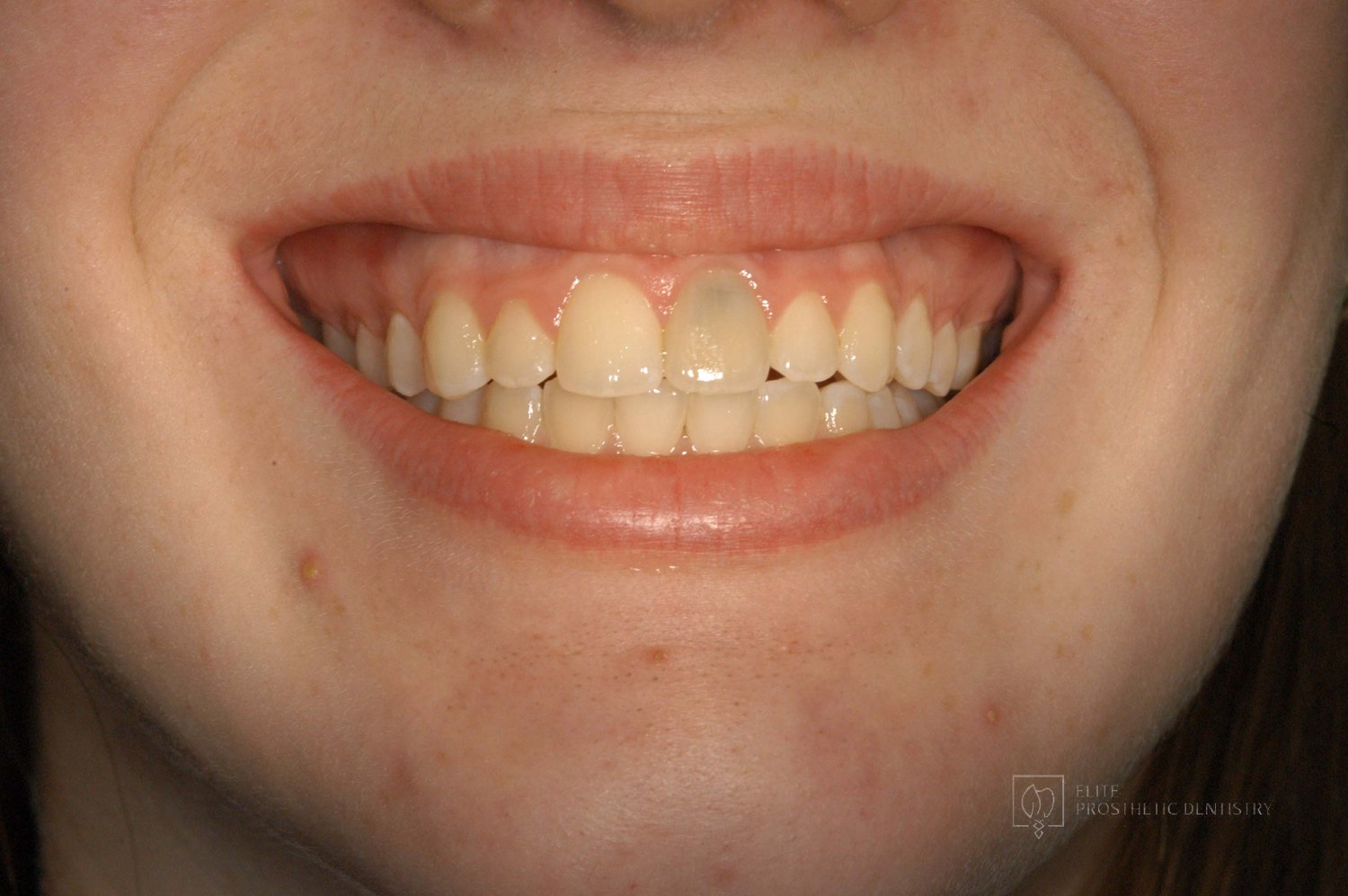 Before
 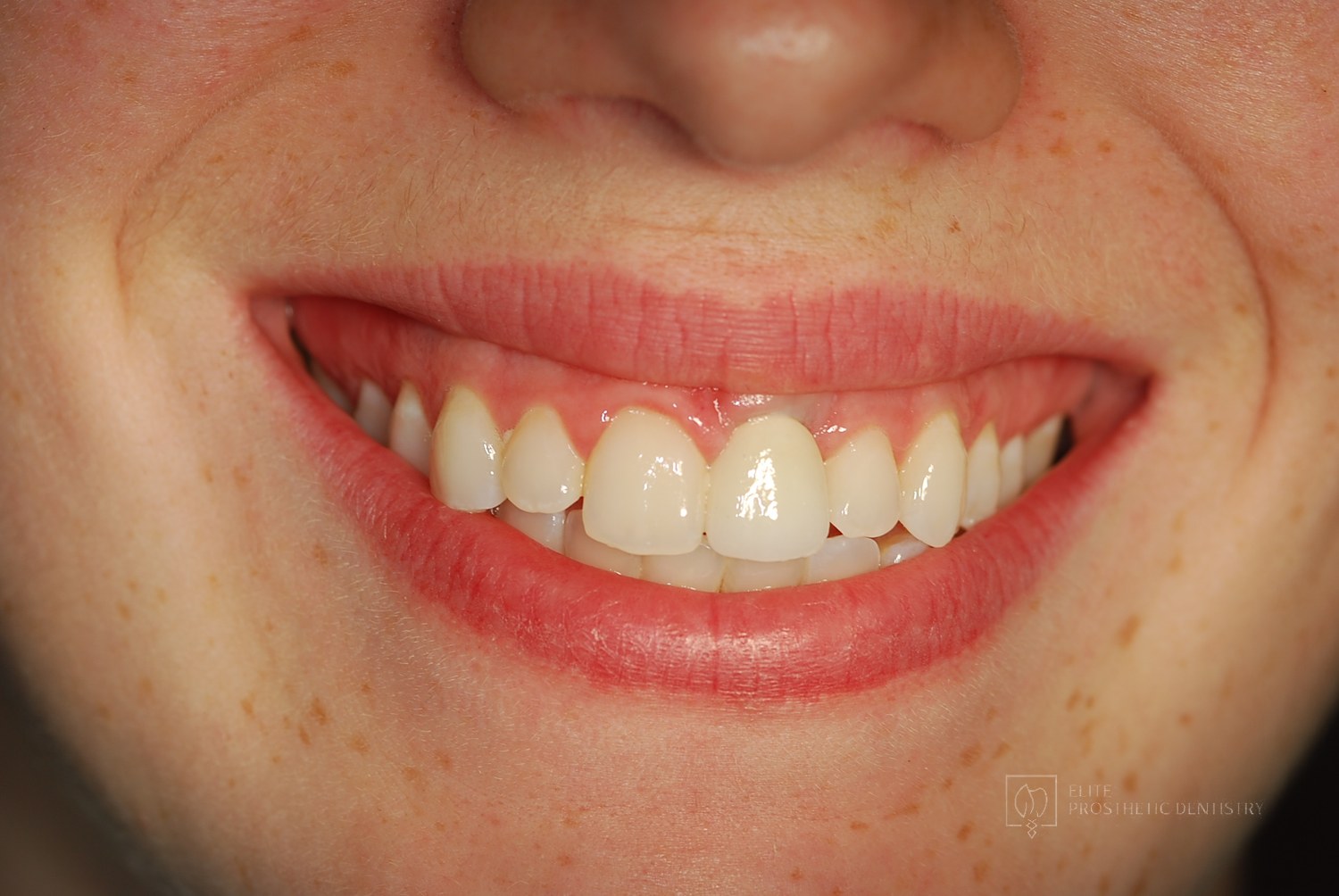 After
After How a Front Tooth Lost to Childhood Trauma Was Rebuilt with Bone Grafting and a Long-Lasting Implant
A teenager was referred by her father after earlier trauma left her upper left front tooth slowly failing from root resorption. She was still growing, so an immediate implant was the wrong move. The tooth had to be maintained to buy time, then replaced correctly once she reached skeletal maturity.
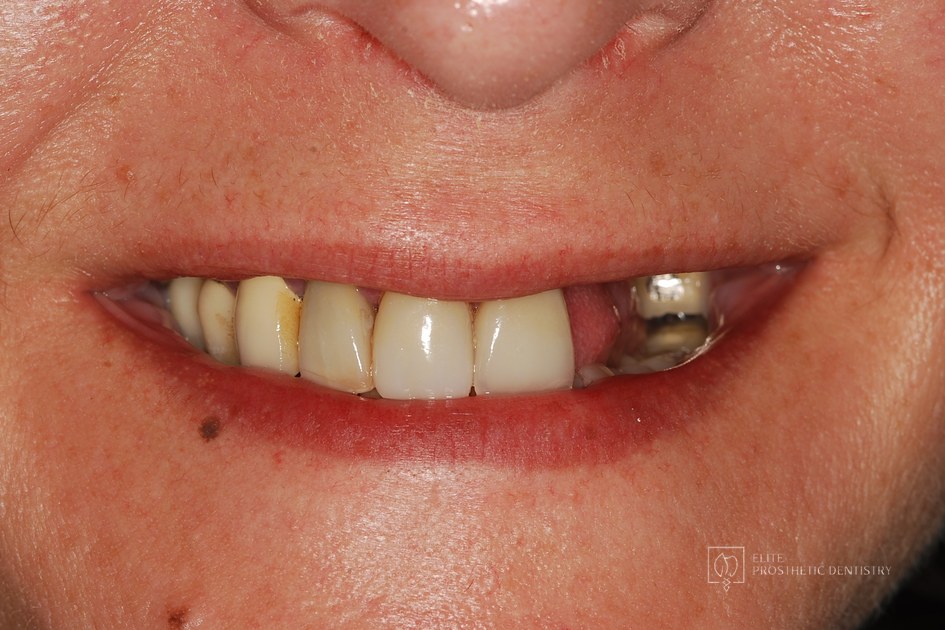 Before
 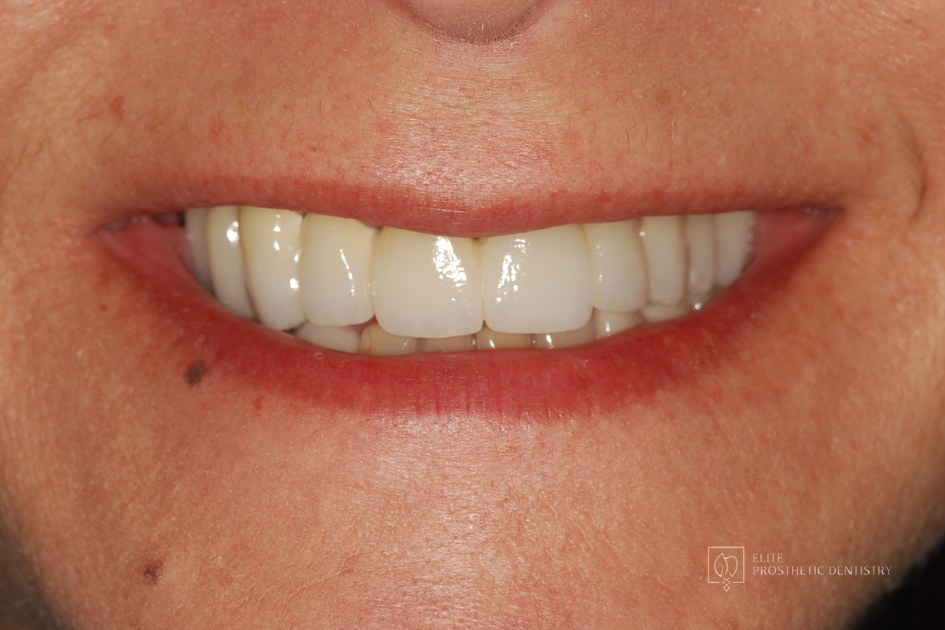 After
After Implant Supported Reconstruction: Failing Bridgework and Missing Back Teeth Rebuilt with Coordinated Specialist Care
Referred by another dental specialist with severe bone resorption on the upper left, multiple broken-down lower teeth requiring extraction, and failing lower back teeth that had left the bite without solid support. No single procedure, and no provider working in isolation, could rebuild a situation this interconnected.
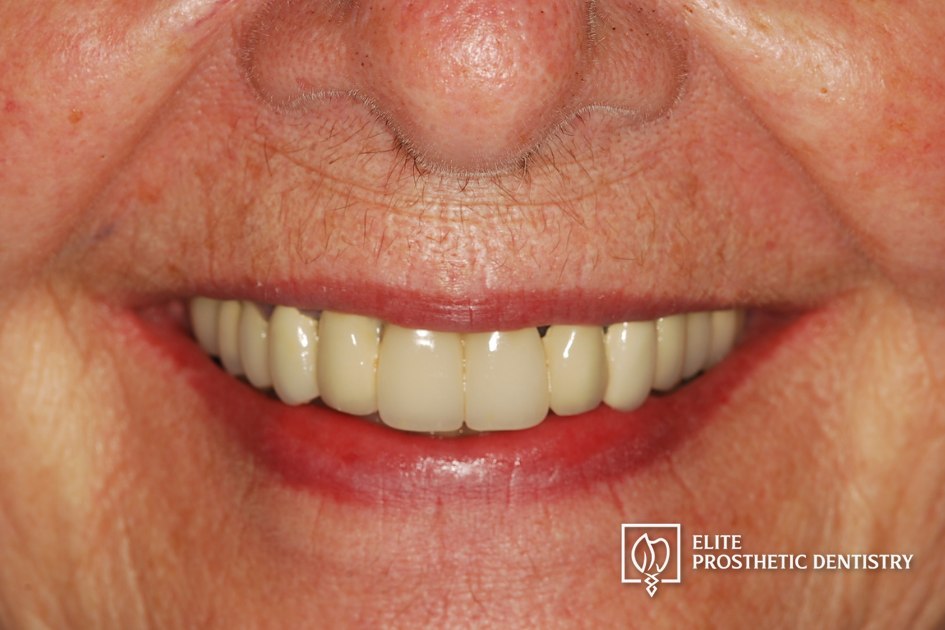 Before
 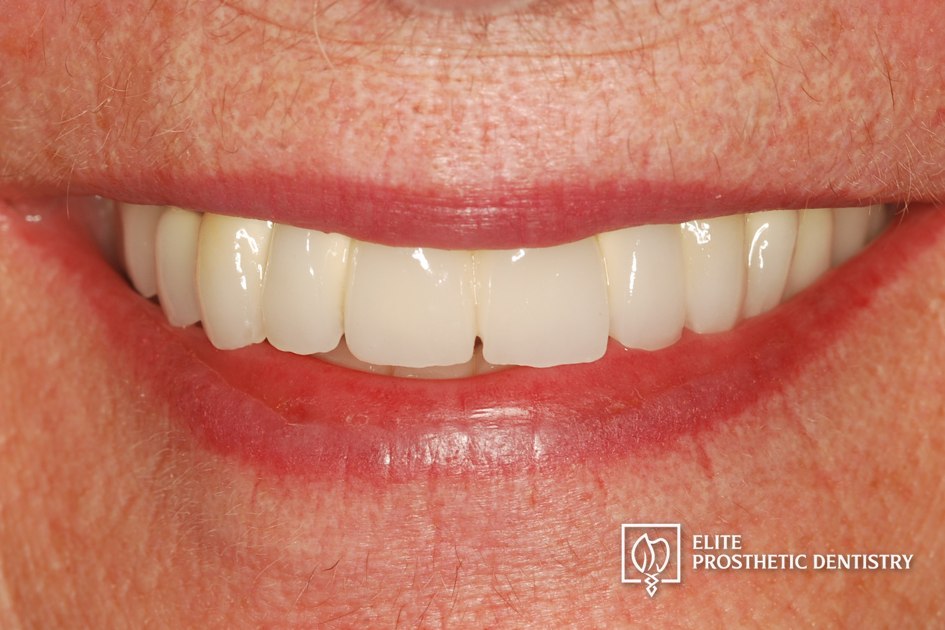 After
After How a Loose Upper Bridge and Aging Crowns Were Rebuilt with Staged Implant Reconstruction
A patient referred by her general dentist after years of aging dentistry no longer holding up. A loose upper bridge and crowns more than twenty years old, combined with the effects of advanced periodontal disease and severely compromised tooth abutments, required a staged surgical and restorative plan delivered with comfort planning at the same time.
Related Articles
Deepen your knowledge with additional insights on this topic.
 Bone Grafting & Surgical
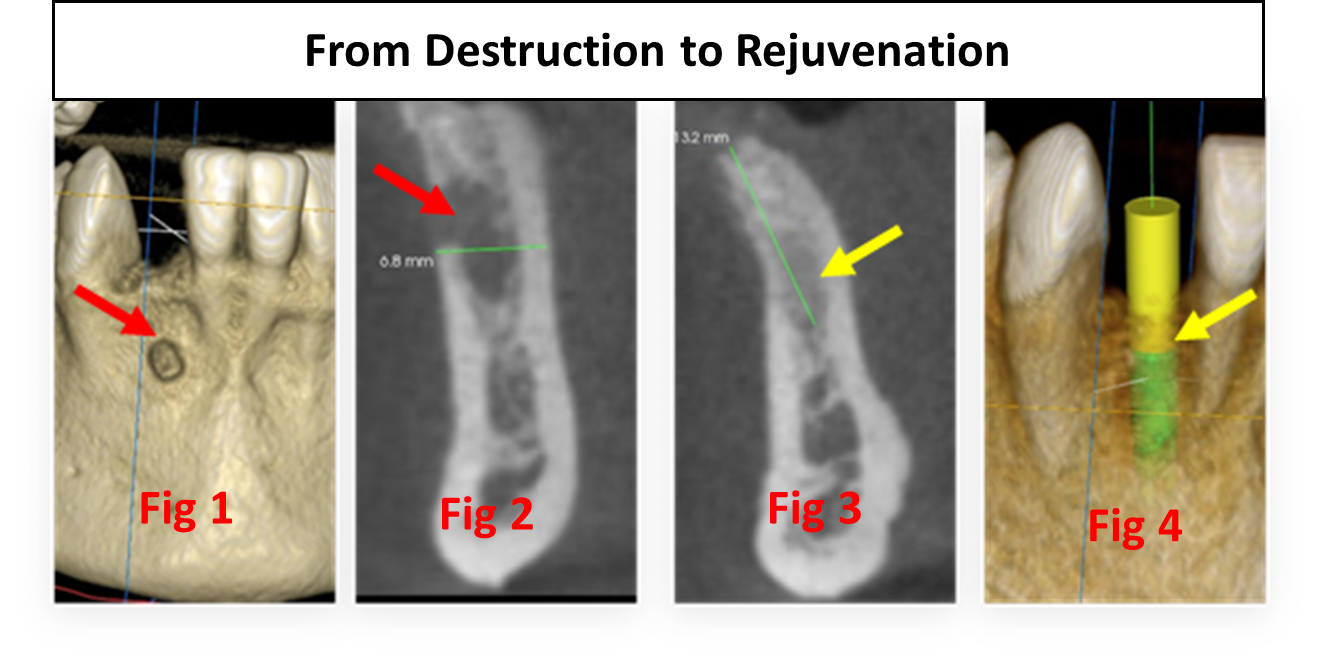
 Rebuilding a Ruined Implant Site with Severely Damaged Bone: The Three-Stage Protocol
Debridement, growth-factor grafting, CBCT-guided planning: the step-by-step protocol that turns a severely damaged implant site into a healthy ridge.
 Bone Grafting & Surgical
 What Is Ridge Augmentation Bone Grafting?
Ridge augmentation rebuilds a jaw ridge too narrow or angled for an implant. See real measurements from planning to precise placement. Washington DC.
 Bone Grafting & Surgical
 What Is a Partial (Internal) Sinus Lift?
A partial (internal) sinus lift adds bone at a single implant site through the implant preparation itself, often with the implant placed the same visit.