
Why Do Some Anterior Implant Restorations Look More Natural Than Others?
The hardest tooth in the mouth to restore is one of the four upper incisors: directly in the line of sight, judged against its natural neighbors in every conversation. Harder still is restoring an implant in that position, because the tooth’s emergence from the gum, which nature handles via the root, must be engineered from scratch.
This is why anterior implant results vary so visibly from practice to practice. Some disappear into the smile. Others read bulky, opaque, or slightly wrong in ways observers feel without being able to name. The difference is rarely the porcelain. It is what happened months earlier, at placement.
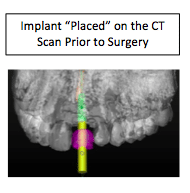
Anterior implant restoration with natural-looking crown
Millimeters Decide the Outcome
An implant placed too far facially forces a bulky crown. Too far lingually, and the crown comes out thin and gray. Too shallow or too deep, and the gumline never sits right. Unless the implant is precisely placed, the final restoration compensates for the error forever, and in the aesthetic zone, compensation shows.
Every implant case at Elite Prosthetic Dentistry, from a single implant through full-mouth reconstruction, is planned on a CBCT (cone beam CT) scan: the angle, depth, and location are chosen by placing the implant virtually before any appointment, and guided surgery is used where bone anatomy, esthetic demands, or proximity to nerves and sinuses call for it. For anterior implants especially, where aesthetics must be exact, the surgical guide is frequently fabricated directly from that CT plan, so the placement delivered matches the placement designed. The 3D data also maps bone anatomy, nerve position, and adjacent roots, which prevents complications while it protects appearance.
The Emergence Profile: Where Natural Is Won or Lost
Precise placement buys the second advantage: the abutment, the connector that holds the crown, can be designed in relation to the restoration rather than improvised after the fact. The abutment shapes the emergence profile, the contour where the crown rises through the gum tissue.
Get the emergence right and the gum drapes around the new tooth exactly as it does around its neighbor, and the eye accepts the tooth as grown. Get it wrong and no shade match can rescue the result. It is the detail every observer reads without knowing they read it.
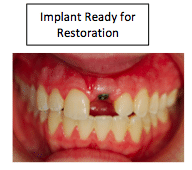
Ideal emergence profile for anterior implant restoration
Then, and Only Then, the Artistry
After four to six months of integration, the restorative phase begins, and because the implant sits where the plan put it, this phase is predictable. A custom abutment is fabricated, and the crown is built in our in-house laboratory with the internal color and translucency of your adjacent teeth, evaluated against your actual smile chairside. The full laboratory standard is described in what makes a crown look natural, and the complete case flow in achieving a natural look with a single front tooth implant.
Surgical precision and prosthodontic artistry are not two vendors here. They are one plan, executed by one team, which is the honest answer to this article’s title: anterior implants look natural when placement, emergence, and crown were designed together from the start.
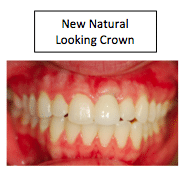
Final anterior implant restoration integrated seamlessly with adjacent teeth
If you are considering a front tooth implant, or living with one that never looked right, Dr. Gerald Marlin has placed more than 3,900 dental implants, and front tooth implants in our practice are planned and restored to exactly this standard. Call 202-244-2101 or request a consultation at Elite Prosthetic Dentistry in Friendship Heights, Washington, DC.
See How We Resolve These Problems
Our patient success stories show real cases and real results. Browse outcomes from a specialist prosthodontist with decades of experience and 3,900+ implants placed.
Key Takeaways
- ✓ Front implant restorations fail aesthetically for predictable reasons: imprecise implant position, wrong emergence profile, and generic crown work.
- ✓ Millimeters decide everything. Too far facially and the crown looks bulky; too far lingually and it looks thin and gray.
- ✓ CT-planned, guide-delivered placement is what puts the implant where the abutment and crown need it.
- ✓ The custom abutment shapes how the crown emerges from the gum, the detail observers read without knowing they read it.
- ✓ Surgical precision plus in-house crown artistry is the combination that makes an anterior implant disappear.
Frequently Asked Questions
Why do some front tooth implants look fake?
Almost always because of position, not porcelain. An implant placed even slightly too far forward forces a bulky crown; too far back produces a thin, grayish one; wrong depth distorts the gumline. The ceramist then compensates visibly for what the surgery decided. Natural-looking results start with placement precise to fractions of a millimeter.
What is the hardest tooth to restore with an implant?
One of the four upper front incisors. They sit directly in the line of sight, immediately beside natural teeth inviting comparison, and their gum contours are unforgiving. An implant in that neighborhood compounds the difficulty, because the emergence through the gum must be engineered rather than inherited from a natural root.
How does guided surgery improve front implant aesthetics?
Planning on a CT scan lets the angle, depth, and location be chosen against the future crown and the bone anatomy before surgery, and a custom guide delivers that plan exactly. It also lets the abutment be designed in relation to the restoration from the start, which is what produces a natural emergence profile.
How long does an anterior implant take to restore?
Typically four to six months from placement to final crown, allowing full integration with the bone. Because the implant was positioned according to the preoperative plan, the restorative phase is predictable, and you wear a natural-looking temporary throughout.
Related Patient Success Stories
Explore similar patient success stories demonstrating our expertise in advanced prosthetic dentistry.
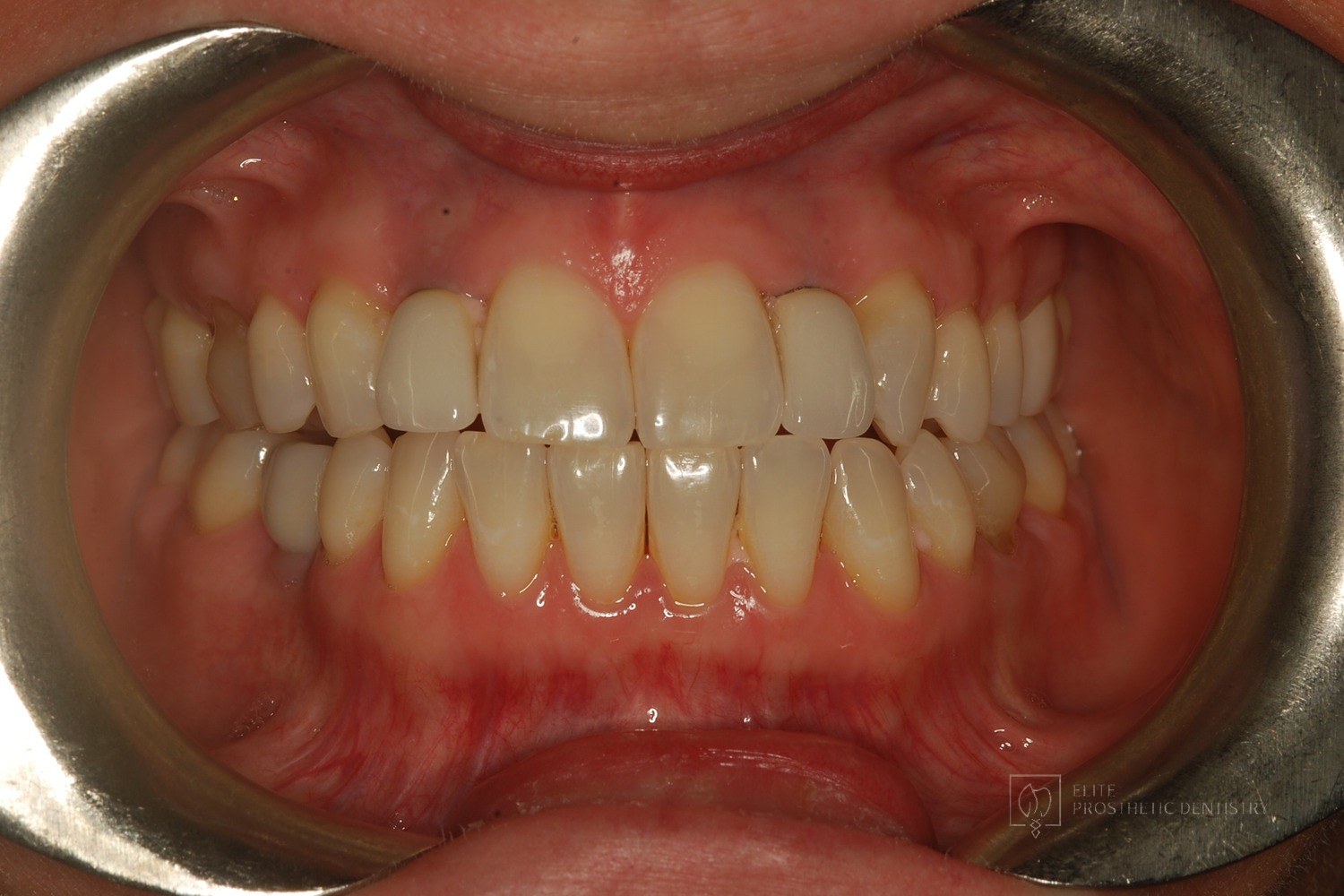 Before
 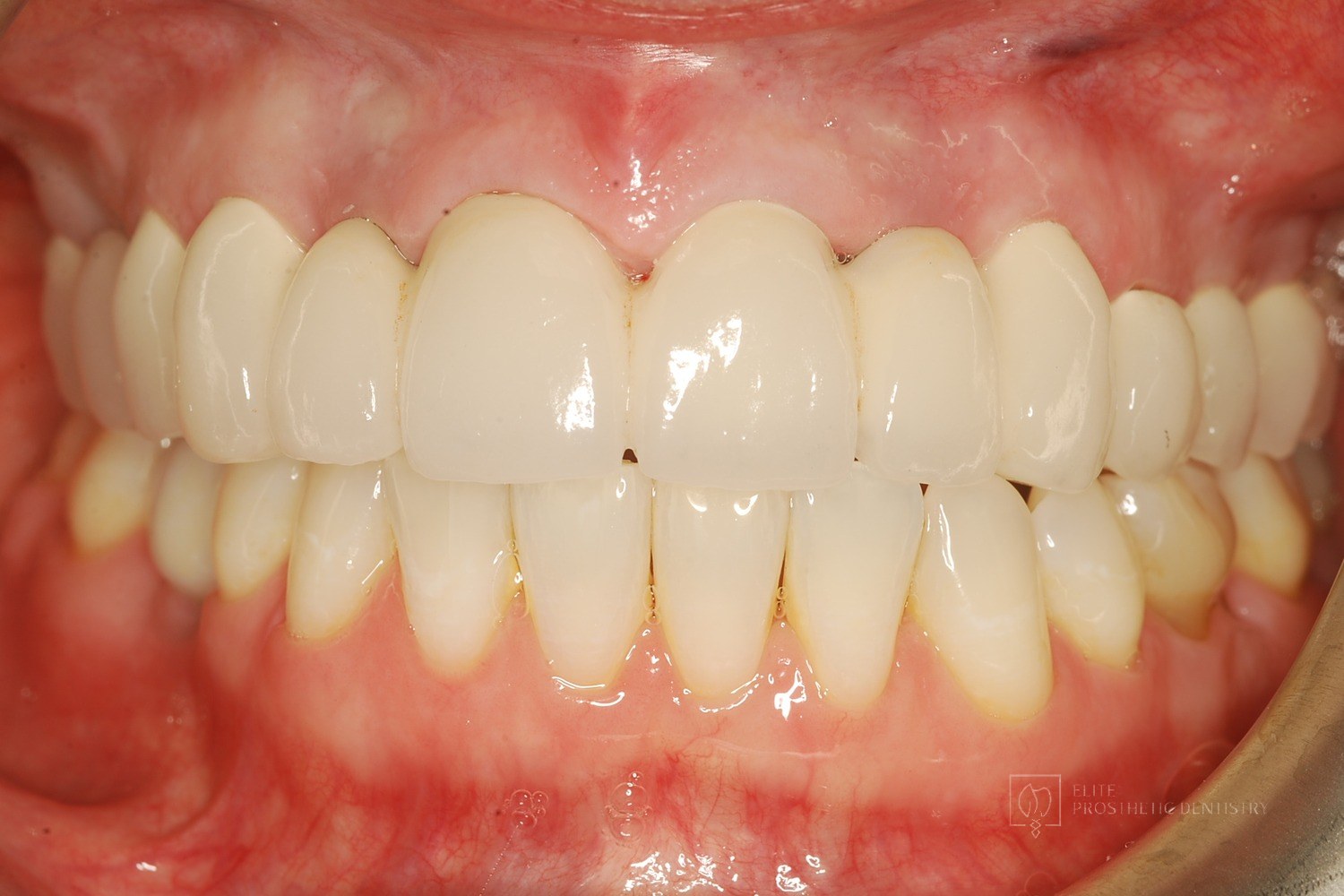 After
After How Older Implant Crowns Were Redesigned for a Better Bite and More Natural Appearance
The patient came in after years of living with implant-supported crowns placed more than twenty years earlier that no longer looked or functioned well. CBCT evaluation, reviewed with a radiologist colleague, showed the implants had been placed too far to the buccal in very thin bone and could not support a healthy long-term restoration.
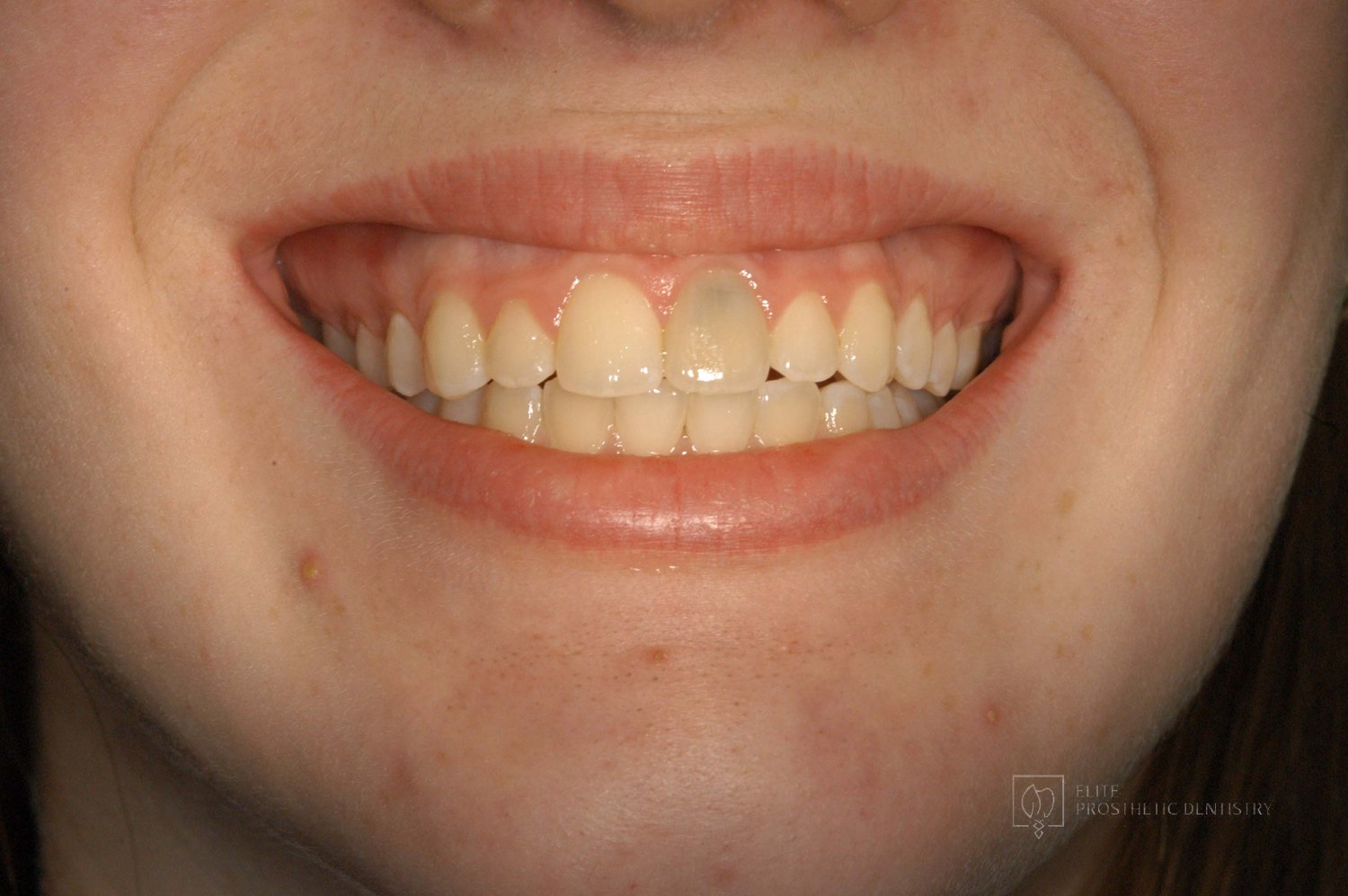 Before
 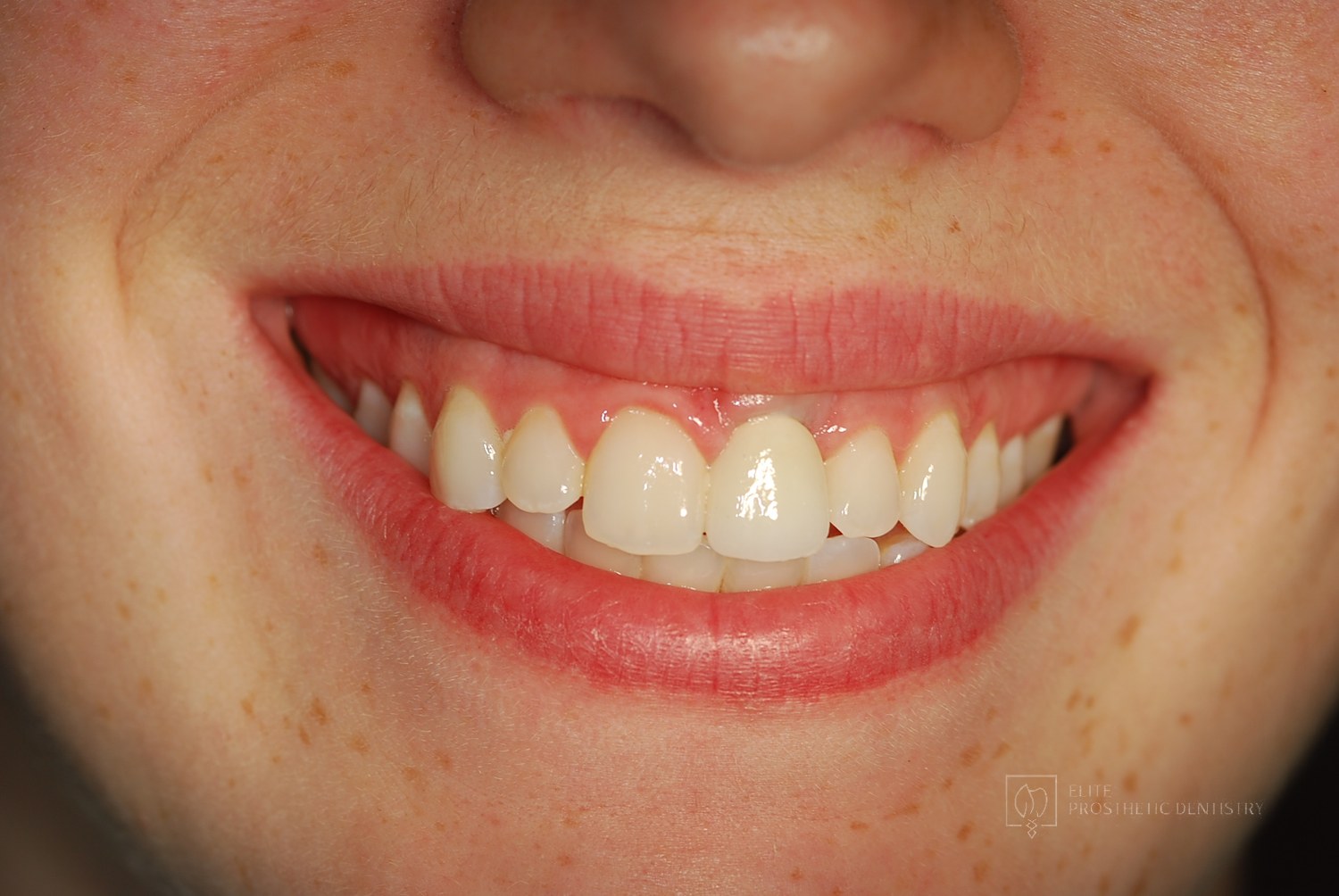 After
After How a Front Tooth Lost to Childhood Trauma Was Rebuilt with Bone Grafting and a Long-Lasting Implant
A teenager was referred by her father after earlier trauma left her upper left front tooth slowly failing from root resorption. She was still growing, so an immediate implant was the wrong move. The tooth had to be maintained to buy time, then replaced correctly once she reached skeletal maturity.
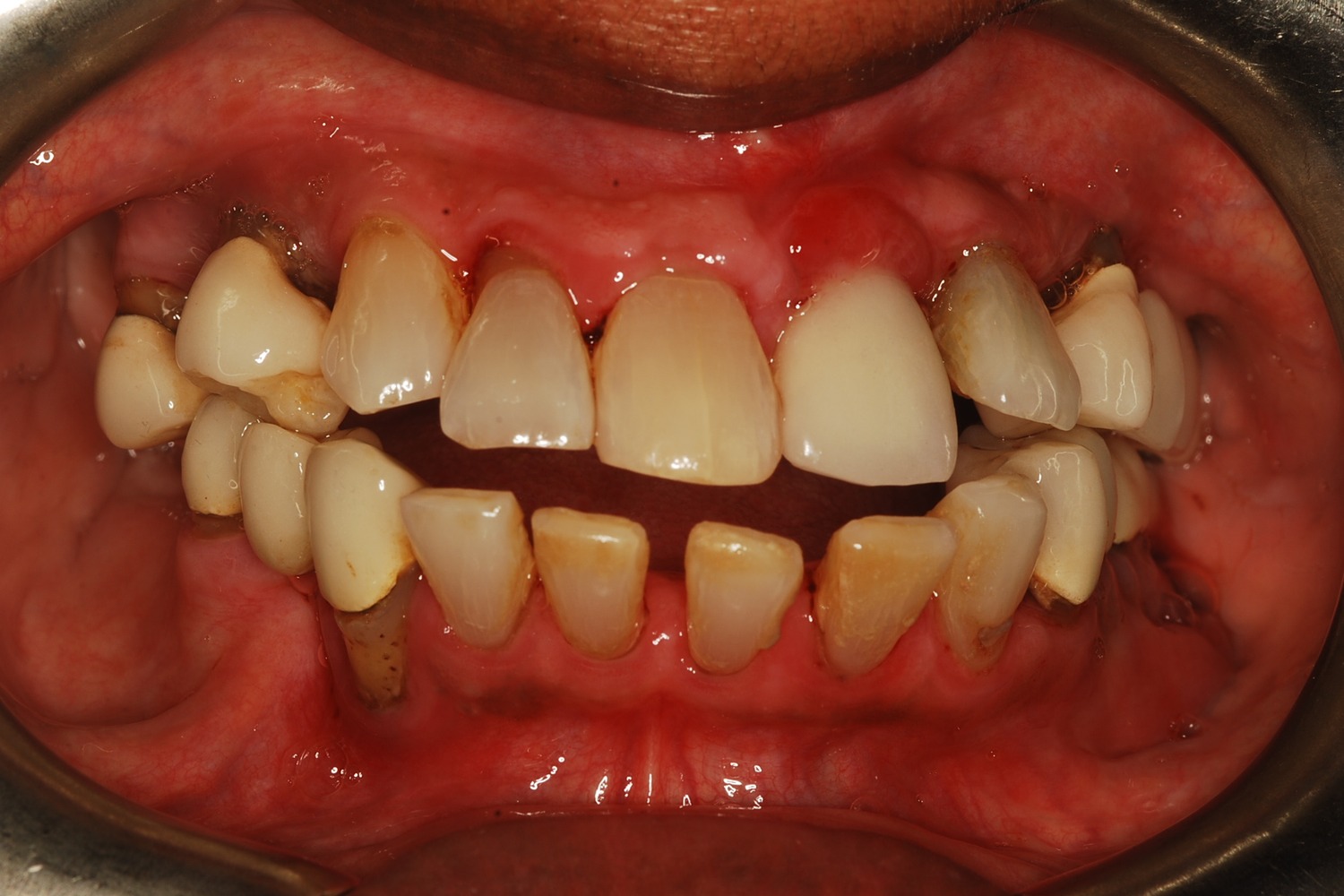 Before
  After
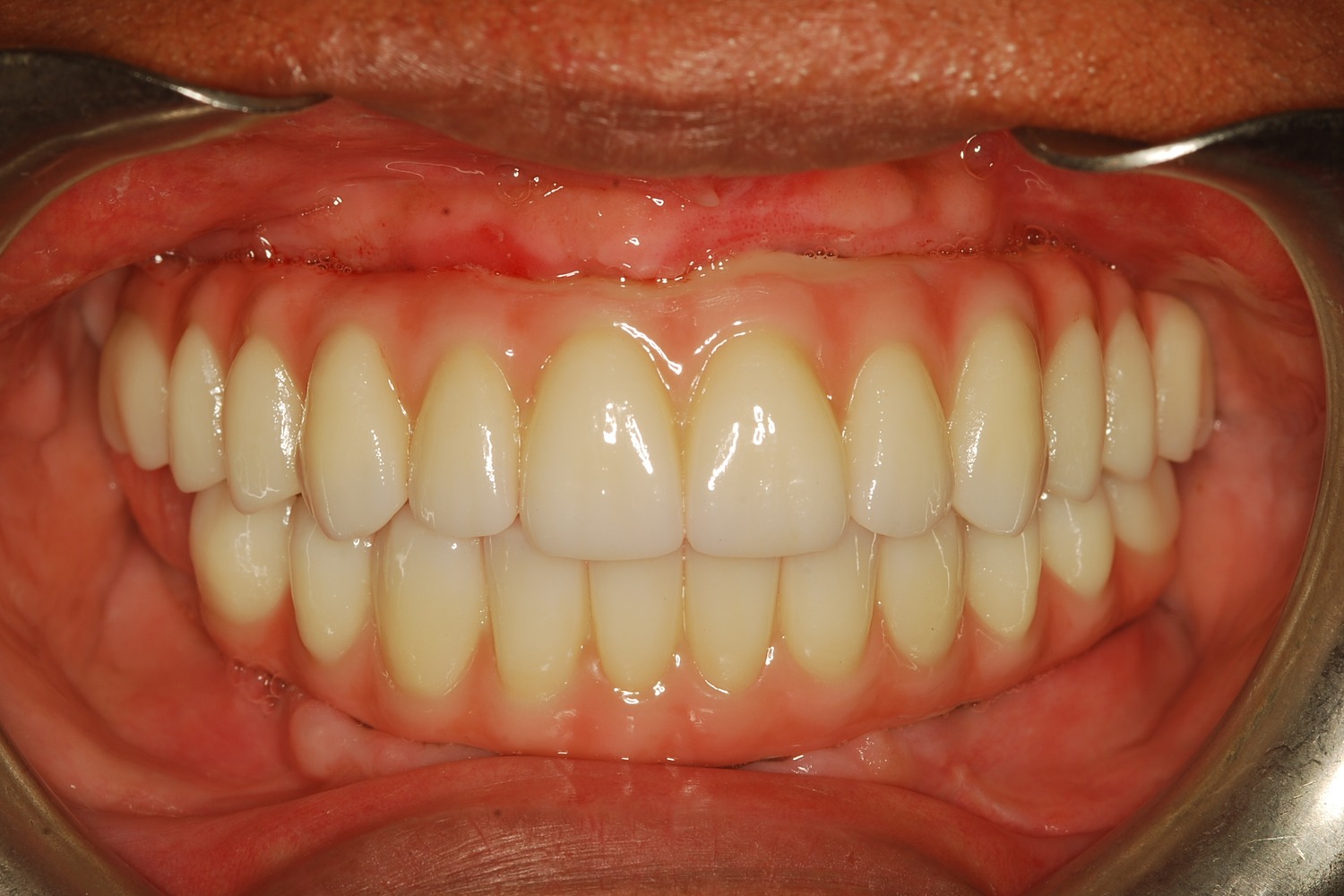
After How Severe Bone Loss and Bite Dysfunction Were Rebuilt with All-on-6 Implants and a Milled Zirconia Hybrid Prosthesis
The patient presented with severe bone loss, advanced periodontal disease, malocclusion, and a dysfunctional bite that required full-arch rebuilding.
Related Articles
Deepen your knowledge with additional insights on this topic.
 Dental Implants
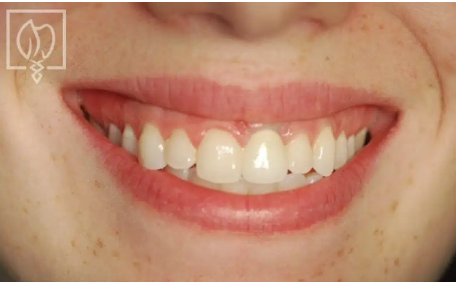
 If a Single Front Tooth Is Replaced with an Implant, Can It Look Natural?
Yes. See the four steps, with real case photos, that make a single front tooth implant indistinguishable from the natural tooth beside it. Washington, DC.
 Dental Implants
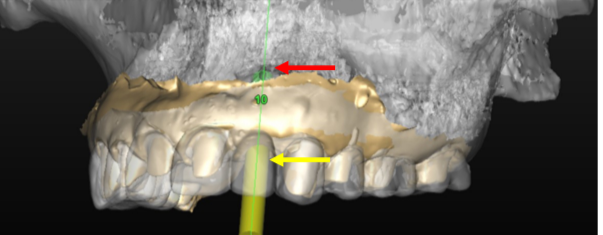
 What Is Precision Implant Placement (PIP)?
Precision Implant Placement plans each implant virtually on a CBCT scan, then delivers it with a custom surgical guide. See the three steps with real images.
 Dental Implants
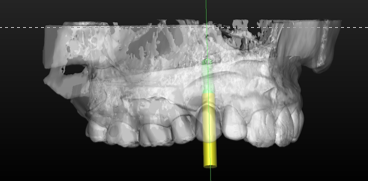
 What Is the Ideal Surgical Guide for Precision Implant Placement?
Not all surgical guides are equal. The gold standard is CBCT-based: planned virtually in 3D, 3D printed, and seated on your teeth. A DC prosthodontist explains.