
What Causes Failed Dental Implants Due to Bone Loss?
Dental implants offer a permanent, natural-looking alternative to dentures and have the potential to last for life. But that potential comes with a dependency: the bone holding the implant must stay healthy. When implants fail, progressive bone loss is the predominant reason, and understanding how that loss starts is the best defense against it.
Specialist salvage of failing implants in Washington, DC. Bone loss around an existing implant is often salvageable. Dr. Marlin’s 3,900+ implants placed, along with his 9 U.S. patents in dental implant restoration methodology, equip him to evaluate and revise troubled implant cases. Learn more about repairing failing implants or bone grafting for cases where the foundation needs rebuilding.
Why Bone Quality Decides Implant Success
A dental implant is a titanium post placed into the jawbone as the foundation for a crown or larger prosthesis. Its stability comes from osseointegration, the process by which bone fuses directly to the implant surface.
That fusion demands adequate bone, in both quantity and quality [1]. When a patient lacks it, the honest sequence is to graft first and place the implant afterward, into a rebuilt foundation. Unfortunately, that preliminary step is sometimes missed in diagnosis, or bypassed in the interest of delivering “implant therapy” as rapidly as possible. Implants placed into deficient bone start their service life already compromised.
How an Implant Fails Through Bone Loss
Bone loss around an implant, called peri-implantitis, is the leading cause of implant failure [2]. It rarely begins in the bone itself. The usual starting point is peri-implant mucositis: inflammation and infection of the gum tissue surrounding the implant. Untreated, that inflammation works downward into the supporting bone.
Where is the line between “at risk” and “failing”? There is not yet a formal consensus, but peri-implantitis is typically diagnosed when bone loss extends to the first thread of the implant, even though the destruction actually begins earlier, at the smooth top of the implant above the threads. At Elite Prosthetic Dentistry, we consider an implant to be failing once bone loss reaches that first thread. Treating the problem at that early landmark, rather than watching it, is what preserves the option to repair instead of remove.
Critically, much of this can be predestined by the dentistry itself. An implant positioned imprecisely, or an abutment and crown built with the wrong emergence profile (the contour where the restoration meets the gum, which should mimic a natural tooth), creates plaque traps and bacterial harbors that no amount of flossing fully overcomes. Expertise in both the surgery and the restoration is the real long-term protection, which is why precision implant placement sits at the center of our protocol.
Other Factors That Contribute to Bone Loss and Failure
Implant failure is often multifactorial [3]. Alongside the disease process itself, the recurring contributors are improper placement or poor initial stability, untreated gum disease, smoking (which impairs healing and compromises bone health), and systemic conditions such as uncontrolled diabetes, autoimmune disorders, or prior head-and-neck radiation. We examine each of these, and what can be done about them, in common factors that can limit implant success.
Preventing Bone Loss Around Your Implant
Prevention is unglamorous and effective: brush and floss around the implant daily, keep up with professional cleanings, and attend routine check-ups so any gum inflammation is caught while it is still reversible. Check-ups matter because early peri-implant disease is usually painless; the X-ray sees what you cannot feel. General health supports bone health too, from nutrition to managing chronic conditions [4].
The other half of prevention happened before you ever owned the implant: precise placement in adequate bone, with a restoration contoured to stay clean. That is the standard we build to, and a major reason our documented in-practice implant success rate is above 97% for implants placed more than 20 years ago.
Concerned About Bone Loss Around Your Implant?
Do not wait for pain; bone loss rarely announces itself early. Dr. Gerald Marlin, a specialty-trained prosthodontist with more than 40 years of clinical practice, has a strong record of repairing failing implants by detoxifying the implant surface and grafting the bone back toward health, and he will tell you candidly whether your implant can be saved. Call 202-244-2101 or request a consultation at Elite Prosthetic Dentistry in Friendship Heights, Washington, DC.
Sources:
See How We Resolve These Problems
Our patient success stories show real cases and real results. Browse outcomes from a specialist prosthodontist with decades of experience and 3,900+ implants placed.
Key Takeaways
- ✓ Peri-implantitis, progressive bone loss around an implant, is the predominant cause of implant failure.
- ✓ It usually starts as reversible gum inflammation (peri-implant mucositis) and advances into the bone when left untreated.
- ✓ We treat an implant as failing once bone loss reaches the first thread, a deliberately early trigger that preserves salvage options.
- ✓ Many bone-loss failures are predestined at treatment: skipped grafting, imprecise placement, or a crown contour that traps plaque.
- ✓ Hygiene, professional monitoring, and overall health protect the bone around an implant for the long term.
Frequently Asked Questions
What causes bone loss around a dental implant?
The direct cause is usually bacterial: gum inflammation around the implant (peri-implant mucositis) that advances into the supporting bone (peri-implantitis). The underlying setup often traces back to treatment decisions such as placing an implant in inadequate bone without grafting, imprecise positioning, or a crown contour that traps plaque. Hygiene, smoking, excessive bite forces, and certain health conditions add to the risk.
When is an implant considered to be failing from bone loss?
There is no universal consensus, but peri-implantitis is commonly diagnosed once bone loss reaches the first thread of the implant. At Elite Prosthetic Dentistry we treat that same landmark as the failing threshold, because acting early is what keeps repair, rather than removal, on the table.
Can bone lost around an implant be regrown?
In many cases, yes. When the implant surface can be decontaminated and the defect geometry is favorable, the area can be bone grafted back toward health. The feasibility depends on how far the loss has progressed and where the bone was lost, which is why early evaluation matters so much.
How do I prevent bone loss around my implant?
Daily brushing and flossing around the implant, routine professional cleanings and check-ups, not smoking, and managing conditions like diabetes all protect the bone. Just as important is the dentistry itself: an implant placed precisely in adequate bone, with a properly contoured crown, is far easier to keep clean and healthy.
Related Patient Success Stories
Explore similar patient success stories demonstrating our expertise in advanced prosthetic dentistry.
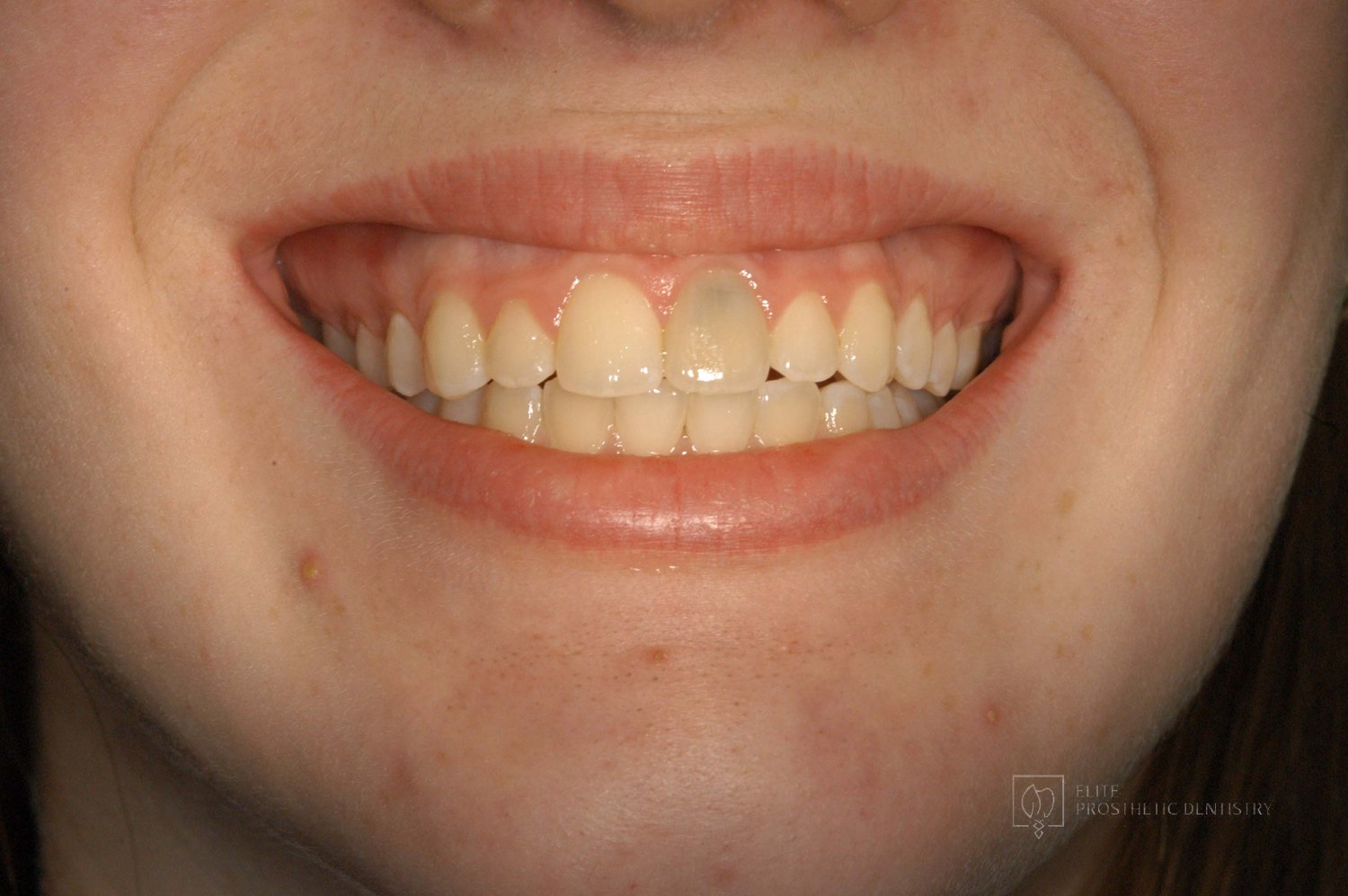 Before
 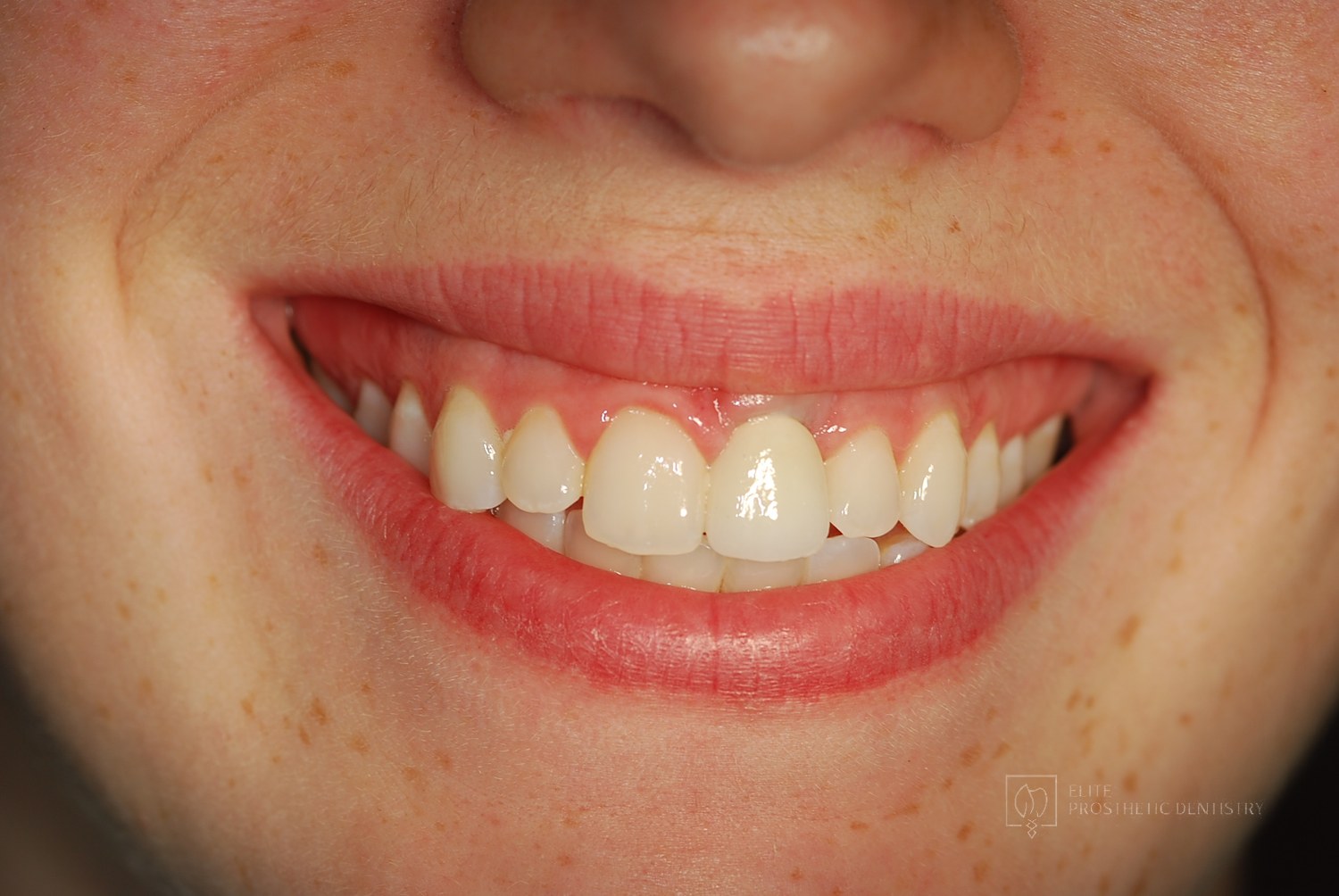 After
After How a Front Tooth Lost to Childhood Trauma Was Rebuilt with Bone Grafting and a Long-Lasting Implant
A teenager was referred by her father after earlier trauma left her upper left front tooth slowly failing from root resorption. She was still growing, so an immediate implant was the wrong move. The tooth had to be maintained to buy time, then replaced correctly once she reached skeletal maturity.
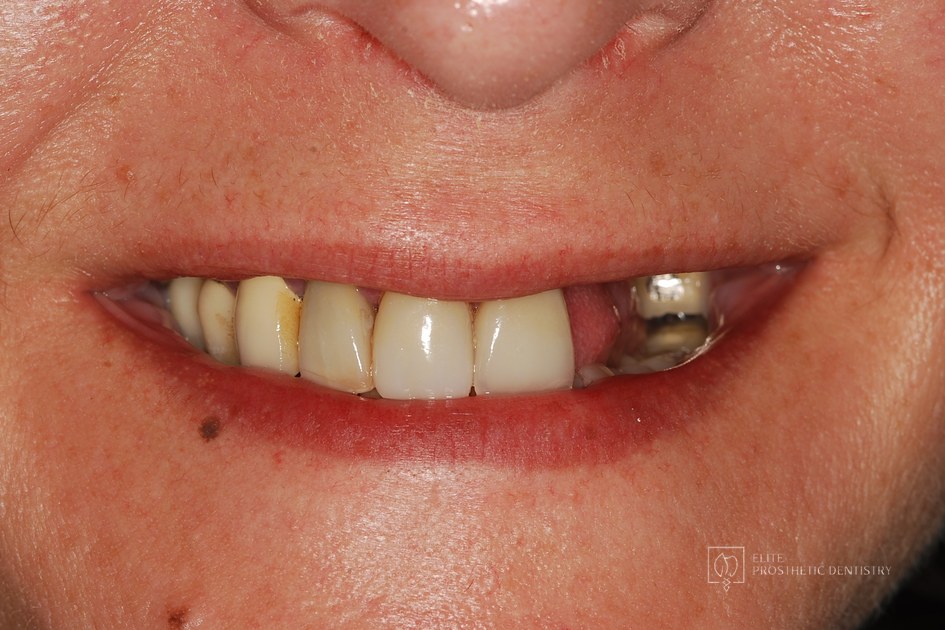 Before
 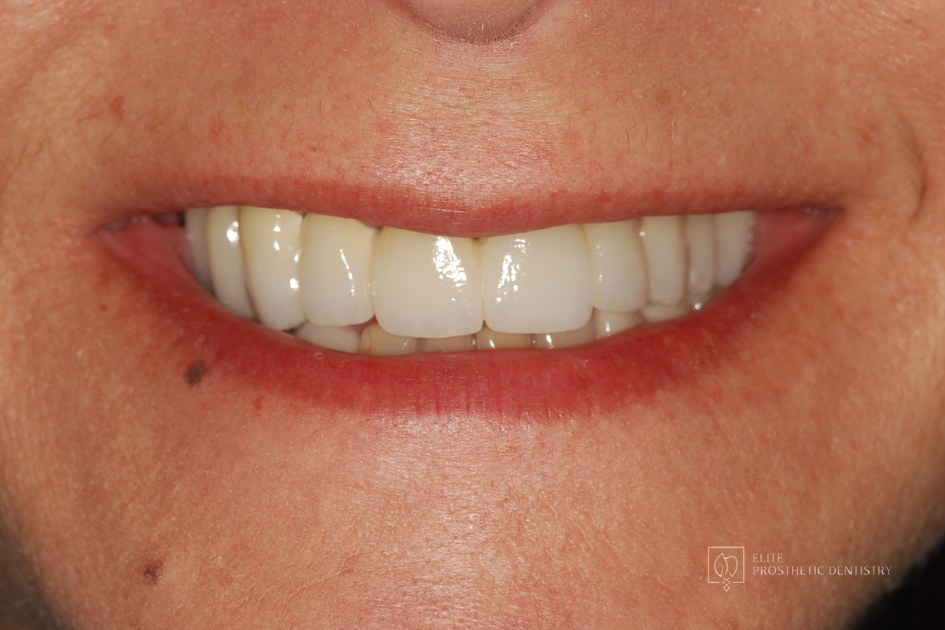 After
After Implant Supported Reconstruction: Failing Bridgework and Missing Back Teeth Rebuilt with Coordinated Specialist Care
Referred by another dental specialist with severe bone resorption on the upper left, multiple broken-down lower teeth requiring extraction, and failing lower back teeth that had left the bite without solid support. No single procedure, and no provider working in isolation, could rebuild a situation this interconnected.
 Before
  After
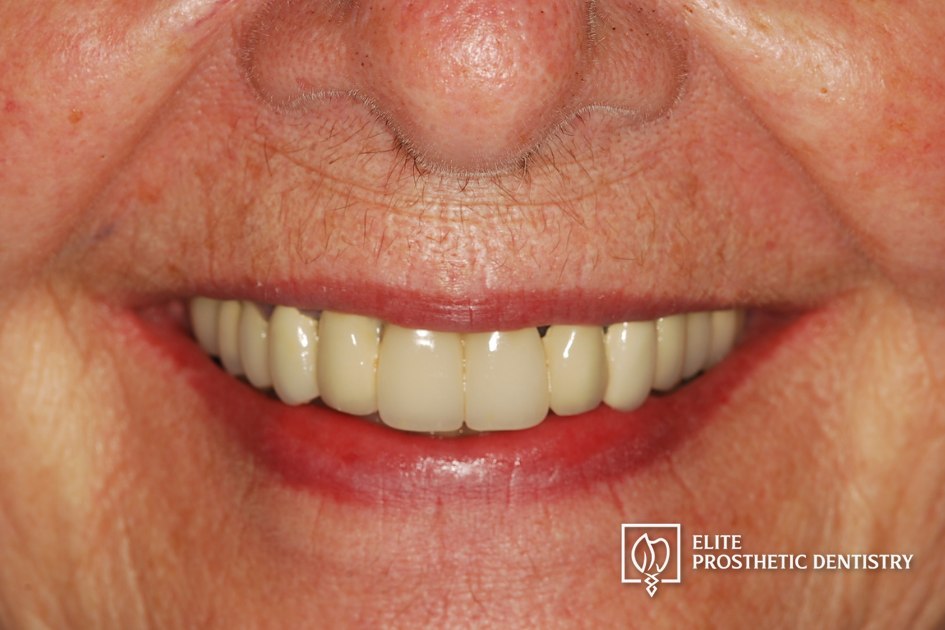
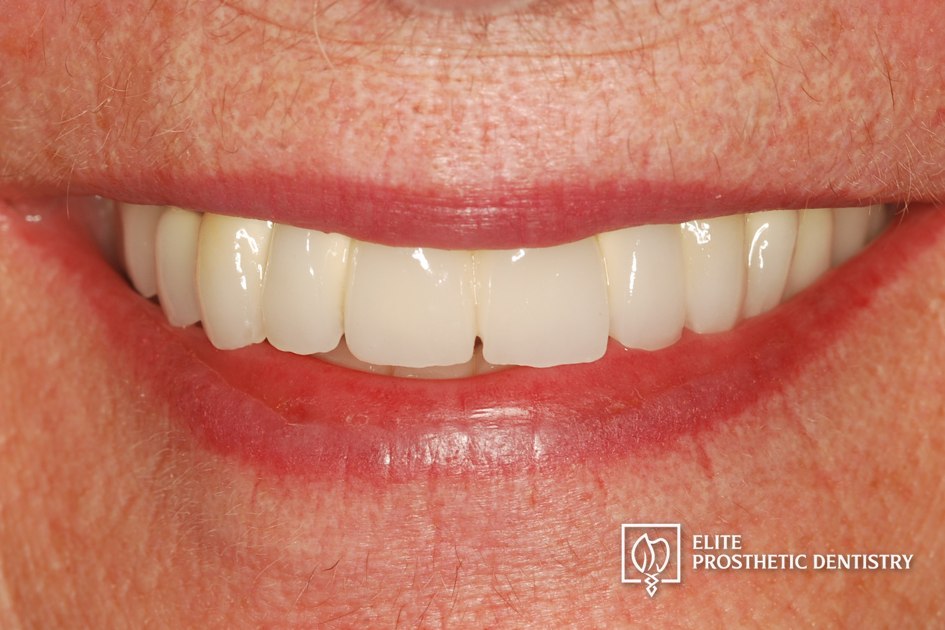
After How a Loose Upper Bridge and Aging Crowns Were Rebuilt with Staged Implant Reconstruction
A patient referred by her general dentist after years of aging dentistry no longer holding up. A loose upper bridge and crowns more than twenty years old, combined with the effects of advanced periodontal disease and severely compromised tooth abutments, required a staged surgical and restorative plan delivered with comfort planning at the same time.
Related Articles
Deepen your knowledge with additional insights on this topic.
 Bone Grafting & Surgical
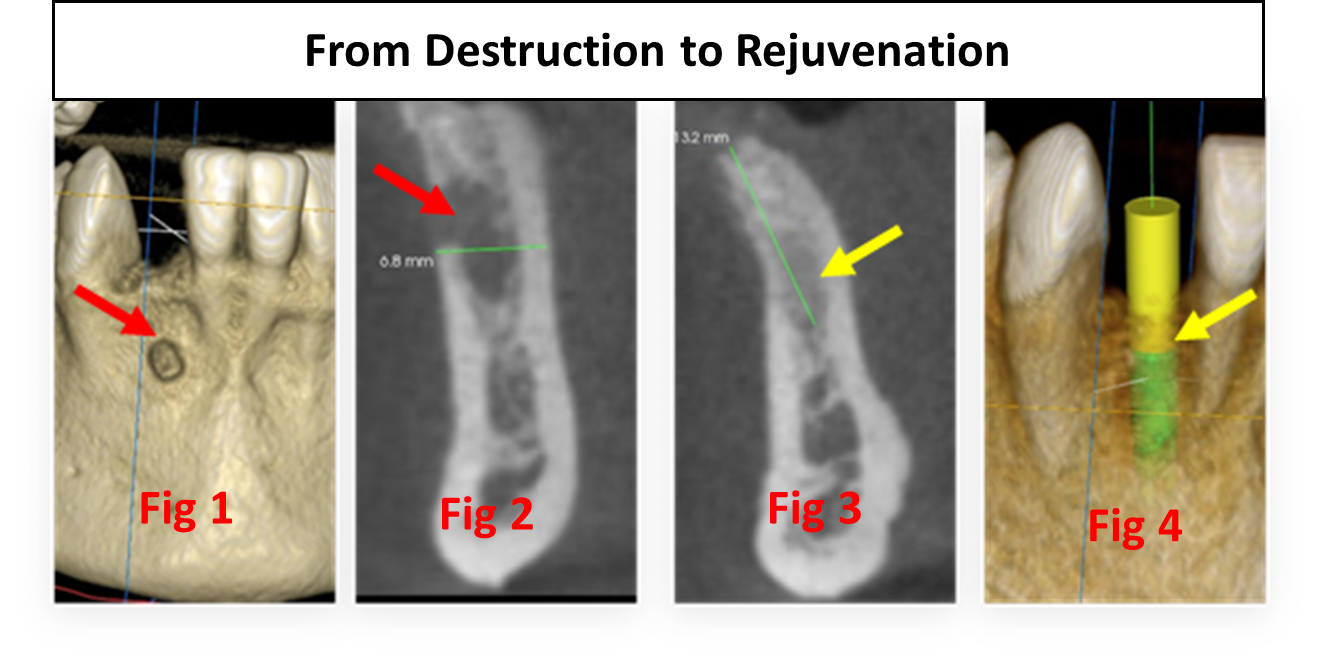
 Rebuilding a Ruined Implant Site with Severely Damaged Bone: The Three-Stage Protocol
Debridement, growth-factor grafting, CBCT-guided planning: the step-by-step protocol that turns a severely damaged implant site into a healthy ridge.
 Bone Grafting & Surgical
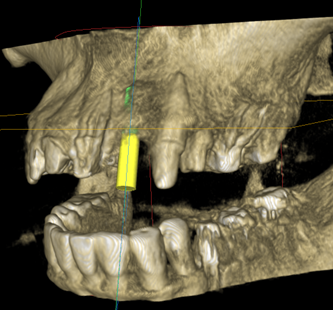
 What Is Ridge Augmentation Bone Grafting?
Ridge augmentation rebuilds a jaw ridge too narrow or angled for an implant. See real measurements from planning to precise placement. Washington DC.
 Bone Grafting & Surgical
 What Is a Partial (Internal) Sinus Lift?
A partial (internal) sinus lift adds bone at a single implant site through the implant preparation itself, often with the implant placed the same visit.