
Teeth in One Day with Immediate-Load Implants: What That Really Means
Most long-term denture wearers share the same quiet complaint: the appliance moves. Relines help temporarily, adhesives less so, and what most patients ultimately want is the security of teeth that do not come out. Immediate-load implant treatment, often marketed as “teeth in one day,” speaks directly to that wish: four or more implants placed in one visit, with your denture converted, or a new fixed provisional attached, as a screw-retained prosthesis the very same day.
Going from a loose denture to fixed teeth in a day is a real, established technique. But “immediate load” is a mechanical claim, and it deserves a mechanical explanation, because understanding how it works is exactly how you evaluate whether it will work for you.
What Immediate Load Means, Mechanically
A conventional implant spends its first months unloaded, letting bone fuse to its surface undisturbed. That fusion, osseointegration, is what gives an implant its permanence, and its enemy is movement during healing.
Immediate loading asks implants to carry teeth before integration has happened. It can succeed because of two engineering principles. First, primary stability: each implant is threaded into dense bone with enough grip that it is rigidly immobile from the moment of placement. Second, cross-arch splinting: the implants are connected by one rigid prosthesis, so chewing forces are shared across all of them rather than concentrated on any single one. Kept below the threshold that would disturb healing, the implants integrate while quietly on duty.
That is the whole trick, and it explains the limits. Softer bone that cannot deliver firm stability, too few implants, or crushing bite forces from clenching and grinding all push the system past what the biology tolerates. This is why candidacy testing is not a formality; the same threshold logic governs single implants too, as we explain in whether implants can be placed in one appointment.
The Questions That Matter More Than the Marketing
This treatment is promoted under many names by many providers, including corporate implant centers: teeth in a day, teeth in an hour, bar-attachment dentures, hybrid prostheses. Whatever the branding, three questions should be answered thoughtfully before you proceed.
How many implants are best for you? Four is a minimum for the approach, not a magic number. Your jaw’s bone volume, density, and the forces it will carry should determine the count.
Will your bone be preserved or reduced? Some protocols flatten healthy jawbone to create room for the appliance. Bone grafting to preserve the ridge is often the wiser investment, because bone removed for convenience is gone permanently, along with some of your future options.
Are angled implants the right insertion method for your case? Tilted implants can cleverly avoid anatomical obstacles, but whether they are correct for you is an anatomical question, not a package default.
Implant positioning has profound effects on how your restoration functions and looks years down the line. These decisions deserve individual evaluation, which is precisely what a one-size-fits-all protocol cannot provide.
When Immediate Load Is Not the Best Answer
Quite often, the immediate-load hybrid prosthesis is the only option presented, even when alternatives might serve a patient’s long-term interests better. Some patients genuinely benefit from immediate loading. Others achieve better outcomes with staged implant treatment and conventional crowns, keeping fixed teeth throughout without a single all-at-once surgery. Denture wearers weighing the switch will find a practical roadmap in three things to know when transitioning from dentures to implants.
The key is working with an experienced specialist who customizes the plan to your circumstances, lifestyle, and goals rather than fitting you into a predetermined protocol.
Find Out What Your Jaw Can Support
Dr. Gerald Marlin is a specialty-trained prosthodontist with more than 3,900 dental implants placed. He will measure your bone, assess your bite, and tell you plainly whether immediate loading, staged treatment, or another design entirely will serve you best for the decades ahead. Call 202-244-2101 or request a consultation at Elite Prosthetic Dentistry in Friendship Heights, Washington, DC.
See How We Resolve These Problems
Our patient success stories show real cases and real results. Browse outcomes from a specialist prosthodontist with decades of experience and 3,900+ implants placed.
Key Takeaways
- ✓ Immediate load means the implants begin carrying a fixed prosthesis the same day they are placed, before the bone has fused to them.
- ✓ It works by engineering: four or more implants splinted rigidly together share and distribute forces while integration happens underneath.
- ✓ Candidacy is mechanical and biological: implant stability at placement, bone quality, and your bite forces decide whether same-day loading is safe.
- ✓ Ask whether bone will be grafted and preserved or reduced to fit the appliance; bone removed for convenience cannot be replaced.
- ✓ Immediate load is one option among several, and the best plan is the one matched to your anatomy and goals, not a predetermined protocol.
Frequently Asked Questions
What does immediate load actually mean?
Normally, implants heal quietly under the gum for months before teeth are attached, so the bone can fuse to them undisturbed. Immediate loading reverses that: a fixed provisional prosthesis is attached the same day the implants are placed. It succeeds by splinting several implants rigidly together so no single implant bears enough force to disturb its healing.
How can implants hold teeth before the bone has fused to them?
Through initial mechanical stability. At placement, the implant threads grip dense bone firmly, like a precisely engineered screw. If that grip is strong enough, and the connected prosthesis spreads chewing forces across four or more implants, the implants stay motionless while osseointegration proceeds underneath. Without that stability, immediate loading is not safe.
Is teeth-in-one-day treatment right for every denture wearer?
No. It requires adequate bone, firm implant stability at surgery, and bite forces the system can tolerate, and some patients are better served by staged treatment or a different prosthesis design entirely. The appeal of one day should never decide the plan; the examination should.
What should I ask before agreeing to a same-day implant prosthesis?
Three questions do most of the work. How many implants are right for my jaw, and why? Will bone be grafted and preserved, or reduced to make room for the appliance? And are angled implants the best insertion method for my anatomy? A provider with good answers will welcome all three.
Related Patient Success Stories
Explore similar patient success stories demonstrating our expertise in advanced prosthetic dentistry.
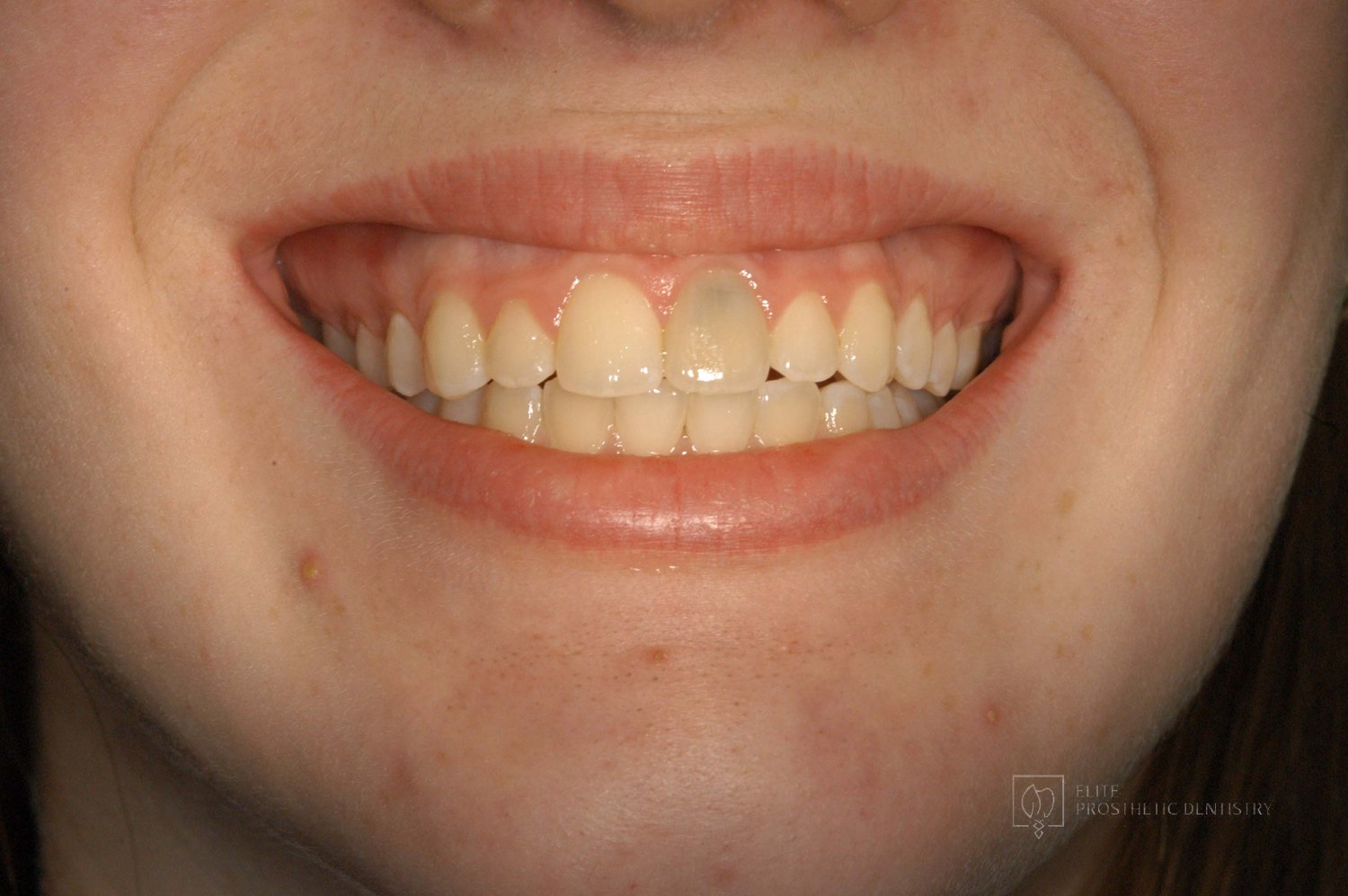 Before
 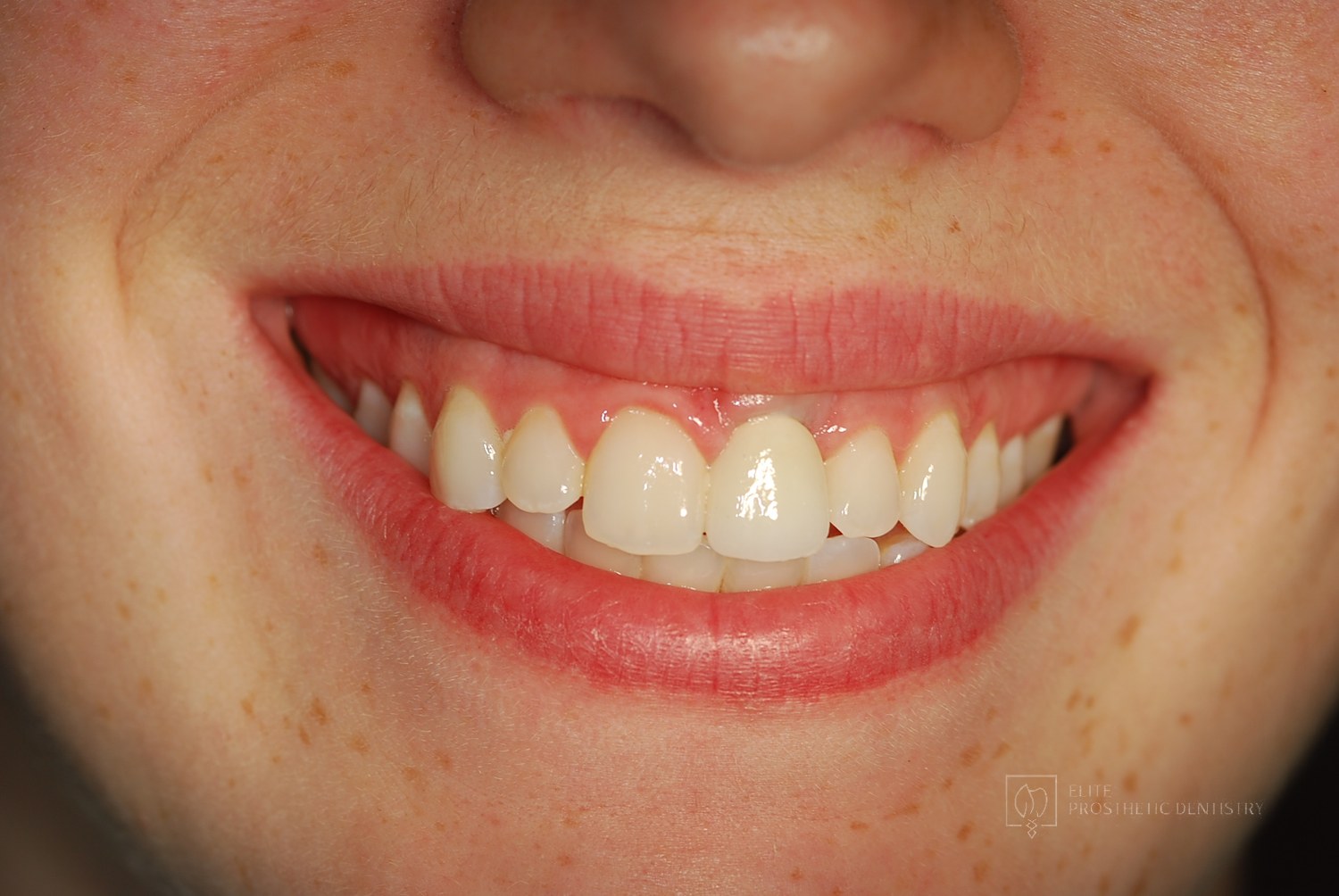 After
After How a Front Tooth Lost to Childhood Trauma Was Rebuilt with Bone Grafting and a Long-Lasting Implant
A teenager was referred by her father after earlier trauma left her upper left front tooth slowly failing from root resorption. She was still growing, so an immediate implant was the wrong move. The tooth had to be maintained to buy time, then replaced correctly once she reached skeletal maturity.
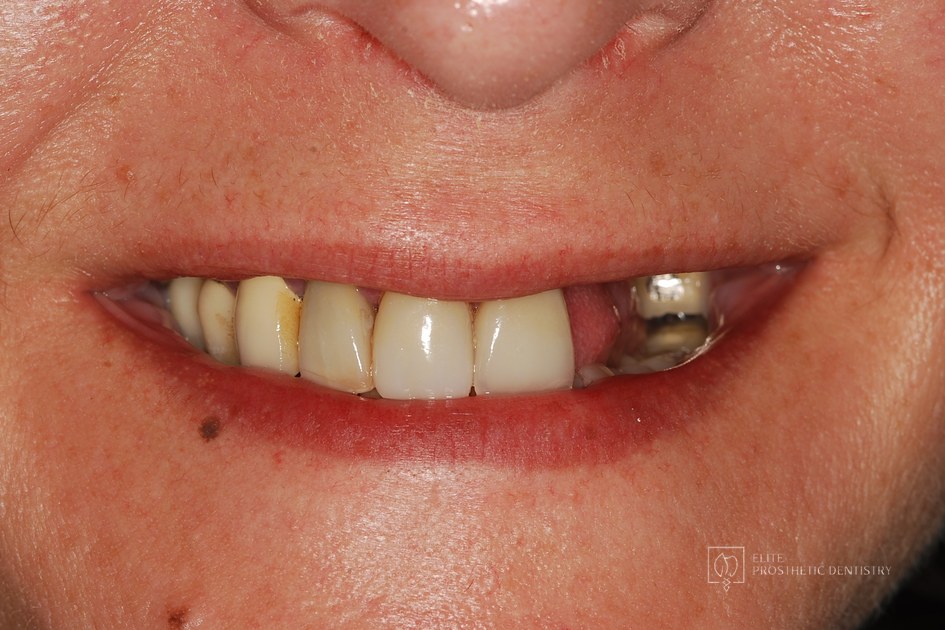 Before
 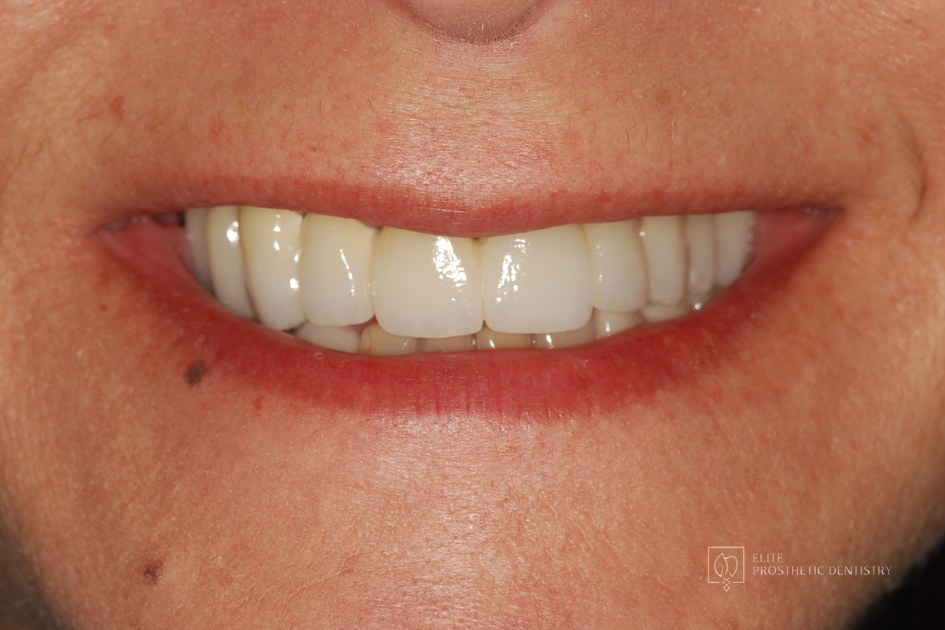 After
After Implant Supported Reconstruction: Failing Bridgework and Missing Back Teeth Rebuilt with Coordinated Specialist Care
Referred by another dental specialist with severe bone resorption on the upper left, multiple broken-down lower teeth requiring extraction, and failing lower back teeth that had left the bite without solid support. No single procedure, and no provider working in isolation, could rebuild a situation this interconnected.
 Before
  After
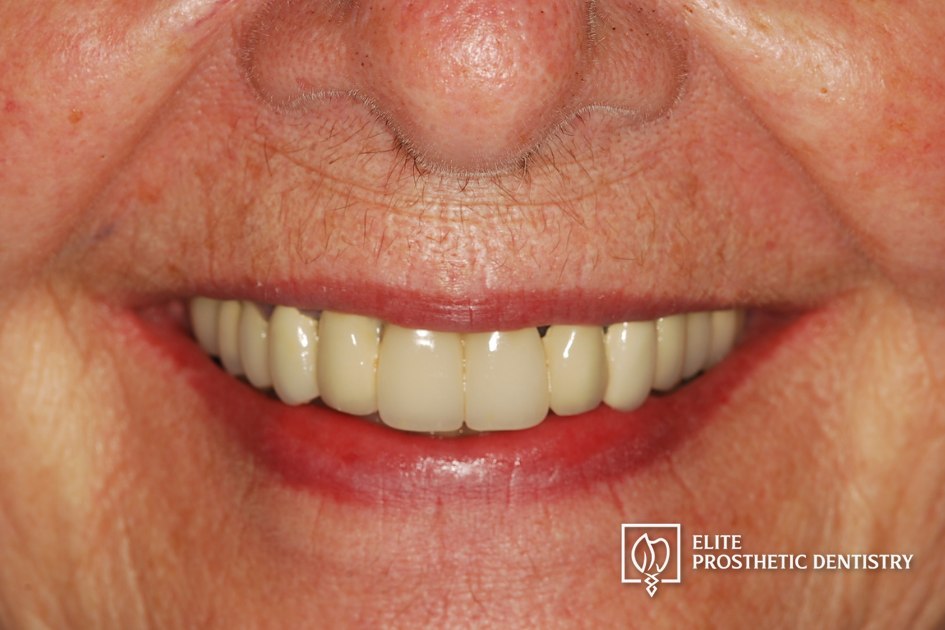
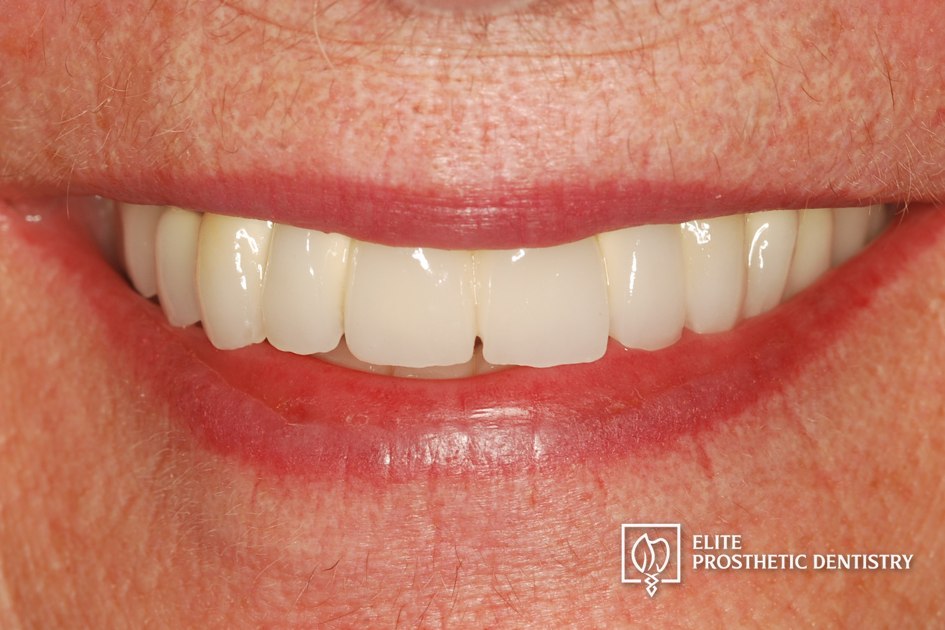
After How a Loose Upper Bridge and Aging Crowns Were Rebuilt with Staged Implant Reconstruction
A patient referred by her general dentist after years of aging dentistry no longer holding up. A loose upper bridge and crowns more than twenty years old, combined with the effects of advanced periodontal disease and severely compromised tooth abutments, required a staged surgical and restorative plan delivered with comfort planning at the same time.
Related Articles
Deepen your knowledge with additional insights on this topic.
 Bone Grafting & Surgical
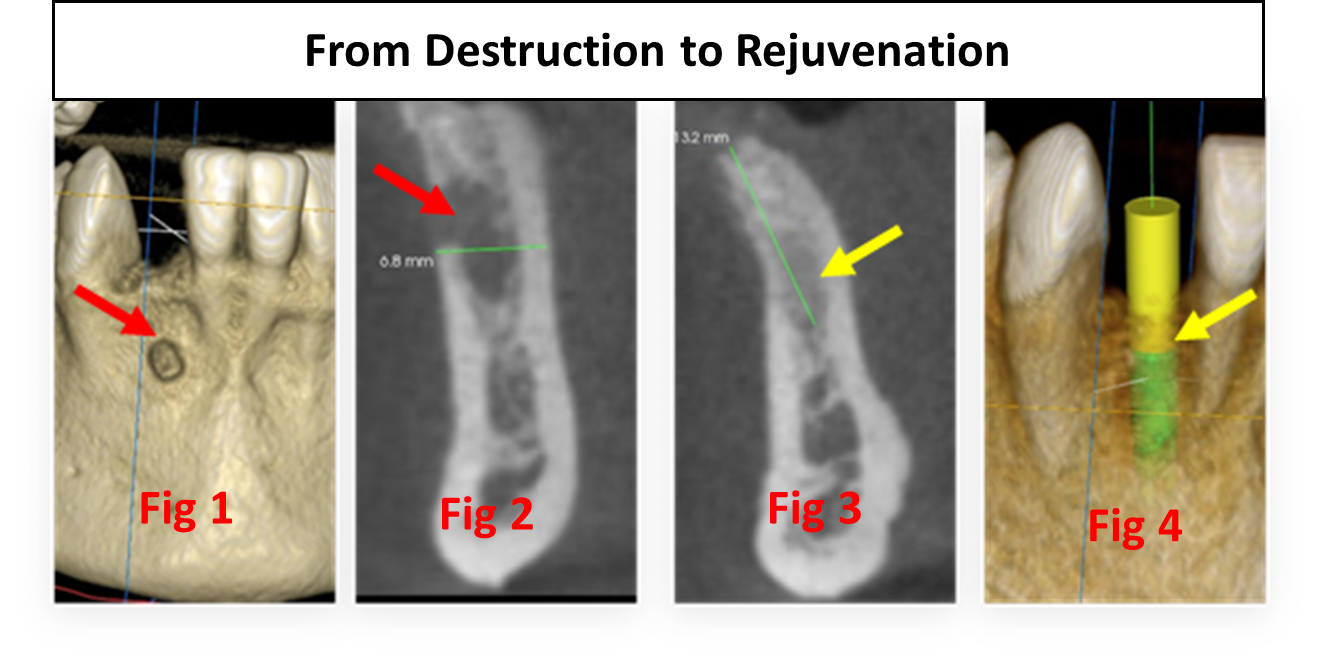
 Rebuilding a Ruined Implant Site with Severely Damaged Bone: The Three-Stage Protocol
Debridement, growth-factor grafting, CBCT-guided planning: the step-by-step protocol that turns a severely damaged implant site into a healthy ridge.
 Bone Grafting & Surgical
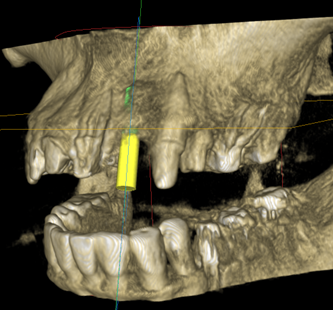
 What Is Ridge Augmentation Bone Grafting?
Ridge augmentation rebuilds a jaw ridge too narrow or angled for an implant. See real measurements from planning to precise placement. Washington DC.
 Bone Grafting & Surgical
 What Is a Partial (Internal) Sinus Lift?
A partial (internal) sinus lift adds bone at a single implant site through the implant preparation itself, often with the implant placed the same visit.