
Can Dental Implants Be Placed in One Appointment?
The answer is yes. Teeth can be extracted and replaced with dental implants in one appointment, a single tooth, several teeth, or in the right circumstances an entire arch converted to fixed teeth in a day.
The more useful question is the one behind it: should yours be? Same-day placement produces dramatic, predictable results for well-selected cases and creates permanent regrets for poorly selected ones. The difference is decided before anyone touches a scalpel.

What One-Appointment Treatment Looks Like
Immediate implant placement pairs the extraction and the implant in a single visit: the failing tooth comes out, and the implant goes into the prepared socket immediately. For full arches, several implants can be placed and a fixed, screw-retained prosthesis attached the same day, an approach often described as All-on-X treatment or, for removable-denture patients, a bar attachment conversion. Few procedures in dentistry change a life faster than converting a loose denture to fixed teeth between morning and afternoon.
When the diagnostics support it, immediate placement also preserves things worth preserving: the bone walls of the socket, the gum architecture, and months of calendar time.
The Analysis That Has to Happen First
To obtain results with a strong long-term prognosis, three things need to exist before the appointment. A complete examination, including charting of the gum and bone support around each involved tooth, confirms the tooth truly cannot be saved. A cone beam CT scan, a 3D image of the jaw, lets the implant positions be planned precisely against your anatomy. And mounted models show how your bite will load the restoration, because an implant that integrates beautifully but takes the wrong forces is still a failure in slow motion.
This is the same crown-first planning discipline behind Precision Implant Placement, compressed into a same-day timeline. The timeline changes. The standard cannot.
When Same-Day Is the Wrong Call
Honest implant dentistry includes declining the fast option. Sometimes the implant that would replace a tooth is much narrower than the socket left behind, and the gap between implant and bone argues for grafting and staging instead. Active infection, compromised bone, or unfavorable bite forces can all make immediate loading a gamble with your result.
One caution deserves special emphasis. If a prospective surgeon recommends reshaping or leveling your bone to simplify same-day placement, understand what is being traded: bone removed that day cannot be replaced later, and your reconstruction options shrink with it. Bone is capital. A plan that spends it for convenience should make you ask more questions. Our article on when an implant should not be done covers the broader contraindications, and staged implant therapy explains the deliberate alternative.
The Guide Question
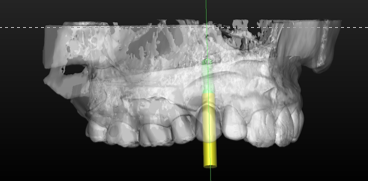
We plan every implant case, from a single implant through full-mouth reconstruction, on a CBCT scan, placing the implants virtually on the 3D image first. Surgical guides generated from the scan are used where bone anatomy, esthetic demands, or proximity to nerves and sinuses call for them. Misplaced implants dramatically affect the aesthetics and function of everything built on them, and in a same-day case there is no second chance at position.
In consultation, ask directly: how will my implant positions be planned, and will a surgical guide be used? The answer tells you a great deal.
Why the Laboratory Matters on Surgery Day
Same-day treatment requires same-day restorations, and this is where our in-house laboratory changes the equation. The provisional restoration attached to your new implants is fabricated and refined on-site, by the technician who will later craft the final work, rather than approximated from a kit. Precision at the laboratory bench is half of what makes one-appointment results look like they took a year.
Dr. Gerald Marlin has placed more than 3,900 dental implants over a career of more than 40 years, including immediate-placement cases from single front teeth to full-arch conversions. If you have been told you need an extraction, or you are weighing a same-day implant offer from another office, get a specialist’s analysis first. Call 202-244-2101 or request a consultation at Elite Prosthetic Dentistry in Friendship Heights, Washington, DC.
See How We Resolve These Problems
Our patient success stories show real cases and real results. Browse outcomes from a specialist prosthodontist with decades of experience and 3,900+ implants placed.
Key Takeaways
- ✓ Yes, teeth can be extracted and replaced with implants in a single appointment, from one tooth to a full arch, when the case is properly selected.
- ✓ Candidacy is determined before surgery, not during it: a complete exam, cone beam CT imaging, and mounted models showing how your bite will load the restoration.
- ✓ Immediate placement is not right for every site. A socket much wider than the implant, or insufficient stability, argues for a staged approach.
- ✓ Be cautious if bone reshaping or leveling is proposed to simplify same-day placement. Bone removed that day cannot be returned, and it narrows your future options.
- ✓ Implant positions should be planned on a CBCT scan first, with a surgical guide generated from the scan where bone anatomy, esthetic demands, or proximity to nerves and sinuses call for one.
Frequently Asked Questions
Can a tooth be pulled and an implant placed the same day?
Frequently, yes. This is called immediate implant placement: the tooth is extracted and the implant inserted into the socket at the same visit. It requires enough healthy bone to stabilize the implant and careful planning beforehand. When the socket anatomy or stability is unfavorable, staging the implant a few months after extraction produces a better long-term result.
Can a full arch of teeth be replaced in one day?
In appropriate cases, several implants can be placed and a fixed full-arch prosthesis attached the same day, converting a denture patient or failing dentition to fixed teeth in one appointment. The transformation is dramatic, and it depends entirely on presurgical analysis: CT imaging, bite records, and a plan for how the prosthesis will be loaded during healing.
What determines whether I qualify for same-day implant placement?
Three studies made before surgery: a complete examination charting the gum and bone support of the teeth involved, a cone beam CT scan to plan precise implant positions, and mounted models showing how your bite will affect the restoration. Bone quality, infection, socket size, and bite forces all factor in.
Why would a dentist advise against immediate placement for me?
Common reasons include a tooth socket much wider than the implant that would replace it, active infection, thin or damaged bone, and bite forces that would overload an implant during healing. Choosing to stage your case is not a lesser outcome. It is usually the decision that protects the final result.
Should a surgical guide be used for same-day implants?
Often, yes. Where the bone, the esthetics, or nearby nerves and sinuses make position critical, a guide generated from the CT scan transfers the planned implant positions into your mouth precisely. Misplaced implants compromise aesthetics and function permanently, so asking how your implant positions will be planned is one of the most revealing questions you can pose in a consultation.
Related Patient Success Stories
Explore similar patient success stories demonstrating our expertise in advanced prosthetic dentistry.
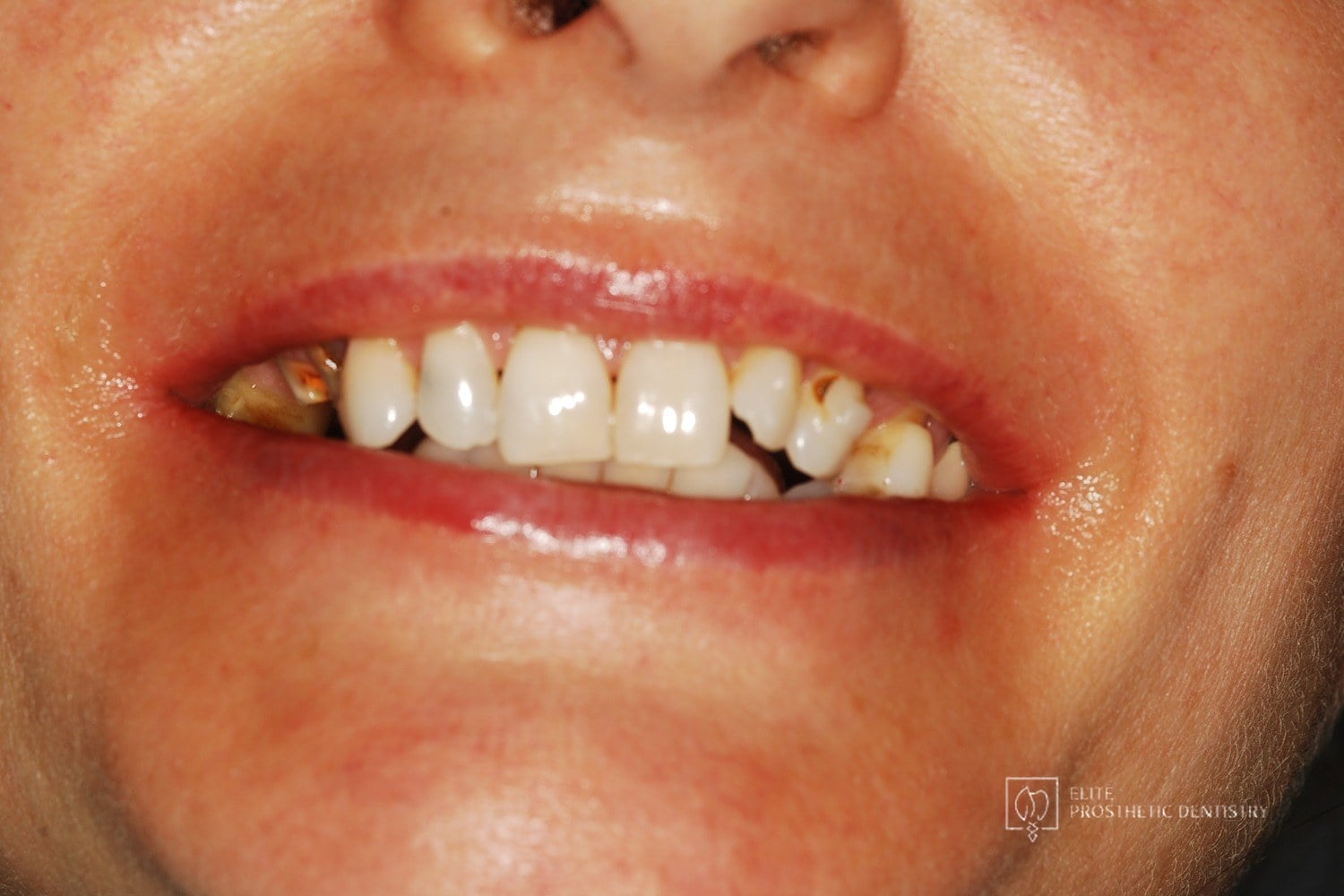 Before
 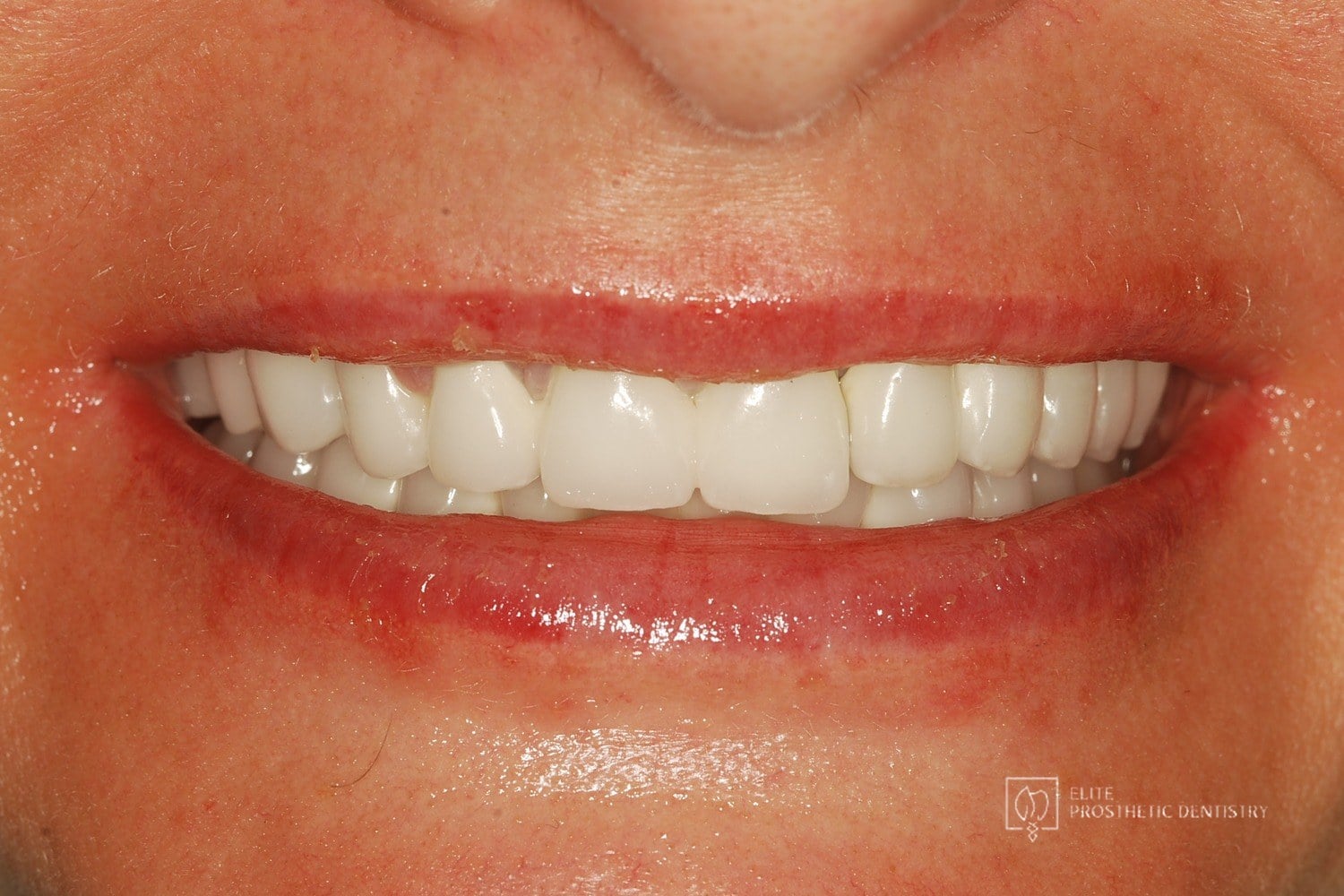 After
After How Aging, Failing Dentistry Was Replaced with a Coordinated Full-Mouth Implant and Crown Reconstruction
The patient presented with throbbing upper-molar pain, long-standing infections, multiple root canals and unfinished prior treatment, generalized sensitivity, and several hopeless teeth.
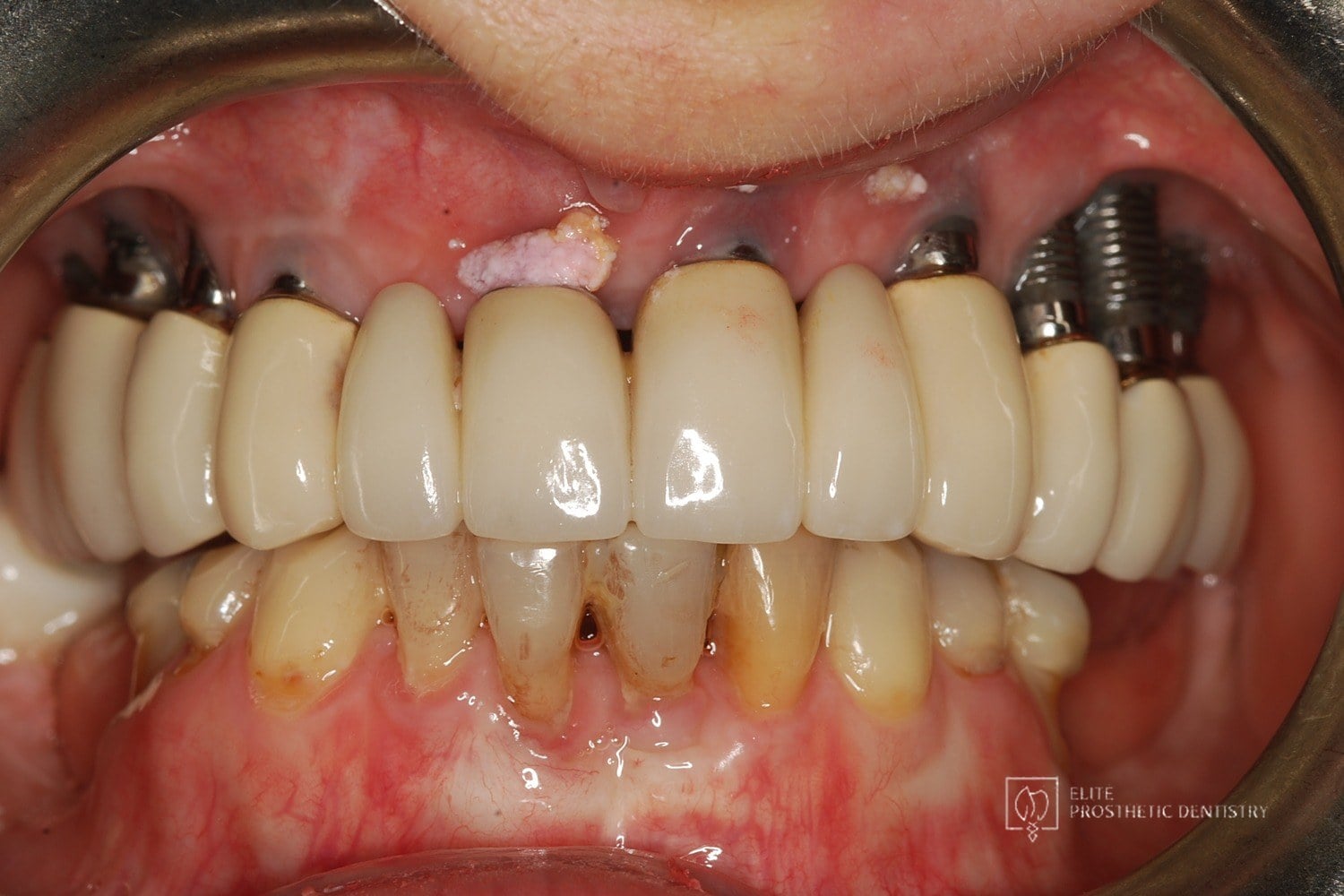 Before
 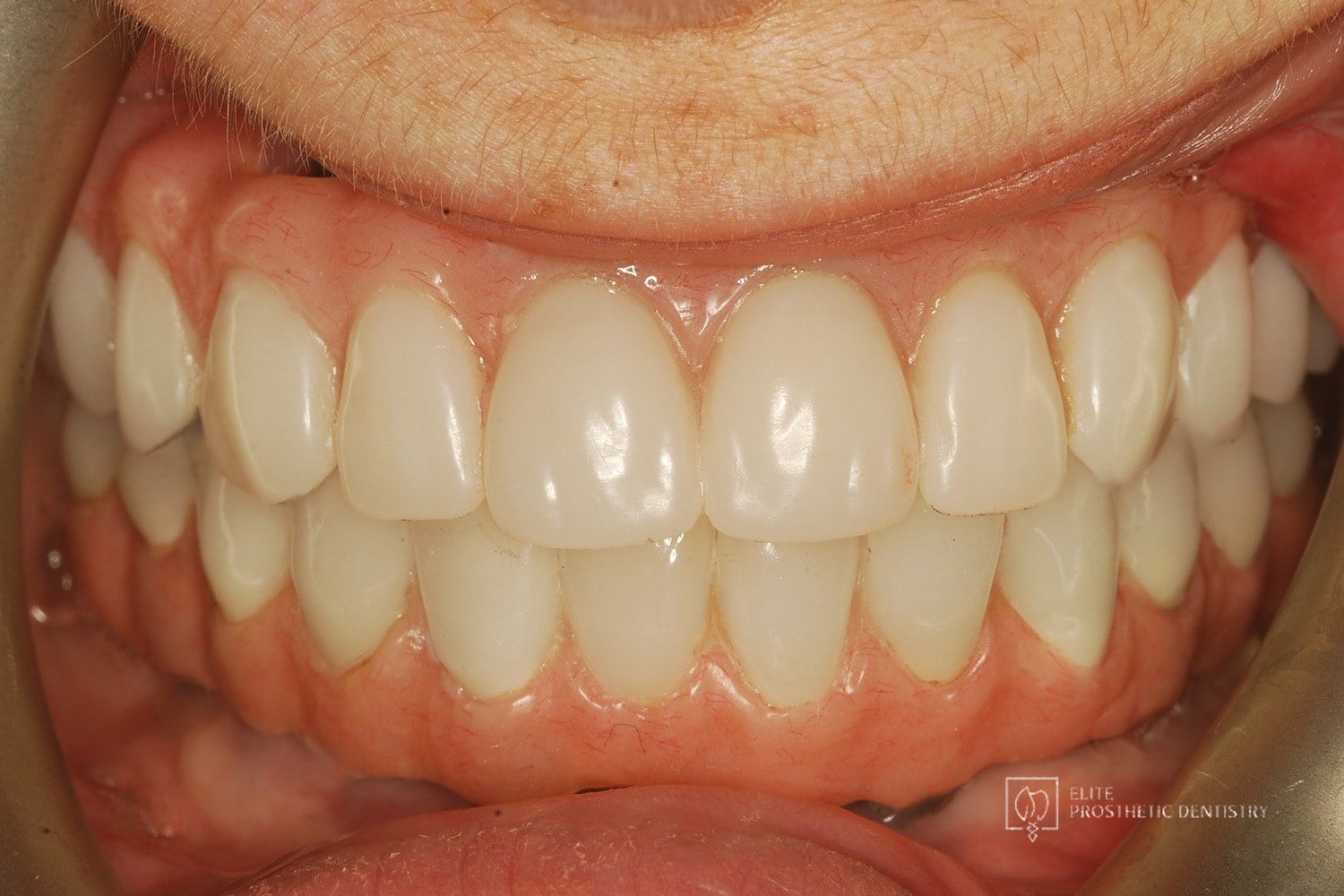 After
After How Failing Implants and Severe Bone Loss Were Rebuilt Into a Stable Full-Arch Implant Reconstruction
The patient presented with significant complications from previously placed implants, severe bone loss, failing posterior implants, and an unesthetic full-arch bridge. Both arches required full reconstruction, with the upper arch showing the most advanced bone loss and instability.
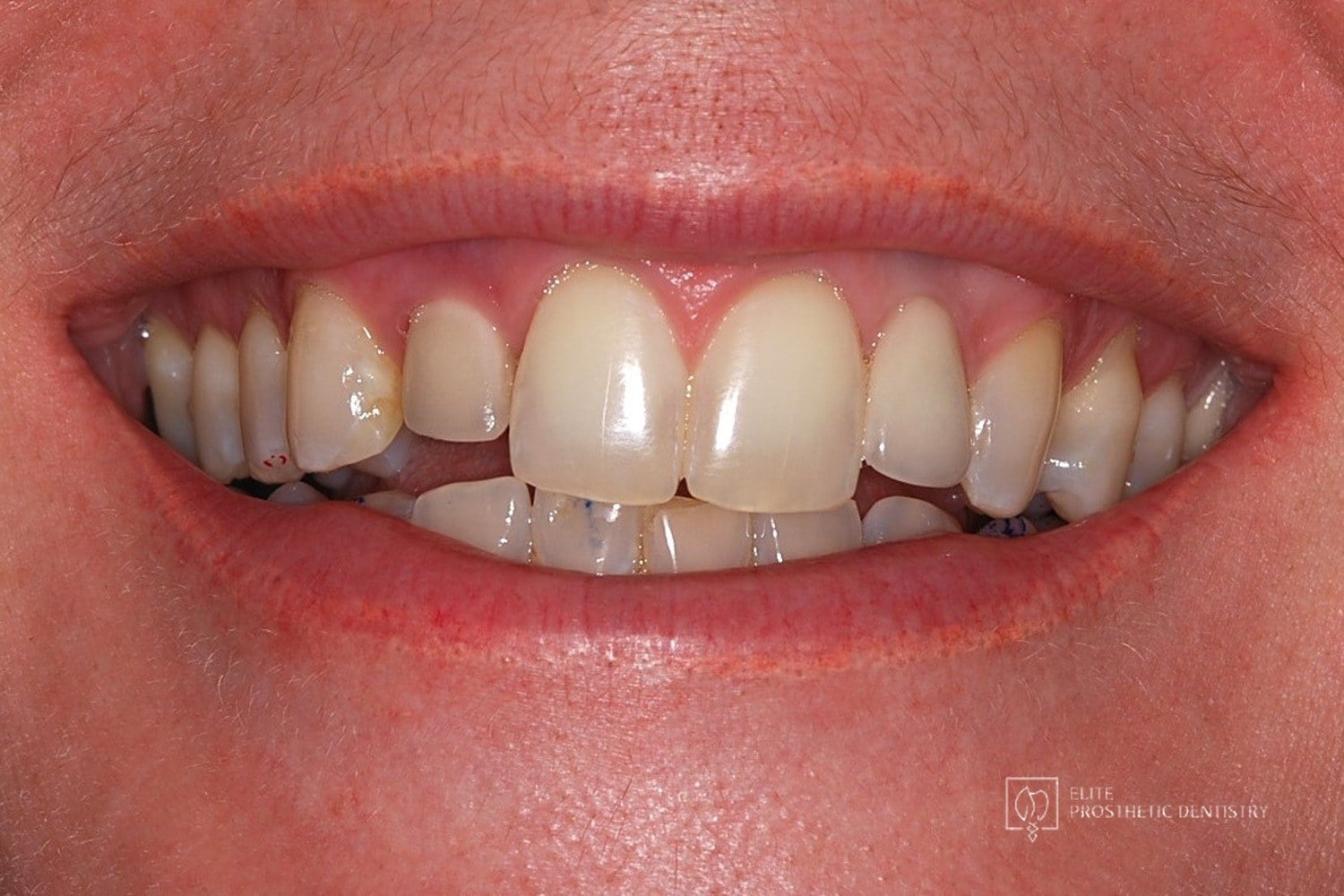 Before
 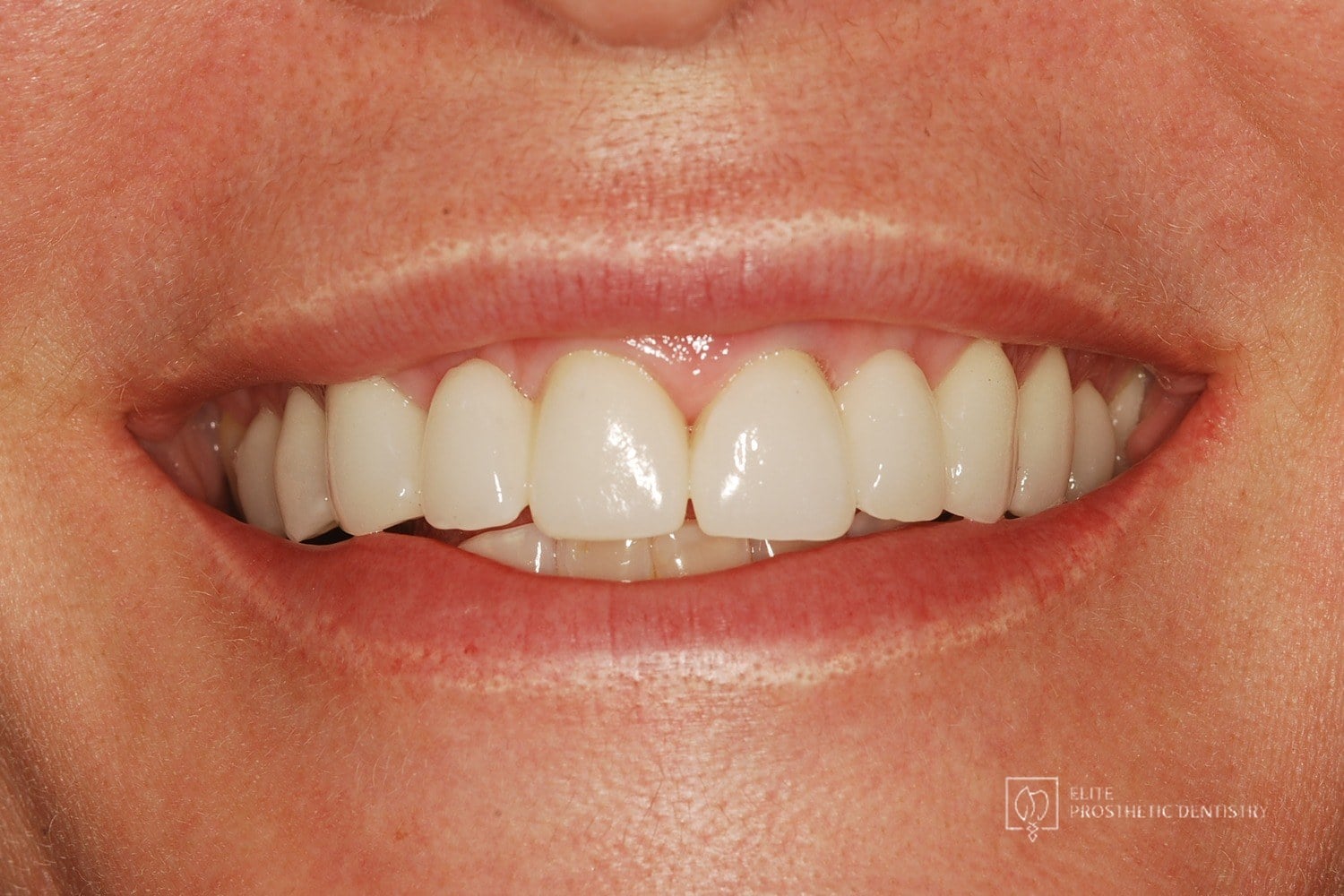 After
After How Failing Lateral Incisor Implants Were Replaced with Custom Zirconia Bridges After Severe Bone Loss Made Replacement Implants Impossible
Comprehensive examination including CBCT imaging revealed significant bone loss surrounding implants that were placed outside the buccal plate, most likely due to placement without a CBCT-generated surgical guide. The implants were determined non-salvageable, and the alveolar ridge was too narrow to support replacement implants without extensive reconstruction.
Related Articles
Deepen your knowledge with additional insights on this topic.
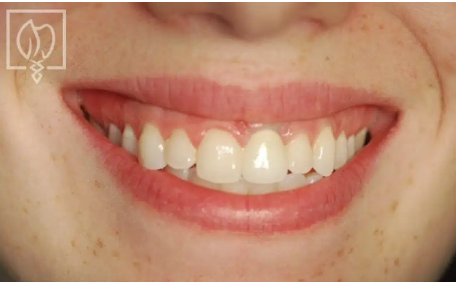 Dental Implants
 If a Single Front Tooth Is Replaced with an Implant, Can It Look Natural?
Yes. See the four steps, with real case photos, that make a single front tooth implant indistinguishable from the natural tooth beside it. Washington, DC.
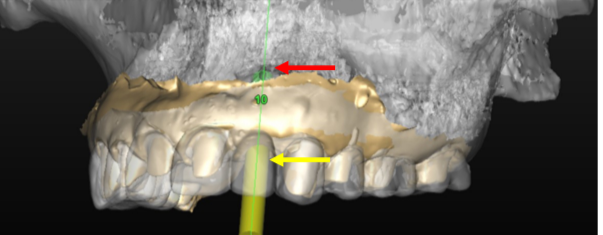 Dental Implants
 What Is Precision Implant Placement (PIP)?
Precision Implant Placement plans each implant virtually on a CBCT scan, then delivers it with a custom surgical guide. See the three steps with real images.
 Dental Implants
 What Is the Ideal Surgical Guide for Precision Implant Placement?
Not all surgical guides are equal. The gold standard is CBCT-based: planned virtually in 3D, 3D printed, and seated on your teeth. A DC prosthodontist explains.