
4 Dental Procedures to Fix Your Smile
Never underestimate the importance of an attractive, healthy smile. Cosmetic problems chip away at your confidence, functional ones erode your comfort, and most people are carrying a little of both. The encouraging news: nearly every common smile complaint maps to a proven procedure, and matching your problem to the right one is most of the battle.
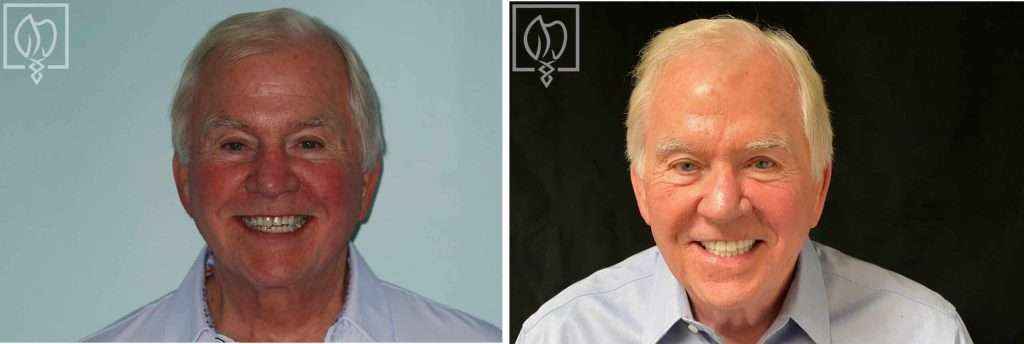
A completed smile transformation from our practice. See the full case
At Elite Prosthetic Dentistry, Dr. Gerald Marlin and our team are problem solvers by reputation: we listen, examine thoroughly, and then present the options that actually fit your situation. Here are the four procedures that fix the problems we see most.
1. Replace Missing Teeth With Implants
Missing teeth are both a cosmetic and a functional problem. The gap is what you see; what you do not see is the jawbone beneath it beginning to shrink, the bite shifting, and the remaining teeth absorbing stress they were not designed for. Left unaddressed, missing teeth can contribute to:
- Difficulty or discomfort while chewing
- Changes to your bite and jaw alignment
- Joint and muscle pain
- Overload and sensitivity in the remaining teeth
In most cases, a dental implant is the best replacement: anchored in the jawbone, it preserves the bone while providing a permanent, stable base for a natural-looking restoration. Dr. Marlin has placed more than 3,900 dental implants over a career of more than 40 years. The surgical and restorative sides of your case are planned together within one specialist practice, and the decision to use an implant is always driven by your tooth’s actual prognosis, never by default.
2. Cover Imperfections With Veneers
If your teeth are healthy but you hold back from photos and open laughter, the issue is usually surface-level, and surface-level is exactly what porcelain veneers fix. These thin ceramic shells bond to the front of the teeth, tailored to match your surrounding tooth color and mimic real enamel. They are the tool of choice for teeth that are misshapen, slightly crooked, gapped, worn, chipped, or discolored, the full list we explore in four ways veneers improve a smile.

A consultation at our Washington, DC practice
3. Protect and Strengthen Damaged Teeth With Crowns
Some problems threaten the tooth itself: deep decay, large old fillings, fractures, severe grinding wear, or discoloration too dark for a veneer to mask, such as tetracycline staining. Here the answer is a dental crown, which covers the entire visible tooth to protect it, restore its shape and size, complete an implant, anchor a bridge, or strengthen a tooth after root canal treatment.
We craft our crowns on-site in our in-house laboratory, which is how we control their aesthetics, fit, and strength; our crowns have lasted 35 years and longer with proper care. One patient with extensive grinding wear was deeply self-conscious about her smile; with her new custom temporary crowns she had an immediate smile makeover and, in her words, “couldn’t be happier with the outcome.”

The immediate smile makeover described above, from a completed case in our practice. See the full case
4. Alleviate Jaw Pain With Bite Alignment and Trigger Point Therapy
The fourth fix is for a problem many people never connect to their dentist: chronic jaw pain. When the cause is TMJ dysfunction from a misaligned bite, symptoms can radiate well beyond the jaw: clicking or popping, pain near the joints, trouble opening and closing, facial pain, ear pain or ringing, and chronic headaches.
Treatment starts with a thorough examination of your bite and the surrounding muscles. Precise adjustments can improve how the teeth meet; where more is needed, a night guard or trigger point therapy enters the plan. Dr. Marlin is unusually qualified here, having written his master’s thesis on the subject during prosthodontic specialty training and trained with Dr. Janet Travell, a pioneering expert in myofascial pain treatment using trigger point injection and massage.
Match Your Problem to Its Fix
Whether your concern is one tooth or your whole smile, the path is the same: an honest diagnosis, then the least treatment that genuinely solves it, chosen from a menu we detail further in our guide to treatable conditions that undermine smiles. Call 202-244-2101 or schedule a consultation at Elite Prosthetic Dentistry, near the Friendship Heights Metro station in Washington, DC. We welcome patients from DC, Bethesda, Chevy Chase, Arlington, and those who travel to us from out of state and abroad.
See How We Resolve These Problems
Our patient success stories show real cases and real results. Browse outcomes from a specialist prosthodontist with decades of experience and 3,900+ implants placed.
Key Takeaways
- ✓ Most smile problems map to one of four fixes: implants for missing teeth, veneers for surface imperfections, crowns for damaged teeth, and bite therapy for jaw pain.
- ✓ Missing teeth are functional problems as much as cosmetic ones, affecting bone, bite, and neighboring teeth over time.
- ✓ Veneers handle the visible flaws on sound teeth; crowns take over when the tooth itself needs protection and strength.
- ✓ TMJ pain often traces to bite misalignment and responds to adjustment, night guards, or trigger point therapy.
- ✓ The right starting point is a diagnosis that matches your problem to the least treatment that truly fixes it.
Frequently Asked Questions
What is the best procedure to fix my smile?
It depends entirely on what is wrong. Missing teeth generally call for implants, cosmetic surface flaws for veneers, structurally damaged or very dark teeth for crowns, and jaw pain for bite evaluation and TMJ therapy. Many patients need a combination, which is why treatment should start with a thorough examination rather than a product choice.
Why replace a missing tooth if it does not bother me?
Because the damage compounds quietly. A missing tooth lets the jawbone in that area shrink, shifts your bite and jaw alignment, stresses the remaining teeth, and can eventually change the structure of your lower face. Replacing it, most often with an implant, preserves the health of everything around the gap.
When is a crown better than a veneer?
When the tooth needs more than a new face: deep decay, large fillings, fractures, root canal treatment, severe wear, or discoloration too dark for a thin veneer to mask, such as tetracycline staining. A crown covers and strengthens the whole tooth while delivering the same aesthetic control.
Can a dentist really treat my jaw pain and headaches?
Often, yes. When the cause is TMJ dysfunction from a misaligned bite, treatment ranges from precise bite adjustments to a night guard or trigger point therapy for the surrounding muscles. A careful examination of your bite and muscles determines whether your symptoms are dental in origin.
Related Patient Success Stories
Explore similar patient success stories demonstrating our expertise in advanced prosthetic dentistry.
 Before
  After
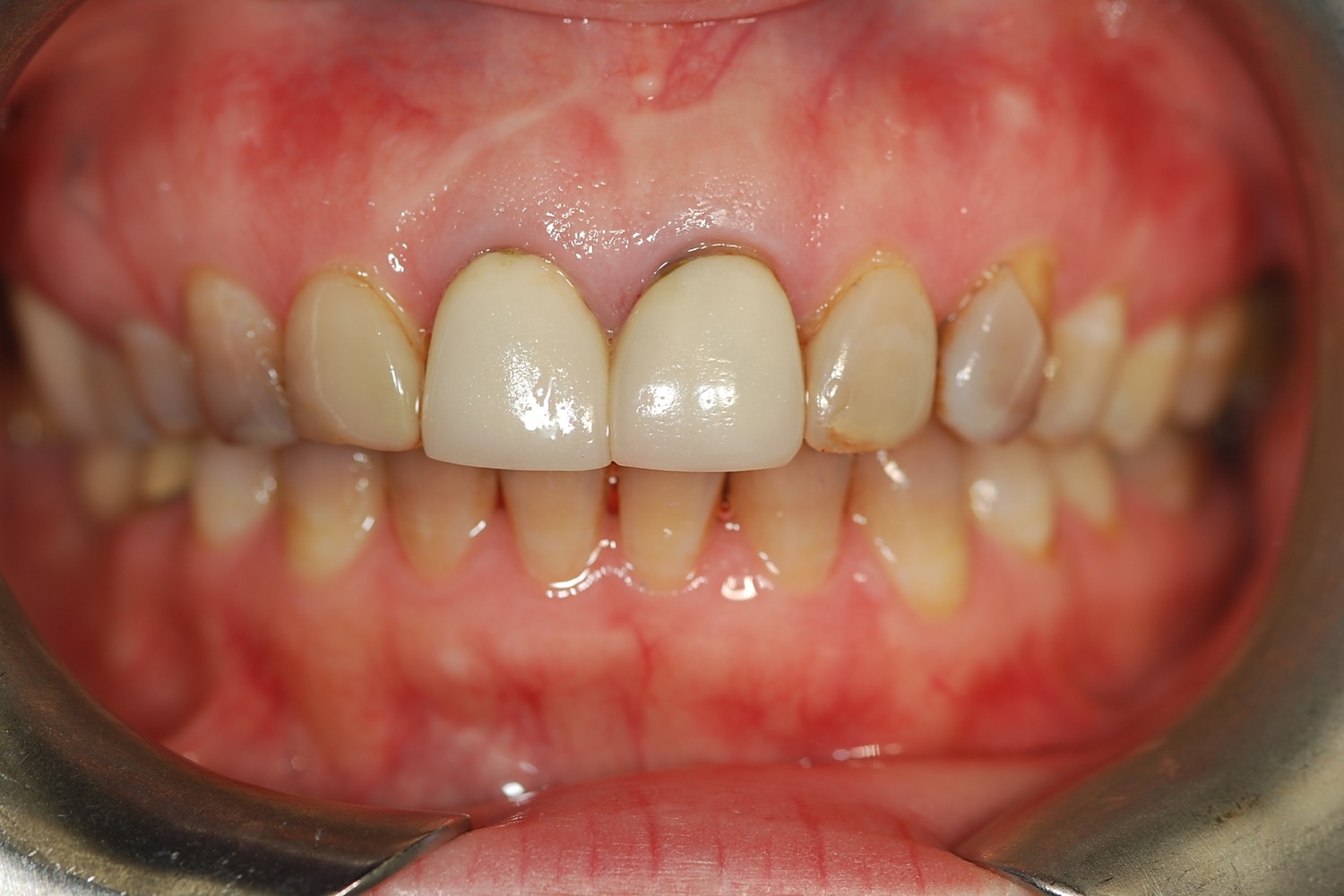
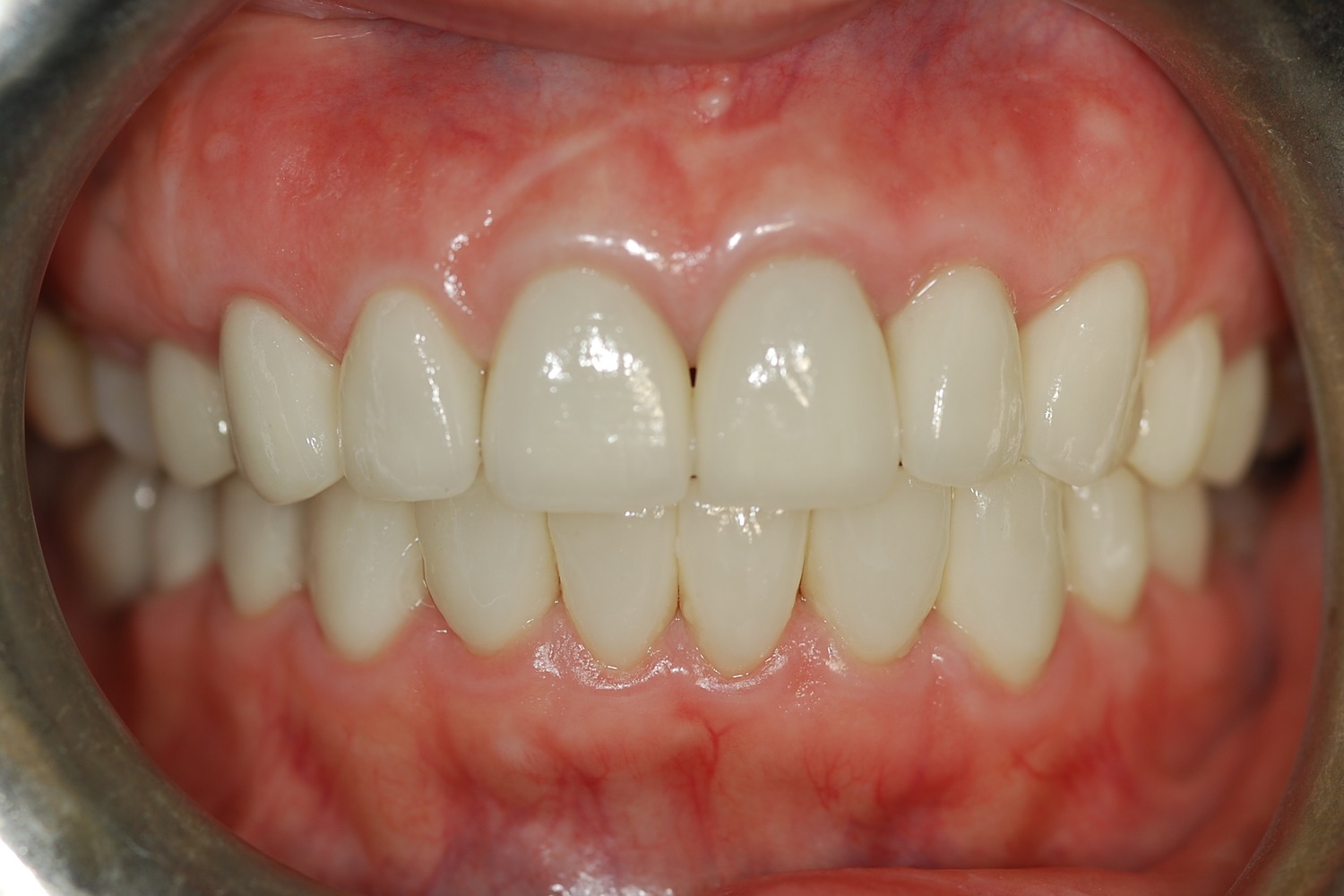
After How Aging, Opaque Restorations Were Replaced with Customized Ceramic Restorations Designed for Long-Term Natural Esthetics
The existing restorations appeared opaque, worn, and unnatural over time, affecting both confidence and overall smile harmony.
Temporary Crowns Restore a Patient's Smile in One Day with an Immediate Smile Makeover
A patient from Potomac, Maryland came to the practice in pain from a failing dental implant whose restoration was also compromising her appearance and her confidence.
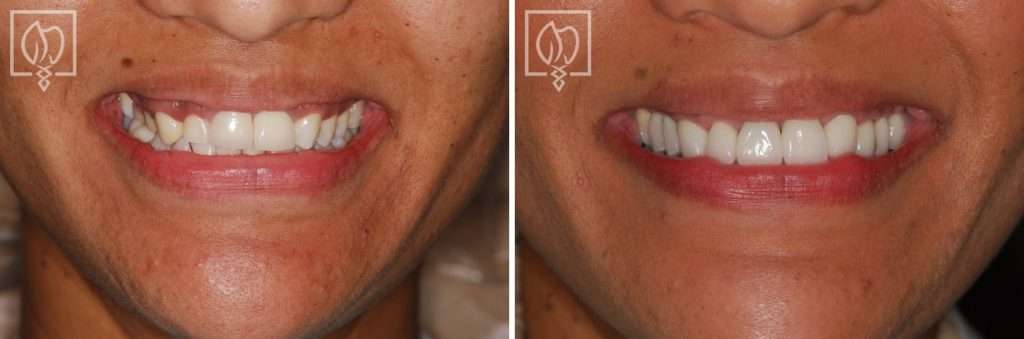
Multi-Faceted Treatment for a Patient Unhappy With the Appearance of Her Crowns, Teeth, and Gums
The patient was unhappy with how her teeth and gums affected her smile: front-tooth crowns that no longer blended with her natural teeth, a missing lateral incisor with the larger canine sitting in its space, and an uneven gum line.
Related Articles
Deepen your knowledge with additional insights on this topic.
 Smile Makeovers
 Look Great on Zoom with a Smile Makeover
Which smile flaws show most on camera, and which treatment fixes each: veneers, crowns, whitening, gum contouring, and implants, mapped by a DC specialist.
 Smile Makeovers
 Highly Sophisticated Front Tooth Replacement
Front teeth are the hardest restorations to fake and the most visible. How color, translucency, and lab craftsmanship make a replacement undetectable.
 Smile Makeovers
 When Do I Need a Second Opinion for My Smile Reconstruction?
Incomplete records, no treatment plan, no examples of similar work: the warning signs that your smile reconstruction plan deserves a second opinion.