
What Are Mini Dental Implants, and What Are They Actually For?
Like conventional dental implants, mini implants are inserted into the jawbone to create a stable anchor. There the similarity ends, and the differences matter enormously, because mini implants are among the most misunderstood, and mis-marketed, devices in implant dentistry.
Here is what they are, what they are for, and where their limits sit.
A Different Design for a Different Job
A conventional implant is a system built to carry fixed teeth: the implant integrates with bone, an abutment connects upward, and a crown or bridge is permanently attached. A mini implant has a much smaller diameter, a different design, and a completely different function. It ends in a round head that attaches to a removable prosthesis through a socket and rubber O-ring, a snap fastener, engineered so a denture clicks into place and holds.
That design difference draws a bright line: mini implants are never restored with a crown or fixed hybrid prosthesis. Their job is stabilizing removable dentures, and within that job they are excellent.
When Mini Implants Are the Right Tool
The classic candidate is the frustrated denture wearer, most often with a lower denture that floats, slips, and rations their diet. Two or more mini implants convert that experience: the denture snaps onto the implant heads and stays put through meals and conversation, while remaining removable for cleaning.
Minis earn their place in two specific situations. First, when the jawbone has thinned past what conventional implants require, and the patient prefers not to undergo bone grafting, the narrow mini can often be placed in bone that would reject a standard implant. Second, when budget matters: minis cost less than conventional implant treatment, and their placement is typically simpler and gentler, frequently without incisions and with quick recovery.
One honest preliminary, though: not every loose denture is an implant case at all. If the denture’s fit has simply aged, a professional reline or repair may restore it as the sensible first step. When the fit is right and the stability still is not, implants enter the conversation.
The Limits, Stated Plainly
Physics writes the fine print. A narrower implant offers less surface area for bone integration and less tolerance for heavy chewing forces. Asked to do a conventional implant’s job, carrying fixed teeth under full load, minis over-deliver risk and under-deliver lifespan, which is why the fixed-teeth marketing occasionally attached to them deserves skepticism. Their honest comparison with standard options appears in our guide to the four types of dental implants, and the question of their durability in Are Mini Dental Implants Permanent?
For patients who want fully fixed teeth, conventional implants, with grafting where the bone needs help, remain the standard, up to and including full-arch solutions. For patients who want their denture to stop moving, minis are a legitimate, proven, and economical answer.
Sorting Your Situation Honestly
The right recommendation follows from your bone, your prosthesis, your priorities, and your budget, in that order. Dr. Gerald Marlin, a specialty-trained prosthodontist with more than 3,900 dental implants placed, evaluates all of it, including when the answer is a reline, a mini-stabilized denture, or conventional implants, and tells you which one your case actually supports.
If your denture is running your life, or you have been pitched minis and want a specialist’s second opinion, call 202-244-2101 or schedule a consultation at Elite Prosthetic Dentistry in Friendship Heights, Washington, DC.
See How We Resolve These Problems
Our patient success stories show real cases and real results. Browse outcomes from a specialist prosthodontist with decades of experience and 3,900+ implants placed.
Key Takeaways
- ✓ Mini implants are narrow-diameter implants with a fundamentally different design and job: they stabilize removable dentures and are never restored with a crown or fixed hybrid prosthesis.
- ✓ Instead of an abutment, a mini implant has a round head that snaps into a socket and rubber O-ring inside the denture.
- ✓ They shine when a loose lower denture needs stability and the bone is too thin for conventional implants, at a lower cost and with gentler placement.
- ✓ Their limits are structural: reduced diameter means reduced load capacity, so they are not a discount substitute for standard implants.
- ✓ Sometimes the honest first step for a loose denture is a reline, not surgery of any kind.
Frequently Asked Questions
What is the difference between mini and regular dental implants?
Diameter, design, and job description. A conventional implant carries an abutment and a fixed crown or bridge. A mini implant is much narrower and ends in a round head that clicks into a socket and rubber O-ring inside a removable denture. Minis stabilize removable prostheses; they are never restored with crowns or fixed hybrid teeth.
Are mini implants a cheaper way to get implant teeth?
No, and this is the most common misunderstanding. They are a less expensive way to stabilize a removable denture, which is a real and valuable service. They are not a budget route to fixed replacement teeth, because their narrow diameter cannot safely carry those loads long-term.
Who are mini implants best for?
Primarily denture wearers, especially lower-denture wearers, whose prosthesis floats and slips, and whose bone has thinned past what conventional implants need without grafting. Placement is typically simpler and gentler, and the stability improvement in daily life is immediate.
Is my loose denture a mini implant case?
Not automatically. Some loose dentures simply need a professional reline to restore their fit. When the fit is right and stability is still poor, implant stabilization, mini or conventional, enters the conversation. An evaluation sorts this quickly.
Related Patient Success Stories
Explore similar patient success stories demonstrating our expertise in advanced prosthetic dentistry.
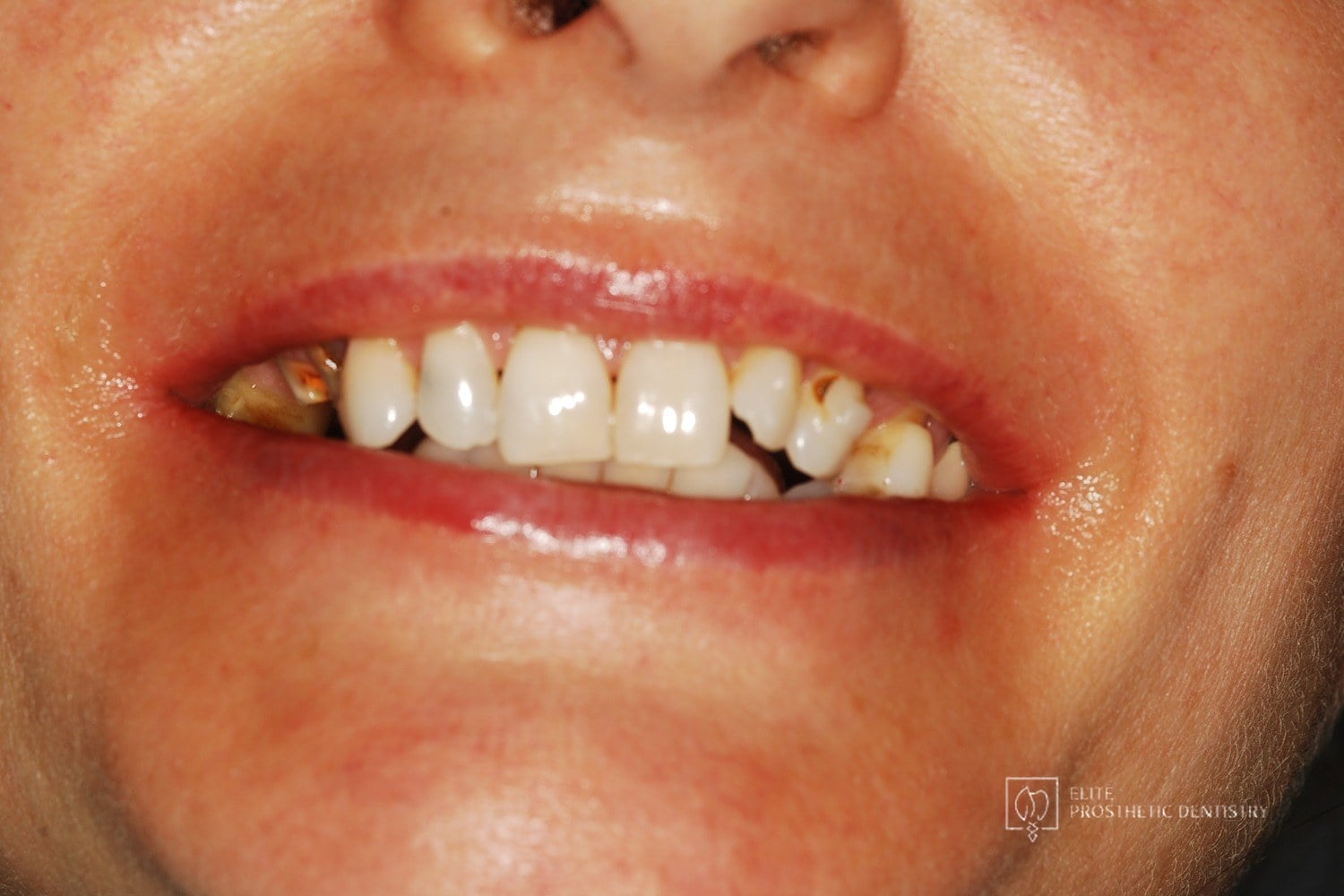 Before
 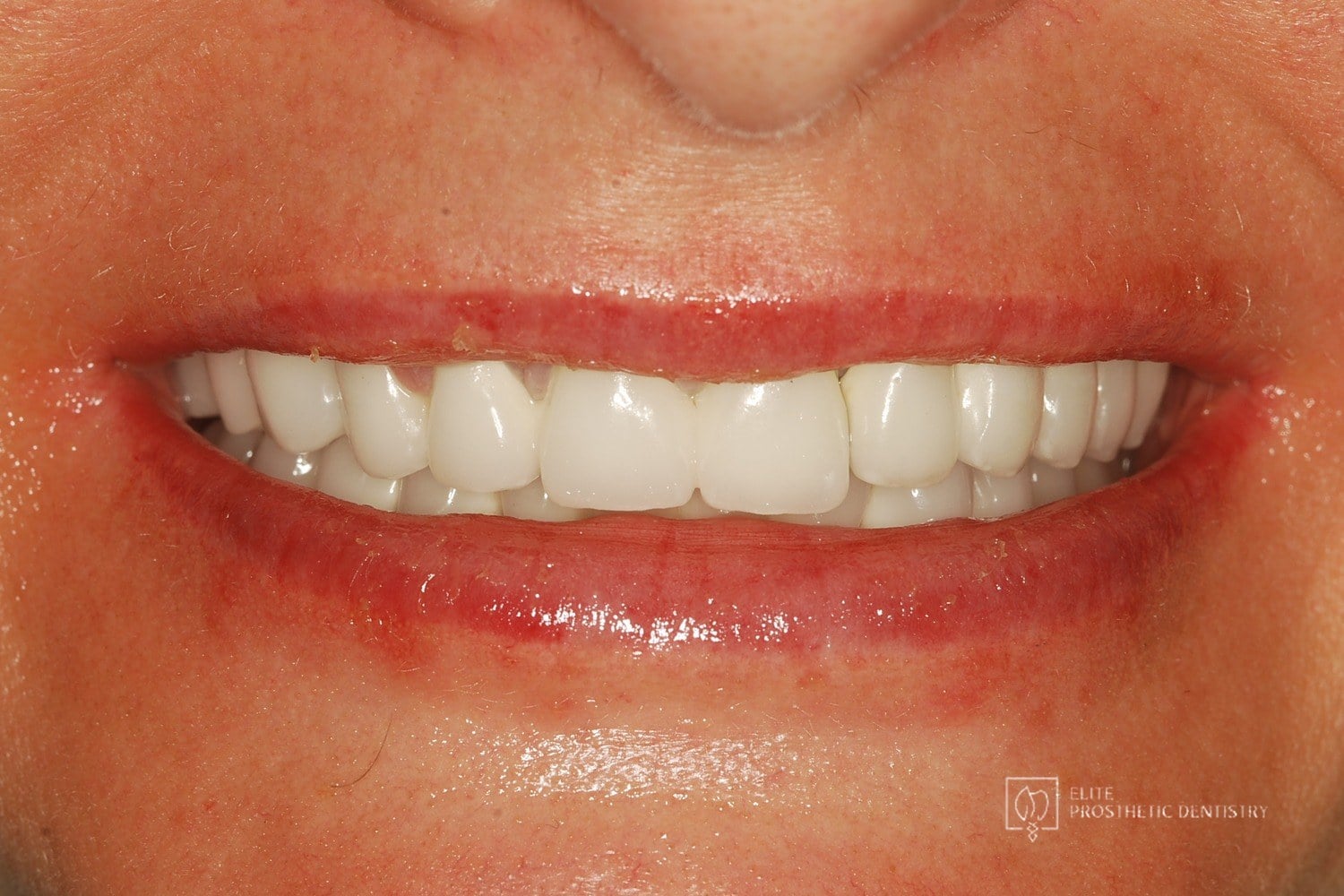 After
After How Aging, Failing Dentistry Was Replaced with a Coordinated Full-Mouth Implant and Crown Reconstruction
The patient presented with throbbing upper-molar pain, long-standing infections, multiple root canals and unfinished prior treatment, generalized sensitivity, and several hopeless teeth.
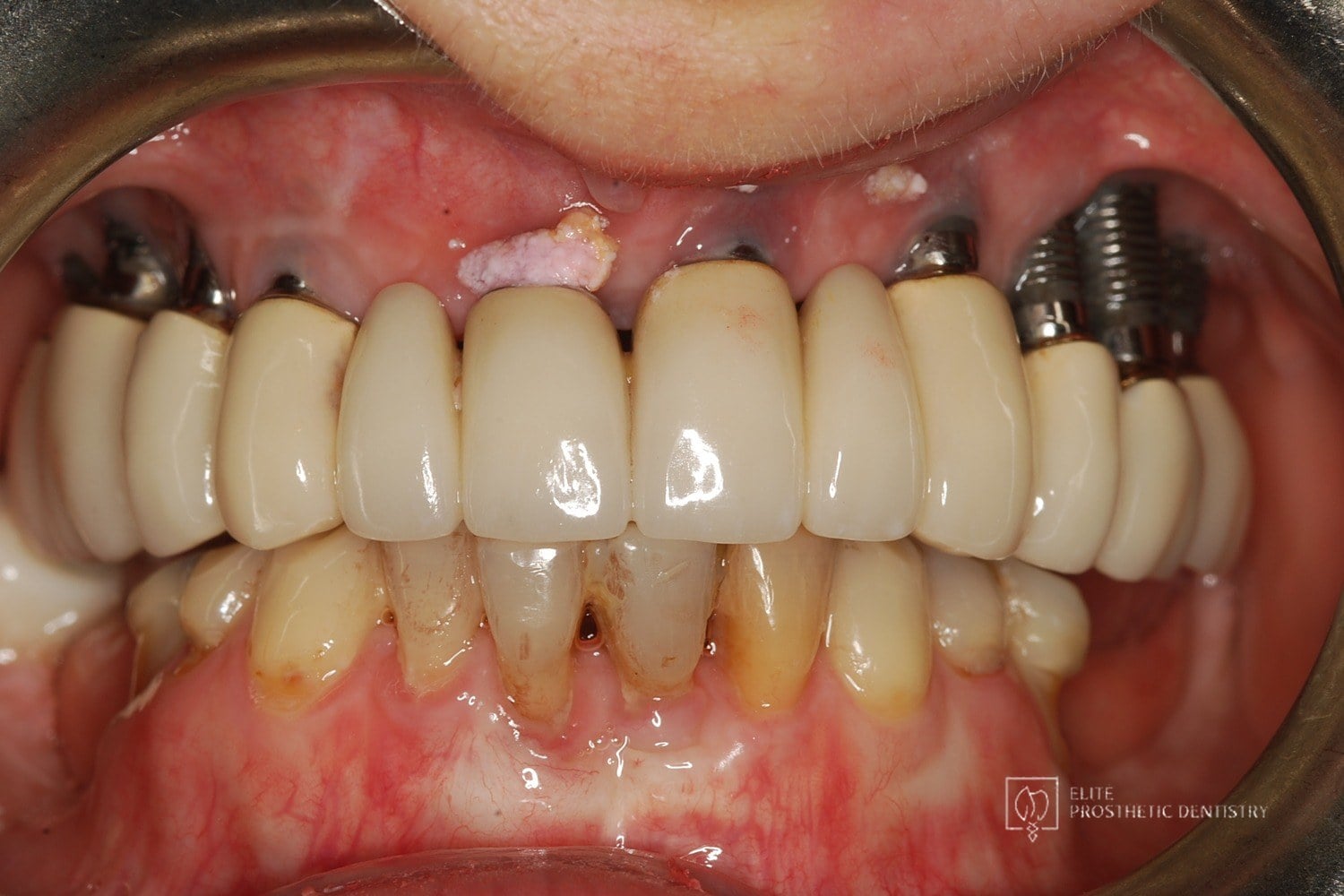 Before
 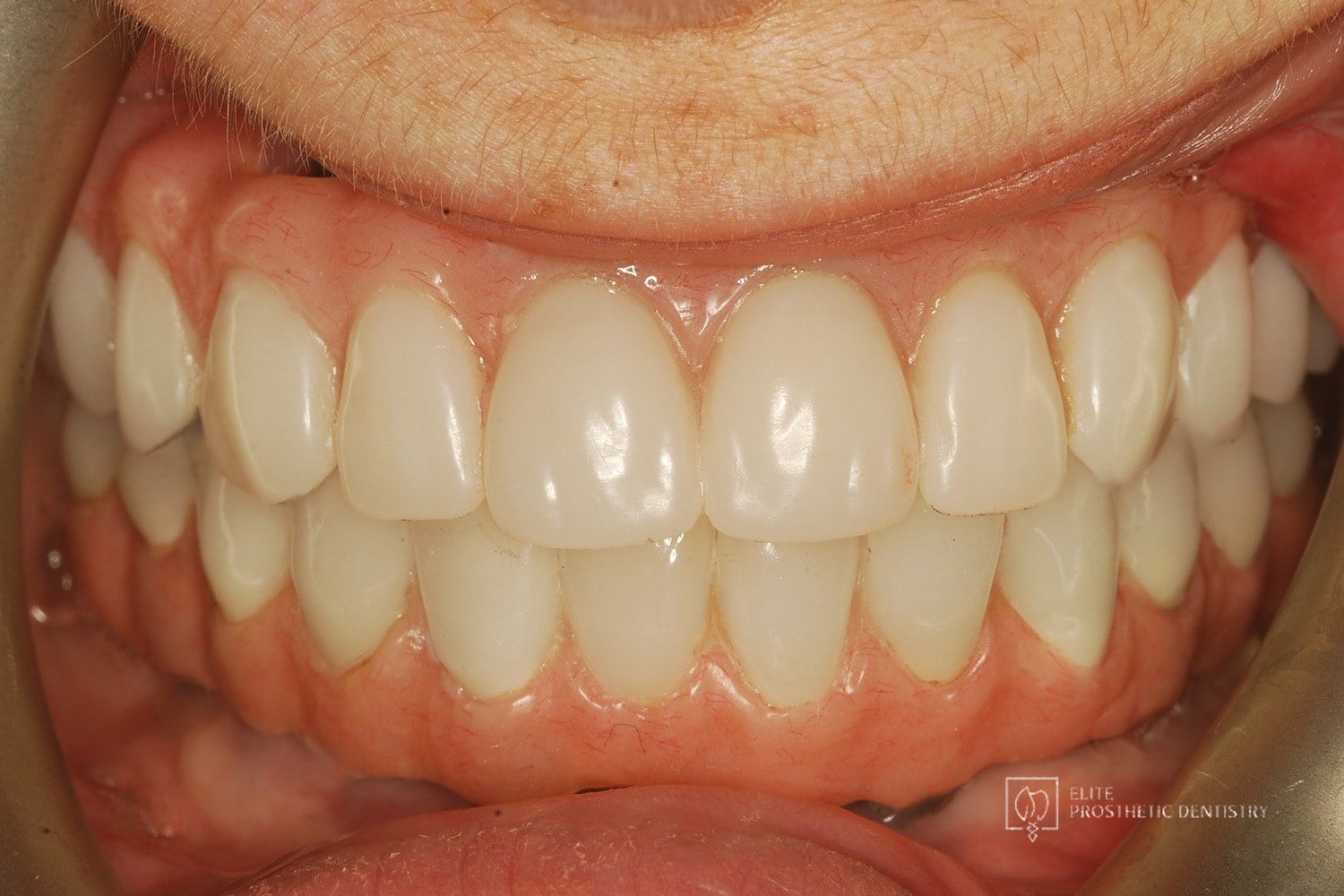 After
After How Failing Implants and Severe Bone Loss Were Rebuilt Into a Stable Full-Arch Implant Reconstruction
The patient presented with significant complications from previously placed implants, severe bone loss, failing posterior implants, and an unesthetic full-arch bridge. Both arches required full reconstruction, with the upper arch showing the most advanced bone loss and instability.
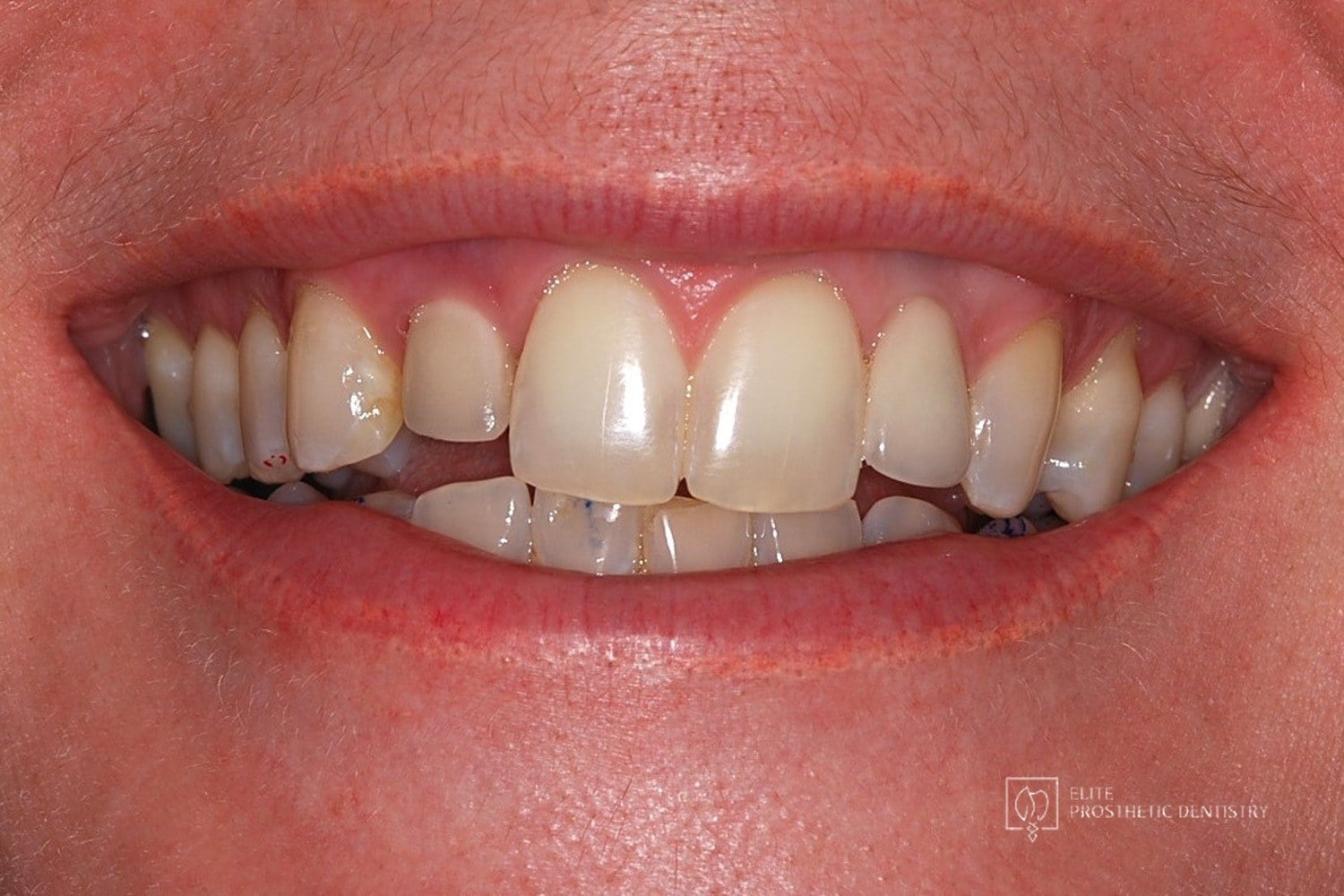 Before
 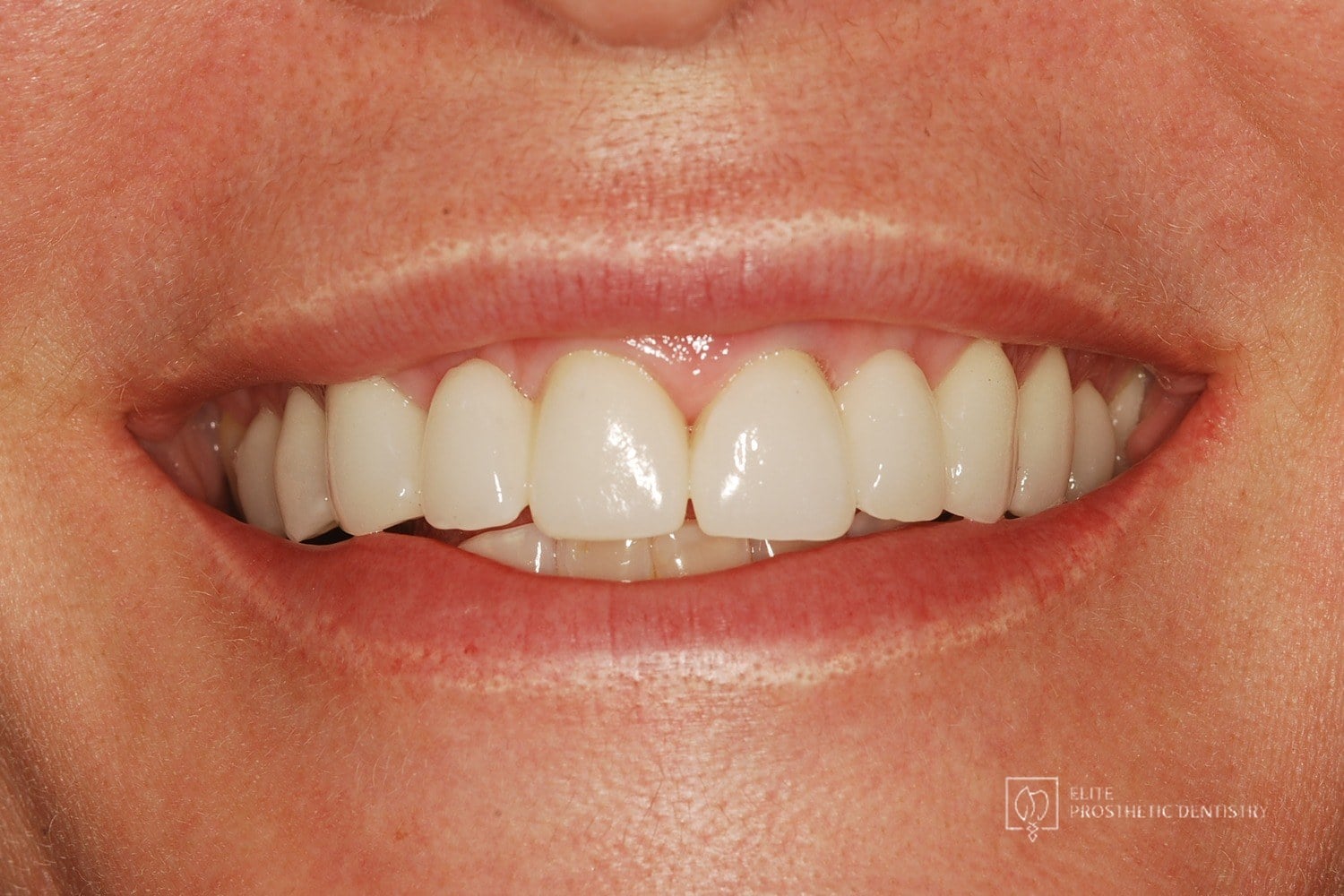 After
After How Failing Lateral Incisor Implants Were Replaced with Custom Zirconia Bridges After Severe Bone Loss Made Replacement Implants Impossible
Comprehensive examination including CBCT imaging revealed significant bone loss surrounding implants that were placed outside the buccal plate, most likely due to placement without a CBCT-generated surgical guide. The implants were determined non-salvageable, and the alveolar ridge was too narrow to support replacement implants without extensive reconstruction.
Related Articles
Deepen your knowledge with additional insights on this topic.
 Dental Implants
 If a Single Front Tooth Is Replaced with an Implant, Can It Look Natural?
Yes. See the four steps, with real case photos, that make a single front tooth implant indistinguishable from the natural tooth beside it. Washington, DC.
 Dental Implants
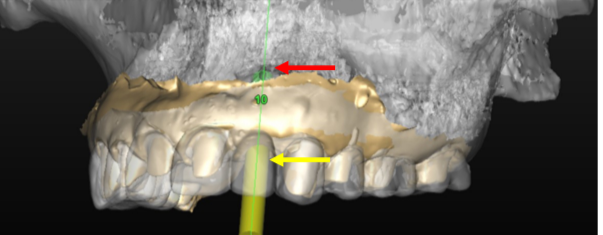
 What Is Precision Implant Placement (PIP)?
Precision Implant Placement plans each implant virtually on a CBCT scan, then delivers it with a custom surgical guide. See the three steps with real images.
 Dental Implants
 What Is the Ideal Surgical Guide for Precision Implant Placement?
Not all surgical guides are equal. The gold standard is CBCT-based: planned virtually in 3D, 3D printed, and seated on your teeth. A DC prosthodontist explains.