
When the 30-Minute Drive from Vienna Is Worth It: Case Complexity Decision Guide
Vienna residents: determine whether your case complexity warrants specialty prosthodontic care. Clinical criteria for when local dentistry falls short.
Vienna residents contemplating significant dental restoration face a practical decision. Your local dentist is convenient and knows your dental history. But complex cases often require specialty expertise available 30 to 35 minutes away via Route 123 and Chain Bridge Road in Friendship Heights. Understanding when case complexity justifies that drive helps Vienna patients make informed choices.
The Complexity Decision Framework
Case complexity determines whether prosthodontic consultation adds value.
Routine cases include single missing teeth, simple bridges, and straightforward crown replacement on healthy teeth. Vienna general dentists handle these well. Travel to a specialist makes no sense.
Moderately complex cases include two to three missing teeth with adequate bone, situations where previous treatment failed but anatomy remains straightforward, or bite problems affecting limited areas. Some Vienna dentists manage these effectively. Others appropriately refer to specialists. Your dentist’s assessment matters here.
Highly complex cases include multiple missing teeth, significant bone loss, failed previous implant treatment, comprehensive bite reconstruction needs, or unusual anatomy. These cases reliably exceed general dentistry scope and justify prosthodontic consultation.
Understanding where your situation falls clarifies your next step.
Routine Cases: Your Vienna Dentist Is Appropriate
A Vienna patient missing one tooth needs that tooth replaced. Whether with an implant, bridge, or denture depends on patient preference and bone adequacy.
If bone is adequate and anatomy is straightforward, a skilled Vienna dentist places an implant competently, restores it appropriately, and produces good outcomes. The patient benefits from local convenience.
Similarly, routine crown replacement or simple multi-tooth bridgework within routine scope is handled well by many Vienna practices.
These cases don’t justify 30 to 35-minute drives. Convenience prevails.
Moderately Complex Cases: Consultation With Your Dentist Matters
A Vienna patient with two missing teeth and adequate bone could potentially be treated by either a Vienna dentist or a prosthodontist. The decision depends on the Vienna dentist’s experience and comfort level.
If your Vienna dentist has managed similar cases dozens of times and describes their approach confidently, they may handle your case well. You benefit from local continuity.
If your Vienna dentist seems uncertain, refers you to a specialist, or acknowledges limited experience with your specific problem, that honest assessment suggests prosthodontic consultation. Your dentist is appropriately recognizing case complexity.
Similarly, when previous treatment has failed, your Vienna dentist’s assessment matters. Have they managed revision cases successfully? Can they explain why the previous treatment failed and how their approach would prevent recurrence? Thoughtful answers suggest competence. Vague responses suggest you should consult a specialist.
Highly Complex Cases: Prosthodontic Consultation Is Clearly Appropriate
Multiple missing teeth with bone loss triggers consideration of implant reconstruction. Bone loss changes the clinical picture fundamentally.
When bone volume is inadequate for implants, prosthodontic expertise involves bone grafting. Bone grafting technique selection, graft material choice, timing of graft integration before implant placement, and understanding of bone biology all require specialized training. A Vienna dentist who has performed bone grafting dozens of times brings valuable experience. A Vienna dentist who has done it occasionally lacks refined judgment.
Asking your Vienna dentist directly helps: “How many bone grafting cases have you completed? What materials and techniques do you use? How do you manage healing timing?” Their answers reveal expertise level.
Failed previous implant treatment often warrants prosthodontic evaluation. When implants placed elsewhere have failed, a prosthodontist investigates whether failure resulted from suboptimal positioning, inadequate bone, surgical technique, restoration design, or other factors. Rather than simply replacing failed implants similarly, a prosthodontist redesigns the solution preventing recurrence.
This investigative approach is prosthodontic specialty. Most Vienna dentists refer these cases.
Comprehensive bite reconstruction, where multiple teeth are affected by bite misalignment, typically exceeds general dentistry scope. A prosthodontist analyzes bite systematically, identifies misalignment causes, and plans comprehensive correction. This level of bite analysis and planning is specialized training.
The Three-Dimensional Imaging Difference
Complex bone cases require three-dimensional imaging (cone beam computed tomography) revealing bone volume, density, and anatomy in detail. Standard radiographs show surface bone but miss three-dimensional relationships critical for surgical planning.
At Elite Prosthetic Dentistry, every implant case, from a single implant through full-mouth reconstruction, is planned on a CBCT scan. A prosthodontist reviewing three-dimensional imaging may identify areas of adequate bone for implant placement or determine where grafting enables implant restoration.
This imaging difference sometimes reveals possibilities that standard imaging missed.
The On-Site Laboratory Advantage
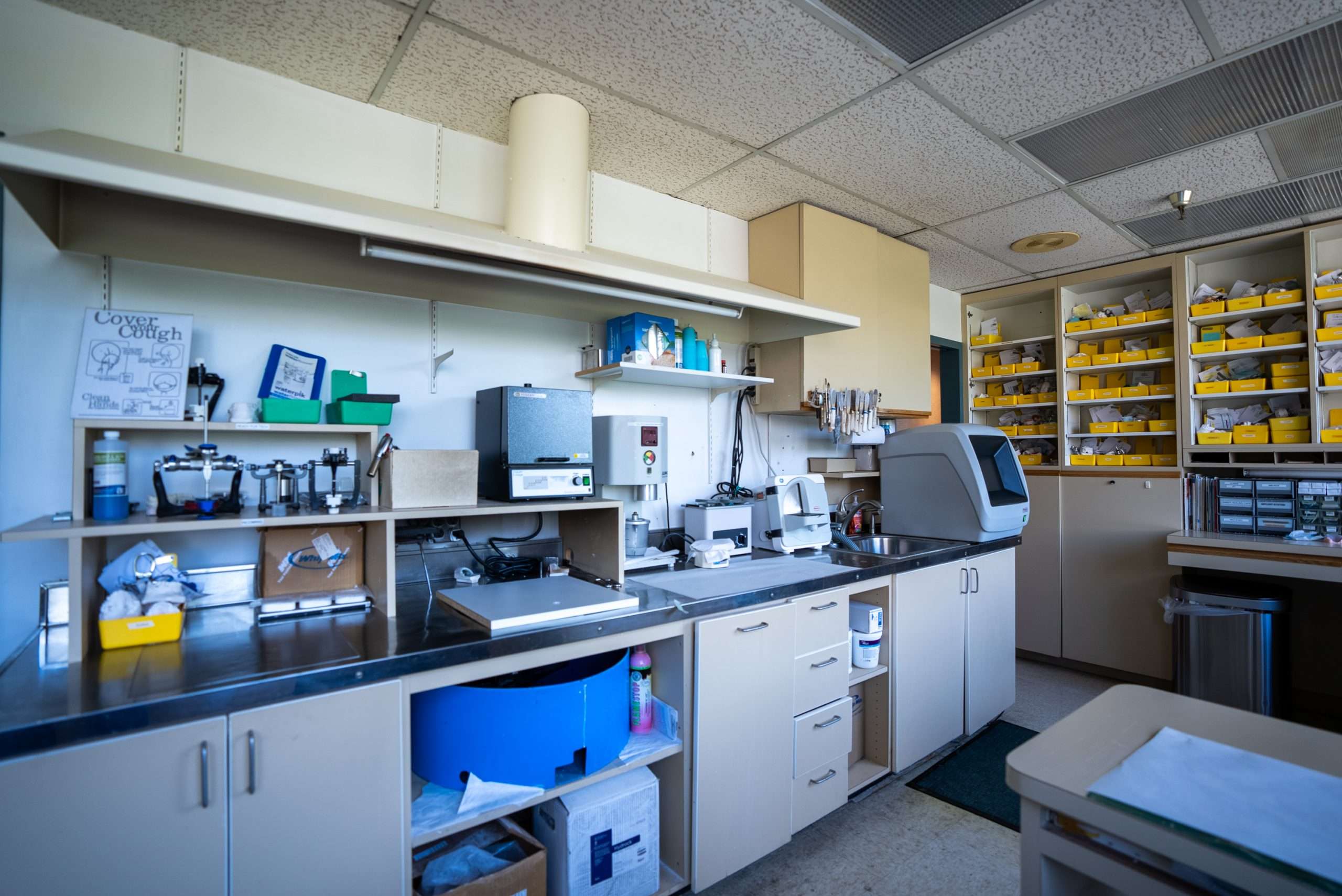
Dr. Marlin’s on-site laboratory enables direct quality control during restoration fabrication. He works with laboratory technicians directly, refining details in real-time. Adjustments happen immediately.
Most practices send restorations to an outside laboratory, which works from impressions, prescriptions, and photographs, so refinements travel back and forth.
For complex esthetic cases where appearance is critical, on-site laboratory capability creates meaningful advantage.
When to Ask Your Vienna Dentist for Specialty Referral
Your Vienna dentist may spontaneously recommend specialist consultation for complex cases. If not, you can ask directly: “Is this case something you handle routinely, or does it exceed typical scope? Would a second opinion from a prosthodontist improve my outcomes?”
Their honest assessment guides your decision. If your dentist says “Yes, I recommend prosthodontic consultation,” honor that assessment.
The Route 123 and Chain Bridge Drive
From Vienna, the drive to Elite Prosthetic Dentistry takes 30 to 35 minutes via Route 123 east toward Tysons, then continuing north via Chain Bridge Road into Friendship Heights. Building parking is available.
For cases requiring multiple appointments across months, these logistics are manageable. You’re making the drive for specialty treatment that improves outcomes, not for routine care.
Deciding Between Local and Specialty Care
Complexity determines the decision.
If your case is clearly routine, local convenience is appropriate.
If moderate complexity exists and your Vienna dentist is confident, proceeding locally often works well.
If high complexity is present, your Vienna dentist is uncertain, or previous treatment failed, prosthodontic consultation is clearly appropriate.
Dr. Marlin evaluates cases during initial consultation. Describing your situation briefly allows him to advise whether specialty involvement would improve your outcomes.
Call (202) 244-2101 or request an appointment to discuss whether your Vienna case would benefit from prosthodontic evaluation. Understanding the clinical situation clearly helps you make the best decision for your restoration outcomes.
Frequently Asked Questions
What clinical indicators suggest my Vienna case needs prosthodontic evaluation?
Multiple missing teeth (three or more), significant bone loss visible on X-rays, previous implant failure, repeated crown replacement on the same tooth, bite problems affecting multiple teeth, failed treatment at other practices, or situations where your Vienna dentist expresses uncertainty about the approach. Single-tooth problems or routine two-tooth bridges rarely require specialty consultation. Multi-tooth complexity usually does. If your dentist recommends specialist evaluation, that recommendation reflects their honest assessment of case complexity.
Can a Vienna general dentist manage multi-tooth restoration, or does bone loss change that?
Vienna general dentists manage routine multi-tooth cases well when bone is adequate and anatomy is straightforward. Bone loss changes the clinical situation fundamentally. When bone loss is significant, implant planning requires three-dimensional analysis, bone grafting technique selection, and understanding of bone regeneration biology that general dental training covers briefly but doesn't develop into clinical expertise. A general dentist facing significant bone loss typically has three options: accept limitations and recommend dentures, refer to a prosthodontist, or extend beyond their training. Prosthodontic expertise exists specifically for situations that exceed general dentistry scope.
How does specialty training change the approach to failed previous implants?
A Vienna dentist examining failed implants may conclude the situation is complicated and refer it out. A prosthodontist investigates systematically: Why did the implant fail? Was the position suboptimal for the bite? Was the bone inadequate initially? Did infection occur? Was the restoration design flawed? Rather than simply replacing the failed implant in a similar position, a prosthodontist diagnoses root causes and redesigns the solution. This investigative approach prevents recurrent failure. The prosthodontic difference is systematic root-cause analysis rather than symptom replacement.
When does esthetic outcome importance trigger prosthodontic consultation?
If tooth appearance matters significantly to you and the restoration involves multiple teeth or visible areas, esthetic outcome importance increases prosthodontic value. Prosthodontic training emphasizes esthetic principles at depth beyond general dentistry. A prosthodontist analyzes your facial features, smile characteristics, tooth proportions, and emergence profiles systematically. They design restorations considering color, shape, texture, and how light travels through ceramic materials. For cases where appearance is critical, this specialized esthetic training produces superior outcomes.
How should Vienna residents evaluate whether complexity truly exists?
Review your situation against these complexity indicators: How many teeth are involved? Are any missing? Is bone loss evident? Have previous restorations failed repeatedly? Do you have bite discomfort? Has another dentist said the case is complex? Does your teeth-spacing or anatomy seem unusual? The more indicators present, the higher the case complexity. Ask your Vienna dentist directly: 'Is this case within routine scope, or does it exceed what you typically handle?' Their honest answer guides your decision. Prosthodontic consultation is appropriate for cases clearly exceeding routine scope.
Related Patient Success Stories
Explore similar patient success stories demonstrating our expertise in advanced prosthetic dentistry.
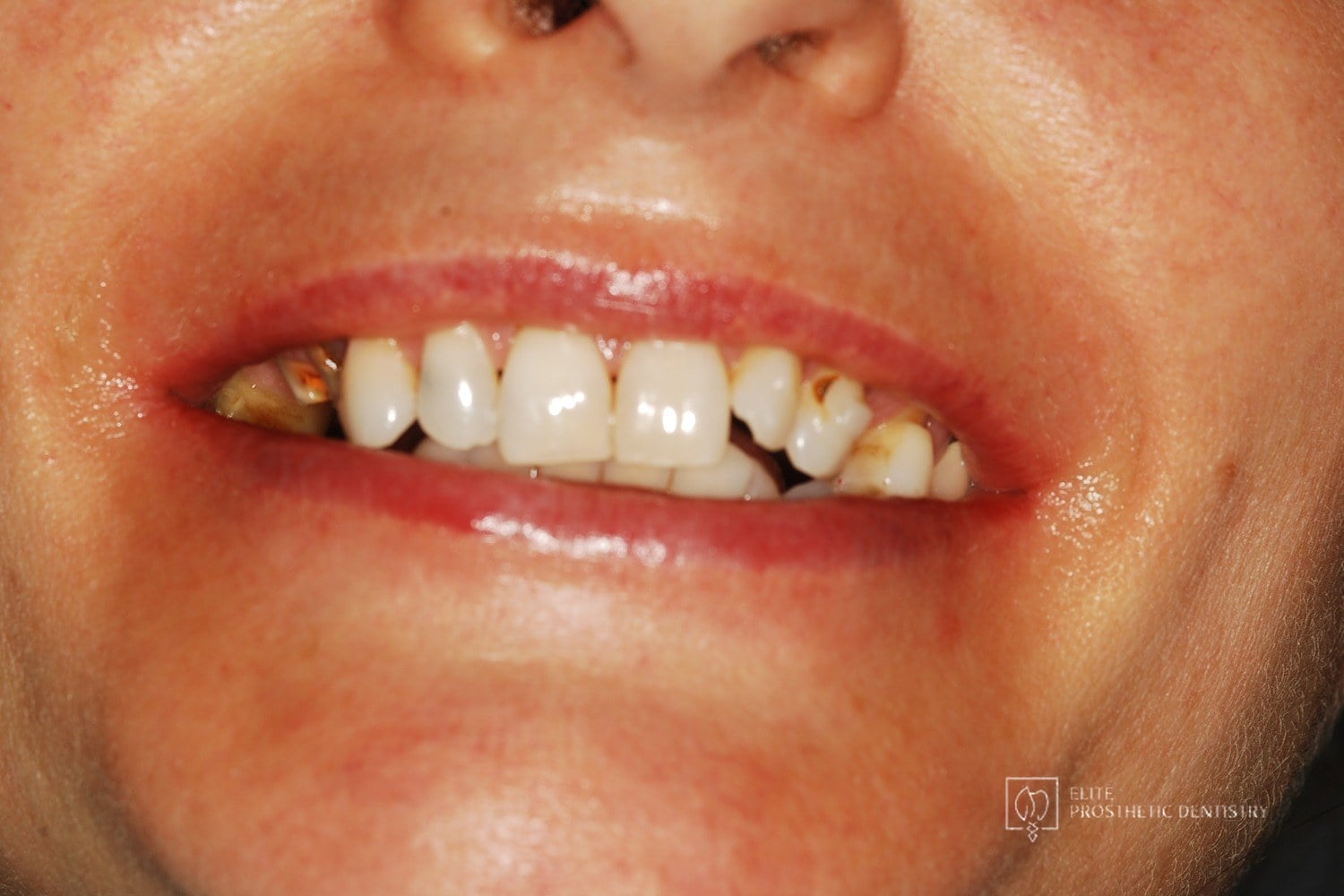 Before
 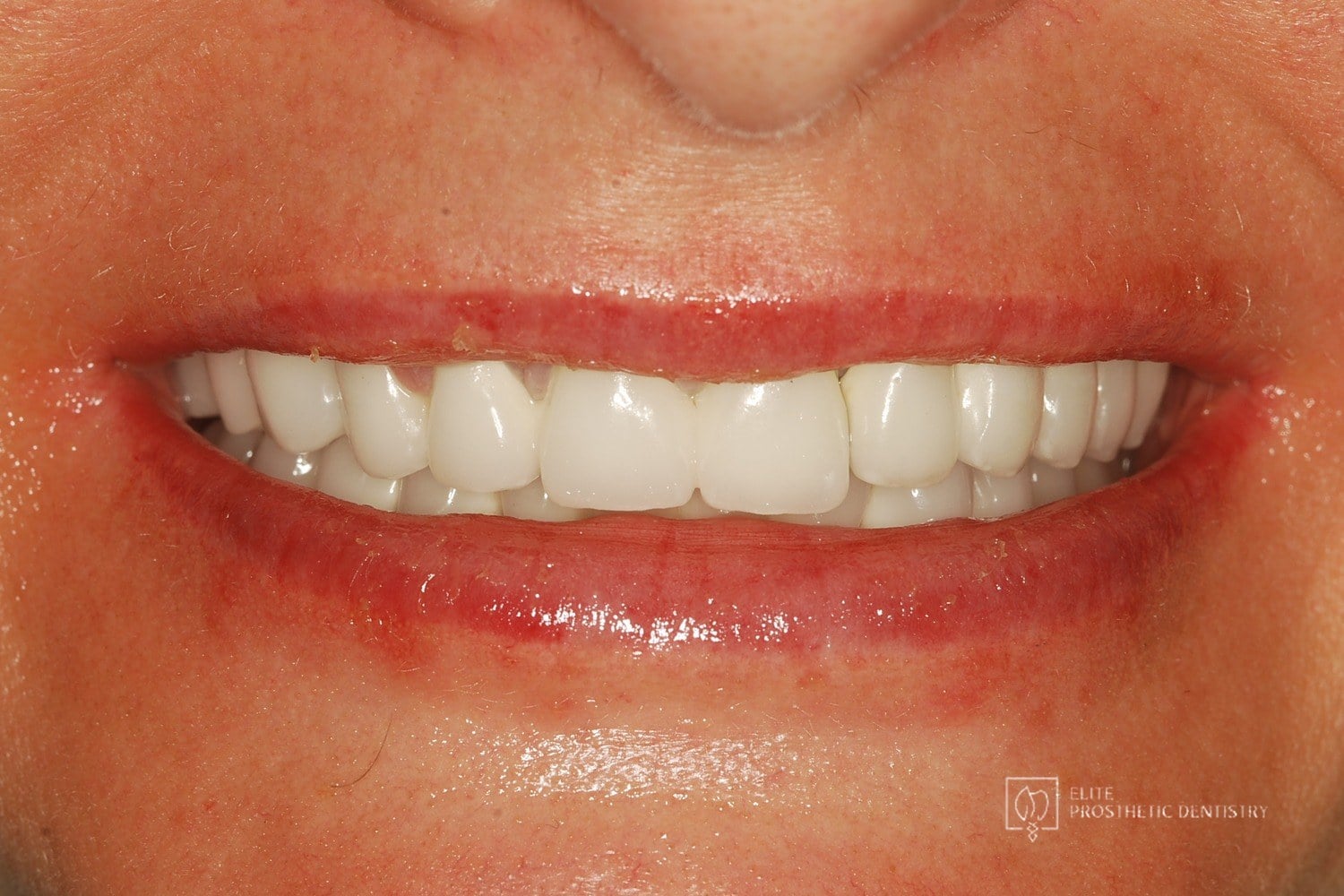 After
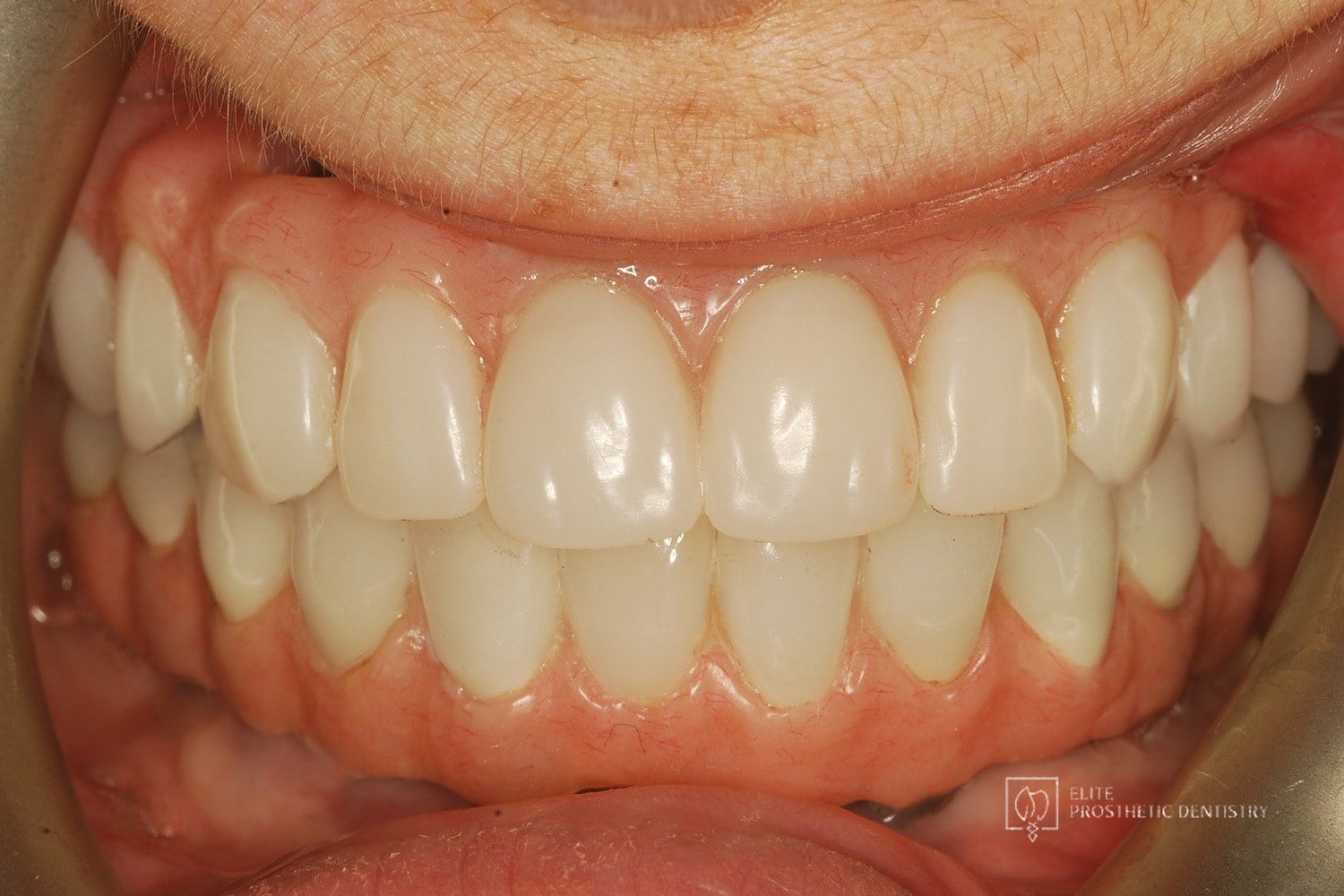
After How Aging, Failing Dentistry Was Replaced with a Coordinated Full-Mouth Implant and Crown Reconstruction
The patient presented with throbbing upper-molar pain, long-standing infections, multiple root canals and unfinished prior treatment, generalized sensitivity, and several hopeless teeth.
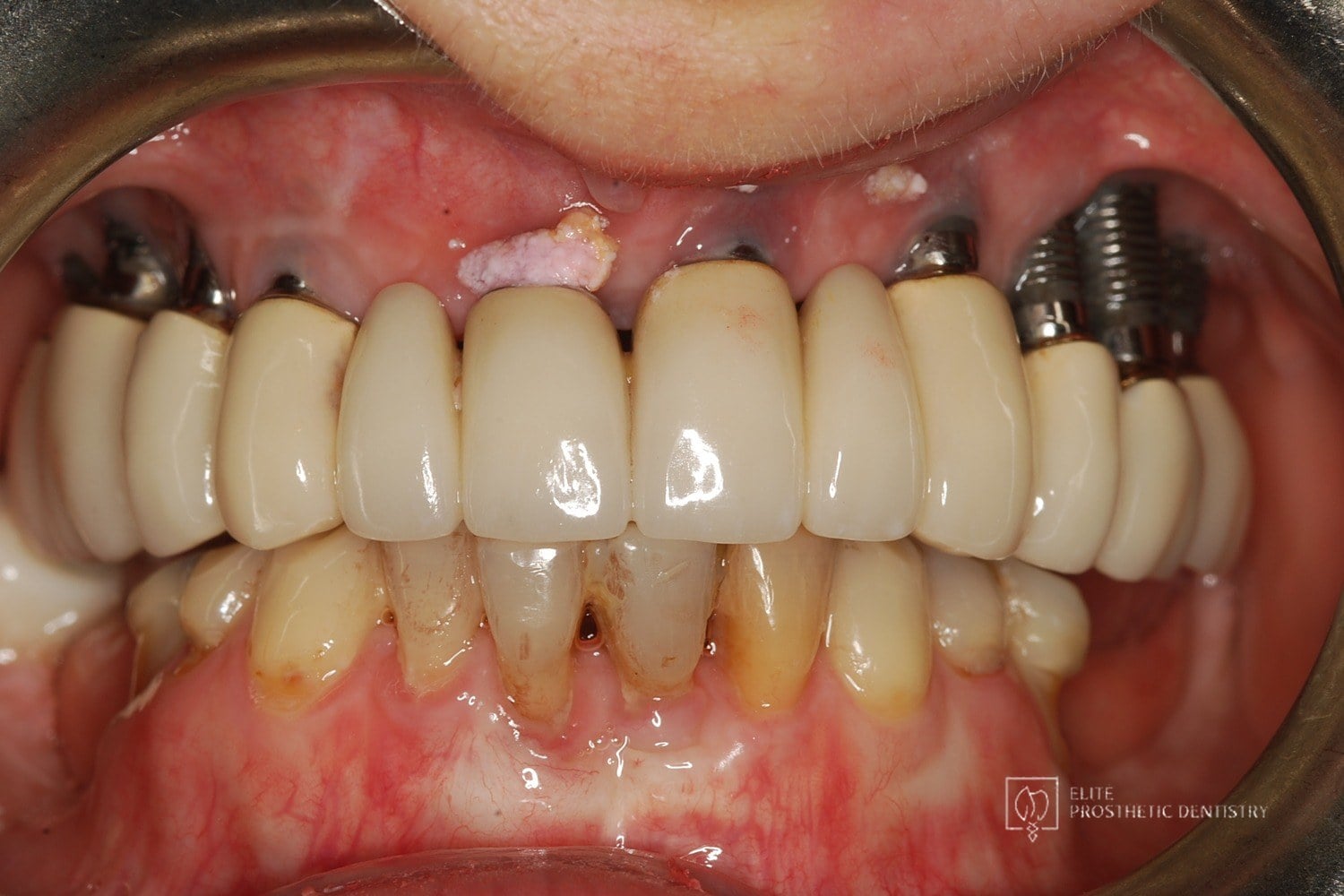 Before
  After
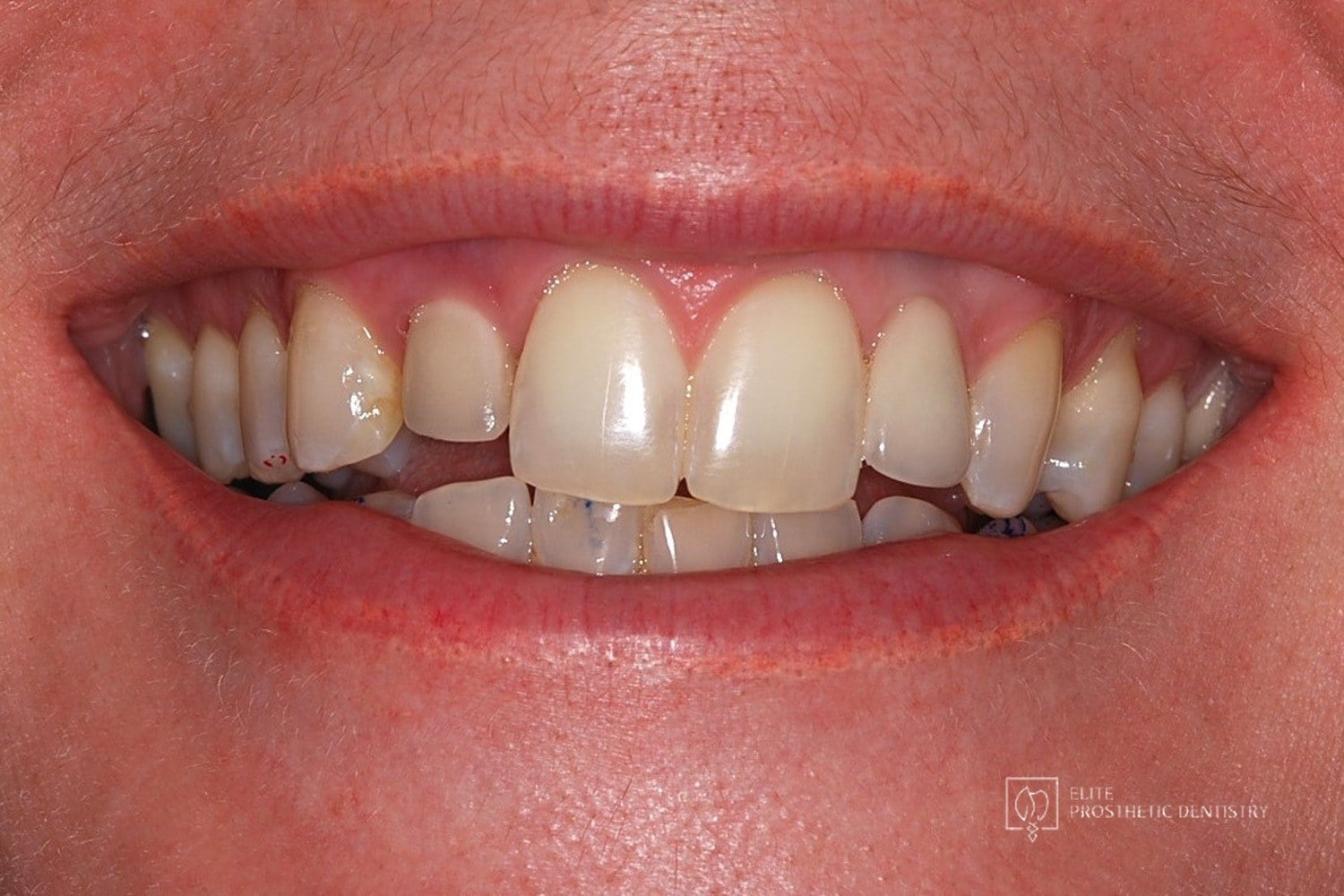
After How Failing Implants and Severe Bone Loss Were Rebuilt Into a Stable Full-Arch Implant Reconstruction
The patient presented with significant complications from previously placed implants, severe bone loss, failing posterior implants, and an unesthetic full-arch bridge. Both arches required full reconstruction, with the upper arch showing the most advanced bone loss and instability.
 Before
  After
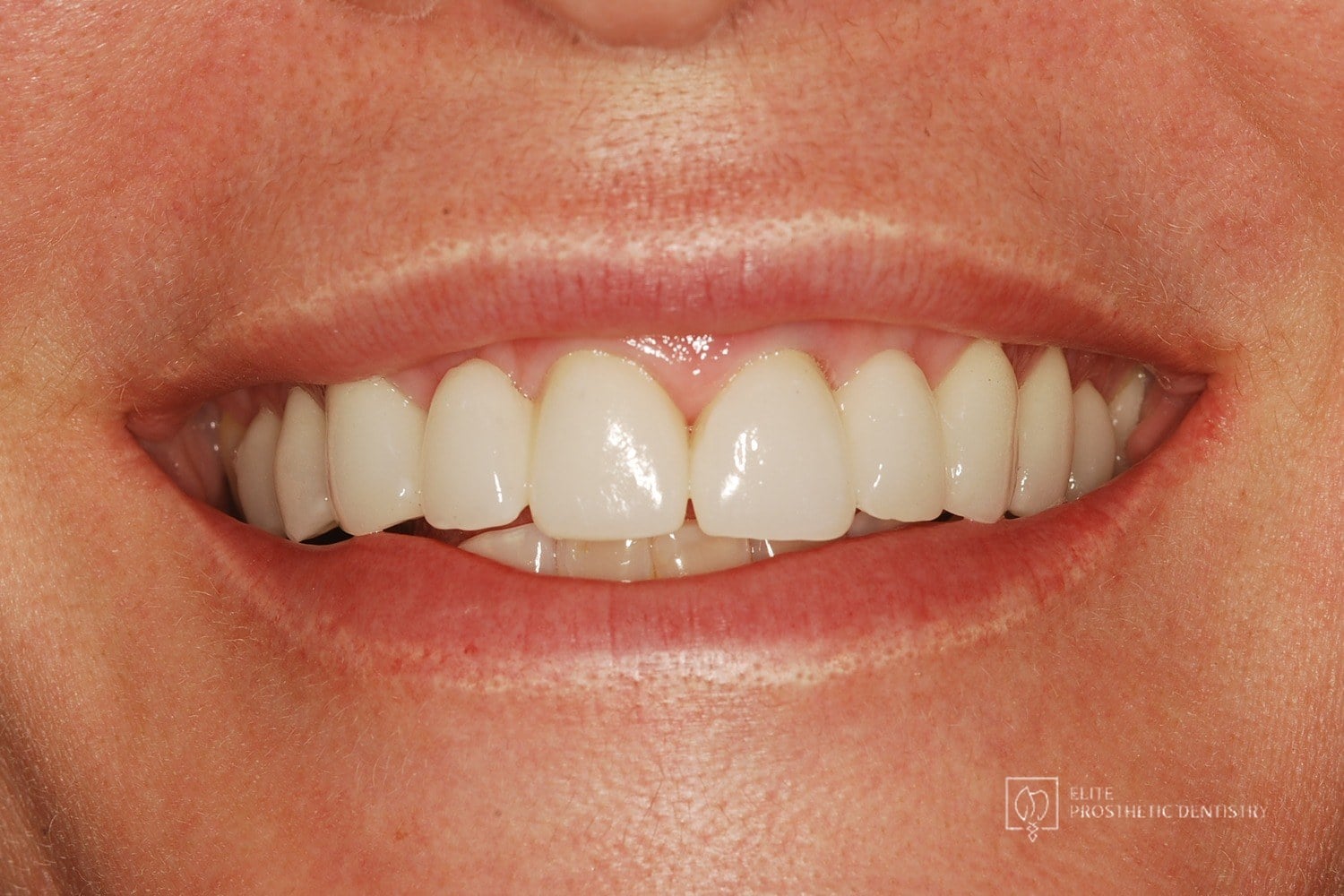
After How Failing Lateral Incisor Implants Were Replaced with Custom Zirconia Bridges After Severe Bone Loss Made Replacement Implants Impossible
Comprehensive examination including CBCT imaging revealed significant bone loss surrounding implants that were placed outside the buccal plate, most likely due to placement without a CBCT-generated surgical guide. The implants were determined non-salvageable, and the alveolar ridge was too narrow to support replacement implants without extensive reconstruction.
 Before
  After
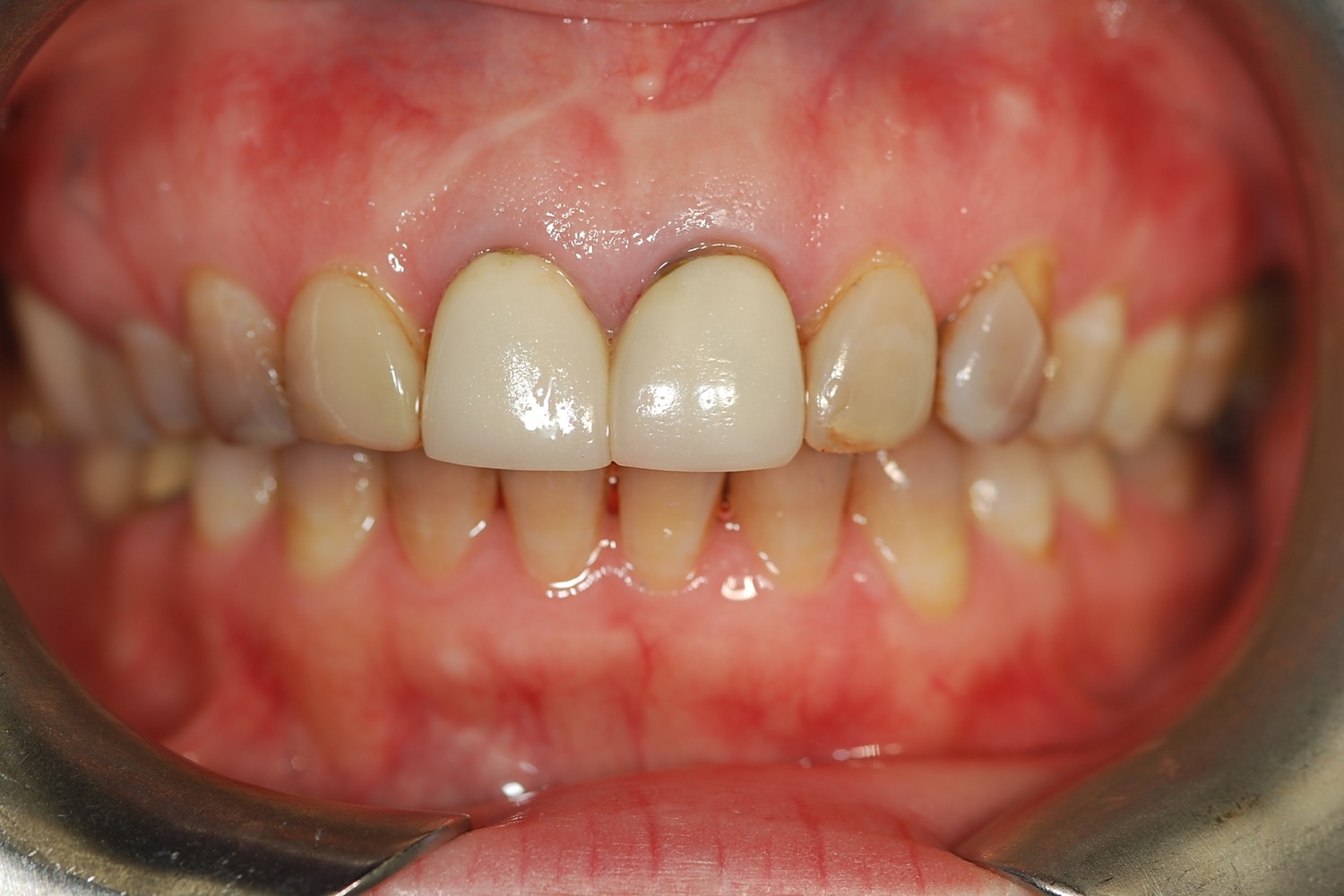
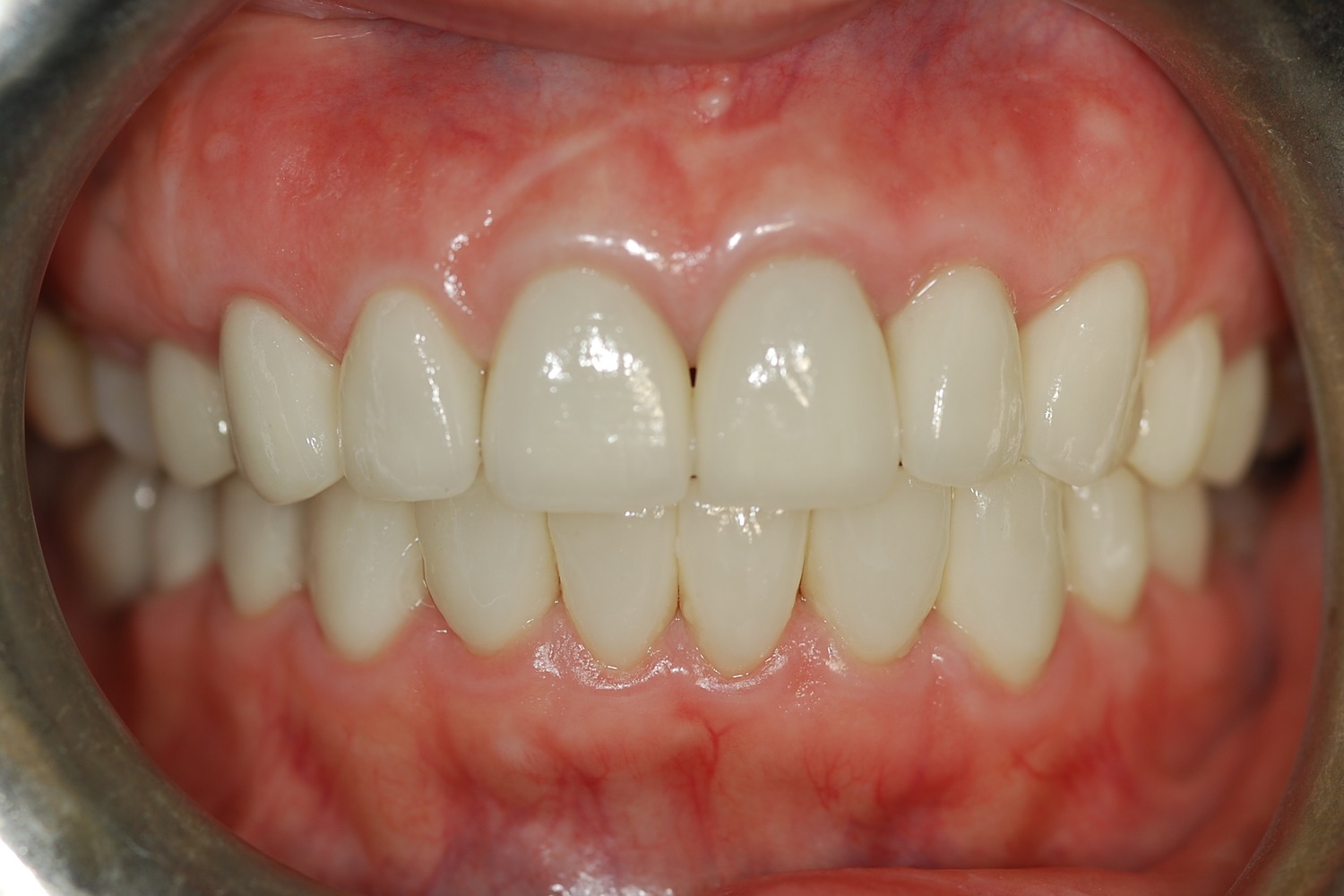
After How Aging, Opaque Restorations Were Replaced with Customized Ceramic Restorations Designed for Long-Term Natural Esthetics
The existing restorations appeared opaque, worn, and unnatural over time, affecting both confidence and overall smile harmony.
 Before
  After
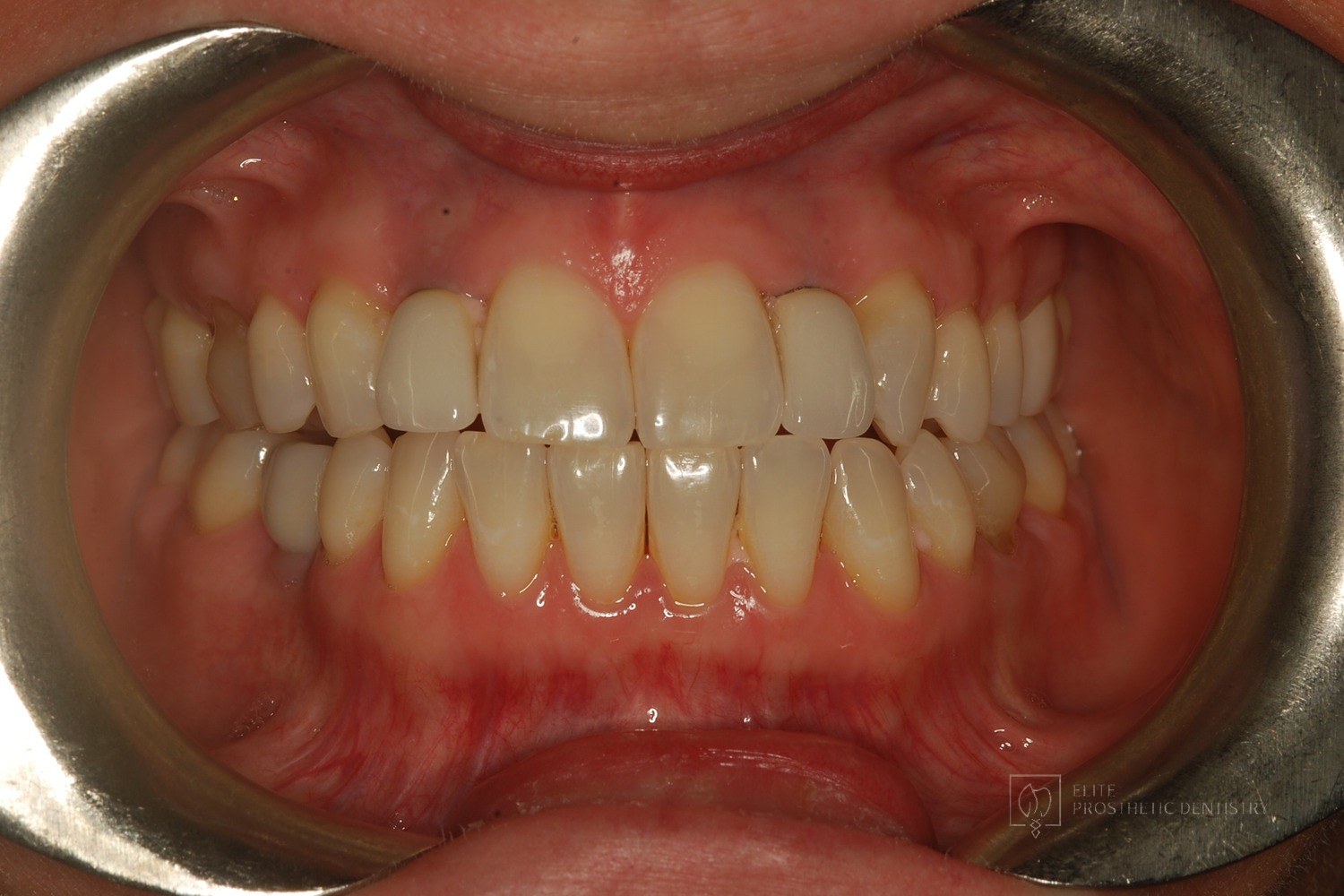
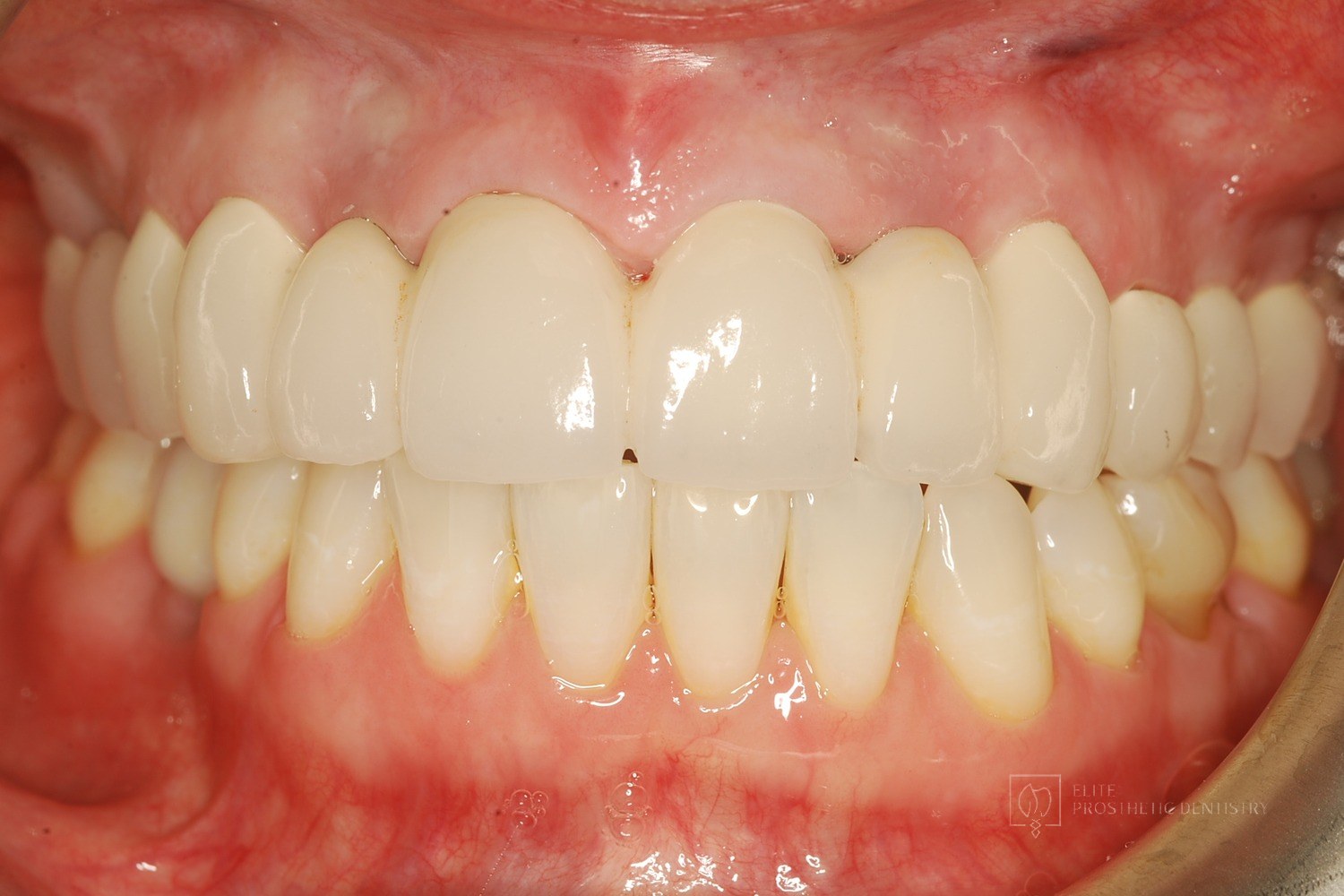
After How Older Implant Crowns Were Redesigned for a Better Bite and More Natural Appearance
The patient came in after years of living with implant-supported crowns placed more than twenty years earlier that no longer looked or functioned well. CBCT evaluation, reviewed with a radiologist colleague, showed the implants had been placed too far to the buccal in very thin bone and could not support a healthy long-term restoration.
 Before
  After
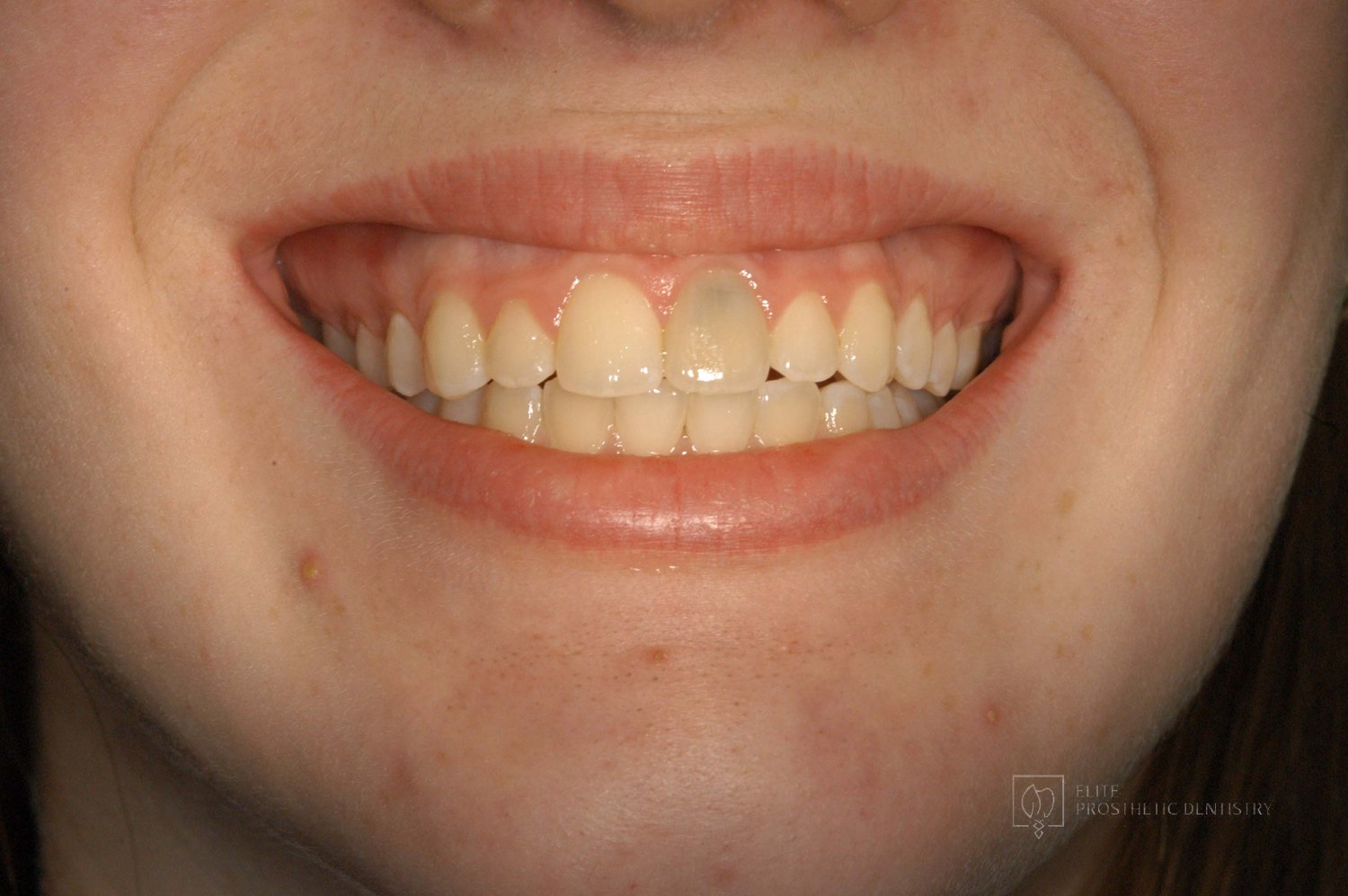
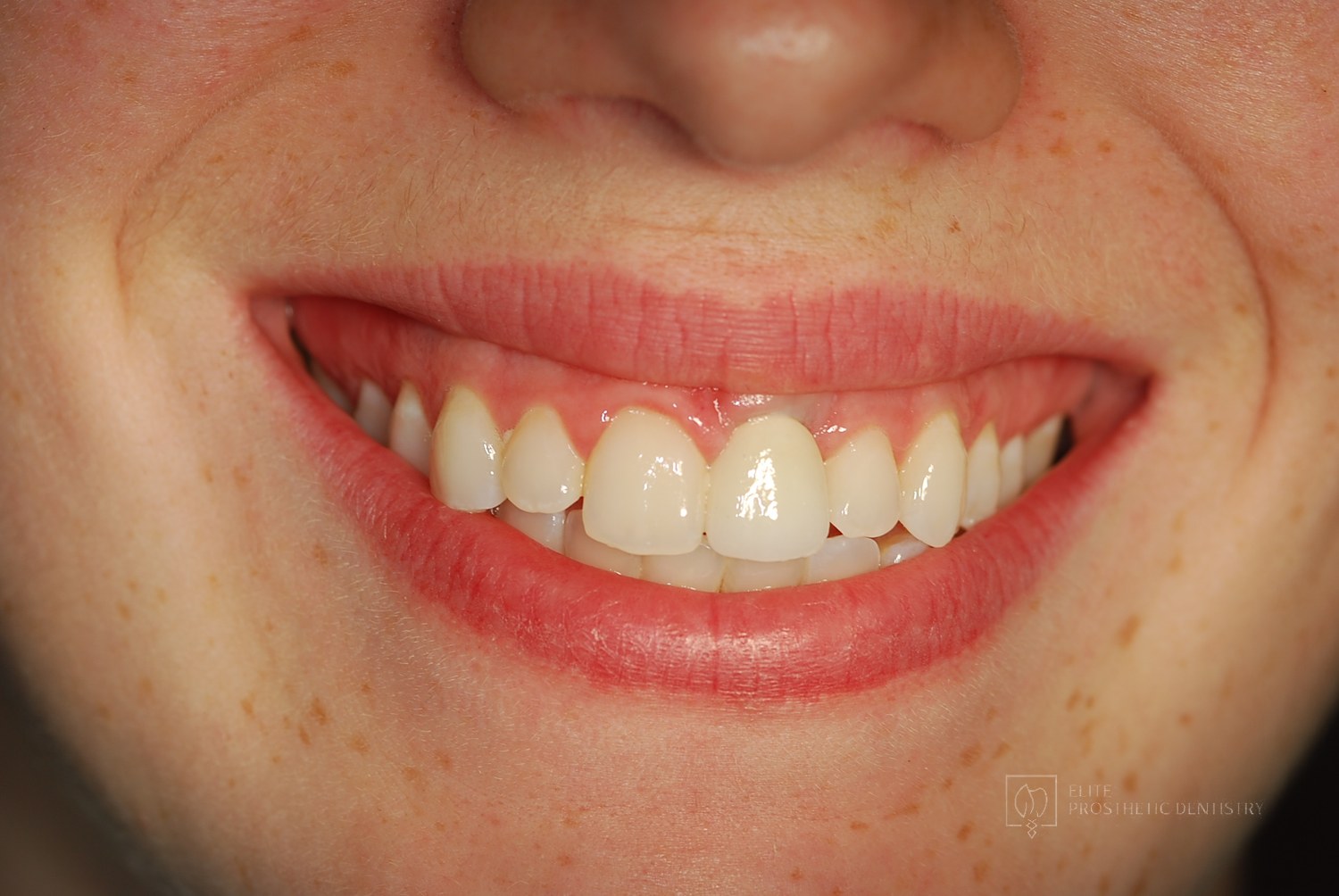
After How a Front Tooth Lost to Childhood Trauma Was Rebuilt with Bone Grafting and a Long-Lasting Implant
A teenager was referred by her father after earlier trauma left her upper left front tooth slowly failing from root resorption. She was still growing, so an immediate implant was the wrong move. The tooth had to be maintained to buy time, then replaced correctly once she reached skeletal maturity.
Related Articles
Deepen your knowledge with additional insights on this topic.
 Choosing a Prosthodontist
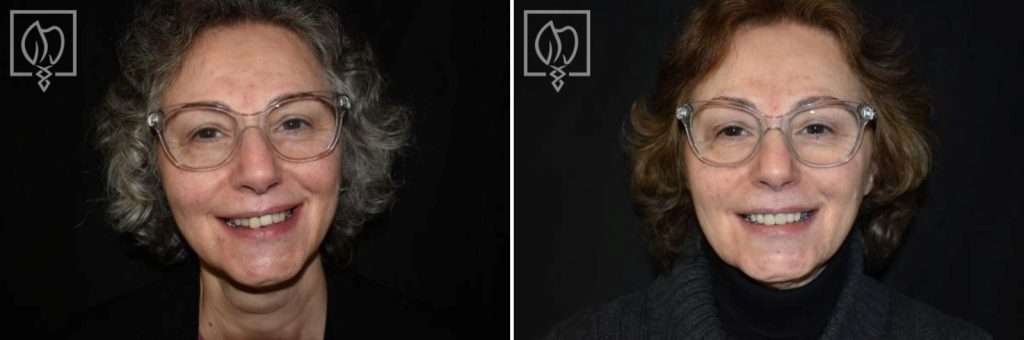
 The Patient's Guide to Implant, Cosmetic and Restorative Dentistry
How to judge quality in implant, cosmetic, and restorative dentistry: choosing a practitioner, why the lab matters, financing, and the questions to ask.
 Choosing a Prosthodontist
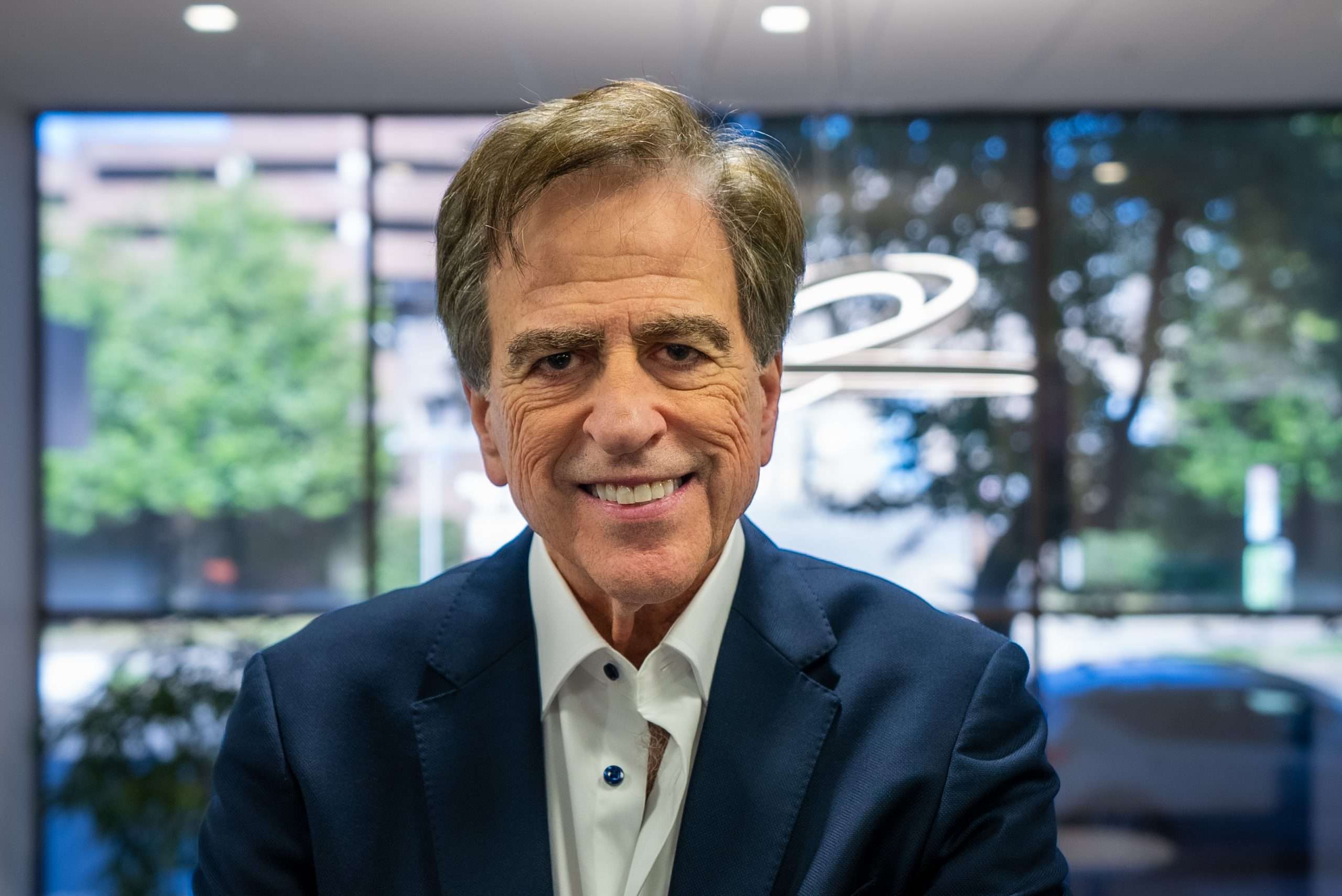
 What is a Prosthodontist?
A prosthodontist is a dental specialist with advanced training in crowns, implants, dentures, and complex restorations. Washington, DC specialist.
 Choosing a Prosthodontist
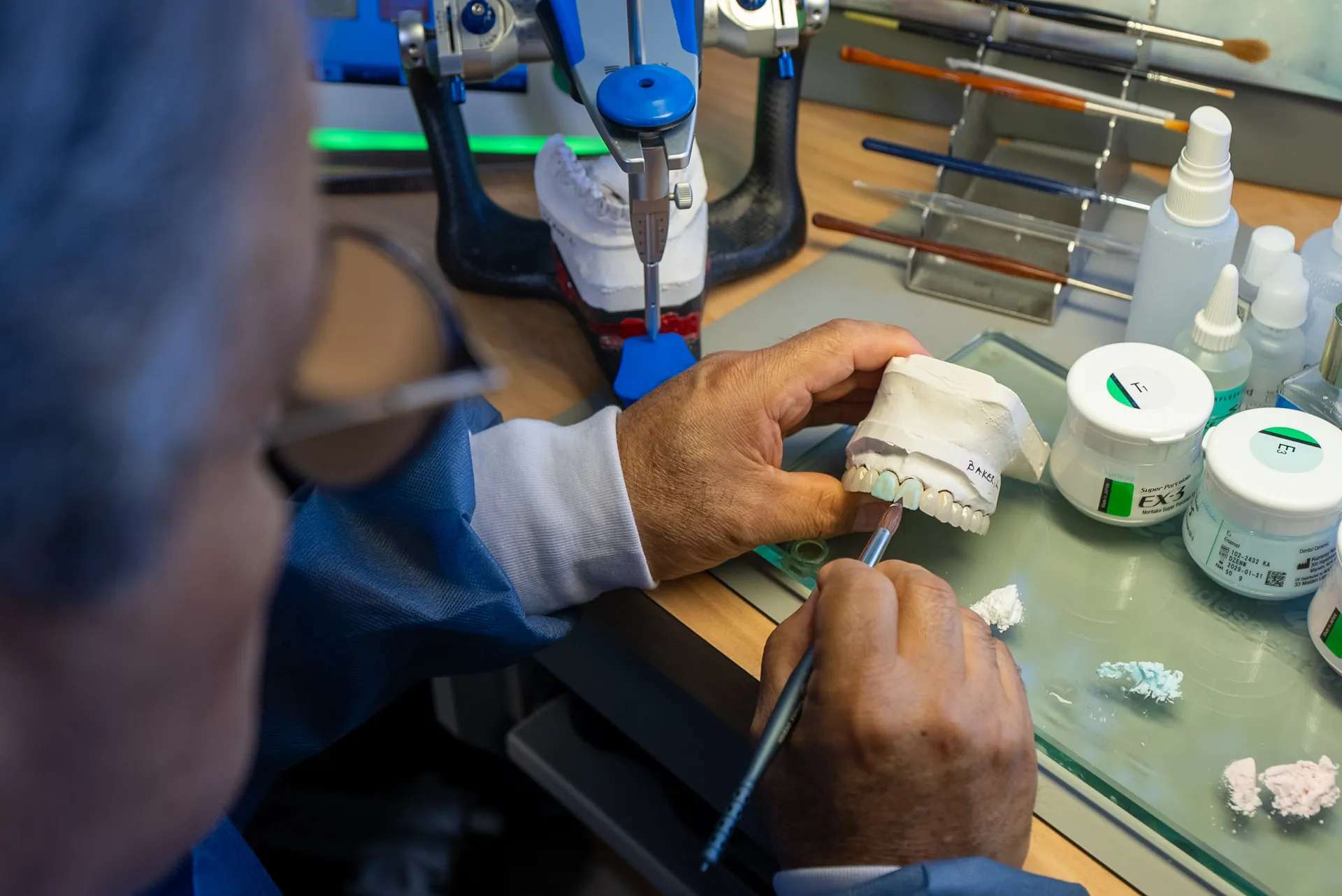
 4 Ways You Can Benefit from Our In-House Dental Lab
Custom aesthetics, precision fit, shorter waits, and fast repairs: four ways an in-house dental laboratory changes both your experience and your results.
 Choosing a Prosthodontist
 What Is the Difference Between a Dentist and a Prosthodontist?
Every prosthodontist is a dentist, but with years of extra specialty training in restoring and replacing teeth. A DC prosthodontist explains who does what.
 Choosing a Prosthodontist
 Don't Wait 'Til It's Too Late: Start with a Virtual Dental Consultation
A virtual consultation is a convenient first step: discuss your concerns, share records, and hear options from a DC prosthodontist before an in-person exam.
 Choosing a Prosthodontist
 Emergency Dentistry: The Benefits of an In-House Laboratory
When a tooth or restoration breaks, an on-site dental lab can mean a natural-looking repair in a day instead of a week. How emergency fabrication works in DC.
Getting Here from Vienna
Elite Prosthetic Dentistry is conveniently located near Vienna, VA.
From Vienna, take Route 123 (Maple Avenue) east toward Tysons, continue north via Chain Bridge Road into DC toward Friendship Heights office at 4400 Jenifer Street NW, Suite 220, Washington DC 20015. Building parking available.
Address:
4400 Jenifer Street NW, Suite 220
Washington, DC 20015
Phone: (202) 244-2101
Request a ConsultationRequest a Specialist Consultation from Vienna
Vienna residents come to Dr. Marlin for specialist prosthodontic care. With 3,900+ implants placed over 40+ years, evaluation, planning, and execution are handled with the depth complex cases require.