
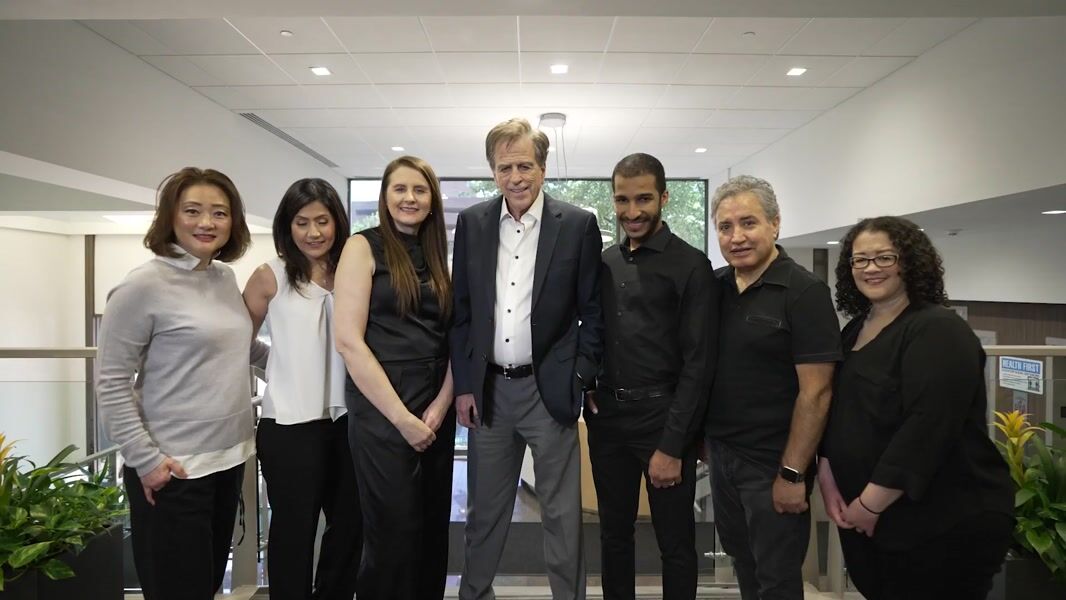
Your Denture Patient Journey in Potomac
Understanding the denture journey from decision through delivery and adaptation for Potomac patients. Phased treatment, realistic adaptation timeline, and honest...
Phase One: The Decision and Consultation
Your denture journey begins when you recognize that tooth loss requires restoration. This realization comes at different times for different patients. Some know extraction is necessary and begin planning before teeth are removed. Others have experienced tooth loss gradually over years and finally decide restoration is essential. Regardless of your path, the decision to move forward is significant.
Your first appointment with us addresses your concerns and options. We evaluate your remaining teeth, assess your bone structure, and discuss what dentures truly involve. We show you examples and explain timelines and costs. We listen to your concerns about appearance, function, and your specific life demands.
During this consultation phase, it’s critical that you ask questions and express any worries. Patients who understand what dentures require report greater satisfaction because they have realistic expectations. We take time to ensure you understand both the benefits and the adjustments required.
Phase Two: Preparation and Extraction
If tooth extractions are necessary, we schedule them strategically. Tooth removal can occur before denture fabrication begins or at the time of immediate denture placement. Immediate dentures are placed at extraction, meaning you leave your appointment with teeth. Delayed dentures are fabricated after extraction healing is complete, typically 3 to 6 months later.
Each approach has advantages. Immediate dentures avoid edentulous periods but require multiple adjustment appointments as tissues heal. Delayed dentures achieve better fit after tissues stabilize but require you to manage a healing period without teeth. We discuss which timing makes sense for your specific situation.
Phase Three: The Fabrication Process
Once tooth removal is complete or planned, fabrication begins with impressions. Your preliminary impression guides a custom tray. Your final impression captures precise ridge anatomy. Your bite record establishes proper jaw relationships. We evaluate tooth shade and shape against your facial characteristics.
This phase spans 8 to 12 weeks. Multiple appointments space the process appropriately. Your try-in appointment allows final adjustments before irreversible processing. You approve how your denture will look and function before final fabrication occurs.
Throughout this phase, you’re engaged in active decision-making about your restoration, not passively receiving treatment.
Phase Four: Delivery and Initial Adjustments
Denture delivery is when your restoration enters your mouth for the first time. We carefully insert it, evaluate the fit, check your bite, and refine any issues. We provide detailed instructions on insertion, removal, cleaning, and care. We schedule follow-up adjustments for the days and weeks following delivery.
The sensation of wearing dentures is immediate and notable. Most patients feel their tongues cannot fit in their mouths because the denture base takes space. Your mouth rapidly adapts. Within hours to days, this sensation becomes normal.
Phase Five: The Adaptation Period
Weeks 1-2: Eating feels different. Speaking sounds slightly strange. You may experience mild sore spots where dentures contact tissues. We schedule adjustment appointments to address these issues promptly. Most sore spots resolve within 24 hours of relief grinding.
Weeks 2-4: Speaking normalizes rapidly. Eating techniques improve as you practice. Sore spots resolve. Your mouth develops unconscious muscle control. Denture retention stabilizes as tissues accommodate the denture base.
Week 4 and beyond: Most patients function completely comfortably with their dentures. They eat without thinking about their teeth. They speak clearly. They forget they’re wearing dentures during normal activities.
Phase Six: Long-Term Maintenance
After initial adaptation, you enter the maintenance phase. Periodic appointments allow us to monitor how your bone is resorbing and maintain optimal denture fit. Initial bone resorption is rapid, requiring adjustments every few months during the first year. After your first year, the pace slows.
For the first 5-8 years, your denture typically functions acceptably with periodic adjustments. Eventually, bone resorption becomes significant enough that a new denture becomes more practical than continued adjustments. We guide you through this decision when the time arrives.
Regular maintenance extends your denture’s functional life and maintains your comfort and confidence.
What Determines Success at Each Phase
Denture success depends on clear expectations during the consultation phase. Patients who understand the adaptation process and commit to it demonstrate higher satisfaction. Those viewing dentures as a compromise rather than a solution sometimes struggle.
Success during fabrication requires that you communicate clearly about appearance and function. Attending try-in appointments and approving your denture before final processing ensures the final result meets your expectations.
Success during adaptation requires patience and willingness to adjust your eating and speaking techniques. Patients who commit to the learning curve adapt quickly. Those expecting instant mastery sometimes become frustrated.
Success during maintenance requires regular appointments and commitment to denture care. Patients who maintain good oral hygiene and attend follow-up visits maintain optimal function. Those neglecting care often experience problems.
Elite Prosthetic Dentistry 4400 Jenifer Street NW, Suite 220 Washington, DC 20015 (202) 244-2101 Request a Consultation Contact & Directions
Potomac patients are 15-20 minutes away via River Road or Falls Road. Free parking is available in our building. parentServicePage: “/dentures/” market: “priority-1” areaServed: name: “Potomac” containedIn: “Montgomery County, MD” geo: latitude: 38.9818 longitude: -77.2086 distanceFromPractice: “25 minutes via River Road and Massachusetts Avenue NW” transitInfo: “Drive east on River Road to Massachusetts Avenue, continuing to our Friendship Heights office near the DC-Maryland line.” faqs:
- question: “Are modern dentures better than they used to be?” answer: “Yes. Modern dentures are fabricated with superior materials and techniques compared to dentures from decades past. Dr. Marlin uses high-quality acrylic resins and tooth materials that are more durable and esthetically refined. Modern dentures also benefit from contemporary design principles that improve fit, retention, and function.”
- question: “Can implant-supported overdentures replace removable dentures?” answer: “Yes. An implant-supported overdenture is a removable prosthesis that snaps onto dental implants, providing much greater stability and retention than a traditional removable denture. Many Potomac patients who have worn traditional dentures find implant-supported overdentures transformative. The teeth no longer slip or move during eating or speaking.”
- question: “How long does it take to get new dentures?” answer: “Timeline depends on whether extraction of remaining teeth is needed. Simple cases where remaining teeth exist can proceed to fabrication within two weeks. Cases involving extraction require healing time (typically several months) before final dentures are completed. Dr. Marlin discusses the timeline during your consultation.”
- question: “Can a partial denture be converted to a fixed bridge on implants?” answer: “Sometimes. If a partial denture is missing several adjacent teeth, those teeth might be replaced with an implant-supported fixed bridge instead, eliminating the need for a removable prosthesis. This depends on bone availability and other factors. Dr. Marlin evaluates whether conversion is appropriate for your specific situation.”
- question: “Will dentures feel normal in my mouth?” answer: “Modern dentures fabricated by a prosthodontist often feel more natural and comfortable than older-style dentures. However, all removable dentures require an adjustment period. Your mouth learns to adapt to the prosthesis. Within a few weeks, most patients report that dentures feel increasingly natural and comfortable.”
Potomac’s accomplished residents sometimes face a situation they did not anticipate: tooth loss that is extensive enough to require a removable prosthesis. Perhaps years of untreated disease led to tooth loss. Perhaps an accident resulted in loss of multiple teeth. Perhaps aging and accumulated failed dental work meant extraction became necessary. Regardless of the circumstance, Potomac patients facing restorations want the best available options.
Dr. Gerald Marlin at Elite Prosthetic Dentistry specializes in restoration fabrication at the highest level. His specialty training as a prosthodontist, combined with decades of experience and an on-site dental laboratory, allows him to create prosthetic teeth that look natural, fit precisely, and function reliably for years. For Potomac patients who need prosthetic teeth, our team at Elite Prosthetic Dentistry’s expertise makes a profound difference in their experience and satisfaction with the final result.
Schedule Your Denture Consultation
Modern Denture Options
Not all dental prosthetics are created equal. The difference between a denture fabricated by a general dentist using an external laboratory and a denture designed and fabricated by a prosthodontist in an on-site laboratory is substantial.
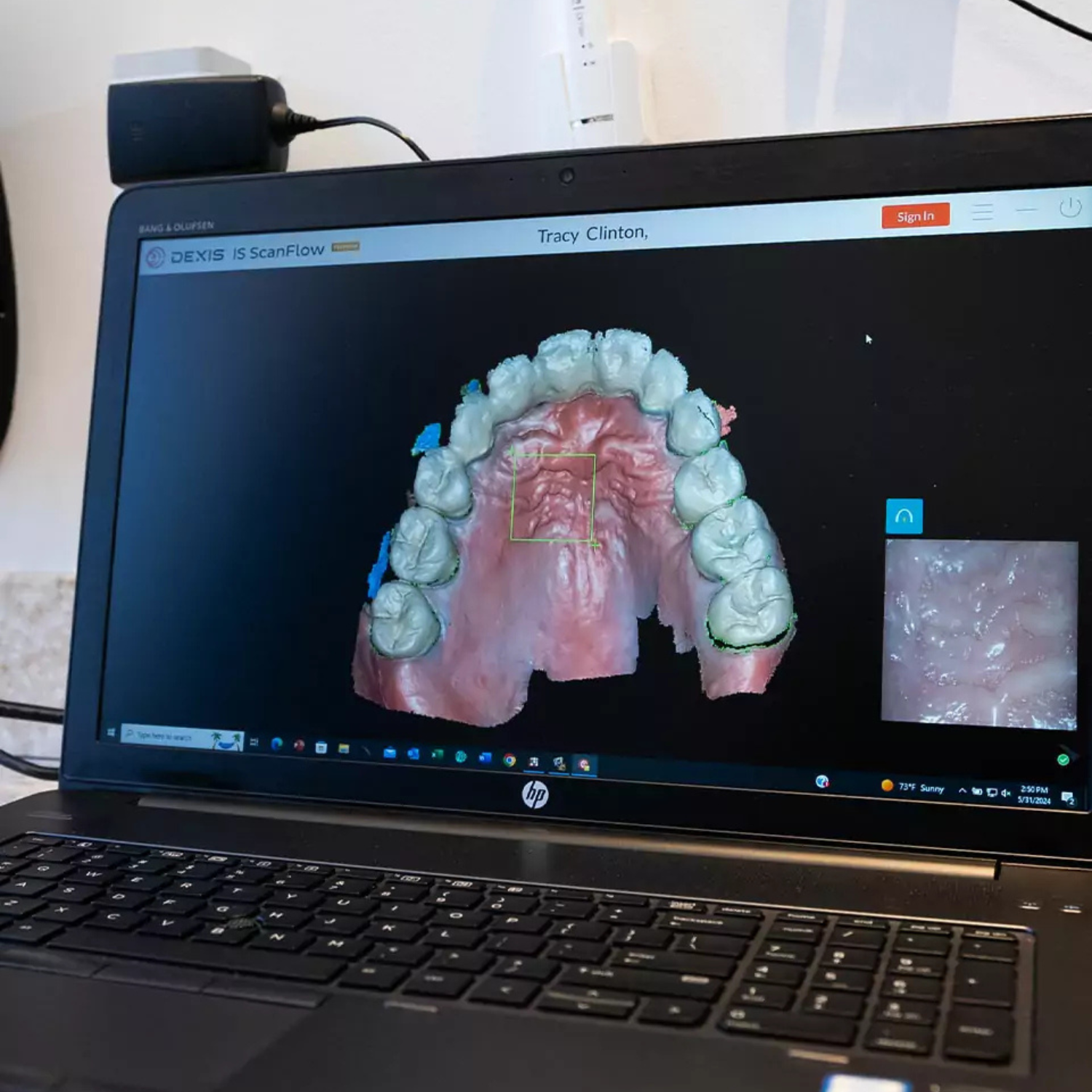
Traditional Complete Dentures
A traditional complete restoration replaces all of the upper teeth, all of the lower teeth, or both. The prosthetic rests on the gum tissue and is held in place by suction and the natural contours of the jaw. A well-fabricated complete option can function quite well, allowing patients to eat most foods and speak normally.
However, complete dental prosthetics have inherent limitations. Bone naturally resorbs (shrinks) after teeth are lost. Over time, a denture that fits well initially can become loose and unstable. Eating very hard foods remains challenging. The denture requires daily removal, cleaning, and storage in a solution.
Partial Dentures
A partial restoration replaces some of the teeth while remaining natural teeth remain. The partial prosthetic is held in place by clasps that grip the remaining natural teeth. Like complete dentures, partials are removable and require daily care.
Partial removable restorations work well when several natural teeth remain to support and stabilize the prosthesis. However, they place stress on the remaining natural teeth. Over time, some patients find that the remaining natural teeth deteriorate, eventually requiring conversion of the partial denture to a complete denture.
Implant-Supported Overdentures
An implant-supported overdenture is a removable denture that is supported by dental implants rather than resting on gum tissue. Typically, two to four implants are placed in the jaw, and the overdenture snaps onto these implants, providing extraordinary stability and retention.
This option transforms the prosthetic experience. The prosthesis is much more stable. It does not slip or move during eating or speaking. Many patients report that the stability and functionality are so superior to traditional dentures that they feel as though they have natural teeth again. The prosthesis is still removable (for ease of cleaning), but the functional experience is dramatically improved.
For Potomac patients who have worn traditional dentures and find them problematic, an implant-supported overdenture is often meaningful.
Implant-Supported Fixed Prosthesis
For some Potomac patients, the ultimate goal is a fixed prosthesis: teeth that are permanently attached and never require removal. An implant-supported fixed prosthesis is designed similarly to a traditional bridge, but instead of being supported by natural teeth, it is supported by dental implants.
This option requires sufficient implants and jawbone support, but when appropriate, it provides the experience of having natural teeth permanently restored. You brush and floss normally. You never remove the prosthesis. You eat virtually any food without concern.
The Prosthodontist’s Approach to Dentures
Elite Prosthetic Dentistry’s approach to denture fabrication emphasizes personalized design and direct involvement at every stage. We design every prosthesis personally, taking meticulous impressions that capture the precise contours of your jaw. We select tooth sizes, shades, and positions that match your facial structure and look naturally beautiful. We work directly with our laboratory technician, reviewing denture design in detail before fabrication.
This personal involvement at every stage produces dentures that fit better, look more natural, and function more reliably through comprehensive prosthodontic expertise and real-time quality control.
Denture Design and Esthetics
When fabricating a denture, our prosthodontic team considers factors that general dentists may not prioritize. The shade of the artificial teeth should match your natural coloring and any remaining natural teeth. The size of the teeth should be proportional to your lips and facial structure. The contour of the teeth should reflect natural tooth anatomy rather than looking identical and artificial.
The gum color and contour should look like natural gum tissue. The position of the teeth in relation to your lips should create a natural smile rather than one that appears denture-like.
These details seem minor but collectively determine whether a prosthetic looks like artificial teeth or like a natural smile. Our prosthodontic team’s attention to these details produces dentures that look naturally beautiful.
Precision Impression and Fit
The accuracy of a denture’s fit depends entirely on the accuracy of the impressions. Sloppy impressions produce loose, unstable dental prosthetics. Precise impressions produce dentures that fit snugly and are comfortable to wear.
Dr. Marlin takes detailed impressions using refined techniques that capture the precise contours of your jaw. For critical areas, he may take multiple impressions, verifying consistency. This meticulous approach to impressioning is the foundation for dentures that fit precisely.
Bite Registration and Occlusion
The way the upper and lower replacement teeth meet when you bite down is critical to prosthesis stability and comfort. Improper bite registration can result in dentures that rock or tilt when you chew.
Our practice records your bite carefully, taking multiple measurements to ensure accurate bite registration. We verify that the upper and lower dentures meet evenly across the entire surface, preventing rocking or instability.
Adjustments and Refinement
After a restoration is delivered, adjustments are common. Small areas may be causing irritation. The bite may need slight refinement. Speech may be affected by denture position.
Our practice provides adjustments and refinements as needed after delivery, working with you until the appliance is comfortable and functions well. This post-delivery support is often the difference between a denture that is tolerable and one that you truly like wearing.
Implant-Supported Overdenture Fabrication
For patients choosing implant-supported overdentures, the process includes coordination with a surgical specialist. Once implants are placed and have fully integrated (typically four to six months), Elite Prosthetic Dentistry fabricates the overdenture to snap precisely onto the implants.
The overdenture is designed similarly to a traditional prosthesis but includes small attachment mechanisms that allow the prosthesis to snap securely onto the implants. This combination of denture design and implant attachment produces extraordinary stability and retention.
Conversion from Removable to Fixed
Some Potomac patients who have worn removable dentures or partials eventually decide to transition to an implant-supported fixed prosthesis. Our prosthodontic team evaluates whether sufficient bone and implant support exists for this option.
If conversion is appropriate, the existing removable prosthetic provides a template for the fixed denture design. Tooth positions and shades from your current denture can be replicated in the new fixed restoration, providing continuity from what you know to what you want.
Long-Term Denture Care
New dentures require a modest adjustment period, typically two to three weeks. Your mouth learns to adapt to the prosthesis. Speech may be slightly affected initially but usually normalizes. Eating requires learning new techniques.
Once adjusted, removable restorations are remarkably durable. With proper care, a well-fabricated restoration can function reliably for 5 to 10+ years. Bone resorption eventually requires denture adjustment or remake, but the timeline for replacement is years, not months.
Daily care is straightforward. Remove and rinse the restoration after eating. Brush gently with a soft prosthetic brush to remove food and buildup. Soak overnight in a prosthesis solution to keep the acrylic hydrated and clean. With proper care, your dentures will maintain their appearance and function for years.
Eating with Dentures
Many Potomac patients worry about eating restrictions with replacement teeth. In fact, well-fitting dentures allow most people to eat virtually any food. Hard nuts and very sticky foods require caution, but soft vegetables, meats, breads, and most other foods can be eaten normally.
The key is that your prosthetic is stable. If your prosthesis rocks or moves when you chew, eating becomes difficult. Dr. Marlin’s meticulous fabrication and fitting process produces dentures that are stable enough to allow comfortable eating of most foods.
Speaking with Dentures
Speech adjustment occurs over the first few weeks. Some sounds may feel slightly different initially. The tongue learns new positions to produce normal speech. Most patients report that speech normalizes within two to three weeks of wearing the denture daily.
Quality of Life
For many Potomac patients, dentures represent the difference between isolation and engagement. A person who has lost multiple teeth often becomes withdrawn, avoiding social situations due to embarrassment about their appearance or concern about eating or speaking difficulties.
Modern dentures from a prosthodontist restore confidence and quality of life. You can smile without embarrassment. You can eat at restaurants and social gatherings. You can speak comfortably in professional and personal settings. The restoration of these normal activities is profound.
Getting Here from Potomac
From central Potomac, drive east on River Road toward Bethesda. Continue on Massachusetts Avenue NW as you approach the DC-Maryland border. Our office at 4400 Jenifer Street NW in Friendship Heights is located just beyond the state line, easily accessible from Potomac. The drive typically takes 25 minutes. Parking is available on Jenifer Street and in nearby public garage facilities.
Frequently Asked Questions
When should I expect to feel comfortable with my dentures?
Most patients feel initially comfortable with properly fitted dentures within days, though full comfort and mastery typically requires 2 to 4 weeks. Your mouth adapts gradually as muscles learn new patterns. Speaking normalizes first, eating proficiency follows. Complete unconscious function usually develops within a month of regular use.
What happens if my dentures don't fit correctly at delivery?
We schedule follow-up appointments specifically to address fit issues. Minor pressure points are corrected through selective grinding. Bite relationships can be adjusted. Denture retention can be optimized. These adjustments are normal and expected. We continue refinement until you're completely comfortable.
Will I need to see you regularly after treatment is complete?
Yes, periodic maintenance appointments are essential. We monitor bone resorption, check denture fit, perform adjustments as your bone shape changes, and perform relines as needed. Annual appointments are typical, though frequency increases if you experience fit changes. Regular care extends denture life and maintains function.
What if I want to transition from dentures to implants later?
Many patients choose dentures initially, then transition to implant-supported or fixed solutions later. This staged approach is practical when immediate implant treatment isn't feasible. Adequate healing time between phases is required. We can discuss timing and planning at your consultation.
Are there any reasons dentures might not work for me?
Rare anatomical conditions or significant bone resorption sometimes make dentures challenging. Certain medical conditions affecting healing or bone health can complicate treatment. Some patients psychologically struggle with denture adaptation. We evaluate candidacy thoroughly during consultation and discuss alternative options if dentures aren't appropriate.
Related Patient Success Stories
Explore similar patient success stories demonstrating our expertise in advanced prosthetic dentistry.
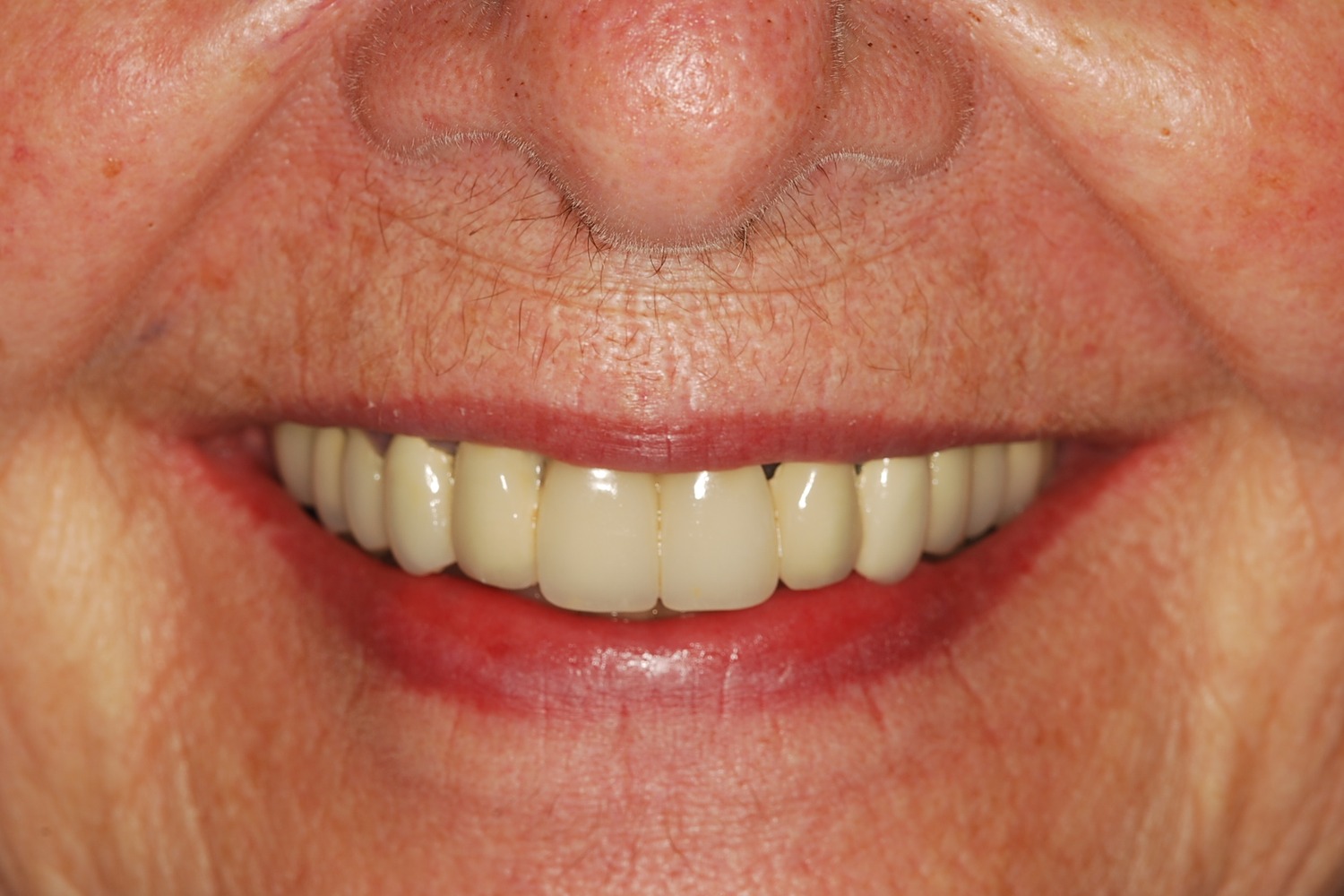 Before
 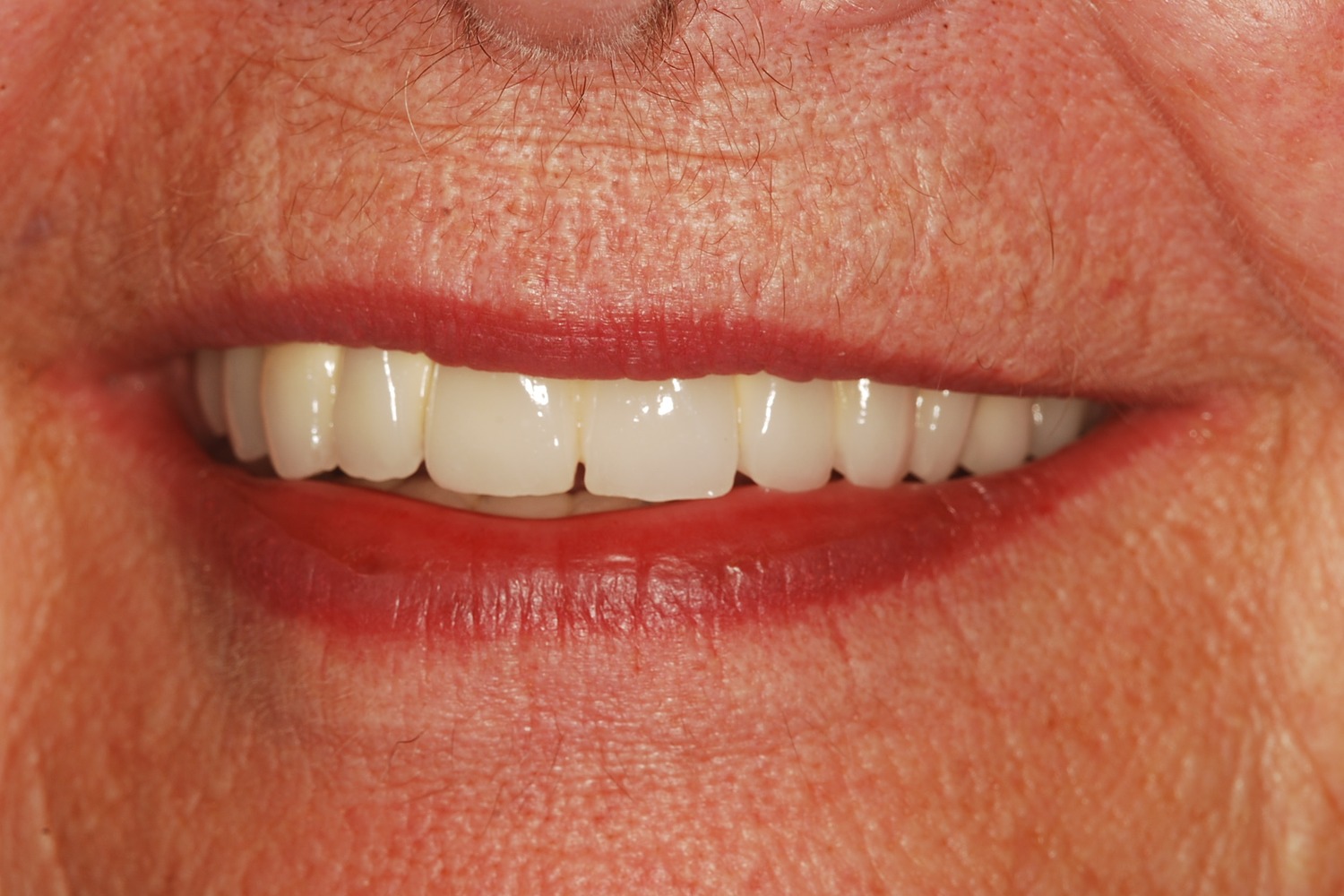 After
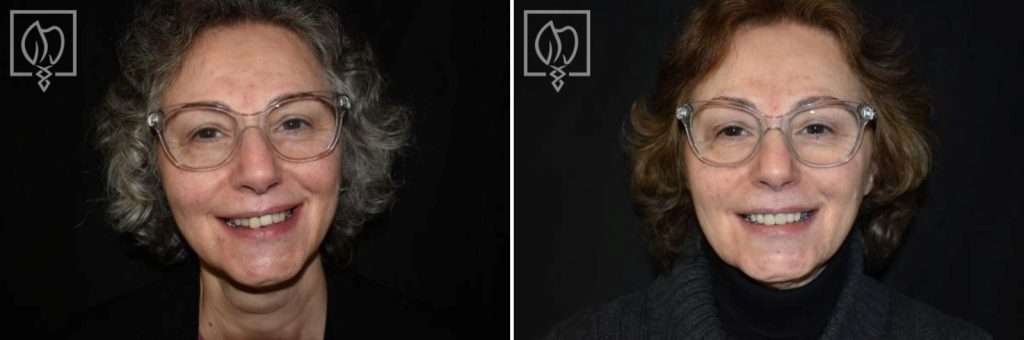
After How a Loose Upper Bridge and Aging Crowns Were Rebuilt with Staged Implant and Crown Reconstruction
The patient was referred by her general dentist after years of aging dentistry no longer holding up. A loose upper bridge and crowns over twenty years old combined with the effects of advanced periodo
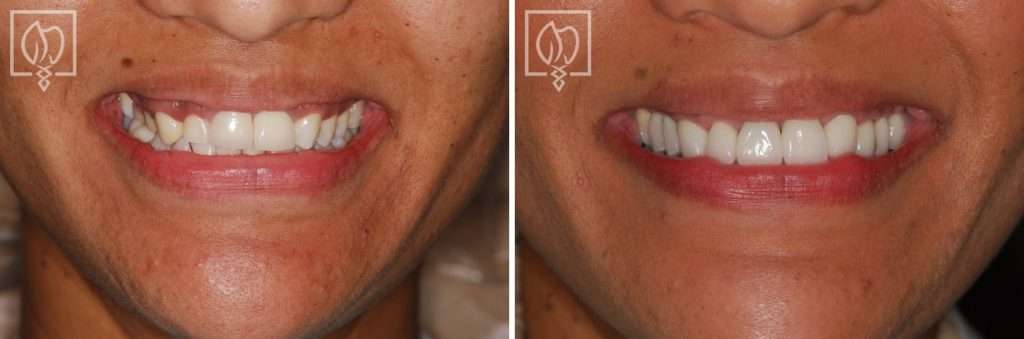
Temporary Crowns Restore Patient's Smile in Just One Day with an Immediate Smile Makeover
A patient from Potomac, Maryland, came to Elite Prosthetic Dentistry with the chief complaint of pain from a failing dental implant and its significant impact on her appearance.
Multi-Faceted Treatment for Patient Unhappy With Her Artificial-Looking Crowns, Teeth and Gums
Many patients come to Elite Prosthetic Dentistry unhappy with the appearance of their smile. However, this particular patient presented with multiple interconnected problems that together created a smile she found deeply unsatisfying.
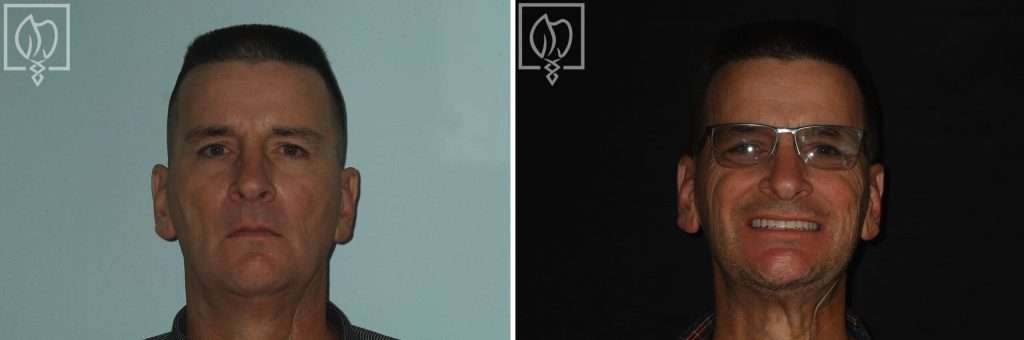
Treating Kevin's Collapsed Bite with a Complete Smile Makeover with New Dentures
Dentures are sometimes not created to the ideal aesthetic and functional scheme. When improperly fabricated, dentures can make an individual appear almost a generation older than their actual age. They can have a poor fit that feels loose and unstable when eating or speaking, and they can actually accelerate bone loss over time.
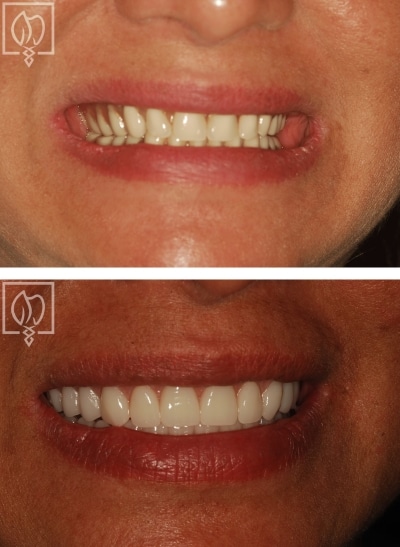
Rejuvenating Maria's Severely Worn Down Implant Overdentures
Many times, per year, patients come to us frustrated because their implant prosthesis is so severely worn down that they are very self-conscious and cover up their smile. They look and feel much older than their age as a result of the extensive wear of their appliance(s).
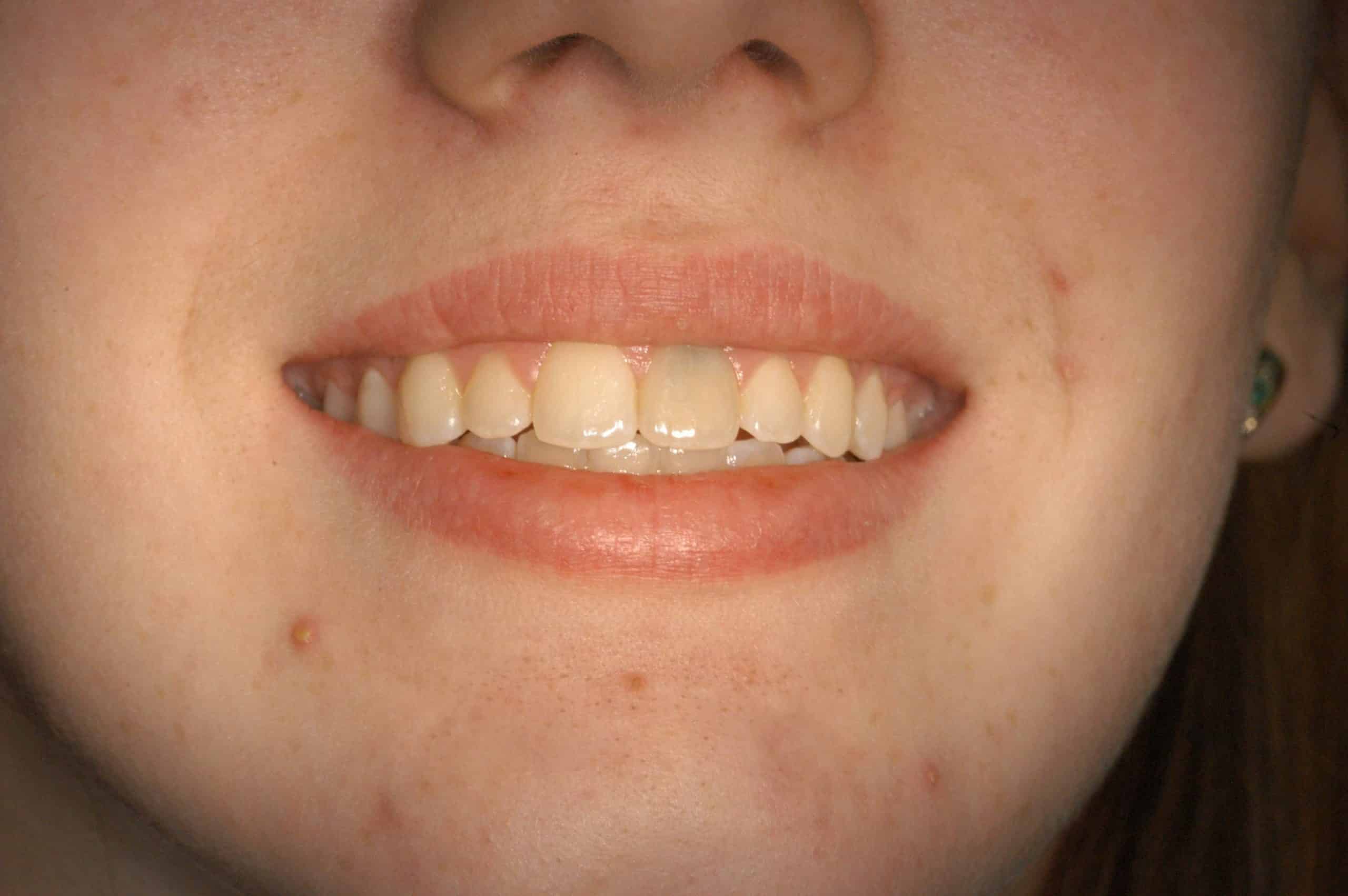
Replacing a Discolored Front Tooth with a Precision Placed Implant
Some of the most challenging restorations occur when fabricating an anterior crown to fit on an implant. Not only does one have the difficulty of matching the single front tooth to the other ones in the high visibility zone, but the dentist must also ensure the position of the underlying implant is precise through accurate preplanning and placement.
Related Articles
Deepen your knowledge with additional insights on this topic.
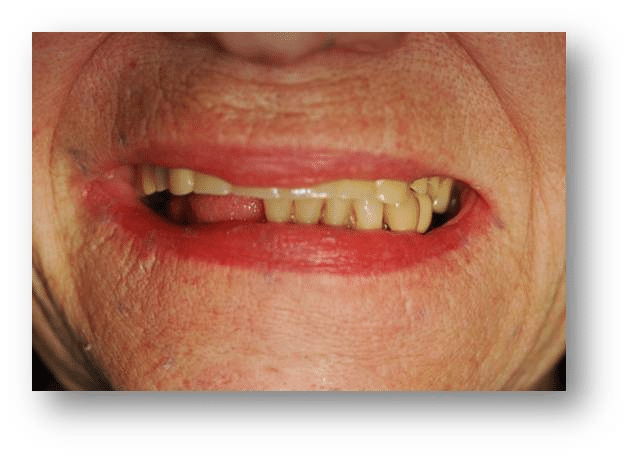
Our Services in Potomac
Beyond Dentures, Potomac patients rely on Dr. Marlin for a full range of advanced dental care.
More services available in Potomac:
Dentures Near Potomac
Dr. Marlin also provides dentures services for patients in these neighboring communities.
Getting Here from Potomac
Elite Prosthetic Dentistry is conveniently located near Potomac, MD.
Potomac patients drive east via River Road or Falls Road to Friendship Heights. Free parking available in our building.
Address:
4400 Jenifer Street NW, Suite 220
Washington, DC 20015
Phone: (202) 244-2101
Request a ConsultationRequest a Specialist Consultation from Potomac
Potomac residents come to Dr. Marlin for specialist prosthodontic care. With 3,900+ implants placed and restored over 40+ years, evaluation, planning, and execution are handled with the depth complex cases require.