
Are All Crowns the Same? Part II: How a Crown Achieves Truly Natural Aesthetics
In Part I of this series, we examined how precision of fit separates crowns that last a decade from crowns that last a generation. Part II turns to the question patients see every time they smile: why do some crowns look unmistakably real while others announce themselves from across the room?
The answer comes down to how, and where, the crown’s color is created.
Why Milled Crowns Fall Short in the Smile Zone
Milled crowns begin as a stock tooth form selected from a CAD/CAM software library and adapted to fit the space over your prepared tooth. Because human teeth come in hundreds of subtle anatomical variations, a library average rarely matches the character of the teeth beside it.
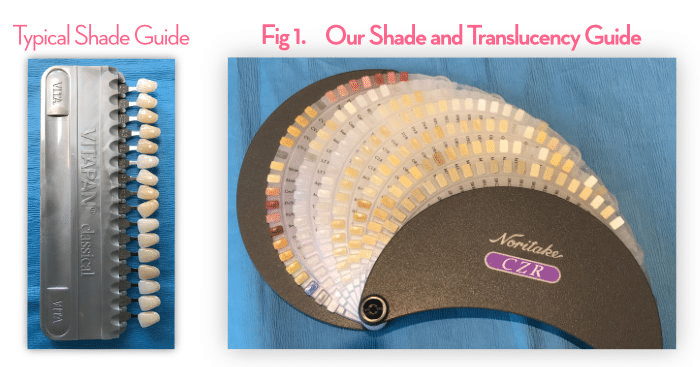
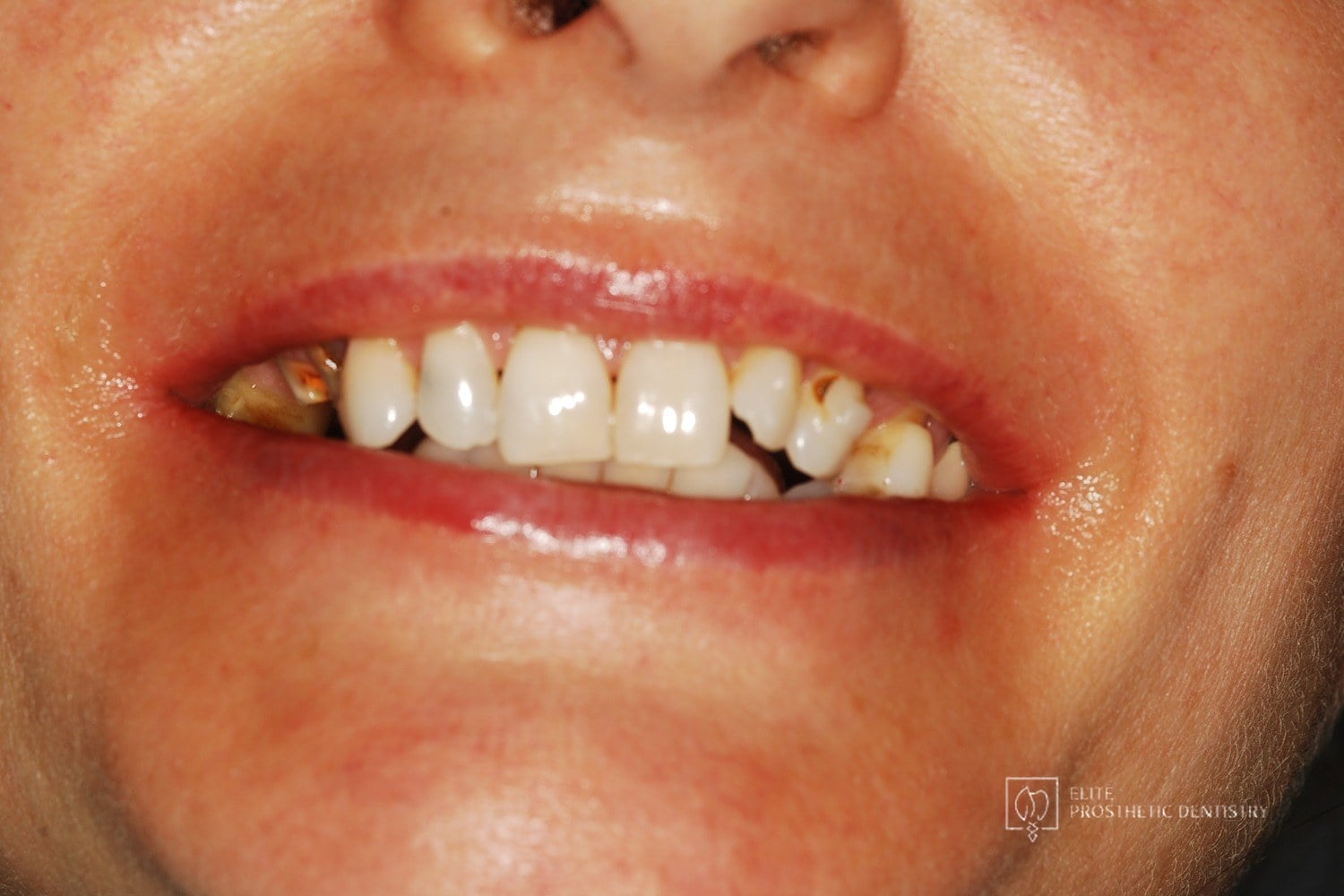
Fig. 1: Milled Crown Appearance
Color is the bigger problem. Carved from a single uniform block, a milled crown is frequently too opaque or too gray, and any character it shows has been stained onto the surface. Natural teeth do the opposite: they carry their color internally, revealed through translucent enamel. The eye detects the difference instantly, even when it cannot name it.
Commercial Laboratory Crowns: Closer, but Blind
Crowns from a commercial laboratory are genuinely handmade and can be well crafted. Their structural limitation is distance. The technician works from an impression and a written shade tab, without ever seeing your face, your lip line, your skin tone, or the way your natural teeth transmit light. The result can fall short in form, in color, in translucency, or in all three, and every correction means another round of shipping.
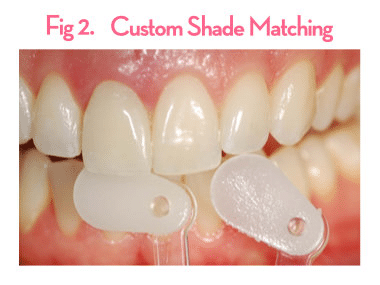
Fig. 2: Commercial Laboratory Crown Appearance
How Our In-House Laboratory Builds a Natural Crown
To obtain truly natural aesthetics, our in-house technician evaluates the shade, translucency, and anatomic form of your other teeth in person, with Dr. Marlin, before fabrication begins.
We use an extended shade system that captures color at each level of the tooth, because real teeth are not one shade. They have internal colorations and different translucencies at every depth. The technician then layers porcelains to reproduce that internal structure, building the crown the way nature builds a tooth.
Once the crown is developed, it is tried in your mouth. Internal color is added or custom characterization performed chairside until the crown disappears among your natural teeth. This try-in and refine step is only possible because the laboratory is inside the practice, a standard we have maintained in our on-site lab since 1985.
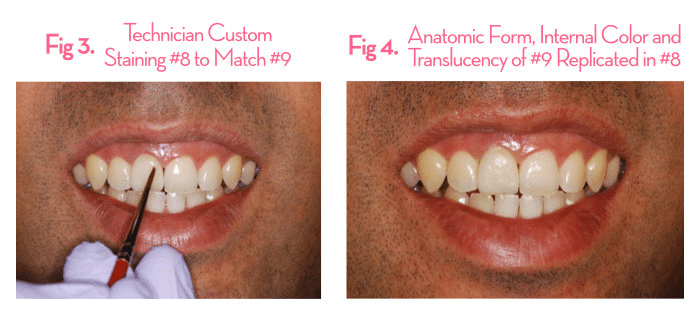
Fig. 3: In-House Lab Shade Matching and Crown Development
You can see this standard applied to the most demanding case in cosmetic dentistry, matching a single upper front tooth, in our single anterior crown case study, and read more about what makes a crown look natural.
Aesthetics You Choose, Craftsmanship You Can Verify
Some patients want restorations indistinguishable from the teeth they were born with. Others, planning a broader smile refresh, want to choose a brighter character deliberately. Both are legitimate goals, and both depend on the same foundation: internal color, correct anatomy, and a technician who can see you rather than a prescription slip.
Many patients come to us specifically to replace crowns that never looked right, work that is structurally serviceable but aesthetically wrong. Treatment ranges from redoing a single visible crown to comprehensive smile reconstruction, depending on your needs and your timeline. The common thread is doing it correctly this time, so it does not need doing again.
For more than 35 years, Dr. Marlin and our in-house technician have created internally colored, custom-characterized crowns for patients across the DMV. Call 202-244-2101 or request a consultation at our Friendship Heights office in Washington, DC to see the difference in person.
See How We Resolve These Problems
Our patient success stories show real cases and real results. Browse outcomes from a specialist prosthodontist with decades of experience and 3,900+ implants placed.
Key Takeaways
- ✓ Natural teeth carry color inside them, in layers of varying translucency. A crown only looks real when its color is built the same way, from within.
- ✓ Milled crowns come from a library of stock shapes and tend to be too opaque, too gray, or anatomically generic.
- ✓ Commercial laboratory crowns are more refined but are matched from a written shade tab by a technician who never sees the patient.
- ✓ Our in-house technician takes shades at multiple levels, layers porcelains to match, and characterizes each crown chairside with the patient present.
- ✓ Elite Prosthetic Dentistry has produced hand-layered, internally colored crowns in its on-site laboratory since 1985.
Frequently Asked Questions
Why does my crown look flat or fake next to my other teeth?
Almost always because the color sits on the surface rather than inside the restoration. Natural enamel is translucent and lets light pass into deeper layers of the tooth. A monochromatic crown with surface stain blocks that light play, so the eye reads it as solid and lifeless even when the shade number technically matches.
What is internal coloration in a dental crown?
It is the technique of building color into the crown layer by layer during fabrication, saturated tones near the gumline, body shades in the middle, translucent enamel porcelain at the edge, instead of painting a uniform surface. It mimics how real teeth are constructed and how they interact with light.
Can a crown be matched to one single front tooth?
Yes, and it is the hardest assignment in cosmetic restorative dentistry. It requires custom shade analysis at multiple depths, trial fittings, and chairside characterization with the patient present. This is where an in-house technician provides an advantage no remote laboratory can replicate.
Do whiter crowns look less natural?
They can, if whiteness is achieved by removing translucency. Because white is the absence of color, a very white crown risks becoming opaque. A skilled technician balances brightness with translucency so the crown reads as luminous rather than chalky. The choice is yours to make, with trial options to compare.
Related Patient Success Stories
Explore similar patient success stories demonstrating our expertise in advanced prosthetic dentistry.
 Before
  After
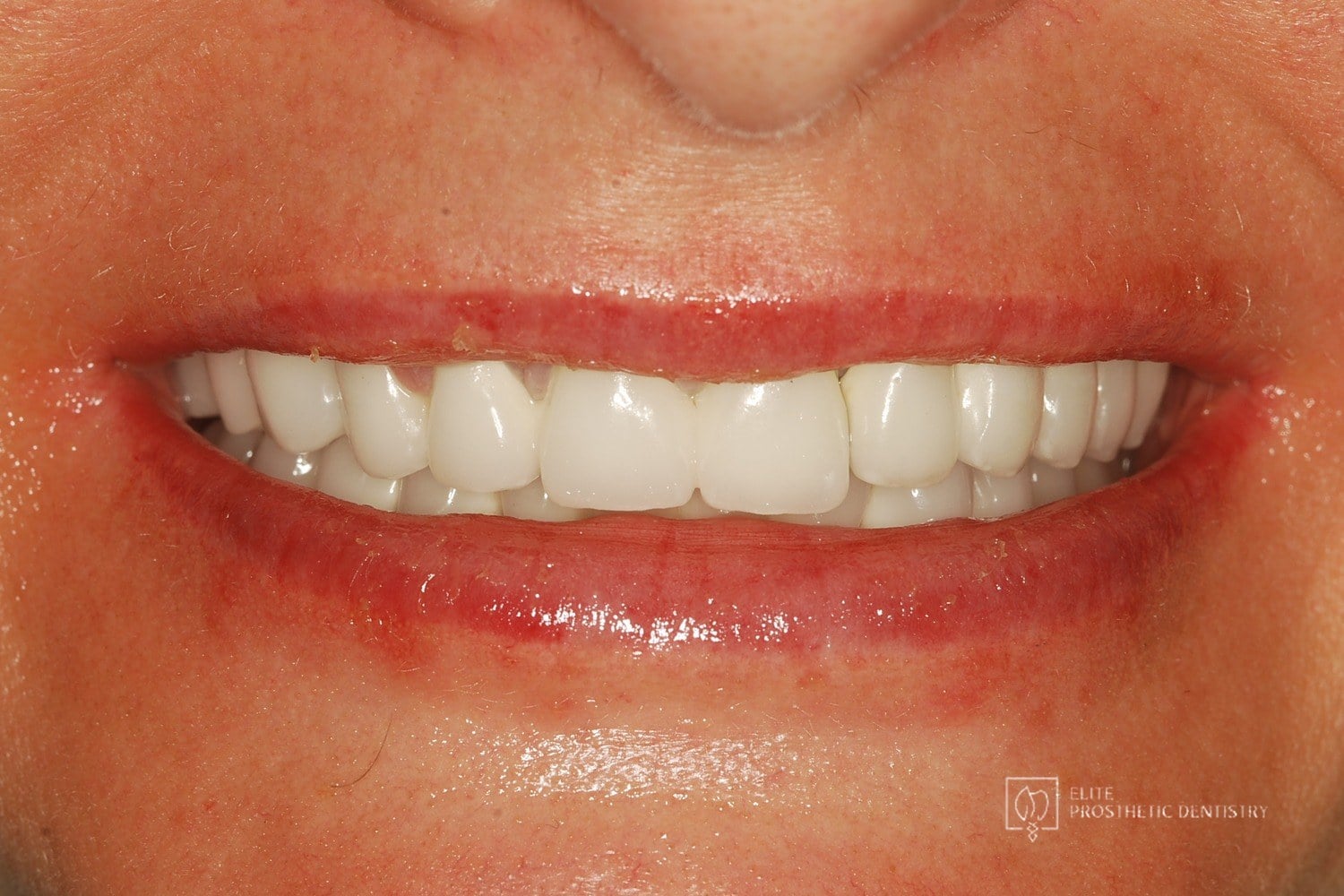
After How Aging, Failing Dentistry Was Replaced with a Coordinated Full-Mouth Implant and Crown Reconstruction
The patient presented with throbbing upper-molar pain, long-standing infections, multiple root canals and unfinished prior treatment, generalized sensitivity, and several hopeless teeth.
 Before
  After
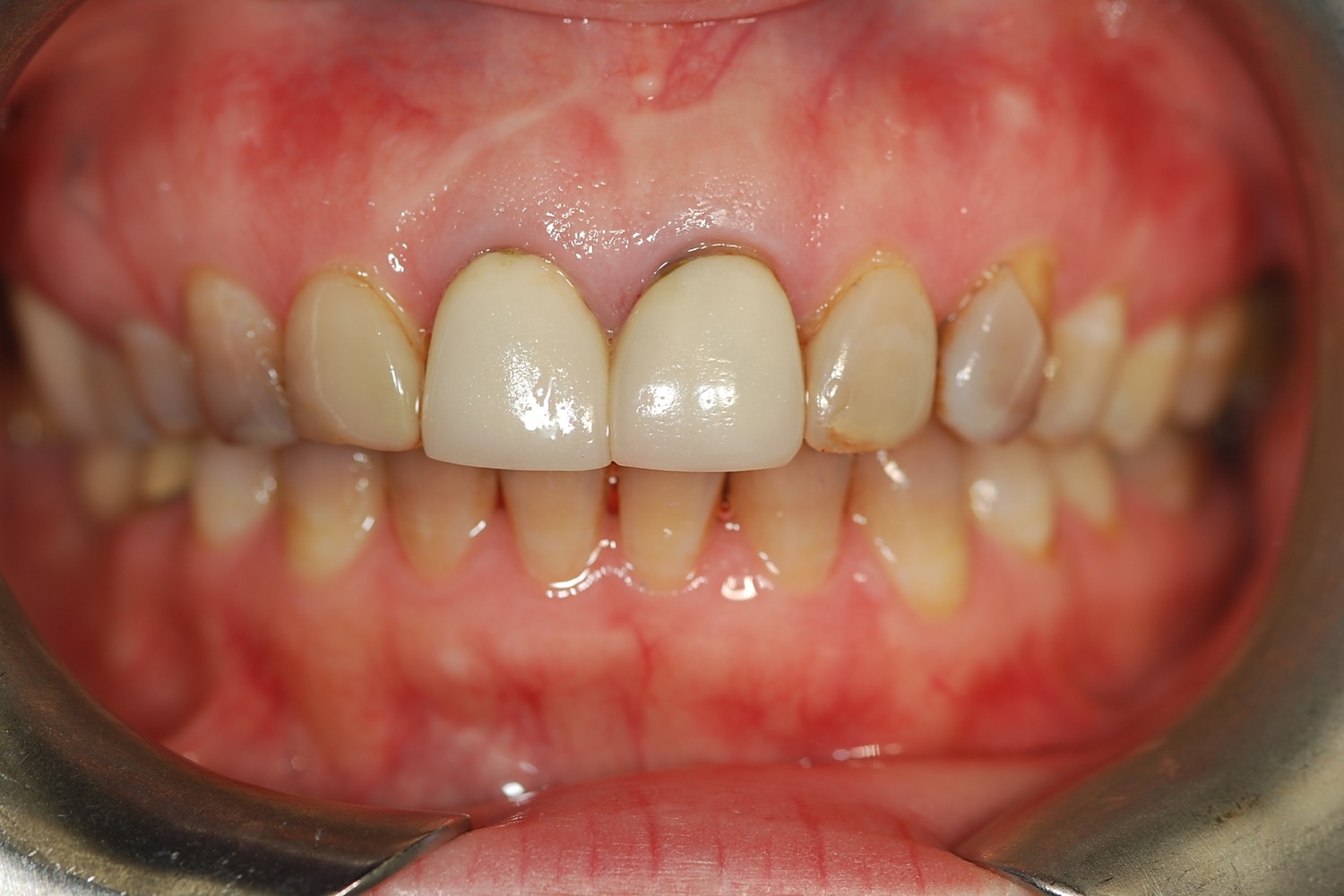
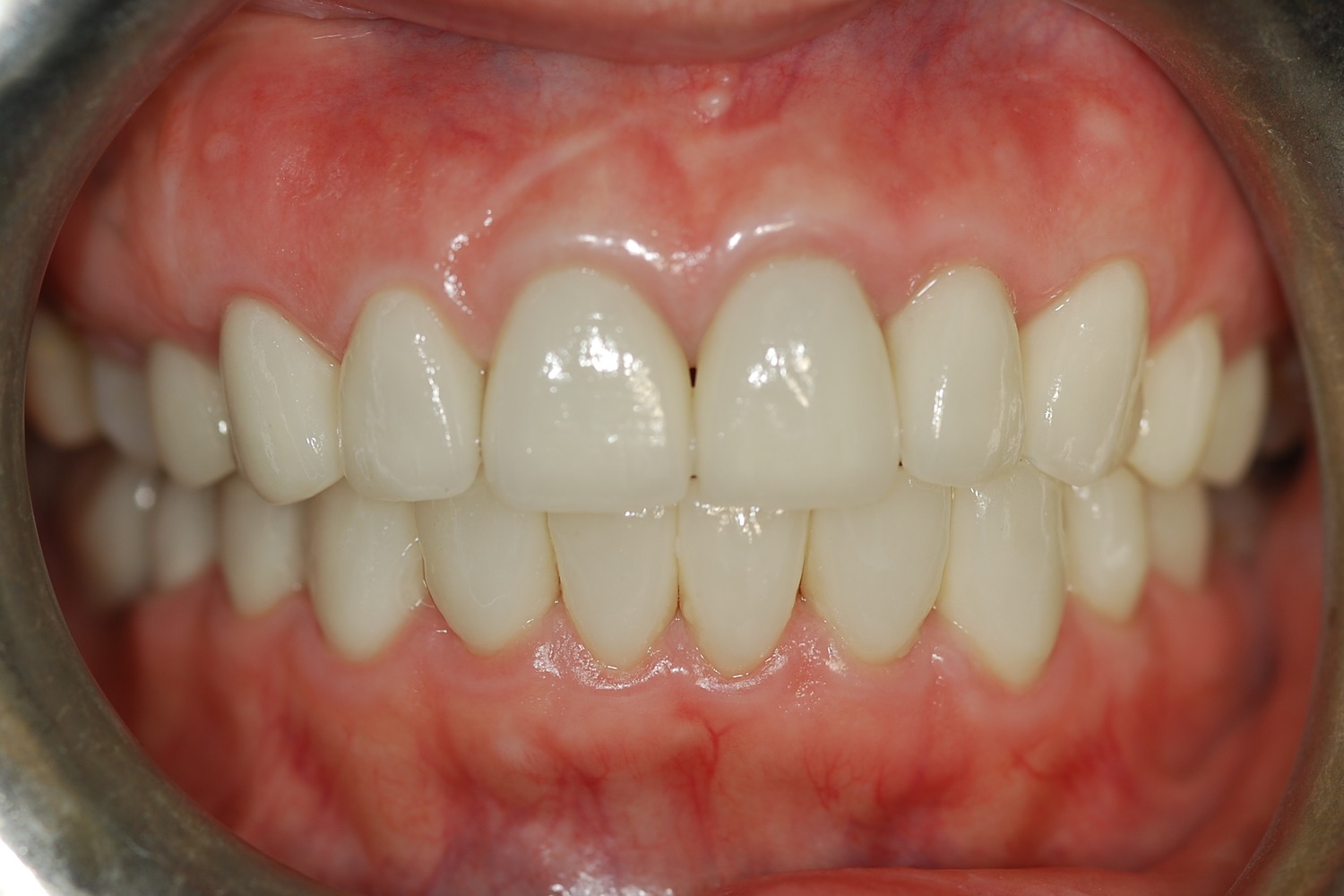
After How Aging, Opaque Restorations Were Replaced with Customized Ceramic Restorations Designed for Long-Term Natural Esthetics
The existing restorations appeared opaque, worn, and unnatural over time, affecting both confidence and overall smile harmony.
 Before
  After
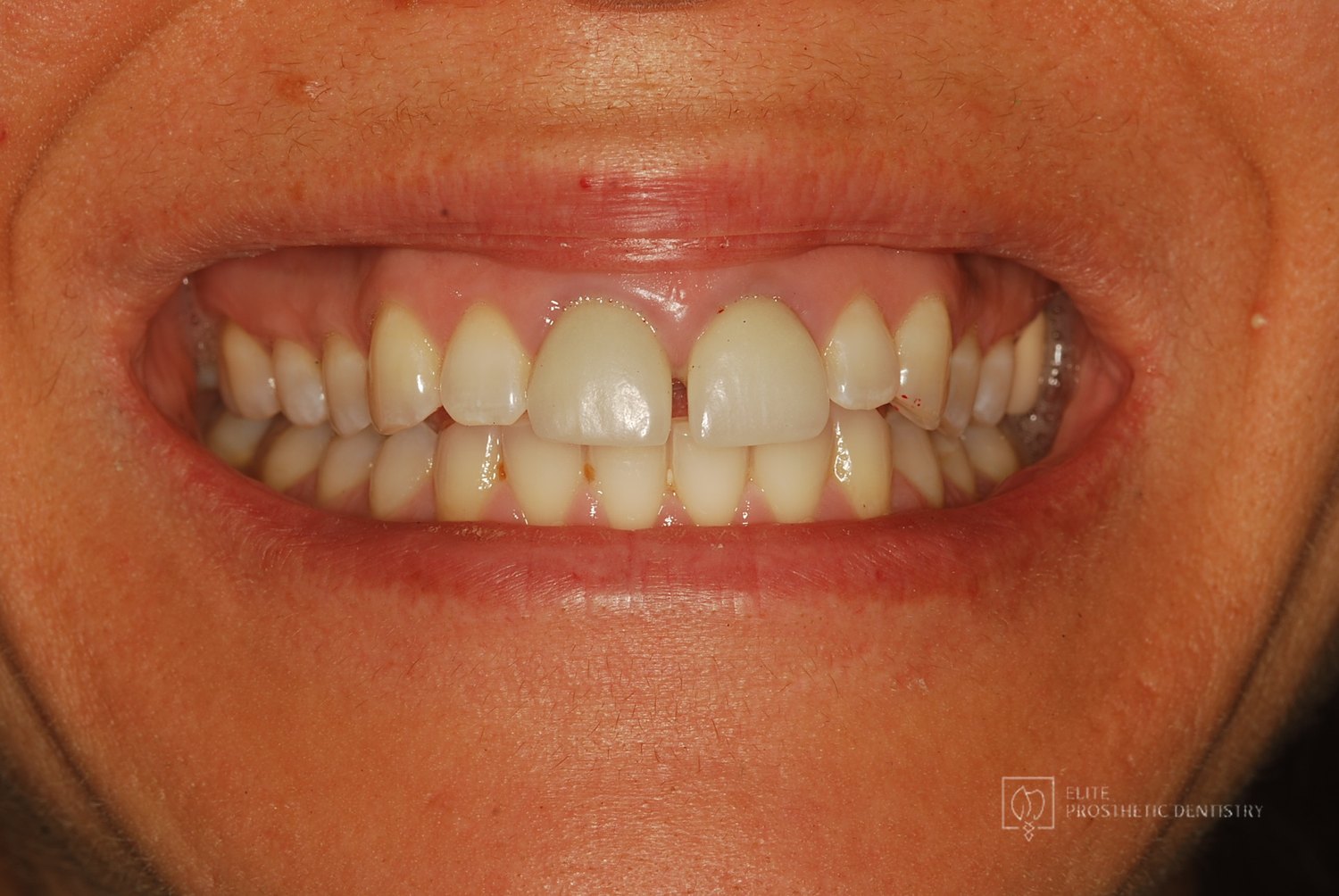
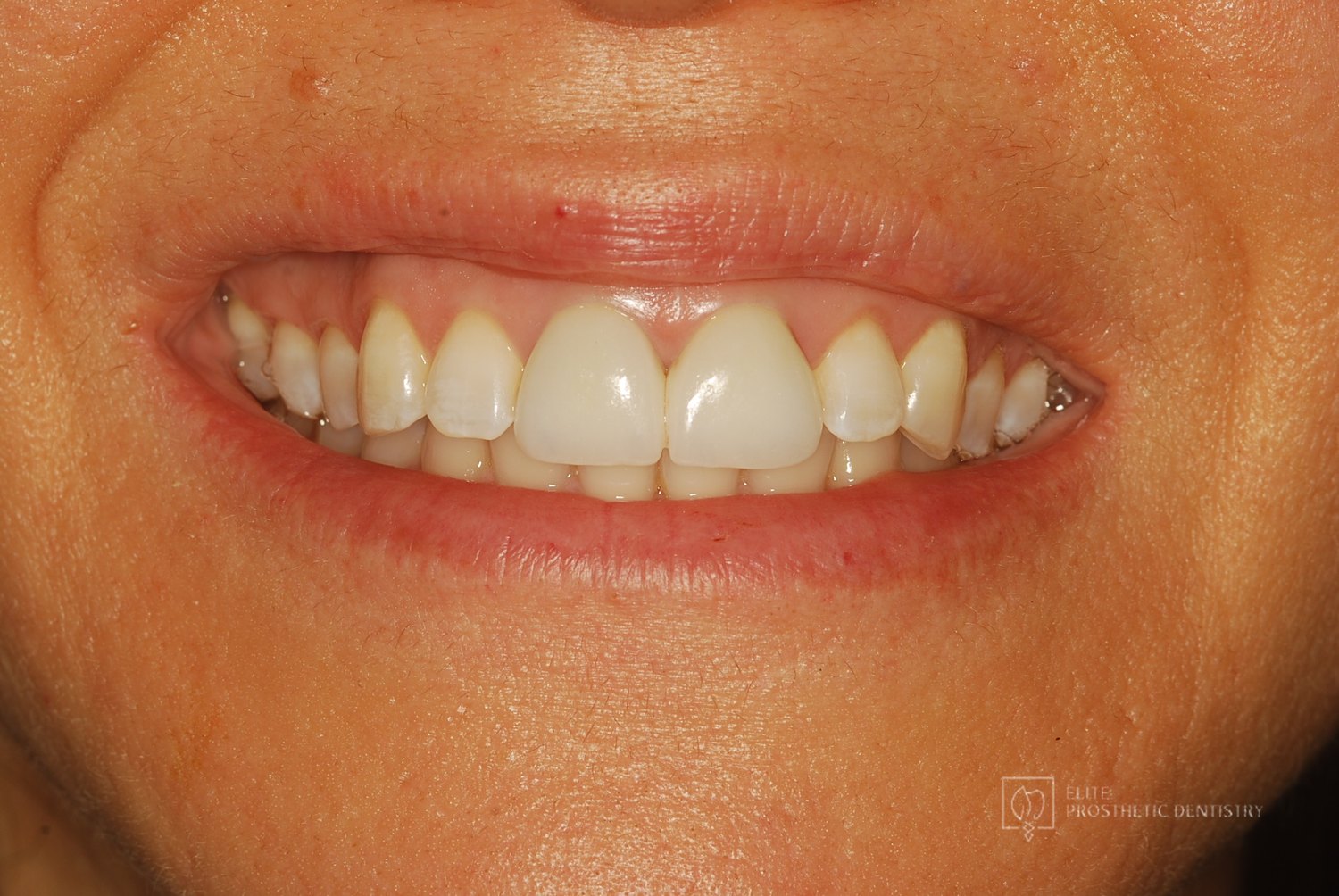
After Two Front Teeth Saved From Extraction: A Second Opinion, Custom Gold Posts, and Crowns Made to Last
Two upper central incisors with failed root canal treatment and recurrent decay had been recommended for extraction and implant replacement. A CBCT evaluation showed that removing the roots from their thin facial bone housing could create a visible esthetic defect in the gum and bone contour, made worse by the patient's high lip line.
Related Articles
Deepen your knowledge with additional insights on this topic.
 Dental Crowns
 Why Are Some Temporary Crowns More Natural Than Others?
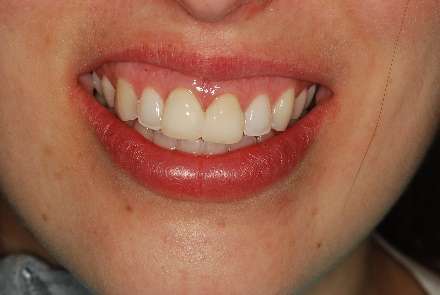
Temporary crowns do not have to look temporary. A DC prosthodontist explains how lab-made provisionals protect your smile and preview your final crowns.
 Dental Crowns
 What Makes a Natural-Looking Crown?
Emergence profile, translucency, internal color, and healthy gum response: a DC prosthodontist explains the anatomy of a crown no one can detect.
 Dental Crowns
 How Is an Immediate Smile Makeover Performed?
An immediate smile makeover transforms your smile in one visit using hand-crafted temporary crowns as a living preview. A DC prosthodontist explains how.