
Why Choose a Specialty-Trained Prosthodontist in Cabin John, MD
Specialty-trained prosthodontist serving Cabin John for complex restorative cases. Learn when prosthodontic expertise changes your treatment outcomes.
When you face a complex dental problem in Cabin John, the choice between your general dentist and a specialty-trained prosthodontist is often not an either-or decision. It is a matter of recognizing when the complexity of what you need requires the specialized training a prosthodontist brings. This page walks you through the patient journey from the moment you recognize your dental problem through the decision point where prosthodontic expertise makes a measurable difference.
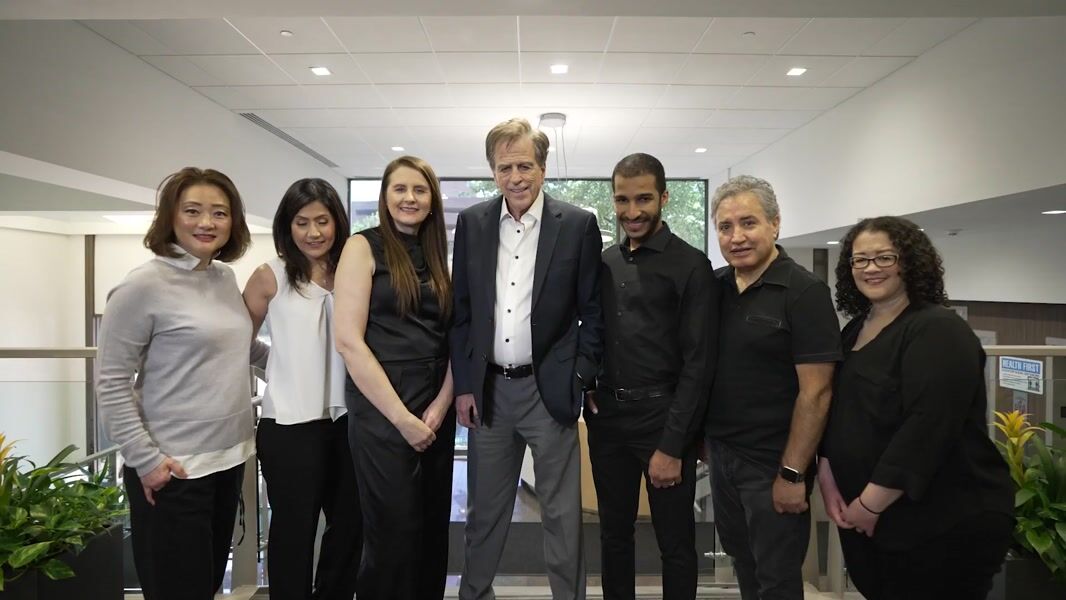
A prosthodontist is a dentist who completed dental school and then completed an additional three-year graduate program in prosthodontics, a specialty focused exclusively on tooth replacement and restoration. Dr. Gerald Marlin trained at the University of Michigan School of Dentistry and completed his prosthodontic residency at the University of North Carolina. His training concentrated on the design, planning, and execution of cases involving missing teeth, failed restorations, complex bites, and multi-tooth rehabilitation.
The Beginning: Recognizing You Have a Problem Larger Than a Single Tooth
Most Cabin John patients do not wake up one morning and decide they need a prosthodontist. The journey usually begins with a single concern. A crown loosens and requires replacement. A tooth fractures and needs extraction. A bridge fails. You visit your general dentist, who addresses the immediate problem. At that point, things may be resolved. But sometimes, as you reflect on the problem, you realize it is part of a larger pattern.
Your existing restorations are failing on similar timelines. The bite feels uneven. You avoid chewing on certain sides. You notice your lower teeth are wearing faster than your upper teeth. Your general dentist may mention that one of your crowns is failing because the supporting tooth structure beneath it has deteriorated, or that your implant is at risk because the bite forces on it are too heavy.
These patterns signal that the problem is not a single failing restoration but a system-level issue. Your bite has shifted. The way your teeth contact when you close your jaw is creating forces that your restorations cannot sustain indefinitely. Your remaining natural teeth are at risk. Single-tooth repair is no longer the answer.
The Decision Point: When Specialty-Level Thinking Begins
At some point in that journey, you face a decision. You can continue repairing teeth one at a time as they fail, knowing that each repair is likely to fail eventually because the underlying bite problem remains unaddressed. Or you can step back and have someone look at your entire dentition as a system and develop a plan that actually solves the problem.
That decision point is where prosthodontic thinking becomes relevant. A prosthodontist approaches your situation differently. Rather than asking, “How do I fix this one tooth?” the prosthodontist asks, “What is going wrong with the entire system, and what needs to happen to fix it permanently?”
For Cabin John patients facing this decision, the question is whether your general dentist can answer that system-level question, or whether a consultation with a prosthodontist would clarify your options. Sometimes the answer is straightforward and your general dentist can guide you. Sometimes the complexity warrants a second opinion.
Understanding What Specialty Training Covers
A prosthodontist’s graduate training goes deep into areas that a general dentist touches only briefly. Implant positioning and restoration design is studied for months, not days. The biomechanics of how a bite functions is explored in detail, including how forces distribute across multiple teeth and how uneven force distribution causes failure. The relationship between the shape of the gum tissue around a restoration and the long-term health of that tooth is mapped precisely.
Complex crown and bridge cases that involve multiple adjacent teeth are designed with attention to how forces transfer through the system. A bridge spanning three teeth is not just three separate crowns. It is a unified structure where the pontic, the artificial tooth, transfers chewing force to the anchor teeth, the abutments, in specific ways, and that force distribution determines how long the restoration lasts and whether the anchor teeth remain healthy.
Bite reconstruction, where the entire vertical dimension of your bite needs to be altered, is a specialty in itself. A general dentist may be uncomfortable altering someone’s bite substantially. A prosthodontist manages bite changes systematically, with attention to how the changed bite affects every tooth and restoration in the mouth.
Your Journey Through the Consultation Process
When you consult with Dr. Marlin, the process differs from a routine general dentistry exam. The consultation focuses on understanding not just your immediate concern but your entire restorative history and your functional goals.
You describe the problems you are experiencing. Where do you feel pain or discomfort? Where do you avoid chewing? How long have you been experiencing these problems? Have previous restorations failed? What was the treatment approach when they failed?
The clinical examination assesses each tooth, the gum tissue around each tooth, the supporting bone, your bite, and the relationship between your upper and lower teeth when you chew. Advanced imaging is ordered when the case requires it. High-resolution CBCT scans provide three-dimensional information about bone structure, critical for planning implants or assessing whether tooth extraction is necessary.
Detailed photographs and digital scans create a record of your current condition. These become the baseline for comparing outcomes if you move forward with treatment.
The conversation also covers your medical history, your dental history, your lifestyle, and your functional and esthetic goals. Cabin John patients with demanding professional schedules have different treatment sequencing preferences than patients with flexible schedules. These preferences are incorporated into the plan.
From Evaluation to Treatment Planning
After the consultation, Dr. Marlin develops a treatment plan specific to your situation. The plan documents what needs to happen, why it needs to happen, the sequence in which treatment will occur, the timeline, and the projected outcome.
For some Cabin John patients, the plan recommends conservative treatment. Your general dentist’s previous approach was sound and should be continued. For others, the plan recommends more comprehensive treatment. The underlying bite problem needs to be addressed to prevent continued failure of restorations.
The plan is documented clearly so you understand what is recommended, what it addresses, and why it addresses those specific concerns. You review the plan with Dr. Marlin and ask questions until you are confident in the approach.
The Treatment Itself
Treatment unfolds according to the plan. For some Cabin John patients this means a phased approach, with the most urgent concerns addressed first, integration periods built in as needed, and provisional restorations ensuring you function throughout the process. For others, the treatment is more straightforward and faster.
Throughout treatment, Dr. Marlin monitors how the case is progressing and adjusts if unexpected factors emerge. Some patients heal faster than expected. Some bone integrates implants at different rates. The plan is flexible and responsive to your actual healing and to how the case unfolds clinically.
Why Prosthodontic Training Matters for Long-Term Success
The additional three years of training a prosthodontist completes is not merely theoretical. It translates directly into how long your restorations last, how well they function, and how your natural teeth fare around them.
A prosthodontist’s approach to bite forces, materials selection, and the relationship between restored and natural teeth produces restorations that typically outlast the same restorations if designed without that specialized perspective. This longevity reduces your long-term treatment burden. Instead of replacing a restoration every five years, it might last ten or fifteen years.
For Cabin John residents, this difference accumulates. The first restoration might cost the same whether done by a general dentist or a prosthodontist. The second restoration, five years later, might be unnecessary if the first was designed with prosthodontic precision. That savings compounds over a decade of care.
Coordinating Care Between Your Dentist and Your Prosthodontist
The ideal model has your general dentist and your prosthodontist communicating directly. Your general dentist remains your dental home, providing preventive care and monitoring your overall dental health. When the prosthodontist needs to be involved, the two doctors work together on the restorative case.
After the prosthodontic treatment is complete, ongoing maintenance often returns to your general dentist’s office. Your dentist monitors the restored teeth, manages any adjustments needed, and coordinates preventive care. This model produces the best outcomes because both doctors have visibility into the full picture of your dental health.
What This Means for Your Long-Term Investment
For Cabin John residents, investing in prosthodontic expertise at a critical juncture in your treatment can shape your dental health for the next 20 or 30 years. A restoration designed with prosthodontic precision may function twice as long as one designed without that level of analysis. Over your lifetime, this difference translates into fewer retreatment appointments, less total cost, and better long-term function.
The initial treatment may cost slightly more than alternative approaches. But the payoff comes in the years that follow, when your restorations continue to function while other patients’ restorations are failing and requiring replacement. This longevity is not luck or coincidence. It reflects the systematic training and attention to detail that prosthodontic expertise brings to case design and execution.
Getting Here from Cabin John
Our office is at 4400 Jenifer Street NW, Suite 220, in Friendship Heights on the Washington DC side of the DC/Maryland border. From Cabin John, drive east on MacArthur Boulevard, which leads directly into Washington DC and becomes Jenifer Street. The drive typically takes about ten minutes, making consultations and follow-up appointments manageable within a Cabin John resident’s routine.
Building parking is available. The Friendship Heights Red Line Metro station is two blocks away if you prefer public transportation.
Next Steps
If you are weighing whether a prosthodontic consultation would clarify your dental situation, reach out. Many Cabin John patients find that a consultation provides the clarity needed to move forward confidently with treatment, or confirms that their current treatment plan is sound. Either outcome is valuable.
For related care, see our pages on dental implants and Prosthodontist in Chevy Chase.
Frequently Asked Questions
What is the main difference between a prosthodontist and a general dentist?
A prosthodontist completes an additional three years of specialized graduate training focused exclusively on tooth replacement and restoration. This training covers implant placement and restoration, complex crown and bridge cases, full and partial denture design, bite reconstruction, treatment planning for complex multi-tooth cases, and the biomechanics of how restorations function long-term. A general dentist can perform many of these procedures competently, but a prosthodontist's advanced training concentrates on cases of higher complexity and cases where multiple systems interact.
When should a Cabin John resident see a prosthodontist instead of their general dentist?
Consult a prosthodontist when you are facing multiple missing teeth, complex bite problems, failed previous dental work, implant placement requiring detailed planning, full mouth reconstruction, or when your general dentist has recommended specialty-level restorative work. If your general dentist can address your needs confidently, that is usually the right path. But if the case involves complexity beyond the scope of routine dentistry, prosthodontic consultation clarifies whether specialty expertise will improve outcomes.
Does seeing a prosthodontist mean I have to stop seeing my general dentist?
No. Prosthodontists and general dentists work best as a team. Your general dentist remains your primary dental home, providing preventive care, monitoring the health of your existing teeth, and ensuring your overall dental care is coordinated. The prosthodontist becomes involved for the specific restorative case and then transitions care back to your general dentist for ongoing maintenance. This coordinated model produces the best long-term results.
How much more expensive is prosthodontic treatment compared to general dentistry?
Prosthodontic treatment is not necessarily more expensive, though complex cases sometimes are. The value proposition is different: specialty training produces predictable outcomes on difficult cases where general dentistry might produce marginal results or require re-treatment. On a straightforward single-implant case, costs may be similar. On a full mouth reconstruction, specialty expertise often prevents expensive complications and re-treatment, sometimes offsetting the specialty fee.
Will a prosthodontist recommend more extensive treatment than my general dentist suggested?
Not necessarily. Some cases warrant more extensive treatment once evaluated thoroughly; others are best addressed with conservative approaches. A good prosthodontist evaluates what will actually solve your problem long-term, not what is most profitable. If your dentist has recommended conservative treatment and it is sound, that plan is often correct. But a second opinion is appropriate if you doubt the proposed approach or if conservative treatment has failed previously.
Related Patient Success Stories
Explore similar patient success stories demonstrating our expertise in advanced prosthetic dentistry.
 Before
  After
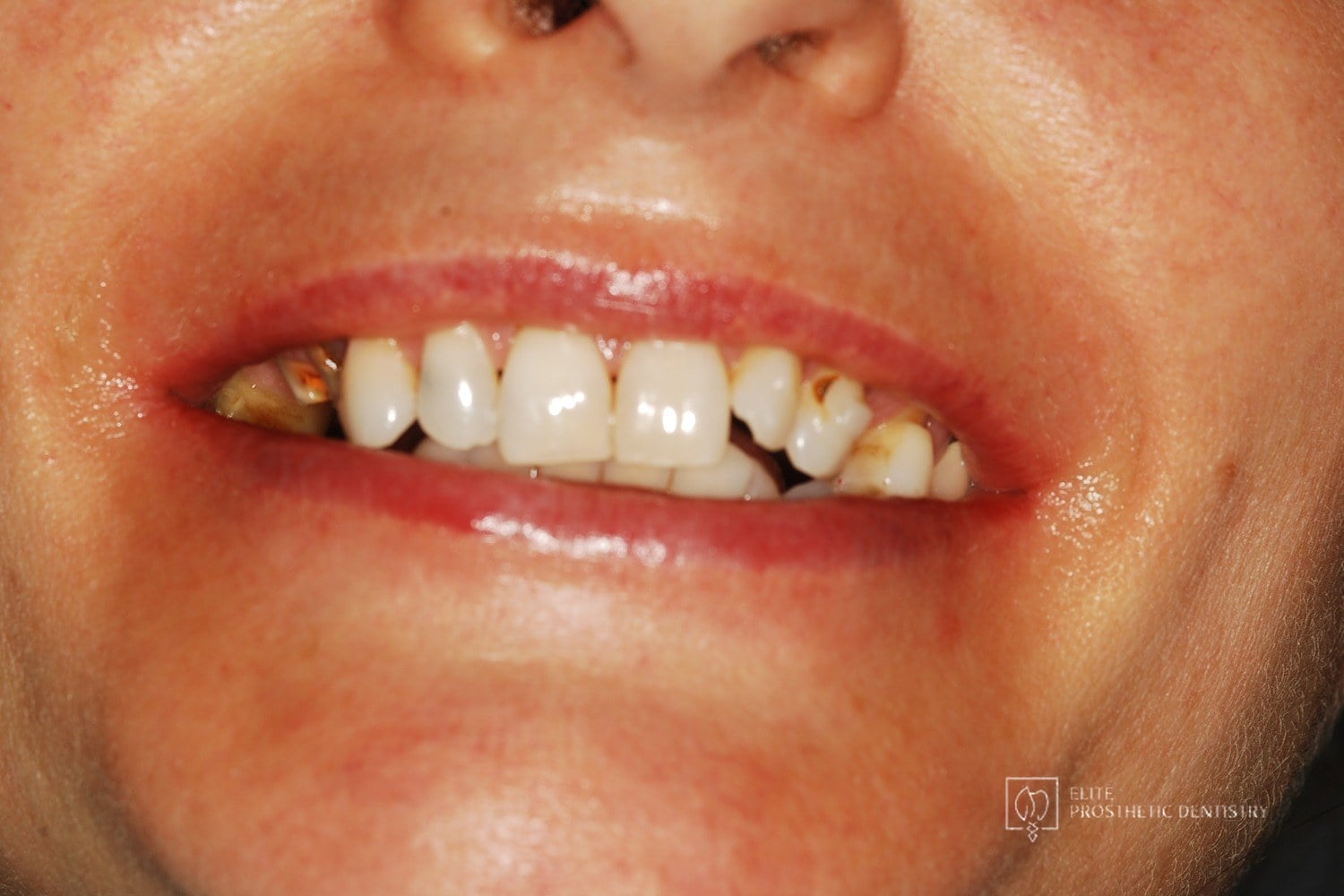
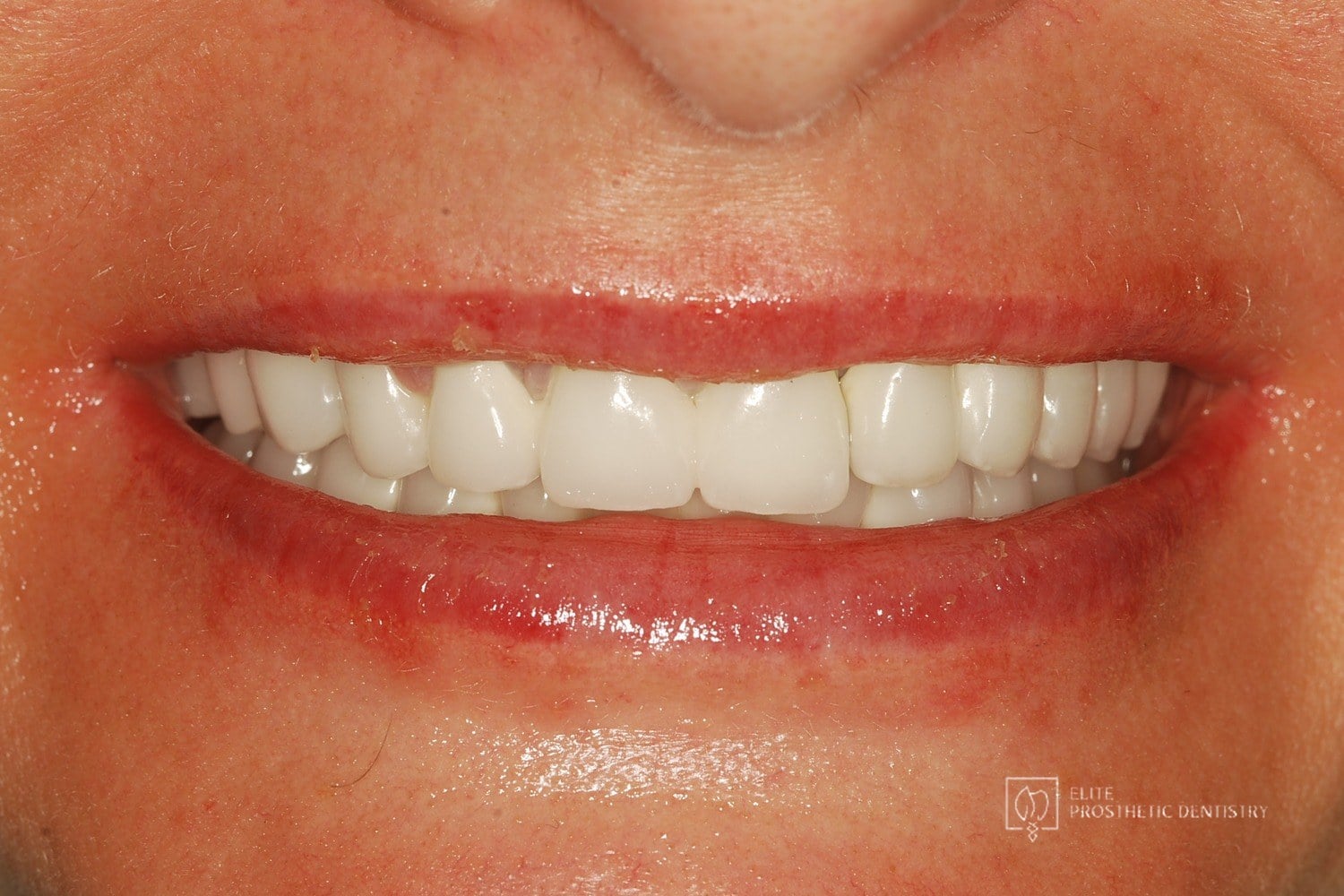
After How Aging, Failing Dentistry Was Replaced with a Coordinated Full-Mouth Implant and Crown Reconstruction
The patient presented with throbbing upper-molar pain, long-standing infections, multiple root canals and unfinished prior treatment, generalized sensitivity, and several hopeless teeth.
 Before
 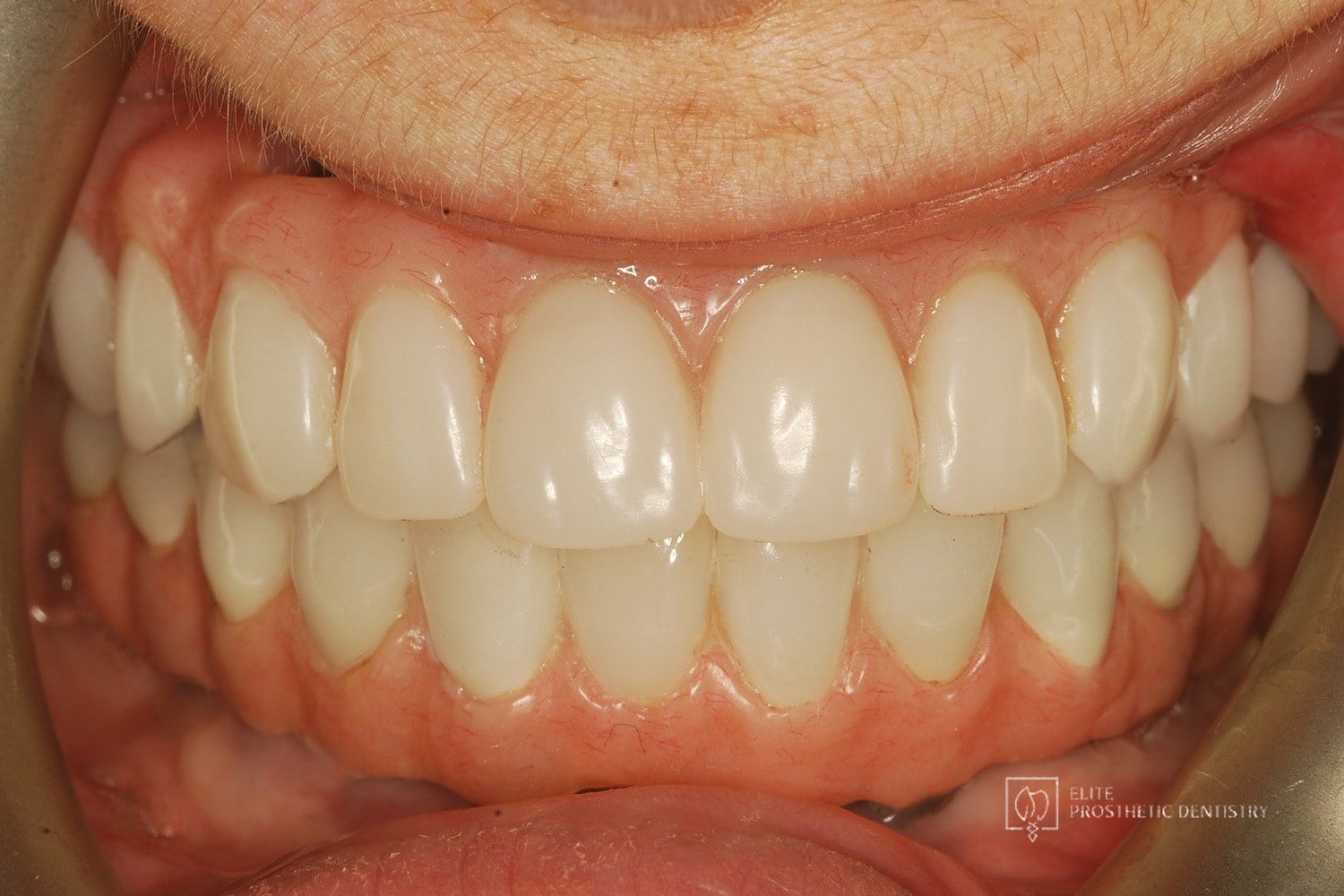 After
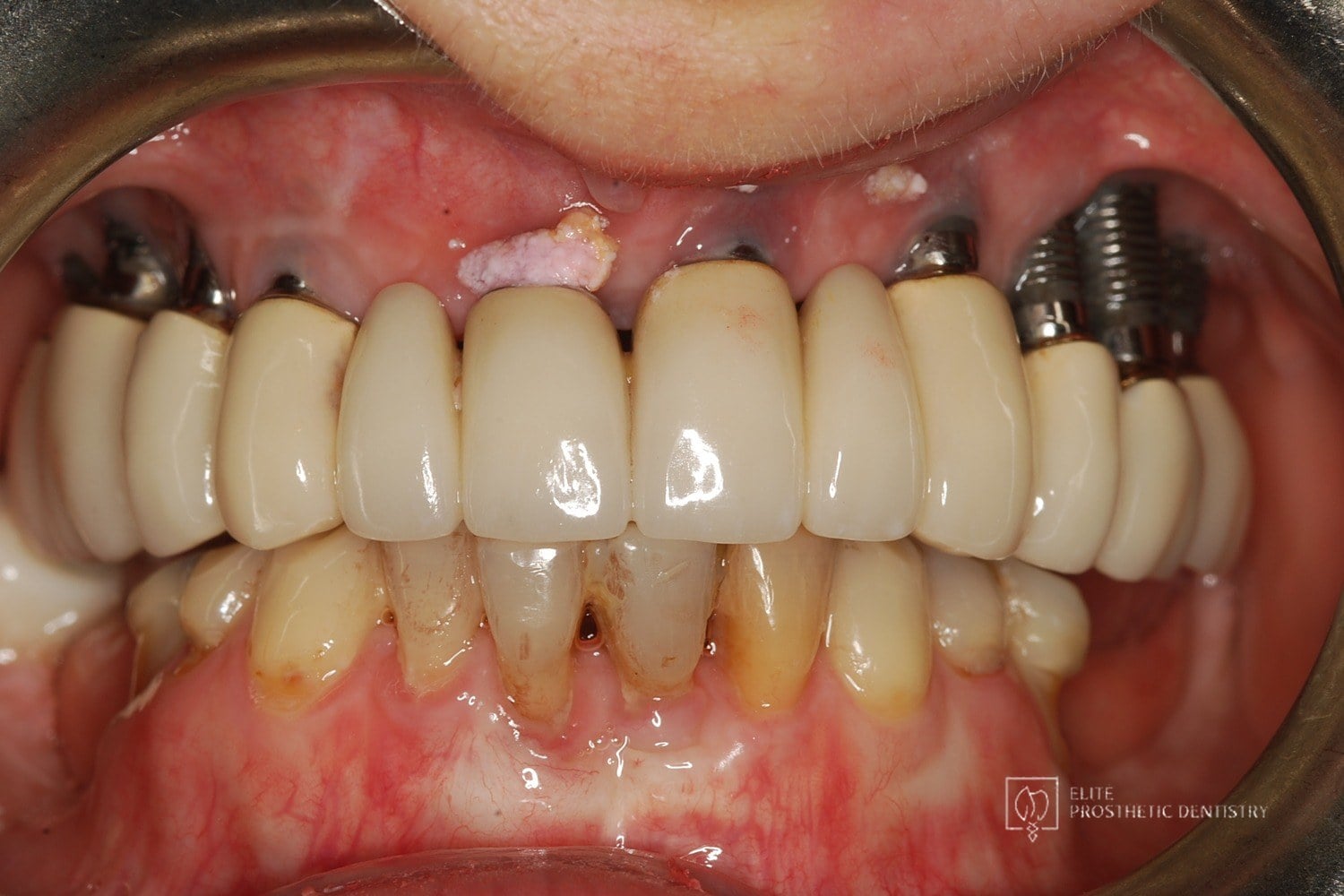
After How Failing Implants and Severe Bone Loss Were Rebuilt Into a Stable Full-Arch Implant Reconstruction
The patient presented with significant complications from previously placed implants, severe bone loss, failing posterior implants, and an unesthetic full-arch bridge. Both arches required full reconstruction, with the upper arch showing the most advanced bone loss and instability.
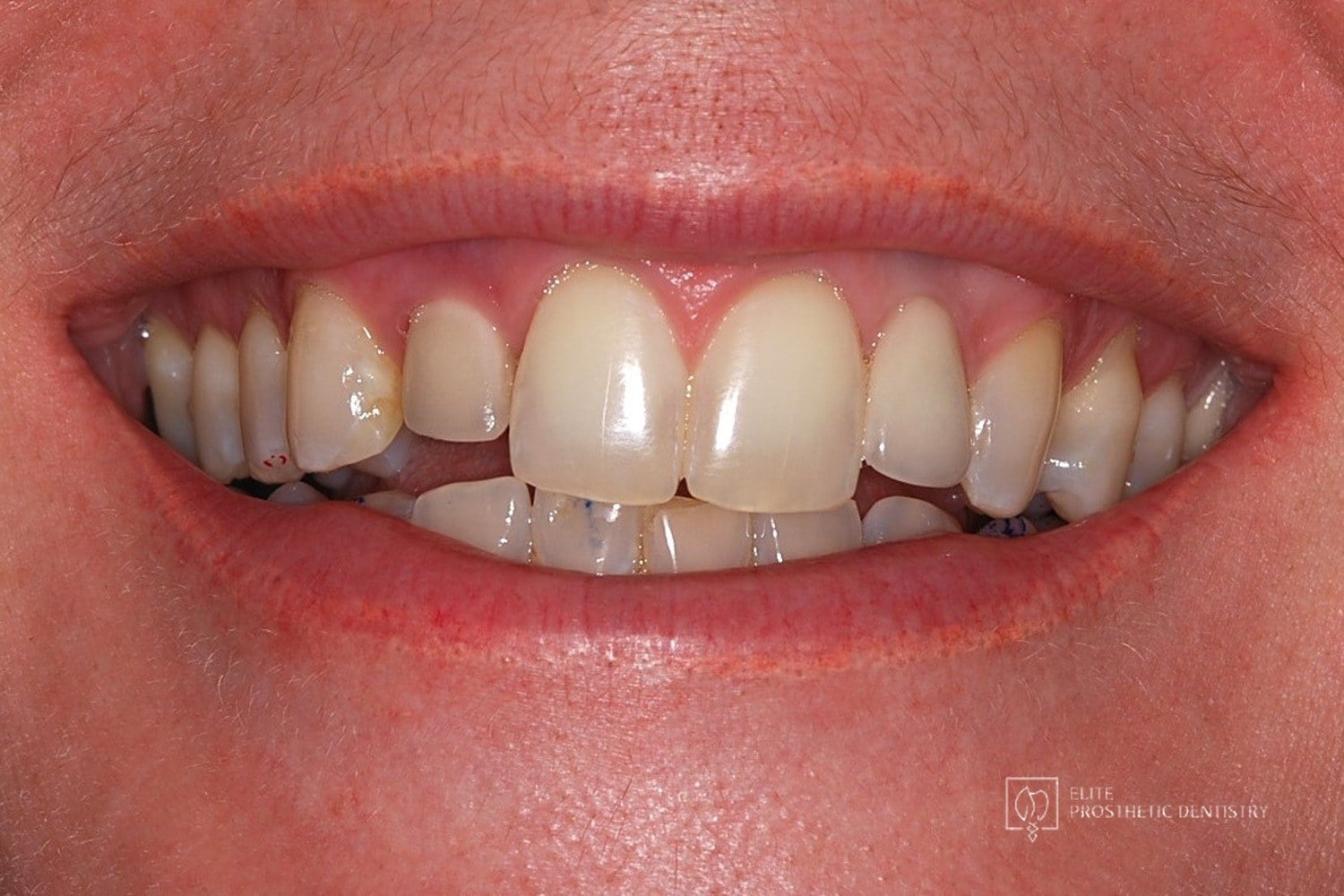 Before
 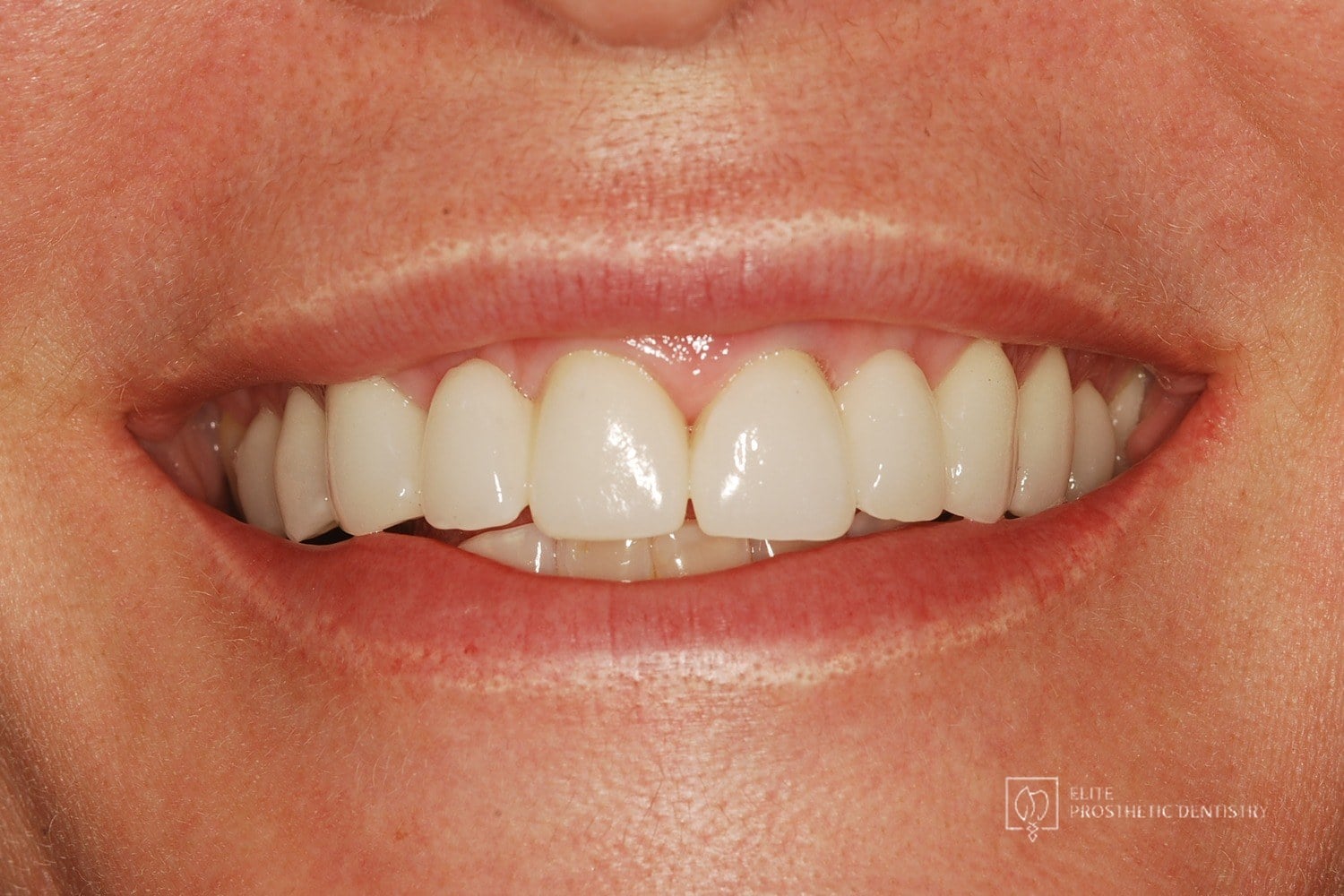 After
After How Failing Lateral Incisor Implants Were Replaced with Custom Zirconia Bridges After Severe Bone Loss Made Replacement Implants Impossible
Comprehensive examination including CBCT imaging revealed significant bone loss surrounding implants that were placed outside the buccal plate, most likely due to placement without a CBCT-generated surgical guide. The implants were determined non-salvageable, and the alveolar ridge was too narrow to support replacement implants without extensive reconstruction.
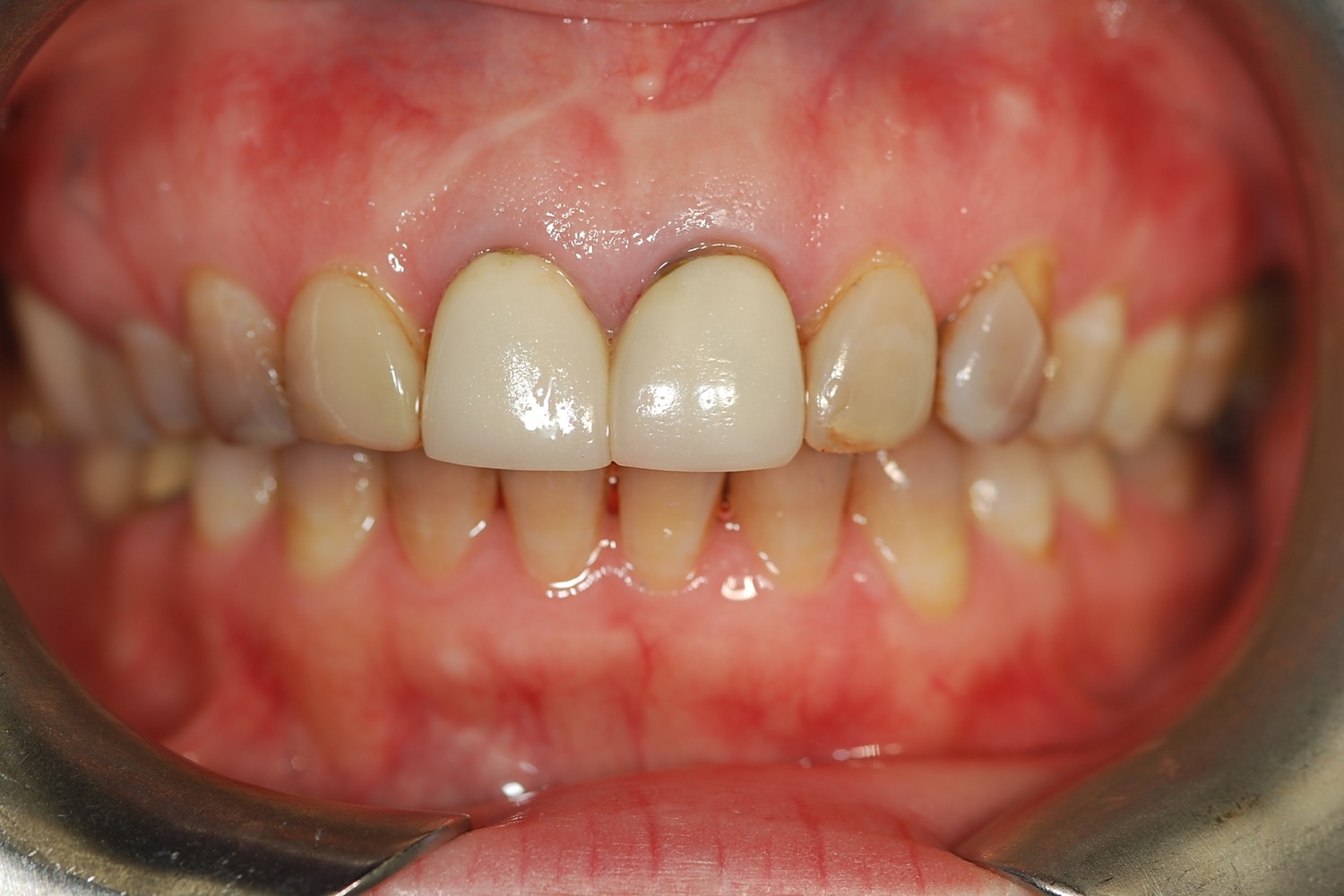 Before
  After
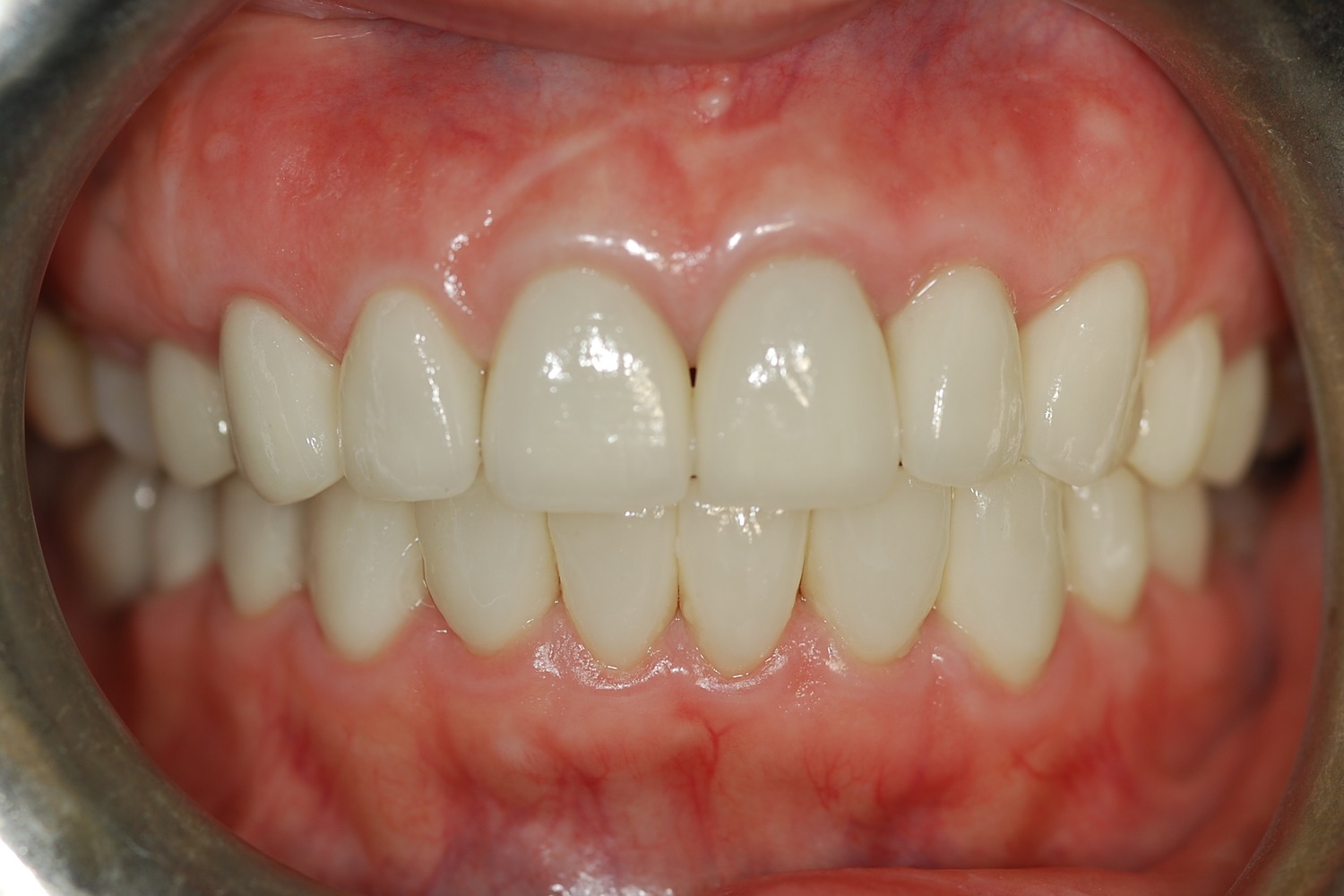
After How Aging, Opaque Restorations Were Replaced with Customized Ceramic Restorations Designed for Long-Term Natural Esthetics
The existing restorations appeared opaque, worn, and unnatural over time, affecting both confidence and overall smile harmony.
 Before
  After
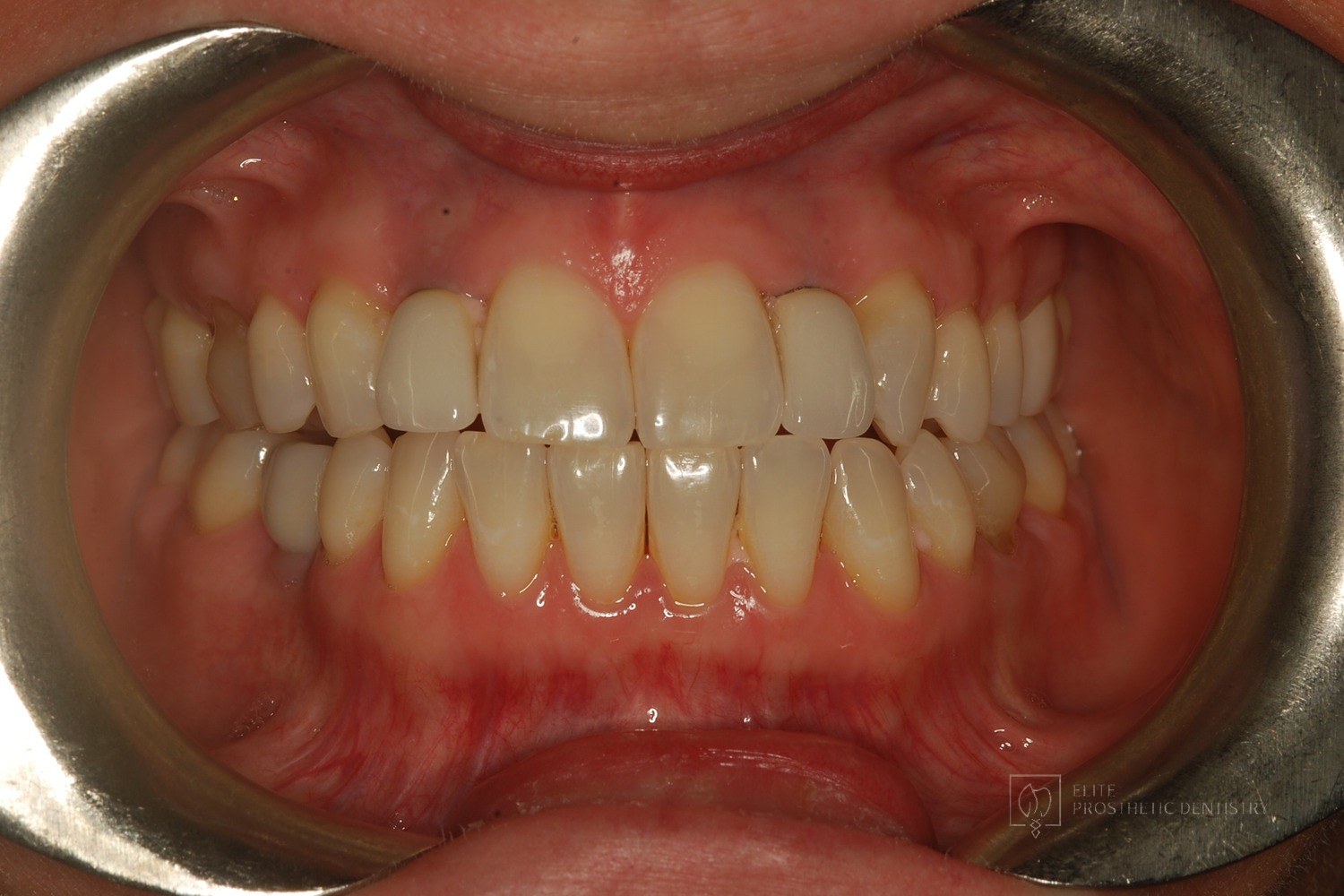
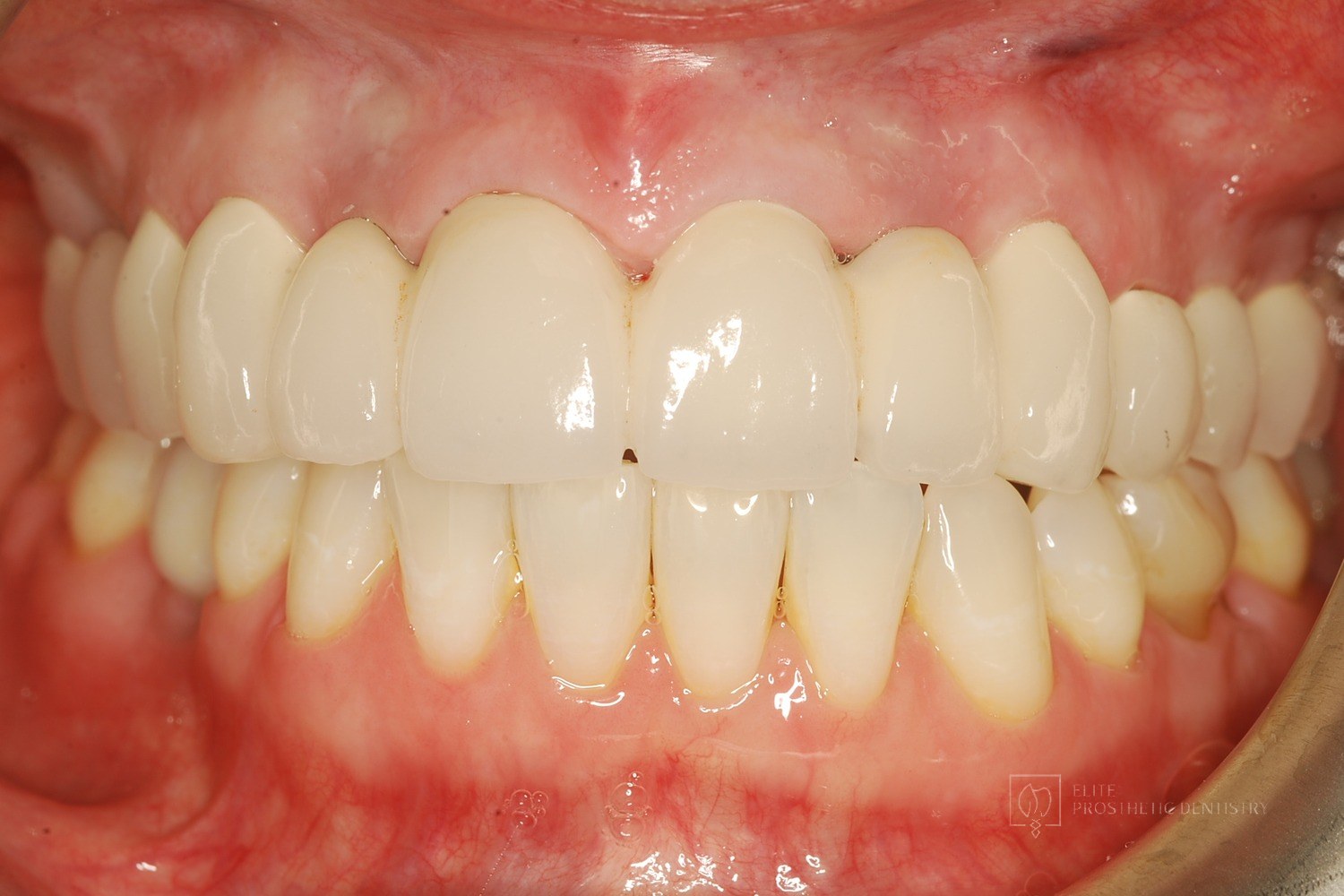
After How Older Implant Crowns Were Redesigned for a Better Bite and More Natural Appearance
The patient came in after years of living with implant-supported crowns placed more than twenty years earlier that no longer looked or functioned well. CBCT evaluation, reviewed with a radiologist colleague, showed the implants had been placed too far to the buccal in very thin bone and could not support a healthy long-term restoration.
 Before
  After
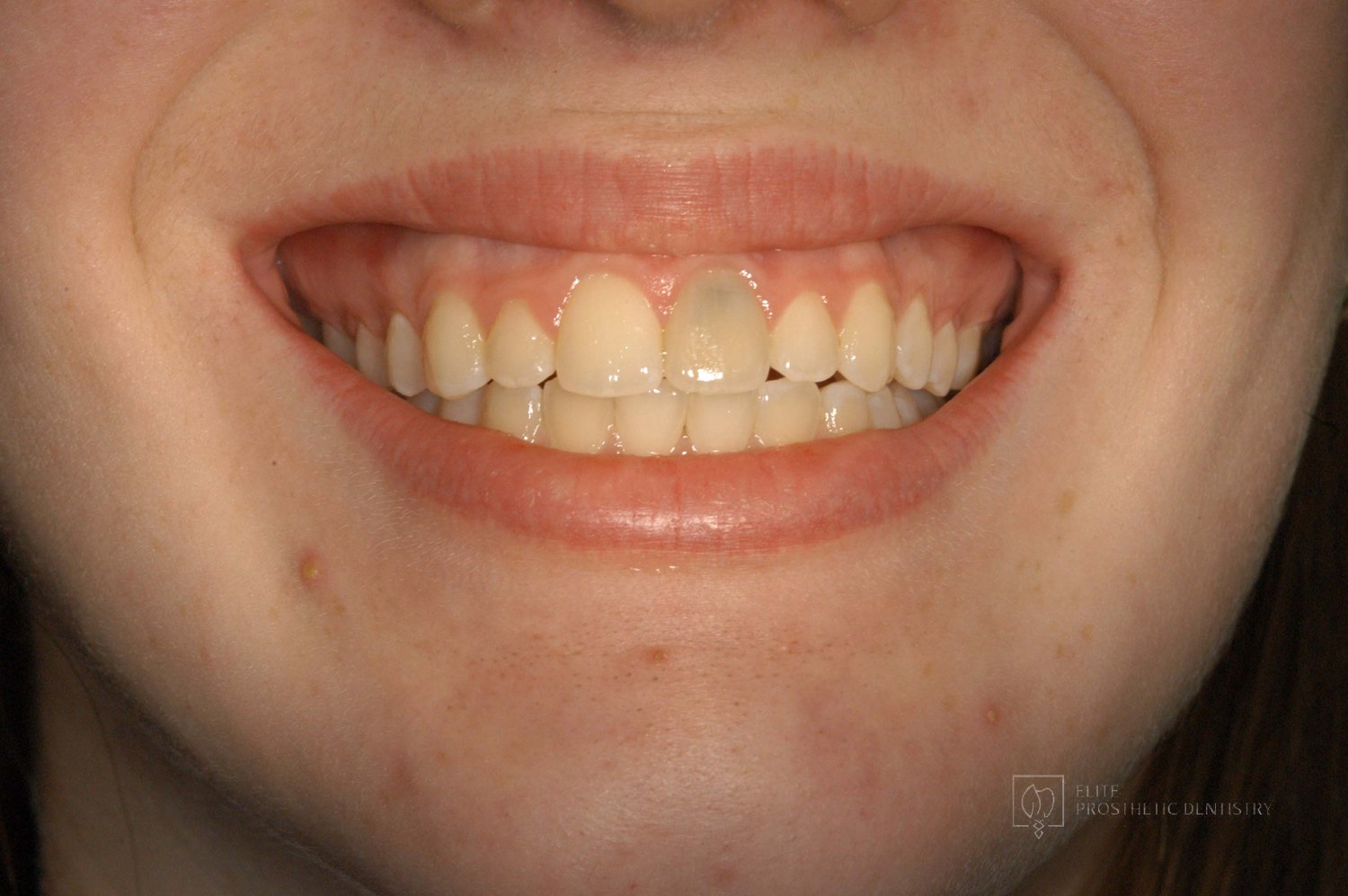
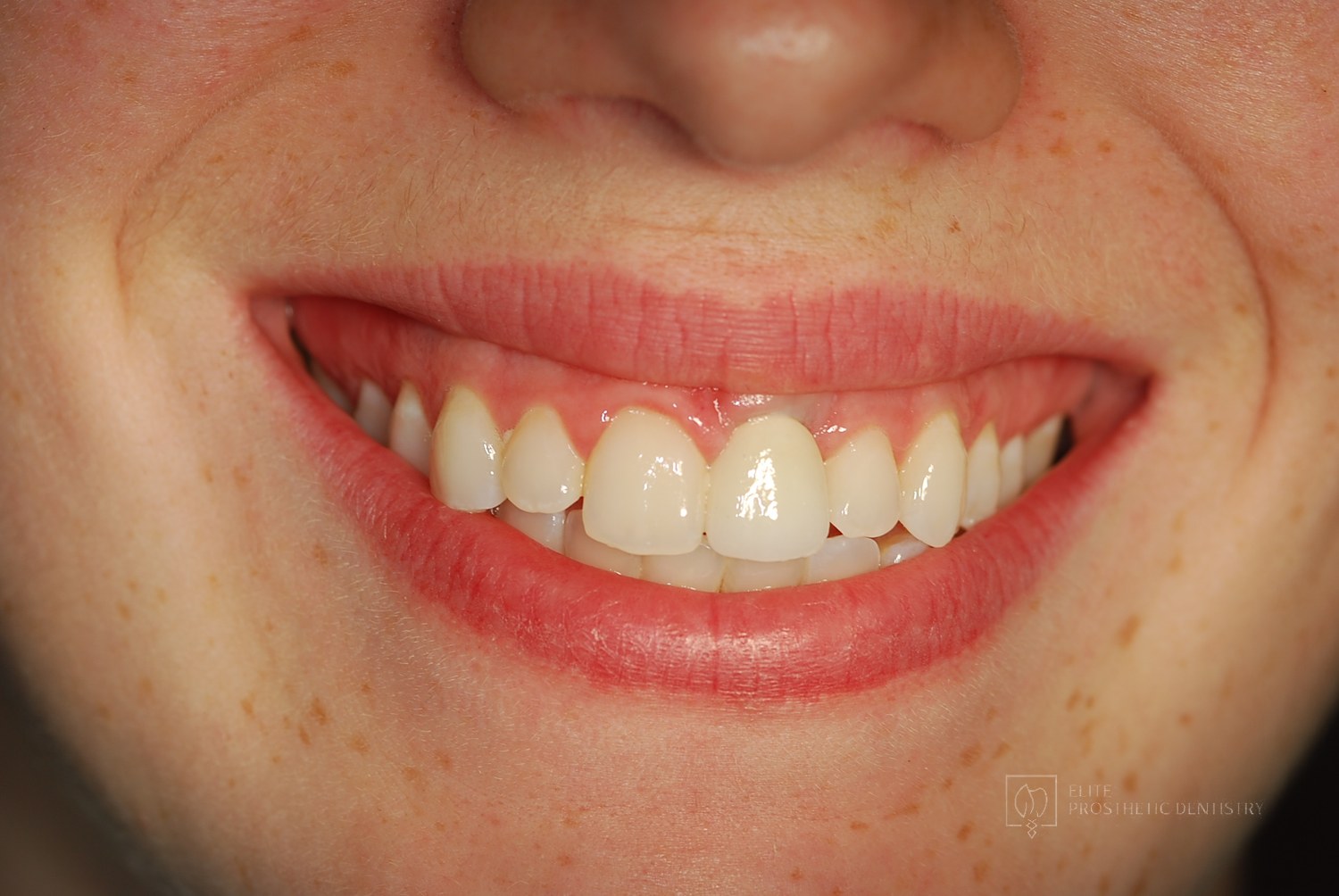
After How a Front Tooth Lost to Childhood Trauma Was Rebuilt with Bone Grafting and a Long-Lasting Implant
A teenager was referred by her father after earlier trauma left her upper left front tooth slowly failing from root resorption. She was still growing, so an immediate implant was the wrong move. The tooth had to be maintained to buy time, then replaced correctly once she reached skeletal maturity.
Related Articles
Deepen your knowledge with additional insights on this topic.
 Choosing a Prosthodontist
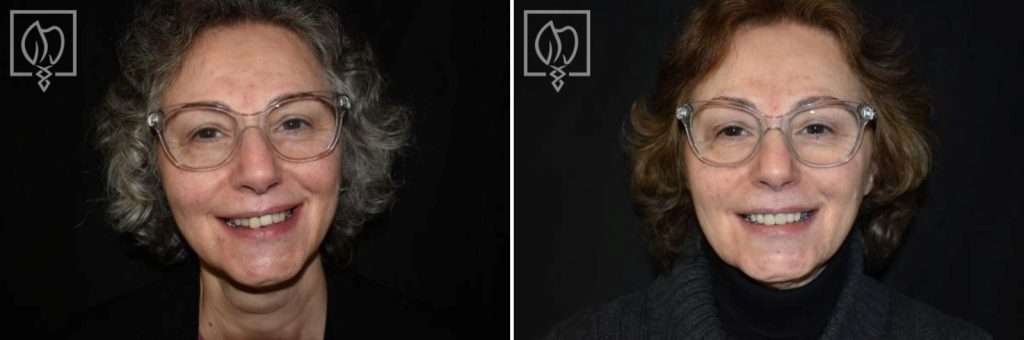
 The Patient's Guide to Implant, Cosmetic and Restorative Dentistry
How to judge quality in implant, cosmetic, and restorative dentistry: choosing a practitioner, why the lab matters, financing, and the questions to ask.
 Choosing a Prosthodontist
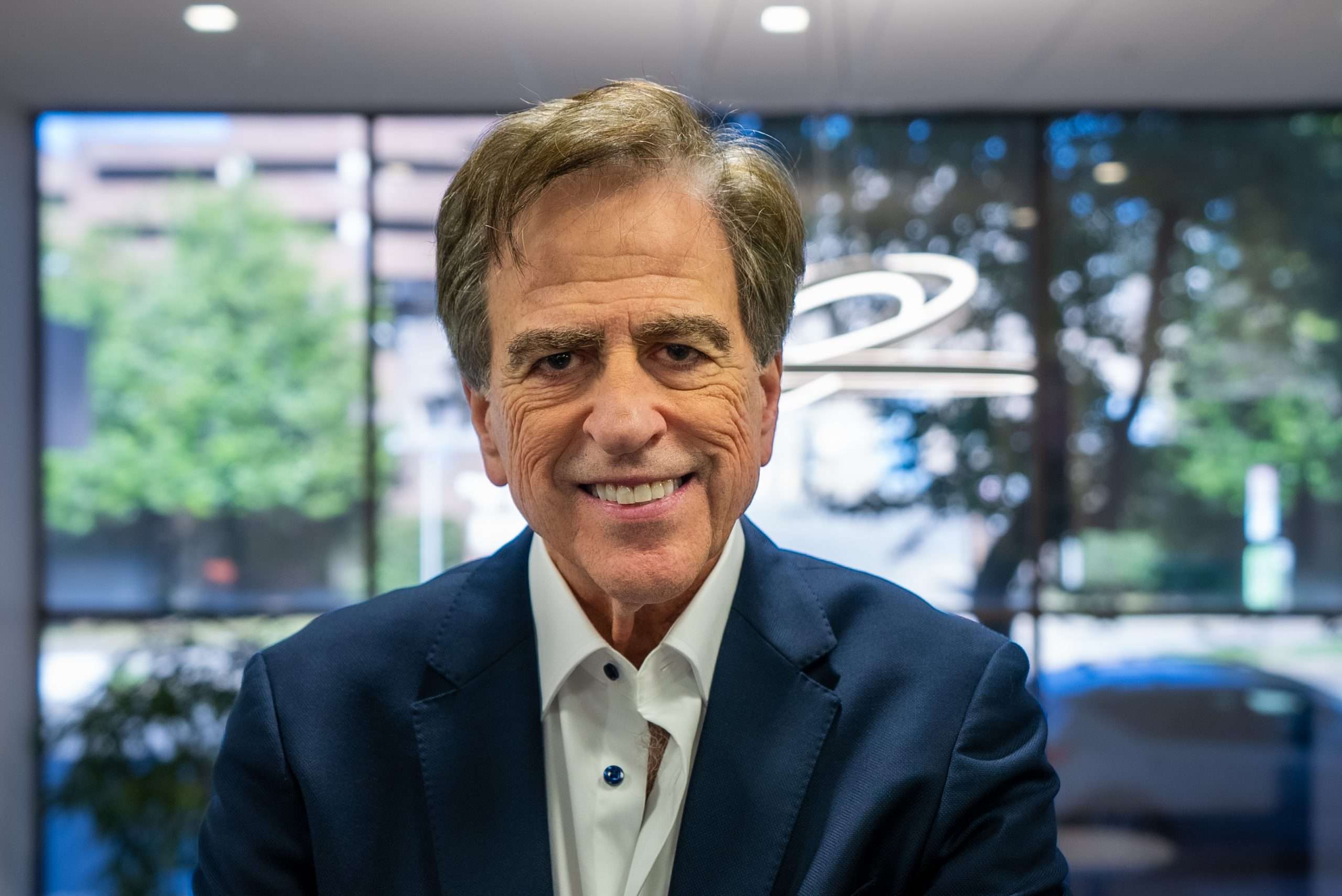
 What is a Prosthodontist?
A prosthodontist is a dental specialist with advanced training in crowns, implants, dentures, and complex restorations. Washington, DC specialist.
 Choosing a Prosthodontist
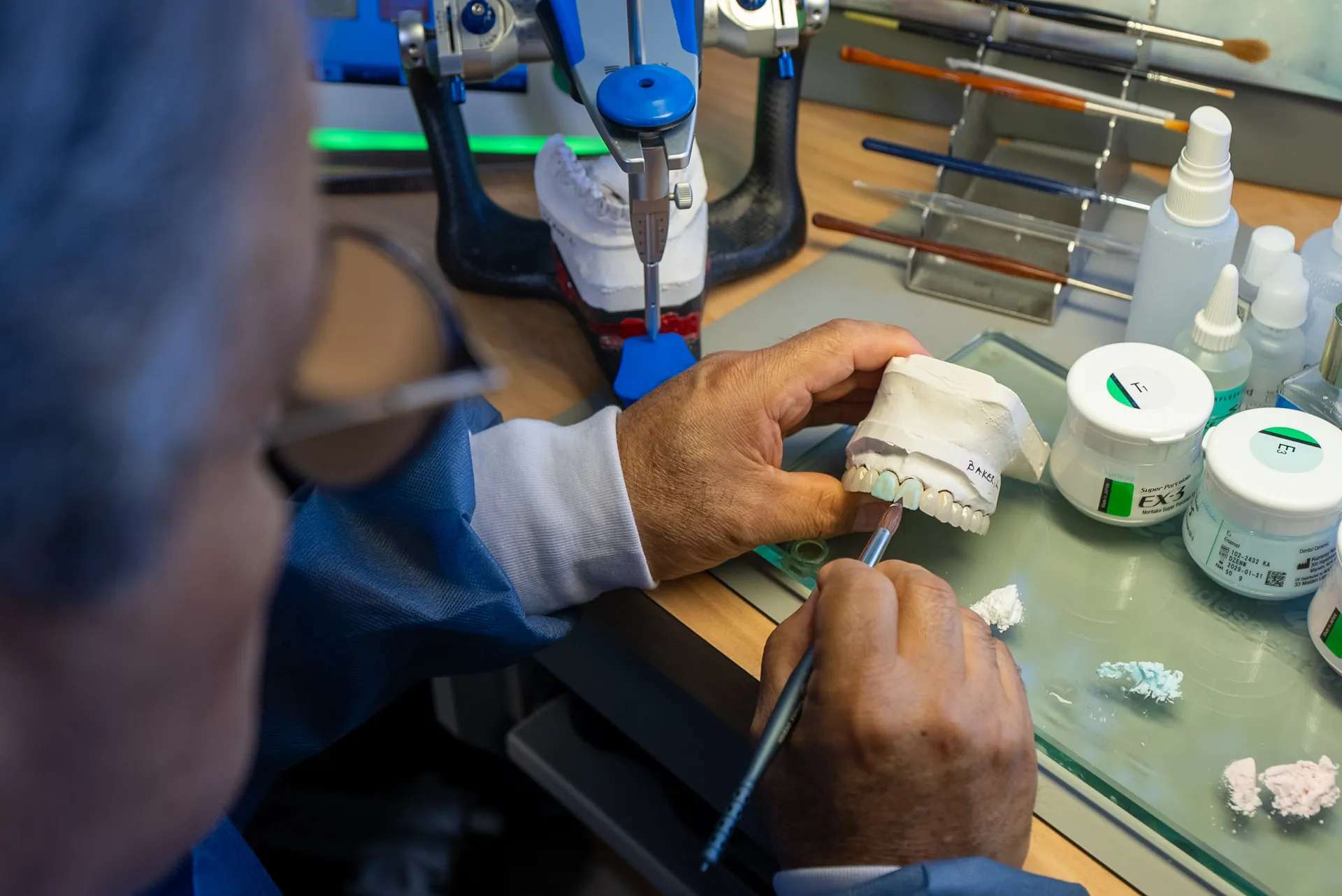
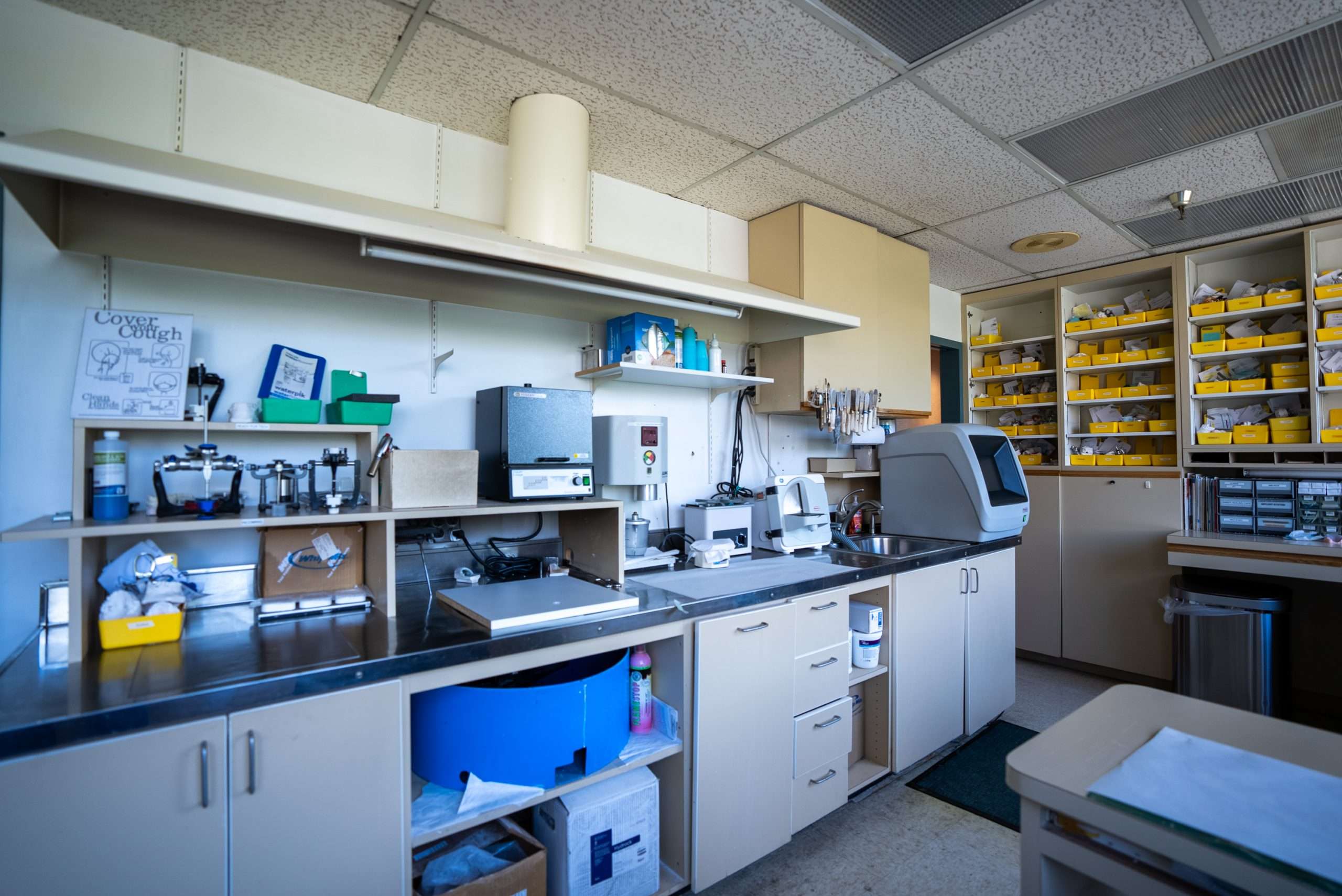
 4 Ways You Can Benefit from Our In-House Dental Lab
Custom aesthetics, precision fit, shorter waits, and fast repairs: four ways an in-house dental laboratory changes both your experience and your results.
 Choosing a Prosthodontist
 What Is the Difference Between a Dentist and a Prosthodontist?
Every prosthodontist is a dentist, but with years of extra specialty training in restoring and replacing teeth. A DC prosthodontist explains who does what.
 Choosing a Prosthodontist
 Don't Wait 'Til It's Too Late: Start with a Virtual Dental Consultation
A virtual consultation is a convenient first step: discuss your concerns, share records, and hear options from a DC prosthodontist before an in-person exam.
 Choosing a Prosthodontist
 Emergency Dentistry: The Benefits of an In-House Laboratory
When a tooth or restoration breaks, an on-site dental lab can mean a natural-looking repair in a day instead of a week. How emergency fabrication works in DC.
Our Services in Cabin John
Beyond prosthodontics, Cabin John patients rely on Dr. Marlin for a full range of advanced dental care.
prosthodontics Near Cabin John
Dr. Marlin also provides prosthodontics services for patients in these neighboring communities.
Getting Here from Cabin John
Elite Prosthetic Dentistry is conveniently located near Cabin John, MD.
Cabin John residents drive east on MacArthur Boulevard into Washington DC, continuing to our Friendship Heights office at 4400 Jenifer Street NW, Suite 220. Building parking is available.
Address:
4400 Jenifer Street NW, Suite 220
Washington, DC 20015
Phone: (202) 244-2101
Request a ConsultationRequest a Specialist Consultation from Cabin John
Cabin John residents come to Dr. Marlin for specialist prosthodontic care. With 3,900+ implants placed over 40+ years, evaluation, planning, and execution are handled with the depth complex cases require.