
Knocked Out a Front Tooth? Know Your Options for Front Tooth Replacement
Losing a front tooth is distressing in a way no statistic captures. Your smile is part of how you meet the world, and a visible gap makes people self-conscious about smiling, laughing, and speaking.
It is also a structural problem on a clock. Teeth beside and opposing the gap begin to drift and shift, the bone that held the tooth starts to shrink from disuse, and each passing year makes the eventual restoration more involved. Replacing the tooth well, and reasonably soon, protects both your appearance and your future options.
Why Front Teeth Are Lost
Three causes account for most missing front teeth. Trauma: falls, sports injuries, and accidents that knock a tooth out or fracture it beyond saving. Gum disease: advanced periodontitis destroys the bone and tissue anchoring the tooth until it loosens or is lost. Endodontic failure: a front tooth with a failed root canal sometimes cannot be salvaged and requires extraction.
When a tooth cannot be saved through emergency dental care, the conversation turns to replacement, and you have real options to weigh.
Your Replacement Options
An implant-supported crown is the modern gold standard: a titanium implant replaces the root, preserving the jawbone, and a custom crown replaces the visible tooth. Nothing is drilled or borrowed from neighboring teeth, and the result stands on its own engineering for decades.
A fixed bridge anchors the replacement tooth on crowns placed over the neighbors. It remains a legitimate choice when adjacent teeth already need crowns, but it spends healthy tooth structure when they do not, and it leaves the bone beneath the gap to shrink over time.
A removable partial solves appearance temporarily and is best treated as a bridge to definitive treatment, not a destination.
For most patients with adequate bone, the implant crown wins the comparison on longevity, bone preservation, and independence from the neighboring teeth. Where bone has been damaged by the injury or infection, bone grafting can rebuild the site first, protecting the final aesthetics.
The Part Most Patients Never See: Crown-First Planning
Here is what separates adequate front-tooth implant work from work no one can detect. The visible crown is not an afterthought added once the implant heals. It is the design target from day one.
Dr. Marlin’s process runs crown-first: three-dimensional CBCT imaging for presurgical planning; the replacement crown designed by our in-house technician before surgery; that crown design then used to virtually position the implant in the CT plan, so the implant is placed to serve the crown’s emergence from the gum. After placement, the implant integrates over roughly four months while you wear a natural-looking temporary. The custom abutment and final crown are then fabricated and fit-verified in our in-house laboratory, customized further at the chair, and seated.
Millimeters decide everything in the aesthetic zone: the angle and depth of the implant determine whether the crown emerges from the gumline like a natural tooth or looks like a peg with a cap. That is why precision here is not perfectionism. It is the whole result. Our precision implant placement page explains the planning discipline in depth.
Experience You Can Verify
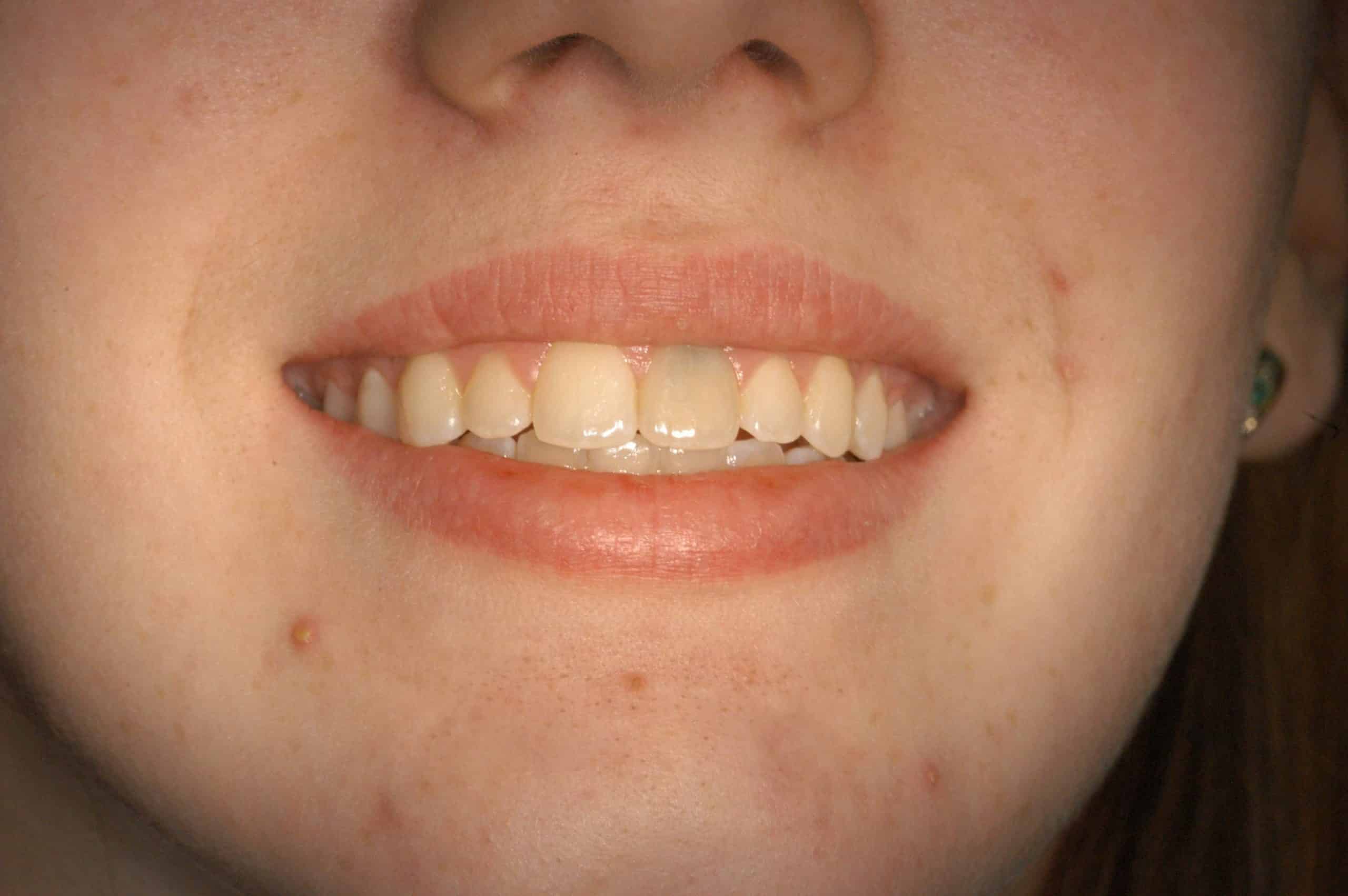
Dr. Marlin, a specialty-trained prosthodontist, has placed more than 3,900 dental implants over a career of more than 40 years, with front-tooth replacement among the most demanding and most frequent assignments. Because the surgical planning, the abutment, and the crown all happen under one roof, accountability for the final result never leaves the building. See a completed case in our study of a discolored front tooth replaced with a precision-placed implant, or the standard our laboratory holds for a single front-tooth crown.
For a deeper look at the treatment itself, visit our front tooth replacement page.
Get Your Smile Back, Engineered to Last
Whether your tooth was lost yesterday or years ago, the evaluation is the same: imaging, an honest review of your options, and a plan matched to your bone, your bite, and your goals. Call 202-244-2101 or schedule an appointment online with Elite Prosthetic Dentistry.
We serve Washington, DC, Bethesda, Chevy Chase, Arlington, and nearby areas of Maryland and Virginia. Our Friendship Heights office is steps from the Metro, easy to reach before or after work.
See How We Resolve These Problems
Our patient success stories show real cases and real results. Browse outcomes from a specialist prosthodontist with decades of experience and 3,900+ implants placed.
Key Takeaways
- ✓ A missing front tooth is both an aesthetic and a structural problem: neighboring teeth begin shifting into the gap, so timely replacement matters.
- ✓ The gold-standard replacement is a custom crown on a precisely placed dental implant, which preserves the jawbone and stands independent of neighboring teeth.
- ✓ Front-tooth implant work is the most visible implant dentistry there is. Success is decided by planning: 3D imaging, crown-first design, and precise placement.
- ✓ In our practice the replacement crown is designed before surgery, and the implant is positioned to serve that crown, not the other way around.
- ✓ Dr. Marlin has placed more than 3,900 dental implants, with custom abutments and crowns fabricated in our in-house laboratory.
Frequently Asked Questions
What should I do immediately after knocking out a tooth?
Handle the tooth by the crown, not the root. If it is clean and you are able, reinsert it gently into the socket; otherwise keep it moist in milk or saliva and seek dental care immediately. Reimplantation is time-sensitive, and even when the tooth cannot be saved, prompt care protects the socket and your options.
What are the options for replacing a missing front tooth?
The main options are an implant-supported crown, a fixed bridge anchored on neighboring teeth, and, as a temporary measure, a removable partial. For most patients the implant crown is the preferred long-term answer because it preserves bone, spares adjacent teeth, and looks and functions like a natural tooth.
Why is a front tooth implant harder than a back tooth implant?
Because everyone will see the result. The implant must be positioned precisely so the crown emerges from the gum at the correct angle and height, with tissue draping naturally around it. Millimeters decide whether the final crown looks born there or built there. This is why planning starts from the crown design, not the implant.
How long does front tooth replacement take?
A typical sequence runs several months from implant placement to final crown, allowing the implant to integrate with the bone. You are never left without a tooth: a natural-looking temporary restoration covers the site throughout treatment.
Can a front tooth be replaced if the socket bone is damaged?
Usually, yes. Trauma and infection can damage the socket, but bone grafting can rebuild the site before or alongside implant placement. This adds time but protects the aesthetic result, since the gum and bone architecture around the implant is what makes the crown look natural.
Related Patient Success Stories
Explore similar patient success stories demonstrating our expertise in advanced prosthetic dentistry.
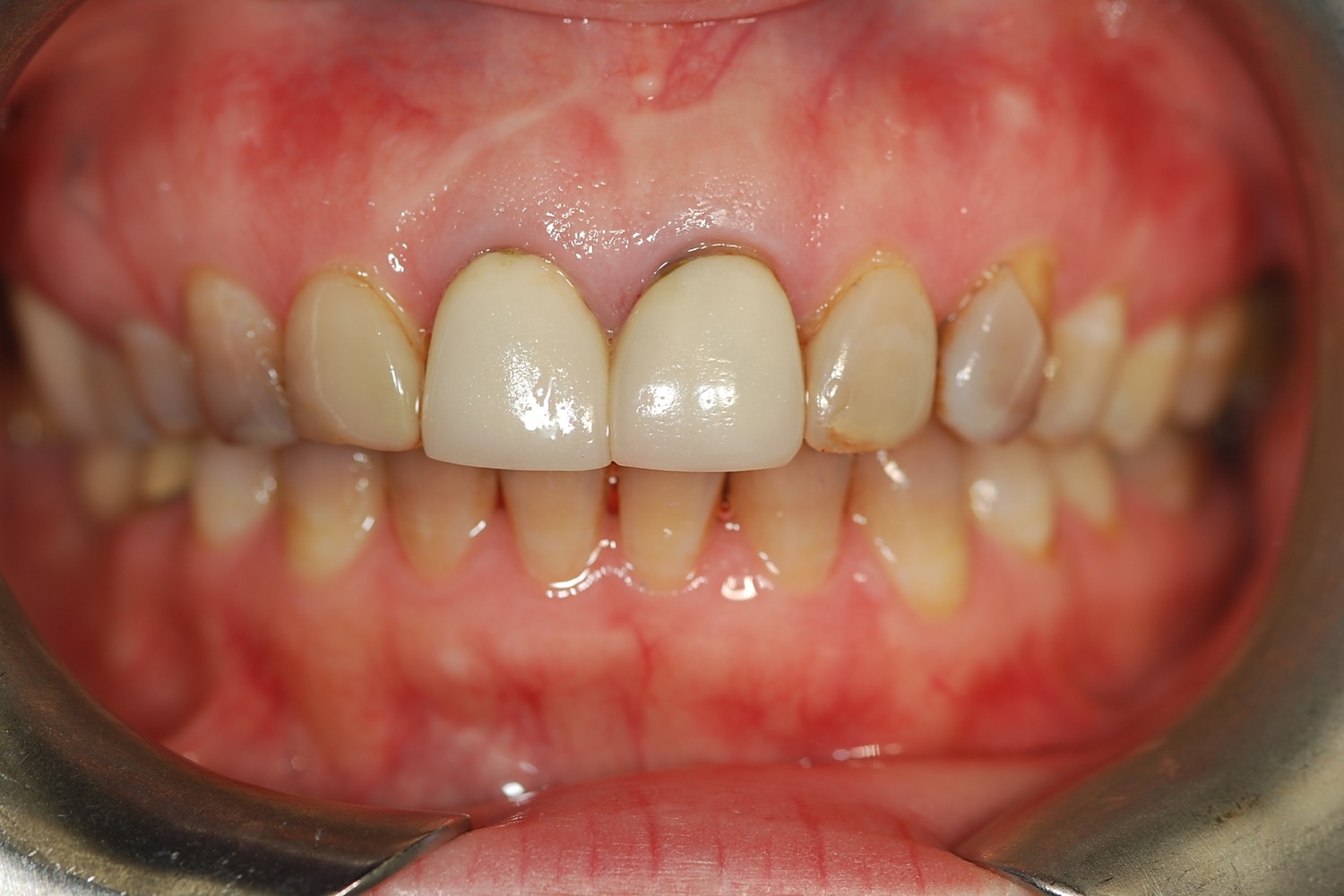 Before
 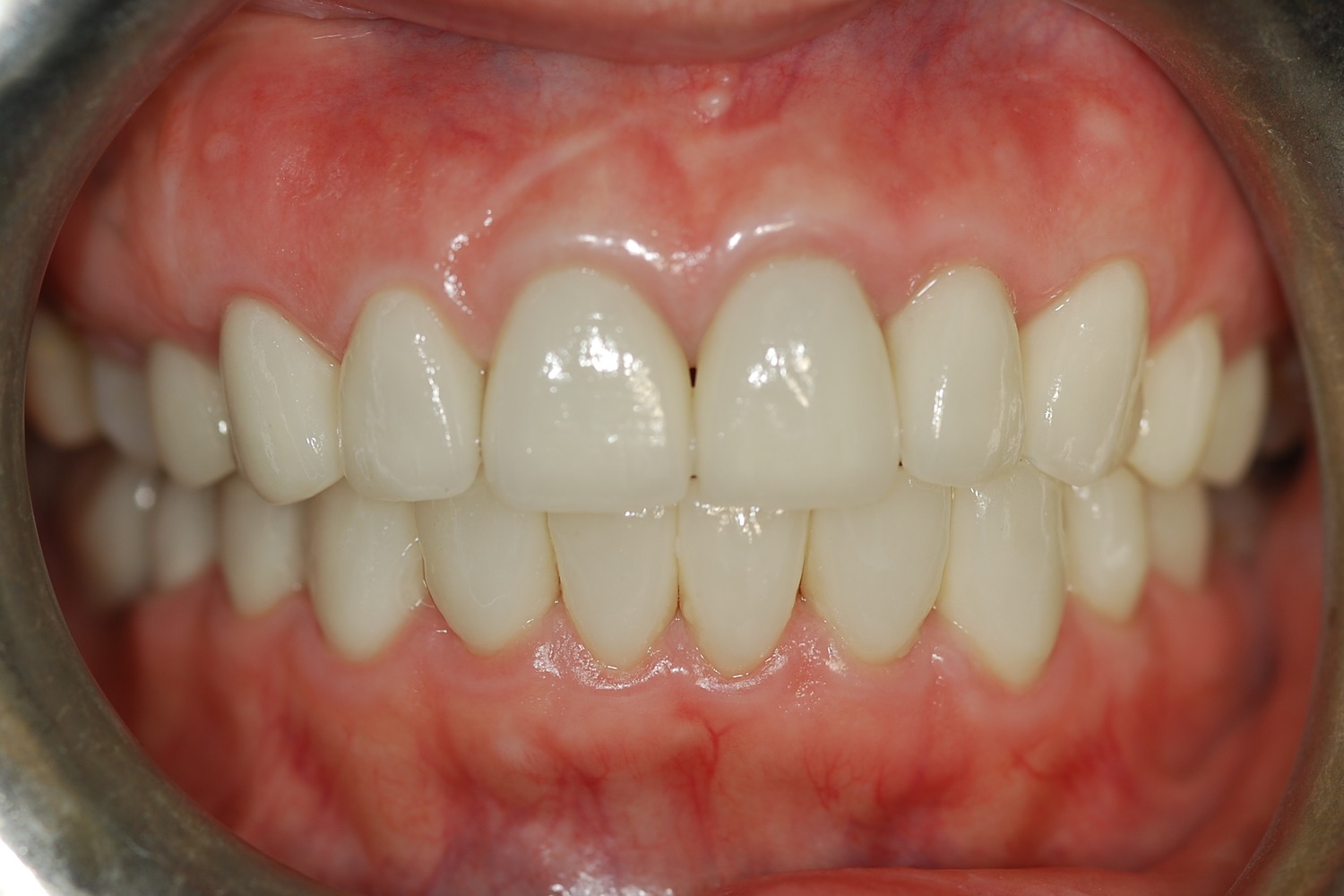 After
After How Aging, Opaque Restorations Were Replaced with Customized Ceramic Restorations Designed for Long-Term Natural Esthetics
The existing restorations appeared opaque, worn, and unnatural over time, affecting both confidence and overall smile harmony.
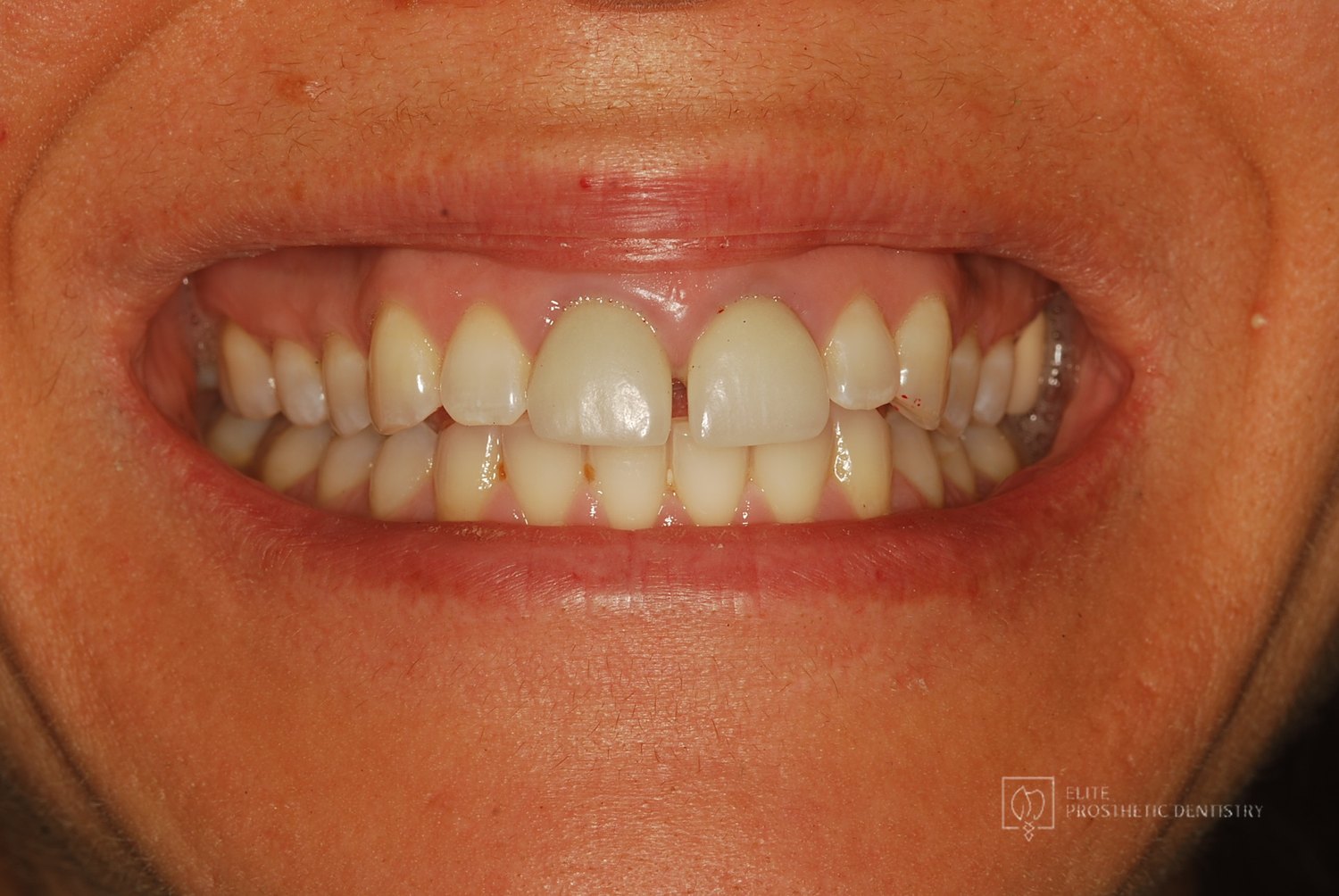 Before
  After
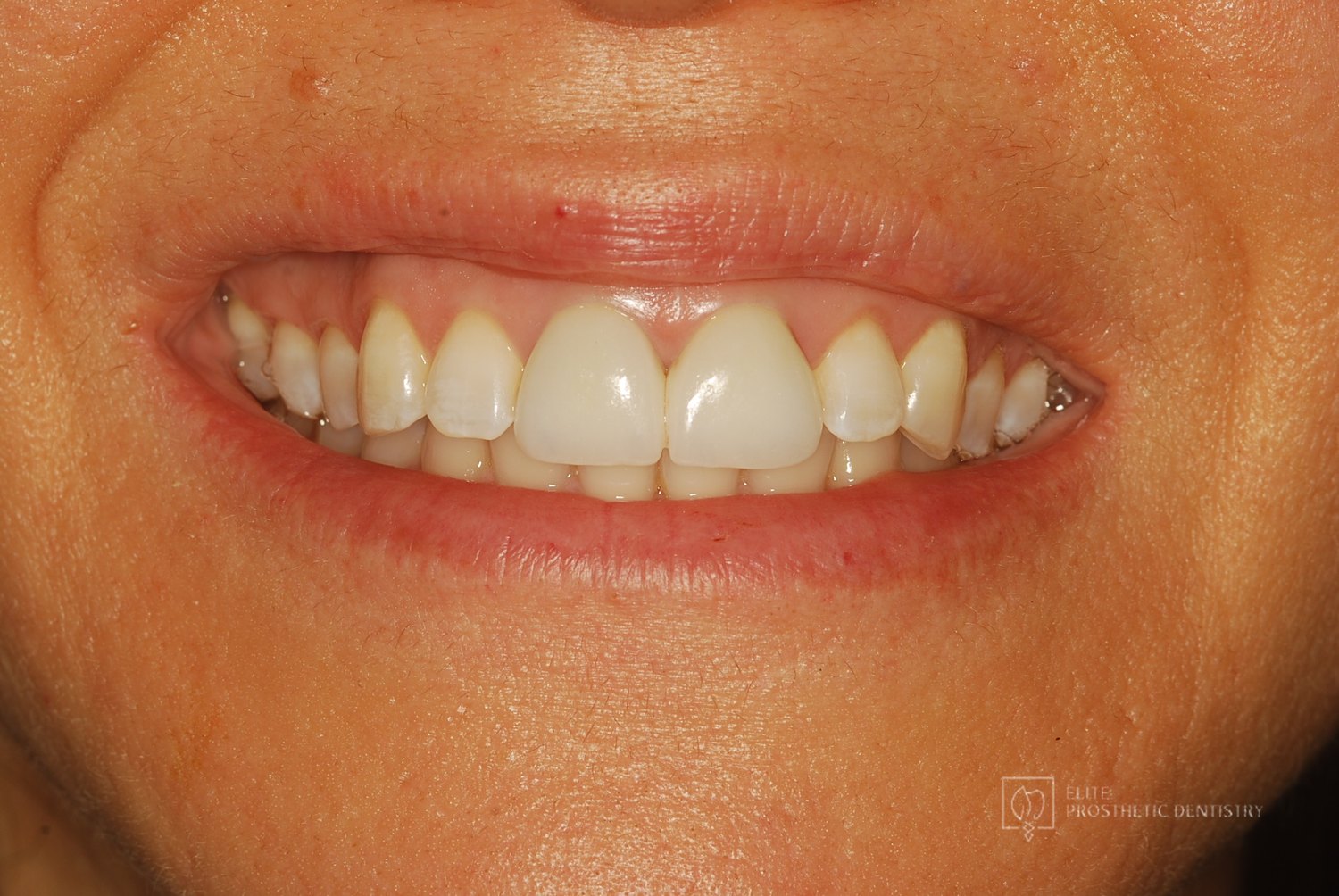
After Two Front Teeth Saved From Extraction: A Second Opinion, Custom Gold Posts, and Crowns Made to Last
Two upper central incisors with failed root canal treatment and recurrent decay had been recommended for extraction and implant replacement. A CBCT evaluation showed that removing the roots from their thin facial bone housing could create a visible esthetic defect in the gum and bone contour, made worse by the patient's high lip line.
 Before
  After
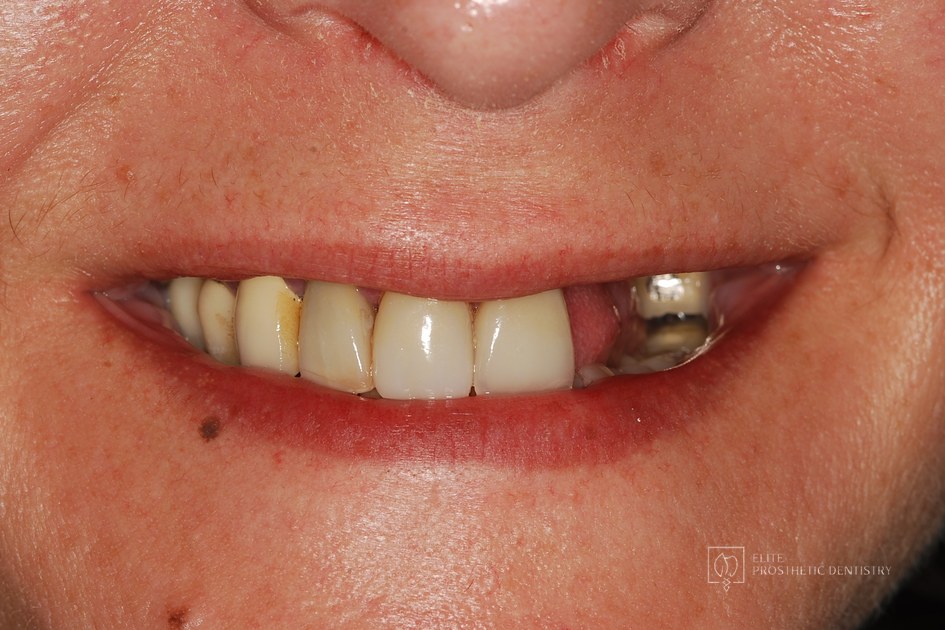
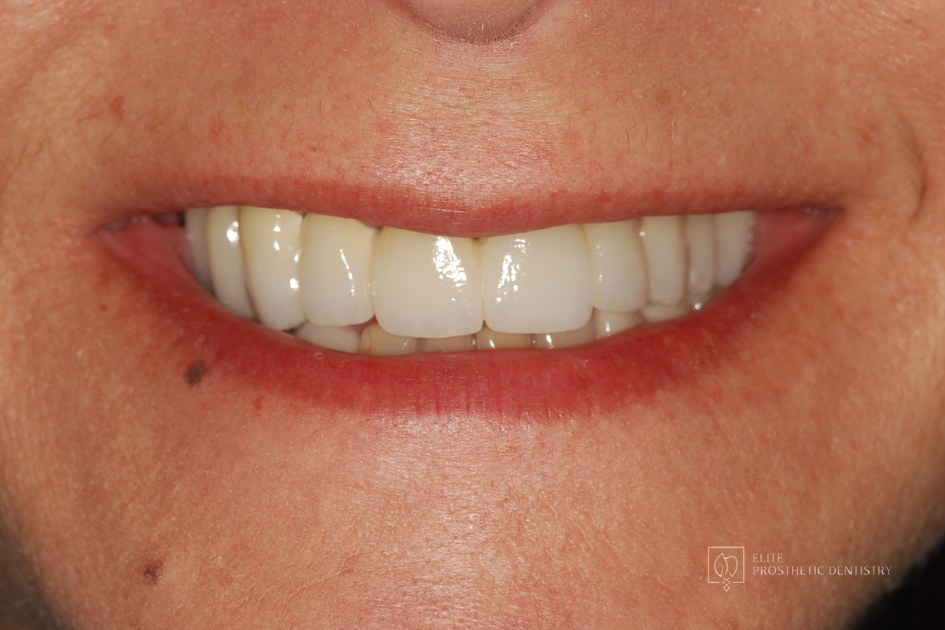
After Implant Supported Reconstruction: Failing Bridgework and Missing Back Teeth Rebuilt with Coordinated Specialist Care
Referred by another dental specialist with severe bone resorption on the upper left, multiple broken-down lower teeth requiring extraction, and failing lower back teeth that had left the bite without solid support. No single procedure, and no provider working in isolation, could rebuild a situation this interconnected.
Related Articles
Deepen your knowledge with additional insights on this topic.
 Dental Crowns
 Why Are Some Temporary Crowns More Natural Than Others?
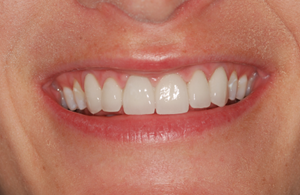
Temporary crowns do not have to look temporary. A DC prosthodontist explains how lab-made provisionals protect your smile and preview your final crowns.
 Dental Crowns
 What Makes a Natural-Looking Crown?
Emergence profile, translucency, internal color, and healthy gum response: a DC prosthodontist explains the anatomy of a crown no one can detect.
 Dental Crowns
 How Is an Immediate Smile Makeover Performed?
An immediate smile makeover transforms your smile in one visit using hand-crafted temporary crowns as a living preview. A DC prosthodontist explains how.