
Implant Placement Using a Surgical Guide: Guided vs. Freehand, Compared
When a dental implant is inserted into the jaw, it should be directed into the center of the space where the future crown will stand. That sentence sounds obvious. What is remarkable is how often it does not happen.
Placing an implant in its ideal location without a guide is demanding, and the price of missing is permanent: an off-angle abutment, a lopsided crown, compromised hygiene, uneven function, and aesthetics that never look quite right. An implant cannot be nudged after placement. You get one chance at position, and careful planning, with a guide where indicated, is how that chance is secured.
What a Surgical Guide Actually Is
A surgical guide is a custom-fabricated template designed specifically for your anatomy. It seats securely in your mouth during surgery and acts as a roadmap, directing the drill and the implant to the exact angle, depth, and location the plan calls for.
The plan is the other half of the story. Every implant case at our practice, from a single implant through full-mouth reconstruction, is planned on a CBCT (cone beam CT) scan, with each implant first placed virtually, positioned relative to roots, nerves, bone volume, and, most importantly, the restoration it will carry. Where bone anatomy, esthetic demands, or proximity to nerves and sinuses call for it, a guide then transfers that virtual placement into physical reality. This is the working heart of Precision Implant Placement, and what separates an adequate guide from an ideal one is covered in our companion article on ideal surgical guides.
Seeing the Difference: Two Molars, Two Outcomes
The comparison below shows implants placed in the lower right first molar position in two different patients.
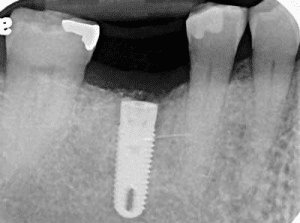
Case 1: An Ideally Placed Implant Using a Surgical Guide
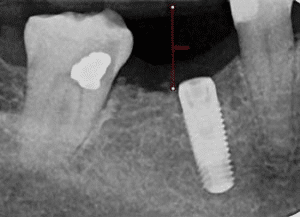
Case 2: Implant Placed Without a Surgical Guide
Notice the difference. The guided implant in Case 1 sits centered in the available bone, aligned for its restoration, with room for healthy tissue and cleanable contours around the future crown. The freehand placement tells a different story, and everything built on it will have to compensate.
Why Position Echoes Through Everything
Implant position is not one variable among many. It is the foundation variable. The angle and location of the implant determine how the crown emerges from the gum, whether you can clean around it, how bite forces load the implant, and whether the result looks like a tooth or a repair. Correctly positioned implants also fail less, because forces flow down their axis the way the engineering intends. Position errors, by contrast, are a recurring theme in the failing implants we are asked to rescue, a pattern documented in what causes dental implant failure.
This is why CBCT planning is not an upgrade in our practice. It is the standard on every implant case, from a single molar to full-arch reconstruction.
One Question Worth Asking Anywhere
If you are consulting with any surgeon about an implant, ask directly: how will my implant position be planned, and will a CT-generated surgical guide be used? The answer, and the confidence with which it is given, will tell you most of what you need to know.
Dr. Gerald Marlin has placed more than 3,900 dental implants with carefully planned positioning, and restorations are fabricated in our in-house laboratory so position and crown are engineered together. Call 202-244-2101 or request a consultation at Elite Prosthetic Dentistry in Friendship Heights, Washington, DC.
See How We Resolve These Problems
Our patient success stories show real cases and real results. Browse outcomes from a specialist prosthodontist with decades of experience and 3,900+ implants placed.
Key Takeaways
- ✓ A surgical guide is a custom template that transfers the planned implant position, angle, and depth into your mouth during surgery.
- ✓ Once placed, an implant cannot be repositioned. Careful planning, with a guide where indicated, is how you get that one chance right.
- ✓ Off-angle implants produce lopsided crowns, hygiene problems, uneven forces, and aesthetic compromises that last as long as the implant does.
- ✓ Every implant case in our practice is planned on a CBCT scan, and surgical guides generated from the scan are used where bone anatomy, esthetic demands, or proximity to nerves and sinuses call for them.
- ✓ The best guides are generated from your CT scan, with the implant positioned virtually before surgery.
Frequently Asked Questions
What is a surgical guide for dental implants?
It is a custom-fabricated template, designed from your anatomy, that seats in your mouth during surgery and directs the implant into the exact position, angle, and depth that were planned. Think of it as the physical delivery mechanism for a three-dimensional plan.
Why does an implant need a guide at all?
Because the target is small, buried, and surrounded by roots, nerves, and sinus anatomy, and because the implant must be positioned for the crown it will carry, not just for the bone available. The more demanding the site, the harder it is to reach that ideal location freehand, and errors show up as off-angle abutments and lopsided crowns.
What happens if an implant is placed without a guide?
Sometimes nothing. In demanding sites, the implant can end up off-center or off-angle, which forces the abutment and crown into compensations: bulky contours, poor emergence from the gum, areas that trap plaque, and bite forces loading the implant sideways. The restoration pays for the placement forever.
Are all surgical guides the same?
No. Guides made from models are better than nothing, but the standard to ask for is a CT-generated guide: your implant positions are planned virtually on a 3D scan of your jaw, and the guide is fabricated to deliver exactly that plan. What makes a guide ideal is covered in our companion article.
Related Patient Success Stories
Explore similar patient success stories demonstrating our expertise in advanced prosthetic dentistry.
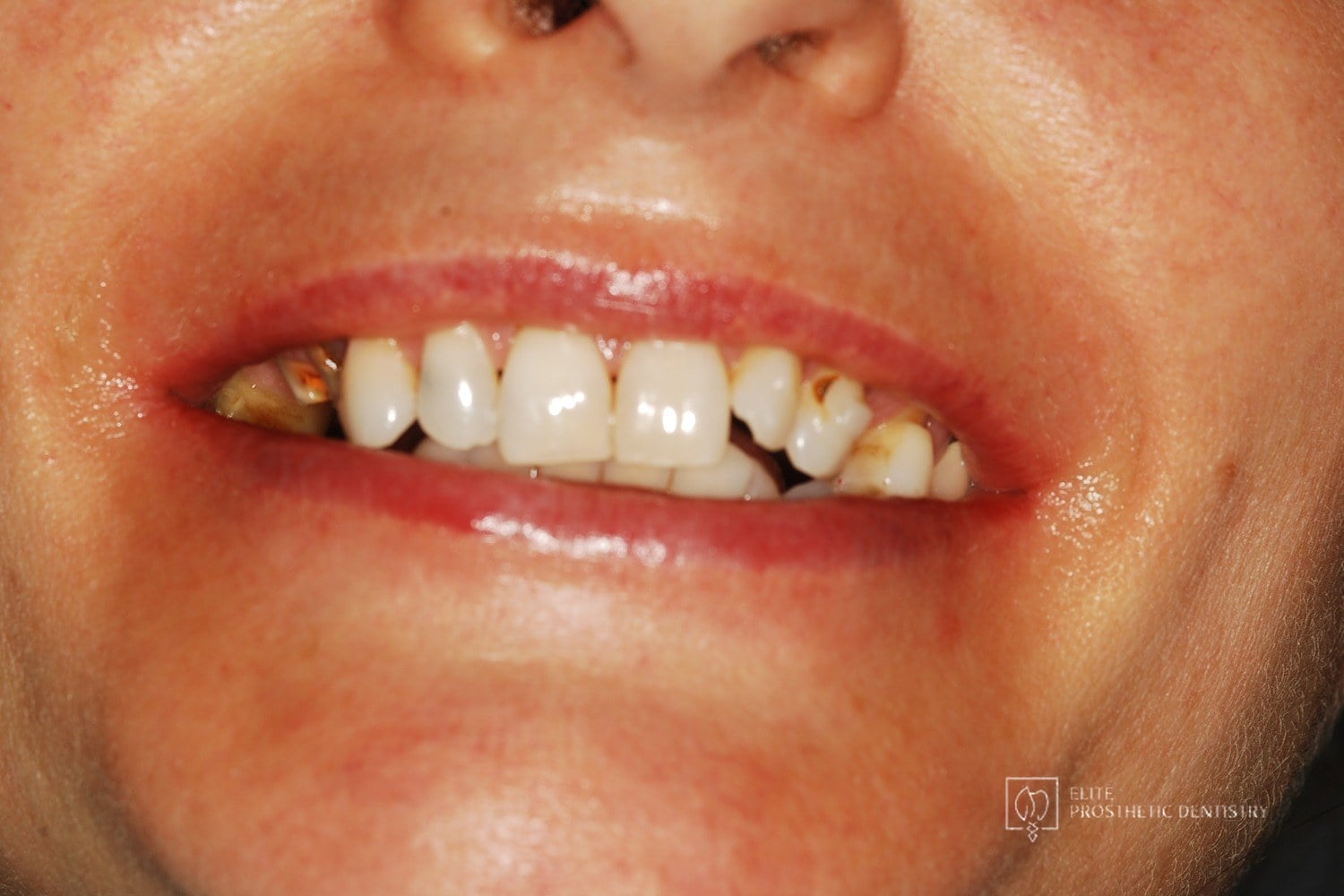 Before
 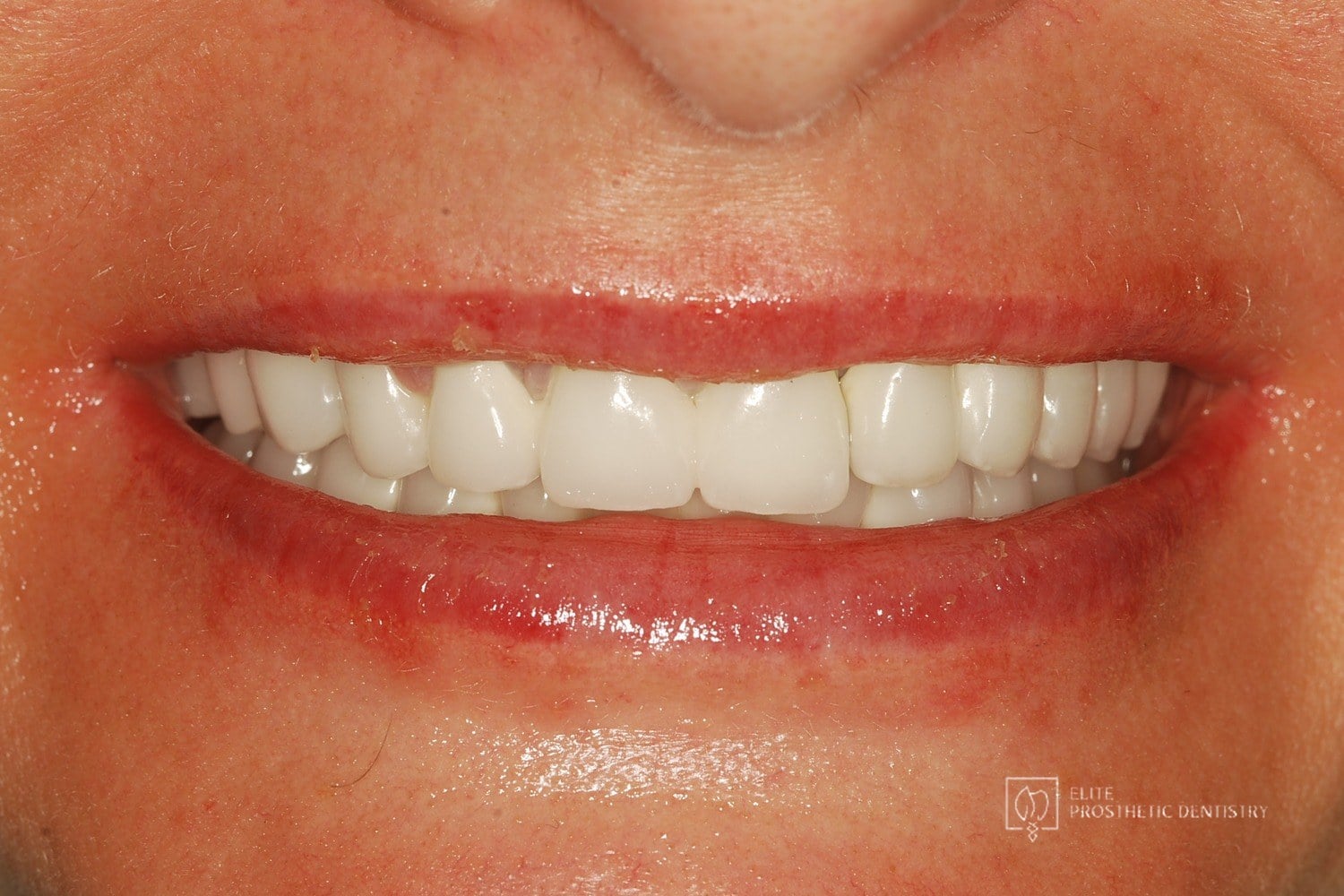 After
After How Aging, Failing Dentistry Was Replaced with a Coordinated Full-Mouth Implant and Crown Reconstruction
The patient presented with throbbing upper-molar pain, long-standing infections, multiple root canals and unfinished prior treatment, generalized sensitivity, and several hopeless teeth.
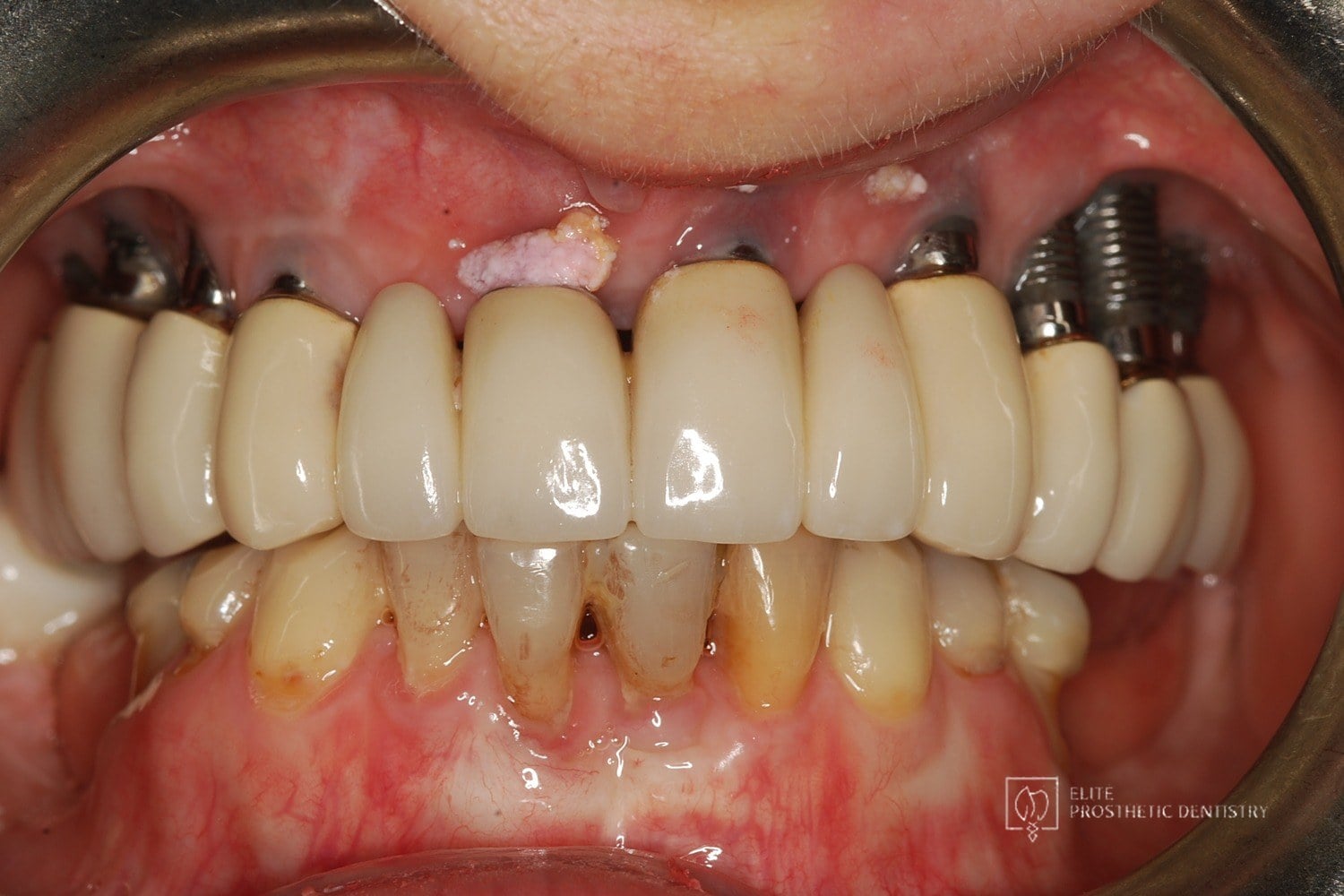 Before
 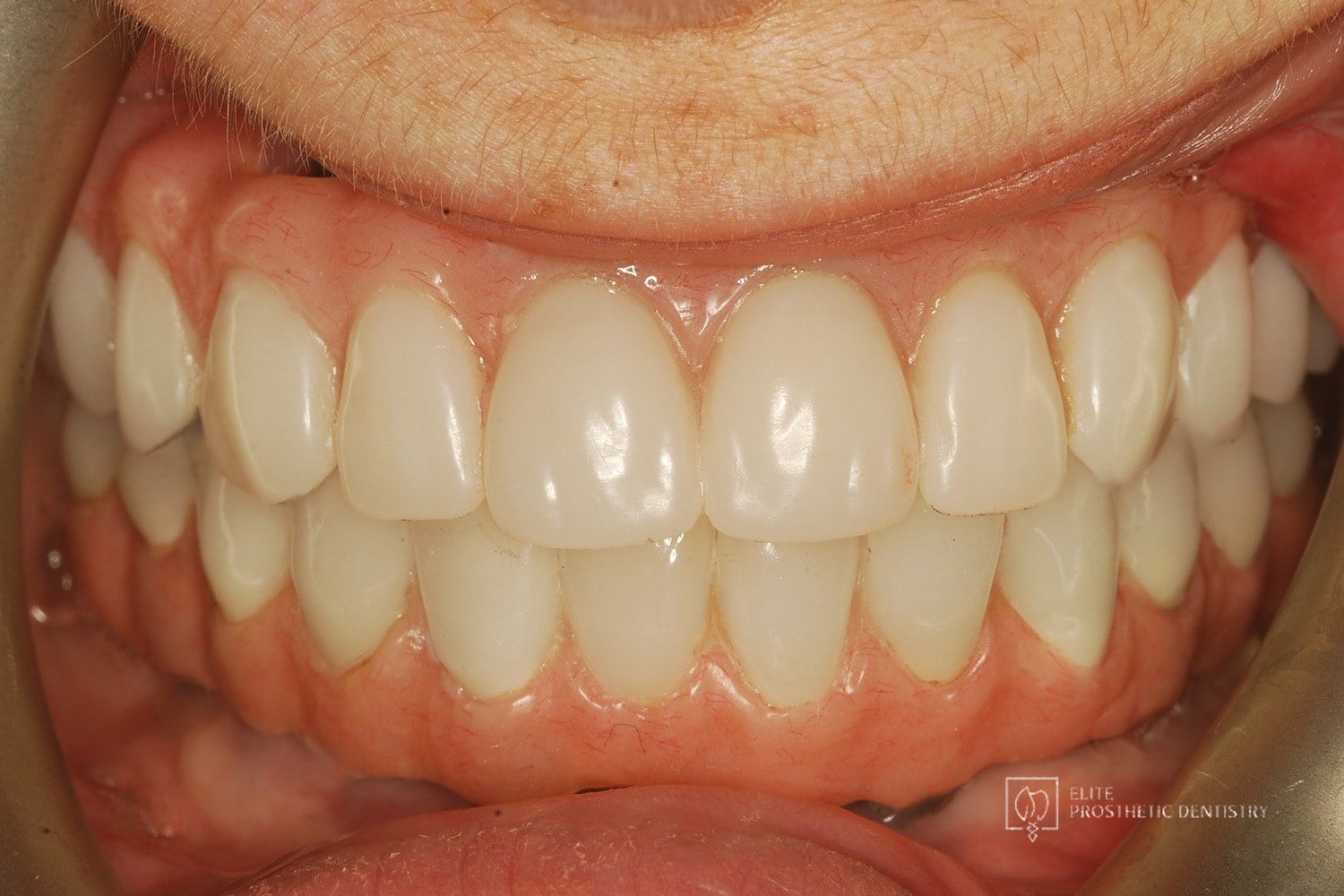 After
After How Failing Implants and Severe Bone Loss Were Rebuilt Into a Stable Full-Arch Implant Reconstruction
The patient presented with significant complications from previously placed implants, severe bone loss, failing posterior implants, and an unesthetic full-arch bridge. Both arches required full reconstruction, with the upper arch showing the most advanced bone loss and instability.
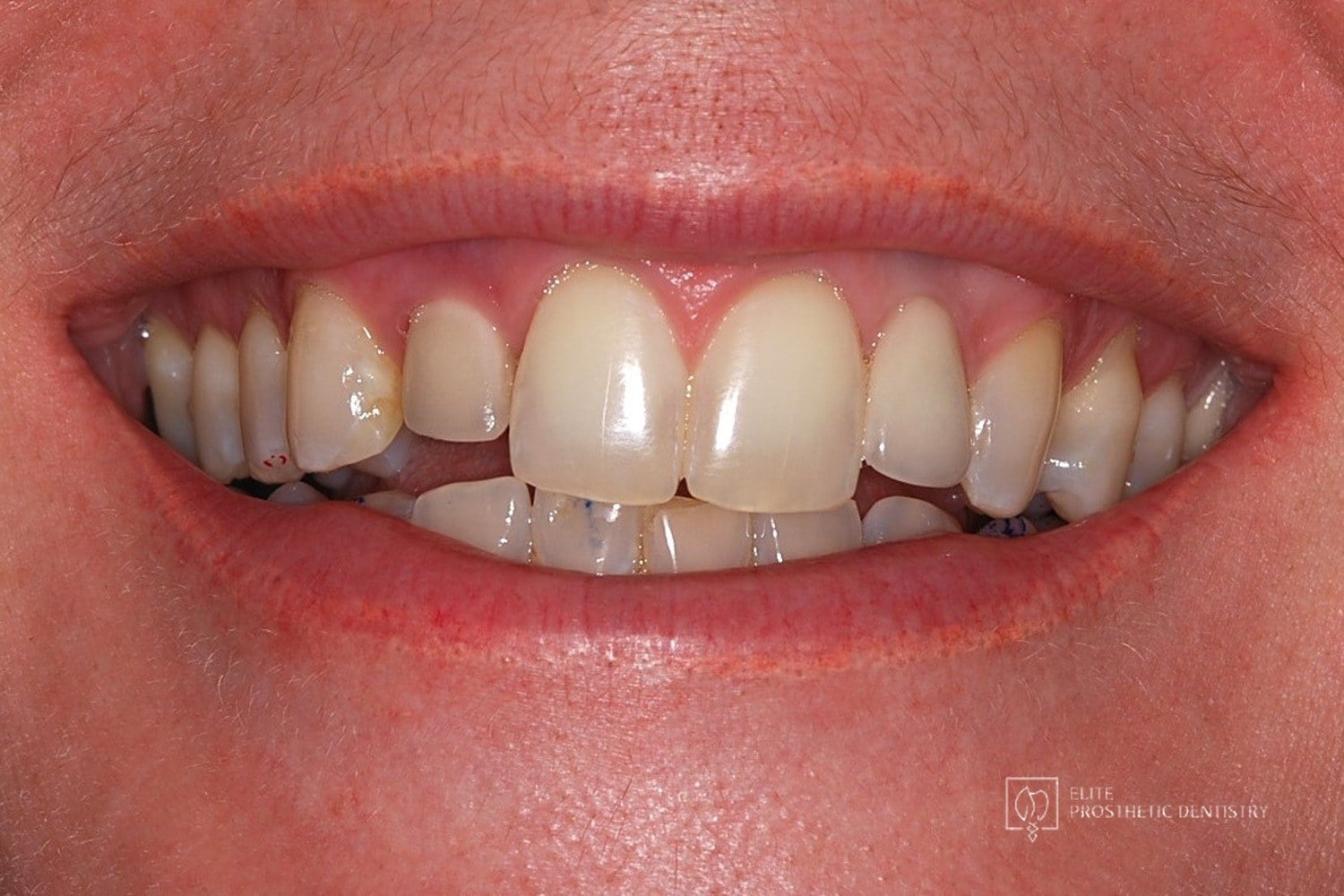 Before
 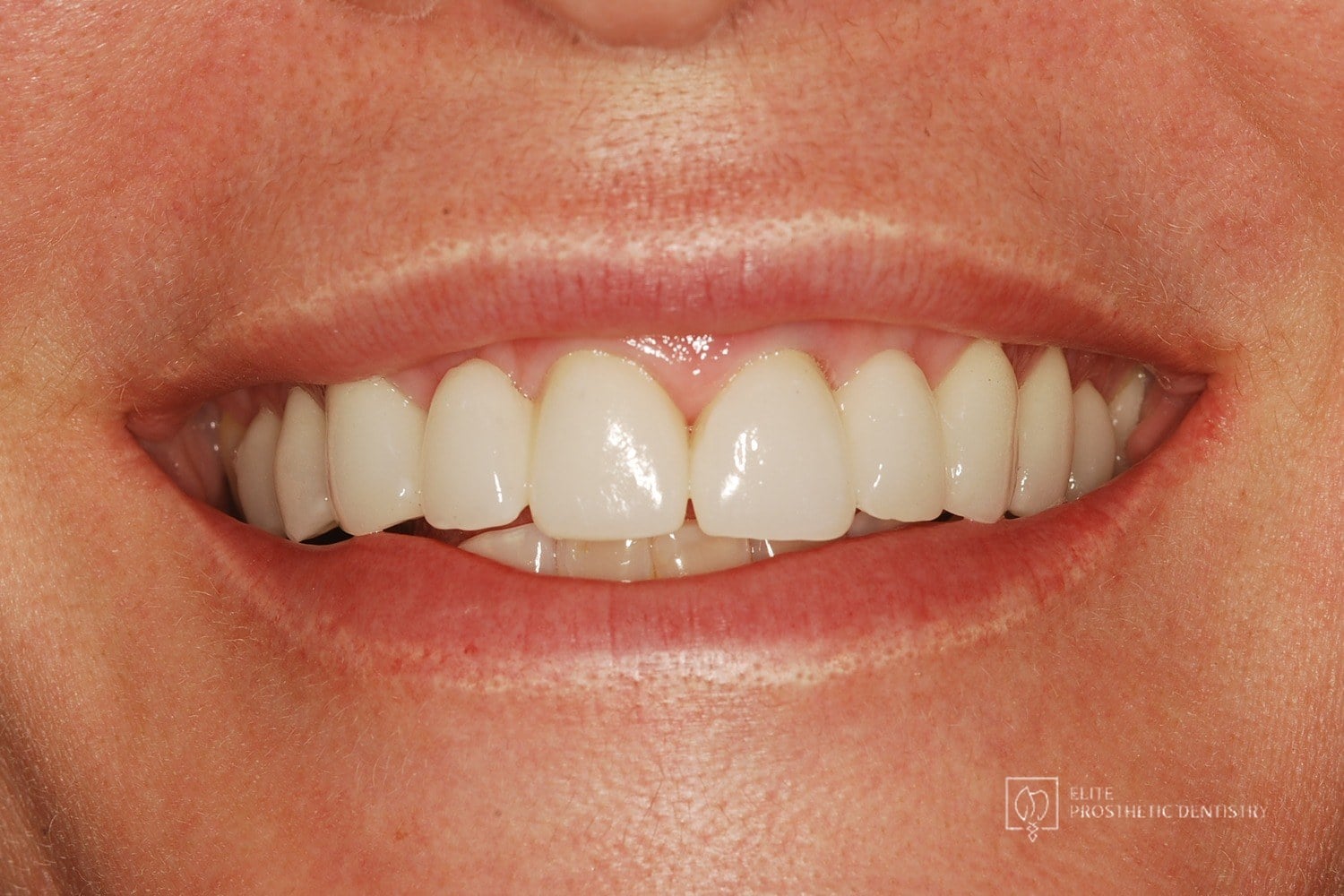 After
After How Failing Lateral Incisor Implants Were Replaced with Custom Zirconia Bridges After Severe Bone Loss Made Replacement Implants Impossible
Comprehensive examination including CBCT imaging revealed significant bone loss surrounding implants that were placed outside the buccal plate, most likely due to placement without a CBCT-generated surgical guide. The implants were determined non-salvageable, and the alveolar ridge was too narrow to support replacement implants without extensive reconstruction.
Related Articles
Deepen your knowledge with additional insights on this topic.
 Dental Implants
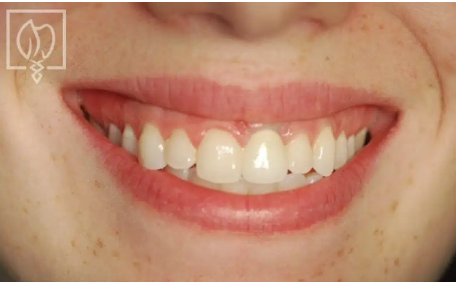
 If a Single Front Tooth Is Replaced with an Implant, Can It Look Natural?
Yes. See the four steps, with real case photos, that make a single front tooth implant indistinguishable from the natural tooth beside it. Washington, DC.
 Dental Implants
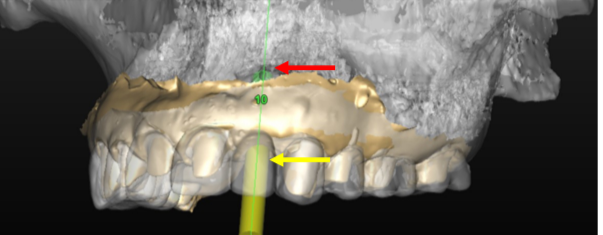
 What Is Precision Implant Placement (PIP)?
Precision Implant Placement plans each implant virtually on a CBCT scan, then delivers it with a custom surgical guide. See the three steps with real images.
 Dental Implants
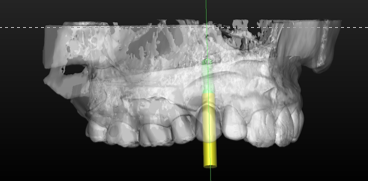
 What Is the Ideal Surgical Guide for Precision Implant Placement?
Not all surgical guides are equal. The gold standard is CBCT-based: planned virtually in 3D, 3D printed, and seated on your teeth. A DC prosthodontist explains.