
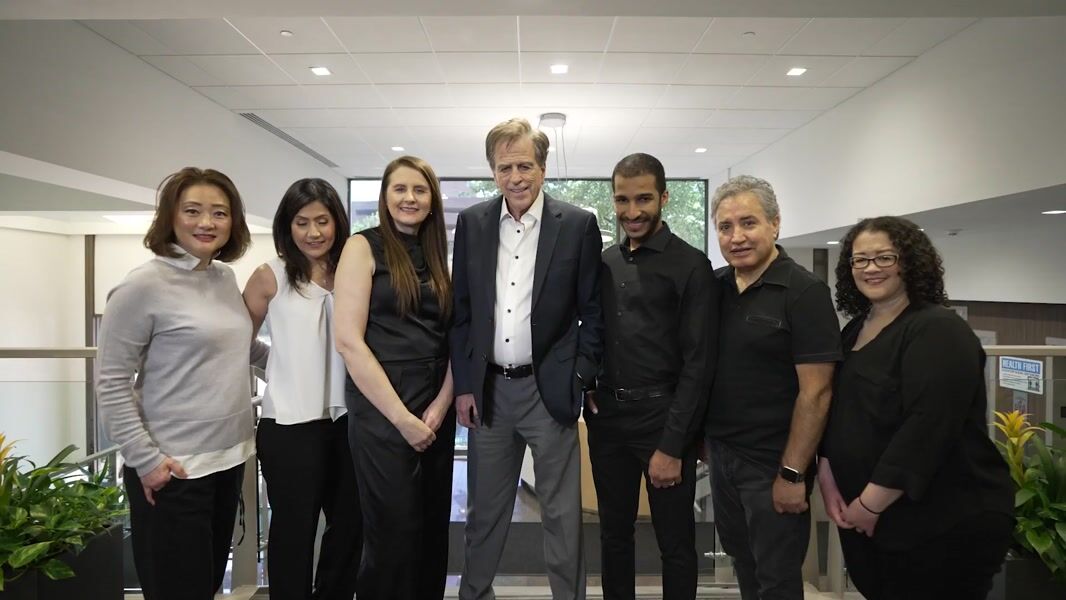
Denture Questions Answered for Georgetown Patients
Common denture questions answered by specialty-trained prosthodontist. Adjustment, eating, speaking, maintenance - comprehensive denture Q&A for Georgetown.
What You Need to Know About Getting Dentures
Georgetown patients often have questions about dentures before committing to treatment. Understanding what dentures truly involve helps you make informed decisions. The following questions and answers address the most common concerns we hear from prospective denture patients.
Will My Dentures Feel Foreign Constantly?
The sensation of wearing dentures diminishes dramatically over time. Most patients report that dentures feel distinctly foreign during the first week. By the end of week two, the awareness decreases substantially. After four weeks, most patients are so accustomed to their dentures that they forget they’re wearing them during normal conversation and eating.
Your tongue adapts quickly to the presence of a denture base in your palate. Your muscles learn proper positioning techniques. Your chewing pattern adjusts to accommodate dentures. This adaptation is largely unconscious and automatic for most people. If you spend time consciously thinking about your dentures, they feel more prominent. When you use them naturally for eating and speaking, most people forget about them entirely.
Some patients report that existing denture wearers can wear new dentures with minimal adaptation because they already understand how dentures function. First-time denture patients require slightly more adjustment time.
What About Speaking With Dentures?
Speech changes are typically minor and temporary. You may notice slight lisp or speech changes during the first week as your tongue adapts to reduced space in your mouth. Your tongue position naturally adjusts around the denture base. Most patients report complete normalization of speech within two to four weeks.
Some patients practice speaking in private during the initial adjustment period to build confidence. Reading aloud or singing can help accelerate speech adaptation. Practicing common phrases you use frequently can increase your confidence in social and professional situations.
If speech problems persist beyond four weeks, contact us for adjustment. Occasionally, denture design modifications can optimize speech outcomes, though this is rare.
How Do I Know When I’m Ready to Eat?
Start with soft foods during your first week. Scrambled eggs, yogurt, soup, and mashed vegetables require minimal chewing and allow you to practice proper eating technique. Cut all foods into small pieces. Position food between your back teeth rather than in front where dentures are more mobile.
Chew slowly and deliberately. Use both sides of your mouth equally to distribute forces. Avoid hot foods initially, which can soften denture material and affect fit.
By week two, most patients can begin gradually introducing foods requiring more chewing. Hard foods, nuts, and sticky candies should be avoided until you’re completely comfortable with your dentures. Some patients never eat these foods with dentures and prefer to remove their dentures for such meals.
Proper chewing technique prevents dentures from moving and causing embarrassment. Your technique will improve naturally with practice.
How Much Maintenance Do Dentures Actually Require?
Daily care is straightforward. After eating, remove your dentures and rinse them under running water to remove food debris. Brush them gently with a soft denture brush and denture cleaner. Never use toothpaste on dentures because the abrasive particles damage the acrylic surface.
At night, remove your dentures and soak them in denture cleaning solution. This overnight soaking removes plaque and bacteria and helps prevent staining. Some patients prefer soaking dentures several times weekly rather than nightly. Discuss the optimal routine for your situation during your consultation.
Additionally, clean your mouth even when not wearing dentures. Rinse your gums and palate with water. Brush any remaining natural teeth and the gum areas beneath your denture. This oral hygiene maintains healthy tissues and prevents infection.
Avoid hot water, which warps denture material. Store dentures in a designated container with cleaning solution. Handle them carefully to prevent drops that cause damage.
What About Adjustments After Delivery?
Your first adjustment appointment occurs within one to two weeks after delivery. Dr. Marlin evaluates how your dentures fit and function with your tissues healing after extraction. Minor pressure areas may need relief. Your bite may need refinement. These adjustments are completed quickly.
Follow-up appointments occur at regular intervals during your first month. As your tissues continue healing, additional minor adjustments maintain optimal comfort and retention. After your first month, most patients need adjustments only when new problems arise or during periodic maintenance appointments.
How Does Bone Loss Affect Long-Term Fit?
After teeth are lost, your jawbone begins resorbing as it loses stimulation from tooth roots. This resorption is relatively rapid during the first year, then slows but continues indefinitely. Your denture fit depends on intimate contact between the denture base and your gum ridge. As your ridge changes shape, this contact becomes less precise, and your denture becomes looser.
For the first year, relining or adjustment appointments every few months help maintain fit. Your denture base can be adjusted to compensate for bone changes. Eventually, bone resorption becomes so significant that your denture’s internal surface no longer matches your bone shape. At this point, a new denture or extensive remake becomes more practical than continuing minor adjustments.
Well-designed dentures typically function acceptably for 5 to 8 years before bone resorption necessitates replacement. This is one reason why implant-supported dentures appeal to some patients, implants anchor directly to bone and prevent resorption in anchoring areas.
What About Sore Spots or Pressure Areas?
Minor sore spots are common during your first month of denture wear. They result from areas where the denture contacts your tissues with slightly too much pressure. This is normal and easily corrected.
Contact us whenever soreness develops. Dr. Marlin identifies the pressure area and performs selective relief grinding to reduce contact pressure. This usually requires only 10 to 15 minutes. The area heals within days.
Continuing to wear a denture with significant pressure spots can cause ulceration of your tissues. Avoid this by seeking adjustment promptly. Once relieved, the tissue heals quickly and remains comfortable.
Can Dentures Be Replaced If They Break?
Dentures sometimes crack or break from normal wear or accidental drops. Minor chips or small cracks can be repaired, sometimes the same day in our laboratory. More extensive damage may require denture remake rather than repair.
Having a backup denture is sometimes practical if your occupation prohibits being without teeth. Discuss this option during your consultation if you’re concerned about damage and loss of ability to wear teeth.
What Makes Quality Dentures Different?
The specialty-trained prosthodontist approaches denture design very differently than general dentists. Prosthodontists receive three additional years of graduate training focused specifically on restoration and replacement dentistry. This training encompasses complex design, biomechanics, esthetics, and fabrication techniques.
Quality dentures are individually customized to your anatomy and facial characteristics. Prosthodontists select tooth shade and shape based on your specific appearance rather than using generic designs. They position teeth to optimize both natural appearance and functional bite. They design gum contours and coloring to match your natural tissue appearance.
The in-house laboratory at Elite Prosthetic Dentistry allows direct collaboration between Dr. Marlin and our ceramists, ensuring exceptional quality control and attention to detail. Dentures made in outside laboratories cannot achieve the same level of customization and quality assurance.
Elite Prosthetic Dentistry 4400 Jenifer Street NW, Suite 220 Washington, DC 20015 (202) 244-2101 Request a Consultation Contact & Directions
Georgetown patients reach our office in 10 to 15 minutes north on Wisconsin Avenue. Free parking is available in our building.
Understanding Denture Options
Removable restorations come in several types, each appropriate for different situations. Complete replacement teeth replace all upper or lower teeth. These prosthetic teeth rest on your gums and underlying bone, held in place through mechanical and retention mechanisms. Complete custom teeth work best when adequate bone remains to support them.
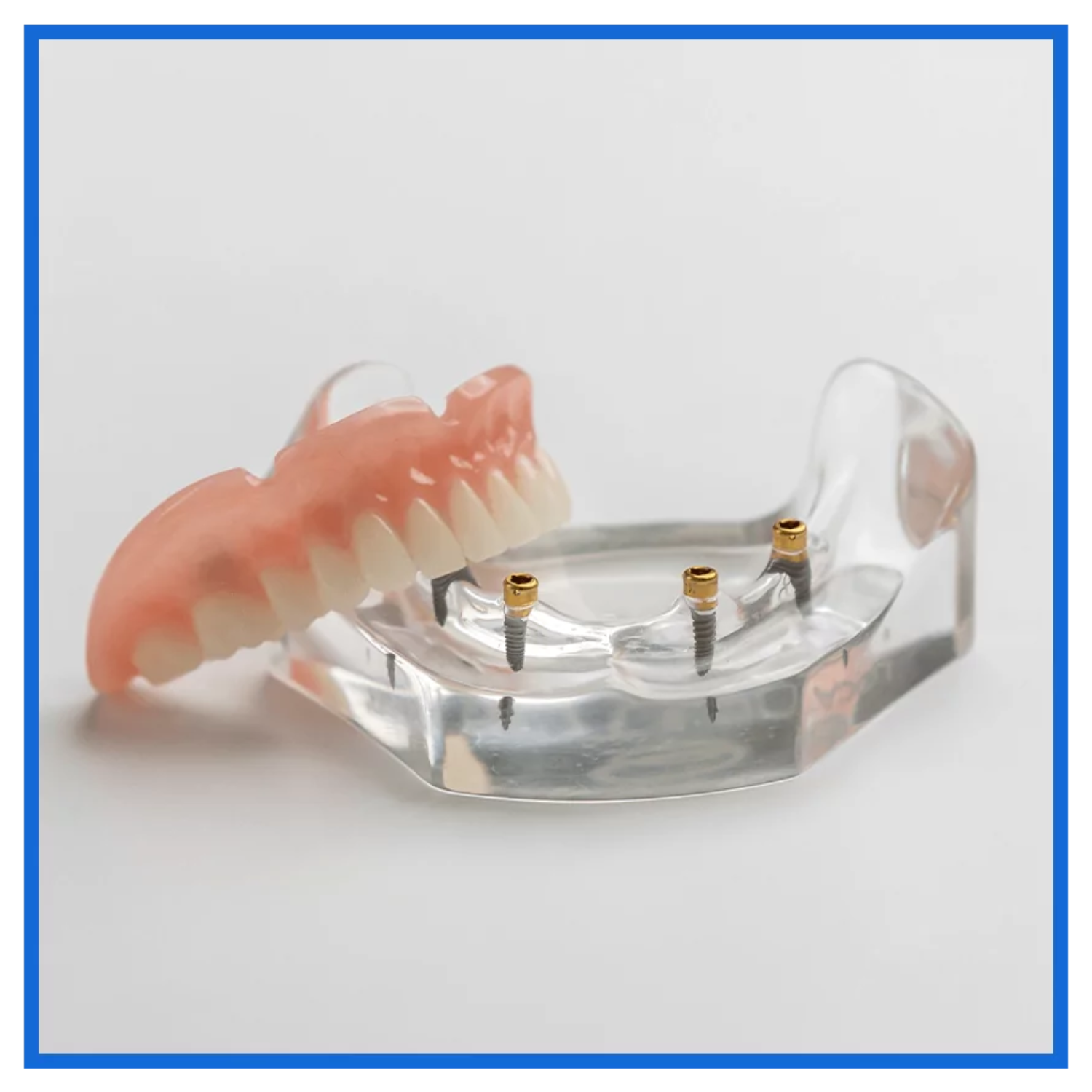
Partial tooth replacements replace some teeth while preserving remaining natural teeth. These dental prosthetics are typically supported partly by remaining teeth and partly by gums and bone. Partials allow you to preserve natural teeth you want to keep, though the remaining teeth must be healthy and strong enough to support the restoration.
Implant-supported removable restorations are fastened to dental implants rather than resting on gums alone. These replacement teeth provide superior support and function compared to traditional prosthetic teeth. Implant tooth replacements eliminate loosening and movement. They preserve bone because implants stimulate bone maintenance. They provide far superior chewing function.
The appropriate treatment type for you depends on how many teeth are remaining, their condition, your anatomy, and your preferences. Our specialty-trained team evaluates your situation and recommends what will serve you best.
The Problem with Bone Loss and Traditional Dentures
When teeth are lost, the bone that supported them gradually resorbs. This bone loss is progressive and accelerates immediately after tooth loss. Traditional dental prosthetics rest on resorbing bone, which means the treatment fit gradually loosens over months and years.
This progressive loosening creates several problems. Dentures that were comfortable initially become loose and uncomfortable. They shift and click during eating or speaking. They require increasing amounts of treatment adhesive to maintain retention. The loose fit makes chewing difficult and reduces the foods you can eat comfortably.
Bone loss also changes your facial appearance. Your face becomes narrower and older-looking as underlying bone resorbs. This is why patients who’ve worn traditional dentures for many years often look aged and hollowed.
Implant-supported removable restorations solve these problems by anchoring replacement teeth to implants integrated with bone. The implants maintain bone because they stimulate it. The appliance support remains stable indefinitely. The denture doesn’t loosen over time because it’s anchored mechanically rather than relying on suction to resorbing bone.
Custom Denture Fabrication
The restoration fabrication process requires multiple appointments and careful collaboration between our prosthodontic team and the dental laboratory. The process begins with detailed examination and discussion of your goals and concerns. Elite Prosthetic Dentistry discusses whether dentures are truly the best solution or whether implants might be preferable.
Once prosthetic teeth are determined appropriate, our specialty-trained team takes preliminary impressions and bite records. Based on these, the laboratory creates custom appliance bases fitted to your mouth. During subsequent appointments, you try in the denture bases. Elite Prosthetic Dentistry adjusts them for fit and comfort. We take final bite records ensuring your bite is recorded correctly.
The laboratory then fabricates the complete prosthetic, selecting individual tooth shades, shapes, and positions based on Elite Prosthetic Dentistry’s specifications and mockups. The denture is constructed to your mouth’s unique anatomy, not a generic pattern.
When your restoration is complete, our prosthodontic team fits it to your mouth, adjusts the bite to ensure proper contacts, and ensures comfort. You receive detailed instructions on insertion, removal, cleaning, and care. Follow-up appointments allow adjustments as you adapt to the denture.
Aesthetic Excellence in Denture Design
Modern denture aesthetics depend on careful selection of individual components. Tooth shades are selected to match your skin tone and appear natural. Tooth shapes are chosen based on your face shape and personality. Tooth positioning creates proper smile arc and lip support.
Gum color and contours are customized. Some patients have pink gums with defined margins. Others have paler or more uniform gum appearance. Denture gums are tinted to match your natural gum appearance, making the denture look part of your mouth rather than obviously artificial.
Dr. Marlin’s experience and artistic approach to prosthetic design means he creates tooth replacements that look attractive and natural. Many Georgetown professionals find that well-made dentures are far more cosmetically acceptable than they anticipated.
Implant-Supported Dentures for Superior Function
Implant-supported dental prosthetics represent the modern pinnacle of prosthetic dentistry. Rather than resting on gums alone, the appliance is fastened to implants, providing extraordinary stability. You can chew with normal force without restoration movement. You can speak without clicking or slippage. You can eat foods you couldn’t manage with traditional dentures.
Implant removable restorations require fewer implants than tooth replacement. A full mouth might need only 4 to 6 implants to support an implant appliance, whereas individual implant crowns would require implants for every missing tooth. This makes implant dentures a more practical solution in cases of extensive tooth loss.
The disadvantage of implant tooth replacements is cost. They’re substantially more expensive than traditional dental prosthetics because they require implant placement and the denture fabrication cost. However, many patients find the superior function and comfort justify the investment.
Partial Dentures for Selective Tooth Loss
When you have some healthy natural teeth remaining, a partial prosthetic can replace missing teeth while preserving what you have. Partial dentures are typically supported partly by your remaining natural teeth and partly by gums and bone.
The advantage of partials is that they preserve natural teeth. The disadvantage is that remaining natural teeth must be strong and healthy, because they provide support for the partial. If remaining teeth eventually fail, the partial must be modified or converted to a complete denture.
Some patients with partials prefer extracting remaining compromised teeth and transitioning to complete dentures or implant solutions rather than attempting to preserve teeth that are increasingly problematic. This decision is individual and depends on remaining tooth health and your comfort level with different options.
Denture Adjustment and Relining
After your restoration is delivered, adjustments are often necessary. Your mouth adapts to the denture over days and weeks. Areas that were uncomfortable might become comfortable as tissues adapt. Other areas might develop pressure spots. Elite Prosthetic Dentistry makes these adjustments at follow-up appointments, ensuring ultimate comfort.
Over time, bone resorption requires prosthetic relining. Your prosthesis was fabricated to fit your mouth as it was. As bone resorbs, the appliance fit becomes loose. Relining adds material to the denture base to restore proper fit. Soft tissue relines use temporary materials and are done at periodic intervals. Hard relines use permanent material and might be done annually or every few years depending on bone loss rate.
Our team at Elite Prosthetic Dentistry monitors your restoration fit during routine appointments and performs relines before loosening becomes uncomfortable. Regular appointments ensure your denture maintains optimal fit and function.
Care and Maintenance of Dentures
Prosthesis care involves daily cleaning, proper storage, and regular professional evaluations. Each day, brush your appliance with a soft denture brush and prosthetic cleanser to remove food particles and plaque. Soak your prosthesis overnight in a denture cleanser solution to remove stubborn deposits and allow denture material to rehydrate.
Your mouth should also be cleaned daily. Brush your gums and any remaining natural teeth. Massage your gums to stimulate circulation and maintain tissue health. Even without natural teeth, your oral tissues require care and stimulation.
Visit our specialty-trained team regularly for prosthetic evaluation and adjustment. We can identify problems early before they become uncomfortable. We perform relines as needed to maintain proper fit. Regular professional care keeps your denture functioning optimally for many years.
Georgetown Professionals and Denture Solutions
Georgetown professionals sometimes find themselves needing dental prosthetics due to genetic predisposition to tooth loss, previous treatment failures, or extensive trauma. The transition from natural teeth to removable restorations can be psychologically challenging. Modern dentures, however, allow professional presentation that would be impossible without them.
Well-made prosthetic teeth allow Georgetown professionals to maintain their appearance, continue eating the foods they enjoy, and function confidently in professional settings. Many patients who initially worried about tooth replacements find that high-quality, custom-fabricated dentures delivered results far exceeding their expectations.
Some Georgetown professionals prefer implant-supported replacement teeth because they provide function closer to natural teeth. Others find traditional dentures perfectly acceptable and prefer the lower cost and simpler maintenance. The decision is individual based on your needs, budget, and preferences.
Transitioning from Other Dentures
If you have older removable restorations that no longer fit properly or don’t look aesthetic, modern replacement dentures can deliver substantial improvement. Newer materials look more natural. Modern design techniques ensure better fit and function. Computer-aided design allows precise customization.
Our specialty-trained team can evaluate your existing tooth replacements, determine whether adjustment and relining might improve them, or recommend replacement with modern dental prosthetics. Many patients find that new dentures deliver such superior results that they’re astounded by the difference.
Combining Dentures with Other Restorations
Replacement teeth can be combined with implants, crowns, or other restorations as part of comprehensive treatment plans. Perhaps you have some teeth that will be retained and crowned, others that will be extracted and replaced with a partial restoration. Or you might have implants supporting some teeth while others are replaced with a hybrid denture.
These combination approaches allow flexibility in designing treatment that matches your anatomy, budget, and preferences. Our prosthodontic team creates treatment plans that integrate different restorations harmoniously.
Cost and Insurance Considerations
Prosthesis costs vary depending on materials selected, complexity of your case, and the specific customization needed. Whether traditional dentures or implant-supported options, Elite Prosthetic Dentistry provides detailed cost discussion during consultation based on your individual treatment plan.
Insurance coverage for dental prosthetics varies. Many plans cover a portion of denture costs. Some plans have limitations on coverage frequency. Elite Prosthetic Dentistry’s office will verify your coverage and explain your financial responsibility, and the practice offers flexible payment options to make treatment accessible.
Your Denture Consultation
If you’re considering replacement teeth or need replacement prosthetic teeth, a consultation with Dr. Marlin is the starting point. He’ll evaluate your oral health, discuss restoration options, explain what’s involved in denture fabrication, and provide a cost estimate. You’ll make an informed decision about proceeding.
Call (202) 244-2101 to schedule your denture consultation. You can also request an appointment online. The office is located at 4400 Jenifer Street NW, Suite 220, Washington, DC 20015, approximately 12 minutes north of Georgetown via Wisconsin Avenue NW.
Modern prosthetic teeth represent an excellent solution for extensive tooth loss. When fabricated by a skilled prosthodontist like Dr. Marlin, they can look beautiful, fit comfortably, and function reliably for many years. Learn more about custom Dentures solutions to explore whether removable restorations might be right for you.
Frequently Asked Questions
How long does the adjustment period take?
Most patients adapt within 2 to 4 weeks. The first week feels awkward as your mouth adjusts. By week two, speaking normalizes and eating becomes more comfortable. By week four, most patients forget they're wearing dentures during normal activities. Some people adapt faster, others require additional time. Regular adjustment appointments during this period optimize your comfort and accelerate adaptation.
Will I be able to eat all the foods I normally enjoy?
You can eat most foods, but technique changes. Cut foods into smaller pieces initially. Avoid very hard or sticky foods until you develop proficiency. With time, your technique improves and you can eat a much wider variety of foods. If you choose implant-supported dentures, you can eat almost any food without restriction.
Can people tell I'm wearing dentures?
With quality custom dentures designed by a specialty-trained prosthodontist, most people cannot tell from appearance. Modern dentures look very natural. However, some people detect slight differences in smile appearance or speech initially. With quality design and proper fit, this becomes less noticeable. Most Georgetown patients report that friends and family are shocked to learn their teeth are dentures.
What happens if my dentures break or crack?
Contact us immediately. Minor repairs can often be completed the same day. Our on-site laboratory can fabricate replacement teeth or denture components quickly. For major damage, Dr. Marlin evaluates whether repair is practical or whether remaking the denture makes more sense. Having backup dentures for emergency situations is sometimes practical for patients who cannot be without teeth.
Do dentures require relines or adjustments over time?
Yes. Your jaw bone gradually resorbs over months and years after tooth loss. This changes how your denture fits. Initially, adjustments might be needed every few months. As bone stabilizes, adjustments become less frequent. Most patients need relines or major adjustments every 2 to 5 years. We monitor your bone changes and recommend appropriate maintenance.
Related Patient Success Stories
Explore similar patient success stories demonstrating our expertise in advanced prosthetic dentistry.
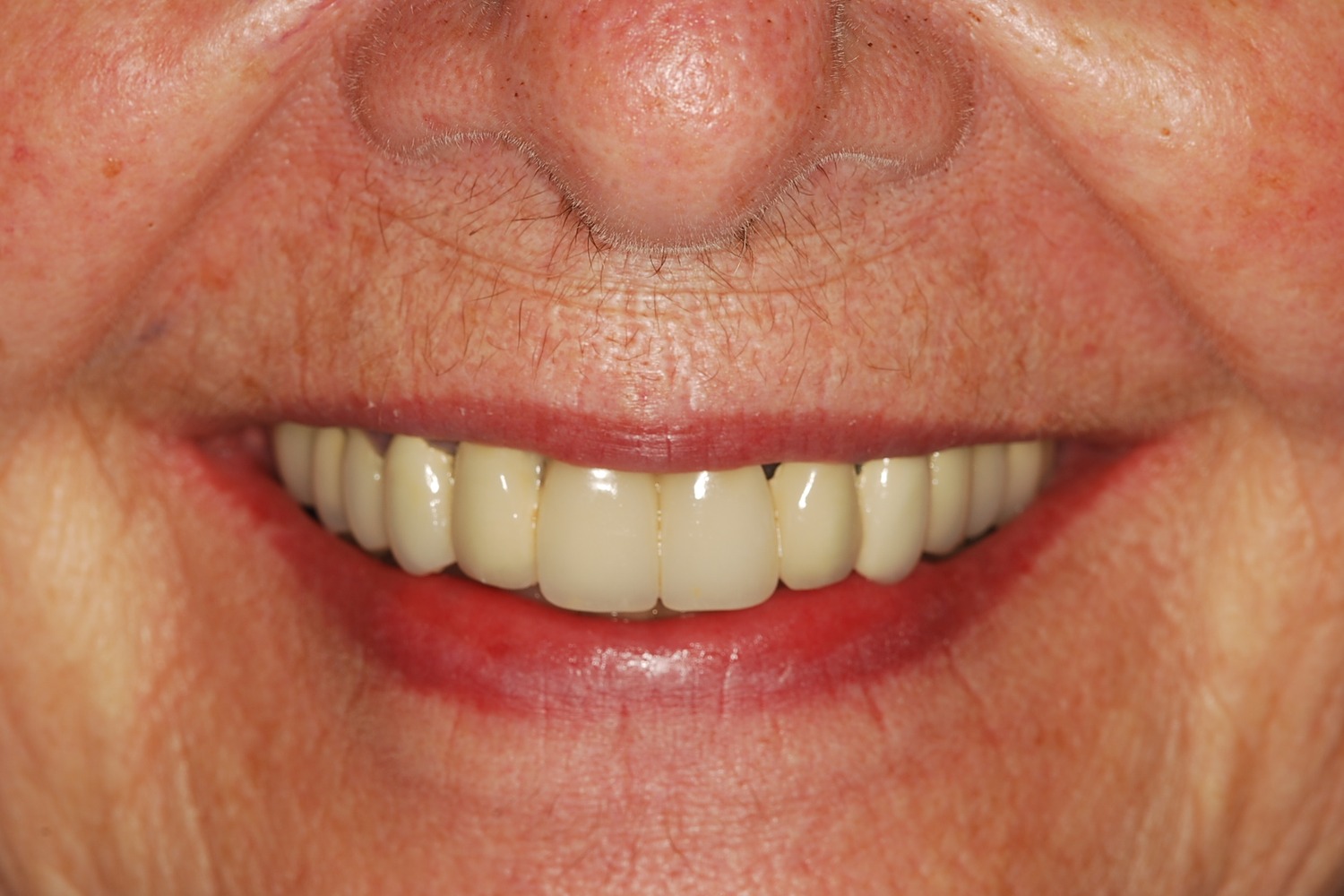 Before
 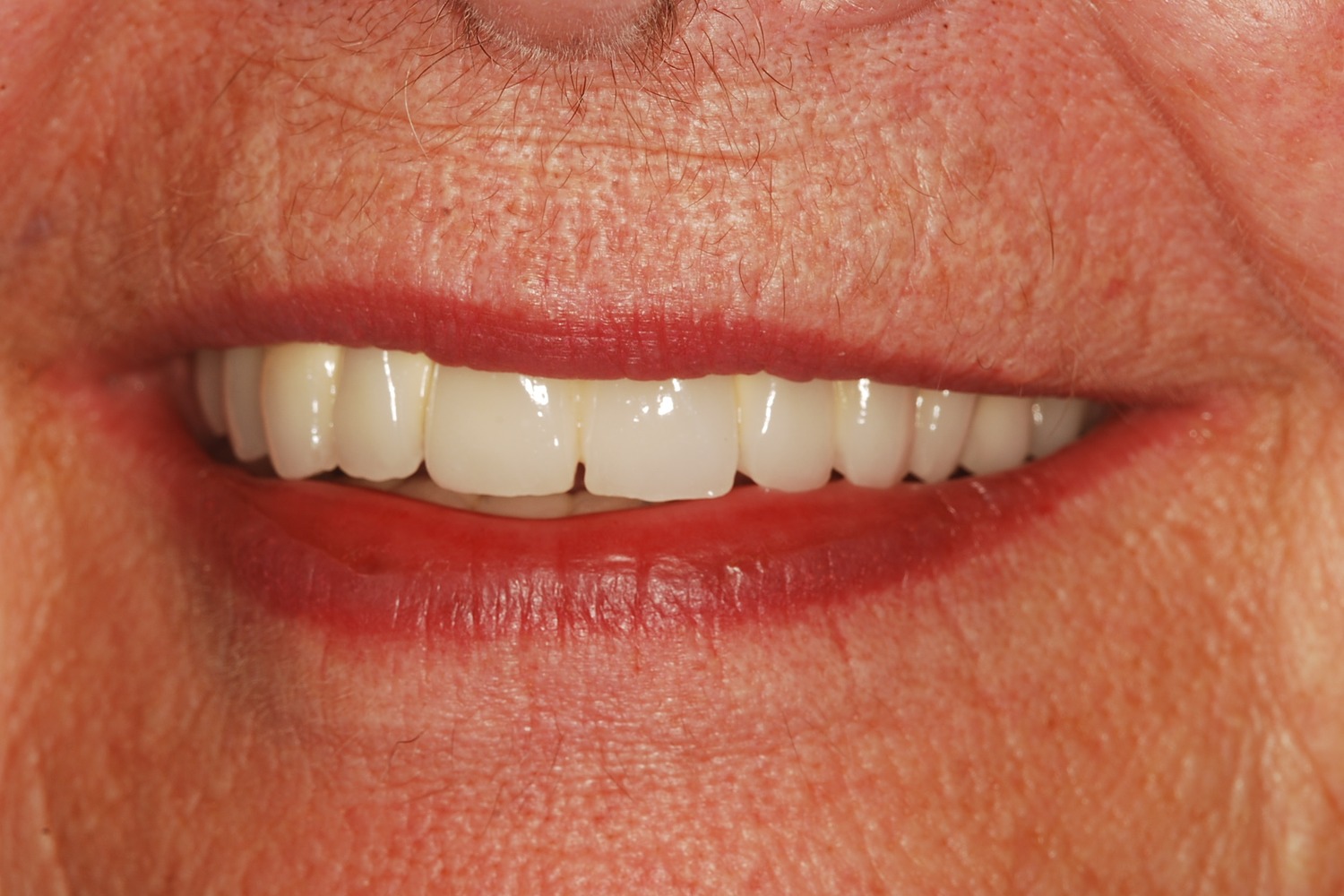 After
After How a Loose Upper Bridge and Aging Crowns Were Rebuilt with Staged Implant and Crown Reconstruction
The patient was referred by her general dentist after years of aging dentistry no longer holding up. A loose upper bridge and crowns over twenty years old combined with the effects of advanced periodo
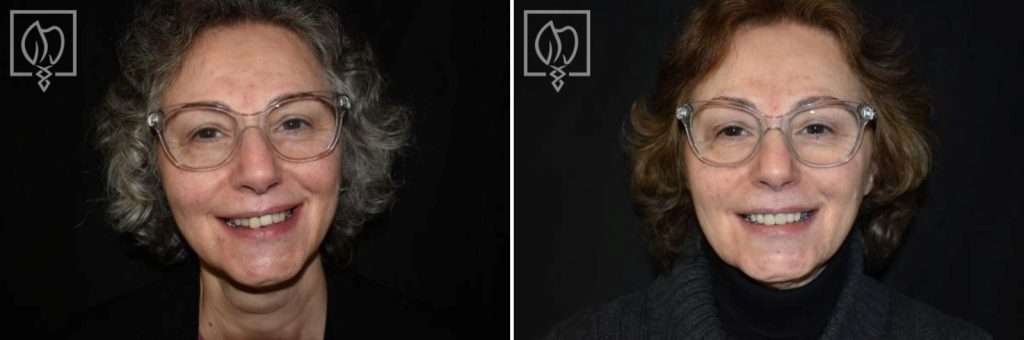
Temporary Crowns Restore Patient's Smile in Just One Day with an Immediate Smile Makeover
A patient from Potomac, Maryland, came to Elite Prosthetic Dentistry with the chief complaint of pain from a failing dental implant and its significant impact on her appearance.
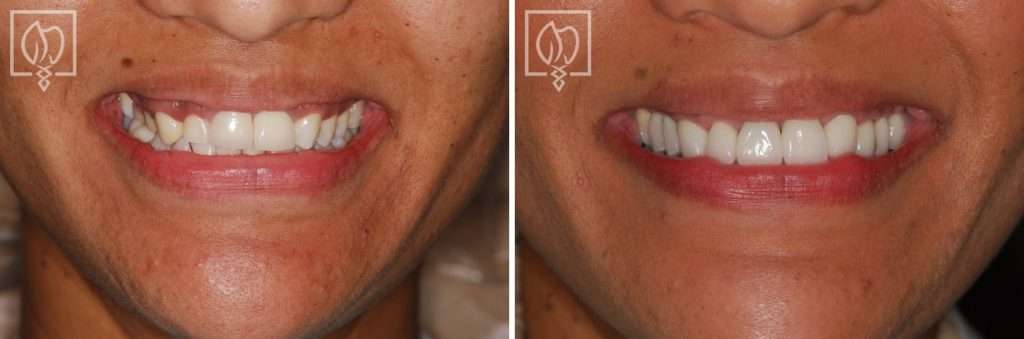
Multi-Faceted Treatment for Patient Unhappy With Her Artificial-Looking Crowns, Teeth and Gums
Many patients come to Elite Prosthetic Dentistry unhappy with the appearance of their smile. However, this particular patient presented with multiple interconnected problems that together created a smile she found deeply unsatisfying.
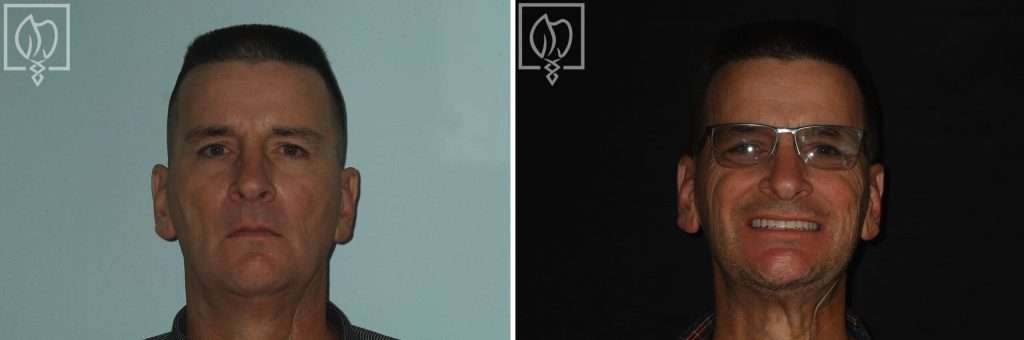
Treating Kevin's Collapsed Bite with a Complete Smile Makeover with New Dentures
Dentures are sometimes not created to the ideal aesthetic and functional scheme. When improperly fabricated, dentures can make an individual appear almost a generation older than their actual age. They can have a poor fit that feels loose and unstable when eating or speaking, and they can actually accelerate bone loss over time.
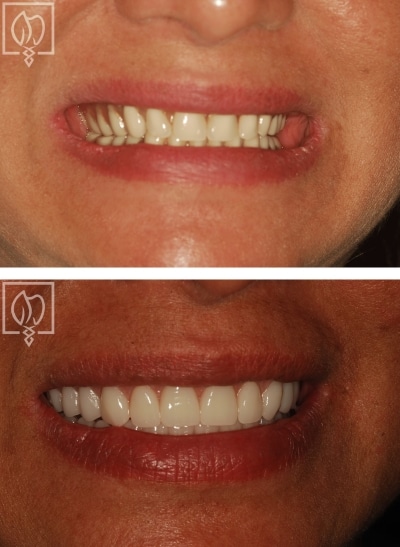
Rejuvenating Maria's Severely Worn Down Implant Overdentures
Many times, per year, patients come to us frustrated because their implant prosthesis is so severely worn down that they are very self-conscious and cover up their smile. They look and feel much older than their age as a result of the extensive wear of their appliance(s).
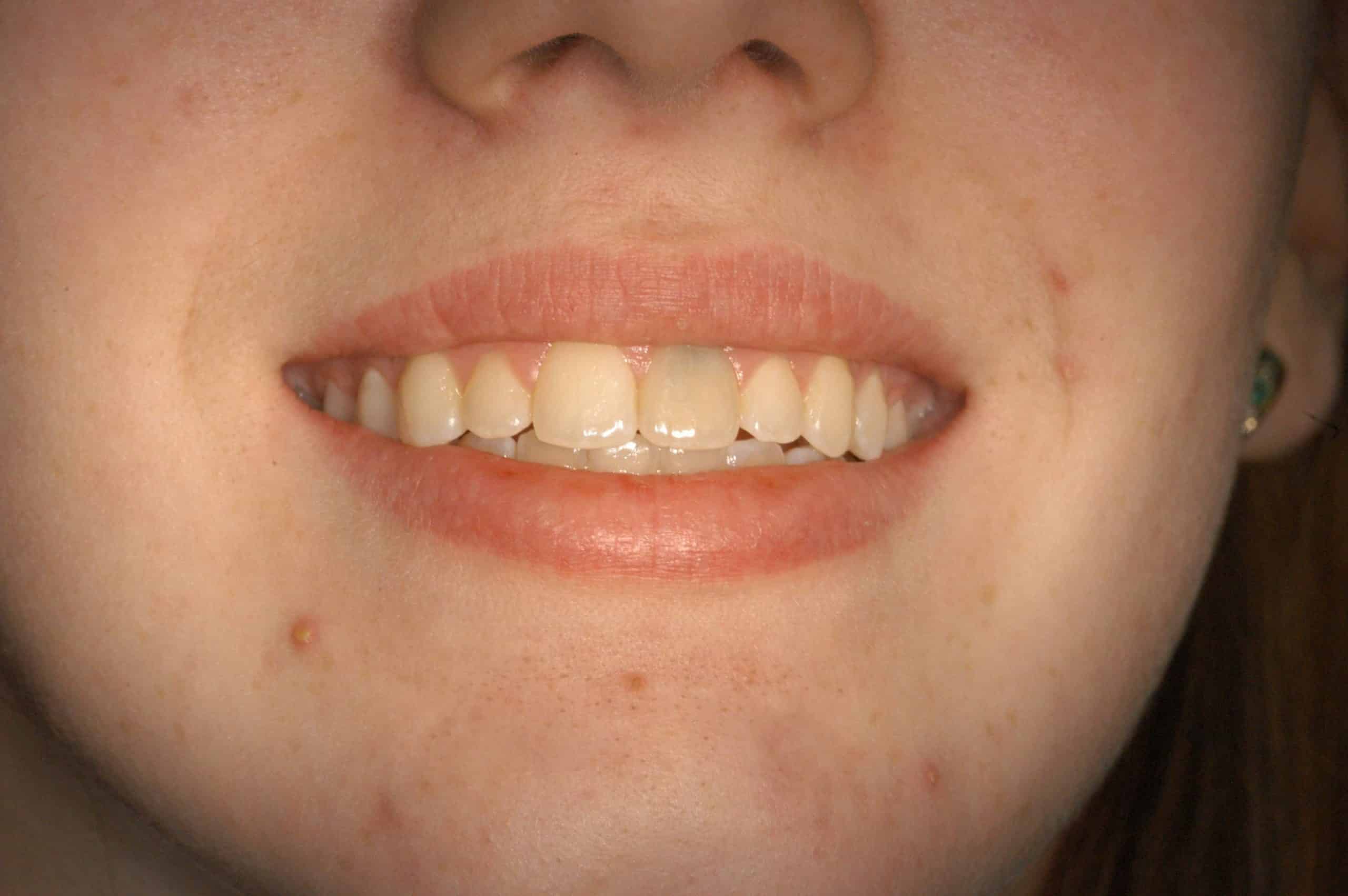
Replacing a Discolored Front Tooth with a Precision Placed Implant
Some of the most challenging restorations occur when fabricating an anterior crown to fit on an implant. Not only does one have the difficulty of matching the single front tooth to the other ones in the high visibility zone, but the dentist must also ensure the position of the underlying implant is precise through accurate preplanning and placement.
Related Articles
Deepen your knowledge with additional insights on this topic.
Our Services in Georgetown
Beyond Dentures, Georgetown patients rely on Dr. Marlin for a full range of advanced dental care.
More services available in Georgetown:
Dentures Near Georgetown
Dr. Marlin also provides dentures services for patients in these neighboring communities.
Getting Here from Georgetown
Elite Prosthetic Dentistry is conveniently located near Georgetown, DC.
Georgetown patients drive north on Wisconsin Avenue to Friendship Heights. No highway required. Free parking available in our building.
Address:
4400 Jenifer Street NW, Suite 220
Washington, DC 20015
Phone: (202) 244-2101
Request a ConsultationRequest a Specialist Consultation from Georgetown
Georgetown residents come to Dr. Marlin for specialist prosthodontic care. With 3,900+ implants placed and restored over 40+ years, evaluation, planning, and execution are handled with the depth complex cases require.