
Which Specialist Should You See: Prosthodontist, Oral Surgeon, Periodontist, or General Dentist
Understand which dental specialist handles which problems. Learn when to choose a prosthodontist for complex restorative cases in Georgetown.
Georgetown residents contemplating tooth replacement or complex restorative work often face a confusing landscape of dental specialists. When you need a tooth extracted, who does it? When you need bone grafting, which specialist handles that? When you need an implant placed and restored, does your general dentist do it all, or do multiple specialists get involved? This page clarifies the roles of different specialists and the situations where each brings the most value.
Your general dentist serves as your primary dental provider. Your relationships, preventive care, and routine restorations all happen there. Specialists exist to address problems beyond what general dentistry training covers. Understanding who does what helps you navigate referral decisions confidently.
The General Dentist: Your Dental Home
Your general dentist provides preventive care, treats cavities, manages routine restorations, and monitors your overall dental health. A well-trained general dentist can manage many restorative cases: single crowns, straightforward implant cases, routine bridges, and dentures.
When should you stay with your general dentist? When the problem is straightforward and your dentist is confident. A single failing crown usually does not require specialist involvement. A routine single implant case often does not. A straightforward removable denture usually does not.
You should look beyond your general dentist when the problem involves multiple teeth, when previous restorations have failed repeatedly, when your bite is significantly compromised, or when you have lost substantial bone. These situations benefit from specialist perspective.
The Oral Surgeon: The Surgical Specialist
An oral surgeon focuses on surgical procedures: tooth extractions, implant placement, bone grafting, sinus augmentation, wisdom tooth removal, and jaw surgery. Oral surgeons complete dental school plus an additional surgical residency, often four years or more, devoted to surgical training.
When you need extractions, especially complicated extractions, an oral surgeon excels. When you need bone grafting to prepare your jaw for implants, an oral surgeon brings extensive experience with bone handling and augmentation techniques. When you need multiple implants placed, an oral surgeon can often complete the surgical placement efficiently.
The limitation of oral surgery alone is that it focuses on the surgical component without necessarily addressing how the eventual restoration will look or function. An implant placed in a surgically convenient location might compromise the eventual crown’s appearance.
The Periodontist: The Gum Specialist
A periodontist specializes in gum disease treatment and gum-related surgery. If you have periodontal disease, a periodontist controls the disease, performs gum surgery when needed, and manages soft tissue grafting for esthetic purposes.
You should consult a periodontist when you have gum disease, when gum recession threatens your remaining teeth, or when you need soft tissue grafting for esthetic reasons. Periodontists understand the relationship between tooth and gum health in depth.
Many complex restorative cases involve a periodontist: first to control any gum disease, then to manage the soft tissue component of the restoration so it looks natural and the gum health remains stable.
The Prosthodontist: The Restoration Specialist
A prosthodontist focuses on tooth replacement and complex restoration. We complete dental school plus a three-year graduate program in prosthodontics, dedicated entirely to the planning and execution of cases involving missing teeth, failed restorations, complex bites, and multi-tooth rehabilitation.
You should consult a prosthodontist when you face multiple missing teeth, complex bite problems, failed previous dental work, full mouth reconstruction, or when your general dentist has recommended specialty-level restorative work. We also manage cosmetic cases requiring detailed esthetic planning.
The prosthodontic advantage is a systematic approach to case planning. Rather than addressing one tooth at a time, we design the entire restorative system, accounting for how restorations interact with each other and with your remaining natural teeth.
Case Coordination: When You Need Multiple Specialists
A complex case often requires multiple specialists working together. For example, a Georgetown resident facing full mouth reconstruction might need all of these:
A general dentist or prosthodontist to lead the overall case planning and act as your primary contact. A periodontist to control any gum disease and manage soft tissue. An oral surgeon to place implants and perform bone grafting if needed. A prosthodontist (if not the leader) to design and place the restorations.
The key to successful multi-specialist cases is clear communication and a defined leader. Either your general dentist coordinates the specialists they refer to, or a prosthodontist leads the team and brings in specialists for specific portions.
Cases without a clear leader sometimes suffer because each specialist optimizes their component without attention to the overall strategy. Implants get placed in surgically convenient locations that compromise the eventual restoration. Bite changes are made without considering their effect on all the restorations. Gum surgery proceeds without consultation about how the final restoration will interact with the new gum contour.
In the best situations, you know who is leading the case, you have their phone number, and the other specialists report to them.
Comparing Specialists: What Each Brings to Different Problems
Consider a Georgetown patient with a failing bridge and bone loss beneath it. Multiple paths exist:
Path One: Your general dentist replaces the bridge without addressing the bone. The bridge fails again in a few years because the bone continues to resorb.
Path Two: Your general dentist refers to an oral surgeon who grafts bone. The bone is grafted, but the location and volume are based on surgical convenience, not on where it would ideally support future implants. The bridge is replaced as a temporary. Later, implants are placed wherever the bone ended up.
Path Three: Your general dentist refers to a prosthodontist. The prosthodontist designs the eventual restoration first, determines where implants need to go to support that restoration, designs bone grafting to those specific locations, and guides the oral surgeon’s grafting to support the ultimate plan. Implants are placed in positions that allow beautiful, functional restorations.
The third path produces better outcomes because the overall plan drives the surgical decisions rather than surgical convenience driving the plan.
Integrated Specialist-Led Care Versus Multi-Specialist Models
Some Georgetown patients benefit from integrated care within one specialist practice, where case planning, any surgical procedures needed, restoration design, and restoration placement are coordinated under one treatment plan. This streamlined model eliminates coordination challenges and ensures a unified treatment philosophy.
Other complex cases genuinely require multiple specialists. A patient with severe periodontal disease benefits from a periodontist’s disease management. A patient requiring extensive bone grafting benefits from an oral surgeon’s surgical expertise. A prosthodontist cannot do everything optimally.
The question is whether the coordination is seamless and whether there is a clear leader.
The Prosthodontist as Case Leader
Some complex restorative cases are most efficiently managed with a prosthodontist as the case leader. The prosthodontist designs the overall plan, determines what surgical procedures are needed, orders necessary imaging, and either performs the restorative treatment directly or coordinates the surgical specialists needed.
This model differs from a general dentist coordinating multiple specialists. Rather than each specialist optimizing their component, the prosthodontist optimizes the entire case, bringing in surgical specialists for specific portions. For Georgetown residents with extensive tooth replacement needs or complex bite problems, this prosthodontist-led model sometimes produces superior outcomes because the entire case design is coordinated toward a unified restorative vision.
When Each Specialist Leads, and the Advantages of Each Model
General dentist leadership works well for straightforward cases where one or two specialists are needed. The general dentist coordinates the work and provides familiarity and continuity. For more complex cases involving multiple specialists, multiple phases, and interdependent decisions, a prosthodontist-led model often produces better outcomes because every decision is made with the eventual restoration in mind.
Neither model is universally superior. The question is which model suits your specific case. A prosthodontist evaluating your situation can clarify whether specialist leadership would improve outcomes or whether your general dentist’s coordination is appropriate for your needs.
How to Choose When Your General Dentist Recommends Specialists
Trust your dentist’s judgment. If your dentist recommends a specific specialist, they are usually basing that recommendation on the needs of your case and on their working relationships with good specialists. Ask your dentist who is leading the overall case plan and how the specialists will coordinate.
If you want a second opinion, you can consult a prosthodontist to evaluate the plan your dentist has developed and provide perspective on whether specialist involvement is necessary or whether the proposed approach is sound.
Getting Here from Georgetown
Our office is at 4400 Jenifer Street NW, Suite 220, in Friendship Heights, approximately ten to fifteen minutes from Georgetown depending on which route you take. You can drive north via Wisconsin Avenue or east via Massachusetts Avenue. Building parking is available. The Friendship Heights Red Line Metro station is two blocks away.
The Value of Clarity in Your Specialist Team
Complex restorative work becomes significantly less stressful when you understand who is responsible for what, who is leading your overall case, and how the specialists are communicating. Confusion about roles and leadership typically leads to duplicated efforts or gaps where no one addresses an issue. Clear coordination produces better outcomes and fewer surprises.
Georgetown residents considering complex treatment benefit from taking time to understand their specialist team before treatment begins. Ask your provider who is leading the overall plan. Ask how the specialists will coordinate. Request a written treatment plan that explains the sequence and the role of each provider. These clarifications upfront prevent confusion and misalignment later.
Schedule Your Consultation
If you are considering complex restorative work and are uncertain about which specialists you need, we offer consultations to help clarify your options and recommendations.
Frequently Asked Questions
When should I see a general dentist versus a specialist?
Your general dentist is your primary dental provider for preventive care, routine restorations, and single-tooth problems. You should consult a specialist when you have a problem requiring specialized training: multiple missing teeth, failed previous dental work, severe bone loss, complex bite problems, extensive periodontal disease, or complex implant cases. Many Georgetown patients see their general dentist regularly and consult specialists only when specific problems arise.
What is the main role of an oral surgeon compared to a prosthodontist?
An oral surgeon focuses on surgical procedures: extractions, implant placement, bone grafting, sinus augmentation, wisdom tooth removal, and jaw surgery. An oral surgeon's training emphasizes surgical technique, bone management, and the surgical component of complex cases. A prosthodontist completes surgical training but focuses on tooth replacement and restoration planning, implant positioning to support planned restorations, and restoration design. For an implant case, the oral surgeon may place the implant, and the prosthodontist designs and places the restoration.
What does a periodontist do, and when does my case need one?
A periodontist specializes in gum disease treatment and gum surgery. If you have periodontal disease, a periodontist addresses the disease, controls it, and performs any necessary gum surgery. Periodontists also manage soft tissue grafting for esthetic purposes and handle the gum component of complex restorative cases. If your problem is primarily gum health, you need a periodontist. If your problem involves tooth replacement and restoration after gum disease has been controlled, you may need a prosthodontist in coordination with your periodontist.
How do I know which specialist my case needs?
Your general dentist can usually recommend the right specialist. If your dentist identifies a problem beyond their scope, they recommend a specialist. But you can also consult directly with specialists for a second opinion. Prosthodontic cases often involve coordination between specialists: a periodontist for gum disease control, an oral surgeon for bone grafting and implant placement, and a prosthodontist for case planning and restoration. Your general dentist coordinates this team, or a prosthodontist leads the team depending on case complexity.
If multiple specialists are involved, who is in charge of my treatment plan?
Either your general dentist leads the team, coordinating the specialists they refer to, or a specialist (often a prosthodontist) leads the plan if the case is primarily a restorative problem. The key is that the specialists communicate with each other and with you about the overall strategy. In the best situations, a designated case leader takes primary responsibility for the overall case plan and brings in specialists for specific portions. This eliminates the risk of each specialist optimizing their component without attention to how it affects the overall outcome.
Related Patient Success Stories
Explore similar patient success stories demonstrating our expertise in advanced prosthetic dentistry.
 Before
  After
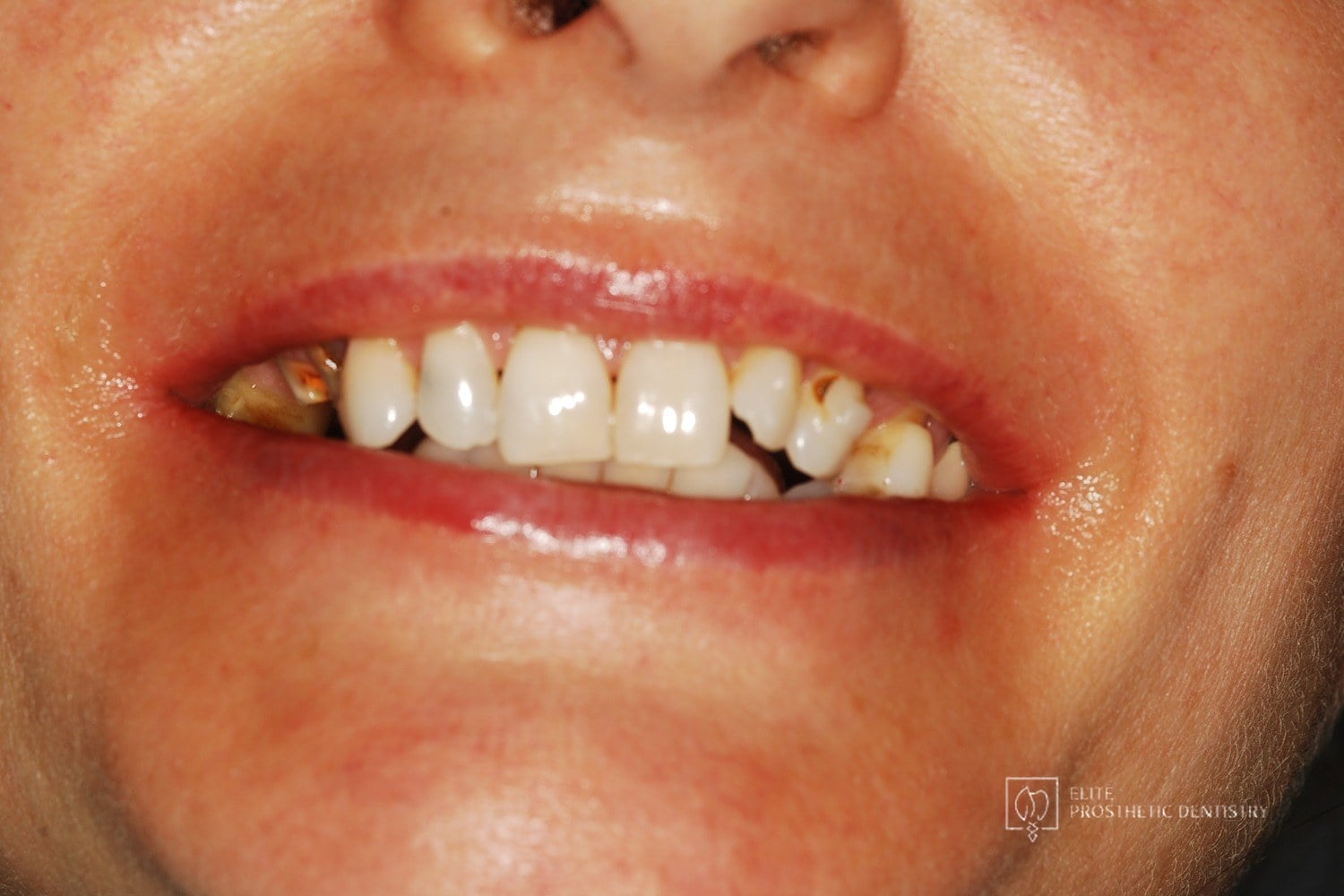
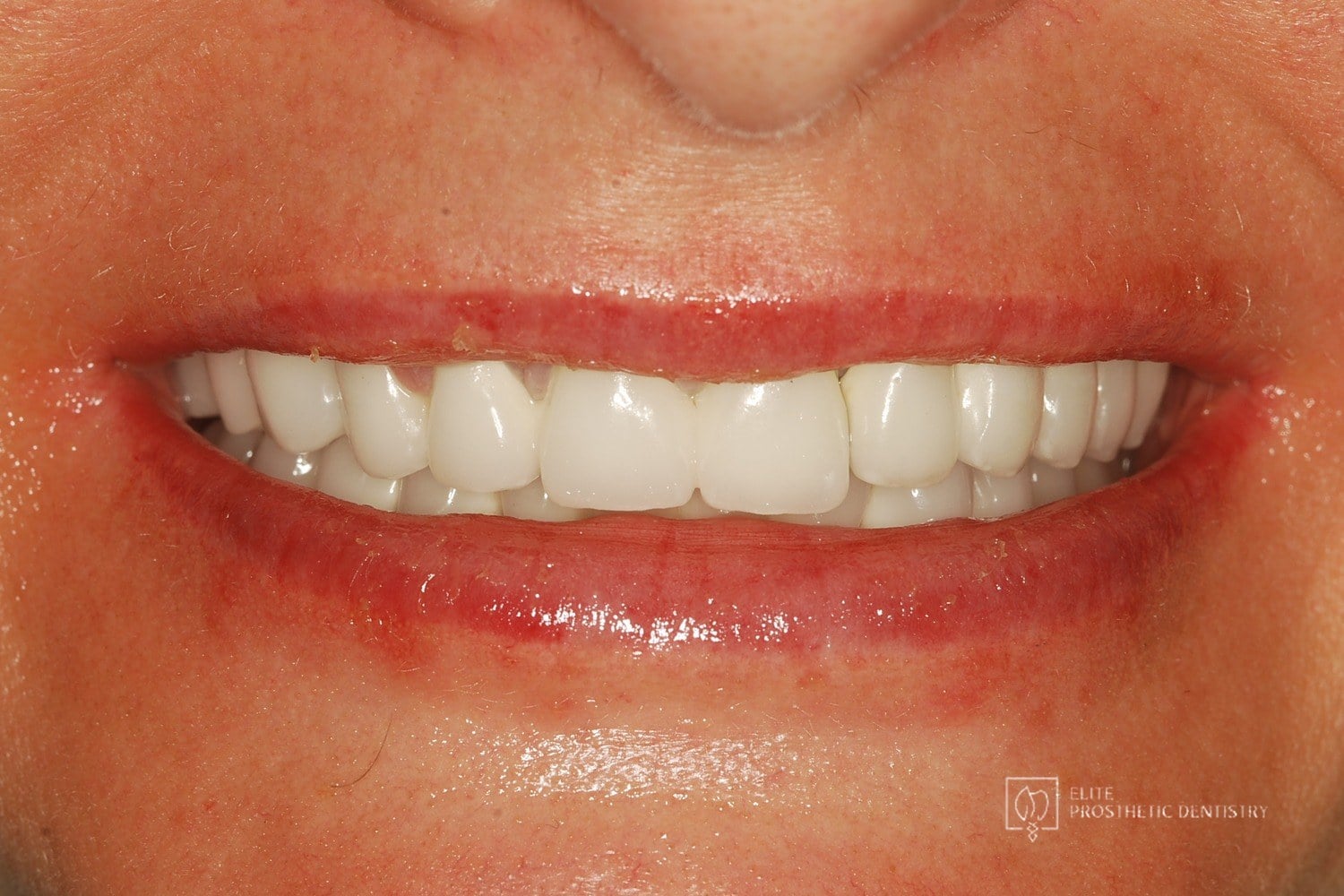
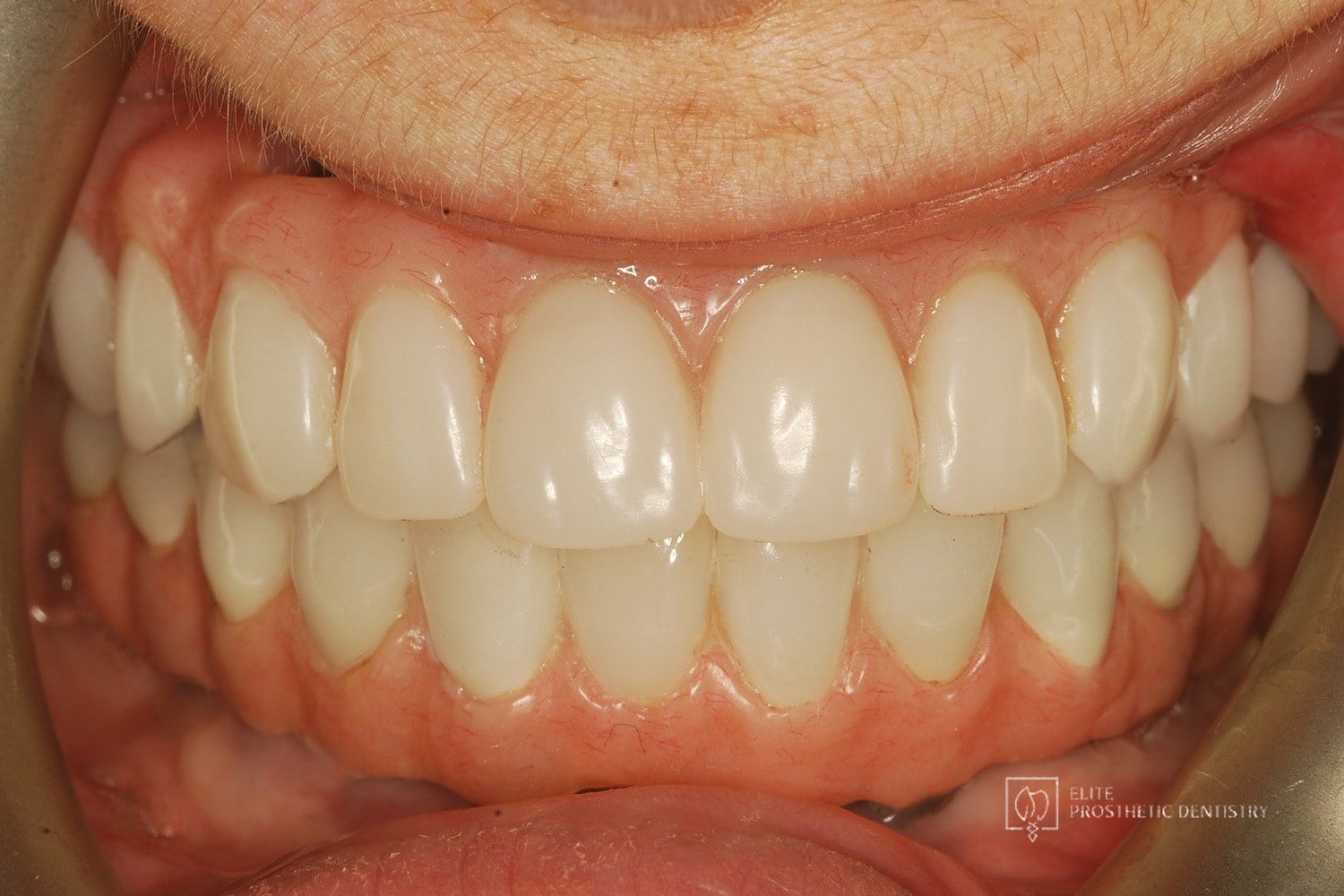
After How Aging, Failing Dentistry Was Replaced with a Coordinated Full-Mouth Implant and Crown Reconstruction
The patient presented with throbbing upper-molar pain, long-standing infections, multiple root canals and unfinished prior treatment, generalized sensitivity, and several hopeless teeth.
 Before
  After
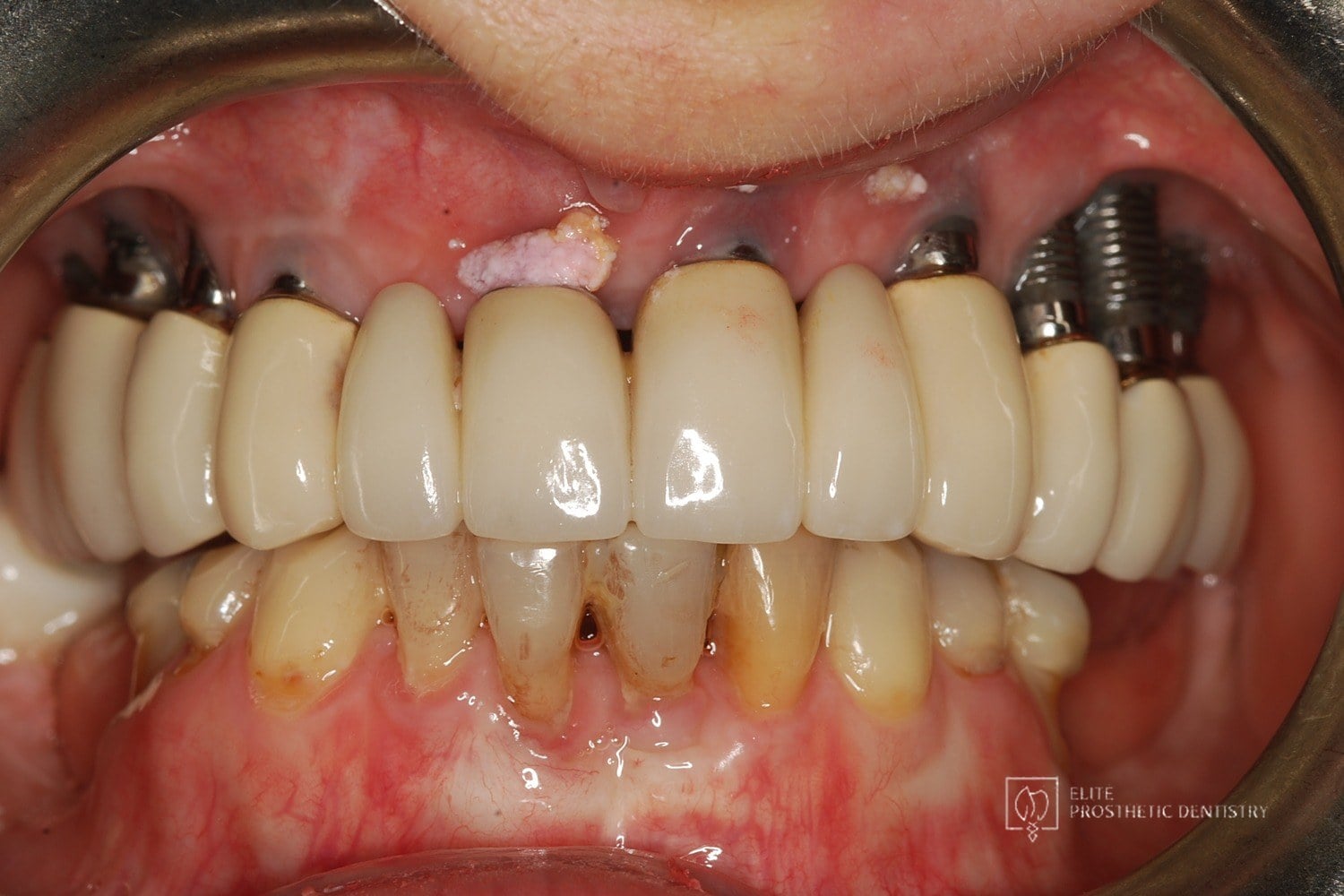
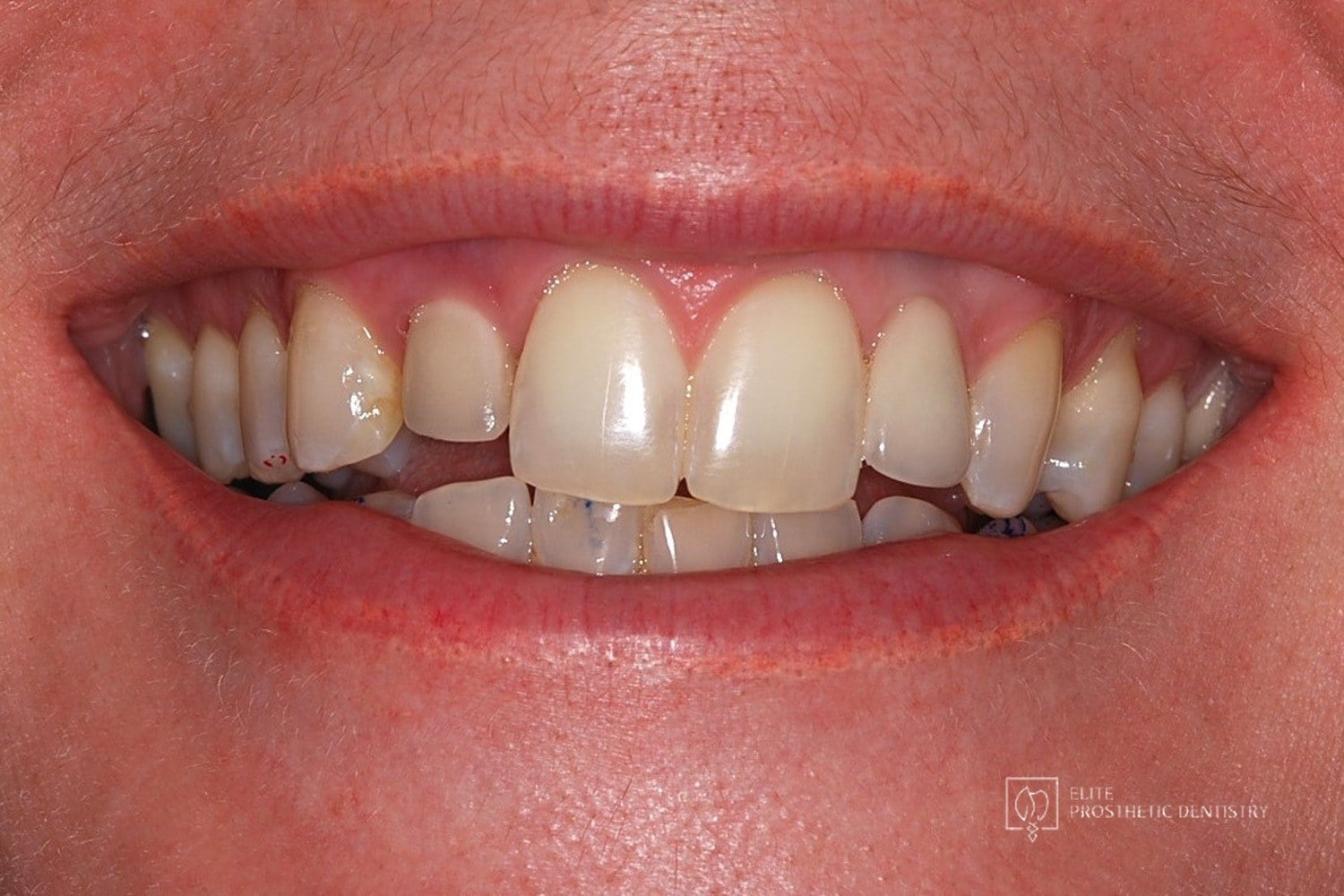
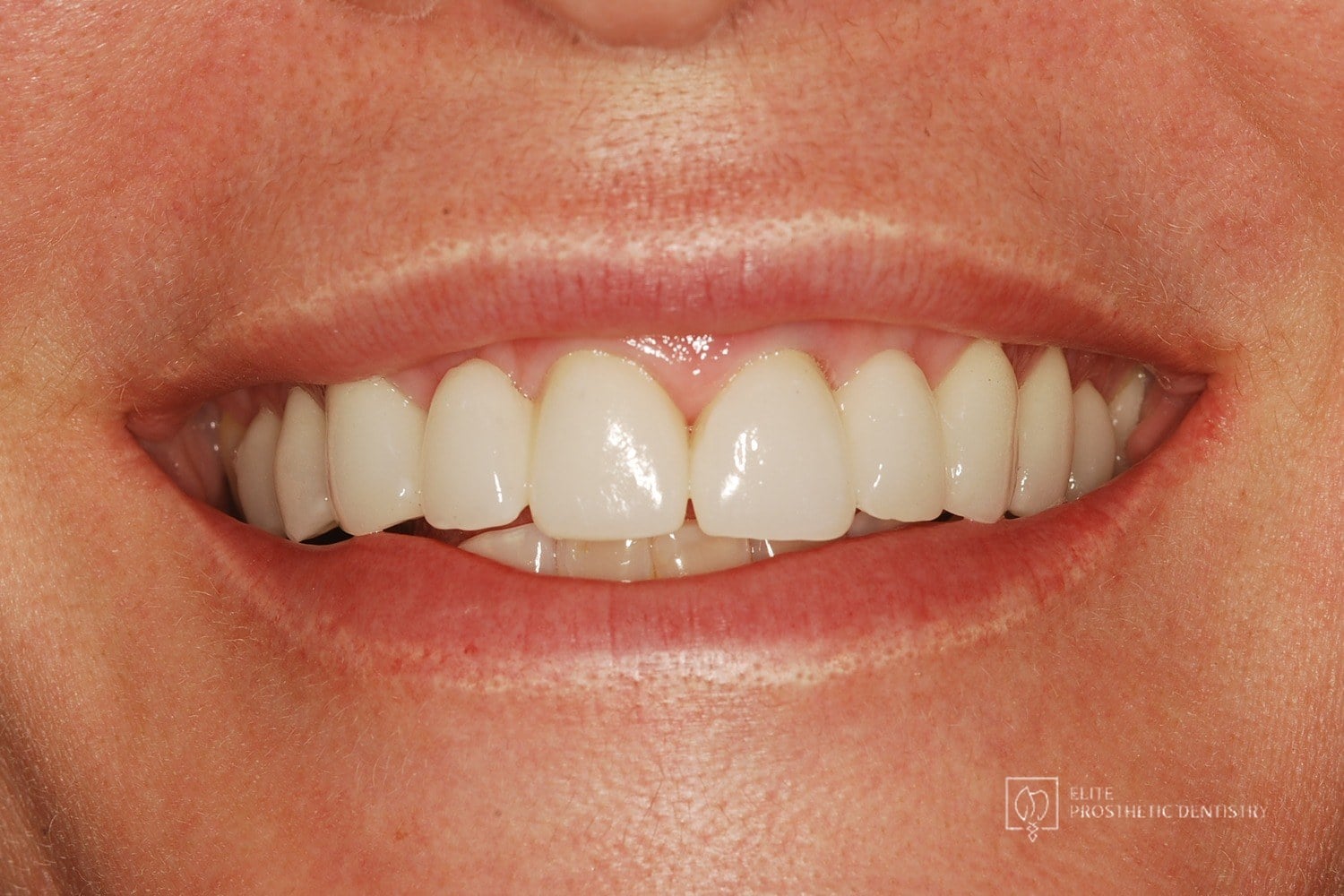
After How Failing Implants and Severe Bone Loss Were Rebuilt Into a Stable Full-Arch Implant Reconstruction
The patient presented with significant complications from previously placed implants, severe bone loss, failing posterior implants, and an unesthetic full-arch bridge. Both arches required full reconstruction, with the upper arch showing the most advanced bone loss and instability.
 Before
  After
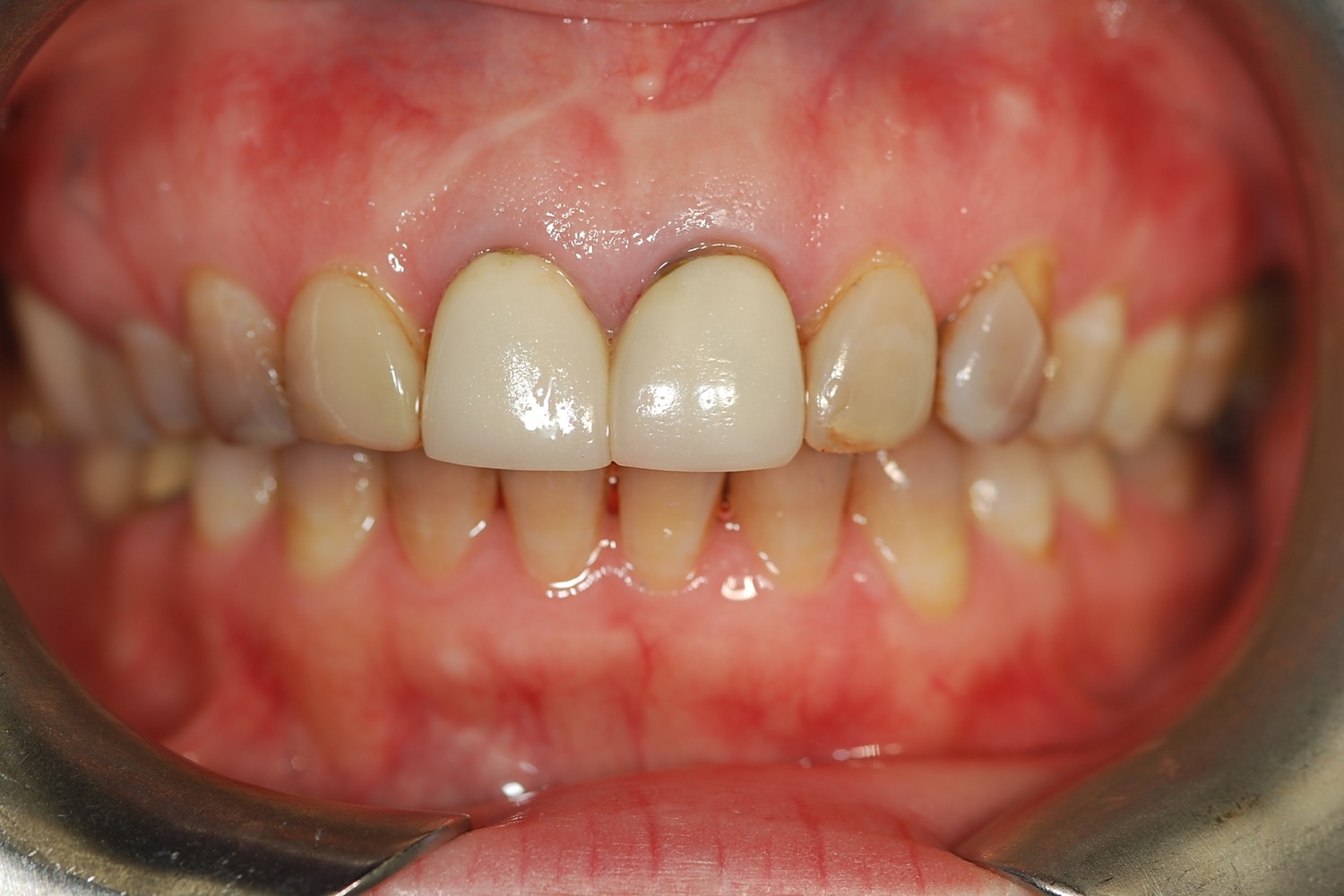
After How Failing Lateral Incisor Implants Were Replaced with Custom Zirconia Bridges After Severe Bone Loss Made Replacement Implants Impossible
Comprehensive examination including CBCT imaging revealed significant bone loss surrounding implants that were placed outside the buccal plate, most likely due to placement without a CBCT-generated surgical guide. The implants were determined non-salvageable, and the alveolar ridge was too narrow to support replacement implants without extensive reconstruction.
 Before
  After
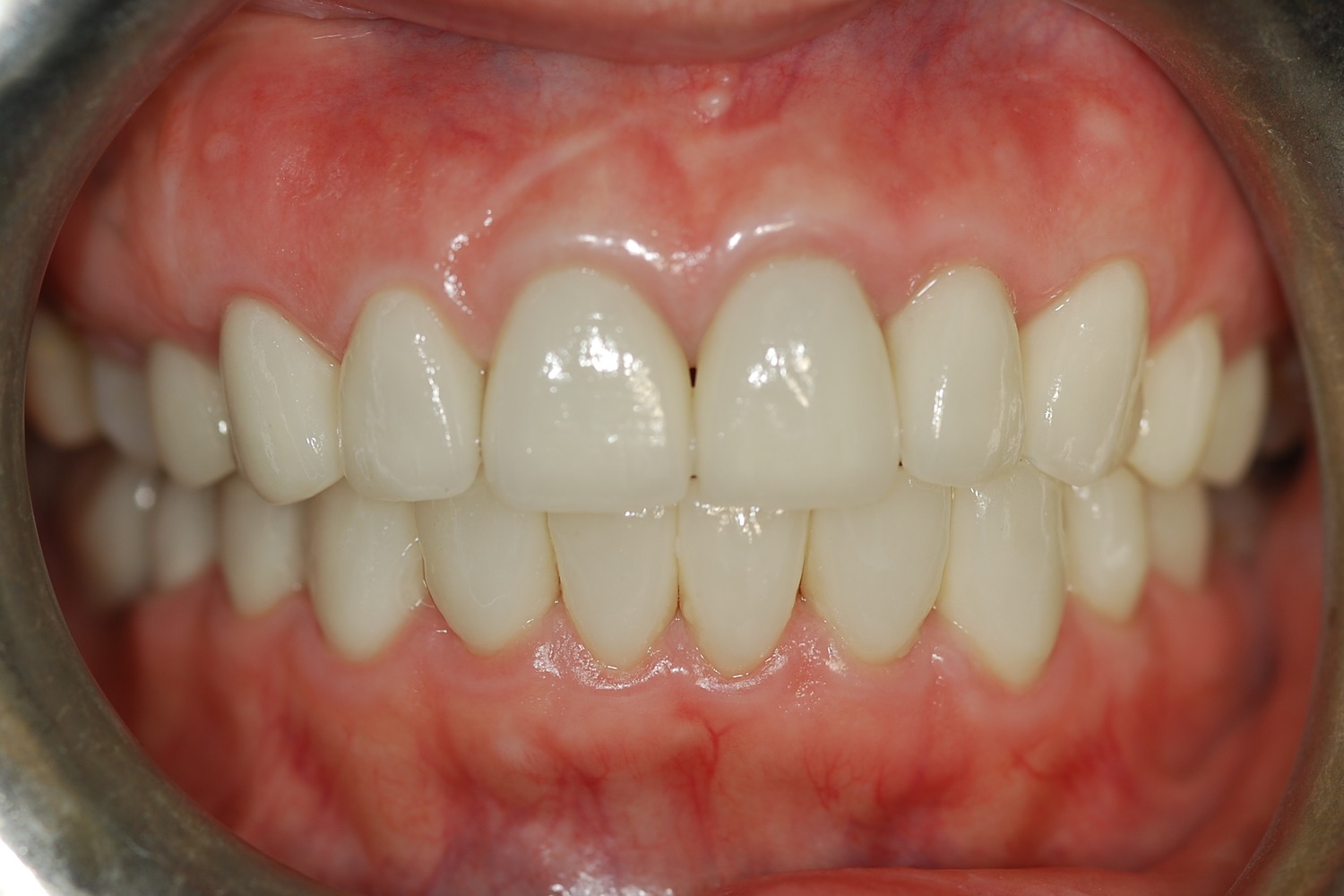
After How Aging, Opaque Restorations Were Replaced with Customized Ceramic Restorations Designed for Long-Term Natural Esthetics
The existing restorations appeared opaque, worn, and unnatural over time, affecting both confidence and overall smile harmony.
 Before
  After
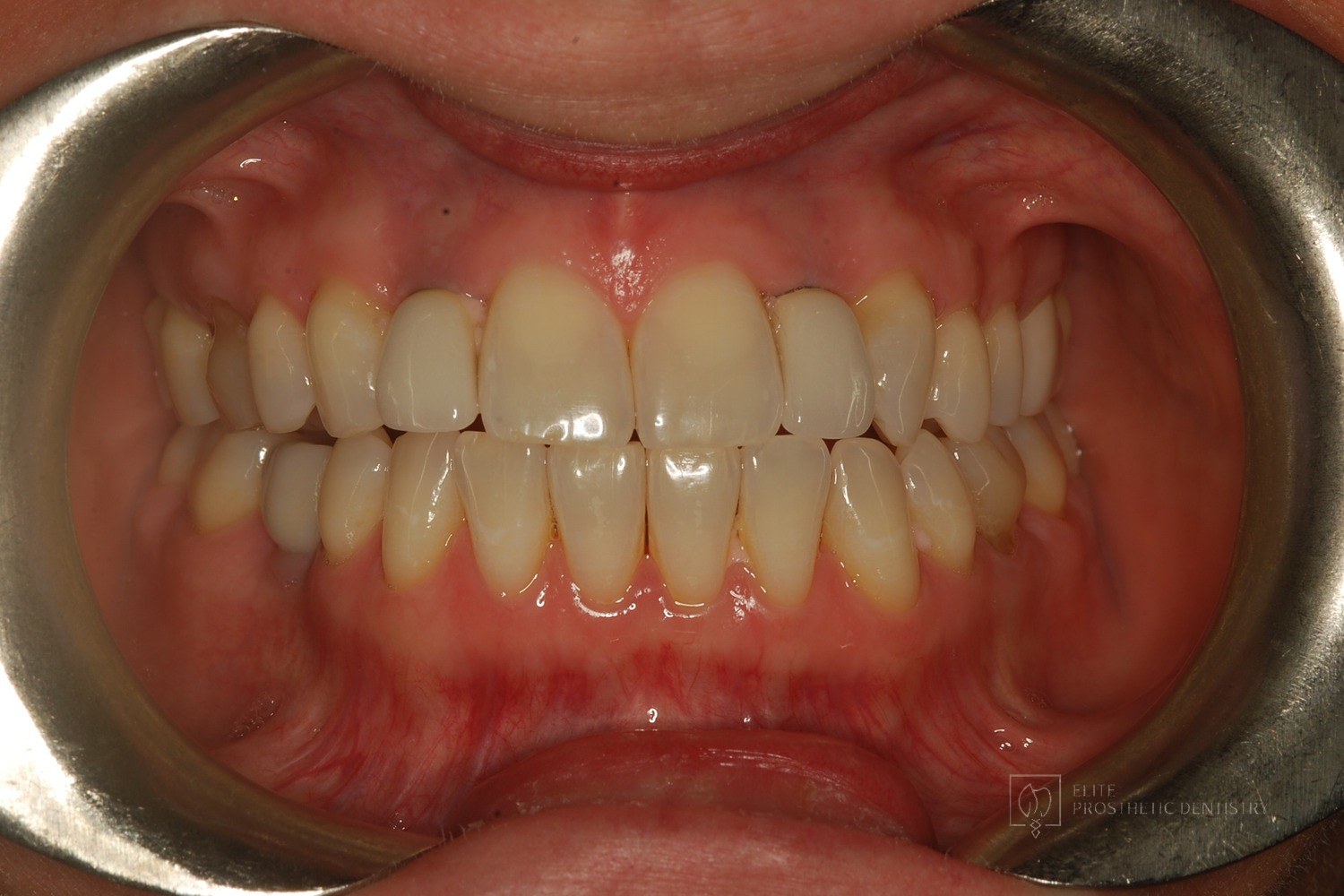
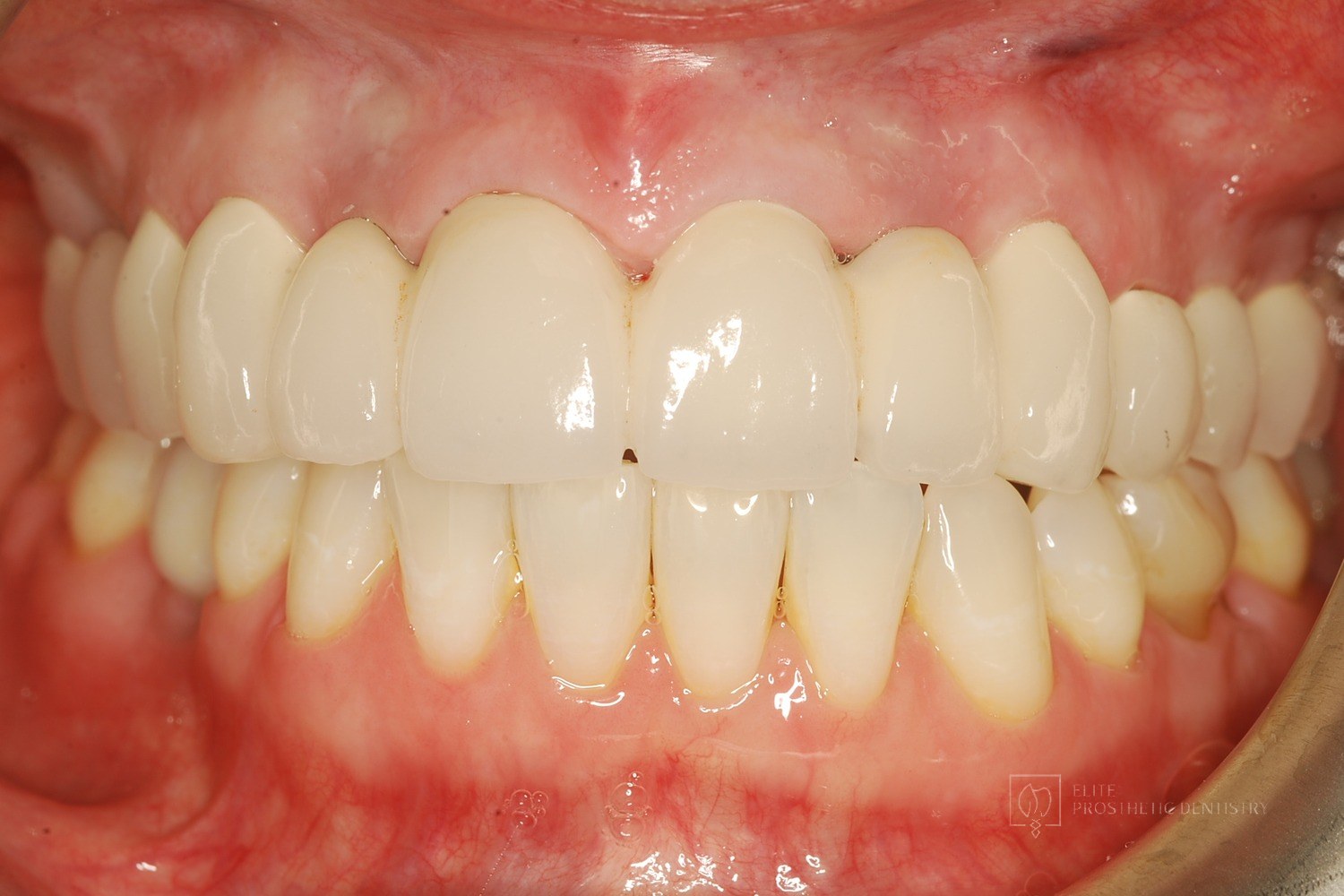
After How Older Implant Crowns Were Redesigned for a Better Bite and More Natural Appearance
The patient came in after years of living with implant-supported crowns placed more than twenty years earlier that no longer looked or functioned well. CBCT evaluation, reviewed with a radiologist colleague, showed the implants had been placed too far to the buccal in very thin bone and could not support a healthy long-term restoration.
 Before
  After
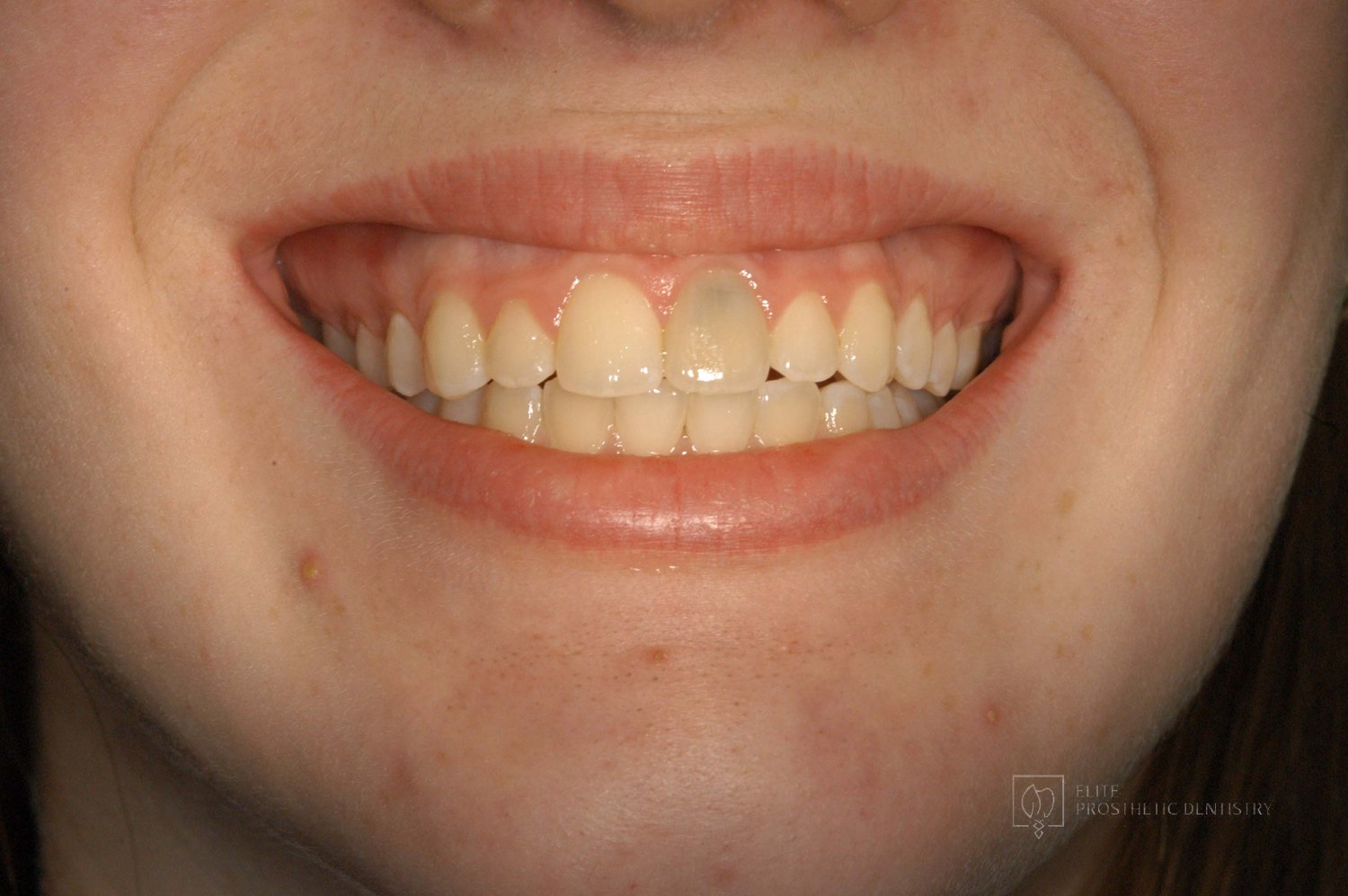
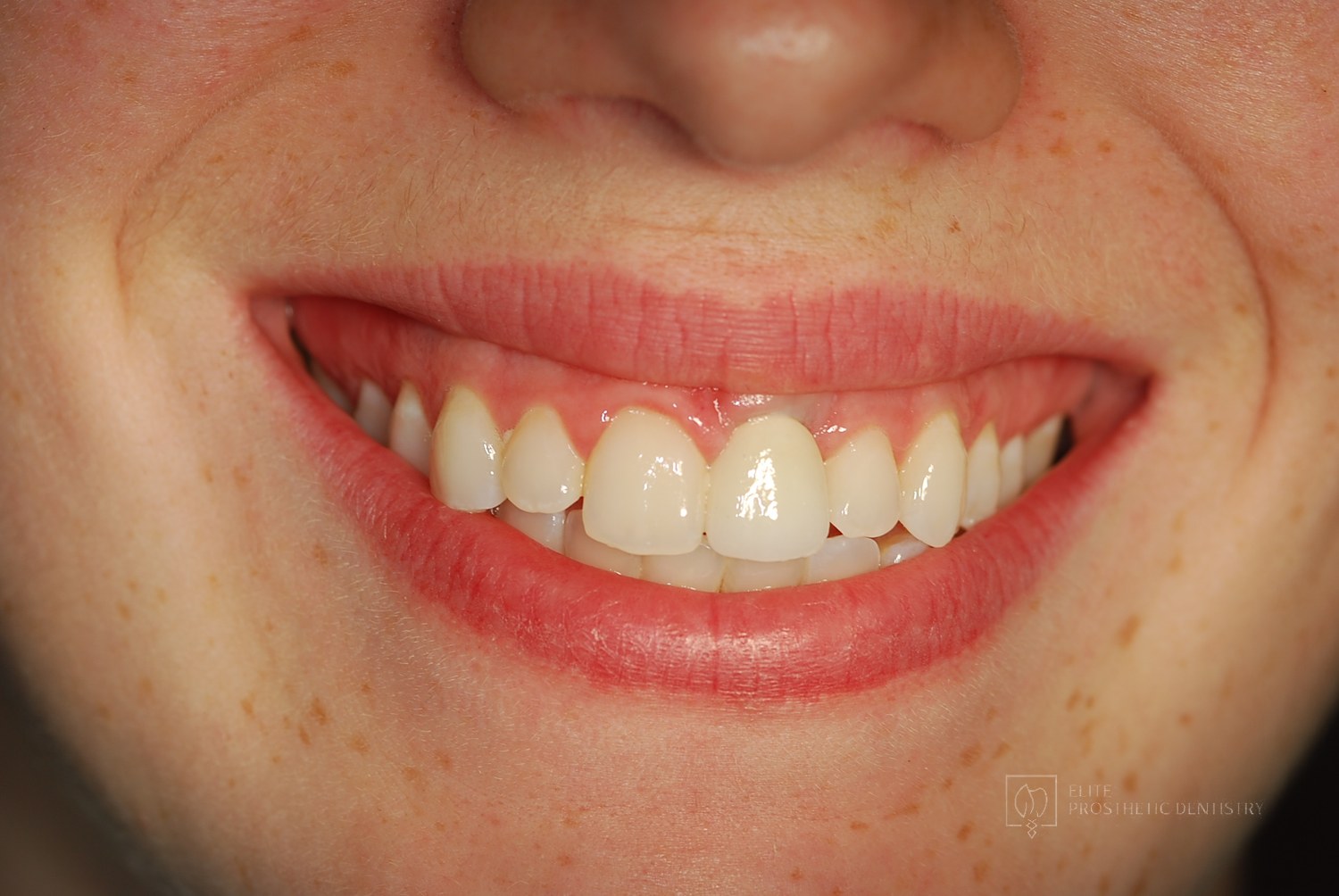
After How a Front Tooth Lost to Childhood Trauma Was Rebuilt with Bone Grafting and a Long-Lasting Implant
A teenager was referred by her father after earlier trauma left her upper left front tooth slowly failing from root resorption. She was still growing, so an immediate implant was the wrong move. The tooth had to be maintained to buy time, then replaced correctly once she reached skeletal maturity.
Related Articles
Deepen your knowledge with additional insights on this topic.
 Choosing a Prosthodontist
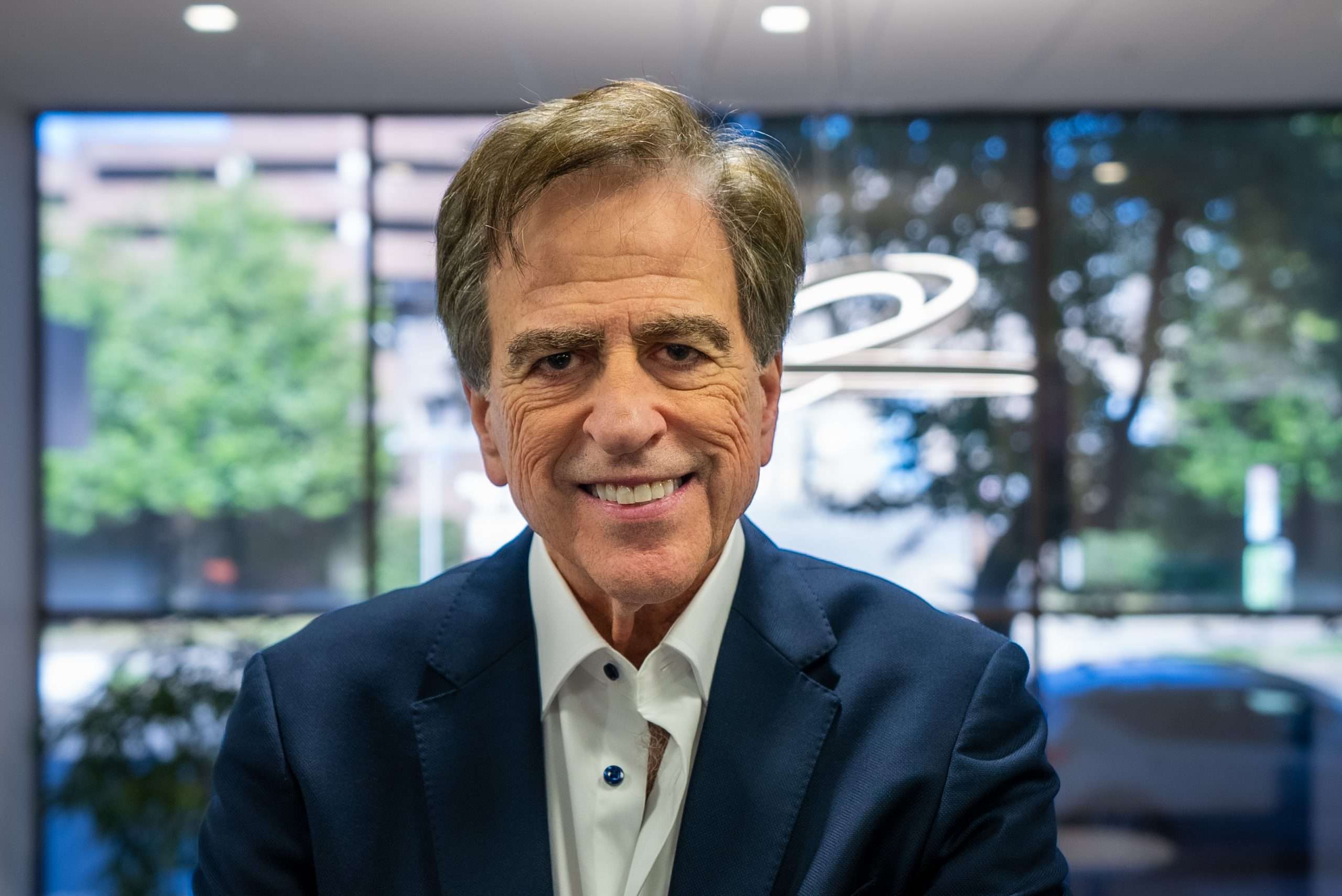
 The Patient's Guide to Implant, Cosmetic and Restorative Dentistry
How to judge quality in implant, cosmetic, and restorative dentistry: choosing a practitioner, why the lab matters, financing, and the questions to ask.
 Choosing a Prosthodontist
 What is a Prosthodontist?
A prosthodontist is a dental specialist with advanced training in crowns, implants, dentures, and complex restorations. Washington, DC specialist.
 Choosing a Prosthodontist
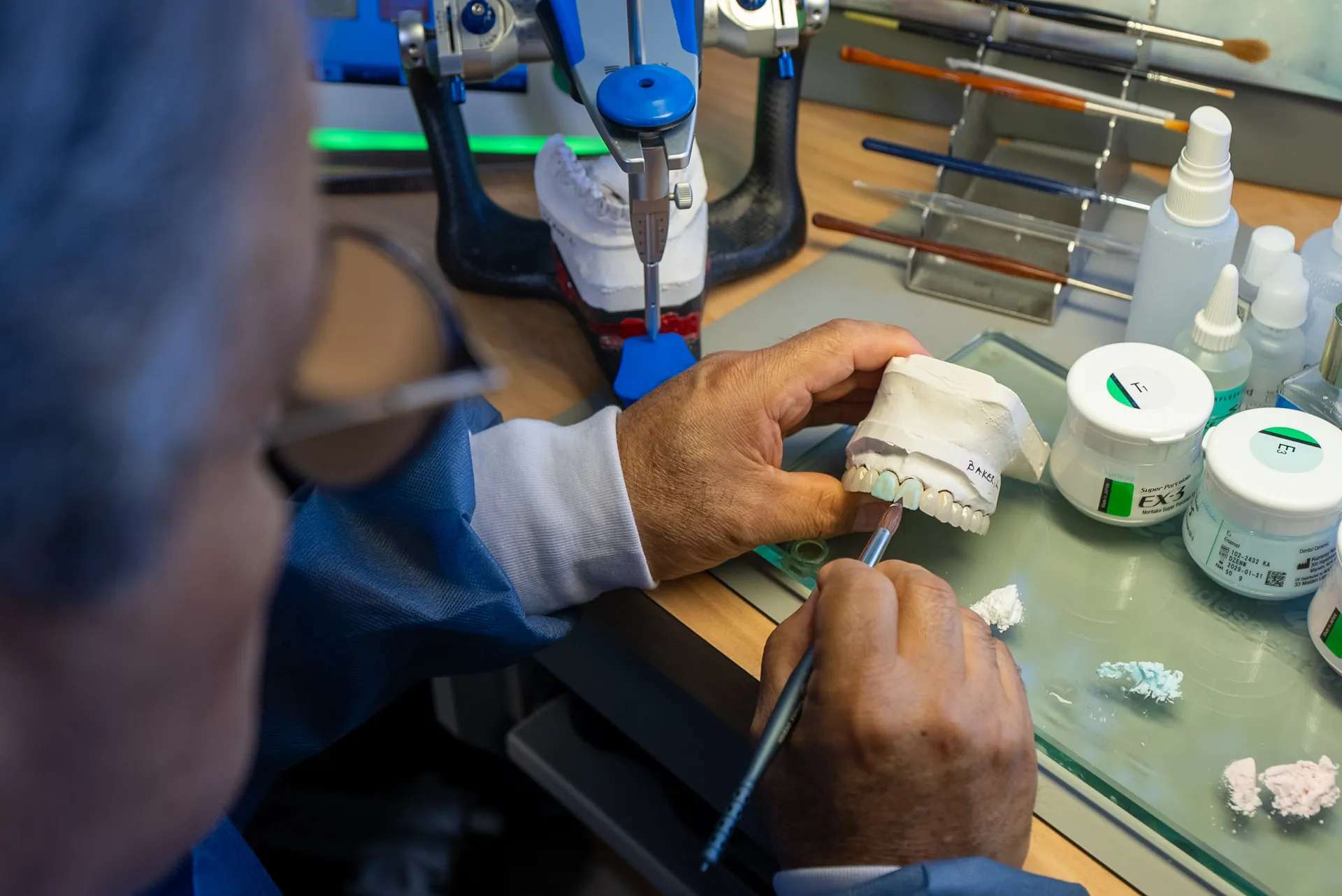
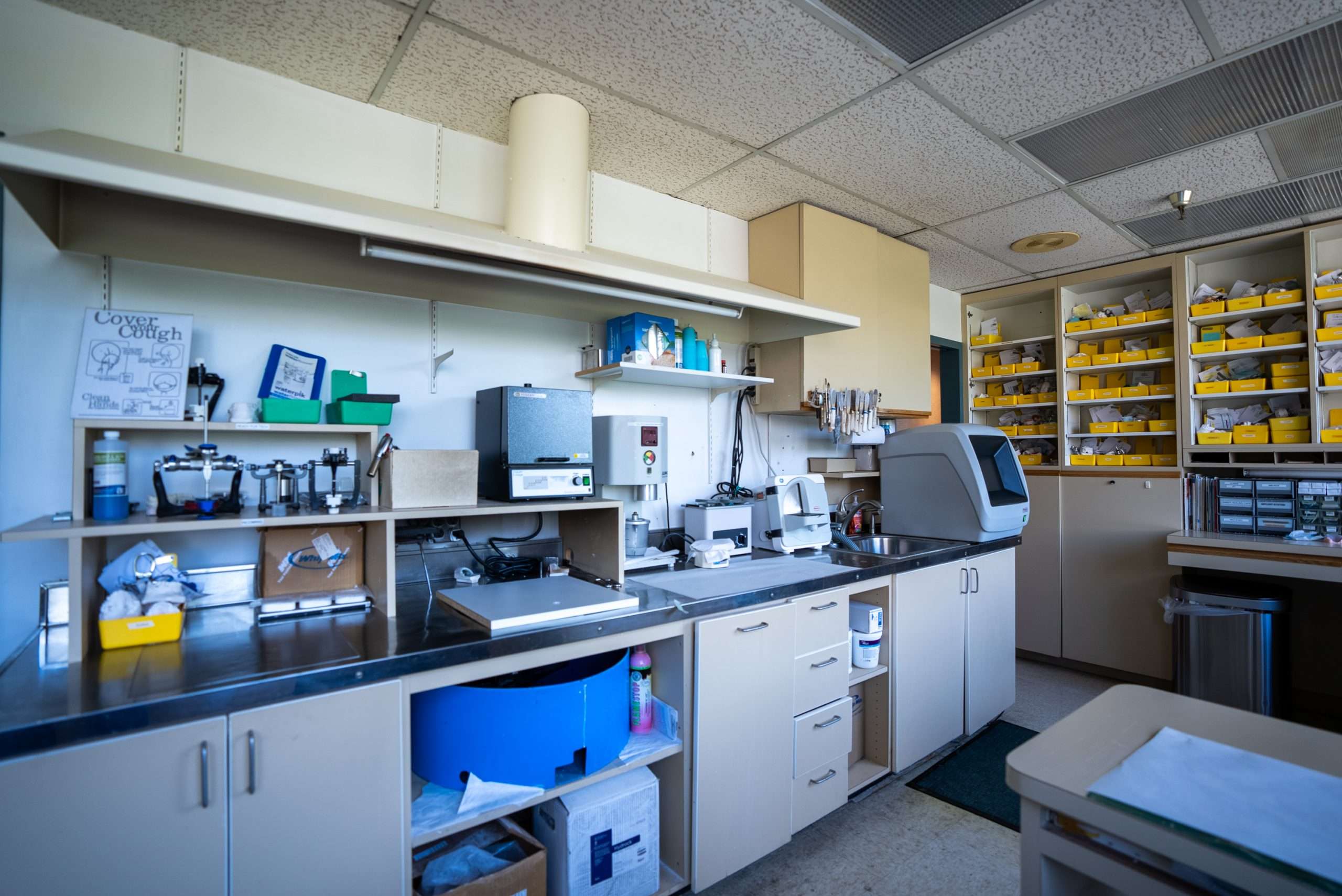
 4 Ways You Can Benefit from Our In-House Dental Lab
Custom aesthetics, precision fit, shorter waits, and fast repairs: four ways an in-house dental laboratory changes both your experience and your results.
 Choosing a Prosthodontist
 What Is the Difference Between a Dentist and a Prosthodontist?
Every prosthodontist is a dentist, but with years of extra specialty training in restoring and replacing teeth. A DC prosthodontist explains who does what.
 Choosing a Prosthodontist
 Don't Wait 'Til It's Too Late: Start with a Virtual Dental Consultation
A virtual consultation is a convenient first step: discuss your concerns, share records, and hear options from a DC prosthodontist before an in-person exam.
 Choosing a Prosthodontist
 Emergency Dentistry: The Benefits of an In-House Laboratory
When a tooth or restoration breaks, an on-site dental lab can mean a natural-looking repair in a day instead of a week. How emergency fabrication works in DC.
Our Services in Georgetown
Beyond prosthodontics, Georgetown patients rely on Dr. Marlin for a full range of advanced dental care.
More services available in Georgetown:
prosthodontics Near Georgetown
Dr. Marlin also provides prosthodontics services for patients in these neighboring communities.
Getting Here from Georgetown
Elite Prosthetic Dentistry is conveniently located near Georgetown, DC.
Georgetown residents drive north or east via Wisconsin Avenue or Massachusetts Avenue to reach our Friendship Heights office at 4400 Jenifer Street NW, Suite 220. Building parking is available.
Address:
4400 Jenifer Street NW, Suite 220
Washington, DC 20015
Phone: (202) 244-2101
Request a ConsultationRequest a Specialist Consultation from Georgetown
Georgetown residents come to Dr. Marlin for specialist prosthodontic care. With 3,900+ implants placed over 40+ years, evaluation, planning, and execution are handled with the depth complex cases require.