
Porcelain Veneers for a Flawless Smile
You may already love your smile, and that is a great starting point. But what about the details that bother only you: one chipped corner, a slightly short tooth, a small gap, a shade you wish were brighter? Perfecting an already good smile is exactly what porcelain veneers do best. They are the finishing tool of cosmetic dentistry, correcting minor surface imperfections and spacing issues without major dentistry.
Because veneers are usually an elective refinement, patients ask wonderfully practical questions about them. Here are the ones we hear most, answered plainly.
Will They Feel Weird on My Teeth?
Not for long, if at all. Veneers are thinner than your fingernails and sit flush against the prepared tooth surface. After a short adjustment period, most patients stop noticing them entirely, and many tell us they forget which teeth carry veneers at all.
How Long Do They Last?
Longer than your car. A good, properly placed veneer commonly serves for 10 to 20 years, and, just like a car, the better you take care of it, the longer it lasts. Daily habits do most of the work, and we lay them out in our veneer care guide. For a smile refinement, that longevity makes veneers a genuinely sound investment.
Will They Ever Fall Off?
They are not going anywhere. Veneers attach with a strong bonding compound engineered specifically for teeth, and a properly bonded veneer stays put through years of normal eating, speaking, and smiling. In the uncommon event a veneer loosens or fails, there is usually a diagnosable reason, bonding conditions, bite forces, or the original preparation, which we examine in why veneers fail.
Do Veneers Look Like Natural Teeth?
You can count on it, provided they are made well. Porcelain is the ideal material for copying tooth enamel because it carries luster, shine, and translucence the way real teeth do. The craftsmanship matters here: our veneers are custom fabricated in our in-house laboratory, where color and translucency are tailored to your surrounding teeth with you present, rather than approximated from a written shade number.
What If My Surrounding Teeth Are a Different Color?
We plan for exactly that. Generally we recommend professional whitening of your natural teeth first, then match the veneer shade to the brighter result, giving you a uniform smile. The sequencing is not optional: porcelain does not bleach, so the natural teeth must reach their final shade before the veneer color is chosen. And if you want the whole smile notably brighter, the translucency craft that makes very white restorations still look real is a specialty of ours, explained in can crowns and veneers be very white.
Do Veneers Stain?
Porcelain is highly stain-resistant, even over many years, and that is one of the reasons we use it. Your natural teeth remain the stain-vulnerable part of the smile, which loops back to the previous answer: keeping them bright keeps everything matched.
Does Getting Veneers Hurt?
The process is comfortable for the great majority of patients. Preparation is done under local anesthetic, any post-visit sensitivity is typically minor and brief, and at the bonding appointment the most common complaint is simply keeping your mouth open for the duration. Patients who feel anxious about dental visits generally can have sedation options available, though few find they need them for veneers.
How Many Veneers Will I Need?
As many as the goal requires and no more. A single veneer can correct one chipped or discolored tooth, though matching one new surface seamlessly into a natural smile is exacting work. More commonly, patients refine the teeth visible in their smile as a set, often the upper front teeth, so shape and shade improve together and symmetrically. The number is a design decision made during your consultation, driven by your smile line, your goals, and honest judgment about where a veneer is the right tool at all.
Ready to Perfect Your Smile?
If your smile is good but not quite yours, veneers may be the precise, conservative fix. Dr. Gerald Marlin, a specialty-trained prosthodontist, will examine your teeth and tell you honestly whether veneers are the right tool for the details you want changed. Call 202-244-2101 or schedule a consultation at Elite Prosthetic Dentistry in Friendship Heights, Washington, DC.
See How We Resolve These Problems
Our patient success stories show real cases and real results. Browse outcomes from a specialist prosthodontist with decades of experience and 3,900+ implants placed.
Key Takeaways
- ✓ Veneers are the finishing tool of cosmetic dentistry: ideal for perfecting a smile you already mostly like.
- ✓ They are thinner than a fingernail, and patients quickly stop noticing them entirely.
- ✓ A well-made, properly bonded veneer commonly serves for 10 to 20 years, and care determines which end of that range you get.
- ✓ Porcelain is highly stain-resistant, which is one of the reasons it is the material of choice.
- ✓ Color planning matters: whitening natural teeth is sequenced before final shades so the whole smile matches.
Frequently Asked Questions
Do veneers feel strange on your teeth?
Not for long, if at all. Veneers are thinner than a fingernail and are bonded flush to the tooth surface, so once any initial newness passes, they feel like your own teeth. Most patients report forgetting they have them.
How long do porcelain veneers last?
A good, properly bonded veneer commonly lasts 10 to 20 years, and like most fine things, care determines which end of the range you reach. Gentle daily hygiene, sensible bite habits, and regular checkups all extend the life of the investment.
Can veneers fall off?
Properly bonded veneers are attached with a strong dental adhesive engineered exactly for this purpose and are designed to stay put through years of normal use. When a veneer does debond, it usually signals a bonding, bite, or preparation issue worth diagnosing rather than bad luck.
Do porcelain veneers stain like natural teeth?
Porcelain is highly resistant to staining, far more so than natural enamel, which is one of the reasons it is the material of choice. The planning point most people miss: your natural teeth still stain, so keeping them bright is what keeps the whole smile matched over time.
What if my other teeth are darker than the veneers?
We plan for that. Typically the natural teeth are professionally whitened first, then the veneer shade is selected to match the brighter result, so the finished smile is uniform. Restorations do not bleach, which is why this sequencing always runs whitening first.
Related Patient Success Stories
Explore similar patient success stories demonstrating our expertise in advanced prosthetic dentistry.
 Before
  After
After Can Worn-Down Teeth Be Fixed or Do They Have to Be Replaced?
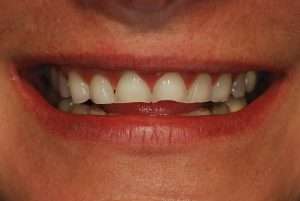
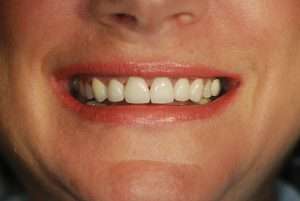
The patient presented with a severely worn dentition that was marring an otherwise great smile line.
 Before
  After
After The Immediate Gummy Smile Makeover
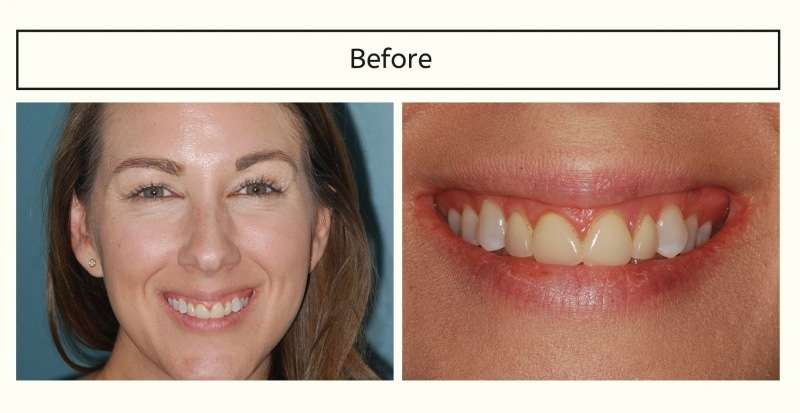
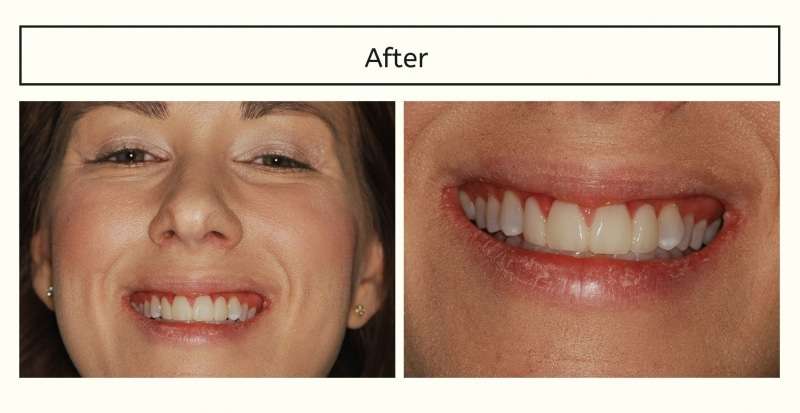
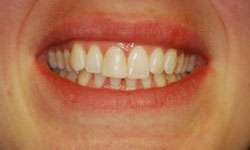
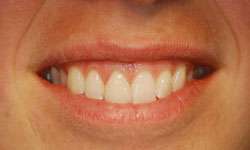
Self-conscious about her gummy smile line and wearing veneers that were not the optimal size or shape for her smile, the patient needed a natural-looking result on a tight timeline before her wedding.
 Before
  After
After The Single Anterior Crown
A veneer on one upper front tooth no longer matched its natural neighbor in shape, color, or translucency, and its contours were irritating the gum tissue around it.
Related Articles
Deepen your knowledge with additional insights on this topic.
 Porcelain Veneers
 Revealing the Process: An In-Depth Look at Veneer Teeth Prep
About half a millimeter of enamel, one careful appointment: a DC prosthodontist walks through veneer tooth preparation and why precision decides the result.
 Porcelain Veneers
 Why Do Some Dental Veneers Chip?
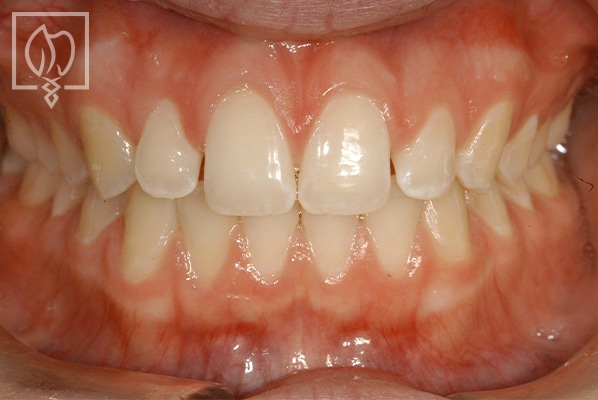
Grinding, bite problems, hard foods, and bonding errors are the usual causes of chipped veneers. A DC prosthodontist explains prevention and repair.
Porcelain Veneers The Most Common Misconceptions About Veneers
Too fake, too fragile, too damaging, too expensive? A DC prosthodontist corrects the five most common misconceptions about porcelain veneers.