
How to Get the Best Dentist for Your Cosmetic Smile Makeover

Dr. Marlin with a patient at our Washington, DC practice
Are you tired of covering your mouth when you smile? A smile makeover can correct the issues you spot in the mirror, from discoloration to worn, damaged, or missing teeth. But the makeover itself is only half the decision. The other half, and the one that determines how the next twenty years go, is who designs and performs it. Here is a practical checklist for choosing well.
First, Understand What You Are Hiring For
A smile makeover is not one procedure. It is a coordinated combination, different for every patient, that can include dental crowns, porcelain veneers, whitening, gum recontouring, and, when teeth are missing, dental implants or full-arch solutions planned as part of a broader reconstruction. We outline the typical menu in the most important procedures for your cosmetic smile makeover.
That combination is the point: you need a dentist with an answer for every problem in your mouth, and the training to sequence those answers correctly.
The Checklist
1. Specialty training. Ask what education the dentist completed beyond dental school. A prosthodontist has years of additional residency training specifically in restoring and replacing teeth, which is the entire substance of a smile makeover. General dentists can do fine cosmetic work on simple cases; complex, multi-procedure makeovers reward specialist planning.
2. Case experience. Ask how many cases like yours they have completed, and about their hardest ones. Dr. Gerald Marlin has practiced for more than 40 years and has placed more than 3,900 dental implants; he is known as a problem solver because difficult cases, including makeovers other dentists declined, are a regular part of the practice.
3. Laboratory control. Ask who actually fabricates the crowns and veneers. At Elite Prosthetic Dentistry, restorations are made in our own in-house laboratory, so the ceramist sees you, not just a shade number on a prescription, and refinements happen with you at the chair rather than traveling back and forth. Crowns from our in-house laboratory have lasted 35 years and longer with proper care.
4. A visible portfolio. Review before-and-after photos of the dentist’s own work, in our case the smile gallery and detailed case studies like our patient who decided it was time for a smile makeover. Judge whether results look like natural teeth that suit each face, or one identical white smile stamped onto every patient.
5. Planning before treatment. The best predictor of a good outcome is what happens before any tooth is touched: photographs, smile analysis, discussion of how recommendations relate to your face, and a clear explanation of why each restoration was chosen for each tooth. Beware of quick fixes sold without a plan.
Signals That Deserve a Closer Look
The reverse checklist is just as useful. Be cautious when a portfolio shows only stock photography rather than the practice’s own patients, when a comprehensive plan is quoted before comprehensive records are taken, when every patient seems to receive the same treatment regardless of their starting point, or when urgency is manufactured around a promotion rather than around your teeth. None of these proves poor dentistry, but each is a reason to slow down and ask more questions before committing to work that will define your smile for decades.
Honest Advice Is Part of the Craft
A trustworthy dentist will also tell you what you do not need. Sometimes the wish list calls for veneers but the teeth call for crowns; sometimes whitening plus one restoration achieves what a full makeover would, at a fraction of the dentistry. Dr. Marlin holds 9 U.S. patents in dental implant restoration methodology and has spent his career on the principle that the work should look natural, function properly, and last, which occasionally means recommending less treatment rather than more.
For guidance specific to searching in this market, see our companion piece, what to look for in a cosmetic dentist in DC and Bethesda.
Start With a Conversation
Your smile shapes first impressions and daily confidence, and a makeover done right is a decades-long asset. If you are researching who should design yours, meet Dr. Gerald Marlin, a specialty-trained prosthodontist named a Washingtonian Top Dentist by his peers, most recently on the 2026 list. Call 202-244-2101 or schedule a consultation at Elite Prosthetic Dentistry in Friendship Heights, Washington, DC.
See How We Resolve These Problems
Our patient success stories show real cases and real results. Browse outcomes from a specialist prosthodontist with decades of experience and 3,900+ implants placed.
Key Takeaways
- ✓ A smile makeover combines multiple procedures, so the dentist you choose needs an answer for every problem in your mouth, not just one.
- ✓ Verify specialty training first: a prosthodontist has years of additional education in exactly this kind of complex restorative work.
- ✓ Ask who fabricates the restorations. A practice with its own laboratory has closer control over fit, contour, and shade.
- ✓ Review real before-and-after cases and judge whether the results look natural, not just white.
- ✓ The right dentist plans the whole makeover before touching a tooth, and explains why each procedure was chosen.
Frequently Asked Questions
What kind of dentist is best for a smile makeover?
A prosthodontist is the strongest match. Prosthodontics is the dental specialty devoted to restoring and replacing teeth, requiring years of training beyond dental school in exactly the procedures a makeover combines: crowns, veneers, implants, and full-mouth planning. Any dentist can call themselves cosmetic; the specialty credential is earned.
What questions should I ask at a smile makeover consultation?
Ask what training the dentist has beyond dental school, how many cases like yours they have completed, who fabricates the restorations and where, whether you can see before-and-after photos of their own work, and how they plan the smile design before treatment begins. The answers reveal more than any advertisement.
Why does the dental laboratory matter so much?
Because your final result is only as good as what the laboratory produces. When restorations are made in-house, the dentist and technician collaborate directly on shade, translucency, and shape, and can refine details with you at the chair. When they are sent to an outside laboratory, that dialogue runs through impressions, prescriptions, and photographs.
How do I judge a dentist's before-and-after photos?
Look past the whiteness. Natural-looking results show teeth in proportion to the face, gumlines that follow a healthy contour, and porcelain with translucency and character rather than a flat, opaque look. If every result looks like the same set of uniform white teeth, the work is formulaic rather than designed.
Related Patient Success Stories
Explore similar patient success stories demonstrating our expertise in advanced prosthetic dentistry.
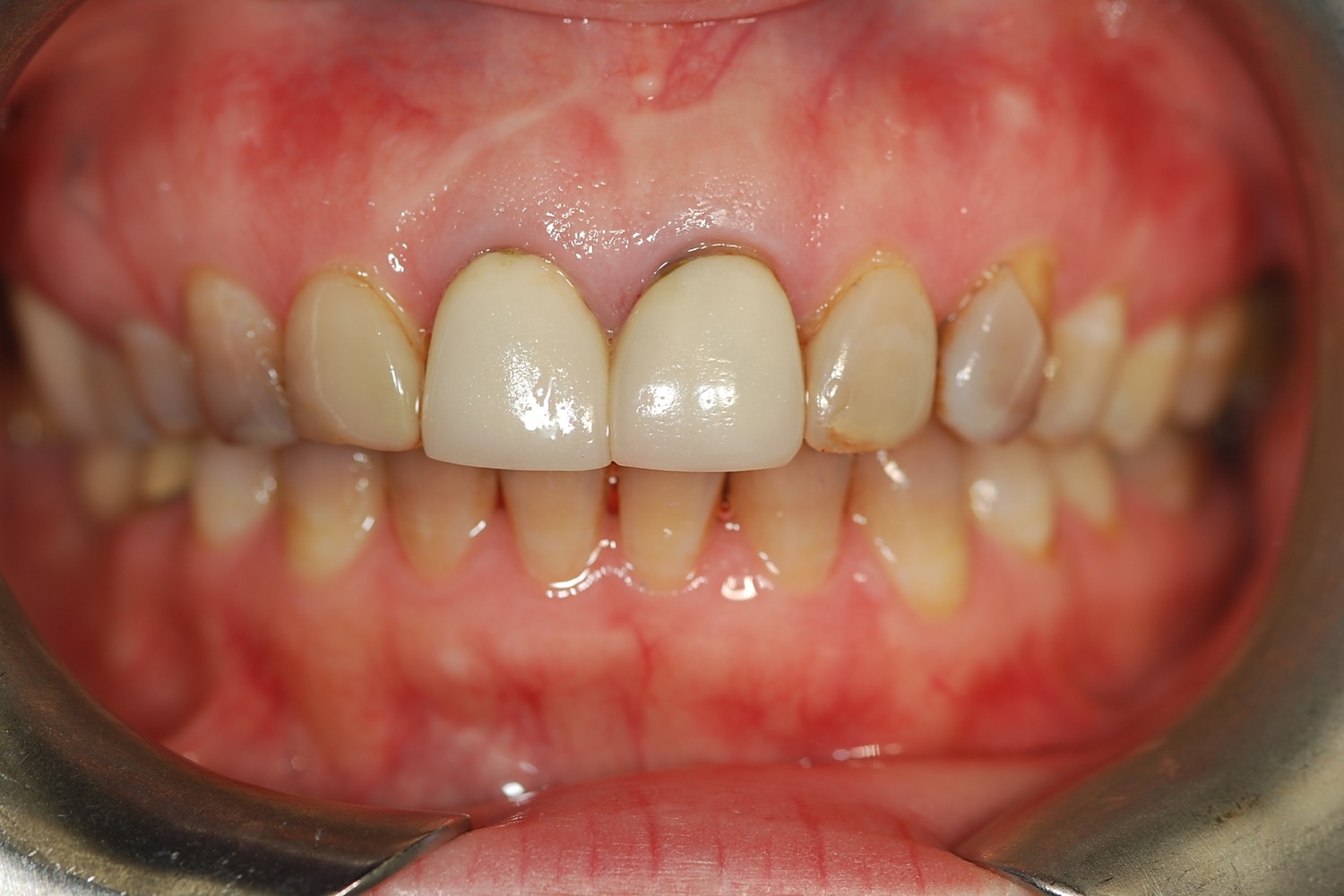 Before
 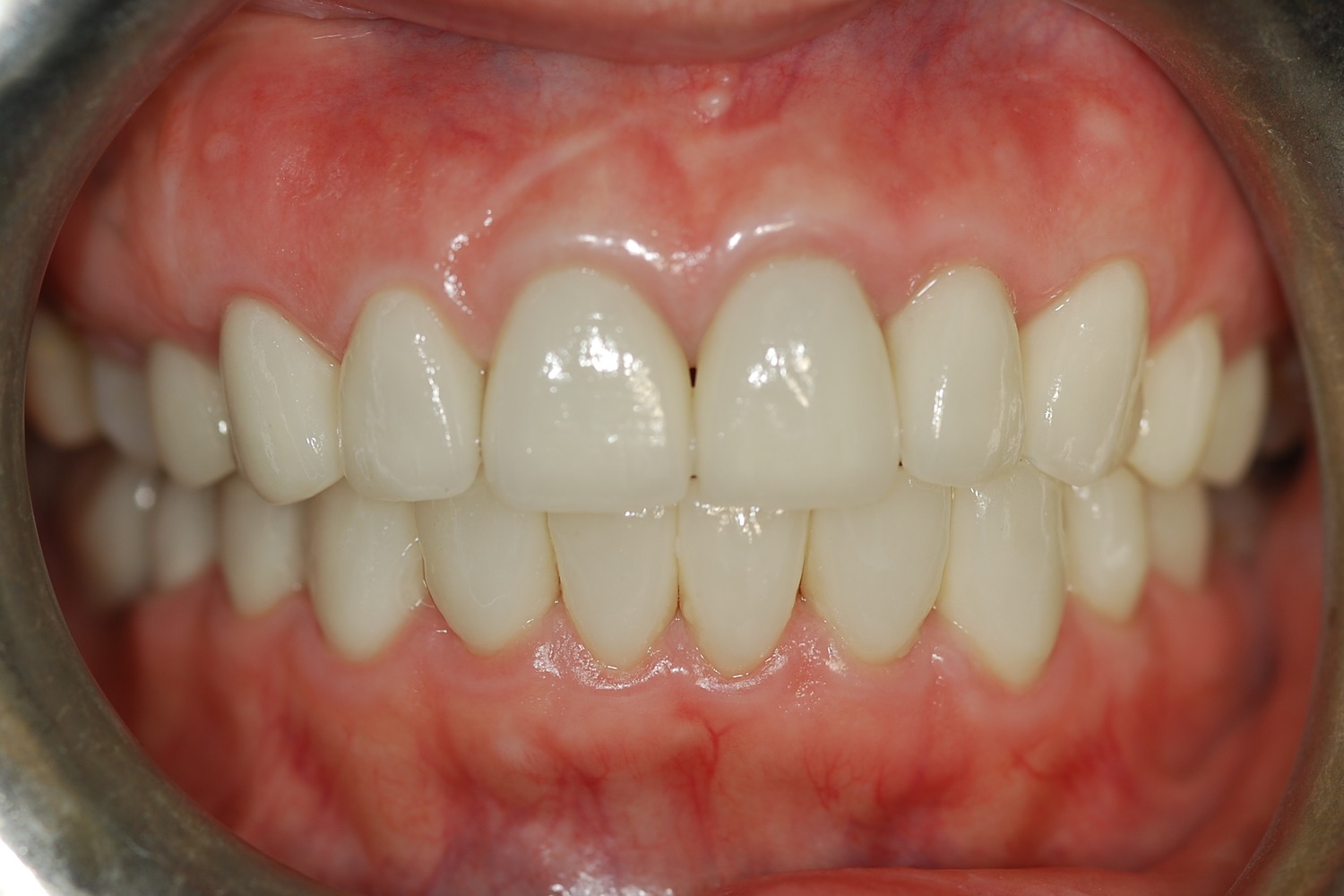 After
After How Aging, Opaque Restorations Were Replaced with Customized Ceramic Restorations Designed for Long-Term Natural Esthetics
The existing restorations appeared opaque, worn, and unnatural over time, affecting both confidence and overall smile harmony.
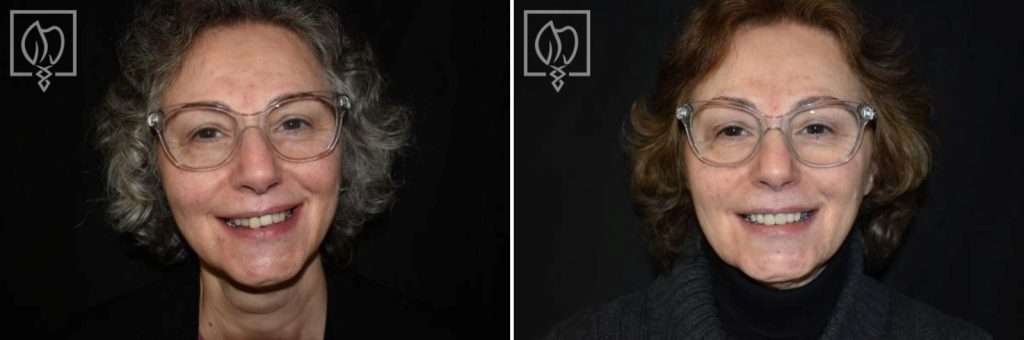
Temporary Crowns Restore a Patient's Smile in One Day with an Immediate Smile Makeover
A patient from Potomac, Maryland came to the practice in pain from a failing dental implant whose restoration was also compromising her appearance and her confidence.
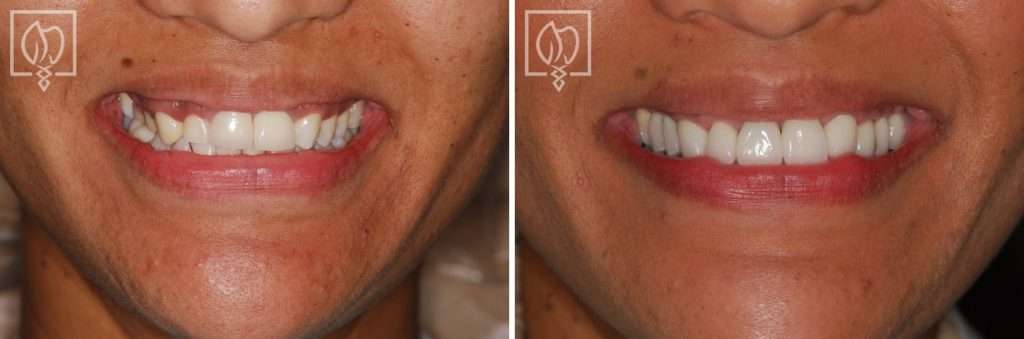
Multi-Faceted Treatment for a Patient Unhappy With the Appearance of Her Crowns, Teeth, and Gums
The patient was unhappy with how her teeth and gums affected her smile: front-tooth crowns that no longer blended with her natural teeth, a missing lateral incisor with the larger canine sitting in its space, and an uneven gum line.
Related Articles
Deepen your knowledge with additional insights on this topic.
 Cosmetic Dentistry
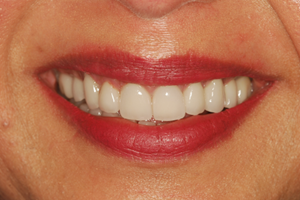
 Can My Tetracycline-Stained Teeth Be Made to Look Beautiful?
Tetracycline staining sits deep inside the tooth, so bleaching cannot fix it. See how translucent porcelain crowns create a bright, natural smile instead.
 Cosmetic Dentistry
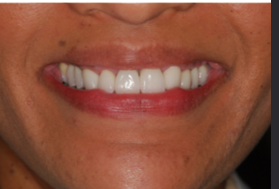
 How Is a Gummy Smile Fixed?
From gum reshaping to custom crowns, a DC prosthodontist explains how a gummy smile is fixed, with a real patient transformation and healing timeline.
 Cosmetic Dentistry
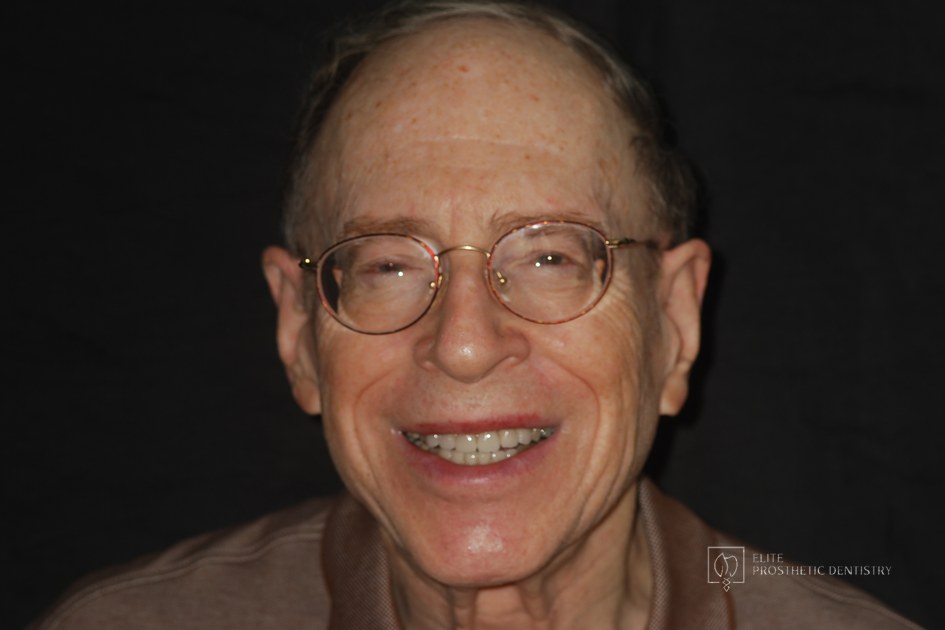
 Discovering Cosmetic Dentistry Beyond Aesthetics
Cosmetic dentistry improves more than looks: easier hygiene, restored chewing function, and better long-term oral health. A DC prosthodontist explains.