
How Long Does a Full Mouth Reconstruction Take?
Full mouth reconstruction is the comprehensive rebuilding of the teeth, gums, and bite to restore function, health, and appearance. The honest answer to “how long does it take?” is a range: most patients should plan on roughly three months to a year, with straightforward cases finishing sooner and complex ones running longer. What determines where you land in that range is worth understanding before you begin.
The process typically combines several disciplines, dental implants, crowns and bridges, veneers, orthodontics, endodontics, and periodontal care, sequenced into one coordinated plan. Patients finish able to chew comfortably, speak clearly, and smile with confidence, which is why the months invested consistently feel worthwhile.
What Drives the Timeline
Case complexity is the biggest variable. Extensive tooth loss, severe decay, advanced gum disease, or significant bite collapse each add required steps, and some of those steps cannot be hurried because tissue must heal between them [1]. A patient needing implants in healthy bone may complete treatment in two stages; a patient needing extractions and bone grafting before implant placement needs at least three, because the graft must mature before it can support an implant.
Planning quality is the second variable, and it is under your control. A rigorous diagnostic phase, examination, X-rays, CT imaging, impressions, and models, produces a written, staged sequence in which every appointment has a purpose [2]. Methodical planning is what makes a long project predictable instead of open-ended. It is also where specialist experience shows: Dr. Marlin has planned and executed comprehensive reconstructions in Washington, DC for more than 40 years.
Why the Work Is Staged
Reconstruction proceeds in phases by design. Disease control and foundation work come first: decay removed, gums treated, hopeless teeth extracted, grafting placed where needed. Implants and structural work follow once the foundation is sound, and then healing time lets bone integrate around the implants. Finally, the restorative phase rebuilds the visible teeth, often after provisional restorations have test-driven the new bite.
Each stage protects the one after it. Seat final crowns on an unstable bite, or load implants before the bone has integrated, and the schedule you “saved” returns with interest. We never rush the sequence, because doing so compromises the result.
That said, legitimate efficiencies exist. Compatible procedures can be combined into single visits, and sedation dentistry helps patients comfortably tolerate the longer appointments that make combining possible [3]. For patients missing most or all of their teeth, full-arch implant protocols can significantly shorten the road to fixed replacement teeth when the case qualifies.
The In-House Laboratory Advantage
Here is a timeline factor few patients think to ask about: where the restorations are made. Every crown, bridge, provisional, and prosthesis in a reconstruction is fabricated laboratory work. Practices using commercial labs ship each case out, wait in the production queue, and ship it back, for every phase, and a multi-phase reconstruction multiplies that delay.
Elite Prosthetic Dentistry fabricates restorations in our own in-house laboratory, as we have since 1985. Cases move down the hall instead of across the country, adjustments happen chairside instead of by mail, and weeks quietly disappear from the calendar without a single clinical corner being cut. You can see the kind of coordinated result this produces in our case study of a severe restorative breakdown rebuilt into a stable, natural smile.
Get a Timeline for Your Case
Averages are useful; your own staged plan is better. If your teeth are worn, breaking down, or already failing, a consultation will tell you what your reconstruction involves and how long each phase should take. Start by reading how severely worn teeth are repaired, then call 202-244-2101 or request an appointment with Dr. Gerald Marlin at Elite Prosthetic Dentistry in Friendship Heights, Washington, DC.
Sources
See How We Resolve These Problems
Our patient success stories show real cases and real results. Browse outcomes from a specialist prosthodontist with decades of experience and 3,900+ implants placed.
Key Takeaways
- ✓ Most patients should plan on roughly three months to a year for a full mouth reconstruction, with complex cases running longer.
- ✓ The timeline is driven by biology and complexity: extractions, bone grafting, implant healing, and gum treatment each add necessary time.
- ✓ Treatment is deliberately staged so each phase heals and integrates before the next builds on it. Rushing the sequence compromises the result.
- ✓ An in-house laboratory removes weeks of shipping and outside-lab queuing from the schedule without cutting any clinical corners.
- ✓ Thorough planning up front, records, imaging, and a written sequence, is what keeps a long project predictable.
Frequently Asked Questions
How long does a full mouth reconstruction take from start to finish?
Generally three months to a year. Patients needing limited restorative work land near the short end, while cases involving extractions, bone grafting, implant healing, or periodontal treatment extend the schedule. Your personal timeline should be laid out phase by phase in the treatment plan before anything begins.
Why does full mouth reconstruction take so long?
Because biology sets the pace. Bone grafts must mature, implants must fuse to the jaw, gums must become healthy, and a rebuilt bite must be tested before the final restorations are made. Each stage protects the next. The alternative, compressing steps that need healing time, risks failures that cost far more time later.
Can any of the treatment be done faster?
Yes, legitimately. A practice with an in-house laboratory eliminates shipping and outside-lab queues, sometimes saving weeks across a multi-phase case. Combining compatible procedures into single visits, with sedation when appropriate, also reduces total appointments. For qualifying patients, full-arch implant protocols can shorten the path to fixed teeth.
Will I be without teeth during the reconstruction?
No. Well-made provisional restorations keep you chewing, speaking, and smiling naturally throughout treatment. Provisionals also serve as a functional test drive of the new bite, letting the prosthodontist refine form and function before the final restorations are fabricated.
Related Patient Success Stories
Explore similar patient success stories demonstrating our expertise in advanced prosthetic dentistry.
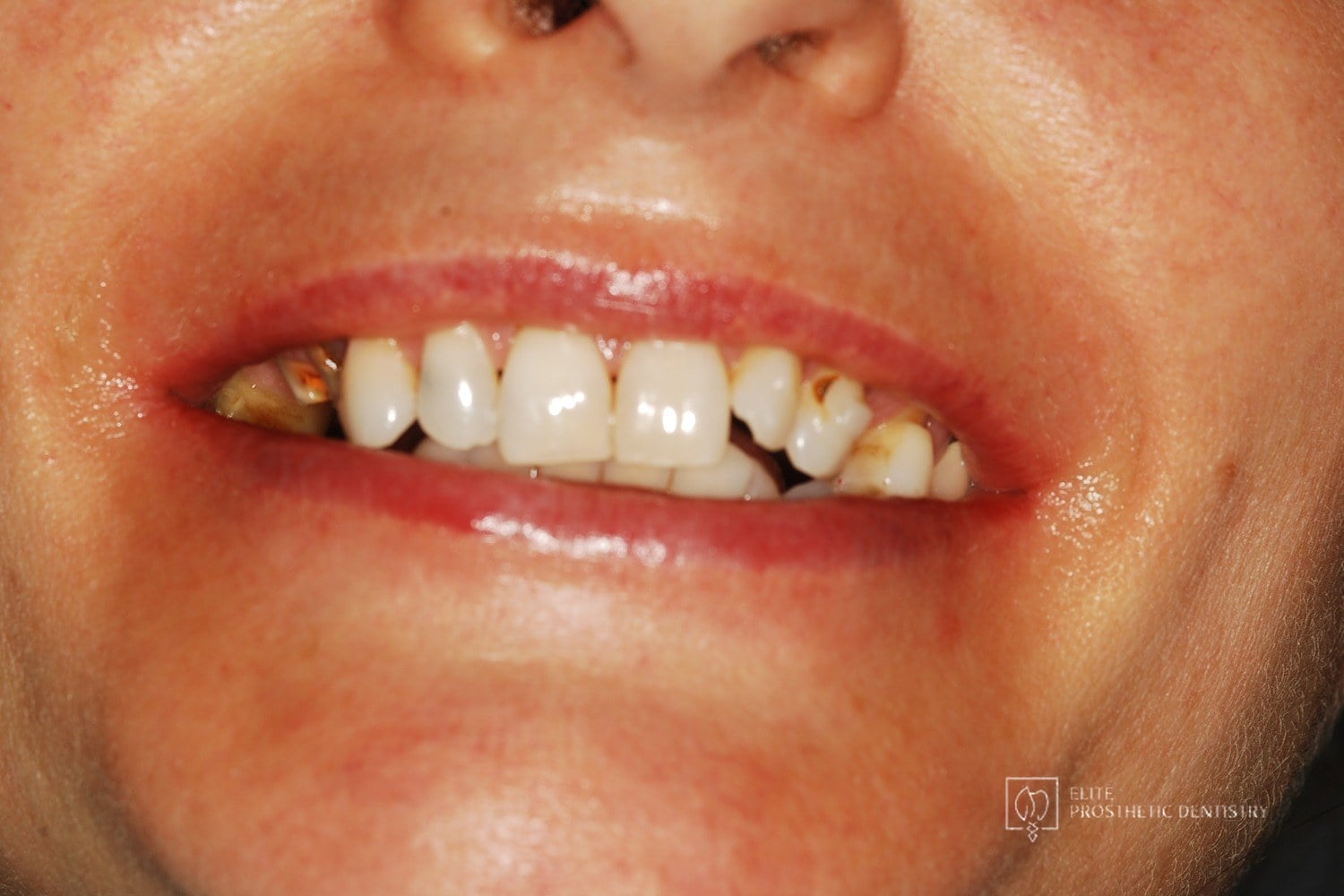 Before
 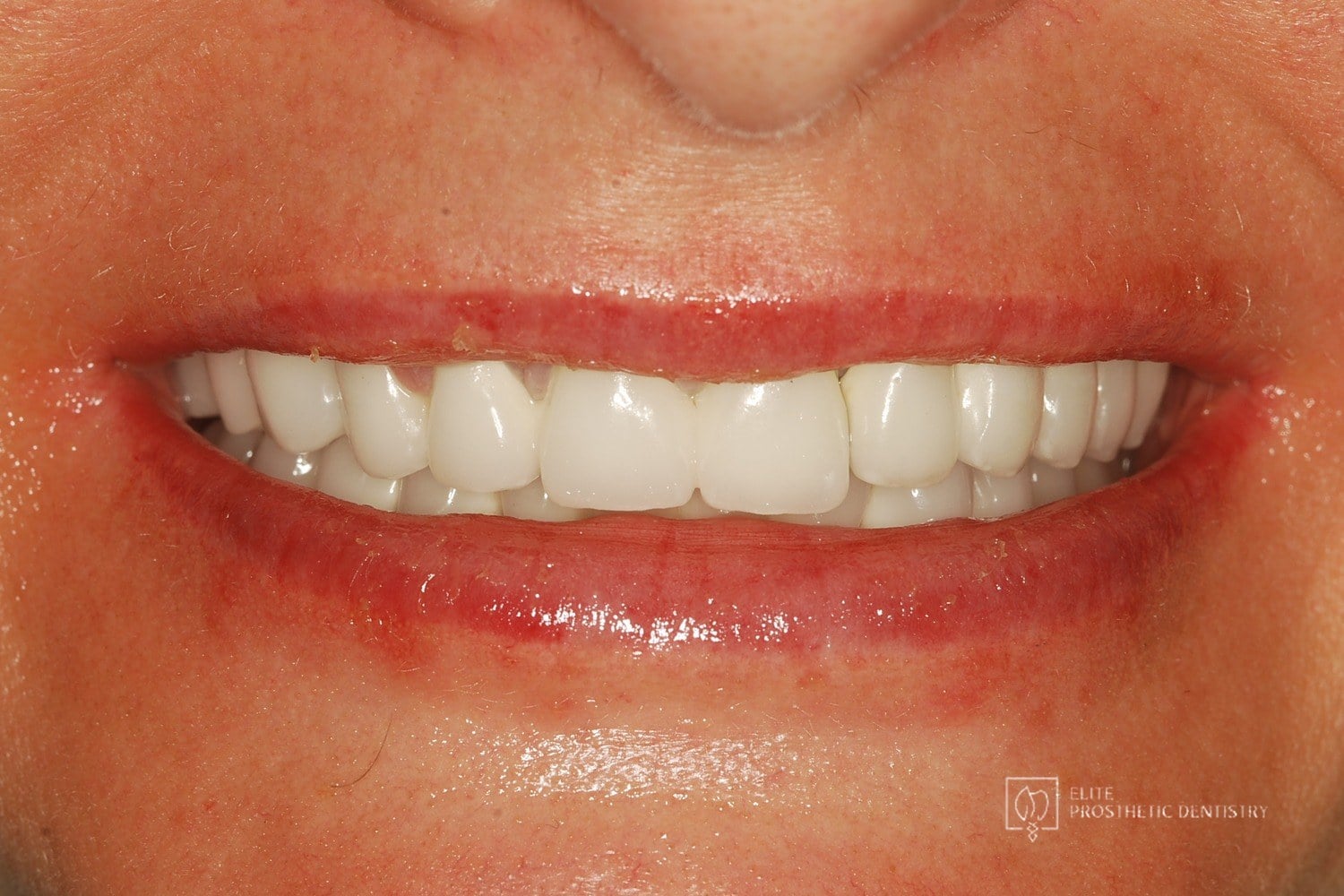 After
After How Aging, Failing Dentistry Was Replaced with a Coordinated Full-Mouth Implant and Crown Reconstruction
The patient presented with throbbing upper-molar pain, long-standing infections, multiple root canals and unfinished prior treatment, generalized sensitivity, and several hopeless teeth.
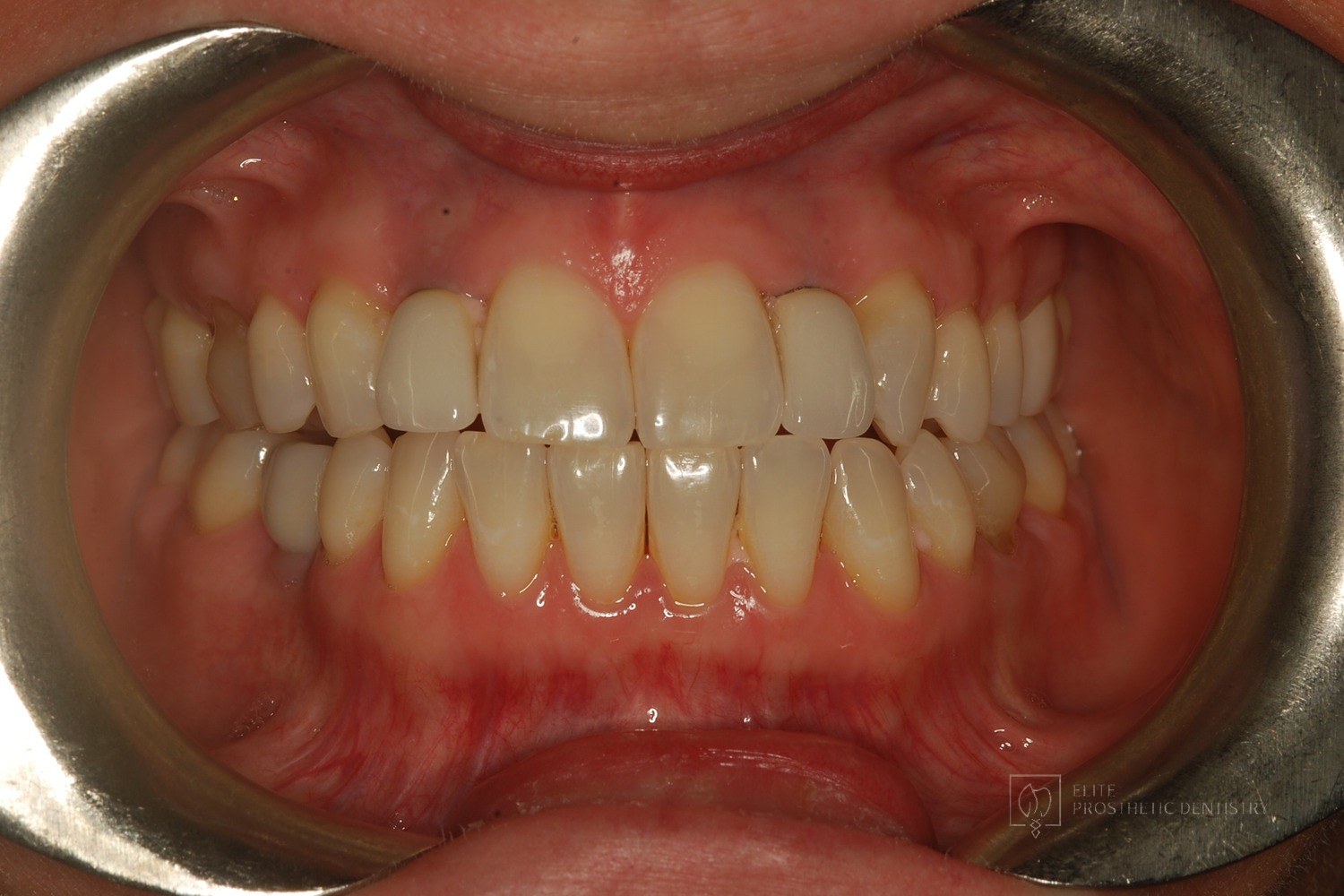 Before
 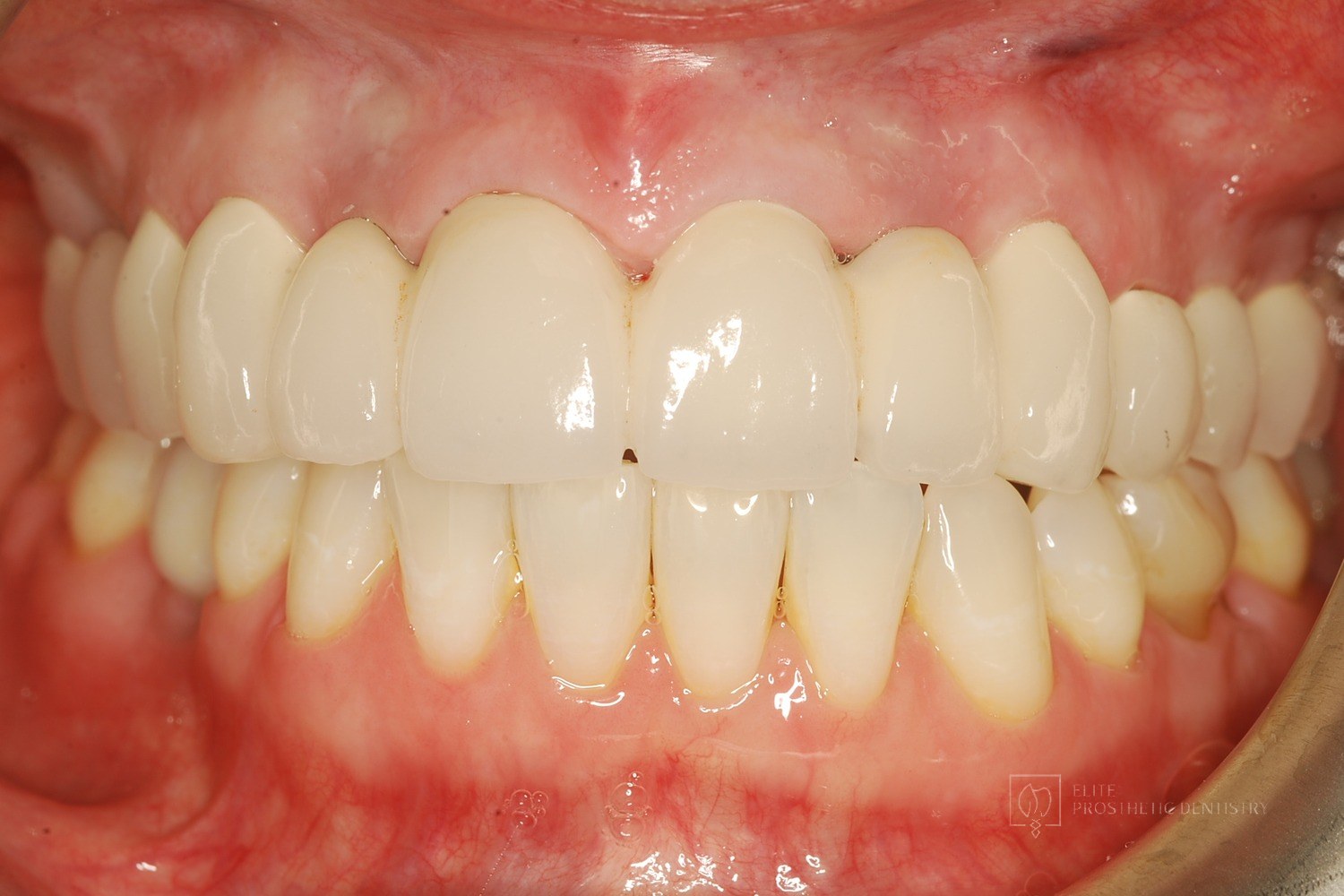 After
After How Older Implant Crowns Were Redesigned for a Better Bite and More Natural Appearance
The patient came in after years of living with implant-supported crowns placed more than twenty years earlier that no longer looked or functioned well. CBCT evaluation, reviewed with a radiologist colleague, showed the implants had been placed too far to the buccal in very thin bone and could not support a healthy long-term restoration.
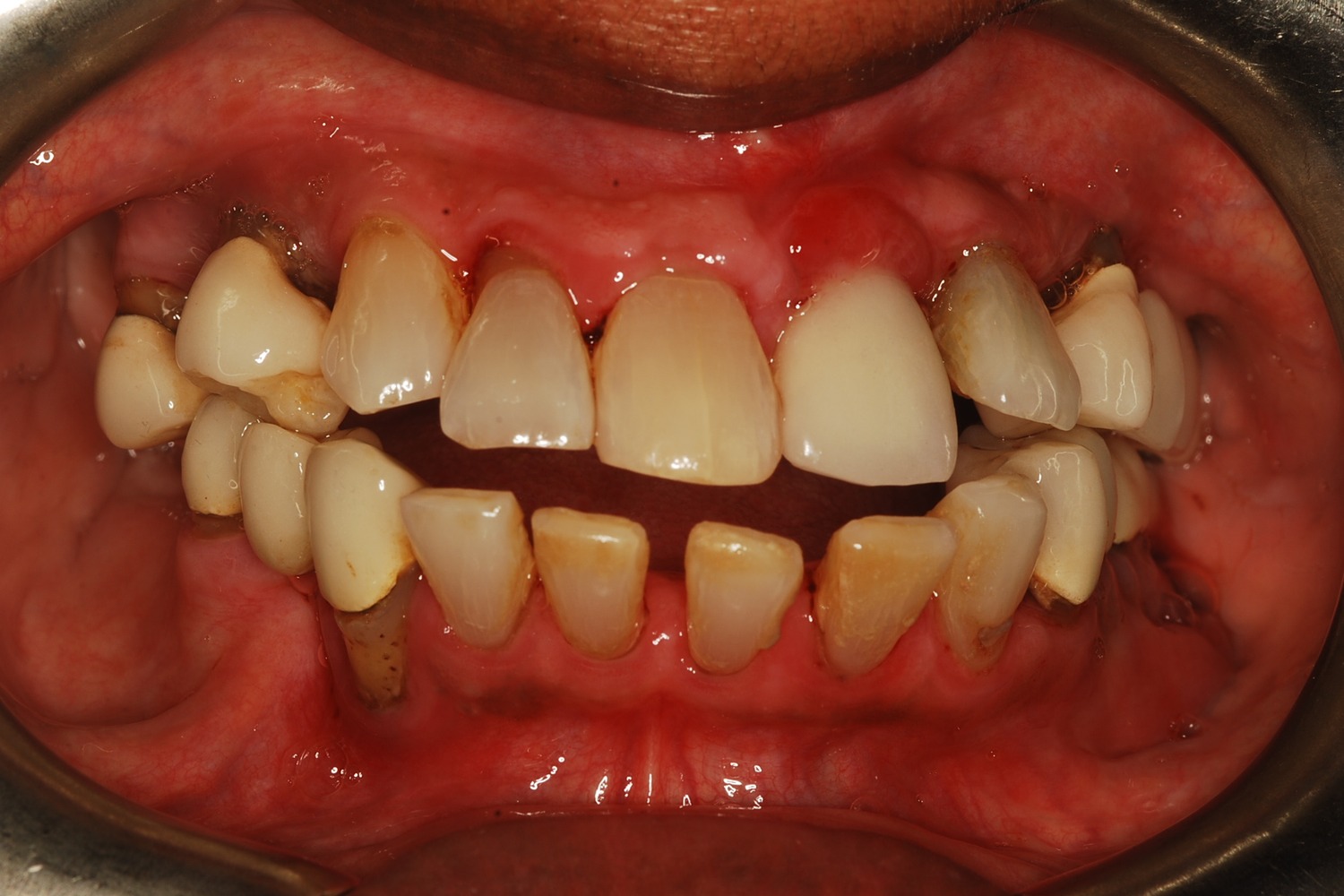 Before
 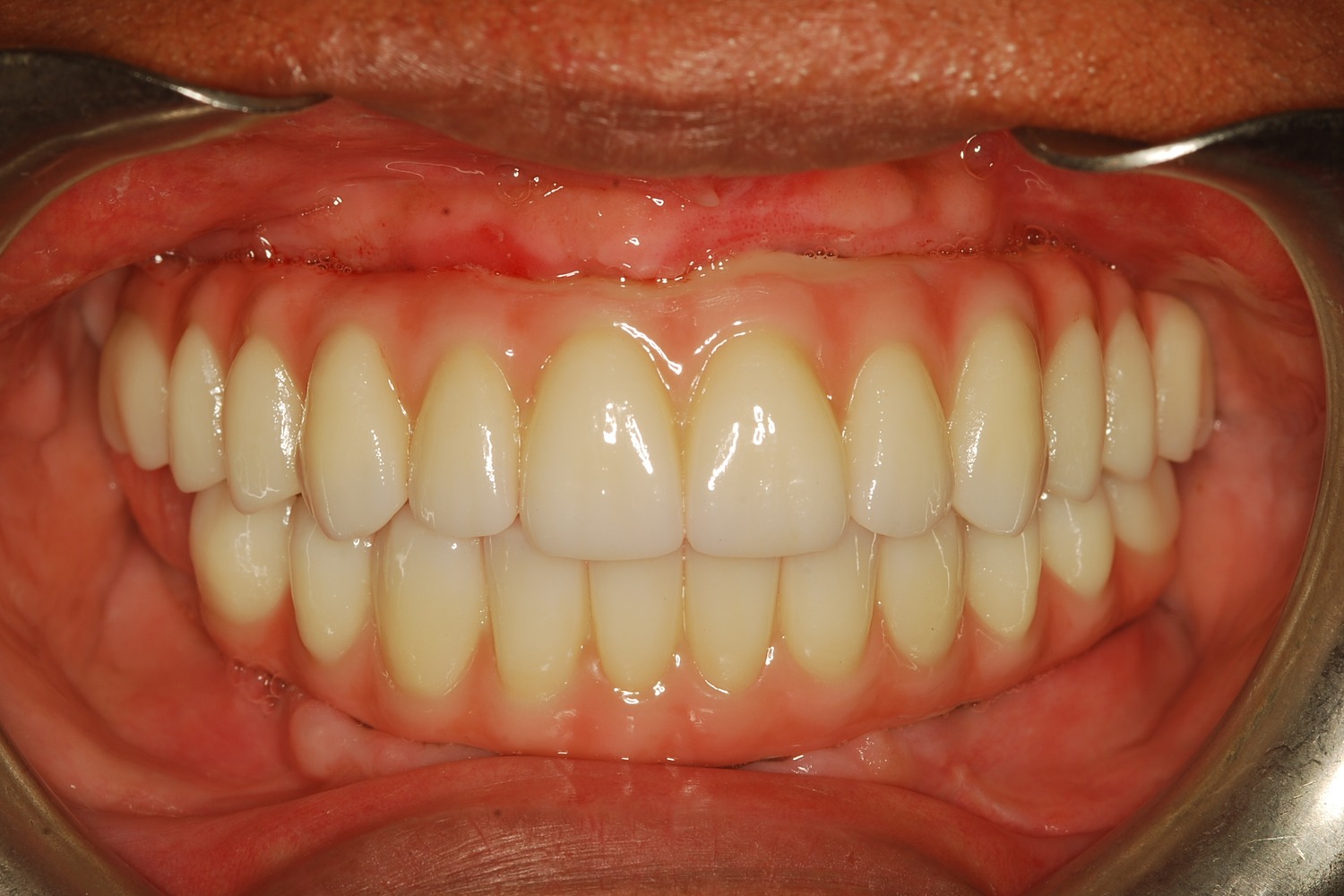 After
After How Severe Bone Loss and Bite Dysfunction Were Rebuilt with All-on-6 Implants and a Milled Zirconia Hybrid Prosthesis
The patient presented with severe bone loss, advanced periodontal disease, malocclusion, and a dysfunctional bite that required full-arch rebuilding.
Related Articles
Deepen your knowledge with additional insights on this topic.
 Full Mouth Reconstruction
 When Jaw Surgery Fails: How Prosthodontic Care Helped a Patient Rebuild Her Smile
After a failed jaw surgery and multiple revisions, a preservation-based prosthodontic plan rebuilt this patient's bite and smile without more surgery.
 Full Mouth Reconstruction
 How Can I Have My Severely Worn Teeth Repaired?
Severely worn teeth can be fully rebuilt with custom crowns, not veneers. How a DC prosthodontist restores ground-down smiles, with a real case example.
 Full Mouth Reconstruction
 How Long Does a Full Mouth Reconstruction Take?
Most full mouth reconstructions take three months to a year, staged in phases. What drives the timeline and how an in-house lab compresses it. DC.