
Smile Makeover with Dentition Reconstruction
Before and after
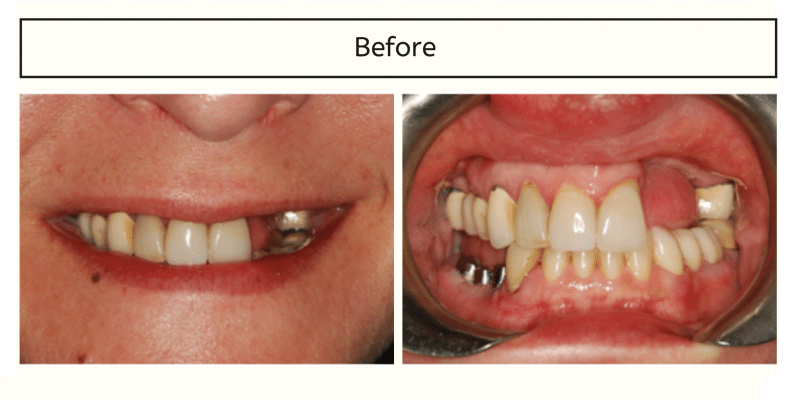 Before
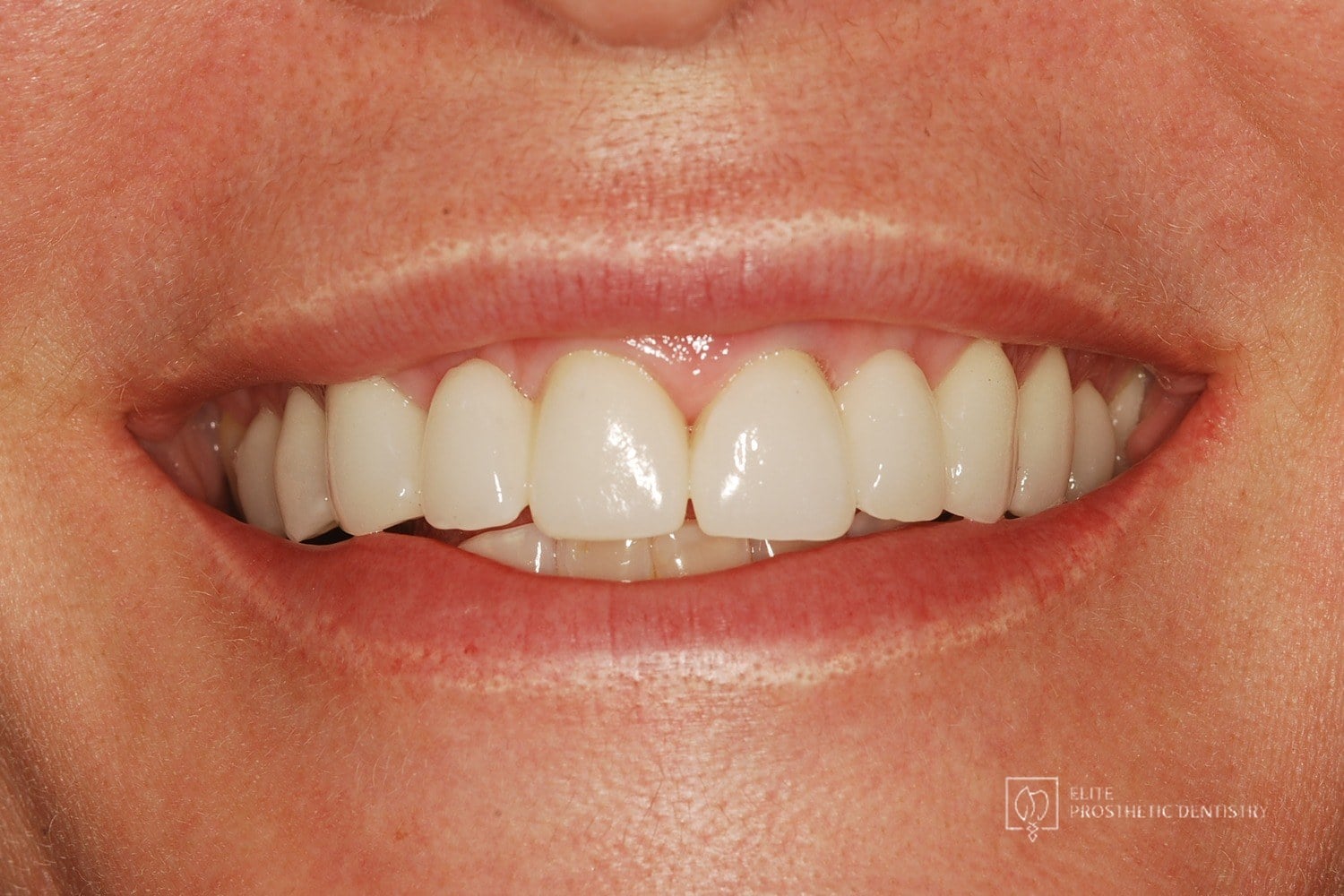
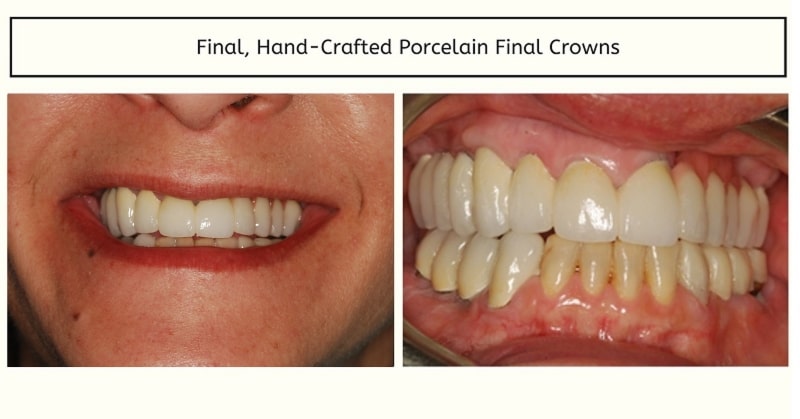 After
After
Immediate smile makeover with custom temporaries
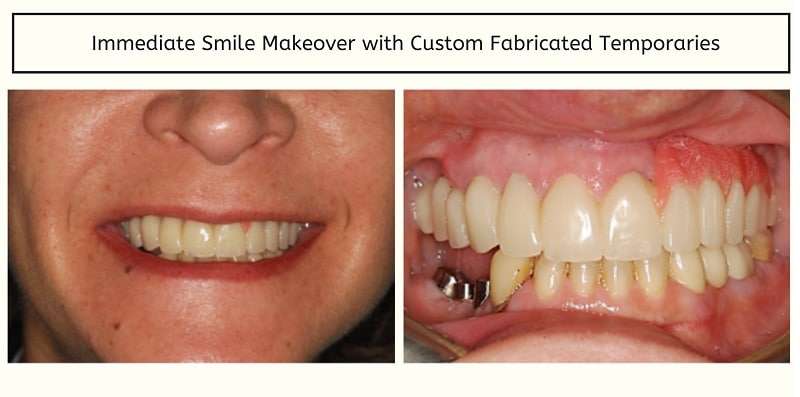
A smile makeover built on upper dentition reconstruction
Smile makeover with dentition reconstruction in Washington, DC. This documented case at Elite Prosthetic Dentistry rebuilt the upper dentition of a patient referred by her periodontist after implants in her upper left jaw had failed and could not be replaced in the available bone. Treatment was planned and completed by Dr. Gerald Marlin, D.M.D., M.S.D., a prosthodontist focused on complex fixed reconstruction and esthetic restorative care.
Case at a Glance
- Treatment
- Upper dentition reconstruction on natural tooth abutments with gingival simulation
- Approach
- Hand-crafted framework and porcelain from the in-house lab, phased toward full-mouth reconstruction
The presenting condition
The patient, from Bethesda, Maryland, was referred by her periodontist to Elite Prosthetic Dentistry for comprehensive reconstruction of her upper dentition. Her clinical situation was complex. Previously placed dental implants in her upper left jaw had failed, and with little available bone remaining in that part of the upper jaw, she was not a candidate for replacement implants. At the same time, she wanted a fixed restoration replacing many teeth, not a removable appliance.
That combination framed the fundamental question of the case: how to stabilize all of her upper teeth in a way that restored both function and esthetics, while making the final result appear completely natural.
Clinical Findings
- →Previously placed implants in the upper left jaw had failed
- →Little available bone in that area, ruling out replacement implants
- →Many missing teeth, with a firm preference for a fixed restoration
- →Missing gingival tissue that would need to be simulated for a natural result
- →Referral from her periodontist for specialty-level reconstruction
Why this case required prosthodontic-level planning
Cases involving multiple missing teeth, failed implants, and compromised bone sit at the hard edge of restorative dentistry, because the usual answers are off the table. Implants could not be placed where the bone was gone. A removable appliance was not what the patient wanted. And treating any single tooth in isolation could not answer the real question, which was how the entire upper arch would be supported, loaded, and made to look natural as one system.
Solving that requires endpoint-first thinking. The final smile had to be designed from her facial pattern, lip line, and unique smile proportions before any restoration was made, and the engineering underneath it had to distribute chewing forces across her remaining natural teeth for the long term. Implant treatment is always a decision driven by anatomy and evidence, and in this case the evidence pointed to a different path: a fixed reconstruction carried by her own remaining teeth.
The decision behind the result: a fixed, natural-looking restoration without new implants
The defining judgment in this case was that a fixed restoration did not need new implants to succeed. Her remaining teeth were prepared as abutments, and the reconstruction was engineered around them.
Two technical commitments carried that decision. First, the practice’s in-house laboratory team hand-crafted a precisely fitting underlying framework to serve as the foundation for all of the crowns. Milled frameworks were deliberately not used, because in the practice’s judgment they cannot provide the same precision of fit that long-term success demands in complex cases like this one; the framework was custom engineered to distribute forces properly and protect long-term stability. Second, the esthetics were built by hand at the same standard. The porcelain crowns were crafted with internal coloration and multiple translucent porcelains to blend with her complexion, with color gradations and translucency matched to natural tooth structure, and her missing gingiva was simulated in pink porcelain so the transition between teeth and gums reads as completely natural.
The treatment plan
-
1
Comprehensive reconstruction planning
The upper arch was planned as one system, designing the restoration around her facial pattern, lip line, and smile proportions, with her remaining teeth serving as the abutments.
-
2
Custom temporary crowns and an immediate smile makeover
Custom temporary crowns were fabricated and fitted to her tooth abutments, with pink acrylic simulating the missing gum tissue. The smile makeover took effect the day the crowns were fitted, and normal chewing was restored.
-
3
Hand-crafted framework from the in-house laboratory
A precisely fitting framework was hand-crafted, rather than milled, and custom engineered to distribute forces properly across the abutment teeth for long-term stability.
-
4
Meticulous porcelain artistry
The porcelain crowns were hand-crafted with internal coloration and multiple translucent porcelains matched to her complexion and natural tooth structure, with pink porcelain recreating the missing gingiva.
-
5
A phased path to full-mouth reconstruction
The next planned phase, lower anterior and left crowns, builds on this foundation toward a comprehensive full-mouth reconstruction restoring both function and esthetics.
The outcome
The patient received an immediate smile makeover on the day her custom-fitted temporary crowns were placed, a visible improvement in her appearance and her confidence. Her ability to chew normally was restored, and the missing gum tissue was simulated so convincingly that the restoration reads as natural rather than prosthetic. The case demonstrates what custom hand-crafted restorations can accomplish when multiple teeth are missing and implant options are limited.
Her reconstruction was planned in phases from the start. She is now prepared for the next stage, lower anterior and left crowns, which will complete a comprehensive full-mouth reconstruction. Each phase builds on the last, with the in-house laboratory and Dr. Marlin coordinating directly so that fit, force distribution, and esthetics stay consistent from the first provisional to the final restoration.
Result Highlights
- ✓Immediate smile makeover delivered the day the custom temporary crowns were fitted
- ✓Fixed restoration achieved without replacement implants, carried by her remaining teeth
- ✓Missing gum tissue naturally simulated in pink acrylic and pink porcelain
- ✓Normal chewing function restored
- ✓Hand-crafted framework engineered for force distribution and long-term stability
- ✓Phased plan building toward a comprehensive full-mouth reconstruction
Who this case may sound familiar to
This story tends to resonate with patients in a few recognizable situations:
- You have had dental implants fail and been told there is not enough bone for replacements.
- You want fixed teeth rather than a removable appliance, even though your case is complicated.
- You are missing several teeth and some gum tissue, and you worry a restoration will look artificial.
- Your periodontist or general dentist has recommended a specialist for the reconstruction.
- You would rather have the engineering done correctly once than have the work revisited later.
If any of those describe where you are, a consultation with Dr. Marlin can establish the diagnostic picture and the specific options for your case.
Frequently asked questions
Can I get a fixed restoration if my implants failed and bone is limited?
In selected cases, yes. When healthy natural teeth remain, they can serve as abutments for a fixed reconstruction that replaces multiple missing teeth without new implants. Whether that is possible depends on the number, position, and condition of the remaining teeth, which is exactly what a prosthodontic evaluation establishes.
How is missing gum tissue handled in a smile makeover?
When bone and gum tissue have been lost, restoring only the teeth can leave them looking long and unnatural. Gingival-shaded materials, pink acrylic in provisional restorations and pink porcelain in definitive ones, recreate the missing tissue so the transition between restoration and natural gum line looks seamless.
Why does the underlying framework matter so much in multi-tooth reconstruction?
The framework is the skeleton of the restoration. It determines how precisely the work seats on the supporting teeth and how chewing forces are distributed among them. In complex cases, a framework that fits imprecisely concentrates stress where it should not go, which is why exacting fit is treated as a requirement for long-term success rather than a refinement.
What can temporary crowns accomplish while a reconstruction is underway?
Well-designed custom provisionals do far more than fill space. Fitted to the prepared teeth, they can restore chewing, rebuild the smile line, and preview the shape and proportions of the final result, delivering a visible improvement on the day they are placed while the definitive restorations are crafted in phases.
Why see a prosthodontist for a case involving failed implants and many missing teeth?
Because these cases have no standard answer. Multiple missing teeth, failed implants, and compromised bone require a specialist trained to weigh fixed and implant-based options against the actual anatomy, design the endpoint first, and coordinate the laboratory work that makes the result both durable and natural looking.
More about the work behind this case
This case brings together smile makeover design, hand-crafted porcelain crowns, and phased full mouth reconstruction planning. The insistence on precision frameworks and in-house laboratory control reflects the practice philosophy that guides complex cases at the practice.
Elite Prosthetic Dentistry treats patients from across the DMV including Bethesda, Chevy Chase, McLean, Arlington, Potomac, and Great Falls, with a record of out-of-area patients traveling to the practice for complex restorative care.
Related Patient Success Stories
Explore similar patient success stories demonstrating our expertise in advanced prosthetic dentistry.
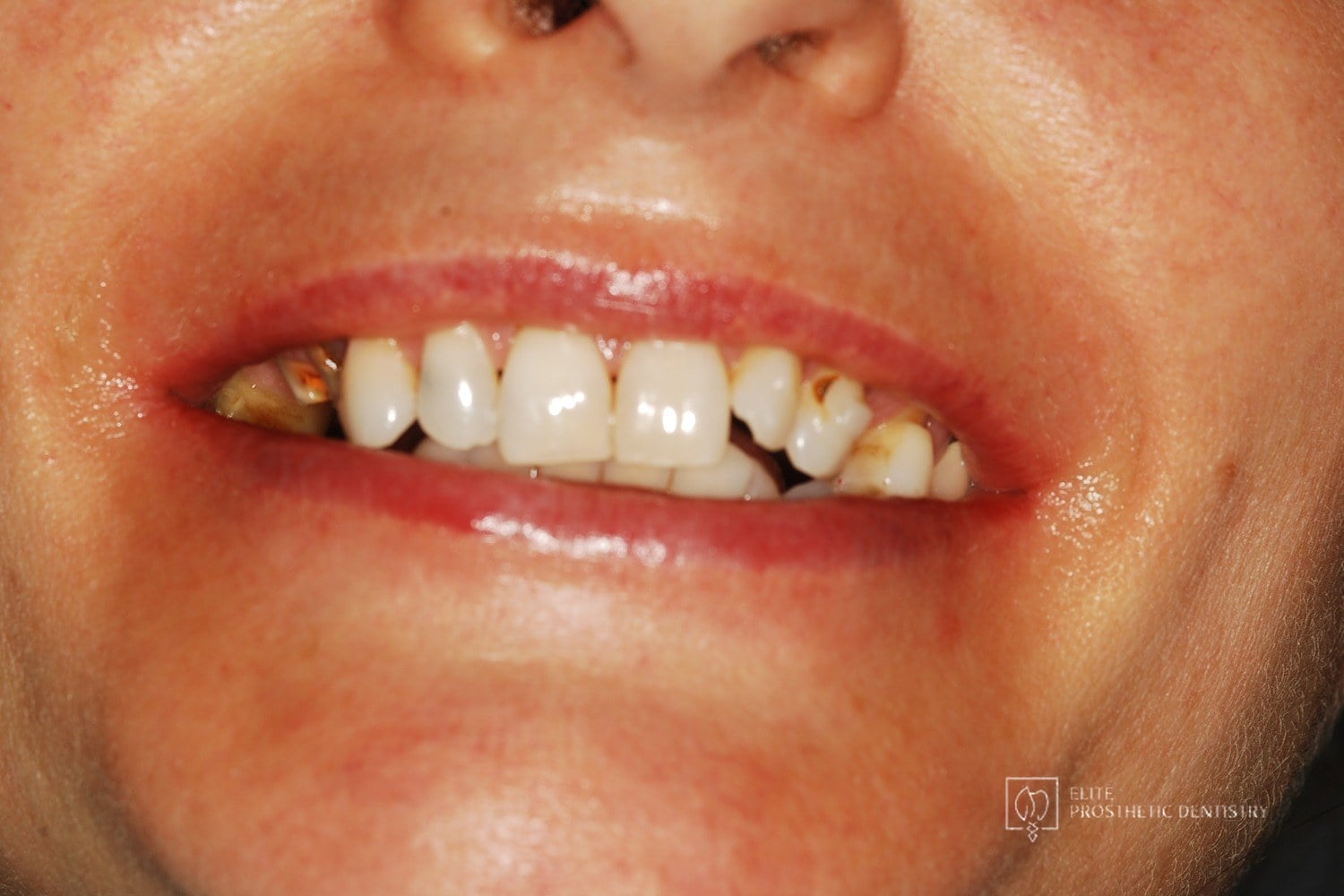 Before
  After
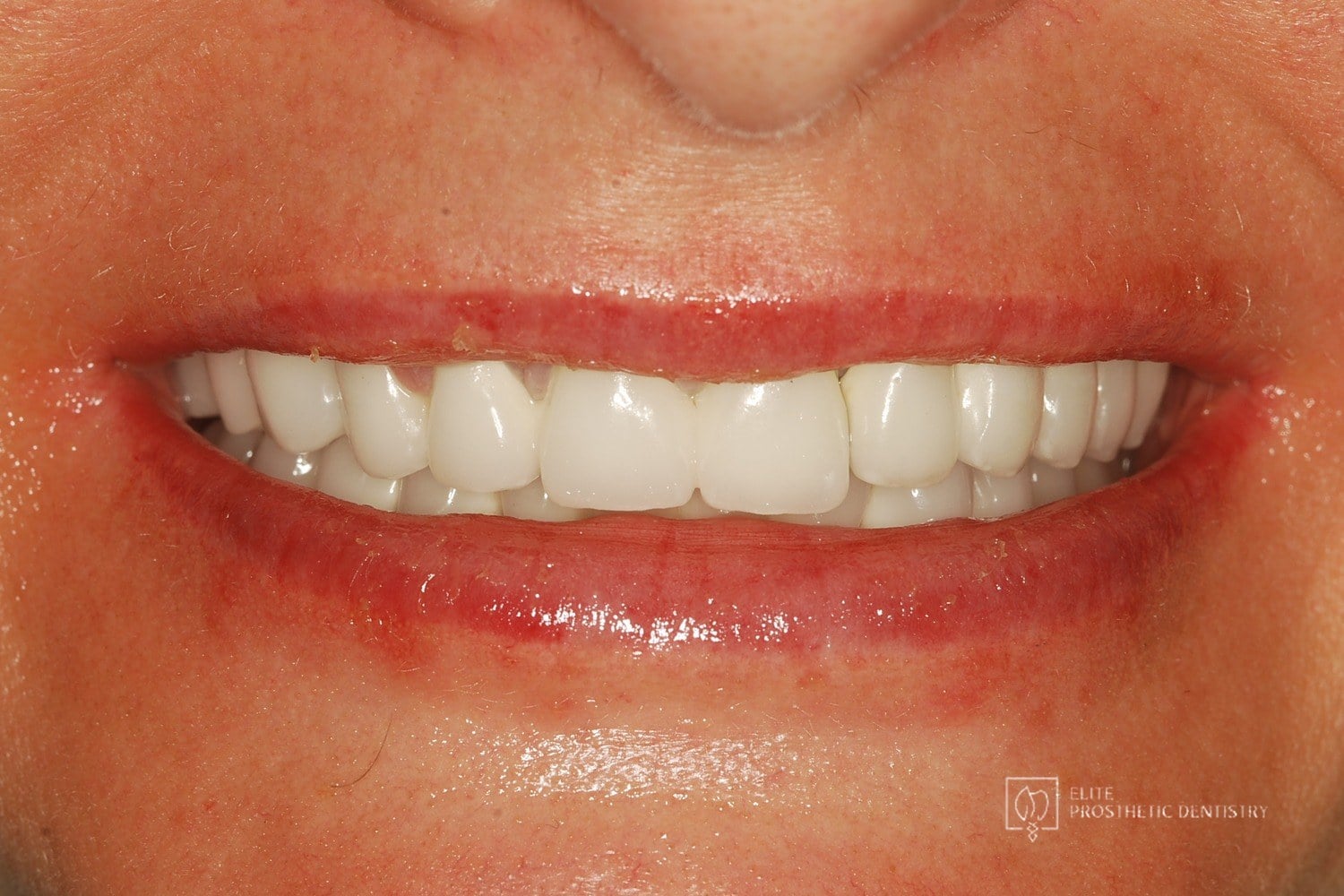
After How Aging, Failing Dentistry Was Replaced with a Coordinated Full-Mouth Implant and Crown Reconstruction
The patient presented with throbbing upper-molar pain, long-standing infections, multiple root canals and unfinished prior treatment, generalized sensitivity, and several hopeless teeth.
 Before
  After
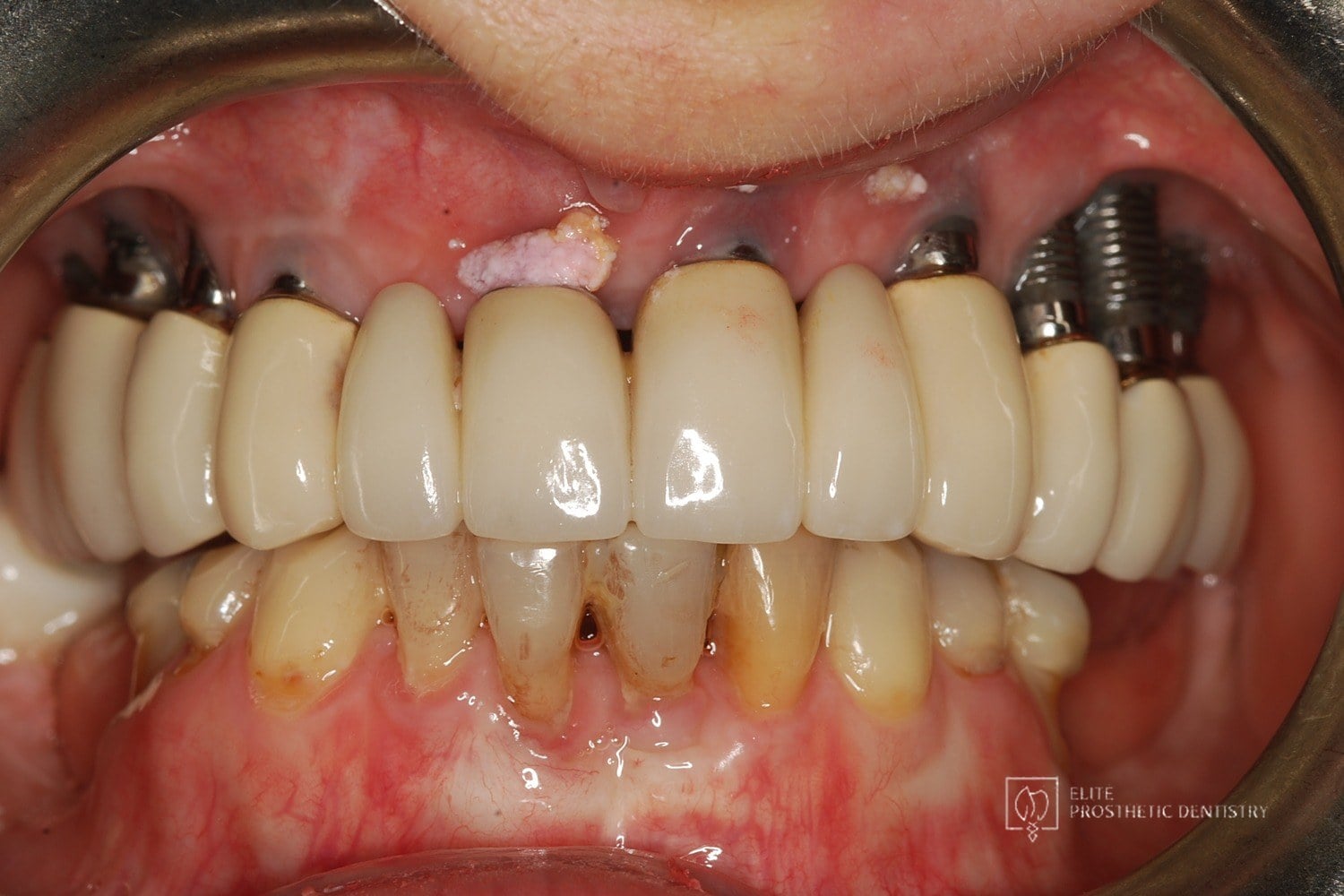
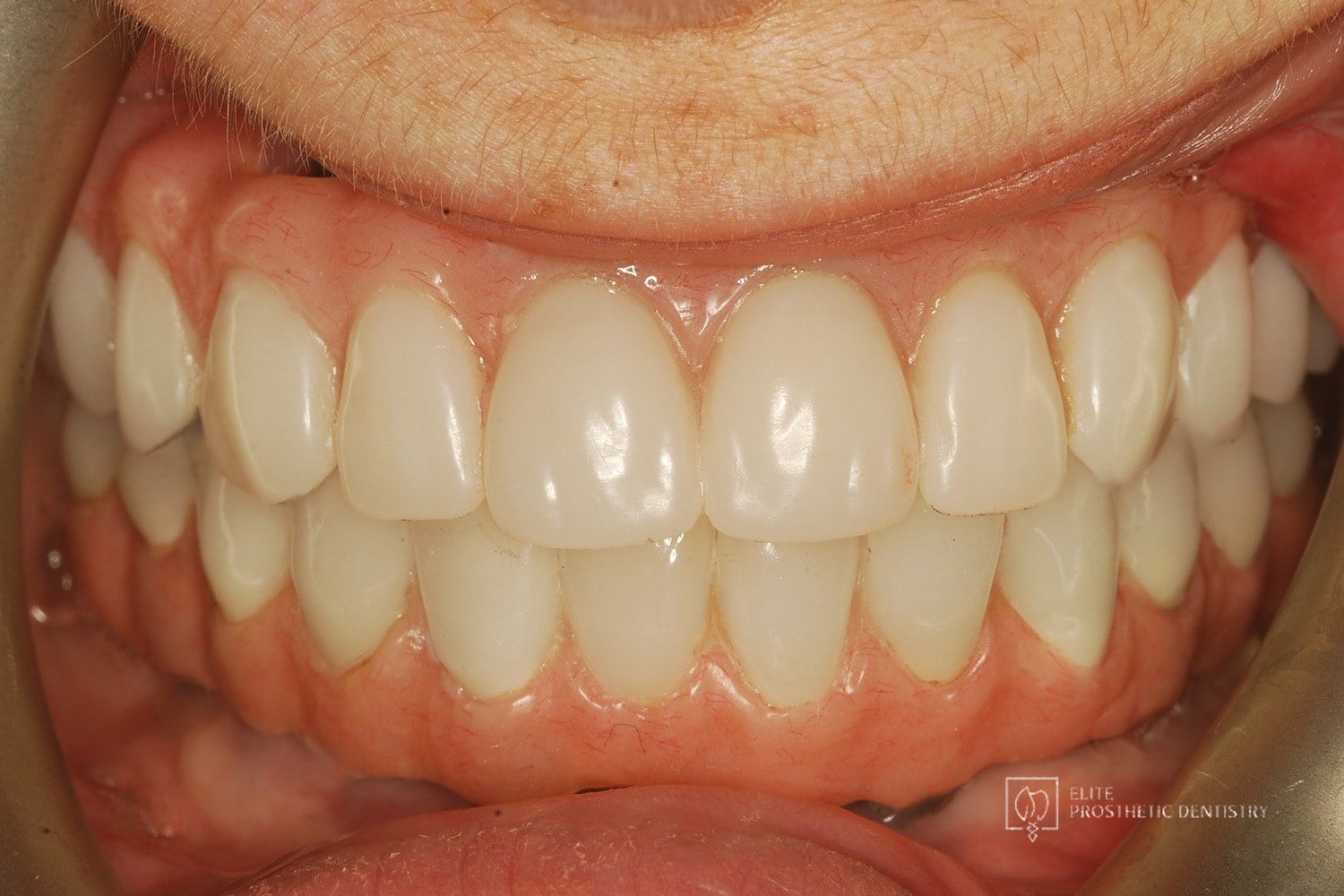
After How Failing Implants and Severe Bone Loss Were Rebuilt Into a Stable Full-Arch Implant Reconstruction
The patient presented with significant complications from previously placed implants, severe bone loss, failing posterior implants, and an unesthetic full-arch bridge. Both arches required full reconstruction, with the upper arch showing the most advanced bone loss and instability.
 Before
  After
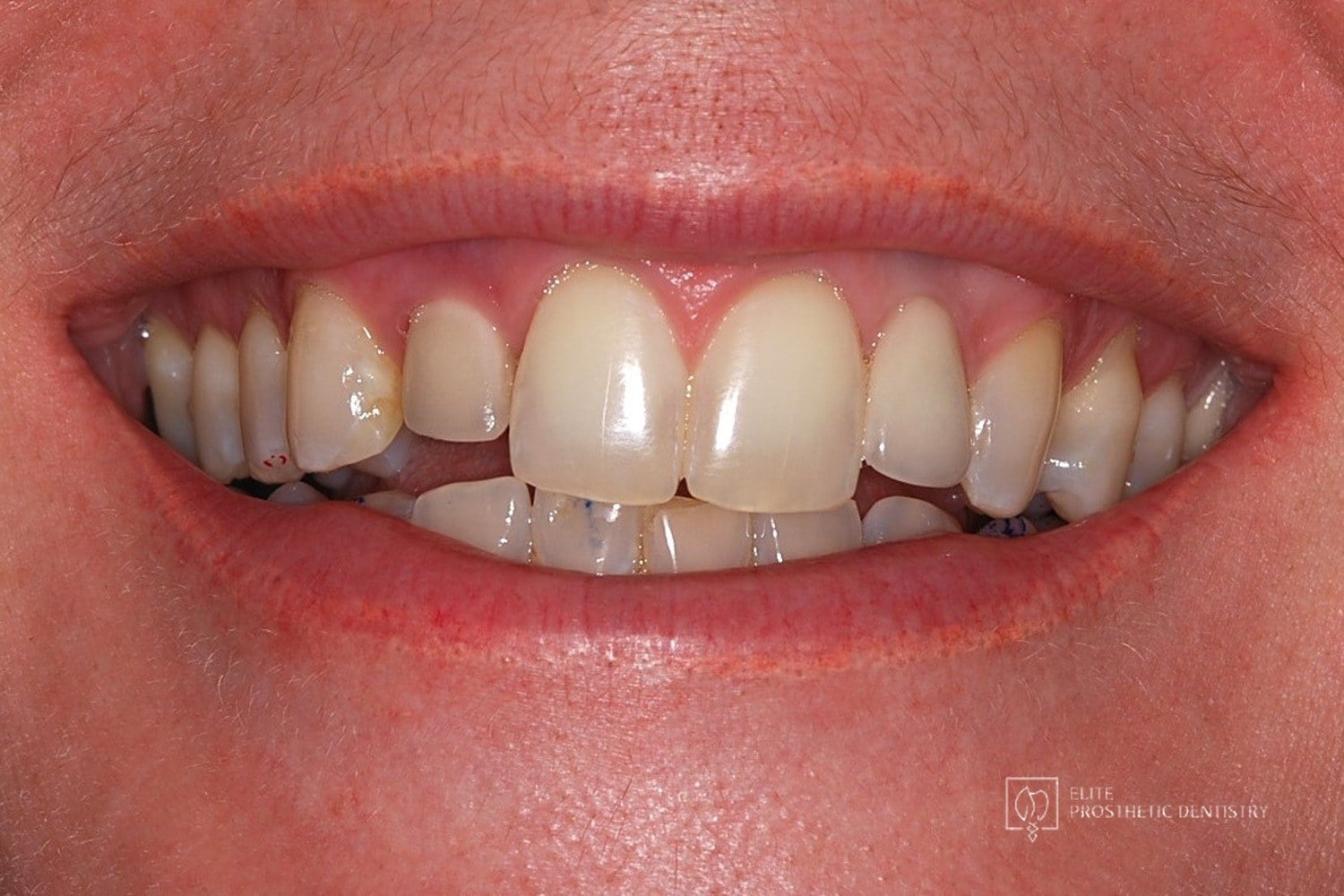
After How Failing Lateral Incisor Implants Were Replaced with Custom Zirconia Bridges After Severe Bone Loss Made Replacement Implants Impossible
Comprehensive examination including CBCT imaging revealed significant bone loss surrounding implants that were placed outside the buccal plate, most likely due to placement without a CBCT-generated surgical guide. The implants were determined non-salvageable, and the alveolar ridge was too narrow to support replacement implants without extensive reconstruction.