
Did Zoom Meetings Make You Unhappy with Your Smile?
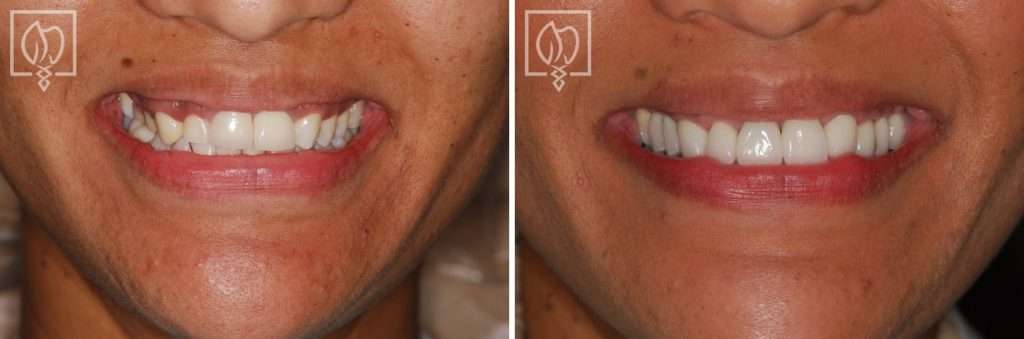
A completed smile makeover from our practice. See the full case
Video meetings are now a permanent fixture of professional life, and they carry a side effect nobody anticipated: hours spent looking at your own face while you talk. Zoom, Teams, Google Meet, the platform hardly matters. What matters is that no other form of human interaction, not phone calls, not in-person meetings, ever forced you to watch yourself speak. For many people, that constant self-view landed on one specific anxiety: their smile.
If years of video calls have made you dislike a smile you used to ignore, two things are true. The reaction is completely normal, and the underlying problem is fixable with modern cosmetic dentistry.
Why the Self-View Changes Everything
On a video call you are doing several things at once: holding a conversation, performing professionally, watching how you look in real time, and watching others watch you. That is a psychological load no earlier format imposed, and it is why so many people find video days uniquely draining.
Your face also appears at close range and in high definition. Imperfections that would never register across a conference table become unmissable on screen: a tooth darker than its neighbors, old crowns that no longer match, worn or uneven edges. And because you see your colleagues’ smiles in the same grid, the comparison runs constantly in the background.
Psychologists describe the underlying mechanism as self-monitoring taken to an extreme. The more attention you devote to how you appear, the less you have available for genuine engagement, and the more anxious the whole exercise becomes.
The Quiet Cost of Hiding
People who become self-conscious about their teeth on camera adapt in predictable ways: keeping the camera off, angling their face, restraining their expressions, smiling with closed lips. These strategies reduce the immediate discomfort, but they cost something real. Authentic expression builds trust and connection; a guarded, strained smile reads as distant even when nothing is wrong. Trying to communicate while simultaneously masking your face is exhausting, and it shows.
Which is why the better response to camera discomfort is not managing the symptom. It is solving the problem underneath it.
Naming the Actual Problem
“I hate my smile on camera” is a feeling. Treatment starts by converting it into specifics, and the usual suspects are a short list: discoloration that whitening can or cannot address, aging dental work that no longer matches, chipped or worn front teeth, a gummy smile, crowding, or missing teeth. Each of these has an established correction, and we walk through the full condition-by-condition list in our guide to treatable conditions that make people self-conscious about their smile.
At Elite Prosthetic Dentistry, that conversion from feeling to plan is the first appointment: a careful evaluation, digital photographs, and an honest conversation about what is realistic for your anatomy and goals. Some patients need a single procedure, such as professional whitening or porcelain veneers. Others, particularly those whose dental work has aged over decades, benefit from a coordinated smile makeover that updates everything at once, and our companion article on looking great on video calls maps which treatments address which on-camera concerns.
The restorations at the center of that work, veneers and crowns, are fabricated in our in-house laboratory, custom-matched to your natural color and translucency so the result looks authentically yours rather than artificially perfect. That distinction is exactly what a high-definition camera rewards.
One more reassurance for the camera-shy: you do not have to arrive with a solution in mind. Most patients cannot name exactly what bothers them about their on-screen smile, only that something does. Identifying the specific culprit is our job, not yours, and it is usually quicker than patients expect.
Better on Camera, Better Everywhere
Patients may arrive because of video meetings, but the benefit does not stay on screen. A smile you are genuinely proud of changes how you engage in person, in photographs, and in every first impression. The camera simply happened to be the mirror that finally made the decision feel worth it.
If the self-view has been bothering you for years, stop negotiating with it. Dr. Gerald Marlin, a specialty-trained prosthodontist with 40+ years of experience, will identify exactly what is undermining your smile and show you the realistic options. Call 202-244-2101 or request a consultation at Elite Prosthetic Dentistry in Friendship Heights, Washington, DC. We serve patients from DC, Bethesda, Arlington, Fairfax, and across the country.
See How We Resolve These Problems
Our patient success stories show real cases and real results. Browse outcomes from a specialist prosthodontist with decades of experience and 3,900+ implants placed.
Key Takeaways
- ✓ Video calls force you to watch yourself speak, an experience no other form of communication imposes, and it magnifies long-tolerated smile concerns.
- ✓ Psychologists call the effect excessive self-monitoring: the more you watch yourself, the harder it is to engage naturally.
- ✓ Camera avoidance, angled faces, and guarded smiles reduce the discomfort but quietly cost you professional presence.
- ✓ The smile concerns video calls surface, discoloration, old dental work, worn or missing teeth, are all correctable.
- ✓ The right response is not accepting the discomfort but solving the underlying problem, on camera and off.
Frequently Asked Questions
Why does my smile look worse on video calls?
It usually does not look worse; you are simply seeing it more. Video calls display your face at close range while you talk, laugh, and react, a view you never get in normal life. Small things you tolerated for years, a dark tooth, old crowns, worn edges, become impossible to ignore when they are on screen in every meeting.
Is it normal to feel self-conscious seeing yourself on camera?
Completely. Watching yourself while performing professionally creates a self-monitoring burden that phone calls and in-person meetings never imposed. For people with existing smile concerns, that constant feedback loop amplifies self-consciousness and can lead to camera avoidance or a guarded, unnatural expression.
What can be done about a smile I dislike on camera?
First, identify what actually bothers you: color, shape, old restorations, gum display, or missing teeth. Each has an established correction, from professional whitening to porcelain veneers, custom crowns, gum recontouring, or implants. An evaluation with a prosthodontist turns a vague dislike into a specific, solvable list.
Is fixing my smile for video calls a vain reason to see a dentist?
No. Video calls are simply how many people finally see their smile as others do. The concerns they surface are real, often include function as well as appearance, especially with worn or aging dental work, and correcting them pays off in every context, not just on screen.
Related Patient Success Stories
Explore similar patient success stories demonstrating our expertise in advanced prosthetic dentistry.
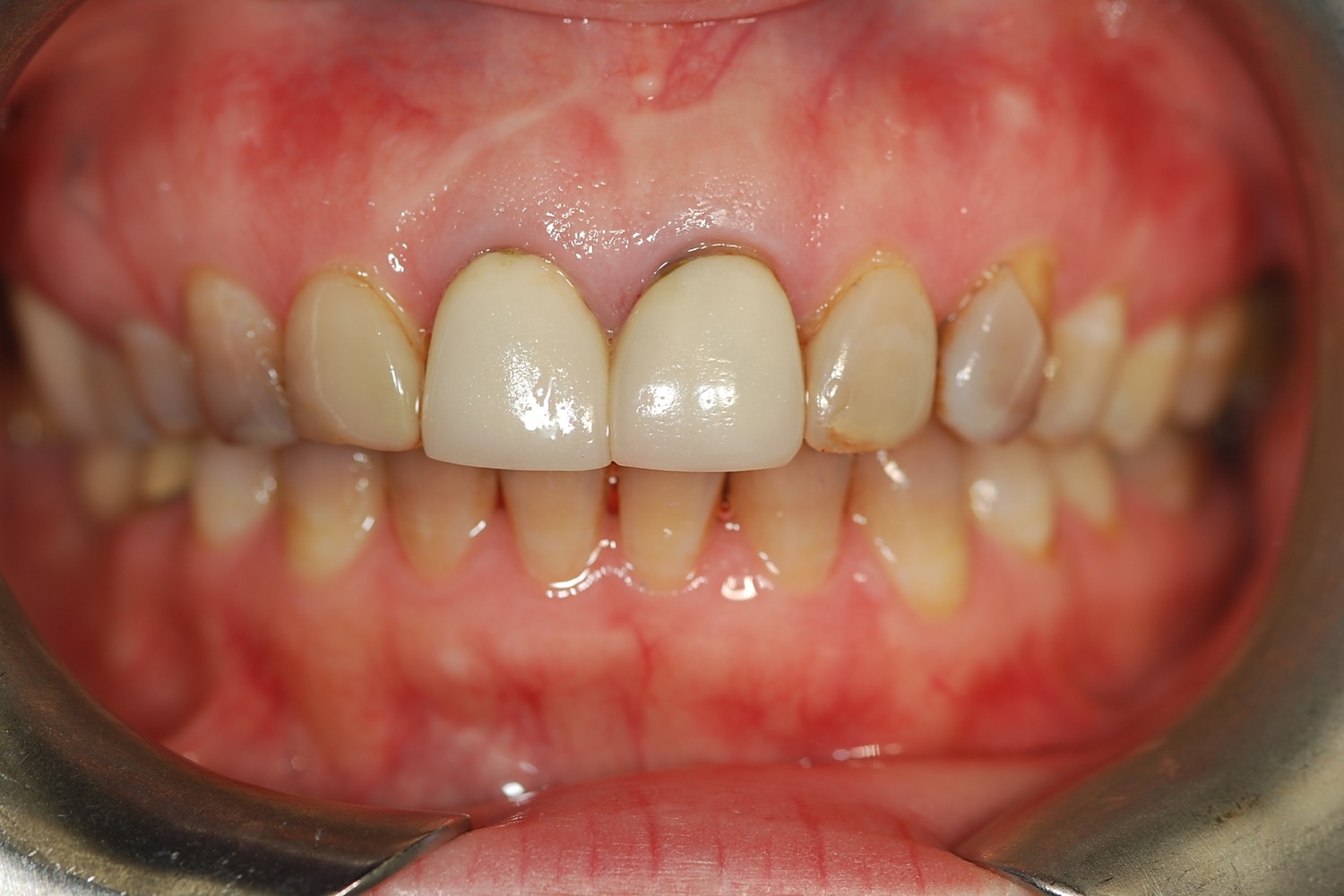 Before
 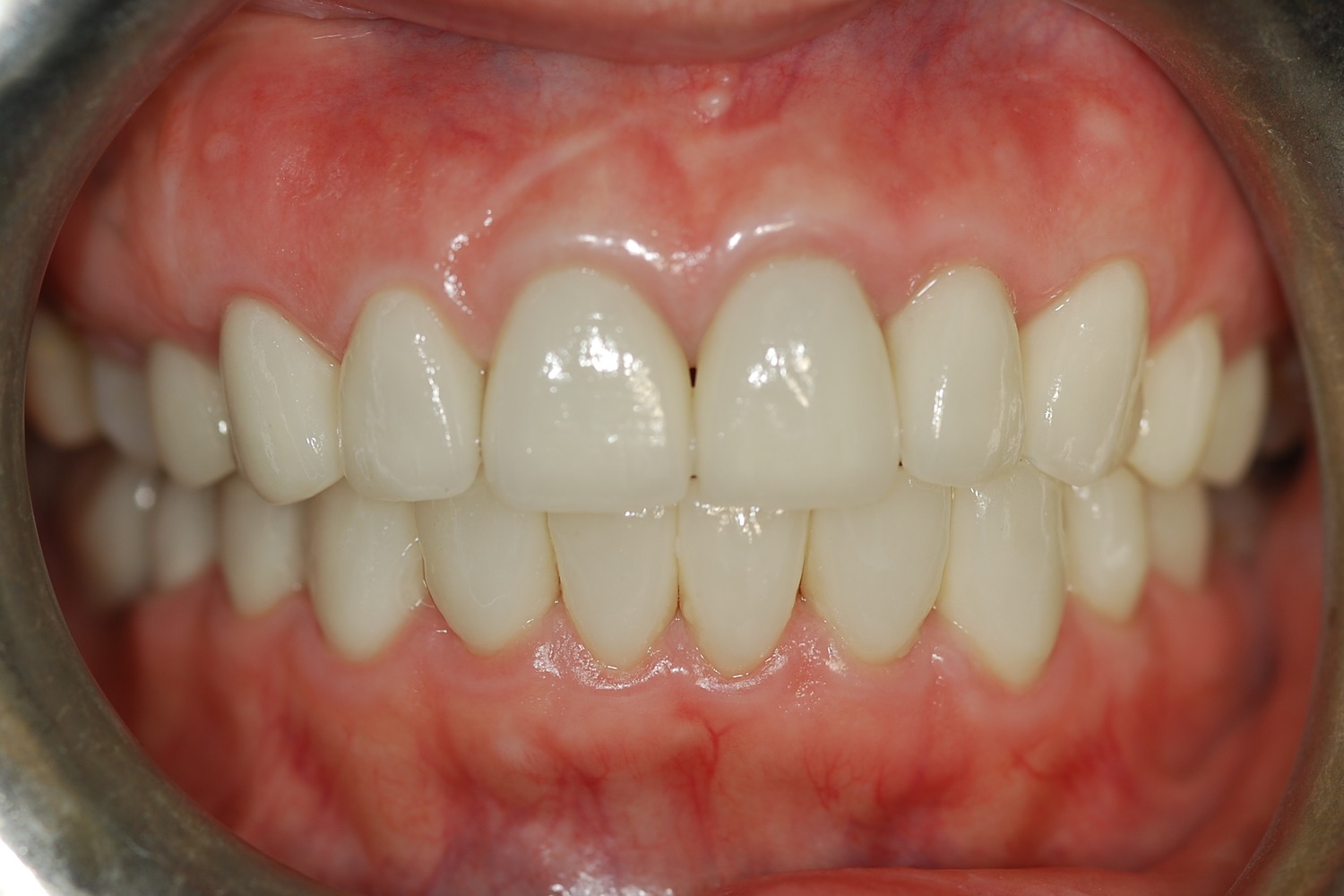 After
After How Aging, Opaque Restorations Were Replaced with Customized Ceramic Restorations Designed for Long-Term Natural Esthetics
The existing restorations appeared opaque, worn, and unnatural over time, affecting both confidence and overall smile harmony.

Temporary Crowns Restore a Patient's Smile in One Day with an Immediate Smile Makeover
A patient from Potomac, Maryland came to the practice in pain from a failing dental implant whose restoration was also compromising her appearance and her confidence.
Multi-Faceted Treatment for a Patient Unhappy With the Appearance of Her Crowns, Teeth, and Gums
The patient was unhappy with how her teeth and gums affected her smile: front-tooth crowns that no longer blended with her natural teeth, a missing lateral incisor with the larger canine sitting in its space, and an uneven gum line.
Related Articles
Deepen your knowledge with additional insights on this topic.
 Cosmetic Dentistry
 Can My Tetracycline-Stained Teeth Be Made to Look Beautiful?
Tetracycline staining sits deep inside the tooth, so bleaching cannot fix it. See how translucent porcelain crowns create a bright, natural smile instead.
 Cosmetic Dentistry
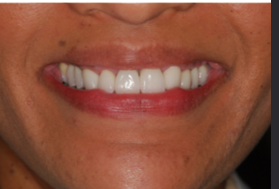
 How Is a Gummy Smile Fixed?
From gum reshaping to custom crowns, a DC prosthodontist explains how a gummy smile is fixed, with a real patient transformation and healing timeline.
 Cosmetic Dentistry
 Discovering Cosmetic Dentistry Beyond Aesthetics
Cosmetic dentistry improves more than looks: easier hygiene, restored chewing function, and better long-term oral health. A DC prosthodontist explains.