
Restoring a Smile After Complete Bone Loss Up to the Floor of the Nose
Documented before and after
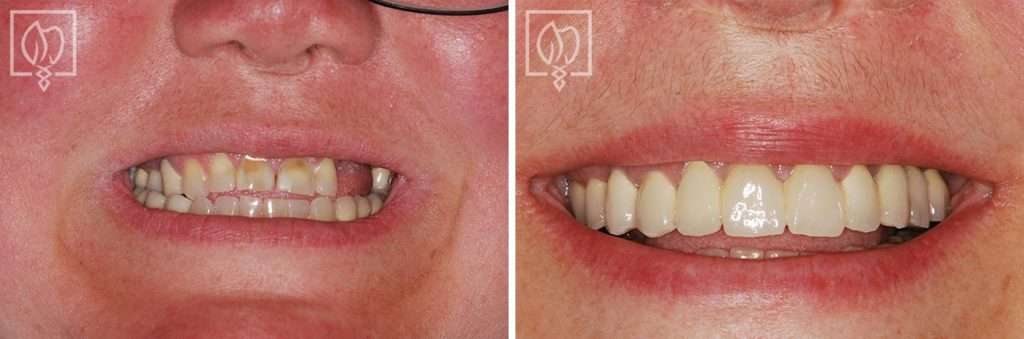
Final documented view
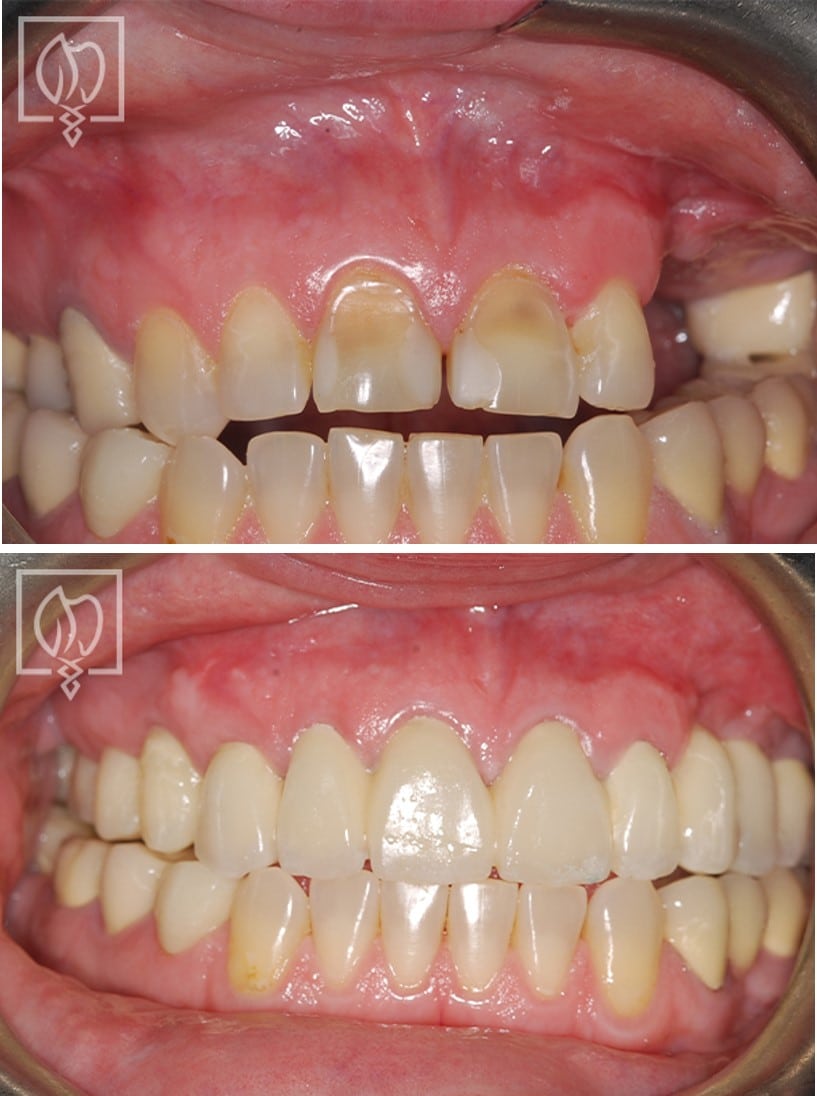
Rebuilding a smile after complete bone loss up to the floor of the nose
Restoring teeth after severe bone loss in Washington, DC. This documented case at Elite Prosthetic Dentistry rebuilt the upper left smile of a patient who had lost the bone in that region all the way up to the floor of her nose, one of the most challenging situations a restorative specialist can face. Treatment was planned and completed by Dr. Gerald Marlin, D.M.D., M.S.D., a prosthodontist focused on implant reconstruction and complex restorative care.
Case at a Glance
- Treatment
- Two precisely positioned dental implants with custom crowns after severe anterior bone loss
- Approach
- Careful surgical planning within the remaining bone, a coordinated surgical team, and comprehensive restoration
- Case Type
- Implant reconstruction
- Patient Concern
- The patient had lost essentially all of the bone in the upper left front region, was missing several teeth nearby, had a non-functional bite, and discolored, uneven remaining teeth.
- Decision Point
- Undergo a complex, multi-stage bone-grafting sequence extending over several years, or plan two implants placed precisely within the limited bone that remained, using detailed surgical mapping.
- Outcome
- The two implants integrated successfully, restoring a functional bite, bright and evenly aligned teeth in place of discoloration and unevenness, complete function, and a very good long-term prognosis.
- Why It Matters
- This case shows that the final tooth position is not negotiable; it is set by function and appearance, and everything else, including where implants can be anchored, is planned backward from that endpoint.
The presenting condition
The patient came to the practice from Bethesda, Maryland, facing one of the most difficult situations that can confront a prosthodontist. The bone in her upper left anterior region had been lost completely, extending all the way up to the floor of her nose. The loss followed the surgical extraction of an impacted upper left canine (#11). When a tooth is impacted, meaning it has failed to erupt normally through the gums, its removal can cost significant supporting bone, and in the years after the extraction the area continued to resorb until the anatomy of the region had been fundamentally altered.
The bone defect was only part of the picture. The patient was missing multiple teeth adjacent to the defect, and several of her remaining teeth were broken down and severely compromised. Her bite was non-functional, which meant she could not bite or chew properly. Her teeth were discolored and uneven, and the loss of dental support and structure had begun to affect her facial appearance. This was not a situation that conventional crowns and bridges could adequately solve.
Clinical Findings
- →Complete loss of bone in the upper left anterior region, extending to the floor of the nose
- →Bone loss following the surgical extraction of an impacted upper left canine (#11)
- →Multiple missing teeth adjacent to the surgical defect
- →Several remaining teeth broken down and severely compromised
- →A non-functional bite that prevented proper biting and chewing
- →Discolored, uneven teeth and compromised facial support
Why this case required prosthodontic-level planning
Dental implants depend on bone. An implant is an anchor, and like any anchor it holds only as well as the material around it. In this case, the area where the new teeth needed to stand had virtually no bone remaining, which is precisely the situation in which implant treatment fails when it is attempted casually. For many patients presenting this way, a prosthodontist might recommend a complex, multi-stage surgical and restorative sequence extending over several years.
The deeper issue is one of planning direction. The position of the final teeth is not negotiable; they must sit where function and appearance require them to sit. Everything else, including where and how implants can be anchored, has to be worked out backward from that endpoint. Treating the bone defect, the missing teeth, the broken-down teeth, and the failed bite as separate projects would have produced piecemeal results on a foundation that could not support them. Planning them as one connected case is what made a coordinated path to a stable result possible.
The decision behind the result: working precisely within the bone that remained
The pivotal judgment in this case was how to anchor an entire restoration in a region with almost nothing left to anchor to. Elite Prosthetic Dentistry developed a plan for two carefully positioned dental implants that would need to be inserted within this extremely limited surgical space. Using precision implant placement technology, each implant position was mapped to make maximum use of the constricted space and bone anatomy that remained.
The two implants were not planned as isolated tooth replacements. They were positioned as strategic anchors for comprehensive restorations that would replace the missing teeth and rebuild the bite, restoring both function and appearance from the same foundation. Working with a coordinated surgical team, Dr. Marlin placed both implants in the planned positions, oriented to maximize success and longevity despite the challenging anatomy.
The treatment plan
-
1
Comprehensive prosthodontic evaluation
A full assessment of the bone defect, the missing and compromised teeth, and the failed bite, establishing what the final restoration needed to achieve before any surgical step was planned.
-
2
Precision planning of two implant positions
Two implant positions were mapped within the severely constricted space using precision implant placement technology, making deliberate use of the limited bone that remained.
-
3
Coordinated surgical placement
Working with a coordinated surgical team, Dr. Marlin placed the two implants in their planned positions, oriented for maximum stability and longevity.
-
4
Integration period
The implants were given time to integrate fully with the remaining bone before any final restoration was attached.
-
5
Custom crowns and comprehensive restoration
Custom crowns were fabricated and cemented to the implant abutments, restoring the missing teeth and rebuilding a natural, functional bite.
The outcome
After the implants integrated and the restorative phase was completed, the patient had a new smile with complete function and a very good long-term prognosis. The comprehensive restoration addressed her dental problems together rather than one at a time. Her bite now works, so she can bite and chew properly. Her teeth are no longer discolored and uneven; they are bright and evenly aligned. The custom crowns were fabricated in coordination with the practice’s in-house laboratory, keeping fit, contour, and shade under Dr. Marlin’s direct control from design through delivery.
The change restored more than anatomy. Her appearance, her confidence, and her ability to function normally came back with it.
Result Highlights
- ✓Two implants successfully anchored within a severely limited surgical space
- ✓Complete function restored with a very good long-term prognosis
- ✓A functional bite: the patient can bite and chew properly again
- ✓Bright, evenly aligned teeth replacing a discolored, uneven appearance
- ✓All of the presenting problems addressed in one comprehensive plan
Who this case may sound familiar to
This story tends to resonate with patients in a few recognizable situations:
- You have been told you do not have enough bone for dental implants.
- You lost bone after a difficult extraction years ago and the area has never been properly restored.
- You are missing several teeth, and the ones that remain are worn, broken down, or discolored.
- Your bite no longer works the way it should, and it is starting to show in your face.
- You want the situation evaluated thoroughly and corrected once, by someone who plans for the long term.
If any of those describe where you are, a consultation with Dr. Marlin can establish the diagnostic picture and the specific options for your case.
Frequently asked questions
Can dental implants be placed after severe bone loss in the front of the upper jaw?
Often yes, but the margin for error shrinks considerably. The answer depends on how much bone remains, where it sits, and whether implants can be positioned within it to support the final teeth. Some situations call for grafting first. In others, careful planning allows implants to be placed precisely within the remaining anatomy, which is the approach documented in this case.
Why does removing an impacted tooth sometimes lead to bone loss?
An impacted tooth sits within the bone rather than erupting through it, so removing one can disturb a larger volume of supporting bone than a routine extraction. The area can then continue to resorb over the following years, because bone that no longer supports a tooth gradually remodels away.
What happens when conventional crowns and bridges are not enough?
Crowns and bridges need sound teeth to anchor to. When multiple adjacent teeth are missing and the remaining teeth are compromised, there may be nothing reliable to build on. Strategically placed dental implants can provide the anchorage the natural teeth can no longer offer, supporting restorations that rebuild both function and appearance.
Why is a prosthodontist the right specialist for a severely resorbed site?
Because the problem is not just placing an implant. It is planning the final teeth first and then determining whether the remaining anatomy can support them. A prosthodontist plans from the endpoint backward, coordinating surgical positioning, bite function, and esthetics as one connected system.
How long does treatment like this take?
It varies with the anatomy and the plan. Implants must integrate with the bone before final restorations are attached, and complex cases are sequenced deliberately rather than rushed. A consultation establishes a realistic timeline for a specific situation.
More about the work behind this case
This case sits at the intersection of dental implant reconstruction and full mouth reconstruction, carried out with the diagnostic depth and in-house laboratory control that are part of the practice philosophy behind complex restorative work.
Elite Prosthetic Dentistry treats patients from across the DMV including Bethesda, Chevy Chase, McLean, Arlington, Potomac, and Great Falls, with a record of out-of-area patients traveling to the practice for complex restorative care.
Related Services
Related Patient Success Stories
Explore similar patient success stories demonstrating our expertise in advanced prosthetic dentistry.
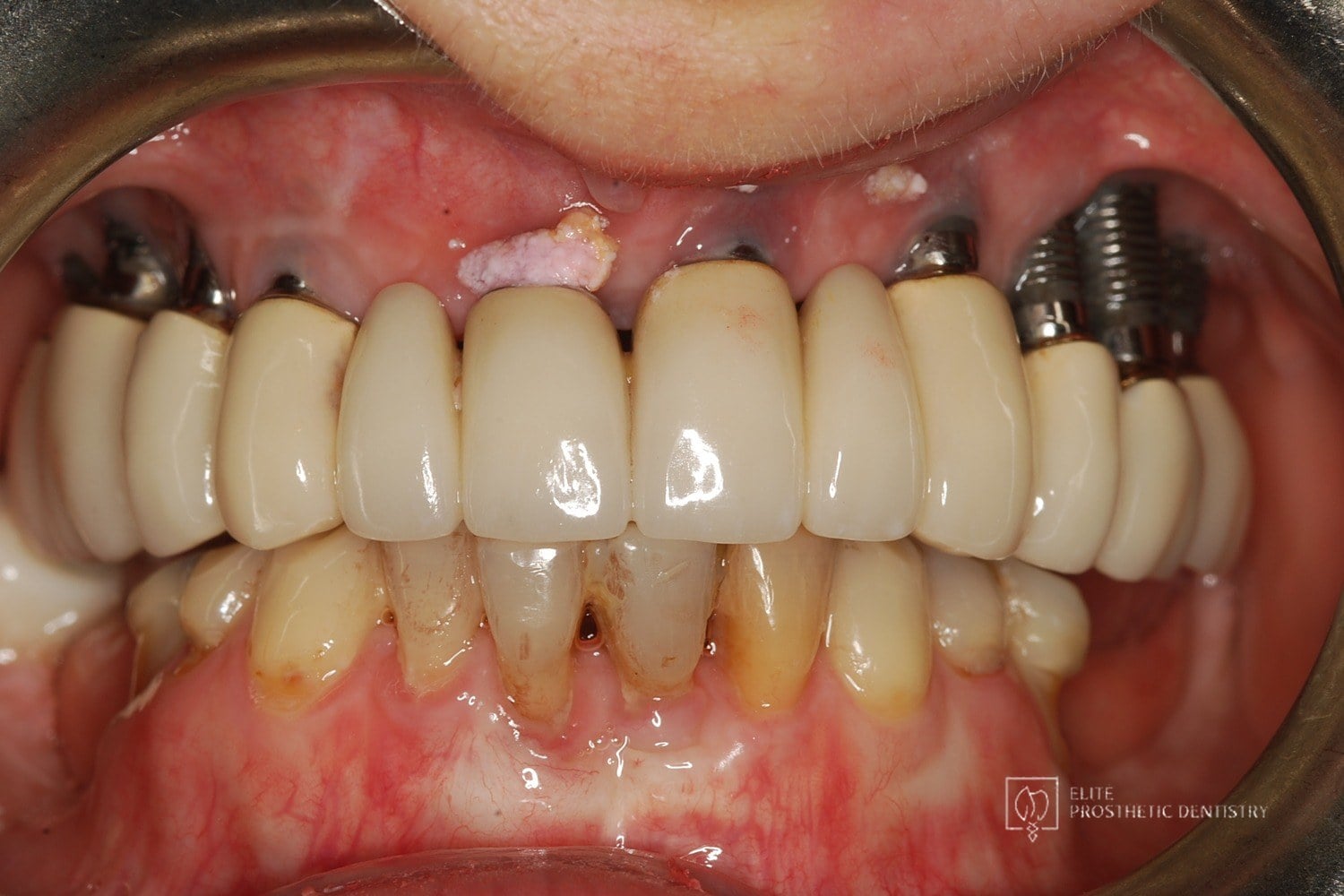
 Before
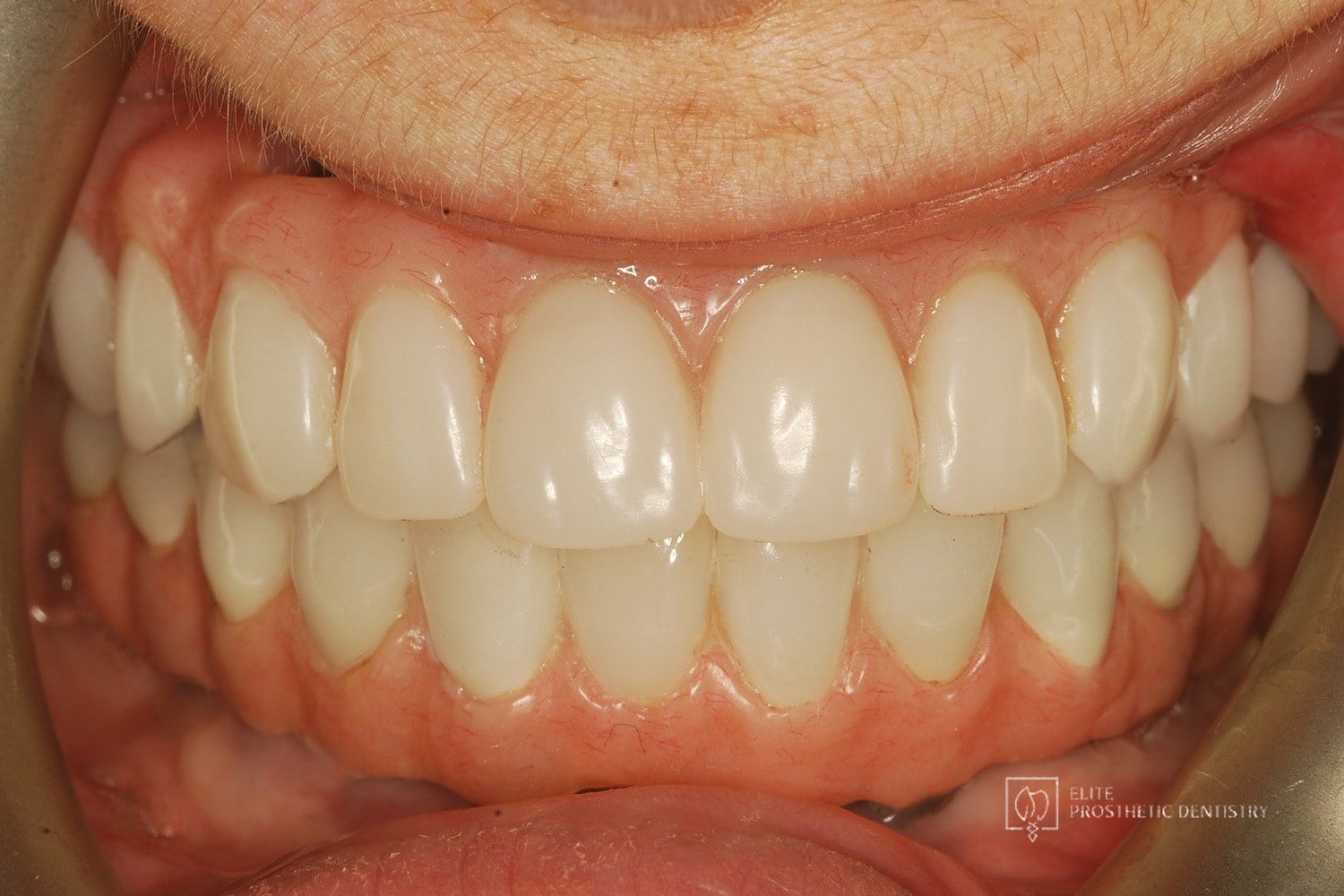
  After
After How Aging, Failing Dentistry Was Replaced with a Coordinated Full-Mouth Implant and Crown Reconstruction
The patient presented with throbbing upper-molar pain, long-standing infections, multiple root canals and unfinished prior treatment, generalized sensitivity, and several hopeless teeth.
 Before
  After
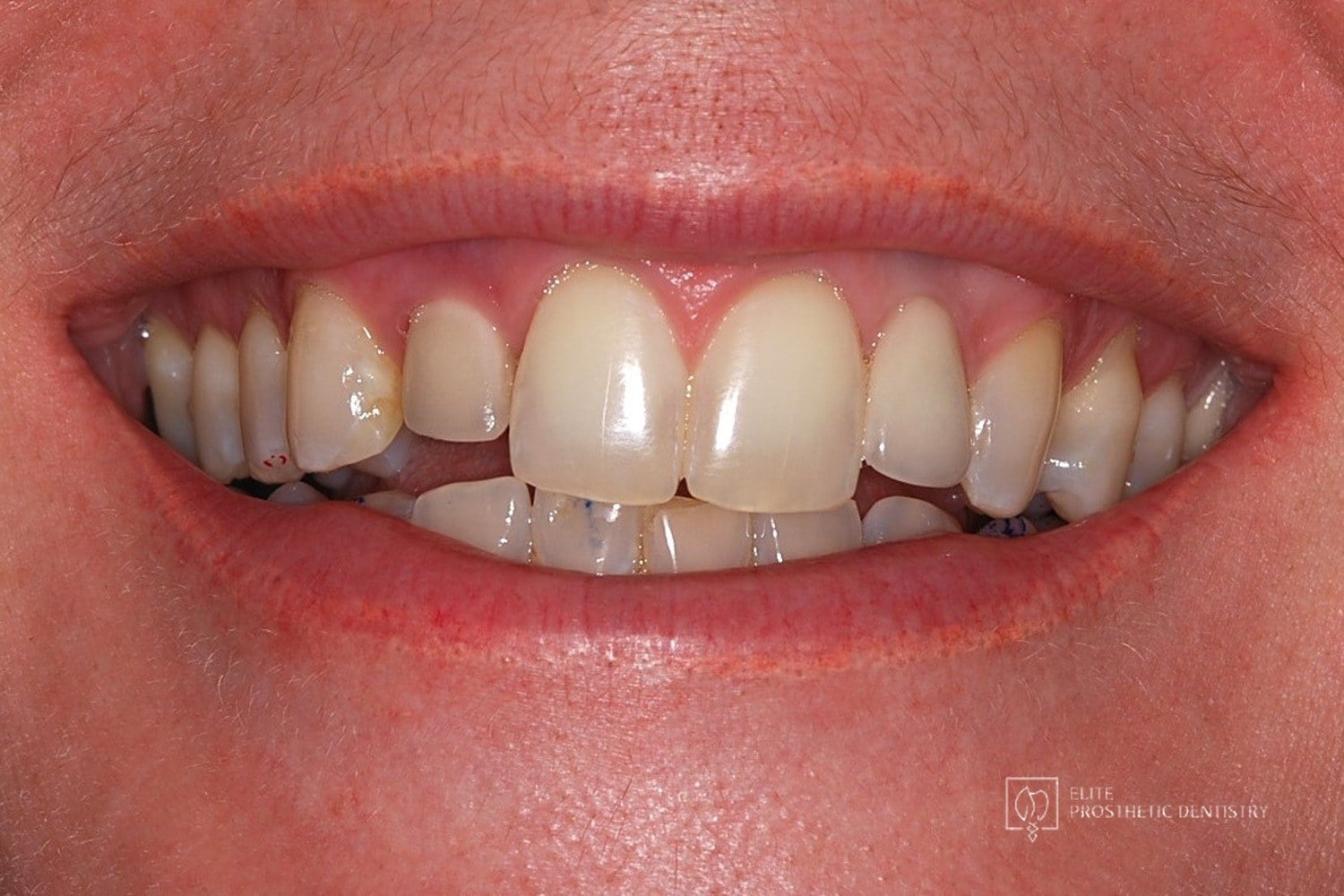
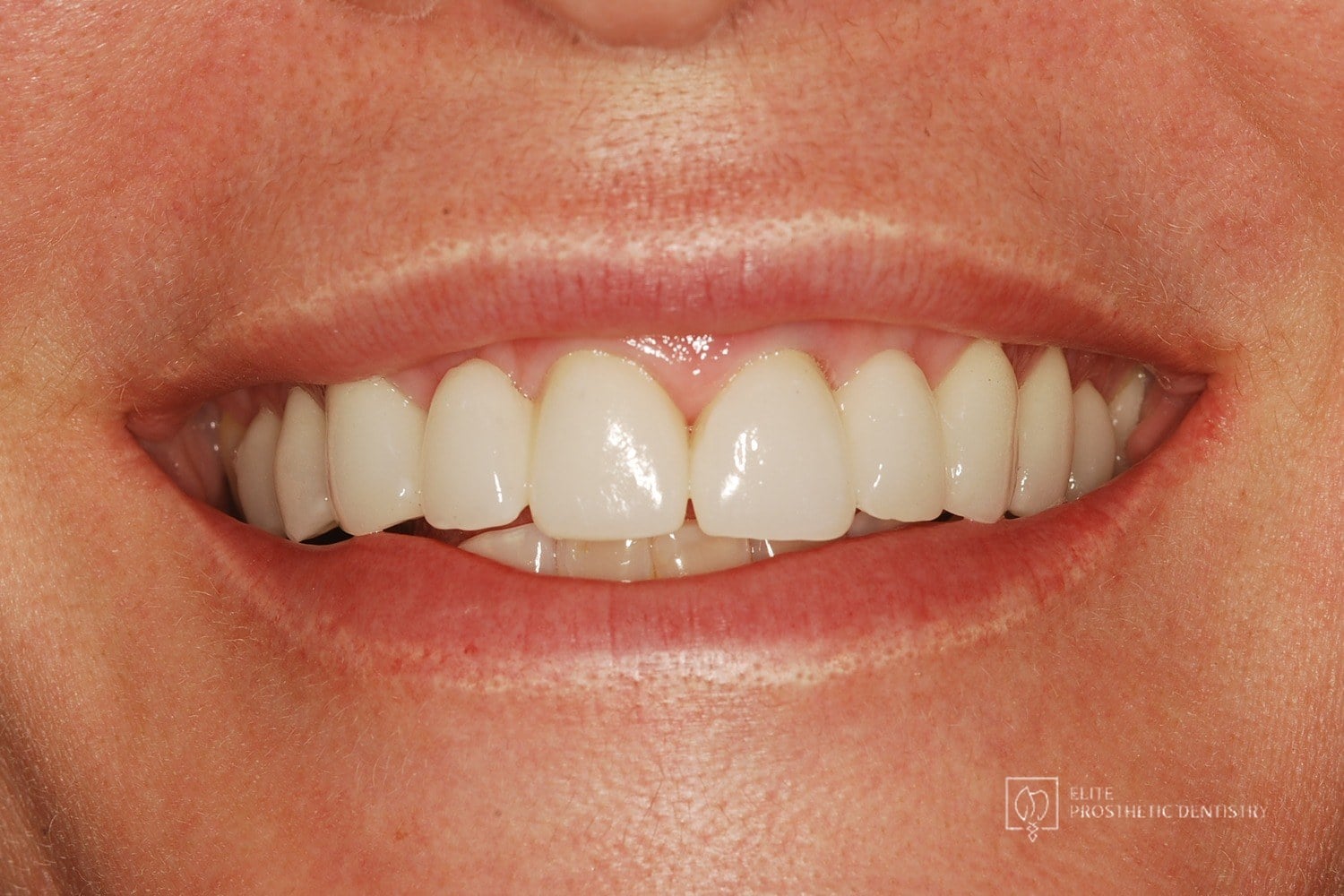
After How Failing Implants and Severe Bone Loss Were Rebuilt Into a Stable Full-Arch Implant Reconstruction
The patient presented with significant complications from previously placed implants, severe bone loss, failing posterior implants, and an unesthetic full-arch bridge. Both arches required full reconstruction, with the upper arch showing the most advanced bone loss and instability.
 Before
  After
After How Failing Lateral Incisor Implants Were Replaced with Custom Zirconia Bridges After Severe Bone Loss Made Replacement Implants Impossible
Comprehensive examination including CBCT imaging revealed significant bone loss surrounding implants that were placed outside the buccal plate, most likely due to placement without a CBCT-generated surgical guide. The implants were determined non-salvageable, and the alveolar ridge was too narrow to support replacement implants without extensive reconstruction.