
What Is a Smile Makeover and What Should You Expect in Foxhall
Smile makeover definition, components, and expectations in Foxhall, DC. Comprehensive approach with Dr. Gerald Marlin, prosthodontist.
A smile makeover represents a comprehensive approach to esthetic and functional smile improvement that addresses multiple concerns simultaneously through a unified treatment plan. Foxhall patients considering smile makeover treatment benefit from understanding what the term encompasses and what to expect throughout the process.
Defining a Smile Makeover
A smile makeover is not simply multiple treatments performed on the same patient. Rather, it is a coordinated, integrated treatment plan where each component contributes to a unified esthetic vision. The treatments are designed to work together harmoniously, creating results that exceed what individual isolated treatments could accomplish.
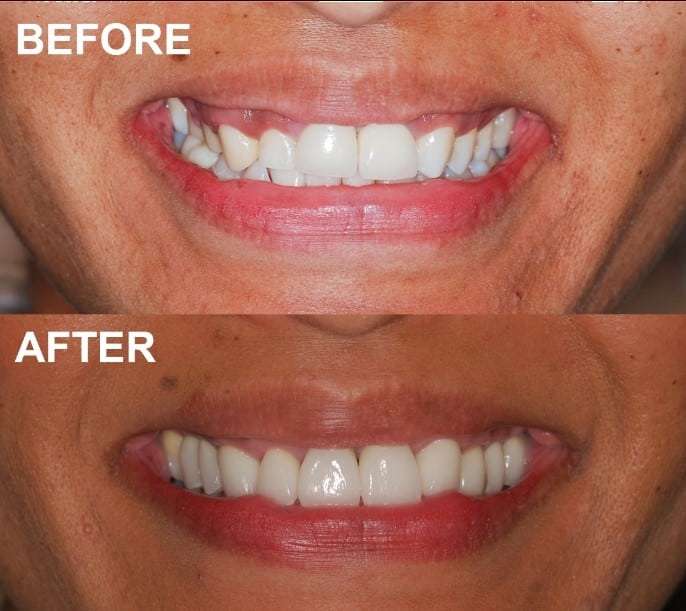
A patient might receive veneers on upper front teeth to address color and shape, crowns on upper back teeth to strengthen previously treated teeth and integrate them into the smile design, whitening to brighten natural teeth, and gum contouring to optimize gum line architecture. Each treatment is individually appropriate, but their combined effect creates comprehensive smile transformation.
Components of a Smile Makeover
Professional Whitening
Many smile makeovers begin with professional whitening to brighten natural teeth. This baseline whitening establishes the lighter shade that veneers and crowns will be designed to match. Professional whitening produces faster, more meaningful outcomes than at-home systems and provides better shade control.
Professional whitening often occurs during the planning phase, before restorations are fabricated, so restorations can be precisely shaded to match the newly whitened natural teeth.
Porcelain Veneers
Veneers address color, shape, alignment, and esthetic concerns on upper front teeth visible during smiling and speaking. Upper veneers typically include the central incisors, lateral incisors, and canines, sometimes extending to first premolars.
Veneers preserve maximum tooth structure while enabling dramatic esthetic improvement. They can correct discoloration, close gaps, improve alignment, and enhance tooth shape and proportion.
Crowns on Back Teeth
Back teeth frequently have existing restorations that are dated, dark, or functionally compromised. Crowns on upper first and second molars integrate these back teeth into the smile design. Crowns on these teeth are not visible during most social or professional interactions, so esthetic demands are less critical than on front teeth.
However, back tooth crowns are functionally important because they restore strength to teeth that bear significant biting force. Crowns ensure these teeth can function properly for decades.
Crowns on Front Teeth
Upper canines or first premolars sometimes receive crowns if significant damage, large fillings, or root canal treatment makes them unsuitable for veneers. Crowns on these more visible teeth must be carefully designed for esthetic integration with adjacent veneers.
Composite Bonding
Composite bonding may be used on lower front teeth to improve their appearance or close small gaps. Bonding provides conservative treatment of lower teeth without the cost of veneers or crowns.
Gum Contouring
Some patients benefit from gum contouring where excess gum tissue is carefully removed to improve the tooth-to-gum proportion and reveal more tooth structure. Gum contouring is performed using soft tissue lasers or scalpel techniques.
Gum contouring can dramatically improve smile esthetics in cases where excessive gum tissue diminishes the visibility of teeth.
Bite Adjustment and Occlusal Therapy
A comprehensive makeover evaluates and optimizes bite relationships. Teeth that are slightly misaligned or show uneven contact can be adjusted through careful veneer or crown contouring.
Some patients benefit from night guard fabrication if grinding habits are identified. The night guard protects restorations from grinding forces and ensures long-term durability.
Planning and Design Process
The makeover planning process begins with comprehensive consultation where the dentist evaluates the patient’s starting situation, discusses esthetic goals, and explains what comprehensive improvement could involve.
Digital smile design software allows the dentist to design multiple smile options, showing the patient different tooth shapes, sizes, and colors overlaid on their face. The patient sees realistic mockups before any treatment begins, helping them visualize the outcome and request adjustments.
This detailed planning phase ensures that the patient understands what is proposed and agrees with the design before any treatment begins.
Treatment Sequence
Treatment sequence varies depending on the specific case. Some makeovers begin with whitening and veneer placement on upper front teeth, followed by back tooth crown placement. Others may require orthodontic movement before restorative treatment begins.
The dentist explains the proposed sequence and the rationale for the specific order recommended. Understanding the treatment plan helps patients prepare mentally and logistically for the treatment process.
Cost and Timeline Considerations
A comprehensive smile makeover typically costs more than single-treatment options because multiple restorations are involved. The cost depends on the number of restorations, material selection, and case complexity.
The timeline typically extends over 4 to 8 weeks from initial consultation through final placement. Some accelerated cases complete more quickly; complex cases may extend longer.
The dentist provides detailed cost estimates and timeline information after evaluation so patients understand their investment and can plan accordingly.
Long-Term Success and Maintenance
Smile makeover success depends on excellent fabrication quality, precise placement technique, patient compliance with care instructions, and consistent long-term maintenance. Regular dental visits every six months allow monitoring of restorations and early detection of any issues.
Patients are instructed in protective measures such as night guard use if grinding is present, avoiding hard foods that might damage restorations, and maintaining excellent oral hygiene.
With proper care, comprehensive smile makeover restorations should last 15 to 20 years or longer, providing decades of enhanced appearance and confidence.
Is a Smile Makeover Right for You?
Smile makeover candidates are patients with multiple esthetic or functional concerns, realistic expectations about outcomes, and commitment to long-term maintenance. Candidates recognize that comprehensive improvement offers results superior to single isolated treatments.
Foxhall patients wondering whether a smile makeover might be appropriate for their situation should schedule a consultation with Dr. Marlin. He will evaluate their starting situation, discuss their goals, and explain what comprehensive improvement could accomplish.
Elite Prosthetic Dentistry 4400 Jenifer Street NW, Suite 220 Washington, DC 20015 (202) 244-2101 Request a Consultation
For related care, see our porcelain veneers page.
Frequently Asked Questions
What is the difference between a smile makeover and traditional cosmetic dentistry?
Traditional cosmetic dentistry addresses single concerns: veneers for color, crowns for damage, whitening for staining. A smile makeover is a comprehensive plan addressing multiple esthetic and functional concerns simultaneously. Every treatment component is coordinated in a unified design to achieve optimal overall results.
How is the makeover plan designed?
The makeover plan begins with detailed consultation and digital smile design using specialized software. The dentist designs the ideal smile considering facial proportions, skin tone, age, personality, and professional context. The patient previews mockups and requests adjustments until the design matches their vision.
What components are typically included in a smile makeover?
A comprehensive smile makeover may include professional whitening, veneers on upper front teeth, crowns on back teeth or previously treated teeth, composite bonding where appropriate, gum contouring if needed, and bite adjustment. The specific components depend on the individual starting situation.
How long does the makeover planning phase take?
The planning consultation typically takes 60 to 90 minutes. Digital smile design mockups are created and reviewed. The patient understands all proposed treatments, timelines, and investment before any treatment begins. Detailed cost estimates are provided.
Can patients make changes to the makeover plan after treatment begins?
Minor adjustments can usually be made during the process. If significant changes are requested, treatment may need to be modified. This is why detailed planning and mockup approval before treatment begins is important. The mockup represents the agreed-upon design guide.
Related Patient Success Stories
Explore similar patient success stories demonstrating our expertise in advanced prosthetic dentistry.

Temporary Crowns Restore Patient's Smile in Just One Day with an Immediate Smile Makeover
A patient from Potomac, Maryland, came to Elite Prosthetic Dentistry with the chief complaint of pain from a failing dental implant and its significant impact on her appearance.
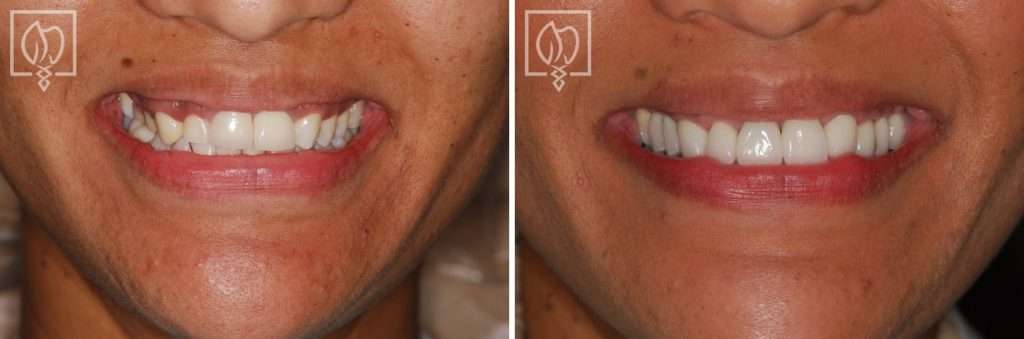
Multi-Faceted Treatment for Patient Unhappy With Her Artificial-Looking Crowns, Teeth and Gums
Many patients come to Elite Prosthetic Dentistry unhappy with the appearance of their smile. However, this particular patient presented with multiple interconnected problems that together created a smile she found deeply unsatisfying.

Treating Kevin's Collapsed Bite with a Complete Smile Makeover with New Dentures
Dentures are sometimes not created to the ideal aesthetic and functional scheme. When improperly fabricated, dentures can make an individual appear almost a generation older than their actual age. They can have a poor fit that feels loose and unstable when eating or speaking, and they can actually accelerate bone loss over time.
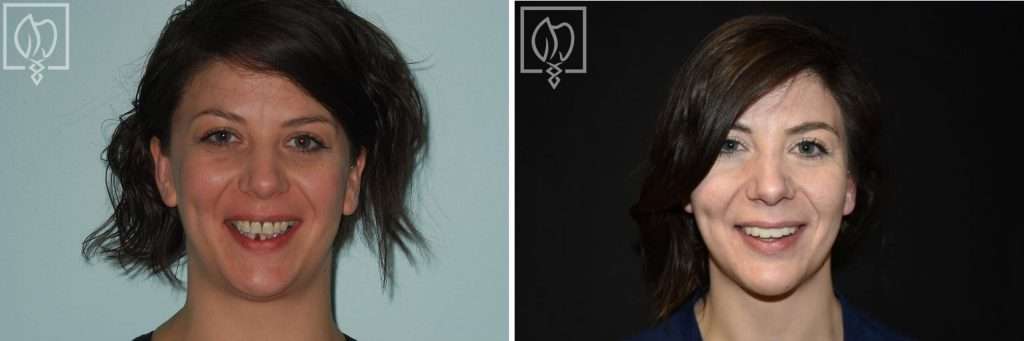
Salvaging Ms. N’s Severely Broken-Down Upper and Lower Teeth from Gum and Bone Disease
Many people in the U.S. suffer from extensive periodontal disease characterized by significant bone loss and shrinkage of the gum tissue. This condition can begin at a very young age and worsen quickly due to hereditary factors and lack of early diagnosis by their dentist.
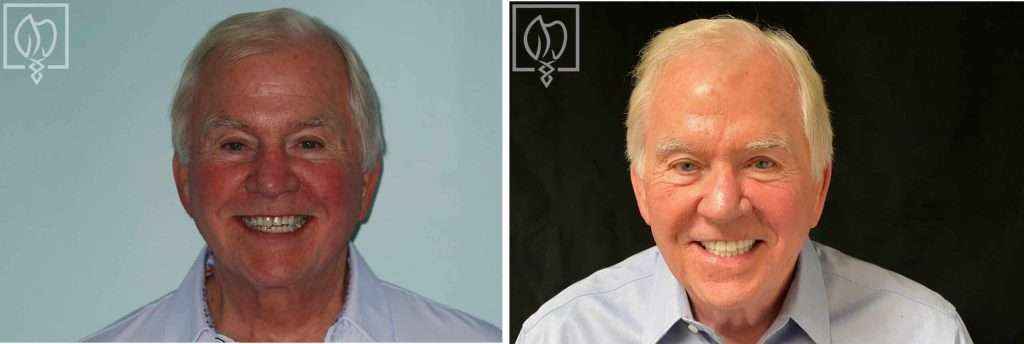
A Smile Transformation in Just Four Months: A Patient’s Dental Crown Restoration for a TV Series
A patient with dental crowns that were in poor shape was going to appear on a streaming video series on a major TV network that was scheduled to begin filming soon. Our patient, John, an author about to embark on a book tour, was anxious as his teeth were not up to his standards to appear on television.
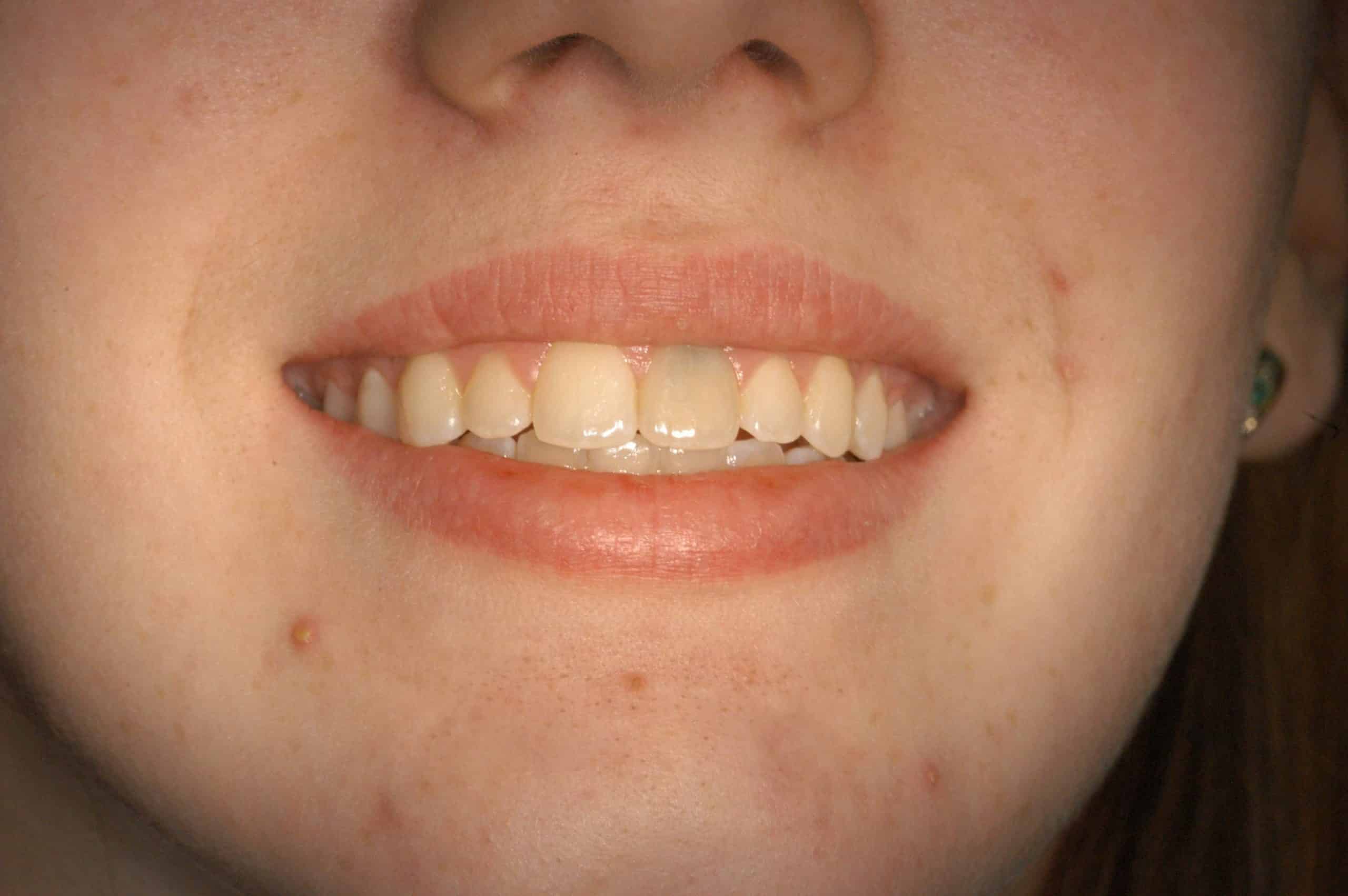
Replacing a Discolored Front Tooth with a Precision Placed Implant
Some of the most challenging restorations occur when fabricating an anterior crown to fit on an implant. Not only does one have the difficulty of matching the single front tooth to the other ones in the high visibility zone, but the dentist must also ensure the position of the underlying implant is precise through accurate preplanning and placement.
Related Articles
Deepen your knowledge with additional insights on this topic.
 Cosmetic Dentistry
 Can my tetracycline stained teeth be made to look pretty?
Tetracycline and other deep, intrinsic stains are best masked with custom crowns - veneers won’t suffice. Elite Prosthetic Dentistry in Washington, DC.
 Cosmetic Dentistry
 How is the Gummy Smile Fixed?
Dr. Marlin reshapes gum tissue and fabricates custom crowns to correct gummy smiles, creating a balanced and confident smile in Washington, DC.
Discovering Cosmetic Dentistry Beyond Aesthetics
Explore how cosmetic dentistry goes beyond aesthetics to improve oral health, self-confidence, and overall well-being with modern treatments and technology.
 Cosmetic Dentistry
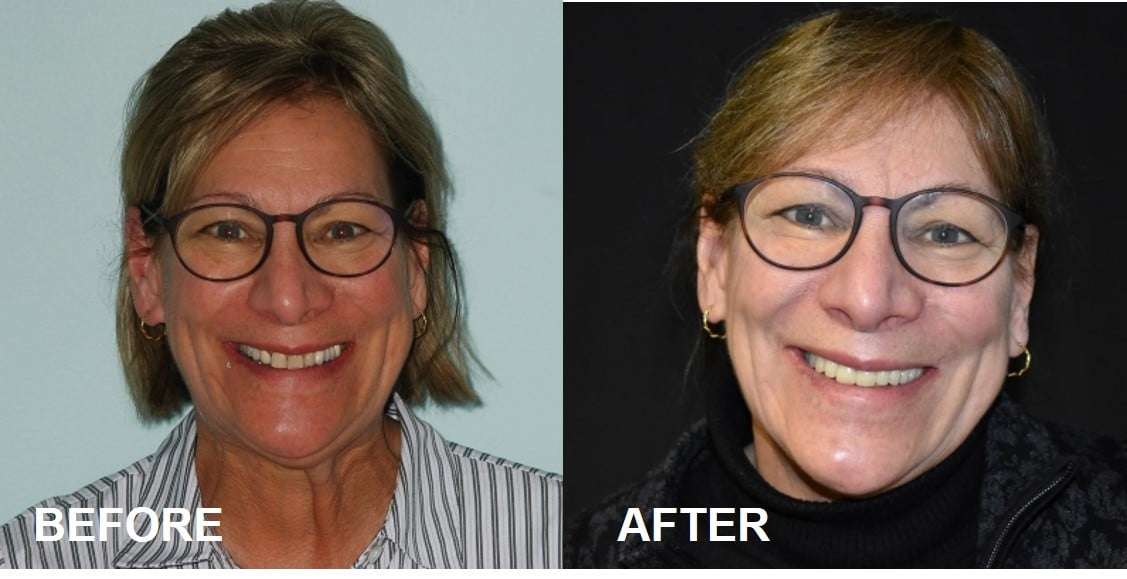
 Benefits of a Cosmetic Smile Makeover With Dental Sedation
A cosmetic smile makeover can transform your appearance and give you the beautiful smile you have always wanted. Elite Prosthetic Dentistry in Washington, DC.
 Cosmetic Dentistry
 Does Treating or Rehabilitating a Gummy Smile Require Surgery?
Gummy smile correction may involve crown lengthening surgery or porcelain restorations depending on severity. Washington, DC prosthodontist explains.
 Cosmetic Dentistry
 Treatable Common Dental Conditions Which Cause Patients to Be Self-Conscious About Their Smile
Common dental conditions like gaps, chips, and discoloration can be treated with cosmetic dentistry at Elite Prosthetic Dentistry in Washington, DC.
Our Services in Foxhall
Beyond Smile Makeover, Foxhall patients rely on Dr. Marlin for a full range of advanced dental care.
More services available in Foxhall:
Smile Makeover Near Foxhall
Dr. Marlin also provides smile makeover services for patients in these neighboring communities.
Getting Here from Foxhall
Elite Prosthetic Dentistry is conveniently located near Foxhall, DC.
From Foxhall, drive north on Foxhall Road to MacArthur Boulevard, continuing to the Friendship Heights office at 4400 Jenifer Street NW, Suite 220.
Address:
4400 Jenifer Street NW, Suite 220
Washington, DC 20015
Phone: (202) 244-2101
Request a ConsultationRequest a Specialist Consultation from Foxhall
Foxhall residents come to Dr. Marlin for specialist prosthodontic care. With 3,900+ implants placed and restored over 40+ years, evaluation, planning, and execution are handled with the depth complex cases require.