
A Compromised Smile Restored With Porcelain Crowns
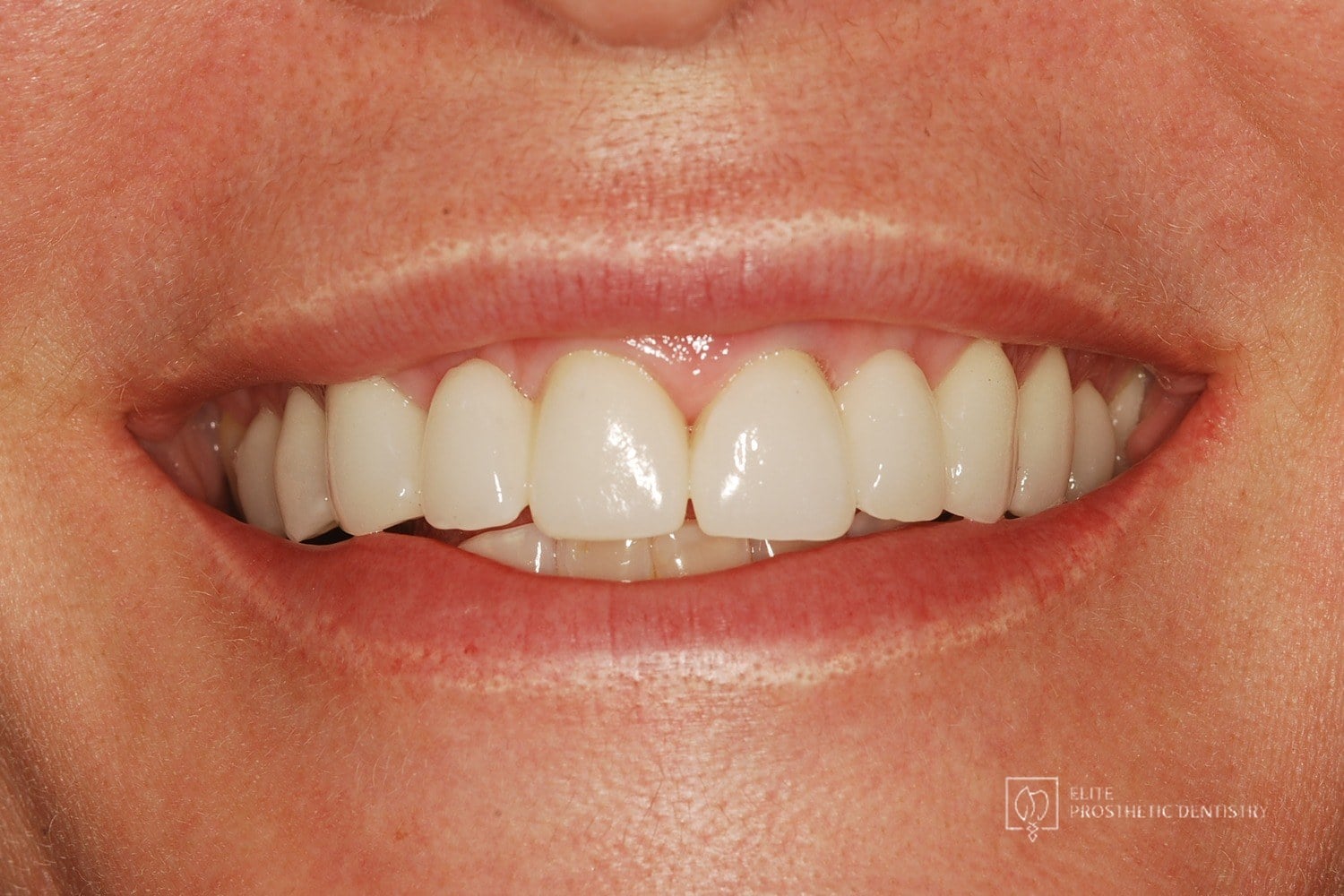
Documented before-and-after view
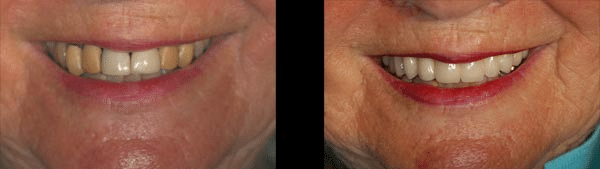
A compromised smile restored with porcelain crowns
Replacing aging dental crowns in Washington, DC is often about more than fixing discoloration; it is about giving a patient her smile back. This documented case at Elite Prosthetic Dentistry restored the smile of an active, energetic woman whose acrylic crowns had darkened and worn over the years. Treatment was planned and completed by Dr. Gerald Marlin, D.M.D., M.S.D., a prosthodontist focused on esthetic crown work and comprehensive restorative care.
Case at a Glance
- Treatment
- Replacement of darkened acrylic crowns with custom hand-crafted porcelain crowns
- Approach
- Internal shading with multiple translucent porcelains, matched to facial features and fabricated in-house
The presenting condition
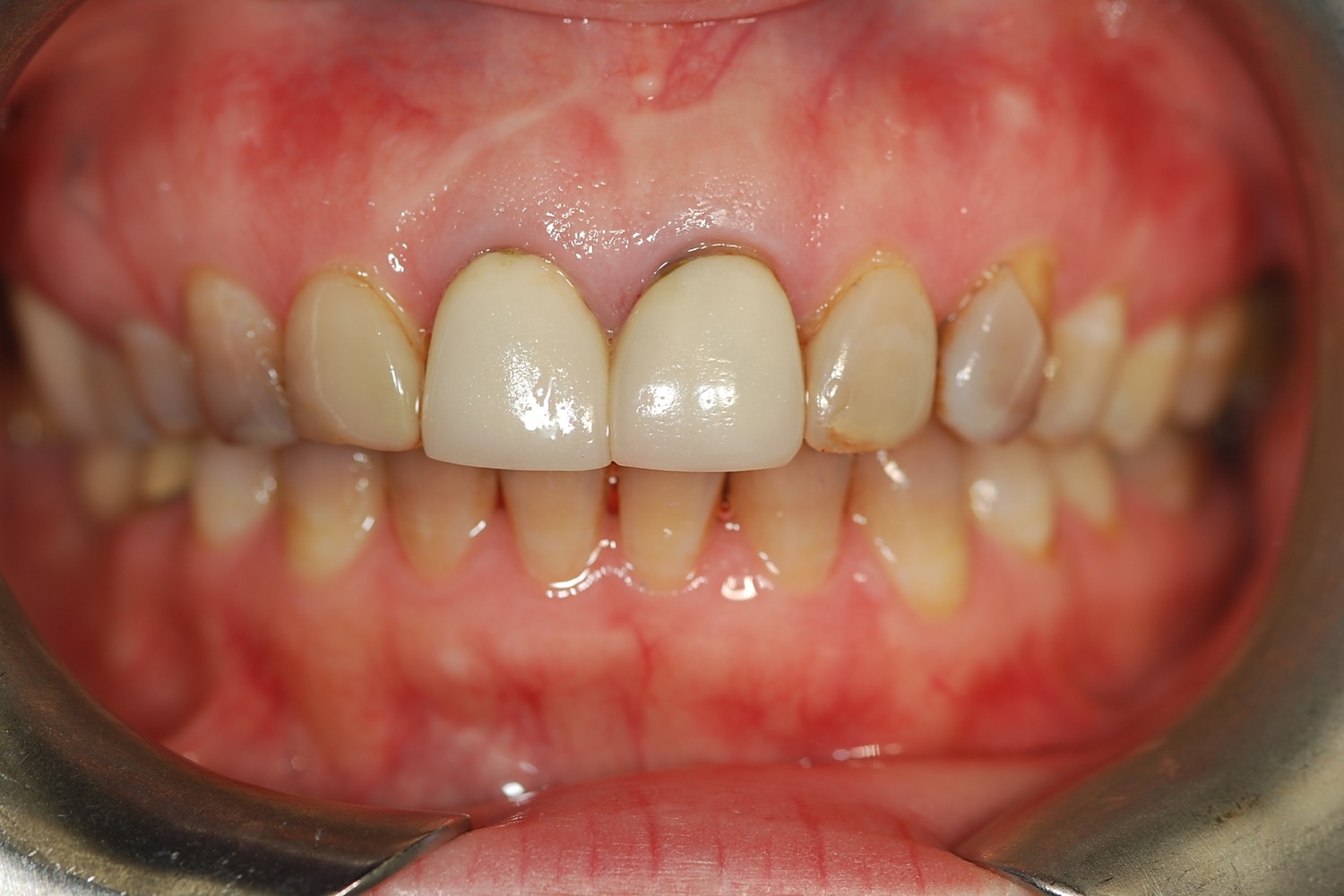
The patient came to the practice with acrylic crowns that had significantly darkened and discolored over the years. Acrylic, while functional, is not as durable or stain-resistant as modern porcelain. Over time it accumulates stains from food, beverages, and everyday exposure that no amount of normal cleaning can remove. The discoloration made her smile appear aged and affected her professional appearance.
The concern went beyond color. The acrylic crowns had become structurally compromised, showing wear, chipping, and the loss of natural luster that comes with years of service. The effect on her daily life was real. She felt self-conscious about her smile and found herself avoiding situations where she needed to smile: professional meetings, social gatherings, and family photos.
Clinical Findings
- →Acrylic crowns with significant darkening and discoloration accumulated over years
- →Staining that could not be removed by normal cleaning methods
- →Structural compromise including wear, chipping, and loss of natural luster
- →A smile that appeared aged relative to the patient's energy and lifestyle
- →Self-consciousness leading the patient to avoid meetings, gatherings, and photos
Why this case required prosthodontic-level planning
Replacing worn crowns is never just a swap. Every crown replacement is a one-time opportunity to correct everything about the previous design: the material, the color behavior, the contours, and the way the restorations relate to the face around them. Doing that well requires diagnosing why the old restorations stopped serving the patient, then designing replacements that will not repeat the pattern.
Material judgment sat at the center of this case. Acrylic and porcelain age differently. Acrylic absorbs stain and dulls; quality porcelain holds its color, shine, and translucency for the long term. But material alone does not produce a natural result. Porcelain crowns made flat and uniform can look as artificial as stained acrylic. The difference comes from how the restorations are designed and built, which is precisely where a prosthodontist working alongside an experienced laboratory team earns the outcome.
The decision behind the result: the right material, built the right way
The recommendation was to replace the aging acrylic crowns with new porcelain crowns that would restore both the beauty and the durability of her smile. Two decisions shaped the result. The first was the material itself, chosen for its lasting color, shine, and stain resistance. The second was how the crowns would be made.
The practice’s in-house laboratory team crafted each crown by hand using internal shading and multiple translucent porcelains, matched precisely to her facial features, skin tone, and remaining natural teeth. Layering translucent porcelains builds depth and color variation into the crown itself, so light moves through it the way it moves through natural enamel. The result reads as a tooth, not a restoration, which is exactly the quality flat, single-shade crowns lack. Direct collaboration between Dr. Marlin and the laboratory technicians kept fit, contour, shade, and translucency under one standard from design through delivery.
The treatment plan
-
1
Evaluation of the existing crowns
Assessment of the darkened, worn acrylic crowns and of what the patient wanted her smile to look like going forward.
-
2
A material recommendation with a reason
Replacement of the acrylic crowns with porcelain, selected for its durability, stain resistance, and natural optical behavior.
-
3
Custom design matched to the patient
Each crown designed against her facial features, skin tone, and remaining natural teeth rather than a generic shade tab.
-
4
Hand-crafted fabrication in the in-house laboratory
Internal shading and multiple translucent porcelains layered by hand to give each crown the depth and color variation of a natural tooth.
-
5
Delivery of the final porcelain crowns
The completed crowns were placed, replacing the discolored restorations and reestablishing the smile.
The outcome
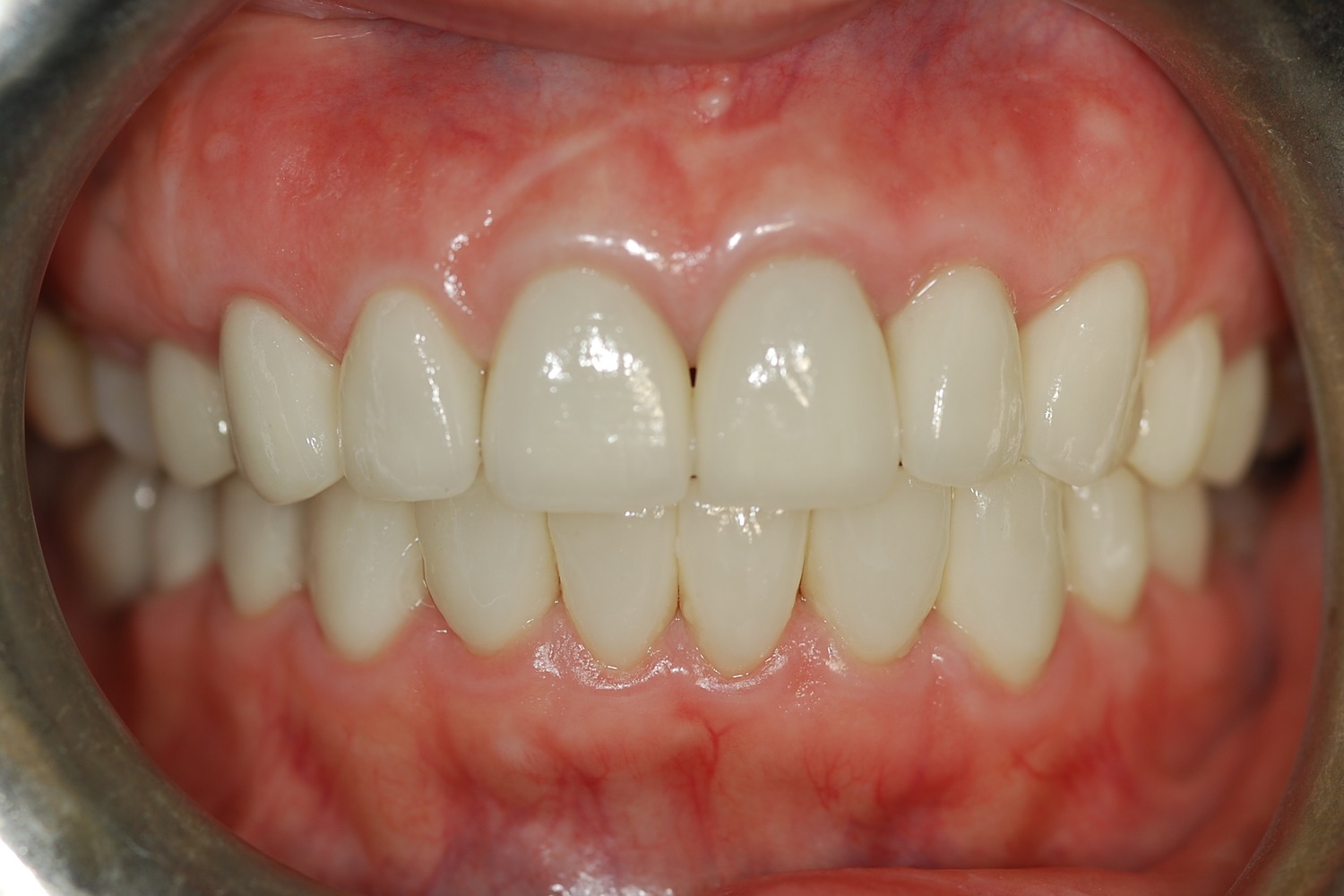
The new porcelain crowns completely reestablished the beauty of her smile. The natural color, shine, and translucency of the layered porcelain made the crowns difficult to distinguish from natural teeth. The discoloration was gone, and the smile looked youthful and vibrant again.
Just as important, the new crowns restored her confidence. She no longer felt self-conscious about her smile and could engage fully in professional and social situations without holding back. An active, energetic person got a smile that matches how she actually lives, which is the point of doing this kind of work carefully.
Result Highlights
- ✓Darkened acrylic crowns replaced with hand-crafted porcelain crowns
- ✓Internal shading and multiple translucent porcelains for natural depth and variation
- ✓Crowns matched to the patient's facial features, skin tone, and remaining natural teeth
- ✓Discoloration resolved, with a youthful and vibrant smile reestablished
- ✓Confidence restored in professional and social situations
- ✓Design and fabrication controlled by the practice's in-house laboratory
Who this case may sound familiar to
This story tends to resonate with patients in a few recognizable situations:
- Your crowns were placed years ago and have darkened or stained no matter how carefully you clean them.
- Your smile makes you look older than you feel, and it shows in photos.
- You catch yourself avoiding meetings, gatherings, or pictures because of your teeth.
- You want replacement crowns designed for your face and skin tone, not pulled from a standard shade guide.
- You want the work done once, properly, in materials that will hold their color.
If any of those describe where you are, a consultation with Dr. Marlin can establish the diagnostic picture and the specific options for your case.
Frequently asked questions
Why do acrylic crowns darken over time?
Acrylic is more porous and less stain-resistant than porcelain, so it gradually absorbs pigment from food, beverages, and everyday exposure. Once that staining penetrates the material, normal cleaning and polishing cannot remove it, and the crowns darken permanently.
Can old crowns be replaced with porcelain?
In most cases, yes. The evaluation begins with the health of the underlying teeth and the bite. When replacement is appropriate, it is also the right moment to improve the design, so the new crowns are matched to your face and natural teeth rather than simply copying the old ones in a new material.
How are porcelain crowns matched to a specific person?
Careful matching considers facial features, skin tone, and the color character of the remaining natural teeth, not just a shade tab. Internal shading and layered translucent porcelains then build that color behavior into the crown itself, giving it the depth and variation of a real tooth.
Am I too old to have my smile restored?
No. A confident smile is not reserved for the young, and age by itself is rarely the deciding factor. What matters is the condition of the teeth and gums and what you want your smile to do for you. Patients at every stage of life have their smiles restored, and the planning simply accounts for the individual situation.
What is the advantage of hand-crafted crowns from an in-house laboratory?
Hand-layered porcelain allows internal shading and translucency to be built into each crown individually, which is how natural depth is achieved. Keeping that work in-house means the prosthodontist and the technician evaluate the same patient in the same room, with direct control over fit, contour, and shade at every step.
More about the work behind this case
This case rests on custom dental crowns delivered as part of broader cosmetic dentistry planning, with fabrication handled by the practice’s own laboratory team. Choosing materials for how they age, not just how they look on delivery day, is part of the practice philosophy behind restorative work here.
Elite Prosthetic Dentistry treats patients from across the DMV including Bethesda, Chevy Chase, McLean, Arlington, Potomac, and Great Falls, with a record of out-of-area patients traveling to the practice for complex restorative care.
Related Services
Related Patient Success Stories
Explore similar patient success stories demonstrating our expertise in advanced prosthetic dentistry.
 Before
  After
After How Aging, Failing Dentistry Was Replaced with a Coordinated Full-Mouth Implant and Crown Reconstruction
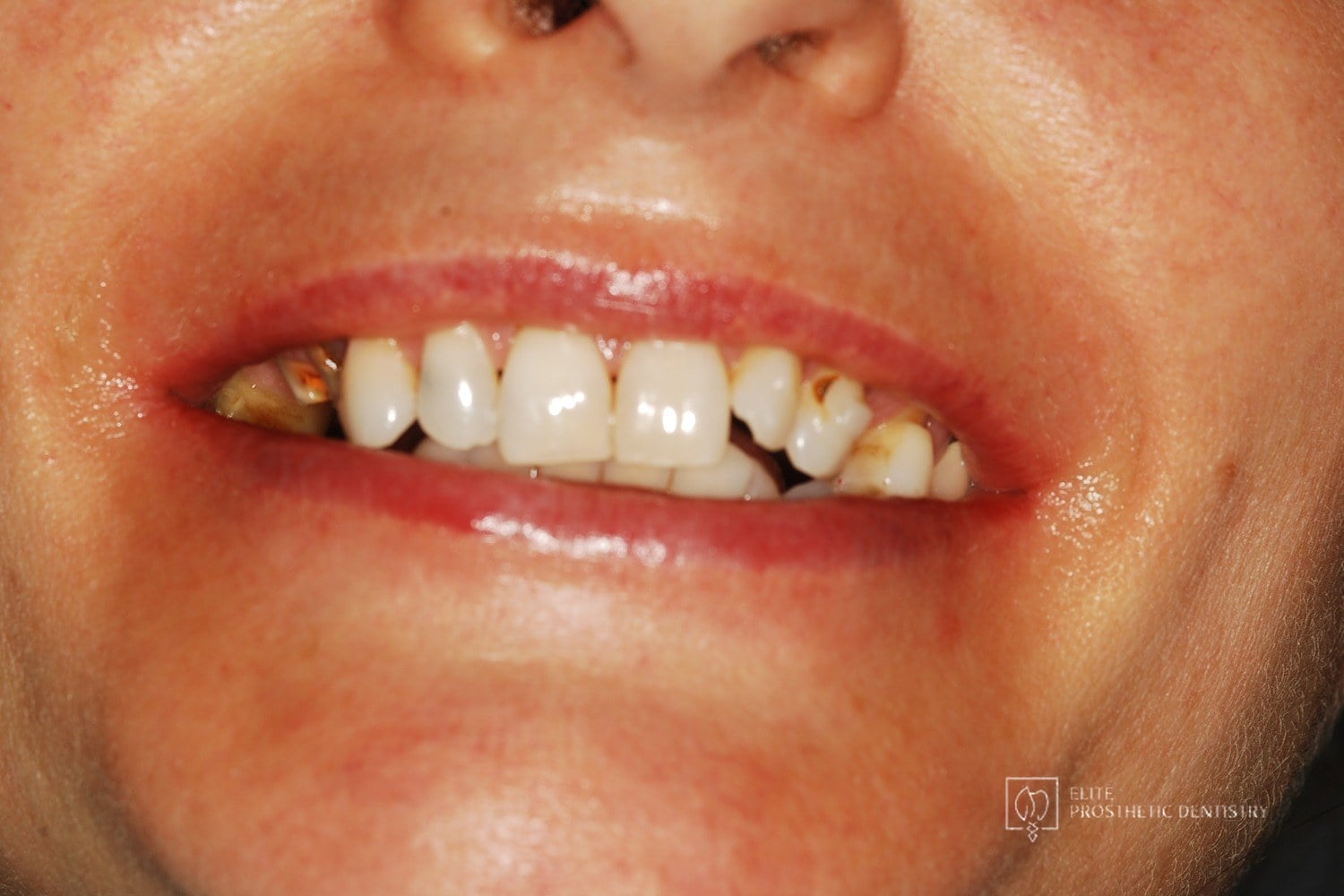
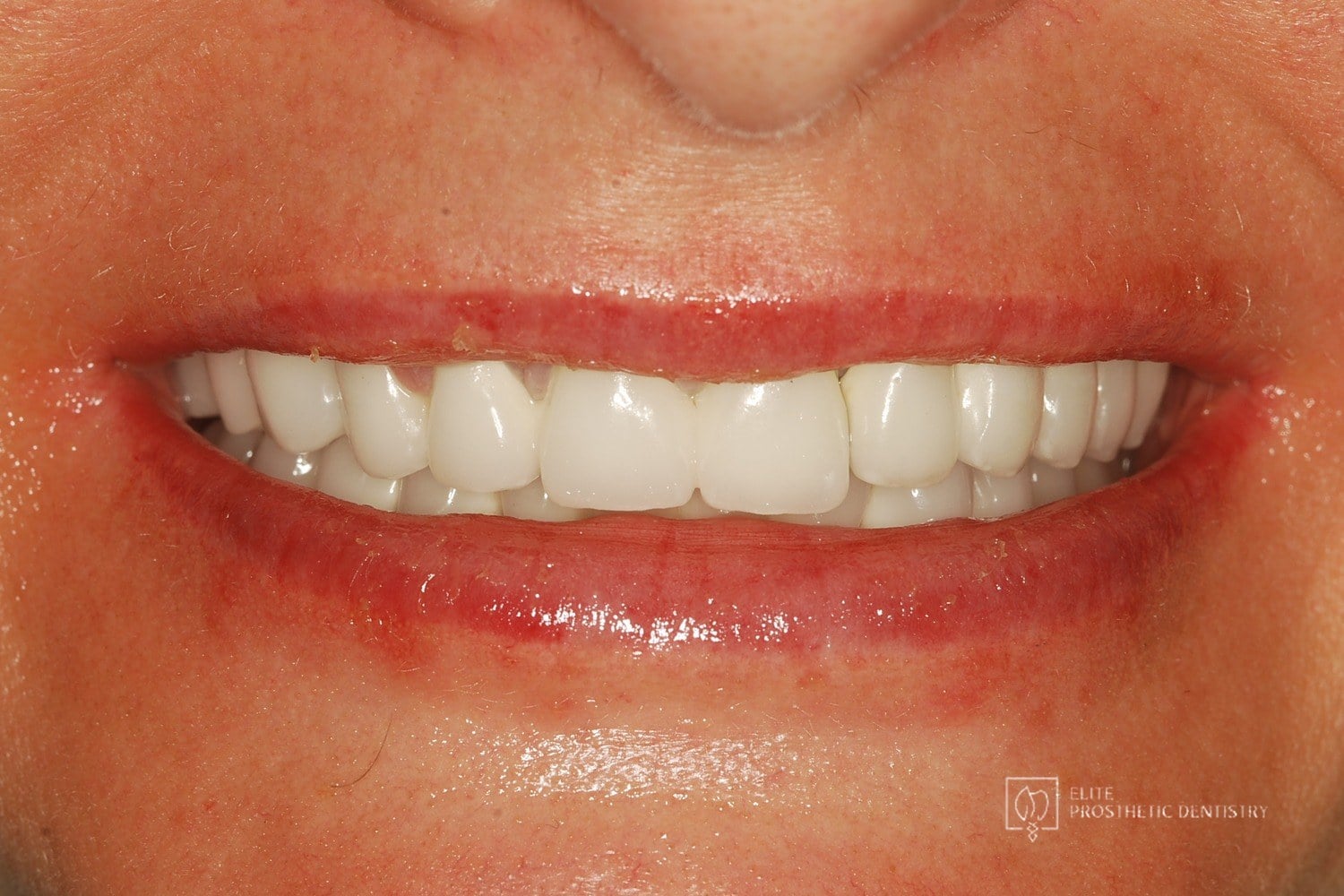
The patient presented with throbbing upper-molar pain, long-standing infections, multiple root canals and unfinished prior treatment, generalized sensitivity, and several hopeless teeth.
 Before
  After
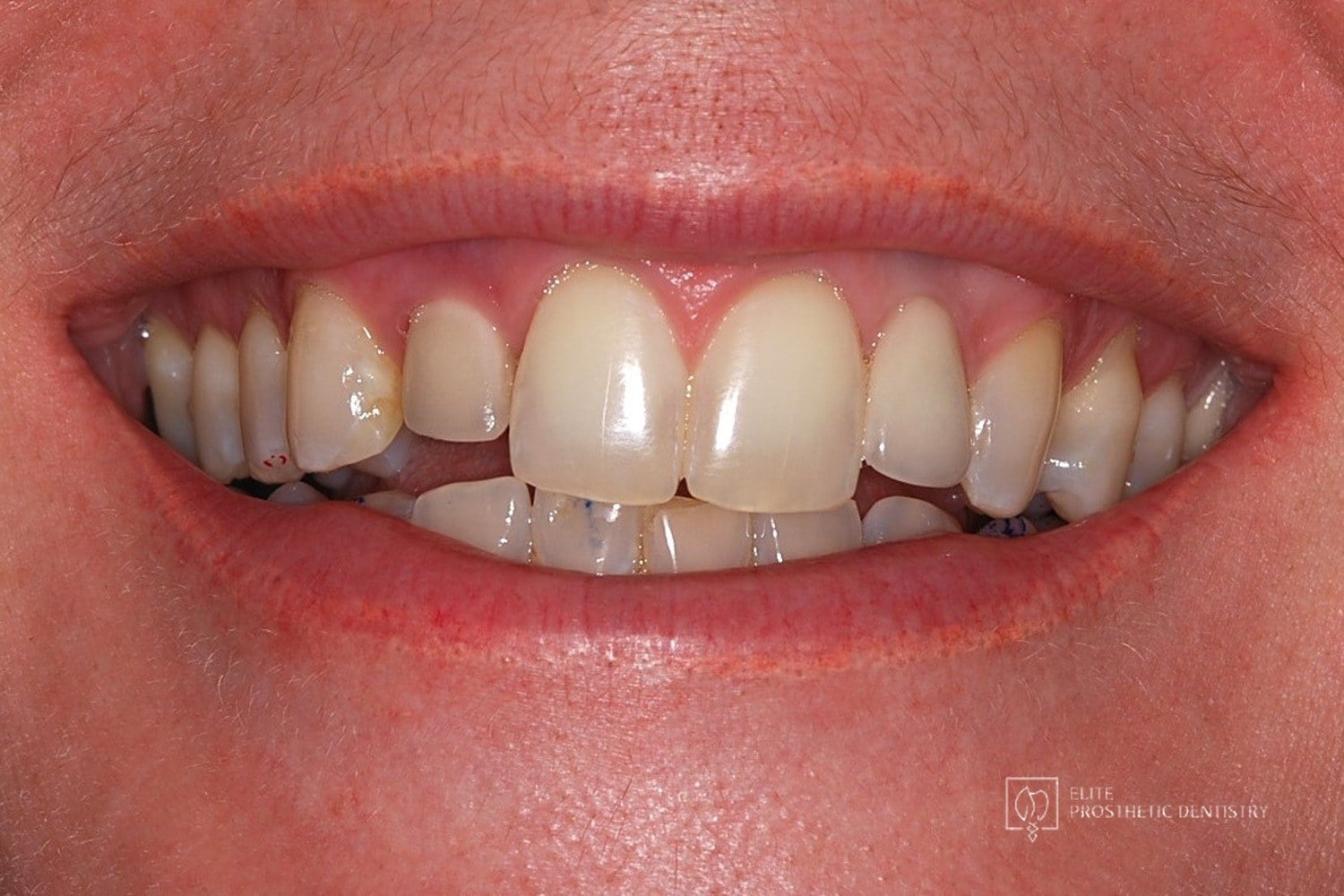
After How Failing Lateral Incisor Implants Were Replaced with Custom Zirconia Bridges After Severe Bone Loss Made Replacement Implants Impossible
Comprehensive examination including CBCT imaging revealed significant bone loss surrounding implants that were placed outside the buccal plate, most likely due to placement without a CBCT-generated surgical guide. The implants were determined non-salvageable, and the alveolar ridge was too narrow to support replacement implants without extensive reconstruction.
 Before
  After
After How Aging, Opaque Restorations Were Replaced with Customized Ceramic Restorations Designed for Long-Term Natural Esthetics
The existing restorations appeared opaque, worn, and unnatural over time, affecting both confidence and overall smile harmony.