
Salvaging Severely Broken-Down Upper and Lower Teeth from Gum and Bone Disease
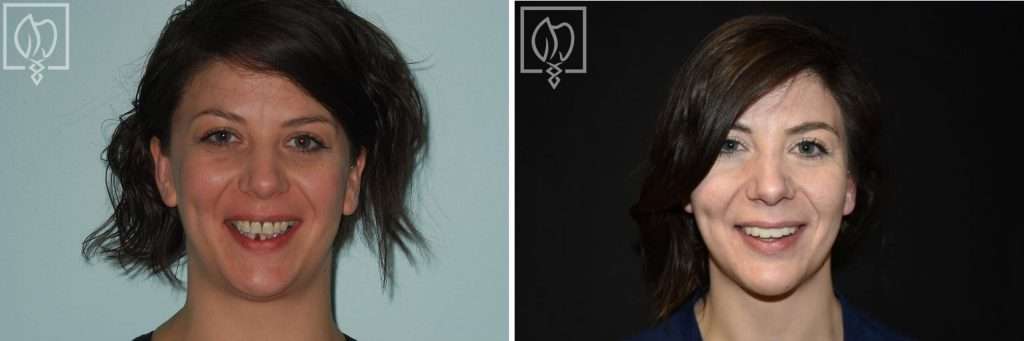
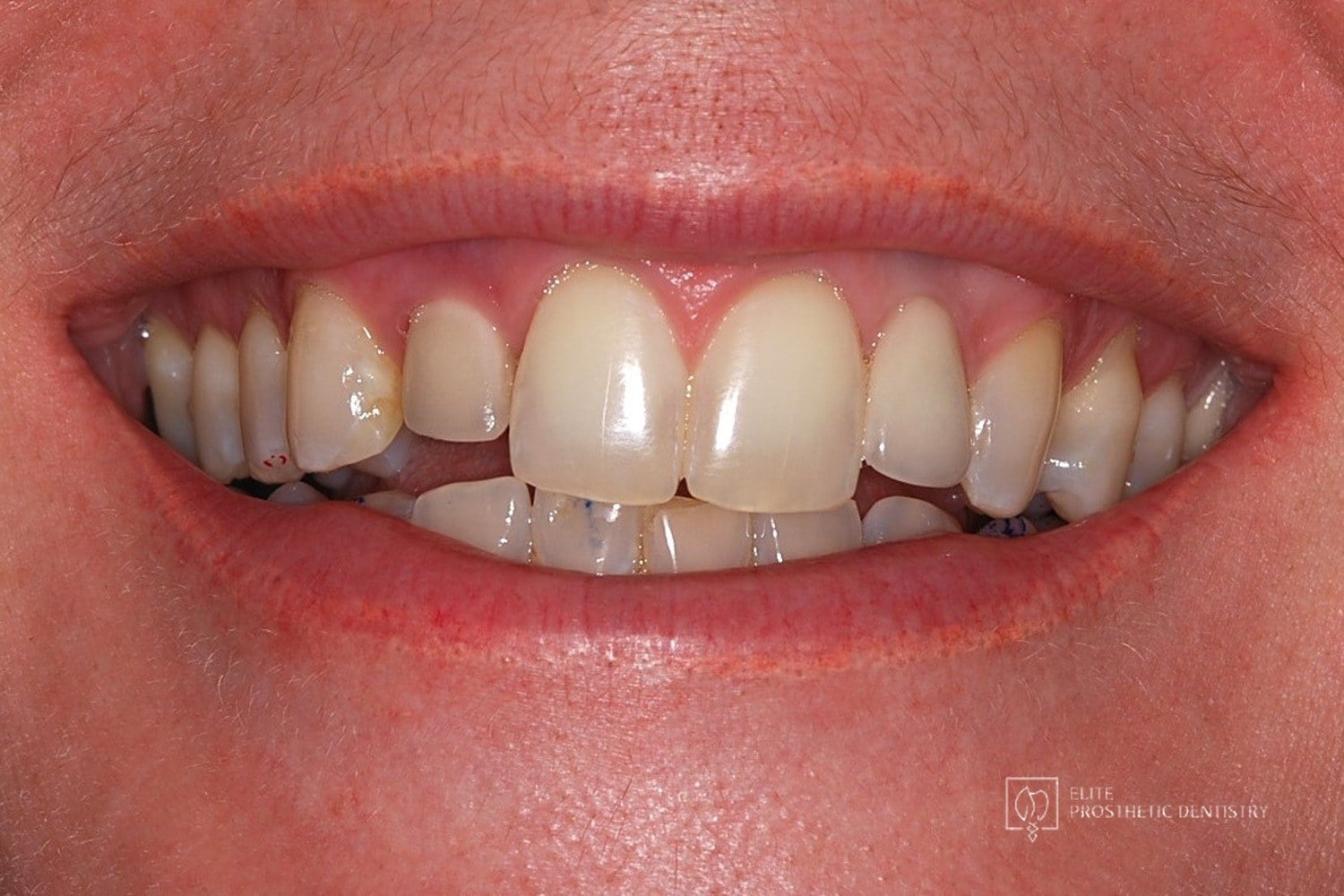
Documented before-and-after view
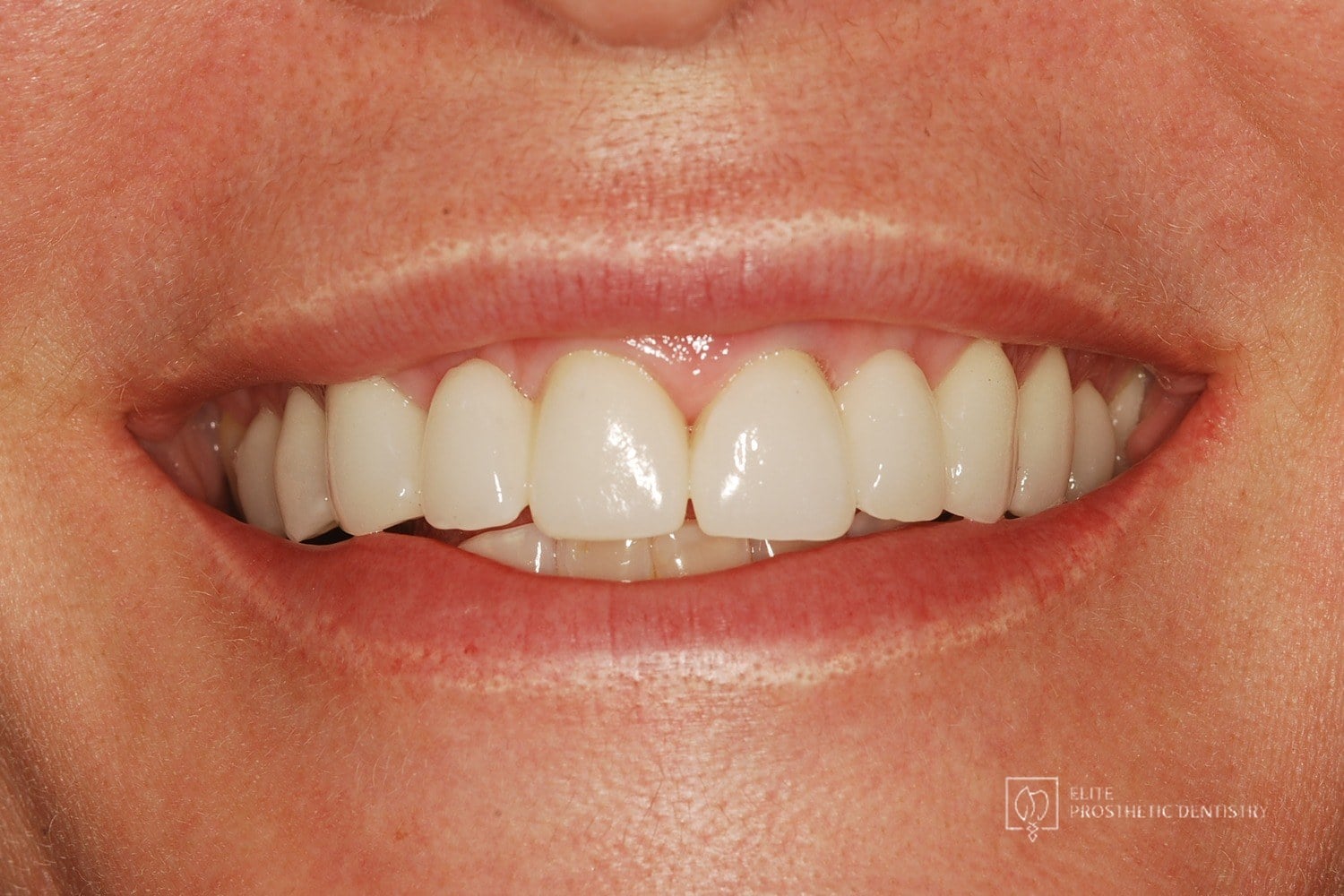
Final documented view
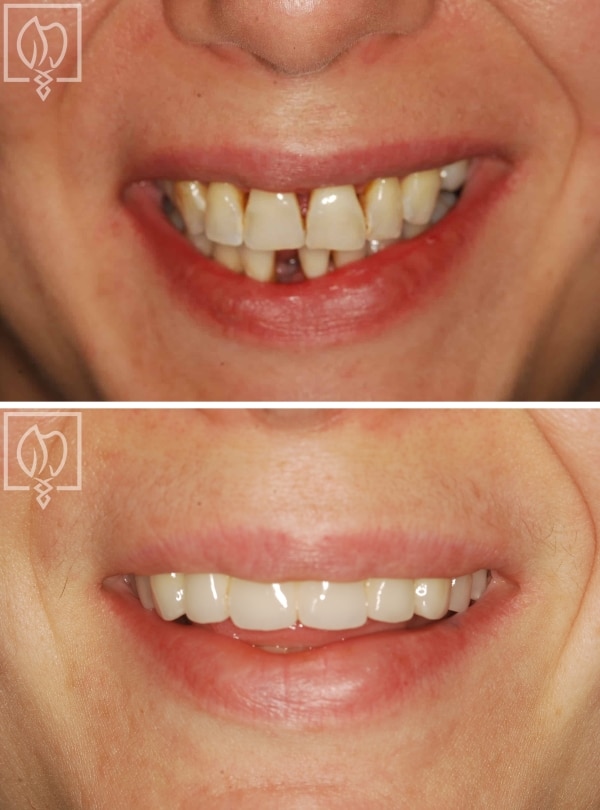
Severely broken-down teeth salvaged after gum and bone disease
Salvaging severely broken-down teeth from gum and bone disease in Washington, DC. This documented case at Elite Prosthetic Dentistry stabilized and rebuilt the smile of a 34-year-old patient whose periodontal disease had loosened her lower front teeth and opened widening gaps between her front teeth. Treatment was planned and completed by Dr. Gerald Marlin, D.M.D., M.S.D., a prosthodontist focused on periodontal prosthesis and complex restorative care.
Case at a Glance
- Treatment
- Periodontal prosthesis therapy: stabilizing splints, extractions, bone grafting, custom temporary crowns
- Approach
- Phased plan across two all-day sedation visits with in-house laboratory support
- Case Type
- Full mouth reconstruction
- Patient Concern
- The patient arrived in distress: two lower front teeth were close to being lost, and gaps were widening between the upper and lower front teeth from gum and bone disease.
- Decision Point
- Move straight to surgery and leave the smile as it was in the meantime, or first stabilize the loosened teeth with temporary splints while the definitive treatment was planned.
- Outcome
- Confidence in smiling and speaking was restored, the bone grafts helped protect the remaining bone, and the temporary crowns now serve as the template for the final restorations.
- Why It Matters
- The case shows that isolated repairs fail when active gum and bone disease keeps changing the foundation, so restorations must be planned tooth by tooth alongside surgical and periodontal treatment together.
The presenting condition
The patient came to the practice in complete distress. Two of her lower front teeth were on the verge of falling out, and wide gaps were opening between her upper and lower front teeth. She was 34 years old. Severe periodontal disease had already cost her significant bone and gum tissue, and it had taken much of her confidence with it. She was unable to smile or speak comfortably in front of others, and she wanted a solution that restored both the function and the appearance of her smile.
Periodontal disease at this severity is not rare. It can begin at a young age and progress quickly, particularly when hereditary factors are involved and the condition is not identified early. As bone shrinks and gum tissue recedes, teeth loosen and drift, spaces open, and the smile line changes in ways a patient feels socially every single day.
Clinical Findings
- →Severe periodontal disease at age 34, with significant bone loss and gum shrinkage
- →Two lower anterior teeth close to being lost
- →Wide gaps opening between the upper and lower anterior teeth
- →Unable to smile or speak with confidence
- →A hereditary predisposition to periodontal breakdown requiring long-term monitoring
Why this case required prosthodontic-level planning
A loose tooth can be splinted. A gap can be closed. But when the underlying problem is disease that is actively consuming bone and gum tissue, isolated repairs fail one after another because the foundation keeps changing underneath them. This case called for comprehensive periodontal prosthesis therapy: the restoration of the adult dentition in the presence of bone loss and gum shrinkage caused by periodontal disease. It is an advanced and demanding discipline because the restorations must be planned for a foundation the disease has altered, the plan must be coordinated with the patient’s periodontal status, and every step, stabilization, surgery, healing, and restoration, has to arrive in the right order.
The planning also had to run on two clocks at once. The failing teeth and the underlying disease needed definitive surgical treatment, but the patient was in distress about her appearance in the present tense. A sequence that addressed only one of those clocks would have failed her on the other.
The decision behind the result: immediate stabilization first, definitive reconstruction second
The key judgment was to phase the treatment so that urgency and biology were each respected. Rather than moving straight to surgery and leaving the patient to live with a deteriorating smile in the meantime, Dr. Marlin fabricated custom temporary splints that stabilized her remaining teeth and filled in the gaps between them. That single step produced an immediate improvement in her appearance and created the time needed to plan the definitive phases properly.
The second judgment was to acknowledge the tissue loss in the design rather than pretend it had not happened. Periodontal disease had taken gum tissue that crowns alone cannot replace. The provisional restorations were therefore crafted in porcelain and pink acrylic, with the pink material simulating the missing gingival tissue so the finished smile reads as natural rather than elongated. This is a signature periodontal prosthesis technique, it demands close coordination between the doctor and the laboratory, and it is one of the reasons cases like this belong with a specialty-trained prosthodontist.
The treatment plan
-
1
Comprehensive periodontal prosthesis planning
Evaluation of the remaining teeth, the extent of bone and gum loss, and the sequence of care required to restore function and appearance on a disease-altered foundation.
-
2
Custom temporary splints for immediate stabilization
Splints stabilized the loosened teeth and filled the gaps between them, delivering an immediate improvement in her smile while the definitive phases were planned.
-
3
Extractions and bone grafting under sedation
In two separate all-day visits under dental sedation, the hopeless teeth were removed and bone grafts were placed to prevent future bone loss and provide a more stable foundation for the restorations to come.
-
4
Custom temporary crowns after healing
Following the healing period, custom-crafted temporary crowns in porcelain and pink acrylic were inserted, simulating the missing gingival tissue and creating a natural-looking smile.
-
5
Long-term monitoring and maintenance
Because her predisposition to periodontal breakdown persists, ongoing professional monitoring and excellent home care were built into the plan to protect the result.
The outcome
The change was immediate and visible. The patient could smile with confidence again, and her ability to speak and smile naturally was restored. The bone grafts were placed strategically to preserve her remaining bone and prevent further deterioration, protecting the foundation for everything built on it. The custom temporary crowns did double duty: they restored appearance and function in the near term, and they now serve as the working template for her final restorations. Throughout treatment, the practice’s in-house laboratory team worked closely with Dr. Marlin so that fit, contour, shade, and the gingival esthetics stayed under direct control from start to finish.
Her care did not end at delivery. Since her predisposition to periodontal breakdown could cause problems at any point, her plan includes constant professional monitoring of her periodontal condition alongside disciplined home care. That vigilance is part of the treatment, not an afterthought, and it is what maintains a salvaged smile for the long term.
Result Highlights
- ✓Immediate smile improvement from custom stabilizing splints
- ✓Hopeless teeth removed and bone grafts placed to prevent further bone loss
- ✓Surgical phases completed comfortably in two all-day visits under dental sedation
- ✓Custom temporary crowns in porcelain and pink acrylic simulating natural gum tissue
- ✓Ability to smile and speak with confidence restored
- ✓Provisional restorations serving as the template for the final reconstruction
Who this case may sound familiar to
This story tends to resonate with patients in a few recognizable situations:
- Gum disease was diagnosed when you were young, or it runs in your family, and your teeth have started to loosen or drift.
- Gaps are opening between your front teeth that were never there before.
- One or more teeth feel like they could be lost soon, and you want a coordinated plan rather than a patch.
- You avoid smiling or speaking up because of how your teeth look.
- You want the periodontal problem and the restorative work planned together, correctly, the first time.
If any of those describe where you are, a consultation with Dr. Marlin can establish the diagnostic picture and the specific options for your case.
Frequently asked questions
What is periodontal prosthesis therapy?
Periodontal prosthesis is the restoration of the adult dentition in the presence of bone loss and gum shrinkage caused by periodontal disease. It combines stabilization, strategic extractions, grafting where needed, and restorations designed for a foundation the disease has altered, all sequenced and coordinated by a prosthodontist.
Can teeth loosened by gum disease be saved?
Sometimes. Teeth with adequate remaining support can often be stabilized, for example with splints that join them to stronger neighbors, while teeth without enough bone are removed on a planned basis before they are lost on their own. That judgment is made tooth by tooth from the periodontal evaluation, and it shapes the entire restorative plan.
Why are bone grafts placed after extractions?
The bone that held a tooth begins to shrink once the tooth is gone. Grafting the site helps preserve ridge volume, limit future bone loss, and maintain a more stable foundation for whatever restoration follows, which matters even more in patients who have already lost bone to periodontal disease.
What is pink porcelain or pink acrylic used for in restorations?
When periodontal disease has taken gum tissue as well as bone, restoring the teeth alone can leave them looking unnaturally long. Gingival-shaded pink material built into the restoration simulates the missing gum tissue so the smile line looks natural and correctly proportioned.
Is sedation an option for long restorative appointments?
Yes. Complex phases such as multiple extractions and grafting are routinely completed under dental sedation, which allows longer visits to proceed comfortably and can reduce the total number of appointments a reconstruction requires.
Why is long-term monitoring important after periodontal reconstruction?
A predisposition to periodontal breakdown does not disappear when treatment ends. Ongoing professional monitoring and excellent home care catch changes early, protect grafted sites and restorations, and are essential to maintaining the result over a lifetime.
More about the work behind this case
This case combines bone grafting, custom crowns, and smile makeover planning inside one coordinated periodontal prosthesis plan. The diagnostic depth and in-house laboratory control behind it reflect the practice philosophy that supports restorative work of this complexity.
Elite Prosthetic Dentistry treats patients from across the DMV including Bethesda, Chevy Chase, McLean, Arlington, Potomac, and Great Falls, with a record of out-of-area patients traveling to the practice for complex restorative care.
Related Services
Related Patient Success Stories
Explore similar patient success stories demonstrating our expertise in advanced prosthetic dentistry.
 Before
  After
After How Aging, Failing Dentistry Was Replaced with a Coordinated Full-Mouth Implant and Crown Reconstruction
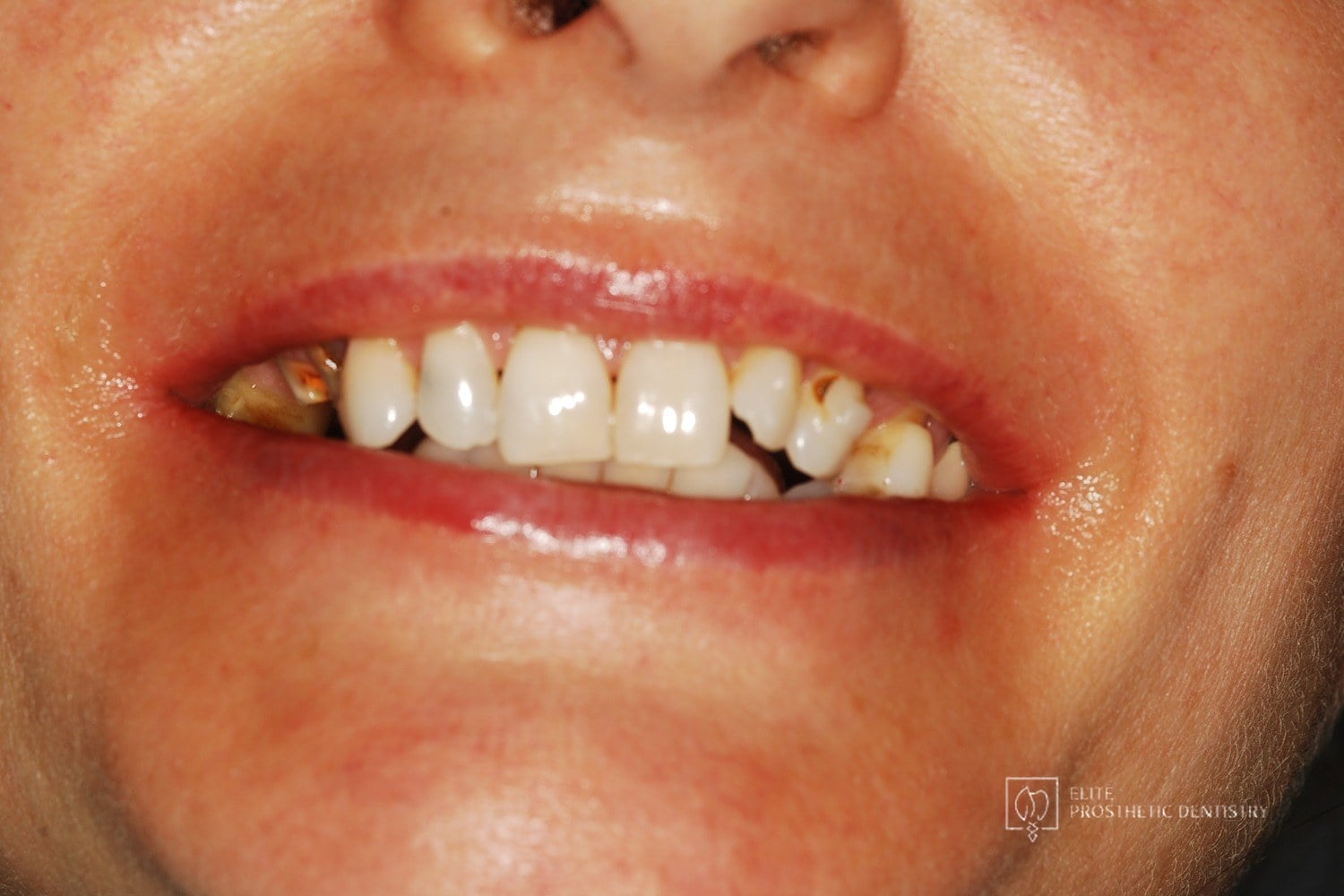
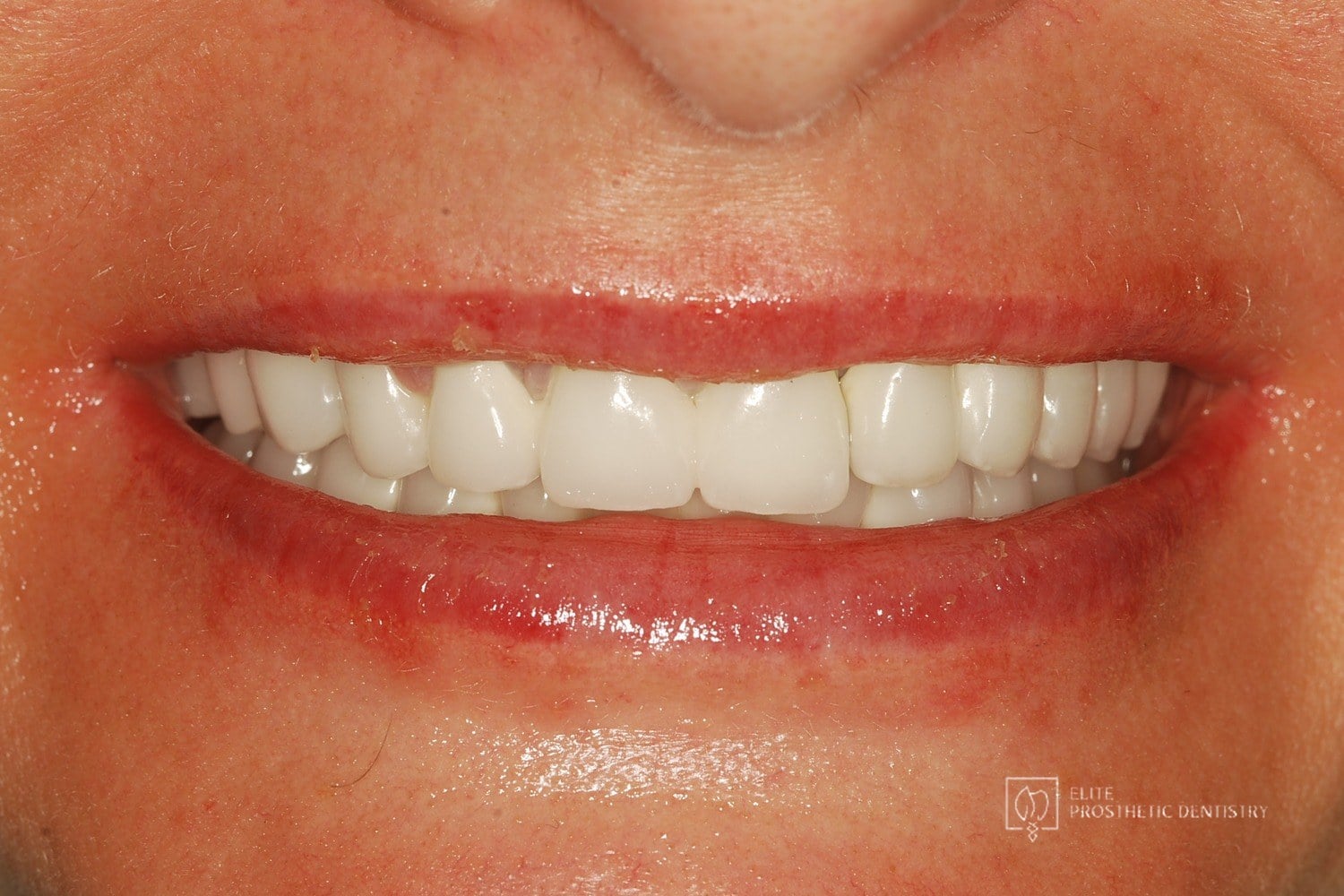
The patient presented with throbbing upper-molar pain, long-standing infections, multiple root canals and unfinished prior treatment, generalized sensitivity, and several hopeless teeth.
 Before
  After
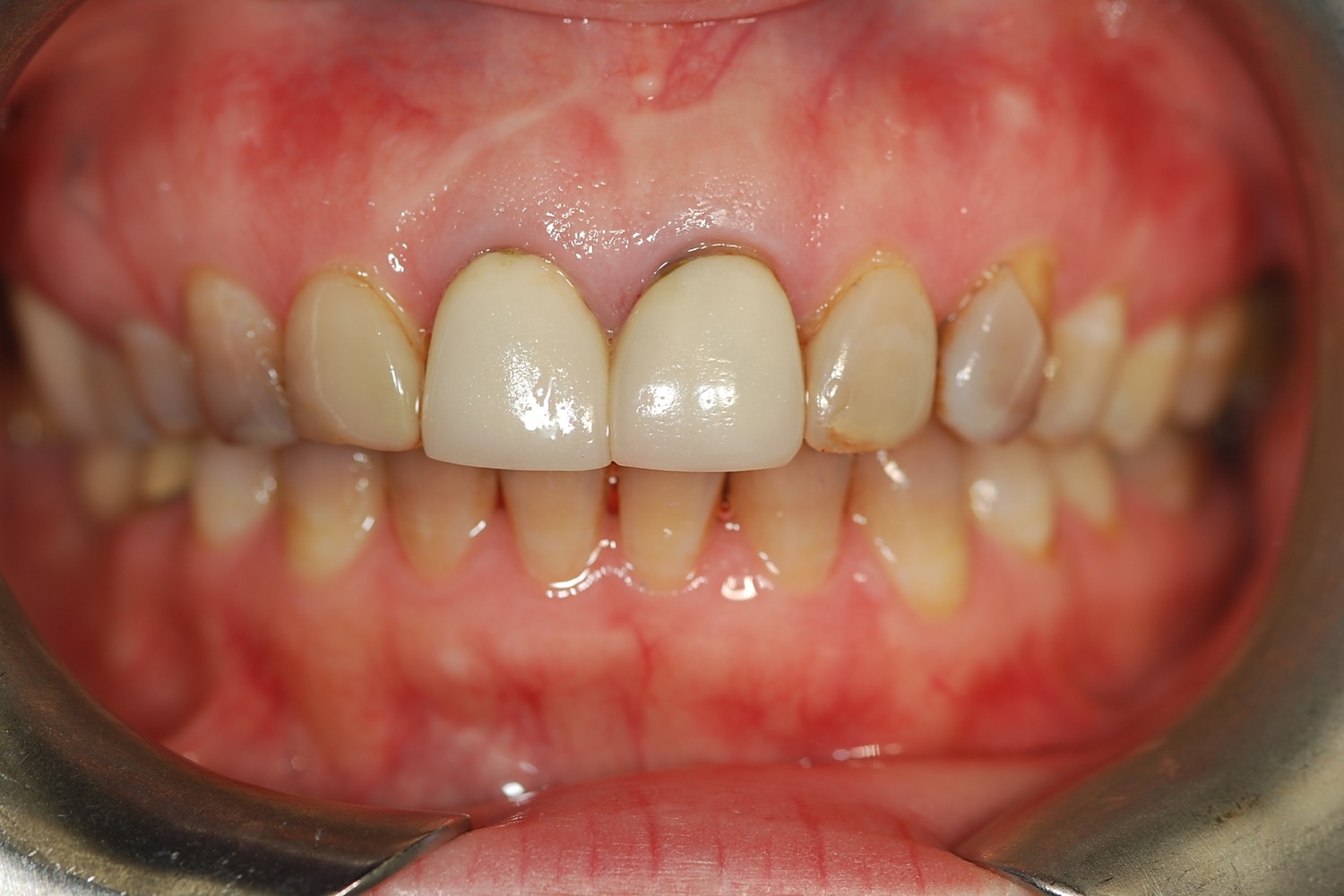
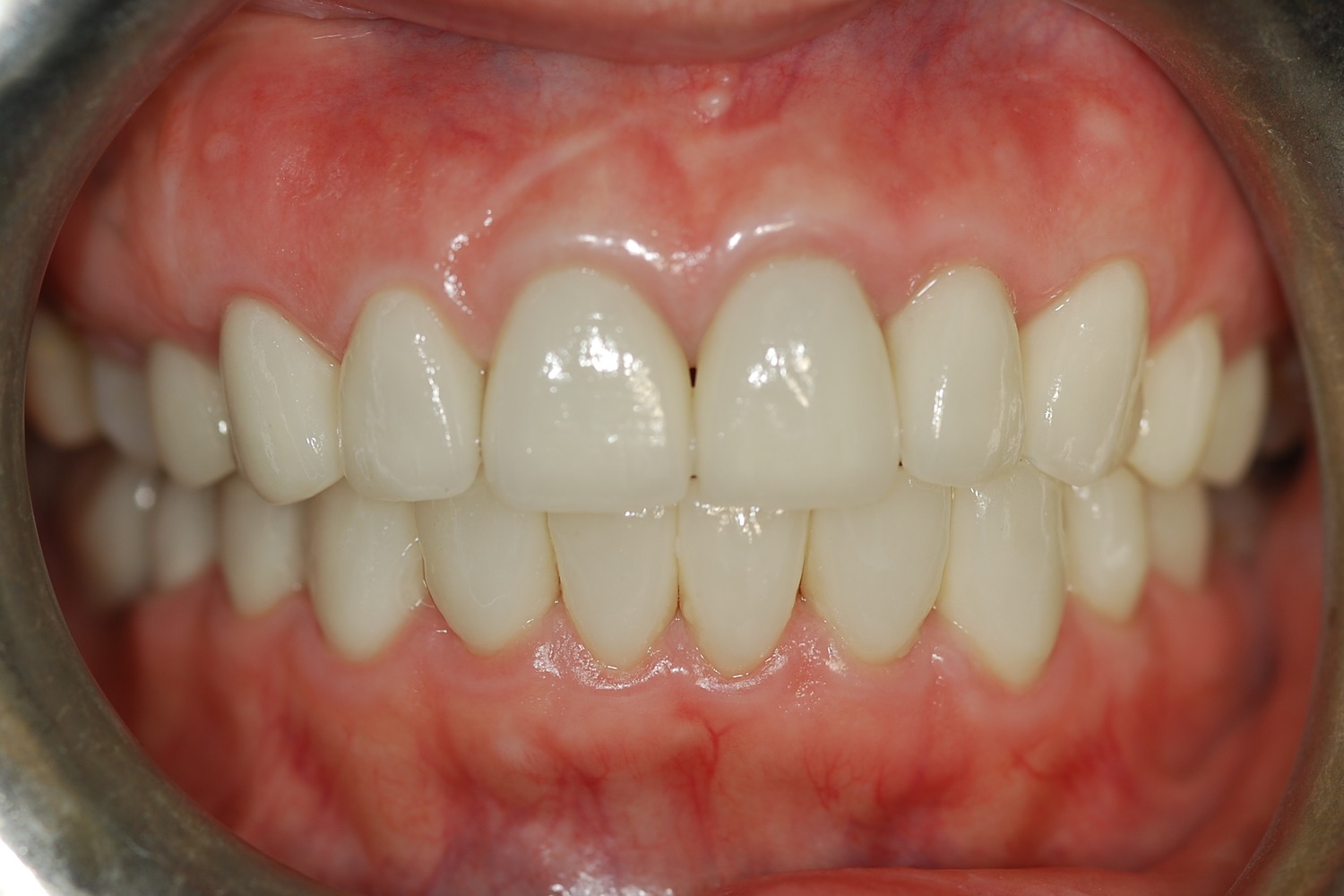
After How Failing Lateral Incisor Implants Were Replaced with Custom Zirconia Bridges After Severe Bone Loss Made Replacement Implants Impossible
Comprehensive examination including CBCT imaging revealed significant bone loss surrounding implants that were placed outside the buccal plate, most likely due to placement without a CBCT-generated surgical guide. The implants were determined non-salvageable, and the alveolar ridge was too narrow to support replacement implants without extensive reconstruction.
 Before
  After
After How Aging, Opaque Restorations Were Replaced with Customized Ceramic Restorations Designed for Long-Term Natural Esthetics
The existing restorations appeared opaque, worn, and unnatural over time, affecting both confidence and overall smile harmony.