
Reconstruction with a Quadrant of Crowns Seated on Implants
Documented case imaging
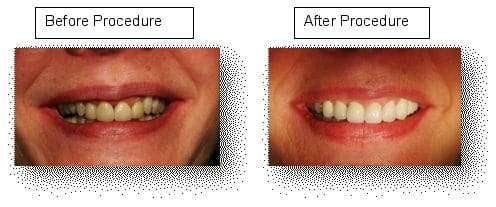
Implant reconstruction when bone grafting is necessary
Rebuilding an upper quadrant with bone grafting and implant crowns in Washington, DC. This documented case at Elite Prosthetic Dentistry restored an upper left quadrant where several teeth were missing and a very large maxillary sinus had left virtually no bone for implants, using sequenced grafting, implant placement, and custom crowns. Treatment was planned and completed by Dr. Gerald Marlin, D.M.D., M.S.D., a prosthodontist focused on implant reconstruction and complex restorative care.
Case at a Glance
- Treatment
- Upper-left quadrant rebuilt with sinus-area bone grafting, implants, and custom crowns
- Approach
- Two sequenced surgical phases, graft integration verified before implant placement, crowns matched to the natural teeth
The presenting condition
The patient needed to restore the upper left quadrant, where several teeth were missing and the bone could no longer support implant placement. The critical complication was a very large maxillary sinus. When upper back teeth have been gone for an extended period, the sinus tends to expand, or pneumatize, downward into the space the tooth roots once occupied. That is exactly what had happened here, leaving virtually no bone support in the left posterior quadrant.
With so few remaining teeth in the quadrant, the patient faced a difficult choice: accept a removable partial denture, with its inherent limitations of maintenance, comfort, and function, or pursue a more complex implant solution that would first require rebuilding the bone itself. She understood the limitations of denture wear and wanted a fixed solution that would provide complete function and stability without relying on a removable appliance.
Clinical Findings
- →Several missing teeth in the upper left quadrant
- →Bone support inadequate for implant placement
- →A very large maxillary sinus pneumatized downward where teeth had been missing for an extended period
- →Virtually no bone remaining in the left posterior quadrant
- →A firm patient goal of fixed teeth rather than a removable partial denture
Why this case required prosthodontic-level planning
Restoring multiple missing teeth in a single quadrant with implants is a complex undertaking under any circumstances, because it demands both surgical and prosthodontic judgment. When the bone itself is deficient, the complexity compounds. Without bone, implants cannot be placed, and without implants, the only conventional answer left is removable prosthodontics. Cases like this one succeed or fail on whether the foundation problem is solved first.
Sequencing is the discipline that makes it work. The bone has to be rebuilt before anything can stand on it. The graft has to heal and integrate with the patient’s native bone before implants can be placed in it. And the implant positions have to be chosen for the crowns they will eventually carry, not simply for where placement is easiest. Planning backward from the finished quadrant, teeth that meet the opposing arch correctly and blend with the neighboring natural teeth, is what determines every earlier step. That endpoint-first, phased approach is the core of prosthodontic-level care.
The decision behind the result: rebuilding bone instead of accepting a removable partial
The defining decision in this case was whether to treat the missing bone as a fixed fact or as a solvable problem. Accepting it would have meant a removable partial denture, the path the anatomy seemed to dictate. Solving it meant grafting the sinus area to recreate the bone volume that years without teeth had erased.
Dr. Marlin’s evaluation supported grafting. Using bone augmentation techniques, the sinus floor could be raised and the posterior ridge rebuilt to a volume that would properly support implants, rather than forcing short or compromised placements into thin bone. The patient’s own priorities pointed the same direction: she wanted complete function and stability without a removable appliance, and she was willing to invest in the phased treatment that goal required. The implants here were not the starting assumption. They were the outcome of a decision to rebuild the foundation properly, made jointly between a specialist who could deliver it and a patient who understood what she was choosing. For patients who cannot have implants or prefer another route, fixed alternatives on natural teeth can also be considered as part of the same kind of evaluation.
The treatment plan
-
1
Comprehensive planning across surgical and restorative phases
Dr. Marlin developed a coordinated plan built around two major surgical phases followed by prosthodontic restoration, all designed from the finished quadrant backward.
-
2
Phase one: bone grafting of the left sinus area
Bone augmentation raised the sinus floor and rebuilt volume in the posterior maxilla, a demanding procedure requiring expertise in sinus anatomy and grafting principles.
-
3
Phase two: implant placement in the reconstructed bone
After the graft had healed and integrated with the native bone, multiple implants were strategically positioned to provide optimal support and distribution of forces across the quadrant.
-
4
Final phase: custom crowns on each implant
Custom crowns were fabricated for each implant, designed to be functionally sound and natural in appearance, integrating seamlessly with the patient's remaining natural teeth.
The outcome
The patient achieved complete restoration of function in the left quadrant through a full quadrant of fixed implant crowns. Most importantly to her, she avoided the removable partial denture that had been her primary concern. A fixed restoration of this kind offers superior comfort, chewing function, and long-term stability compared with removable prosthodontics, and it asks nothing of the patient beyond normal care.
The restored quadrant now functions as if the teeth had never been lost. She can eat normally, speak clearly, and smile with complete confidence, and the implant-supported crowns are stable, durable, and designed for long-term service. The crown work was completed with direct coordination between Dr. Marlin and the practice’s in-house laboratory, keeping control over fit, contour, and shade so the new teeth blend with the natural ones beside them. The broader lesson of the case is worth stating plainly: even when bone is severely deficient, modern grafting combined with carefully planned implant placement can make a fixed result possible.
Result Highlights
- ✓Bone rebuilt in a quadrant that had virtually no support remaining
- ✓Complete chewing function restored with fixed implant crowns
- ✓The removable partial denture the patient feared was never needed
- ✓Implants positioned for optimal support and force distribution
- ✓Crowns that integrate naturally with the remaining teeth
- ✓A stable, durable result designed for the long term
Who this case may sound familiar to
This case tends to resonate with patients in a few recognizable situations:
- You have been told you do not have enough bone for dental implants.
- Several teeth are missing in one area of your mouth and you have been managing around the gap.
- You are weighing a removable partial denture against a fixed solution and dislike the idea of removable teeth.
- Teeth were removed years ago and the area has been empty long enough that the bone has receded.
- You want the foundation rebuilt correctly once rather than settling for the easiest available option.
If any of those describe where you are, a consultation with Dr. Marlin can establish the diagnostic picture and the specific options for your case.
Frequently asked questions
What is a sinus bone graft, and why is it needed for upper implants?
The maxillary sinus sits directly above the upper back teeth. When bone in that area is too thin to hold an implant, graft material can be placed to raise the sinus floor and rebuild vertical bone volume. Once the graft heals and integrates, the reconstructed ridge can support implants placed at proper length and position.
Why does bone disappear after upper back teeth are lost?
Two processes work against the ridge at once. Without tooth roots to stimulate it, the bone gradually resorbs. At the same time, the maxillary sinus above can expand, or pneumatize, downward into the space the roots once occupied. The longer the area goes without teeth, the less bone remains, which is why timing matters in implant planning.
Can I get implants if I have been told I have no bone?
Often the accurate answer is not yet rather than no. Modern grafting techniques can rebuild severely deficient bone, including sinus-area augmentation for the upper jaw, so that implants become possible where they once were not. A prosthodontic evaluation with imaging establishes how much bone exists, how much can be rebuilt, and whether a fixed restoration is a realistic goal.
How do fixed implant crowns compare with a removable partial denture?
A removable partial denture can restore appearance and some function, but it involves ongoing maintenance, can affect comfort, and depends on the teeth and tissue it rests on. Fixed implant crowns stand on their own supports, stay in place, and function much closer to natural teeth. The tradeoff is that the fixed path may require more treatment up front, especially where bone must be rebuilt first.
Why does a quadrant reconstruction call for a prosthodontist?
Because the case spans surgery and restoration, and the two have to be planned as one. The graft determines where implants can go, the implants determine what the crowns can be, and the crowns have to meet the opposing teeth and match the natural ones beside them. A prosthodontist plans that chain from the endpoint backward and sequences each phase so the final quadrant functions as a coherent whole.
More about the work behind this case
This case sits at the intersection of bone grafting, dental implants, and custom crowns. The phased surgical sequencing and endpoint-first design behind it are part of the practice philosophy that supports cases other practices may consider impossible.
Elite Prosthetic Dentistry treats patients from across the DMV including Bethesda, Chevy Chase, McLean, Arlington, Potomac, and Great Falls, with a record of out-of-area patients traveling to the practice for complex restorative care.
Related Services
Related Patient Success Stories
Explore similar patient success stories demonstrating our expertise in advanced prosthetic dentistry.
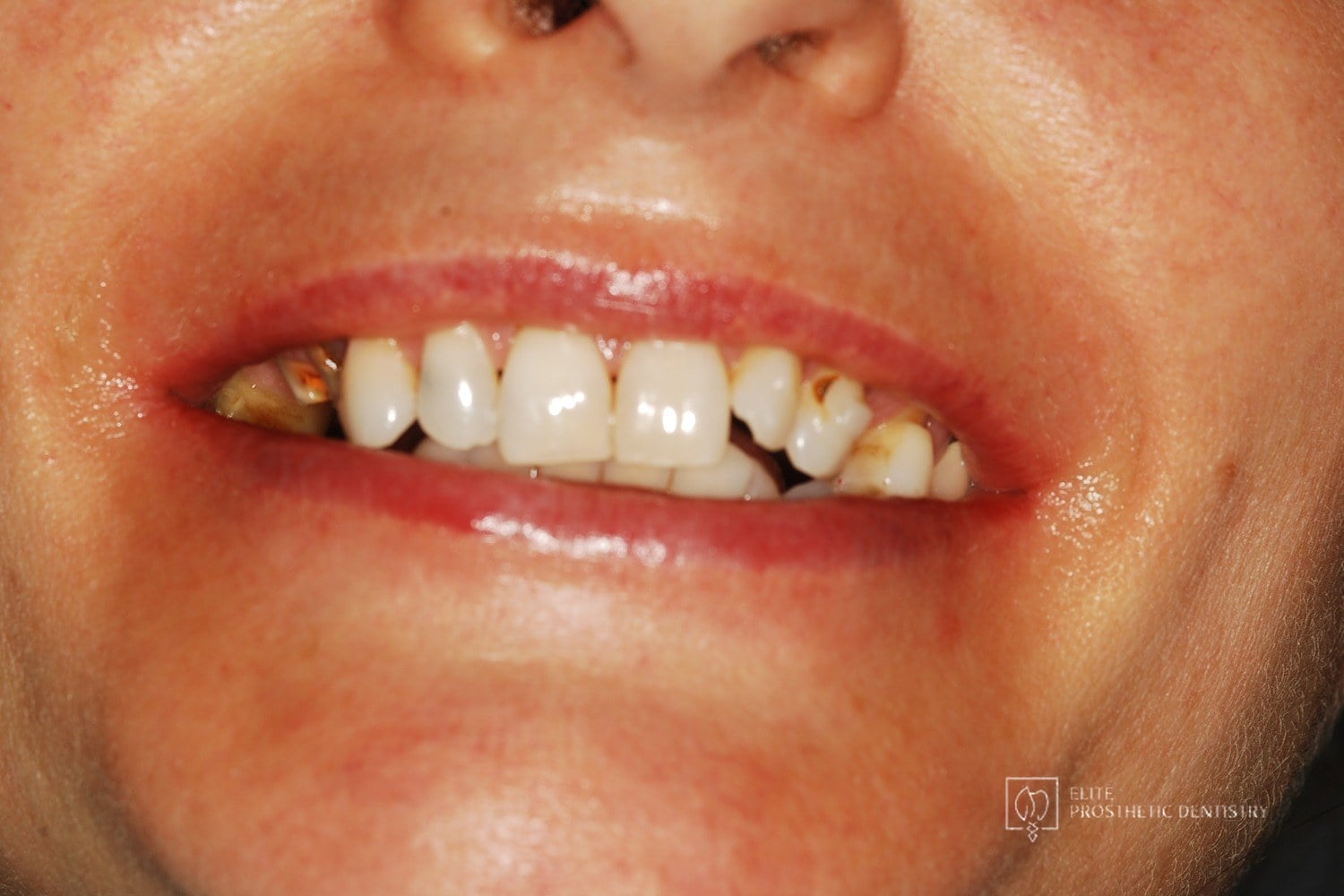 Before
 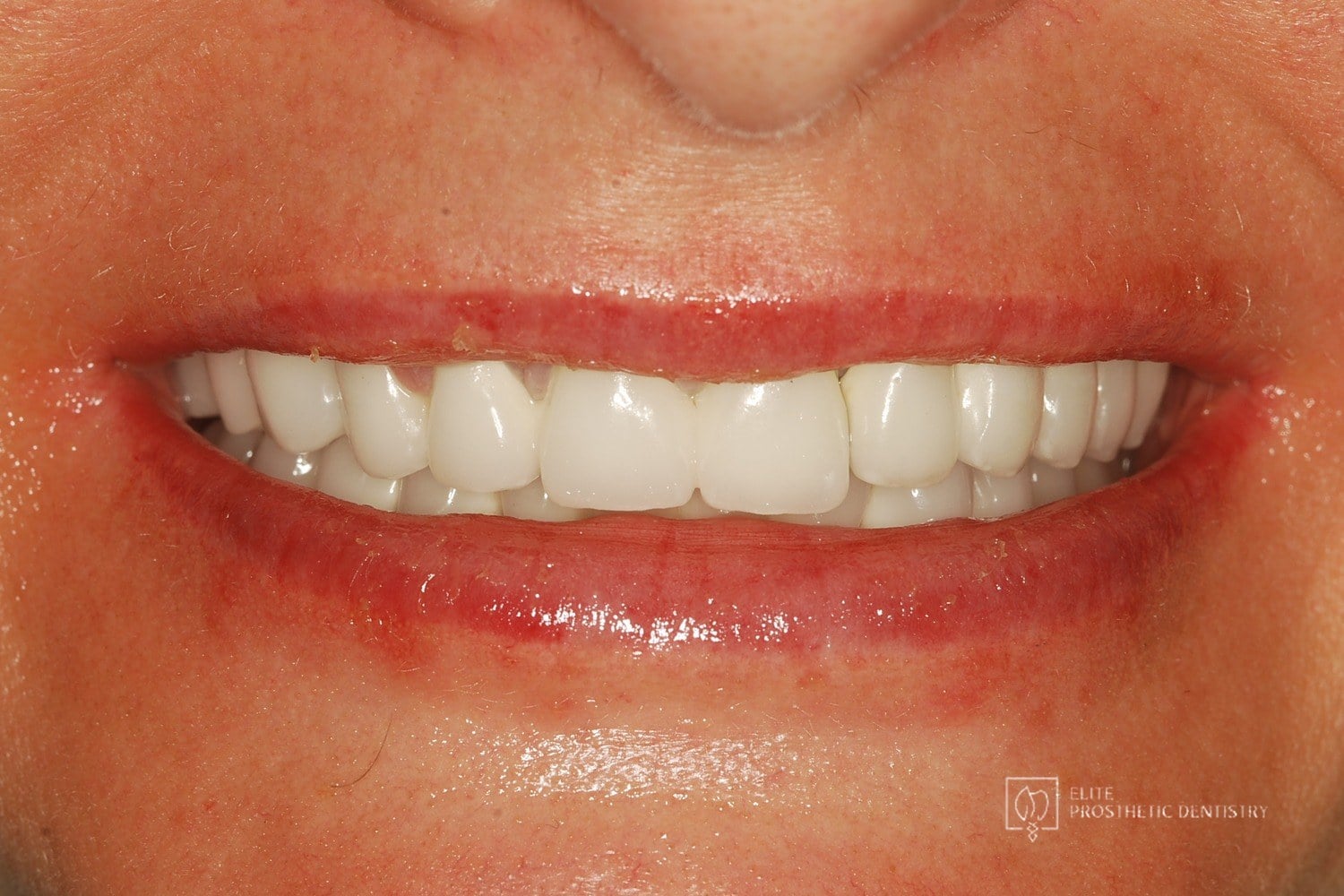 After
After How Aging, Failing Dentistry Was Replaced with a Coordinated Full-Mouth Implant and Crown Reconstruction
The patient presented with throbbing upper-molar pain, long-standing infections, multiple root canals and unfinished prior treatment, generalized sensitivity, and several hopeless teeth.
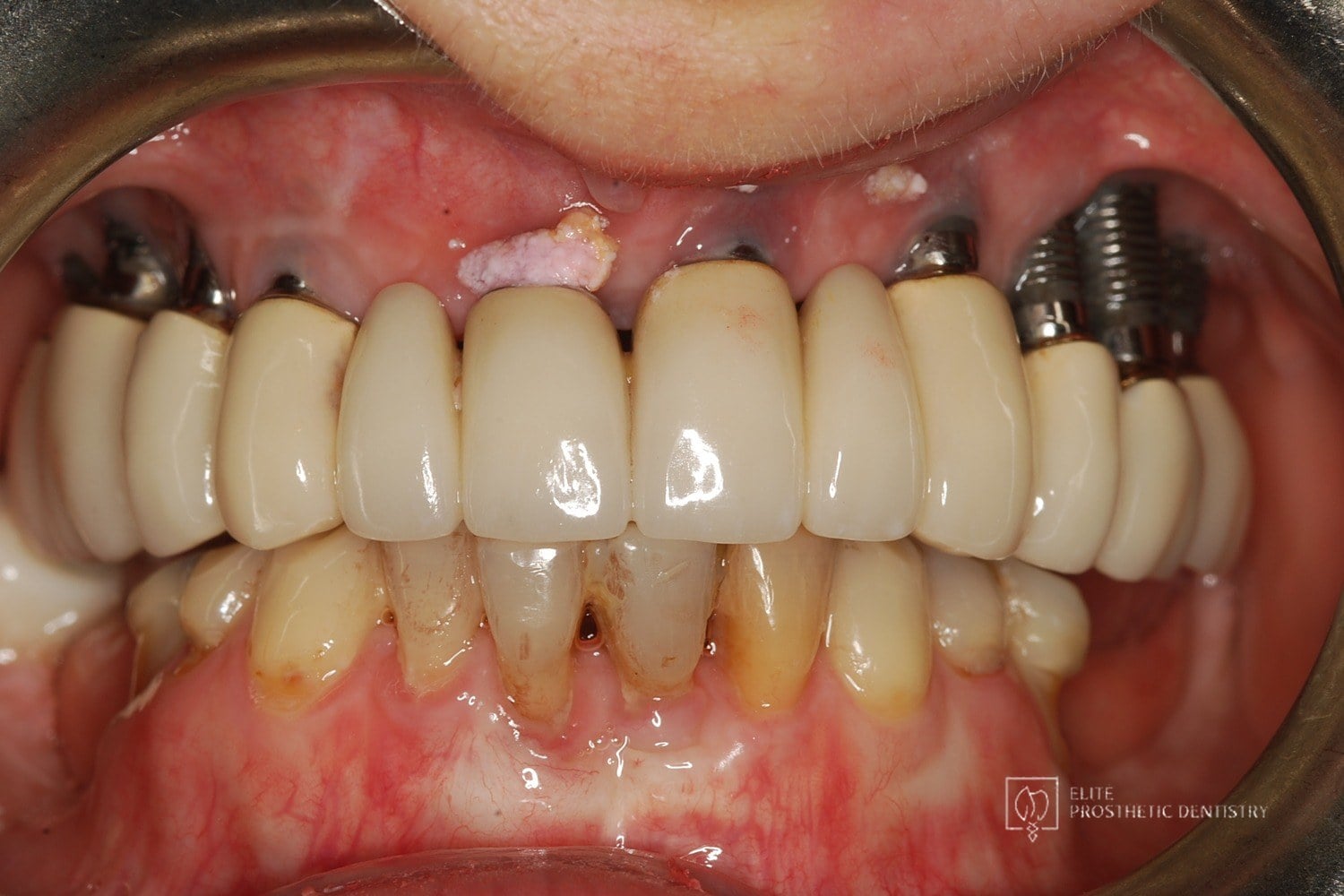 Before
  After
After How Failing Implants and Severe Bone Loss Were Rebuilt Into a Stable Full-Arch Implant Reconstruction
The patient presented with significant complications from previously placed implants, severe bone loss, failing posterior implants, and an unesthetic full-arch bridge. Both arches required full reconstruction, with the upper arch showing the most advanced bone loss and instability.
 Before
  After
After How Failing Lateral Incisor Implants Were Replaced with Custom Zirconia Bridges After Severe Bone Loss Made Replacement Implants Impossible
Comprehensive examination including CBCT imaging revealed significant bone loss surrounding implants that were placed outside the buccal plate, most likely due to placement without a CBCT-generated surgical guide. The implants were determined non-salvageable, and the alveolar ridge was too narrow to support replacement implants without extensive reconstruction.