
Loose Dental Implant in Bethesda, MD
Bethesda loose dental implant repair. Dr. Marlin diagnoses implant fixture, abutment, and crown problems with advanced imaging. Schedule your evaluation today.
Loose Dental Implant Treatment in Bethesda, MD
When you notice movement in a dental implant, your first instinct is often alarm. But here’s what many patients don’t realize: “loose implant” is actually a catchall term that describes three completely different problems. Understanding which one you have is the critical first step toward the right solution. At Elite Prosthetic Dentistry, we specialize in identifying exactly what’s loose and developing a precision treatment plan to address it.
Three Distinct Problems, Three Different Solutions
The term “loose implant” creates confusion because patients use it to describe any movement or shifting in their implant tooth. But the anatomy involved is more nuanced than most people understand.
The Implant Fixture Itself
The implant fixture is the titanium screw surgically placed into your jawbone. This is the foundation that fuses with bone through a process called osseointegration. When the fixture moves, it typically indicates one of two serious issues: bone loss around the implant, or failure of the implant to integrate properly with bone in the first place. A truly loose fixture is the most concerning of the three problems because it affects the entire structural integrity of the restoration.
The Abutment Connection
The abutment is the connector piece that sits on top of the implant fixture. It supports your crown or bridge. The abutment attaches to the fixture through a screw or, less commonly, through a cement interface. Many patients experience abutment movement, but this is actually the most straightforward problem to address. The abutment screw can back out from normal chewing forces, or the connection can loosen due to screw relaxation. Simply retightening or replacing the screw often resolves the entire problem.
The Crown or Bridge Restoration
The crown is the visible tooth replacement that sits on top of the abutment. It can loosen if it was cemented rather than screw-retained, or if the cement has failed. It can also appear loose if there’s movement at the abutment or fixture level below it. Some patients report that their crown feels mobile when actually the underlying implant components are moving.
Why Precise Diagnosis Matters
Determining which component is actually loose requires more than a visual exam. We use a combination of clinical techniques and advanced imaging to pinpoint exactly what’s moving.
Physical Examination Technique
During your examination, we perform a test called the implant mobility test. Using a specialized dental instrument, we gently apply force to different parts of your restoration. A truly loose fixture will move independently from the surrounding bone and teeth. An abutment will move relative to the fixture. A loose crown will move relative to its support structure. These tactile differences are diagnostic.
Digital Radiography
Standard X-rays show us bone levels around your implant. A comparison between current and previous radiographs reveals whether you’ve experienced bone loss, which is often associated with fixture mobility. Periapical radiographs and occlusal radiographs from multiple angles give us the dimensional information we need.
Cone Beam Computed Tomography (CBCT)
For complex cases, CBCT imaging provides 3D visualization of your implant position, bone density, and any fractures or integration failures. This is particularly valuable when the history is unclear or when we’re planning potential repositioning or replacement.
Bite Analysis
The way your teeth meet when you bite down can reveal why an implant is loose. Excessive force on an implant or poor force distribution can cause or accelerate loosening. We assess your occlusion and discuss modifications that might be necessary. Understanding your bite helps us determine if overloading is contributing to implant problems.
Treatment Approaches Based on Root Cause
Once we’ve identified which component is loose, the treatment becomes straightforward and targeted.
When the Abutment Screw Is Loose
This is the most common scenario and the most straightforward to address. The fix is simple: we unscrew the abutment, clean the threads, apply a light threadlocker material, and retorque the screw to the manufacturer’s specifications. This usually takes one appointment. Prevention involves ensuring your home care is adequate and avoiding chewing on very hard objects that can cause screw relaxation. Patients in Bethesda experiencing this issue can access our implant repair services.
When the Crown Restoration Is Loose
If the crown is cemented, we remove it, clean the abutment, and re-cement it with a permanent cement. If the crown is screw-retained and the screw has backed out, we access the screw hole from the top of the crown, retighten it, and restore the access hole with a tooth-colored filling material.
When the Implant Fixture Is Loose
This requires more investigation and often represents a more serious situation. We determine whether the cause is bone loss from infection, poor initial placement, loading issues, or failed osseointegration. Depending on the situation, we might perform surgical evaluation to assess bone quantity and quality, treat underlying infection, or plan for repositioning or removal and replacement. In some cases, full mouth reconstruction strategies are needed when multiple implants are affected.
Abutment Screw Failure: The Most Common Scenario
The abutment screw is the workhorse component of your implant restoration. It bears significant load and is subject to cyclic stress. Under normal circumstances, these screws are highly reliable. But several factors can cause them to loosen. Understanding abutment screw issues helps distinguish them from more serious problems like failed implant integration.
Screw Relaxation
When a screw is first tightened, the joint between components settles over the first hours and days. This is called screw relaxation, and it’s why some prosthodontists retorque screws at a follow-up appointment after initial placement. If you experience mobility within days of getting your implant, screw relaxation is often the culprit.
Inadequate Torque at Insertion
The abutment screw must be tightened to a specific torque value. Under-tightening leaves the screw with slack, allowing movement. Over-tightening can damage the threads or fracture the screw. We use calibrated torque wrenches and follow manufacturer specifications precisely.
Material Compatibility
Certain abutment materials work better with specific fixture designs. Mismatches can lead to poor seating and premature loosening. We select compatible components from the same manufacturer system whenever possible.
Chewing Forces and Parafunctions
Patients who grind their teeth or chew forcefully on hard objects place extra stress on the abutment screw. We discuss these habits and may recommend a nightguard to distribute forces more evenly.
Corrosion and Debris
Over time, metallic particles can accumulate in the abutment screw joint, preventing proper seating. During screw retightening, we thoroughly clean the connection and remove any debris.
Infection and Bone Loss: When Loose Implants Indicate Deeper Problems
Not all loose implants are mechanical failures. Sometimes, the loosening is a symptom of infection or biological bone loss.
Peri-Implantitis Signals
If your loose implant is also accompanied by bleeding, swelling, or drainage around the implant, bacterial infection may be compromising bone stability. This requires more aggressive intervention than simply tightening a screw. We discuss infection-related bone loss in detail, as peri-implantitis is a common underlying cause of implant failure.
Medical and Medication Factors
Certain medical conditions and medications slow or prevent bone healing. Diabetes, autoimmune conditions, and medications like bisphosphonates can impair osseointegration. During your initial consultation, we review your medical history to identify any factors that might affect implant stability.
Prior Radiation Therapy
Patients who have undergone radiation therapy to the head or neck often experience compromised bone healing. If you have a history of radiation, we adjust our approach accordingly and may recommend additional diagnostic imaging and longer healing periods.
Evaluating Your Implant From Our Perspective
When you come to us with a loose implant, we take a systematic diagnostic approach that respects your time and provides clarity quickly.
Comprehensive History
We want to know when the movement started, whether it’s progressive or stable, what it feels like, and whether you’ve noticed any other changes. The timeline often reveals the underlying cause.
Clinical Assessment
Beyond the mobility test, we assess bone levels visually, check the health of surrounding tissues, evaluate your bite forces, and examine the crown or restoration for any damage that might correlate with the loosening.
Imaging Review
We compare current radiographs to any previous images you have. Sometimes the problem is subtle in a single image but obvious when comparing before and after. If we need 3D imaging, we discuss that with you upfront.
Treatment Recommendation
Based on our findings, we present you with realistic options, timelines, and what to expect. We discuss the most conservative approach first and escalate only if necessary.
When to Seek Evaluation in Bethesda
Bethesda has a high concentration of educated, health-conscious professionals who often notice subtle changes in their teeth. If you have a loose implant, trust your awareness and seek evaluation promptly. Early intervention is almost always simpler and less costly than waiting until the problem advances.
Bethesda residents within our service area can often reach our office in just 5 minutes via Old Georgetown Road. For patients who need sedation during complex treatment, we offer sedation dentistry options. This proximity means you can get urgent evaluation without disrupting your day significantly.
The Importance of Following Post-Treatment Care
Once we’ve addressed your loose implant, maintenance is critical. We provide specific instructions based on your situation. These might include avoiding hard or sticky foods for a specified period if we’ve retightened a screw or re-cemented a crown. Using a soft toothbrush and water flosser to keep the implant clean without disturbing healing tissues. Attending follow-up appointments as scheduled so we can verify stability and assess healing. If you grind or clench, modifying these parafunctional habits through nightguard therapy prevents recurrence. Comprehensive prosthodontic care during the recovery period ensures optimal outcomes.
Why Choose Elite Prosthetic Dentistry for Your Loose Implant
Dr. Gerald Marlin earned his Master of Science degree in Prosthodontics, the dental specialty focused on complex restorations and implants. This advanced training gives him the diagnostic and treatment skills to handle loose implants that other general dentists might find difficult. He specializes in prosthodontic care and advanced implant restoration.
We have an in-house laboratory, which means we can fabricate or modify components quickly without waiting for external lab turnaround. This is particularly valuable when you need abutment adjustments or crown modifications as part of your treatment plan.
We invest in advanced diagnostic imaging, including CBCT technology, because precision diagnosis drives precision treatment. We don’t guess. We measure. We image. We diagnose clearly, then treat accordingly.
Related Services and Next Steps
Your loose implant situation might intersect with several other services we provide. Many of our patients in the Bethesda area benefit from understanding these related areas:
If your implant is experiencing multiple problems simultaneously, our failing implant repair services address complex cases. For infection or bone-related causes, we provide dental implant bone loss treatment. If you suspect the original placement angle was incorrect, we can evaluate that through imaging. When an implant never healed properly, failed implant integration treatment might apply.
If your loose implant requires bone reconstruction, our bone grafting services restore adequate bone support. For patients considering replacement implants, we emphasize precision implant placement to avoid future complications. Local Bethesda patients can access dental implants in Bethesda and bone grafting in Bethesda services. We also offer second opinion dentistry if you want another perspective on treatment recommendations.
Scheduling Your Evaluation
The first step is a thorough evaluation with Dr. Marlin. We’ll take the time to diagnose your specific situation accurately and present realistic treatment options. To request an appointment, contact us today. We serve the Bethesda area and surrounding communities, and we can often see patients for urgent evaluations within 1-2 days.
If you’d like to learn more about Dr. Marlin’s background and approach to complex implant cases, read his professional biography.
Your loose implant is solvable. The key is accurate diagnosis and treatment that addresses the actual problem, not just the symptom. Let us help you restore your implant to full stability and function.
Frequently Asked Questions
How can I tell if my implant fixture itself is loose versus the crown or abutment?
This requires clinical examination and imaging. A truly loose fixture moves with bone loss. A loose crown typically feels loose but the underlying implant is stable. An abutment screw that has backed out creates mobility without implant movement. We use digital radiography and manual testing to differentiate.
Can a slightly loose implant wait a few months to be fixed, or is this urgent?
It depends on the cause. A loose abutment screw can wait a few days but should be addressed quickly to prevent crown loss. A loose implant fixture with bone loss needs urgent evaluation because continued mobility worsens the condition. We assess urgency during your consultation.
Will I need bone grafting if my implant is loose from bone loss?
Not always. Minor bone loss around a loose implant may resolve with treatment of infection or surgical repositioning. Significant bone loss often requires grafting before the implant can be stabilized or replaced. We evaluate your specific anatomy with CBCT imaging first.
What happens if the original implant placement angle was wrong?
Poor implant angulation can lead to crown malposition, accelerated bone loss, or functional problems. Depending on the severity and tooth position, we may correct the angle through abutment selection, or remove and reposition the fixture. This is why we use precision surgical planning.
Is it possible to save my loose implant, or will I definitely need replacement?
Many loose implants can be saved through targeted intervention. Abutment screw tightening, infection treatment, or surgical correction addresses many cases. Some require removal and reinsertion. We pursue salvage whenever anatomically and functionally feasible before recommending replacement.
Related Patient Success Stories
Explore similar patient success stories demonstrating our expertise in advanced prosthetic dentistry.
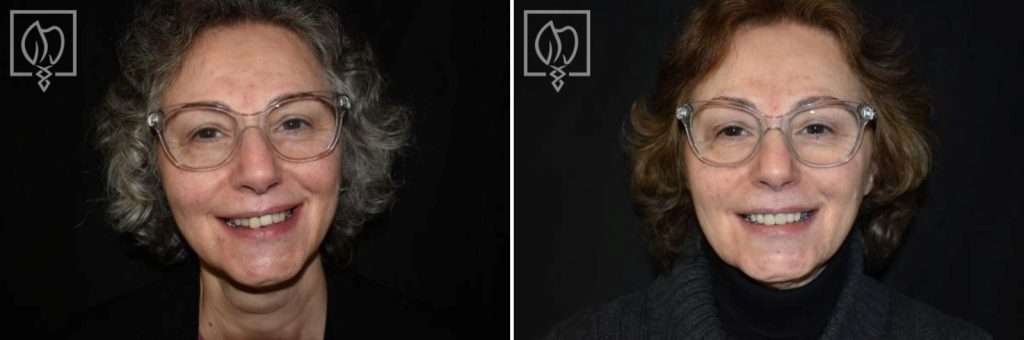
Temporary Crowns Restore Patient's Smile in Just One Day with an Immediate Smile Makeover
A patient from Potomac, Maryland, came to Elite Prosthetic Dentistry with the chief complaint of pain from a failing dental implant and its significant impact on her appearance.
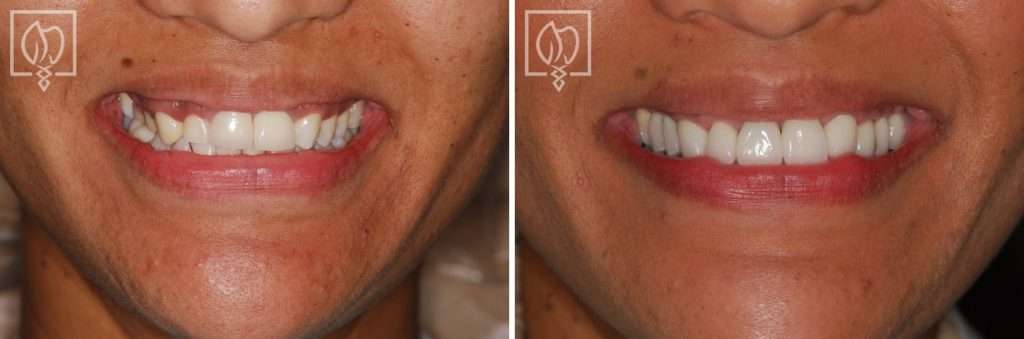
Multi-Faceted Treatment for Patient Unhappy With Her Artificial-Looking Crowns, Teeth and Gums
Many patients come to Elite Prosthetic Dentistry unhappy with the appearance of their smile. However, this particular patient presented with multiple interconnected problems that together created a smile she found deeply unsatisfying.
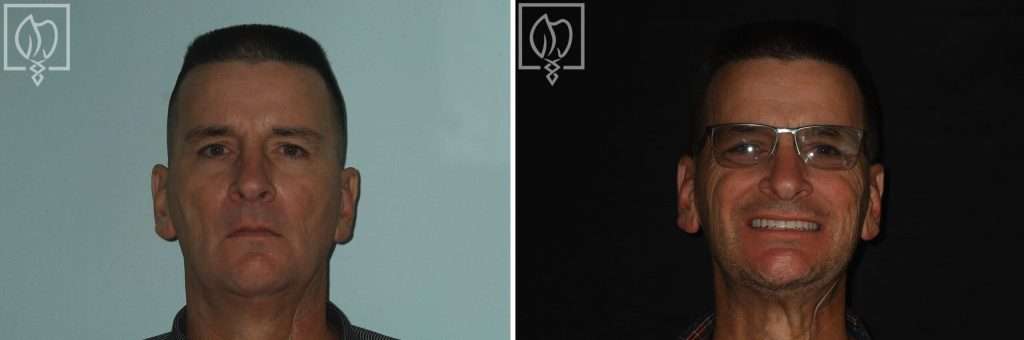
Treating Kevin’s Collapsed Bite with a Complete Smile Makeover with New Dentures
Dentures are sometimes not created to the ideal aesthetic and functional scheme. When improperly fabricated, dentures can make an individual appear almost a generation older than their actual age. They can have a poor fit that feels loose and unstable when eating or speaking, and they can actually accelerate bone loss over time.
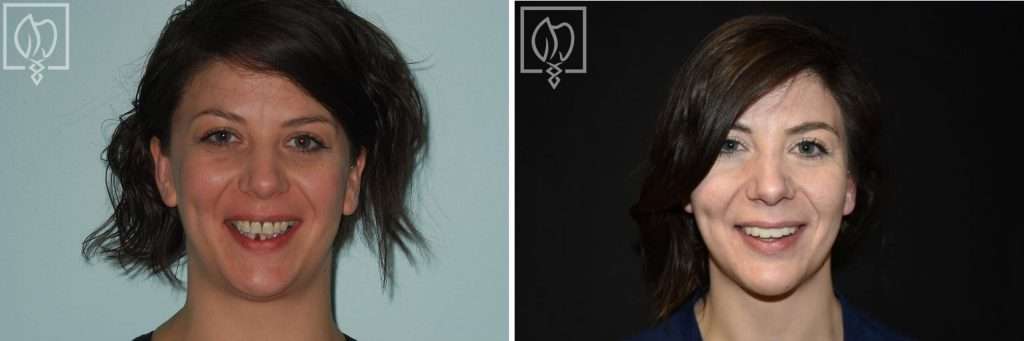
Salvaging Ms. N’s Severely Broken-Down Upper and Lower Teeth from Gum and Bone Disease
Many people in the U.S. suffer from extensive periodontal disease characterized by significant bone loss and shrinkage of the gum tissue. This condition can begin at a very young age and worsen quickly due to hereditary factors and lack of early diagnosis by their dentist.

Rejuvenating Maria’s Severely Worn Down Implant Overdentures
Many times, per year, patients come to us frustrated because their implant prosthesis is so severely worn down that they are very self-conscious and cover up their smile. They look and feel much older than their age as a result of the extensive wear of their appliance(s).
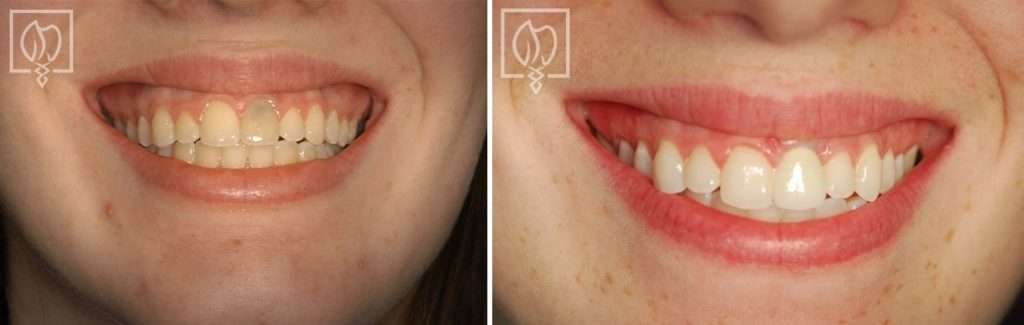
Replacing a Discolored Front Tooth with a Precision Placed Implant
Some of the most challenging restorations occur when fabricating an anterior crown to fit on an implant. Not only does one have the difficulty of matching the single front tooth to the other ones in the high visibility zone, but the dentist must also ensure the position of the underlying implant is precise through accurate preplanning and placement.
Related Articles
Deepen your knowledge with additional insights on this topic.
 Dental Implants
 If a Single Front Tooth is Replaced with an Implant, can it Look Natural?
A single front tooth implant can look completely natural with precision placement, custom abutments, and hand-crafted porcelain crowns. Washington, DC.
 Dental Implants
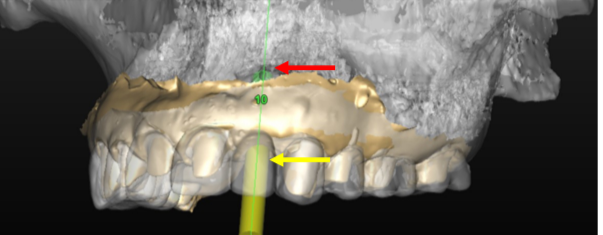
 What is Precision Implant Placement (PIP)?
Learn what Precision Implant Placement (PIP) is and how meticulous planning ensures optimal implant positioning for long-lasting results in Washington, DC.
 Dental Implants
 What is the ideal Surgical Guide for Precision Implant Placement?
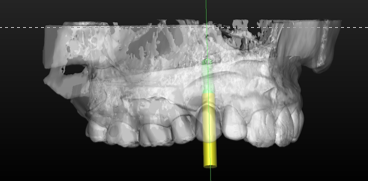
CBCT-based surgical guides allow virtual implant planning for precise positioning in optimal bone, ensuring predictable results in Washington, DC.
 Dental Implants
 When Should an Implant not be Done?
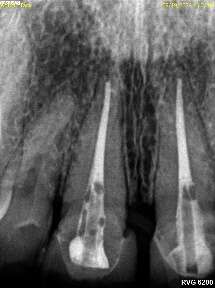
Not every patient is a candidate for dental implants. Learn when healthy roots, fragile bone, or steep angles may make alternatives the better choice.
 Dental Implants
 What is Staged Implant Therapy?
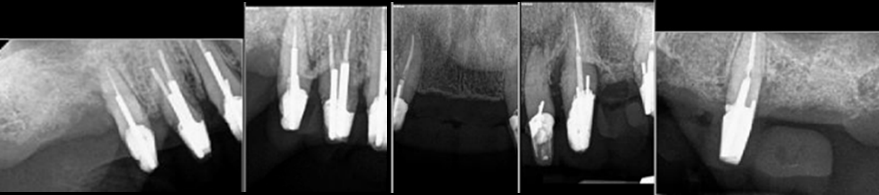
Staged implant therapy replaces teeth gradually using existing teeth as temporary support. A personalized alternative to All-on-X for full-arch cases.
Unveiling the Four Types of Dental Implants: Which One's for You?
Learn about the four types of dental implants - endosteal, subperiosteal, zygomatic, and mini implants - and which option may be right for your needs.
Our Services in Bethesda
Beyond loose-dental-implant, Bethesda patients rely on Dr. Gerald Marlin for a full range of advanced dental care.
More services available in Bethesda:
loose-dental-implant Near Bethesda
Dr. Gerald Marlin also provides loose-dental-implant services for patients in these neighboring communities.
Getting Here from Bethesda
Elite Prosthetic Dentistry is conveniently located near Bethesda, MD.
Located just north of the Bethesda Metro station area. Easy access via Old Georgetown Road or Wisconsin Avenue.
Address:
4400 Jenifer Street NW, Suite 220
Washington, DC 20015
Phone: (202) 244-2101
Schedule ConsultationSchedule Your Consultation from Bethesda
Bethesda residents trust Dr. Gerald Marlin for precision dental care. With 3,900+ implants placed and 40+ years of experience, your smile is in expert hands.