
A Dramatic Smile Improvement With Redesigned Crowns
Documented before and after
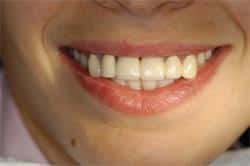 Before
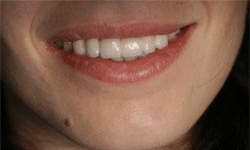 After
After
Clinical detail
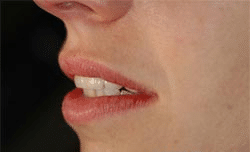
A dramatic smile improvement through crown redesign
Redesigning existing dental crowns in Washington, DC is as much an exercise in optics and proportion as in dentistry. This documented case at Elite Prosthetic Dentistry replaced a set of functional but artificial-looking crowns with restorations designed around the patient’s face, lip line, and natural tooth character. Treatment was planned and completed by Dr. Gerald Marlin, D.M.D., M.S.D., a prosthodontist focused on cosmetic prosthodontics and complex restorative care.
Case at a Glance
- Treatment
- Redesign and replacement of existing crowns with custom-crafted natural-looking restorations
- Approach
- Comprehensive cosmetic analysis, redesigned proportions and optical properties, in-house laboratory fabrication
The presenting condition
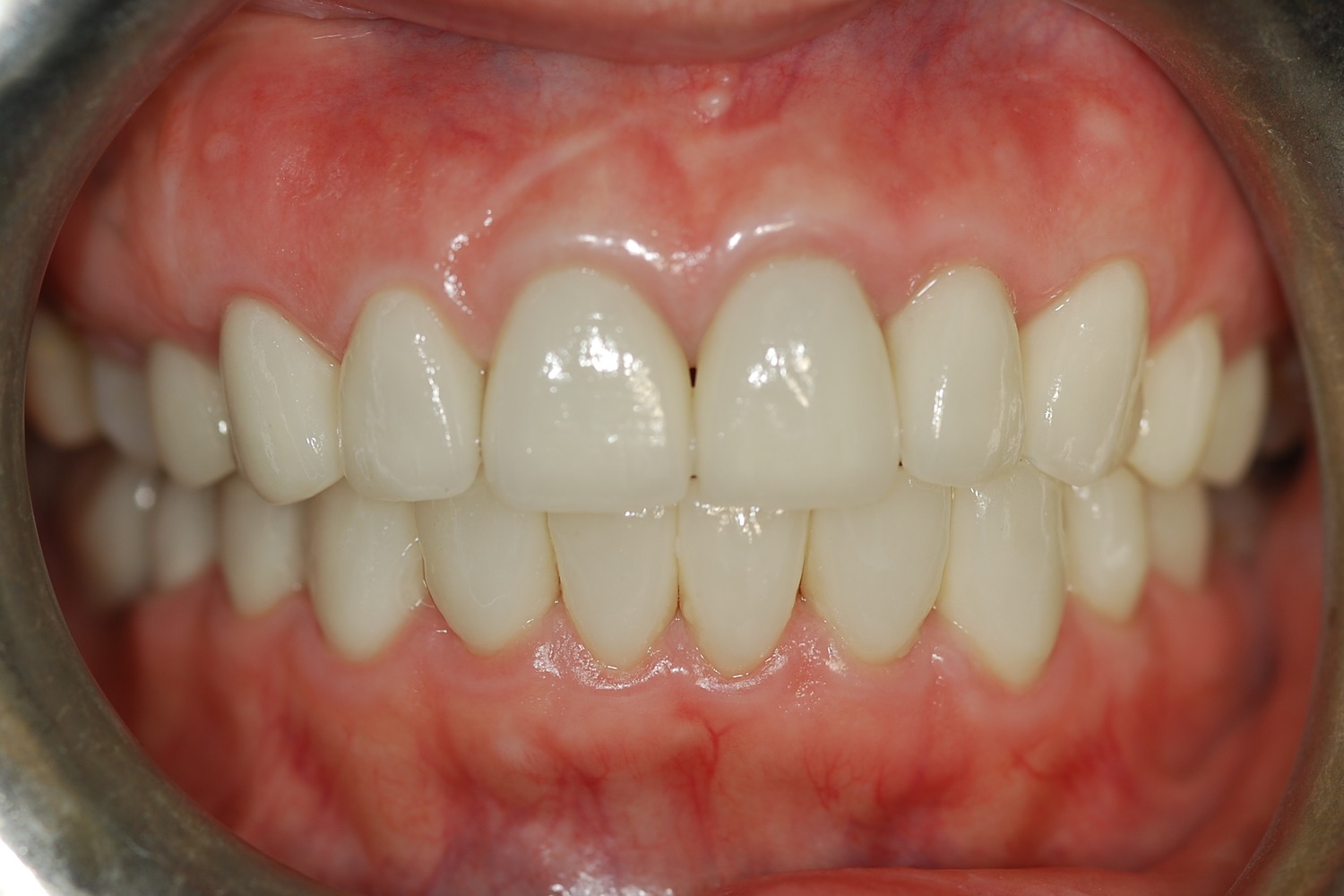
The patient presented with existing crowns that, while functional, showed several esthetic characteristics often seen in restorative work placed years earlier. The crowns appeared too wide for her natural tooth structure and too long for her facial proportions. They extended too far forward, and their color was a uniform white without the natural variation of real teeth. Most limiting of all, they were opaque, with none of the translucency and three-dimensional light transmission that gives healthy enamel its depth.
Together those characteristics created an obviously restored appearance. The patient had already made a substantial investment in her smile and still felt self-conscious about it. What she wanted was straightforward to say and demanding to deliver: a smile that would look naturally beautiful and appropriate for her age and facial features.
Clinical Findings
- →Existing crowns functional but esthetically limited
- →Crown width and length out of proportion with the natural tooth structure and facial features
- →Restorations positioned too far forward (protrusive)
- →Uniform white shade without natural color variation
- →Opaque surfaces lacking translucency and natural light transmission
- →Patient self-conscious about an obviously restored appearance
Why this case required prosthodontic-level planning
Crowns can be structurally sound and still read as artificial, because what makes teeth look real has little to do with whiteness. Natural teeth vary in color from gumline to edge, transmit light through semi-translucent enamel, and sit in proportions dictated by the face around them. When restorations miss on those dimensions, no shade adjustment fixes it. Remaking the same crowns in a different white would have reproduced the same artificial result at full price.
The real work in this case was diagnostic and architectural. The smile had to be reimagined: its dimensions, its contours, its color behavior, and its optical properties, all designed against the patient’s facial proportions rather than copied from the restorations being replaced. That endpoint-first design discipline, deciding exactly what the finished smile should look like before touching a single tooth, is what prosthodontic training is built around.
The decision behind the result: redesigning the smile, not just replacing the crowns
The defining judgment in this case was to treat the problem as a design failure rather than a materials failure. Dr. Marlin began with a comprehensive cosmetic analysis of the patient’s smile, evaluating facial proportions, lip line characteristics, smile arc, and overall facial esthetics. The new crowns were then designed with specific modifications answering each documented limitation of the existing restorations.
The dimensions were narrowed, creating the visual effect of longer, more proportional teeth that better matched her facial structure. The canines were strategically shortened to produce a more feminine, curved smile line in place of a flat, uniform one. Internal color grading and layering built subtle variation and depth into each crown, mimicking the multi-dimensional color of healthy natural teeth. Translucency was engineered into the restorations so light passes through them the way it passes through enamel, and the contours were shaped to follow her natural lip line so the smile and the face read as one composition.
None of that can be ordered from a checklist. It requires a prosthodontist and a laboratory working from the same design intent, which is exactly how this case was run.
The treatment plan
-
1
Comprehensive cosmetic analysis
Evaluation of facial proportions, lip line characteristics, smile arc, and overall facial esthetics to define what the redesigned smile needed to achieve.
-
2
A crown design answering each limitation
Narrower dimensions for better proportion, strategic canine shaping for a curved smile line, and contours that follow the patient's natural lip line.
-
3
Optical properties built into every crown
Internal color grading and layering for natural depth and variation, with translucency engineered to transmit light the way natural enamel does.
-
4
In-house fabrication with the patient involved
The practice's in-house laboratory worked directly with Dr. Marlin and collaborated closely with the patient, fabricating each crown to precise specifications with multiple opportunities for her to evaluate the esthetics.
-
5
Final placement
The redesigned crowns were placed only after the patient had reviewed and approved their appearance, completing the new smile.
The outcome
The result exceeded the patient’s expectations. Her new smile looks naturally beautiful, with proper proportions, vibrant color, and the subtle translucency that characterizes young, healthy teeth. The crowns harmonize with her facial features and lip line, so the overall effect reads as effortless rather than obviously restored. Because design and fabrication happened under one roof, Dr. Marlin and the in-house laboratory maintained direct control over every specification from analysis through final placement.
The change was more than cosmetic. The patient smiles freely now, without the self-consciousness that had limited how willingly she engaged socially and professionally. That is the practical return on prosthodontic-level design: not just a better smile, but the freedom to use it.
Result Highlights
- ✓Crown proportions redesigned to suit the patient's tooth structure and facial features
- ✓A curved, more feminine smile line achieved through strategic canine shaping
- ✓Internal color grading and layering for natural depth and variation
- ✓Lifelike translucency and light transmission in the finished crowns
- ✓Patient evaluated and approved the esthetics before final placement
- ✓Crowns fabricated by the in-house laboratory working directly with Dr. Marlin
Who this case may sound familiar to
This story tends to resonate with patients in a few recognizable situations:
- Your crowns work fine but look obviously restored: too white, too uniform, or too opaque to pass for natural teeth.
- You have already invested in your smile once and are cautious about investing again without a different plan.
- You want proportions and color designed for your face and age rather than a one-shade-fits-all result.
- You want to see and approve the appearance of your restorations before they are finalized.
- You want the redesign planned by a specialist so it is done correctly this time.
If any of those describe where you are, a consultation with Dr. Marlin can establish the diagnostic picture and the specific options for your case.
Frequently asked questions
Why do some crowns look artificial?
Usually because of optics and proportion rather than workmanship alone. Natural teeth show color variation, depth, and translucency, and they sit in proportions dictated by the face. Crowns that are uniformly white, opaque, or oversized for the smile tend to read as restorations even when they function well.
Can existing crowns be replaced for cosmetic reasons?
Often, yes. The evaluation starts with the health of the underlying teeth and the bite, then moves to what the new design should accomplish. When replacement is appropriate, it is an opportunity to correct proportion, color behavior, and contour rather than simply repeat the previous design in a new shade.
What makes a crown look natural?
Internal color layering that grades from gumline to edge, translucency that lets light pass the way enamel does, proportions that fit the face, and contours that follow the lip line. Each element has to be designed deliberately and executed by a laboratory capable of building it into the restoration.
Can I see how my new crowns will look before they are finished?
In a practice with an in-house laboratory, yes. Fabricating the restorations on site creates natural checkpoints where the patient can evaluate shape, shade, and overall appearance, and adjustments can be made before anything is finalized.
Why see a prosthodontist for a cosmetic crown redesign?
Because the difference between a functional crown and a beautiful one is design, and design is what prosthodontic specialty training concentrates on. A prosthodontist plans the smile as a system, weighing facial proportion, lip dynamics, color behavior, and bite function together before any restoration is made.
More about the work behind this case
This case draws on custom dental crowns and cosmetic dentistry executed through the practice’s in-house laboratory. Designing restorations against the face rather than in isolation is part of the practice philosophy that guides comprehensive esthetic work here.
Elite Prosthetic Dentistry treats patients from across the DMV including Bethesda, Chevy Chase, McLean, Arlington, Potomac, and Great Falls, with a record of out-of-area patients traveling to the practice for complex restorative care.
Related Services
Related Patient Success Stories
Explore similar patient success stories demonstrating our expertise in advanced prosthetic dentistry.
 Before
 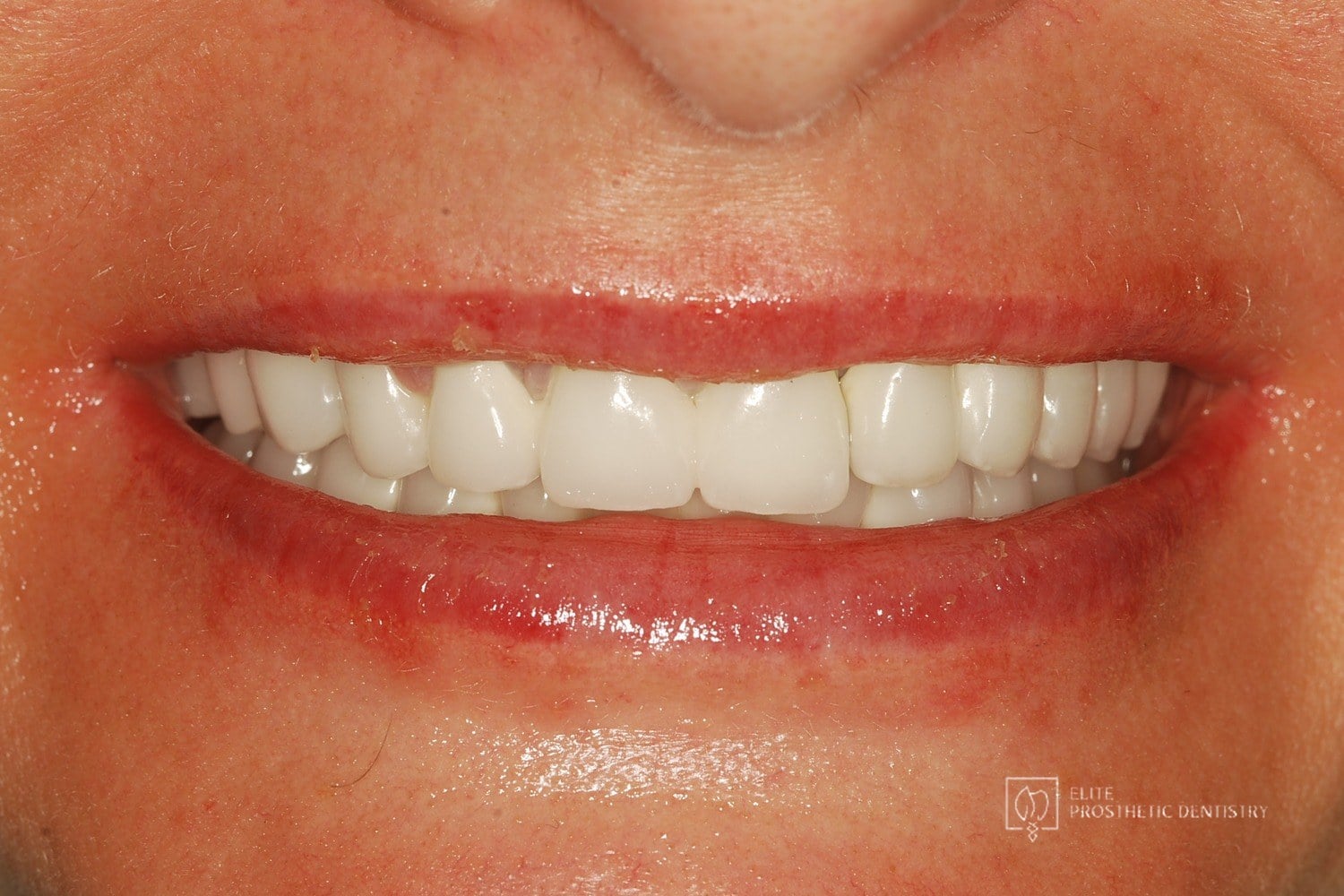 After
After How Aging, Failing Dentistry Was Replaced with a Coordinated Full-Mouth Implant and Crown Reconstruction
The patient presented with throbbing upper-molar pain, long-standing infections, multiple root canals and unfinished prior treatment, generalized sensitivity, and several hopeless teeth.
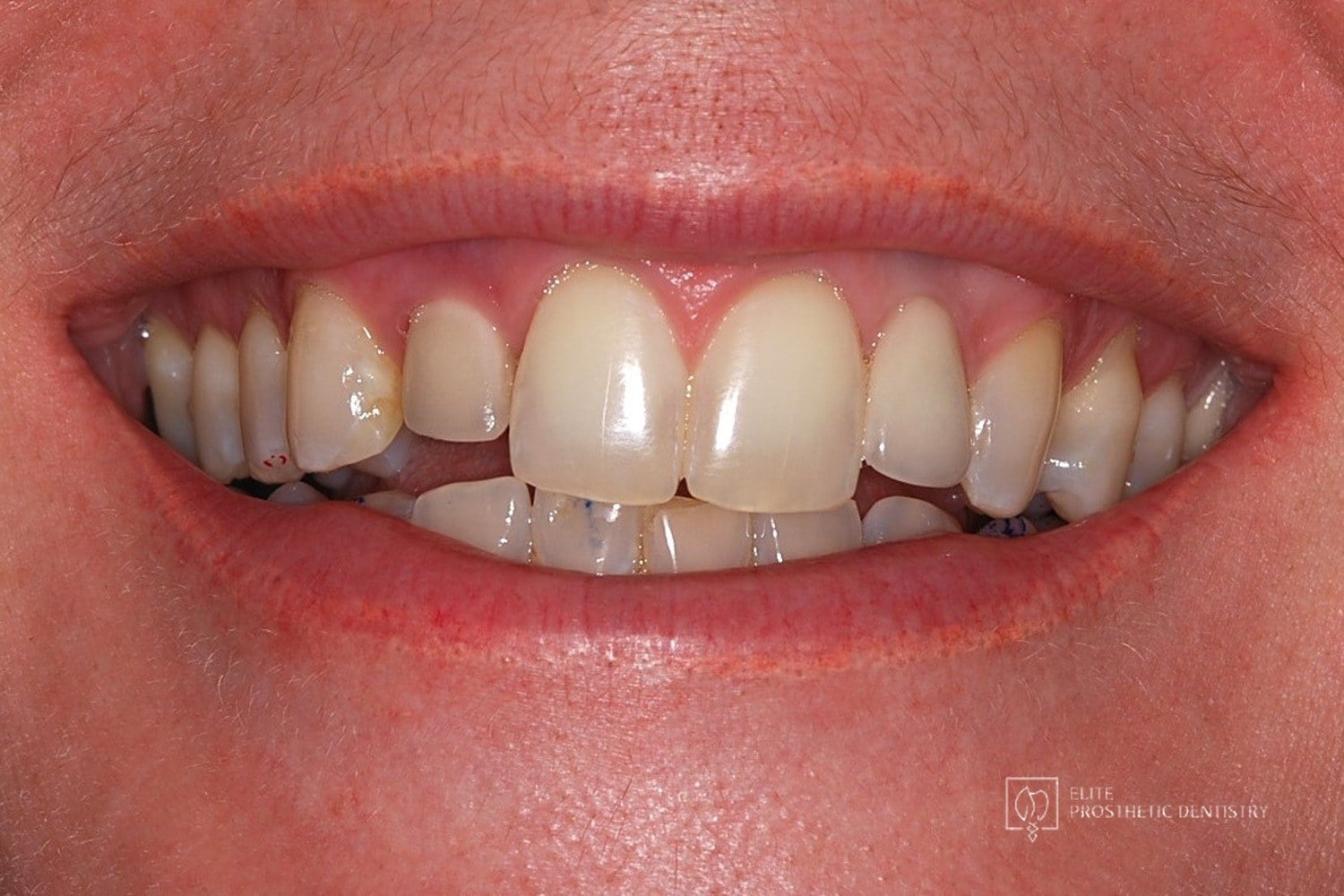 Before
 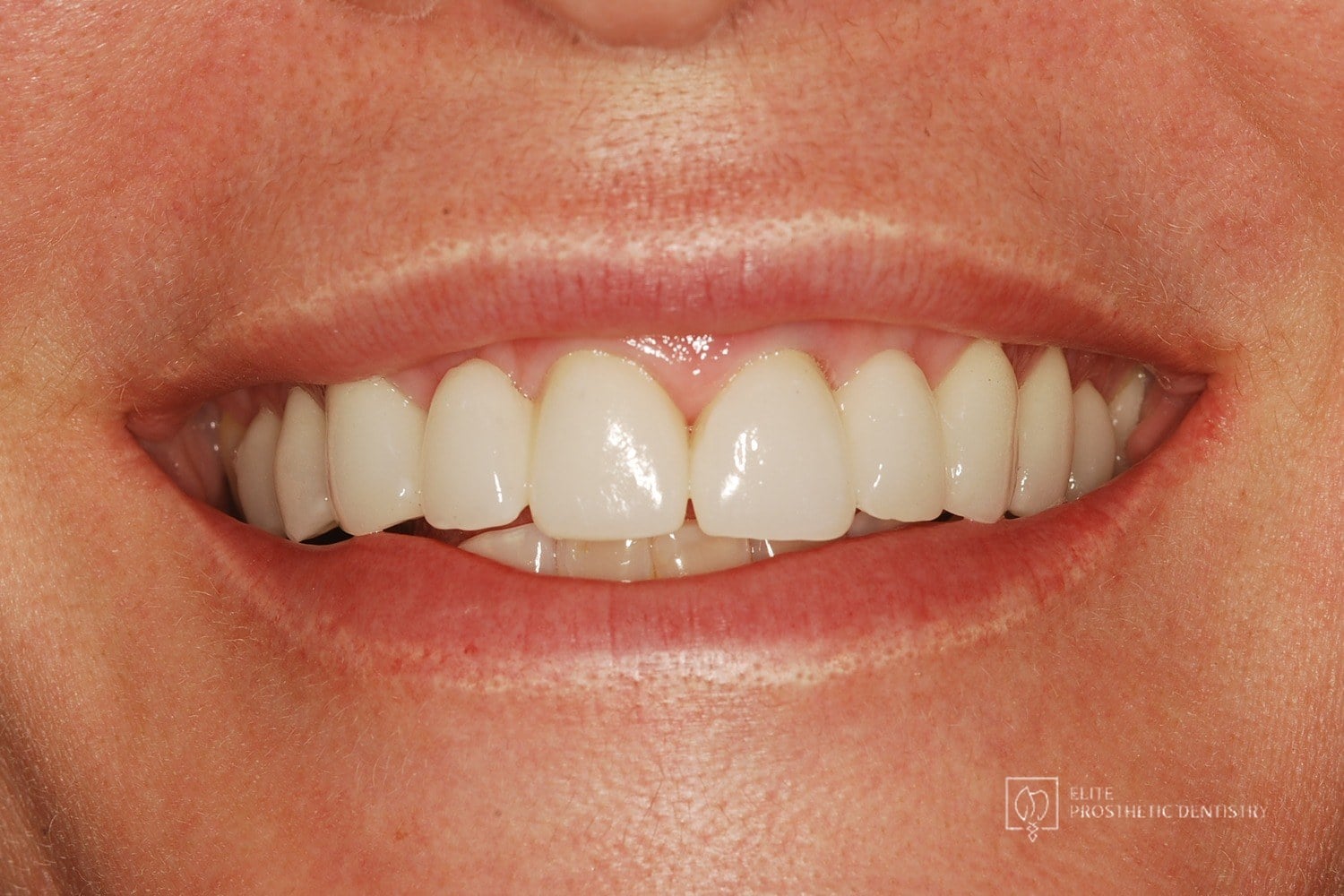 After
After How Failing Lateral Incisor Implants Were Replaced with Custom Zirconia Bridges After Severe Bone Loss Made Replacement Implants Impossible
Comprehensive examination including CBCT imaging revealed significant bone loss surrounding implants that were placed outside the buccal plate, most likely due to placement without a CBCT-generated surgical guide. The implants were determined non-salvageable, and the alveolar ridge was too narrow to support replacement implants without extensive reconstruction.
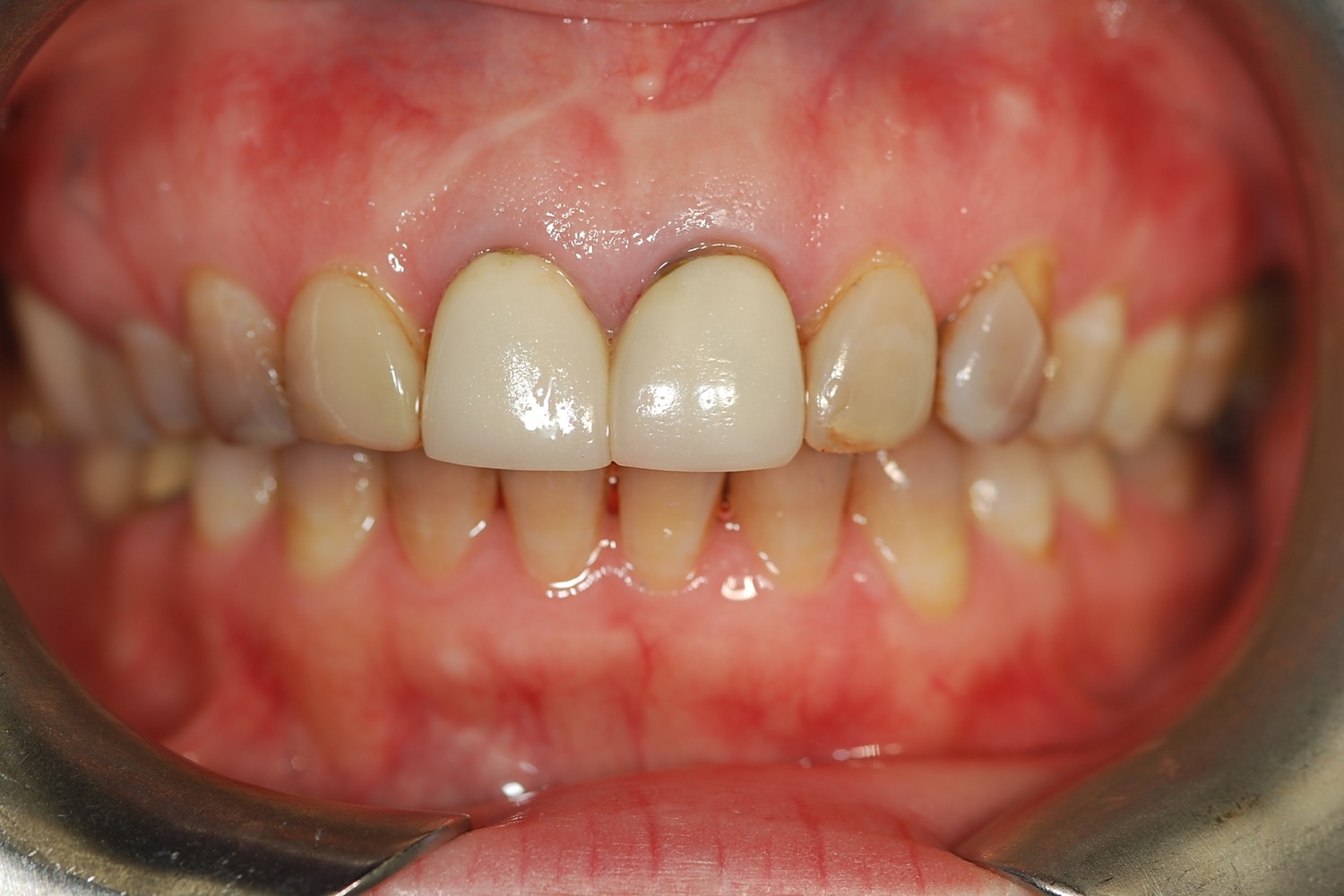 Before
  After
After How Aging, Opaque Restorations Were Replaced with Customized Ceramic Restorations Designed for Long-Term Natural Esthetics
The existing restorations appeared opaque, worn, and unnatural over time, affecting both confidence and overall smile harmony.