
Dental Implant-Supported Makeover with Crowns
Smile view
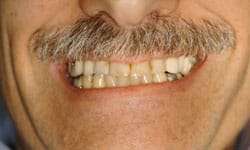 Before
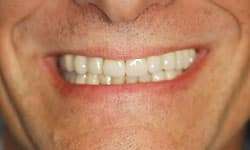 After
After
A comprehensive smile makeover through strategic implant and crown restoration
An implant-supported smile makeover in Washington, DC. This documented case at Elite Prosthetic Dentistry resolved a set of overlapping dental problems, a fractured root, decay beneath crowns that could not be saved, missing teeth, and failing root canals, with one unified plan built on nine implants and custom crowns. Treatment was planned and completed by Dr. Gerald Marlin, D.M.D., M.S.D., a prosthodontist focused on implant reconstruction and complex restorative care.
Case at a Glance
- Treatment
- Smile makeover with nine implants and custom crowns on implants and retained natural teeth
- Approach
- One unified plan, strategic implant placement, in-house laboratory crowns, permanently cemented fixed result
The presenting condition
Some cases are defined by a single problem. This one was defined by how many problems existed at once. The patient had a fractured root on one tooth, which required extraction and replacement. Beneath existing crowns, extensive decay had developed, and those crowns could no longer be salvaged. Teeth lost in years past had left both functional and esthetic deficits. Root canals completed earlier had lost their effectiveness.
On top of the clinical picture sat a clear personal requirement: the patient wanted to avoid a removable denture or an implant-supported overdenture. He wanted teeth fixed permanently in place. Each issue on its own would have called for a different treatment approach. The real challenge was developing one unified, sequenced plan that addressed everything simultaneously and produced a cohesive result.
Clinical Findings
- →A fractured root on one tooth requiring extraction and replacement
- →Extensive decay hidden beneath existing crowns that could not be salvaged
- →Missing teeth from years past creating functional and esthetic deficits
- →Root canals that had lost their effectiveness
- →A firm patient goal of a fixed restoration, not a removable denture or overdenture
Why this case required prosthodontic-level planning
Treated one at a time, each of these problems has a textbook answer. An extraction here, a new crown there, a re-treated root canal somewhere else. The difficulty is that the textbook answers interact. Where an implant replaces one tooth affects how force is carried by the teeth beside it. Which compromised teeth are kept and which are replaced determines what the final bite can look like. A series of disconnected fixes would have left the patient with dentistry that was newer but not more coherent.
Prosthodontic planning inverts the sequence. The finished result is defined first: a fixed, esthetically cohesive, functionally sound set of teeth. Then every individual decision, extraction, implant position, crown design, is made in service of that endpoint. That is the difference between treating problems and planning an outcome, and with this many overlapping issues it was the only reliable way to honor the patient’s goal of never wearing a removable appliance.
The decision behind the result: a fixed restoration instead of a removable one
The pivotal decision in this case came directly from the patient’s own priorities. With multiple failing teeth and long-standing gaps, a removable denture or an implant-supported overdenture is a conventional recommendation. The patient did not want removable teeth in any form. Honoring that preference changed the engineering of the entire case.
A fixed, permanently cemented result requires enough well-positioned support to carry it. Dr. Marlin evaluated the entire dentition and determined which natural teeth could be retained and where support had to be added. Nine dental implants were strategically placed to replace the missing teeth and provide support where the fractured and failing teeth could not be relied on. The implant positions were planned to optimize force distribution, esthetics, and long-term stability throughout the restored mouth. The implants were not the goal in themselves. They were the means of delivering the fixed result the patient asked for.
The treatment plan
-
1
Comprehensive evaluation and one unified plan
Dr. Marlin evaluated the entire dentition and developed a single treatment plan that addressed the fractured root, the decay beneath the failing crowns, the missing teeth, and the ineffective root canals together.
-
2
Nine strategically placed implants
Implants were placed to replace the missing teeth and provide support where fractured and failing teeth could not carry the restoration, with positions planned for force distribution, esthetics, and long-term stability.
-
3
Custom crowns from the in-house laboratory
The practice's in-house laboratory designed and fabricated each crown, for the implants and for the retained natural teeth, with attention to youthful proportions, natural color and translucency, contours that support healthy gum tissue, and efficient chewing surfaces.
-
4
Permanent cementation of the finished restoration
The entire restoration was permanently cemented, giving the patient security, stability, and function with no removable components.
The outcome
The patient’s failing, compromised dentition was replaced with a beautiful, functional, fixed restoration that provides the confidence and function of natural teeth. The problems that had accumulated over years, the fracture, the hidden decay, the gaps, the failing root canals, were all resolved through one coordinated course of treatment rather than a string of separate procedures.
Because each crown was designed and fabricated in the practice’s in-house laboratory, the proportions, shading, and contours could be controlled directly, which is a large part of why the finished smile reads as youthful and natural rather than as dental work. The patient regained the ability to chew efficiently and the confidence to smile freely in social and professional situations, with nothing removable to manage and nothing to hide.
Result Highlights
- ✓Every overlapping problem addressed in one unified treatment plan
- ✓Nine implants positioned for force distribution, esthetics, and long-term stability
- ✓Crowns designed and fabricated in the practice's in-house laboratory
- ✓A permanently cemented, fixed restoration with no removable components
- ✓The function and confidence of natural teeth restored
- ✓A youthful appearance and vibrant smile maintained
Who this case may sound familiar to
This case tends to resonate with patients in a few recognizable situations:
- You are dealing with several problems at once: a cracked tooth here, an aging crown there, gaps you have learned to work around.
- Different providers have addressed different teeth over the years, and no one has connected it all into one plan.
- You are determined not to end up with a removable denture in any form.
- You want teeth that are fixed in place and feel like your own.
- You would rather invest in one comprehensive, correctly planned reconstruction than keep paying for piecemeal repairs.
If any of those describe where you are, a consultation with Dr. Marlin can establish the diagnostic picture and the specific options for your case.
Frequently asked questions
What is an implant-supported smile makeover?
It is a comprehensive reconstruction that combines dental implants with crowns to rebuild both function and appearance. Implants replace teeth that are missing or cannot be saved, healthy natural teeth are retained and crowned where appropriate, and all of the restorations are designed together so the finished smile works and looks like one coherent set of teeth.
Can dental implants help me avoid a removable denture?
Frequently, yes. When enough implants can be positioned well, a full set of fixed, permanently cemented teeth becomes possible even for patients with many failing or missing teeth. Whether that is realistic in a specific mouth depends on bone support, the condition of the remaining teeth, and the bite, which is what a prosthodontic evaluation establishes.
What happens when decay is found under an existing crown?
It depends on how much sound tooth structure remains once the decay is removed. Some teeth can be rebuilt and re-crowned. When the damage runs too deep, the tooth may not be salvageable, and replacement, often with an implant, becomes the more predictable long-term choice. Because decay under a crown is hidden from view, it is frequently more extensive than it appears, which is why thorough evaluation matters before committing to a repair.
How many implants does a reconstruction like this require?
There is no universal number. It depends on how many teeth are missing or failing, where they are, how the bite loads them, and how many natural teeth can be retained. In the case documented here, nine implants provided the support the fixed restoration needed. The right number is an output of the plan, not a starting assumption.
Why see a prosthodontist when multiple dental problems overlap?
Because overlapping problems interact. A prosthodontist is trained to weigh which teeth to keep, where to add implant support, and how every crown should meet the opposing teeth, then to sequence the work so each step supports the final result. That system-level judgment is what turns a list of separate problems into one stable, cohesive outcome.
More about the work behind this case
This case sits at the intersection of dental implants, custom crowns, and cosmetic restorative dentistry. The unified planning and in-house laboratory control behind it reflect the practice philosophy that guides complex cases at the practice.
Elite Prosthetic Dentistry treats patients from across the DMV including Bethesda, Chevy Chase, McLean, Arlington, Potomac, and Great Falls, with a record of out-of-area patients traveling to the practice for complex restorative care.
Related Services
Related Patient Success Stories
Explore similar patient success stories demonstrating our expertise in advanced prosthetic dentistry.
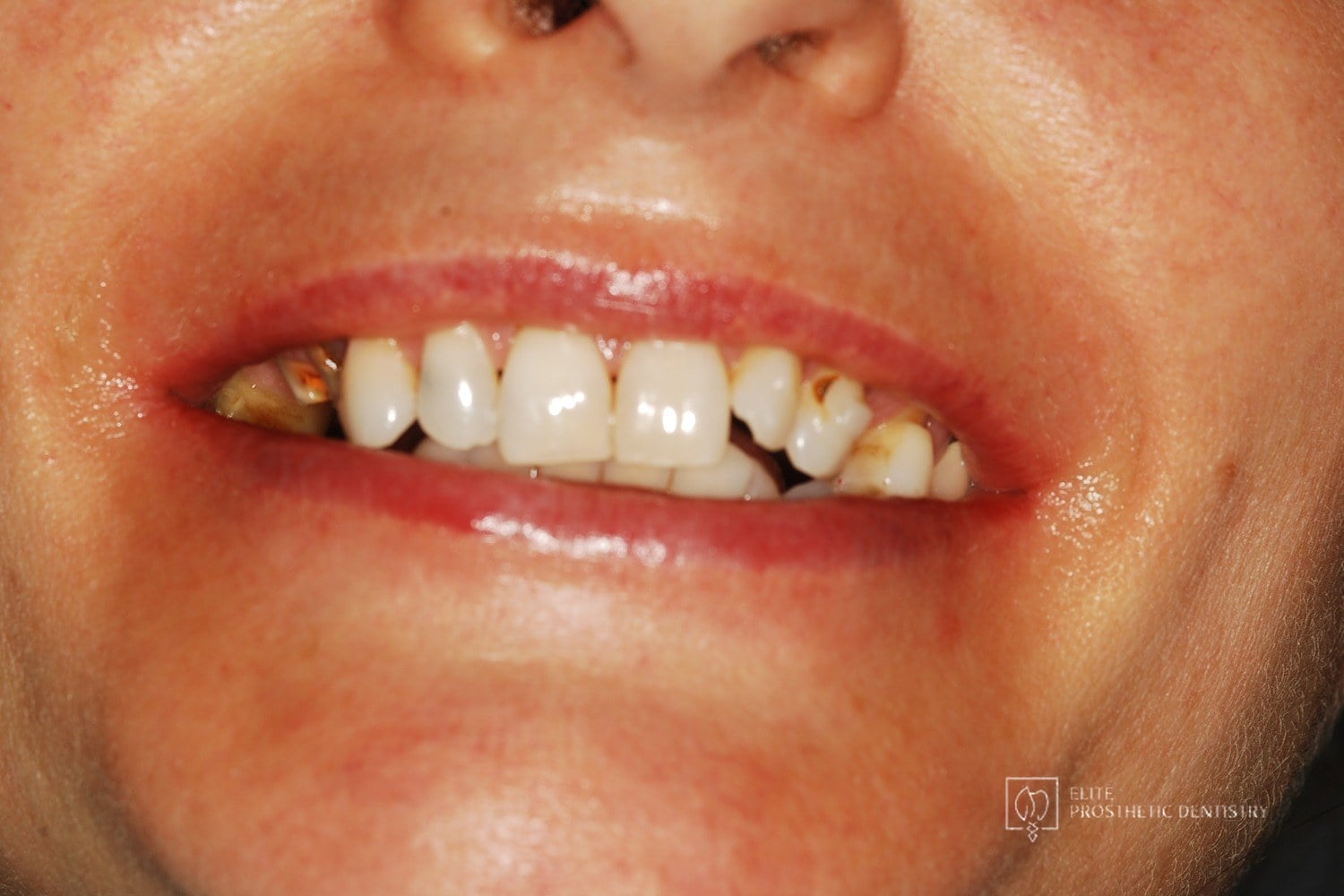 Before
 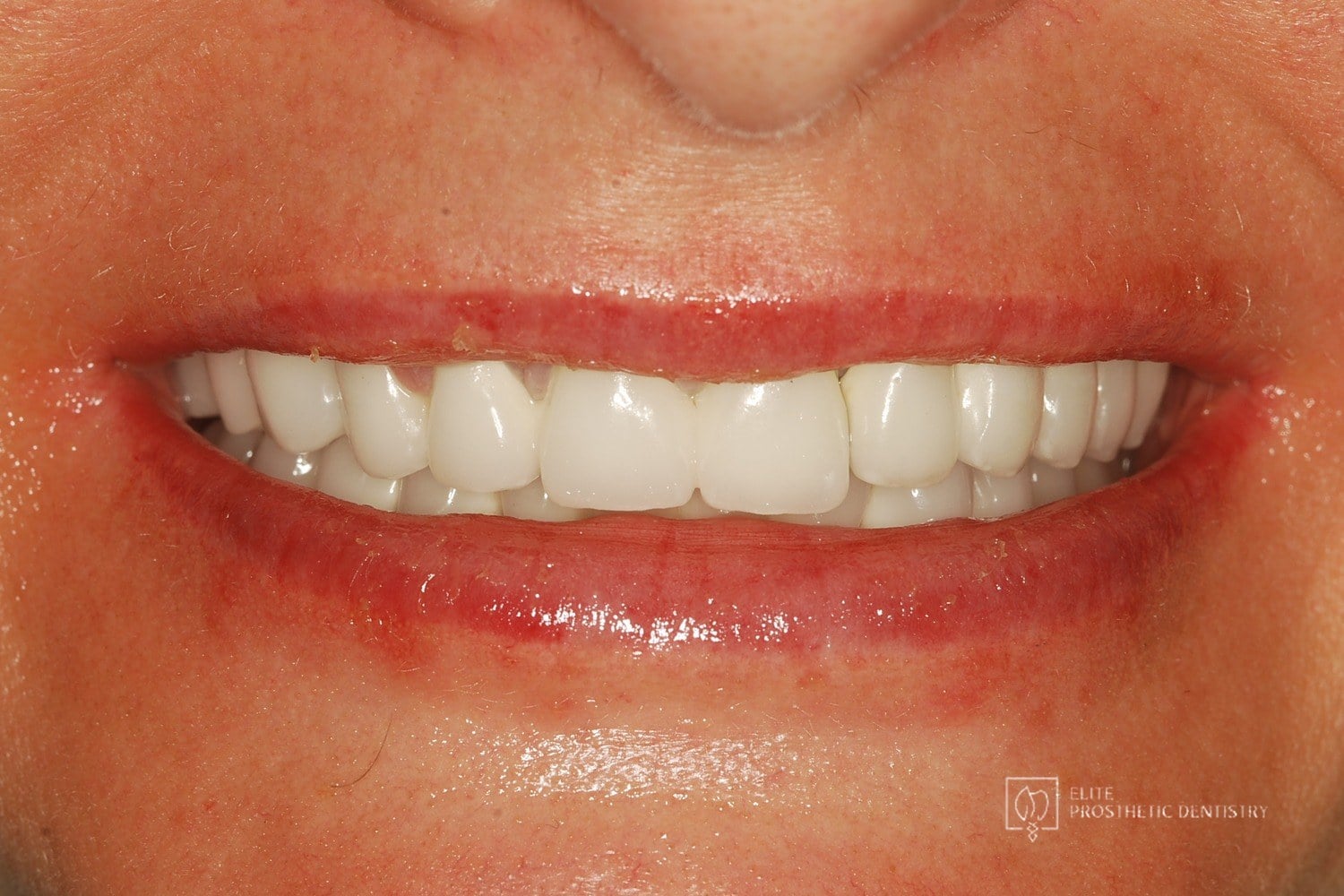 After
After How Aging, Failing Dentistry Was Replaced with a Coordinated Full-Mouth Implant and Crown Reconstruction
The patient presented with throbbing upper-molar pain, long-standing infections, multiple root canals and unfinished prior treatment, generalized sensitivity, and several hopeless teeth.
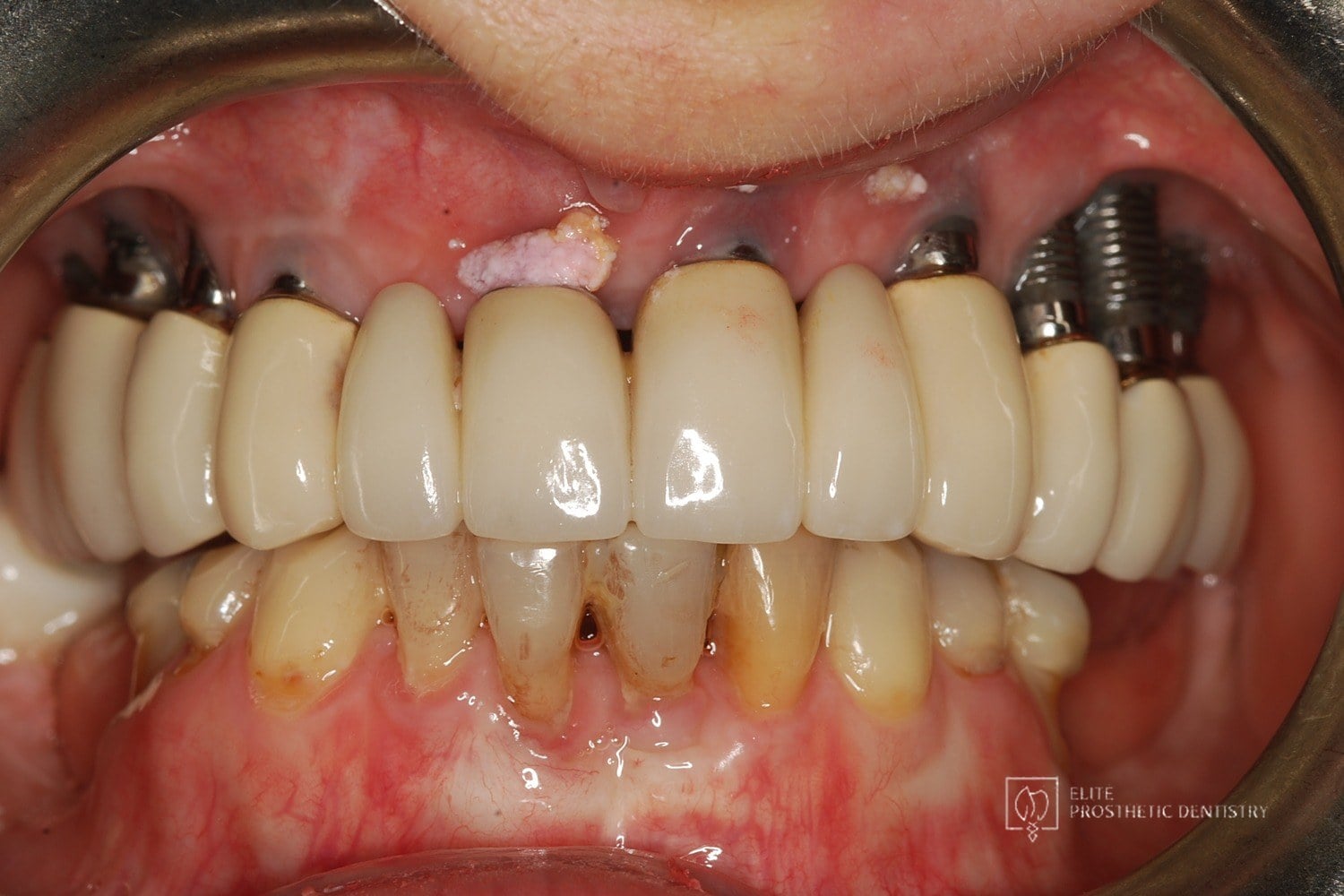 Before
 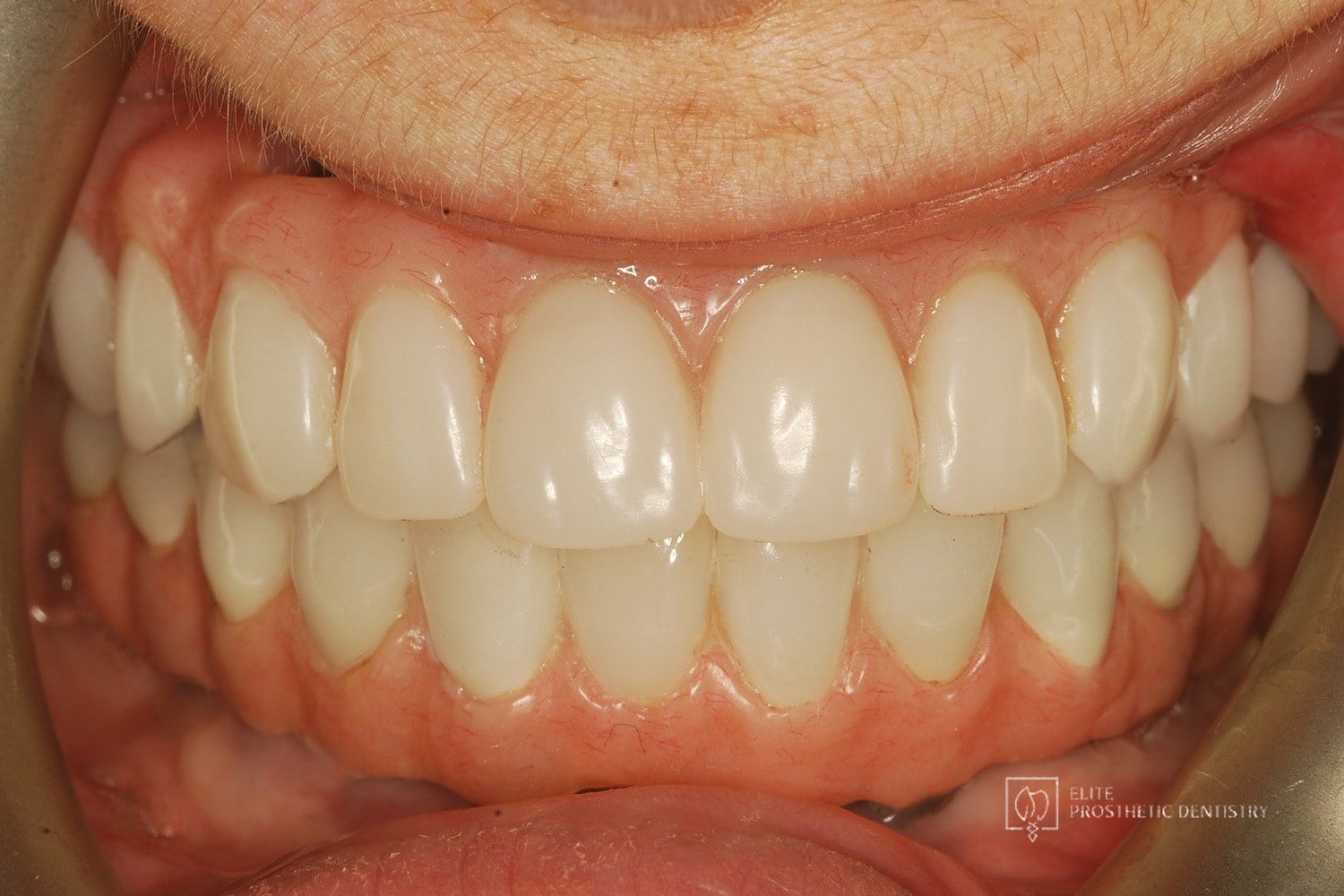 After
After How Failing Implants and Severe Bone Loss Were Rebuilt Into a Stable Full-Arch Implant Reconstruction
The patient presented with significant complications from previously placed implants, severe bone loss, failing posterior implants, and an unesthetic full-arch bridge. Both arches required full reconstruction, with the upper arch showing the most advanced bone loss and instability.
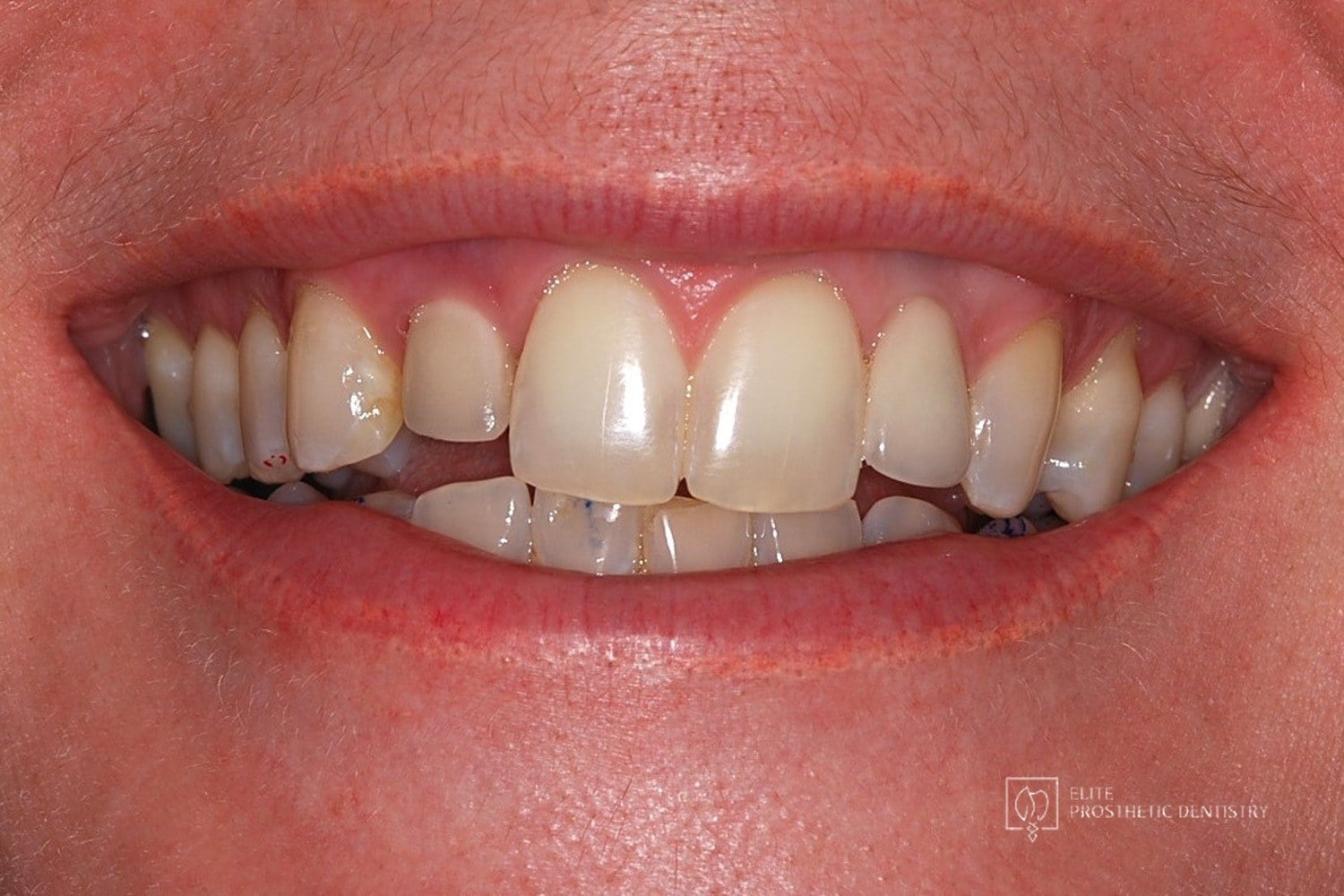 Before
 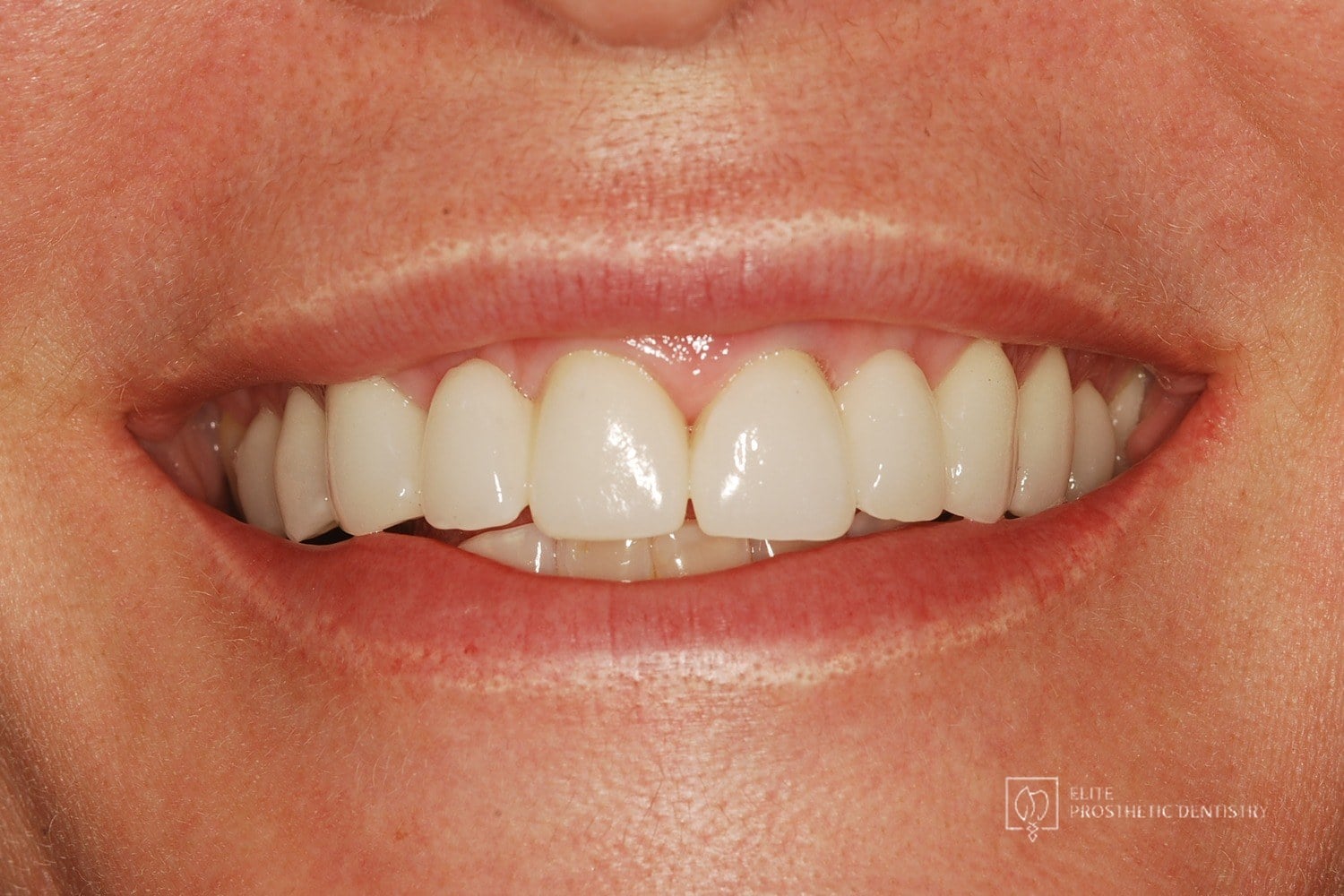 After
After How Failing Lateral Incisor Implants Were Replaced with Custom Zirconia Bridges After Severe Bone Loss Made Replacement Implants Impossible
Comprehensive examination including CBCT imaging revealed significant bone loss surrounding implants that were placed outside the buccal plate, most likely due to placement without a CBCT-generated surgical guide. The implants were determined non-salvageable, and the alveolar ridge was too narrow to support replacement implants without extensive reconstruction.