
Dental Implant Rejuvenation of the Jaw
Documented before and after
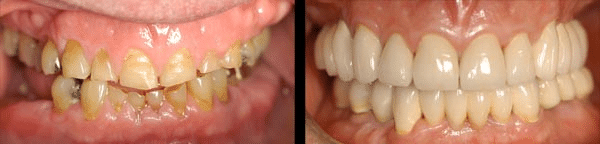 Before
 After
After
Complete mouth rejuvenation through strategic implant placement and restoration
Rejuvenating a jaw with dental implants in Washington, DC. This documented case at Elite Prosthetic Dentistry rebuilt a mouth affected by years of tooth loss and severe wear, combining strategically placed implants with custom-crafted crowns on both natural teeth and implants to restore function, facial proportions, and a more youthful appearance. Treatment was planned and completed by Dr. Gerald Marlin, D.M.D., M.S.D., a prosthodontist focused on implant reconstruction and complex restorative care.
Case at a Glance
- Treatment
- Complete mouth rejuvenation with implants for missing teeth and crowns on natural teeth and implants
- Approach
- Endpoint-first planning, strategic implant placement, restored vertical dimension, in-house lab crowns
The presenting condition
Over the years, the cumulative effects of tooth loss, wear, and damage can profoundly age a face and a smile. Missing teeth remove support. Worn teeth shorten, and as they shorten, the bite gradually closes down and the lower face loses height. The patient in this case had experienced progressive dental decline over many years. Multiple teeth had been lost to decay, trauma, or extraction. Many of the teeth that remained had been severely abraded and worn from years of wear, grinding, or trauma.
The combination mattered more than either problem alone. Missing and severely worn teeth together were aging his appearance and compromising his ability to function. The challenge was to develop one comprehensive treatment plan that addressed every area of dental compromise, rather than simply replacing individual missing teeth.
Clinical Findings
- →Multiple teeth lost over the years to decay, trauma, or extraction
- →Many remaining teeth severely abraded and worn from wear, grinding, or trauma
- →An aged appearance driven by the combination of missing and worn teeth
- →Compromised chewing function across the mouth
- →Lost vertical dimension affecting facial proportions
Why this case required prosthodontic-level planning
The instinctive approach to a mouth like this is incremental: replace the most obvious gaps, crown the most broken teeth, and leave the rest for later. The problem is that missing teeth and worn teeth are not separate conditions. Every gap changes how force lands on the teeth that remain, and every worn tooth changes the height and geometry of the bite those forces move through. Repairs made one at a time inherit a collapsing framework, and they tend to wear or fail on the same schedule as everything around them.
A comprehensive plan works in the opposite direction. It first defines where the finished bite should be, including the vertical dimension the face has lost, and then uses every implant and every crown to build toward that endpoint. That is what this case required: not a series of individual repairs, but a complete mouth rejuvenation planned as one project, so that appearance, function, and confidence could be restored together.
The decision behind the result: rebuilding the mouth as one system
Dr. Marlin evaluated the patient’s remaining dentition and made the defining judgment of the case. Rather than simply replacing individual missing teeth, the plan would treat the entire mouth as a single system: dental implants would replace the teeth that were missing, custom-crafted crowns would restore the worn teeth that remained, and all of the new restorations, tooth-supported and implant-supported alike, would be designed together at a corrected vertical dimension.
That distinction drives everything that follows, because each choice constrains the next. Where the implants go determines how chewing forces are distributed through the finished mouth. The height of the new crowns determines the facial proportions the patient sees in the mirror. Designing those elements together is what allows the final result to look and function as if the damage had never happened, and it is the reason implants were used here: they were the right tool for replacing what was truly gone, deployed as part of a plan, not as a reflex.
The treatment plan
-
1
Comprehensive evaluation and endpoint-first planning
Dr. Marlin evaluated the remaining dentition and developed a comprehensive plan combining implant placement with crown restoration on both natural teeth and implants.
-
2
Strategic implant placement
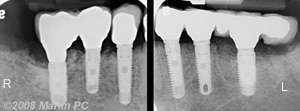
Implants were placed to replace the missing teeth, serving as permanent artificial tooth roots, with positions planned for optimal support, spacing, and distribution of chewing forces throughout the restored mouth.
-
3
Restoring the vertical dimension
The reconstruction was designed at an optimal vertical dimension to restore the patient's facial proportions and create a more youthful appearance.
-
4
Custom-crafted crowns across the mouth
Crowns were fabricated to restore the severely worn and compromised teeth, engineered for natural color and translucency, contours that support healthy gum tissue, and anatomically optimized chewing surfaces. Fabrication was coordinated directly with the practice's in-house laboratory to keep fit, contour, and shade under one roof.
The outcome
The patient finished treatment with a completely functioning mouth, restored as if he had never lost any teeth. His appearance was years younger, a change driven by the restored vertical dimension and the rejuvenated smile. Because the crowns were engineered for natural color, translucency, and contour, the result reads as healthy teeth rather than as dental work.
More than teeth were restored. The ability to eat normally, speak clearly, and smile confidently in social and professional situations came back with the reconstruction. A completed full-mouth case like this one delivers more than dental improvement; for this patient it meant a significant improvement in overall quality of life.
Result Highlights
- ✓A completely functioning mouth, restored as if no teeth had been lost
- ✓An appearance years younger through the restored vertical dimension
- ✓Implants positioned for support, spacing, and balanced chewing forces
- ✓Crowns with natural color, translucency, and contours that support healthy gum tissue
- ✓Normal eating, clear speech, and confident smiling restored
- ✓A meaningful improvement in overall quality of life
Who this case may sound familiar to
This case tends to resonate with patients in a few recognizable situations:
- Years of gradual tooth loss have left gaps you have learned to chew around.
- Your remaining teeth look shorter and flatter than they used to.
- You feel your smile is aging your face faster than the rest of you.
- You have collected individual repairs over the years and want one coordinated plan instead.
- You want the work planned and completed correctly once, by someone responsible for the whole result.
If any of those describe where you are, a consultation with Dr. Marlin can establish the diagnostic picture and the specific options for your case.
Frequently asked questions
What does dental implant rejuvenation of the jaw mean?
It describes a comprehensive reconstruction in which implants replace missing teeth and crowns restore worn ones, all designed together at a corrected vertical dimension. Because the height and proportions of the lower face depend on the teeth that support them, rebuilding the bite to its proper dimension can restore facial proportions along with chewing function.
Can missing teeth and severely worn teeth be treated in one plan?
Yes, and in complex cases they usually should be. Missing teeth and worn teeth each change how force moves through the bite, and treating one without accounting for the other tends to produce restorations that fight the rest of the mouth. A single coordinated plan lets implants and crowns share one bite designed from the endpoint backward.
How do worn teeth age a person's appearance?
As teeth wear and shorten, the bite loses height and the lower third of the face gradually closes down. Lips and cheeks lose the support the teeth once provided, which deepens folds and shortens the visible smile. Restoring the correct vertical dimension with properly proportioned restorations rebuilds that support, which is why these reconstructions often make patients look years younger.
Do crowns go on natural teeth, implants, or both in a full-mouth case?
Often both. In the case documented here, crowns restored the patient’s worn natural teeth while implants replaced the teeth that were missing. What matters is that every restoration, tooth-supported or implant-supported, meets the opposing teeth in one coordinated bite rather than being designed in isolation.
Why does this kind of reconstruction call for a prosthodontist?
Prosthodontists are the dental specialists trained in restoring and replacing teeth as a complete system. A full-mouth rejuvenation involves implant positioning, vertical dimension, materials, esthetics, and bite mechanics all at once, and the judgment calls that connect them are where cases of this scale succeed or fail.
More about the work behind this case
This case sits at the intersection of dental implants, full mouth reconstruction, and cosmetic restorative dentistry. The endpoint-first planning and in-house laboratory coordination behind it are part of the practice philosophy that supports reconstructions of this scale.
Elite Prosthetic Dentistry treats patients from across the DMV including Bethesda, Chevy Chase, McLean, Arlington, Potomac, and Great Falls, with a record of out-of-area patients traveling to the practice for complex restorative care.
Related Services
Related Patient Success Stories
Explore similar patient success stories demonstrating our expertise in advanced prosthetic dentistry.
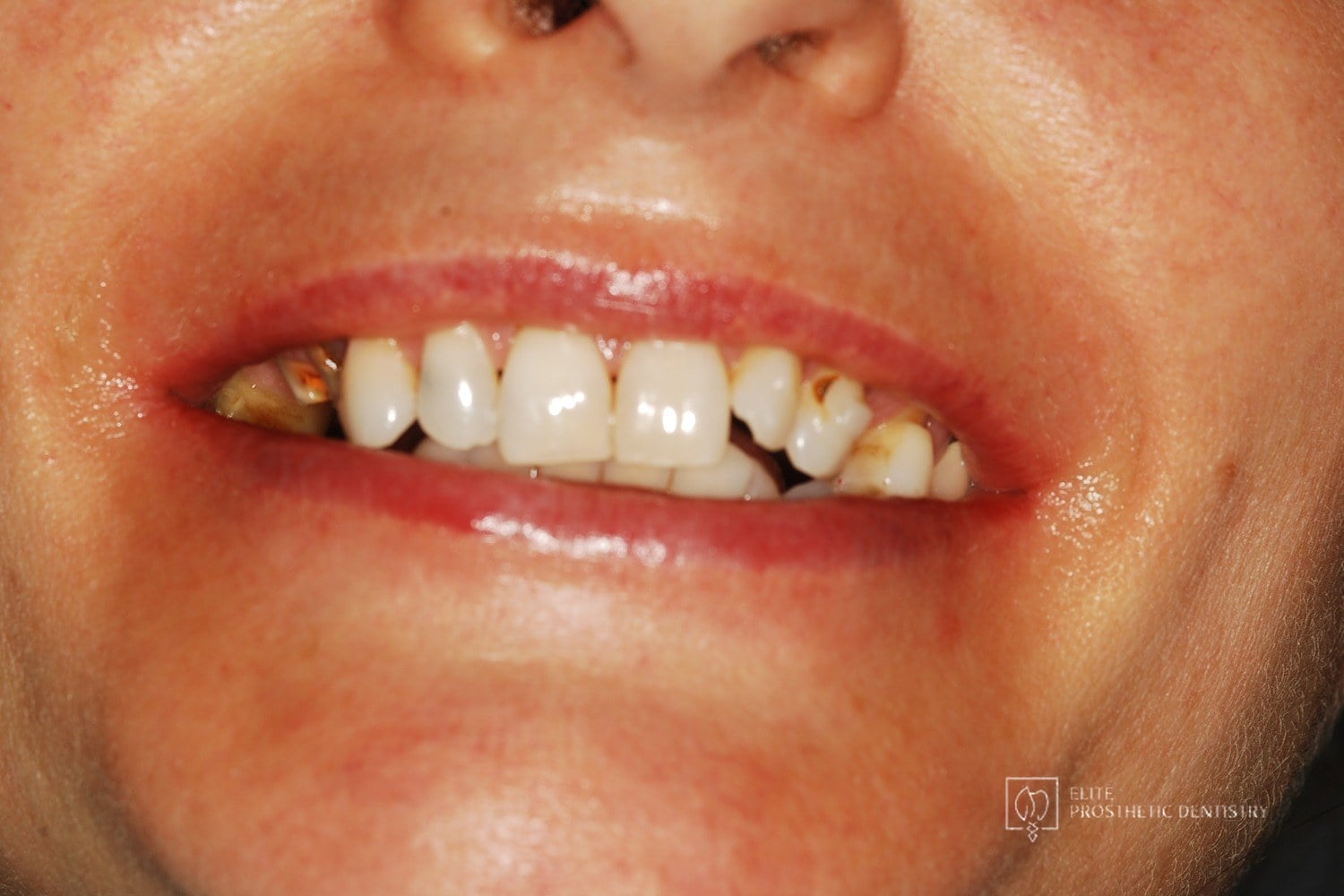 Before
 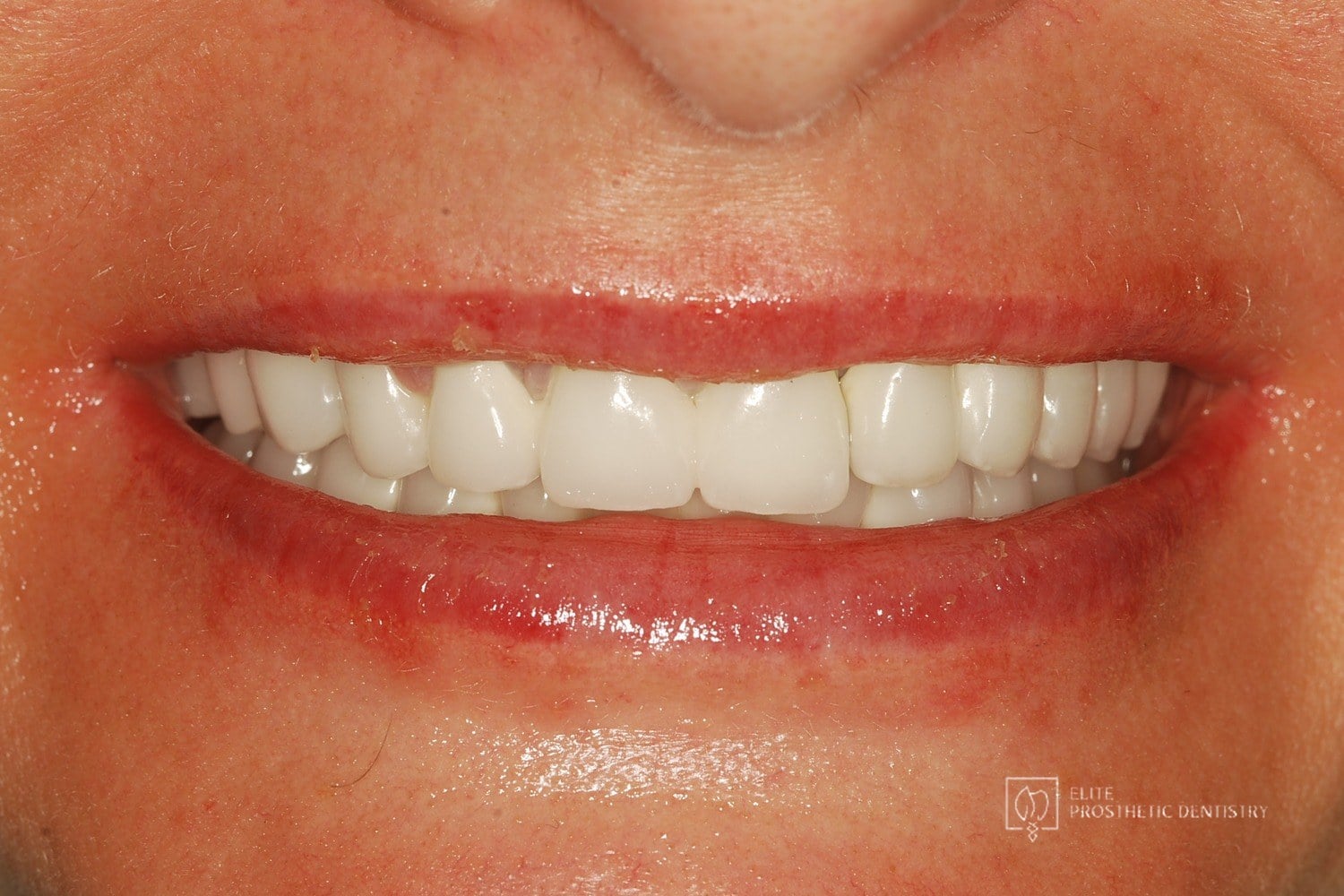 After
After How Aging, Failing Dentistry Was Replaced with a Coordinated Full-Mouth Implant and Crown Reconstruction
The patient presented with throbbing upper-molar pain, long-standing infections, multiple root canals and unfinished prior treatment, generalized sensitivity, and several hopeless teeth.
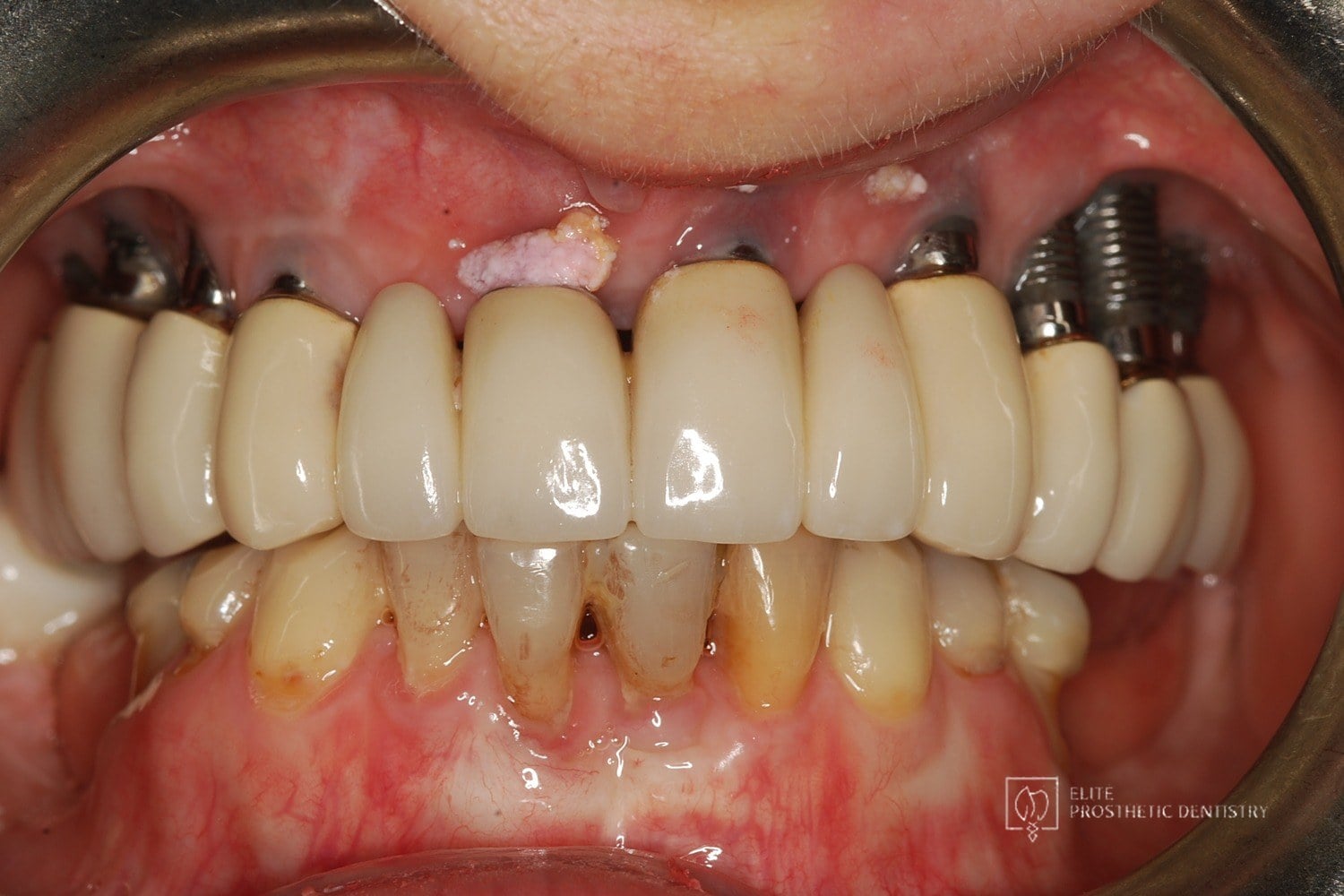 Before
 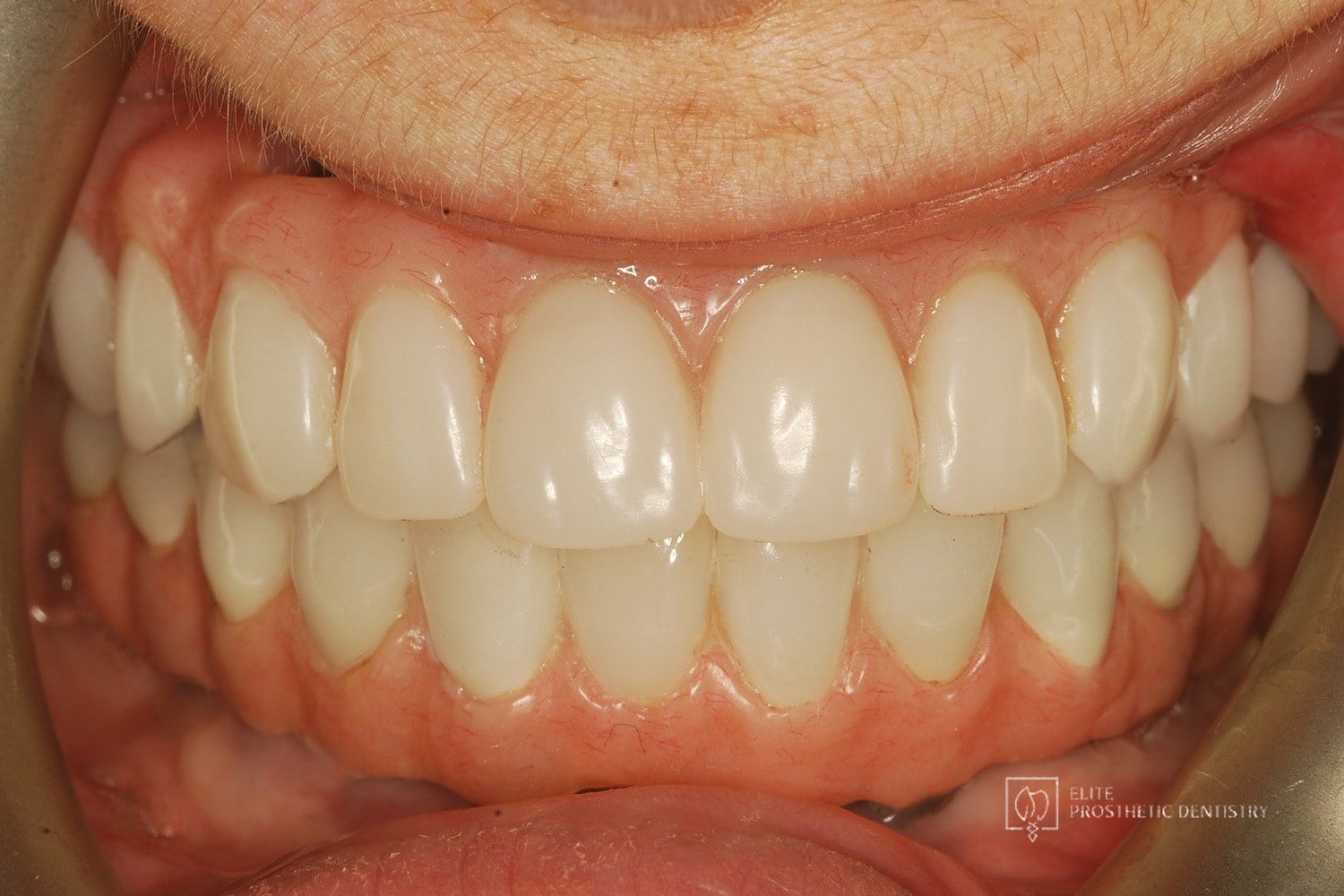 After
After How Failing Implants and Severe Bone Loss Were Rebuilt Into a Stable Full-Arch Implant Reconstruction
The patient presented with significant complications from previously placed implants, severe bone loss, failing posterior implants, and an unesthetic full-arch bridge. Both arches required full reconstruction, with the upper arch showing the most advanced bone loss and instability.
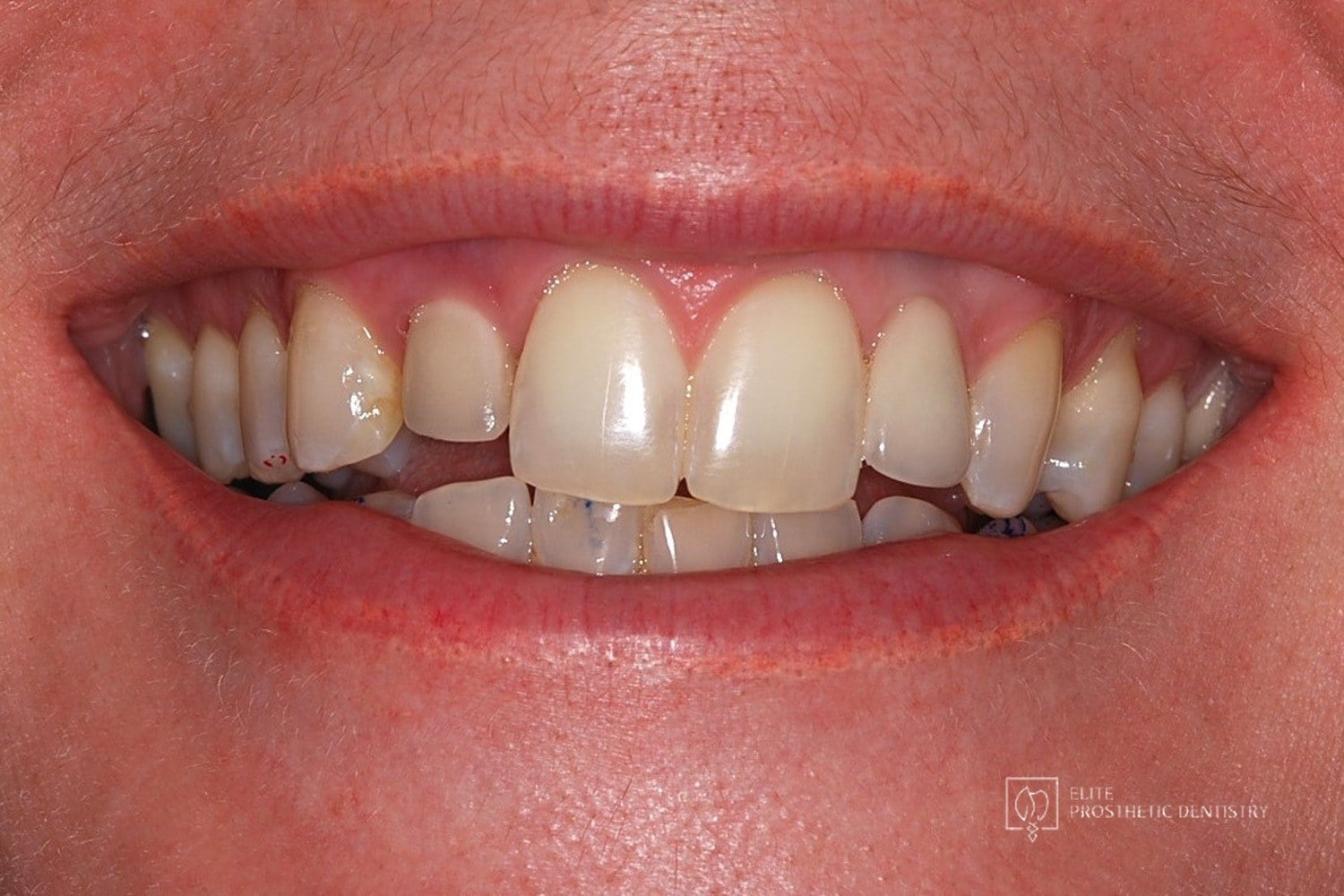 Before
 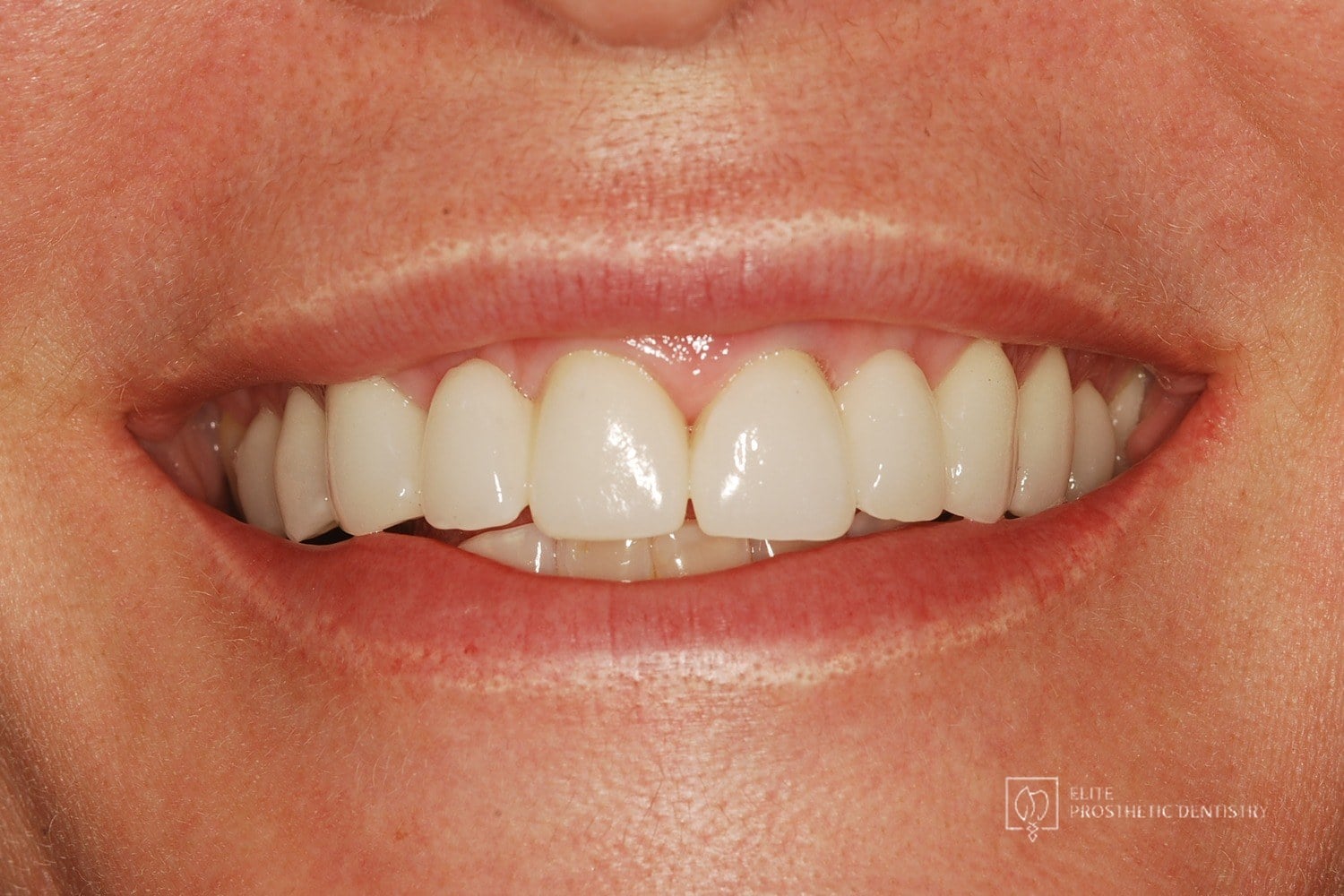 After
After How Failing Lateral Incisor Implants Were Replaced with Custom Zirconia Bridges After Severe Bone Loss Made Replacement Implants Impossible
Comprehensive examination including CBCT imaging revealed significant bone loss surrounding implants that were placed outside the buccal plate, most likely due to placement without a CBCT-generated surgical guide. The implants were determined non-salvageable, and the alveolar ridge was too narrow to support replacement implants without extensive reconstruction.