

Worn, Chipping, or Shifting Teeth? Finding the Real Cause
Teeth wearing down, chipping, or shifting? A bite that feels off? Washington DC prosthodontist Dr. Gerald Marlin diagnoses the cause, from uneven bite to bite collapse, before more damage occurs.
Some patients arrive with a diagnosis. Many arrive with a feeling: something is changing, and no one has explained why.
The front teeth look shorter than they used to. A corner chips, gets smoothed or bonded, then chips again. The bite feels different, as if the teeth no longer meet the way they once did. Teeth that were straight for decades begin to shift, flare, or crowd. Chewing drifts to one side. Jaw muscles feel tired in the morning.
None of these symptoms arrives with a label. Each one, on its own, looks small enough to patch. That is exactly why the underlying cause so often goes undiagnosed for years, while the damage quietly compounds.
If this sounds familiar, you are not imagining it, and you do not need to have a diagnosis before you call. Finding the diagnosis is the point of the visit.
The Symptoms Patients Describe
Patients who come to Elite Prosthetic Dentistry with undiagnosed bite and wear problems usually describe some combination of the following:
- Teeth that are wearing down, flattening, or looking shorter
- Front teeth that keep chipping, even after repairs
- Teeth that are shifting, flaring, or developing new gaps or crowding
- A bite that feels uneven, or “off,” without an obvious reason
- Chewing that has migrated to one side of the mouth
- Tired or tight jaw muscles, especially in the morning
- Edges of front teeth that look thin, gray, or translucent
- A sense that the lower face or smile looks different in photos
One of these signs alone may be minor. Several together usually mean the bite itself, the way the upper and lower teeth meet and distribute force, is the problem.
Why These Symptoms Get Patched Instead of Diagnosed
There is a predictable cycle with this kind of problem. A chip gets bonded. A worn edge gets smoothed. A cracked filling gets replaced. Each repair is reasonable on its own, and each one fails sooner than expected, because every repair is placed back into the same forces that caused the original damage.
The difficulty is that wear and bite problems develop slowly and affect the whole system, while most dental care is organized around fixing one tooth at a time. Diagnosing why fourteen teeth show a specific wear pattern is a different exercise from treating the one tooth that happens to be chipped today. It requires stepping back, documenting the entire bite, and asking what force, habit, or structural change is driving the pattern.
That whole-system diagnosis is the core of prosthodontic training. A prosthodontist is a specialist in the restoration and replacement of teeth, and in the bite mechanics that determine whether dentistry lasts.
What These Symptoms Can Mean
A proper diagnosis comes from records and examination, not from a website. But it helps to understand the kinds of underlying causes these symptoms typically trace back to.
Wear That Outpaces Age
Teeth do wear over a lifetime, but healthy enamel wears slowly. When teeth visibly flatten, shorten, or develop sharp, thin edges over a few years, something is accelerating the process: grinding or clenching, an uneven bite concentrating force on certain teeth, acid erosion softening enamel, or a combination. Identifying which mechanism is at work changes the treatment completely.
Chipping That Keeps Coming Back
Repeated chipping, especially of the front teeth, often signals that the back teeth no longer support the bite properly. When posterior support is lost to wear, damage, or missing teeth, the front teeth absorb forces they were never designed to take. They respond by chipping, flaring forward, or loosening. Repairing the chips without restoring the support is why the problem keeps returning.
Teeth That Shift, Flare, or Develop Gaps
Teeth hold each other in position. When back teeth are lost or worn down, neighboring teeth tip and drift, opposing teeth grow into the empty space, and front teeth can begin to fan outward under chewing pressure. Gum condition matters here as well, which is why the evaluation includes the supporting structures, not just the teeth.
A Bite That No Longer Feels Right
When patients say the bite feels off, they are usually describing real, measurable changes: contacts that hit early on one side, teeth that no longer meet evenly, or a jaw that has to search for a comfortable closing position. Left alone, an uneven bite can contribute to muscle fatigue, joint discomfort, and accelerating wear on whichever teeth take the early contact.
Bite Collapse: When Small Symptoms Add Up
The most important condition hiding behind these symptoms is bite collapse, the gradual loss of the height and support that hold your bite at its proper dimension. Worn or shortened back teeth, missing teeth, and aging restorations all remove support. As support is lost, the lower face shortens, jaw muscles overwork, and the front teeth take increasing force, which accelerates their wear in turn.
Bite collapse is progressive, which is the strongest argument for diagnosing it early. Caught early, it can often be managed with targeted, comparatively conservative treatment. Caught late, rebuilding a collapsed bite becomes a comprehensive project. Patients come to us at both stages, for both comprehensive reconstruction and proactive treatment of a bite that is beginning to fail, and the earlier conversation is always the easier one.
What a Prosthodontic Diagnostic Evaluation Involves
Dr. Gerald Marlin is a specialty-trained prosthodontist with more than 40 years in practice in Washington, DC. The diagnostic evaluation he performs is a structured workup designed to answer one question: what exactly is causing the changes you are seeing, and what will it take to stop and correct them?
Depending on your situation, the evaluation includes:
- A detailed history of your symptoms, prior dentistry, and habits
- Examination of the teeth, existing restorations, gums, jaw joints, and muscles
- Photographic documentation of wear patterns and tooth position
- Radiographs or 3D imaging where indicated
- Impressions for mounted study models, so your bite can be measured and analyzed outside the mouth
Because Elite Prosthetic Dentistry operates its own in-house dental laboratory, diagnostic findings can be translated directly into a physical plan: wax-ups that show how rebuilt teeth would look and function before any treatment begins. You see the plan before you commit to it.
The outcome of the evaluation is an explanation, in plain language, of what is happening and why, along with options. Many patients simply want dentistry that looks natural, functions properly, and lasts. The plan is built around that.
Repair, Replace, or Rebuild: Right-Sized Treatment
A diagnosis does not commit you to a particular scale of treatment. Treatment ranges from conservative protection and a few crowns to staged rebuilding of the bite or, in advanced cases, full mouth reconstruction. The same diagnostic depth, material standards, and laboratory craftsmanship apply whether treatment is limited or comprehensive.
Where treatment is larger, it can usually be staged in planned phases, and our team will walk through insurance and financing options so the plan fits your circumstances as well as your mouth.
If your symptoms involve dental work you already have, crowns, veneers, implants, or bridgework that is not performing the way it should, our second opinion service is the right starting point.
A Real Example: Severely Worn Teeth, Rebuilt
One of our documented cases involved a patient whose upper teeth had worn down severely over many years. The wear had been treated piece by piece for a long time before anyone addressed the cause. Dr. Marlin diagnosed the underlying bite problem, planned the case with mounted records and a diagnostic wax-up, and rebuilt the worn teeth to restore both function and a natural appearance.
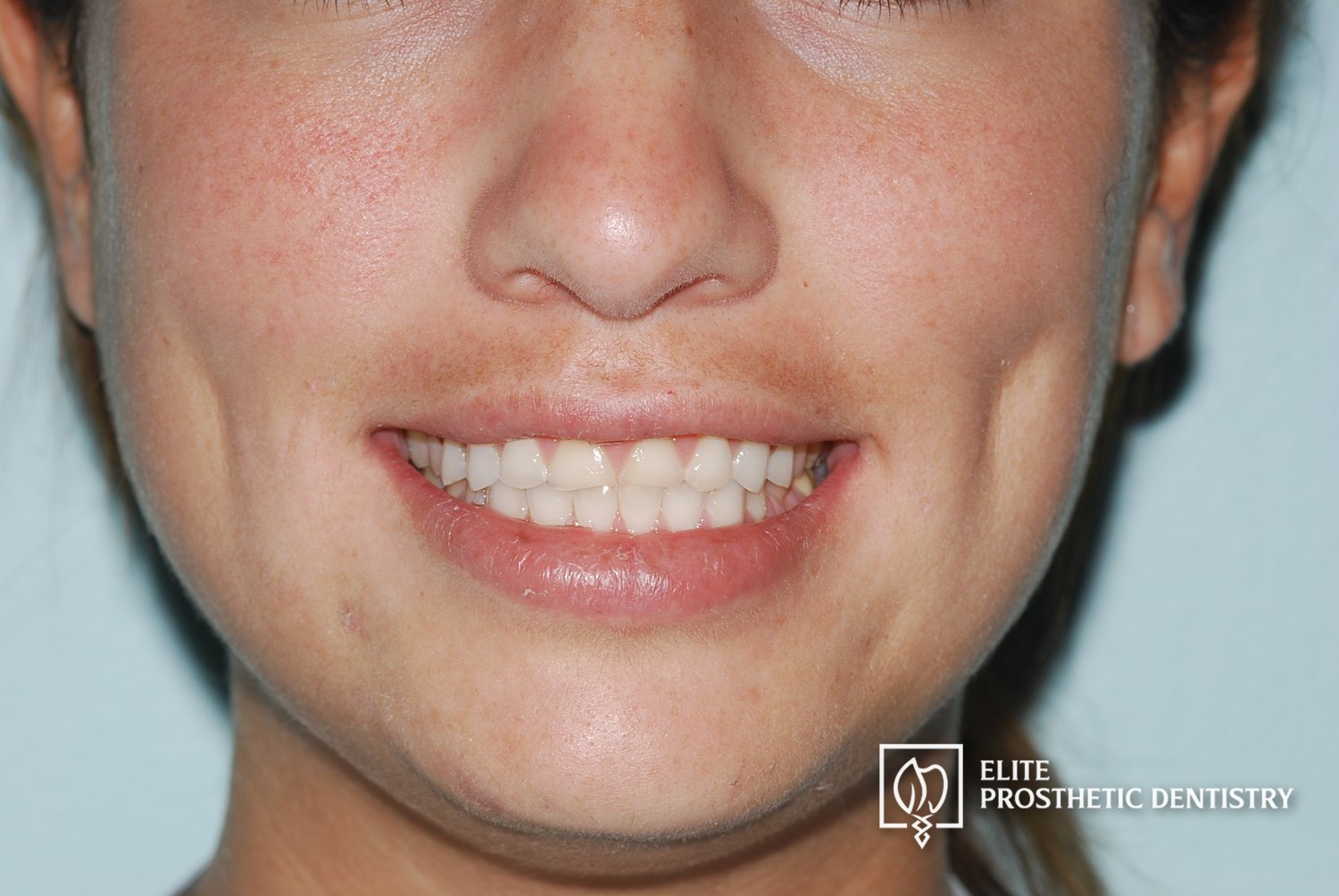 Before
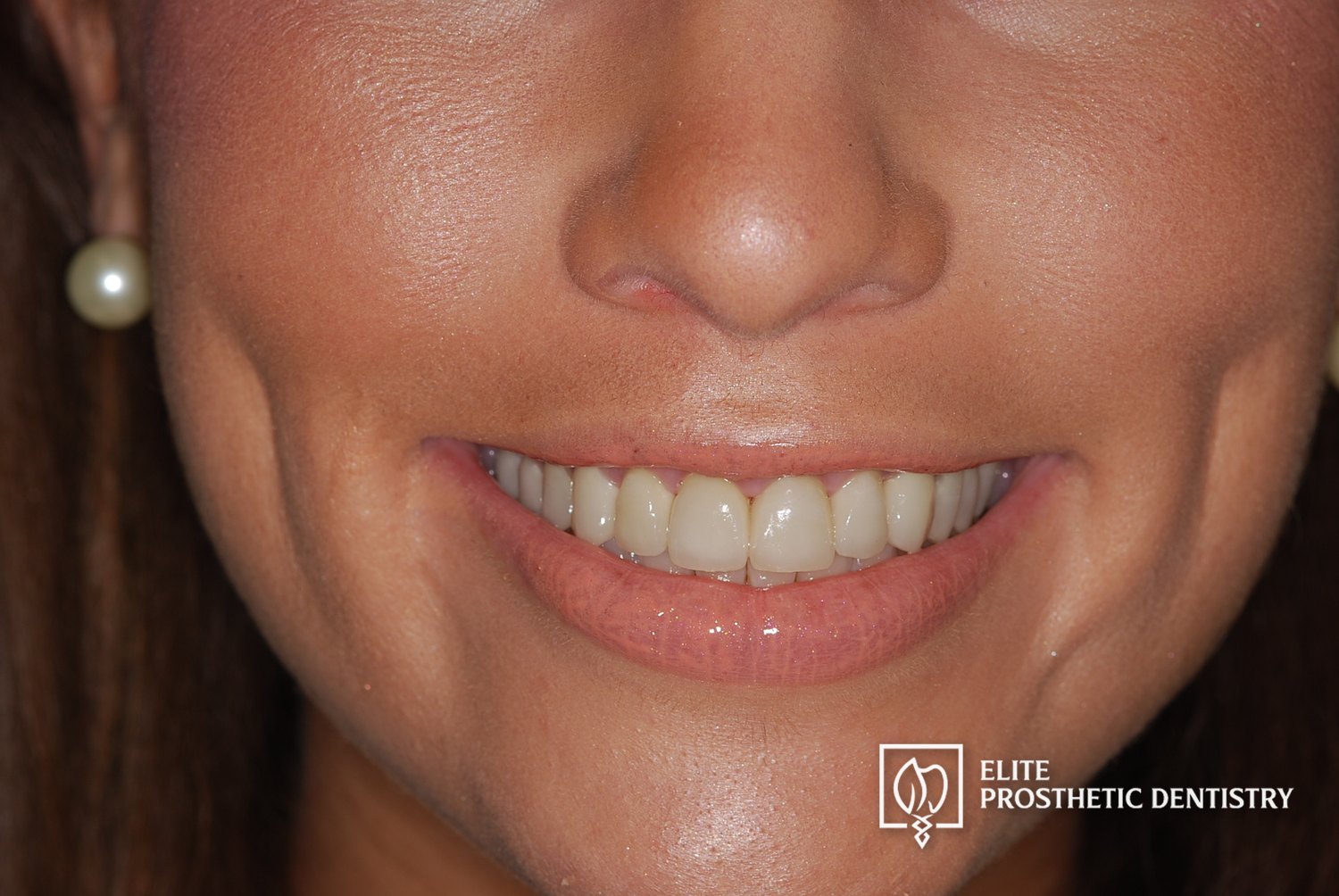 After
After
You can read the full case, with photographs, here: Severely Worn Upper Teeth Rebuilt for a More Natural Result.
For a broader discussion of treatment options for wear, see Can Worn Down Teeth Be Fixed, or Do They Have to Be Replaced?
When to Seek an Evaluation
You do not need to wait until something breaks. Consider a diagnostic evaluation if:
- You notice your teeth wearing, shortening, or chipping faster than seems normal
- Repairs to the same teeth keep failing
- Your teeth are shifting, flaring, or developing new gaps
- Your bite feels uneven or your jaw muscles are frequently tired
- A previous dentist has mentioned wear, grinding, or bite problems without offering a clear plan
A private consultation with Dr. Marlin starts with listening, continues with records, and ends with answers. Request a consultation or call our Friendship Heights office, one block from the Metro, to schedule a diagnostic evaluation.
Your Best Smile Is Within Reach
Request a specialist consultation with Dr. Marlin to discuss your situation and the most appropriate path forward.
Frequently Asked Questions
Can worn down teeth be fixed, or do they have to be replaced?
Worn teeth can usually be restored, and the right approach depends on how much tooth structure remains and why the wear happened in the first place. Mild wear may be managed with conservative bonding or onlays plus protection against further damage. More advanced wear often requires crowns or a combination of restorations to rebuild lost height and re-establish a stable bite. The critical step is diagnosing the cause of the wear before restoring the teeth. Restorations placed into the same destructive bite that wore down the natural teeth will wear or fracture the same way. A prosthodontic evaluation identifies the cause first so the repair lasts.
Why do my teeth keep chipping even after my dentist repairs them?
Repeated chipping is rarely bad luck. Teeth and repairs chip again when the underlying force problem is never addressed: an uneven bite that concentrates stress on certain teeth, grinding or clenching, or front teeth taking forces they were never designed to absorb because the back teeth no longer provide proper support. Each individual repair can be done well and still fail, because the repair treats the symptom rather than the cause. When the bite is diagnosed and corrected, restorations stop living under constant overload, which is what allows them to last.
What is bite collapse?
Bite collapse describes the gradual loss of the natural height and support of your bite. It can develop from years of wear, missing or heavily damaged back teeth, or restorations that no longer hold the bite at its proper dimension. As support is lost, the lower face can appear shorter, front teeth take more force and begin to chip or flare, jaw muscles work harder, and teeth may shift or super-erupt into the spaces around them. Bite collapse develops slowly, which is why patients often sense that something is changing long before anyone names the problem. It is diagnosable, and it is treatable when identified properly.
Is it normal for teeth to shift or look shorter as you age?
Some change over a lifetime is common, but noticeable shifting, growing gaps, crowding that was not there before, or front teeth that look visibly shorter are not changes to ignore. These signs frequently point to an active process: wear that is removing tooth structure, missing back teeth allowing neighbors to drift and tip, or a bite that is losing its supporting height. The earlier the cause is identified, the more conservative the treatment options tend to be.
What happens during a diagnostic evaluation with Dr. Marlin?
The evaluation is a structured diagnostic workup, not a quick look. Dr. Marlin reviews your history and your concerns in detail, examines the teeth, existing restorations, gums, jaw joints, and muscles, and documents the wear patterns across your bite. Depending on your situation, records may include photographs, radiographs or 3D imaging, and impressions for mounted study models that allow your bite to be analyzed outside the mouth. You leave with an explanation of what is happening, why it is happening, and a clear set of options, whether that means monitoring, limited treatment, or a staged long-term plan.
Does having worn or shifting teeth mean I need a full mouth reconstruction?
No. Treatment ranges from conservative protection and limited restorations to comprehensive reconstruction, depending on what the diagnosis shows and what you want to achieve. Some patients need only targeted treatment and a plan to prevent further damage. Others, particularly where wear or bite collapse is advanced, benefit from a staged rebuild of the bite. Our goal is to help patients make thoughtful long-term decisions, whether treatment is limited or comprehensive, and the diagnosis always comes before any recommendation.
Will dental insurance cover treatment for worn teeth or bite problems?
Coverage varies widely by plan. Diagnostic records and individual restorations often receive partial benefits, while comprehensive bite reconstruction is usually subject to annual maximums that cover only a portion of treatment. After your evaluation, our team provides a clear written plan that can be used to verify benefits, and we can discuss phasing treatment over time as well as financing options so the plan fits your circumstances. Details are available on our insurance and financing page.
Ready to Transform Your Smile?
With 40+ years of experience and 3,900+ dental implants placed, Dr. Marlin and the team deliver dentistry planned to last. Request a specialist consultation.