
How a Mistaken Implant Recommendation Was Resolved with Bite Correction and New Restorations
Bite rehabilitation before unnecessary implant surgery
Rebuilding the bite and replacing aging restorations in Washington, DC. This documented case at Elite Prosthetic Dentistry resolved a patient’s concerns without unnecessary implant surgery through a coordinated specialist treatment plan. Treatment was planned and completed by Dr. Gerald Marlin, D.M.D., M.S.D., a prosthodontist focused on comprehensive bite rehabilitation and specialist-level second-opinion care.
Case at a Glance
- Treatment
- Comprehensive bite rehabilitation and restoration redesign
- Approach
- Specialist second opinion, orthodontics, custom restorations, bite adjustment, sedation
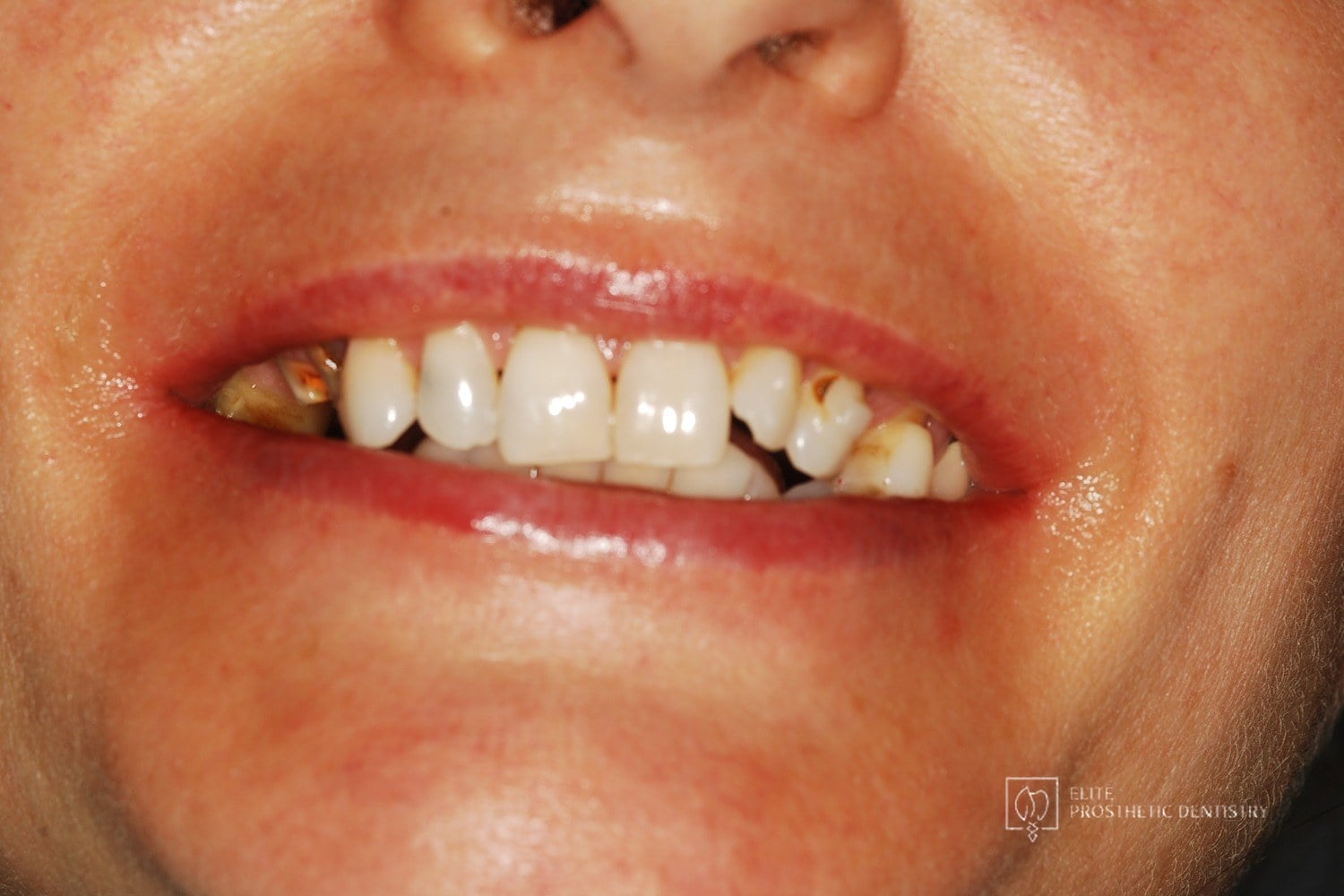
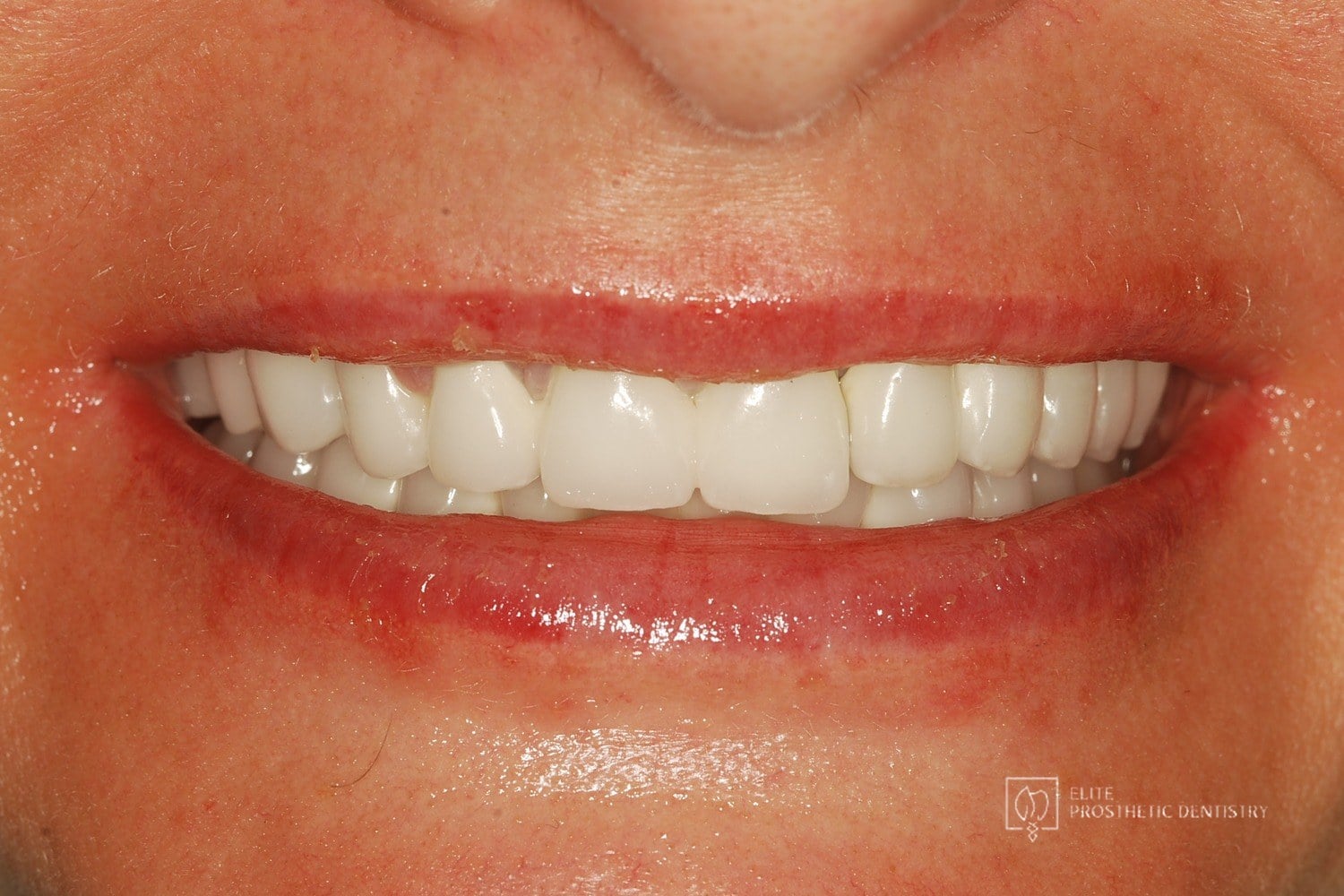
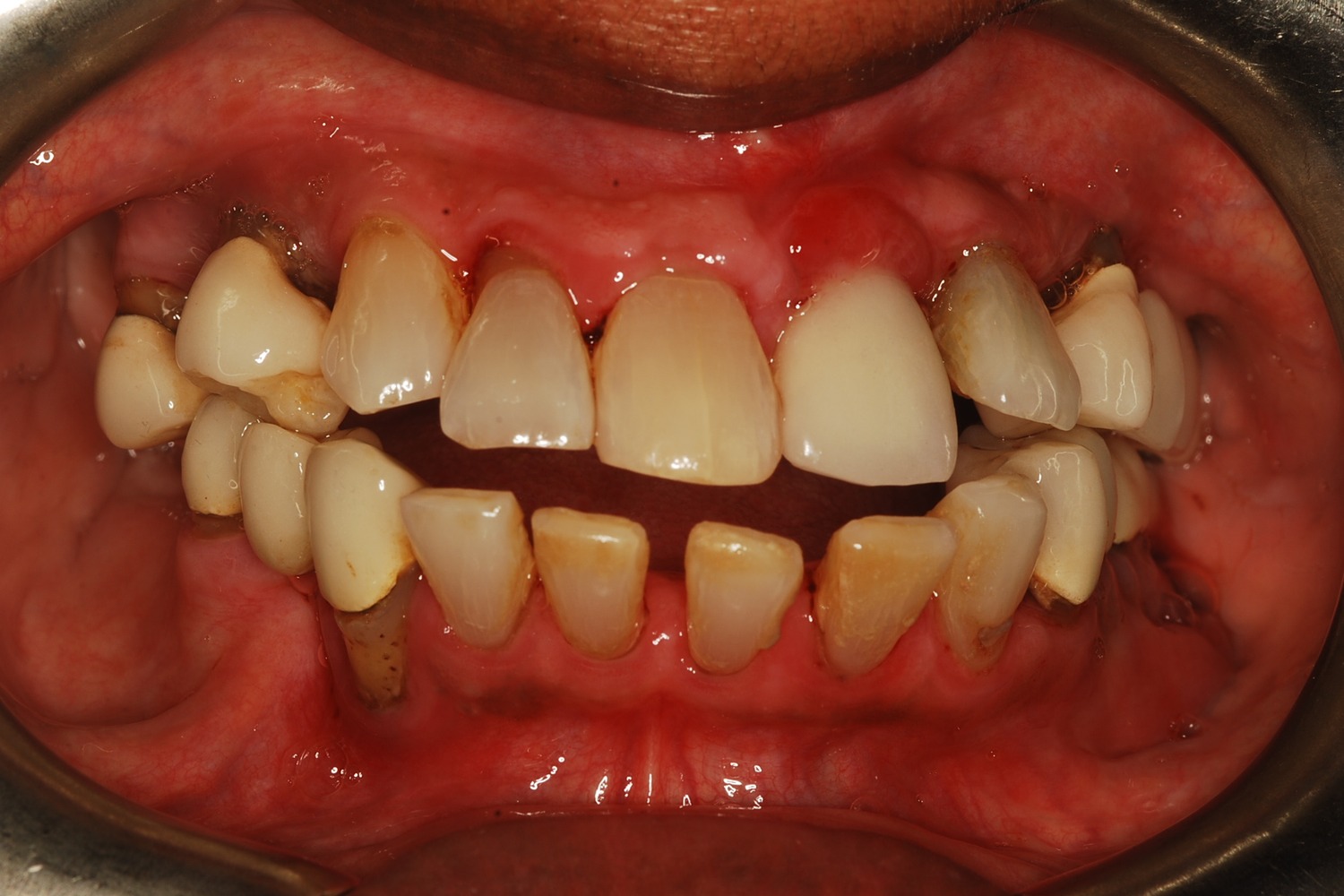
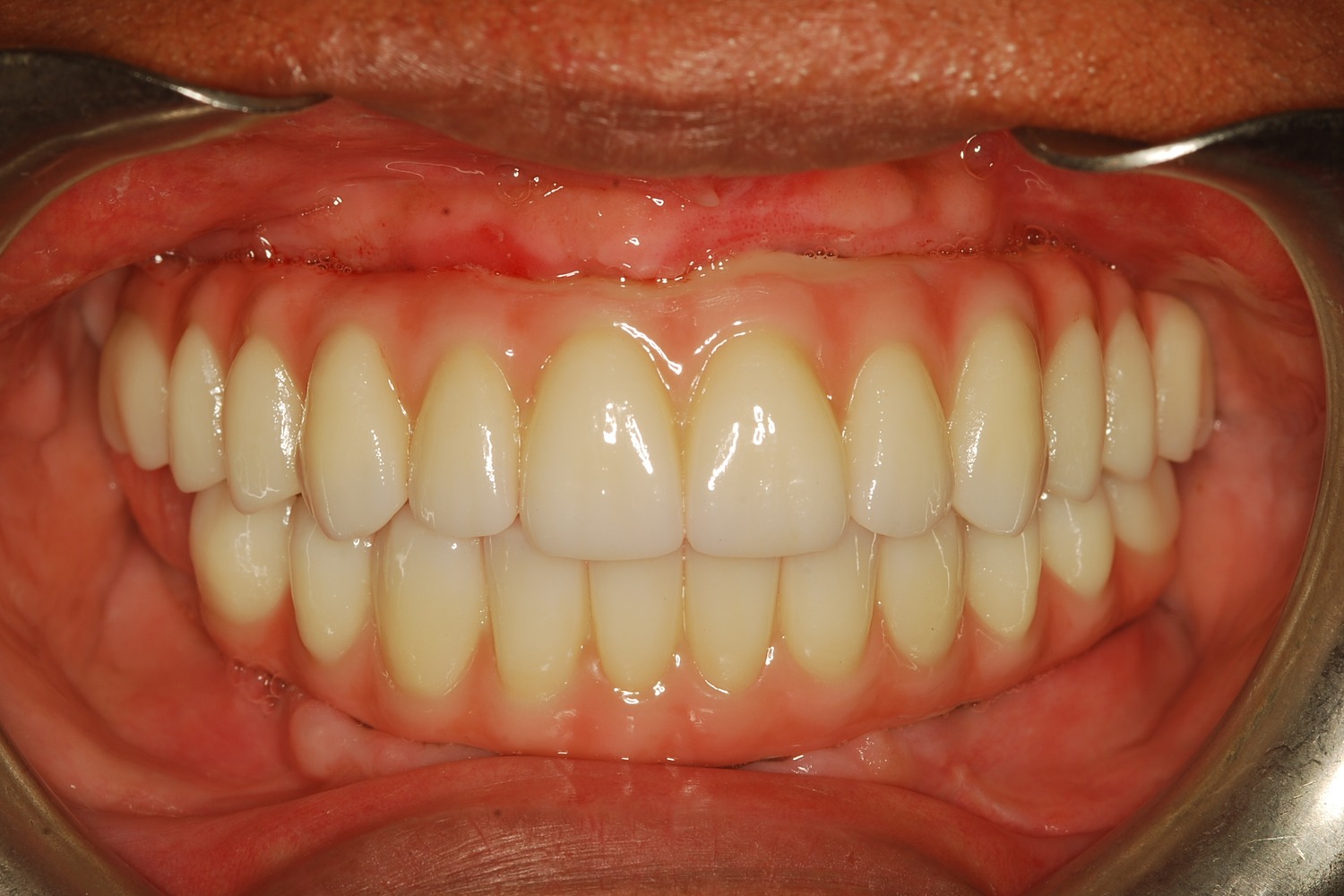
Intraoral view
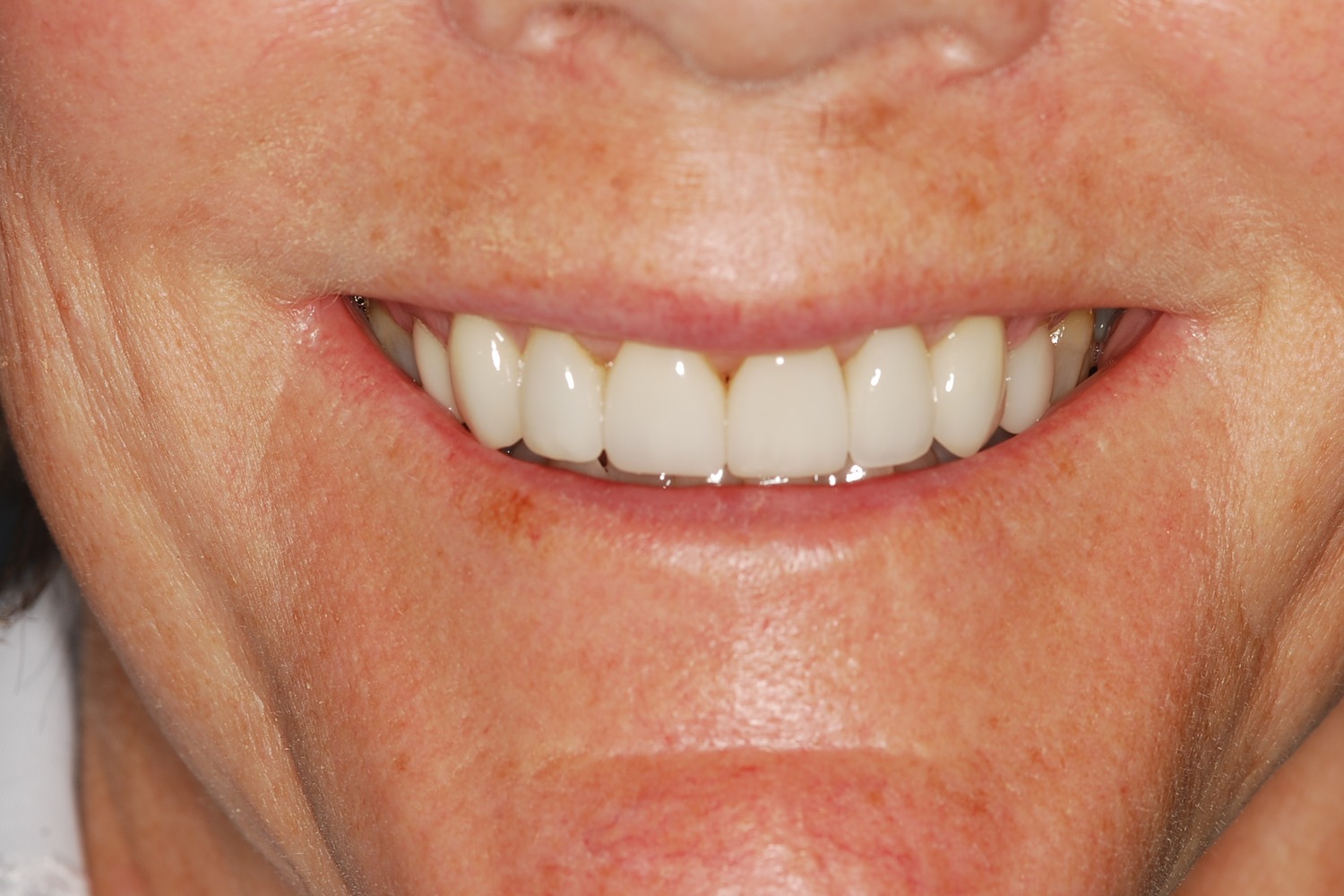 Before
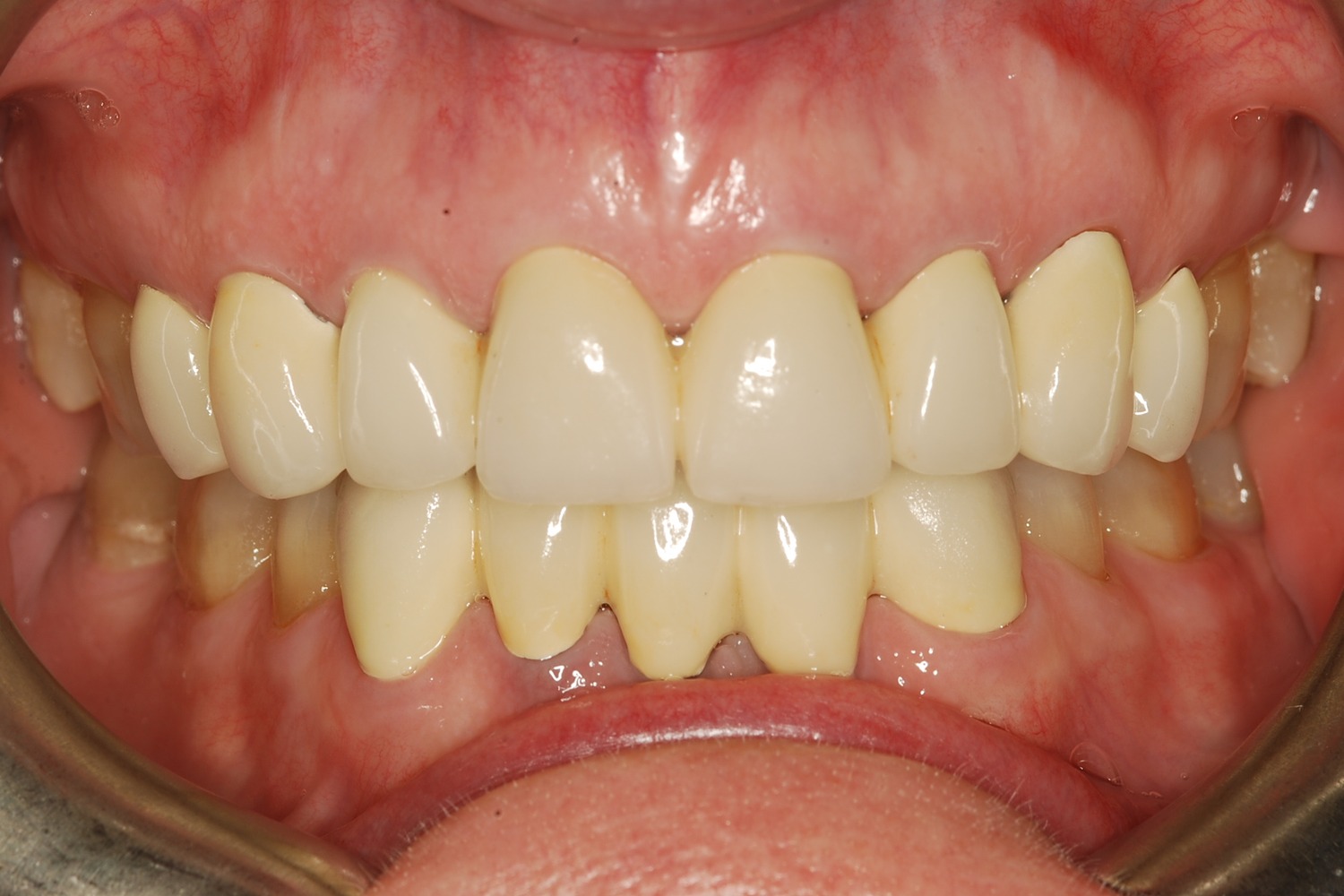 After
After
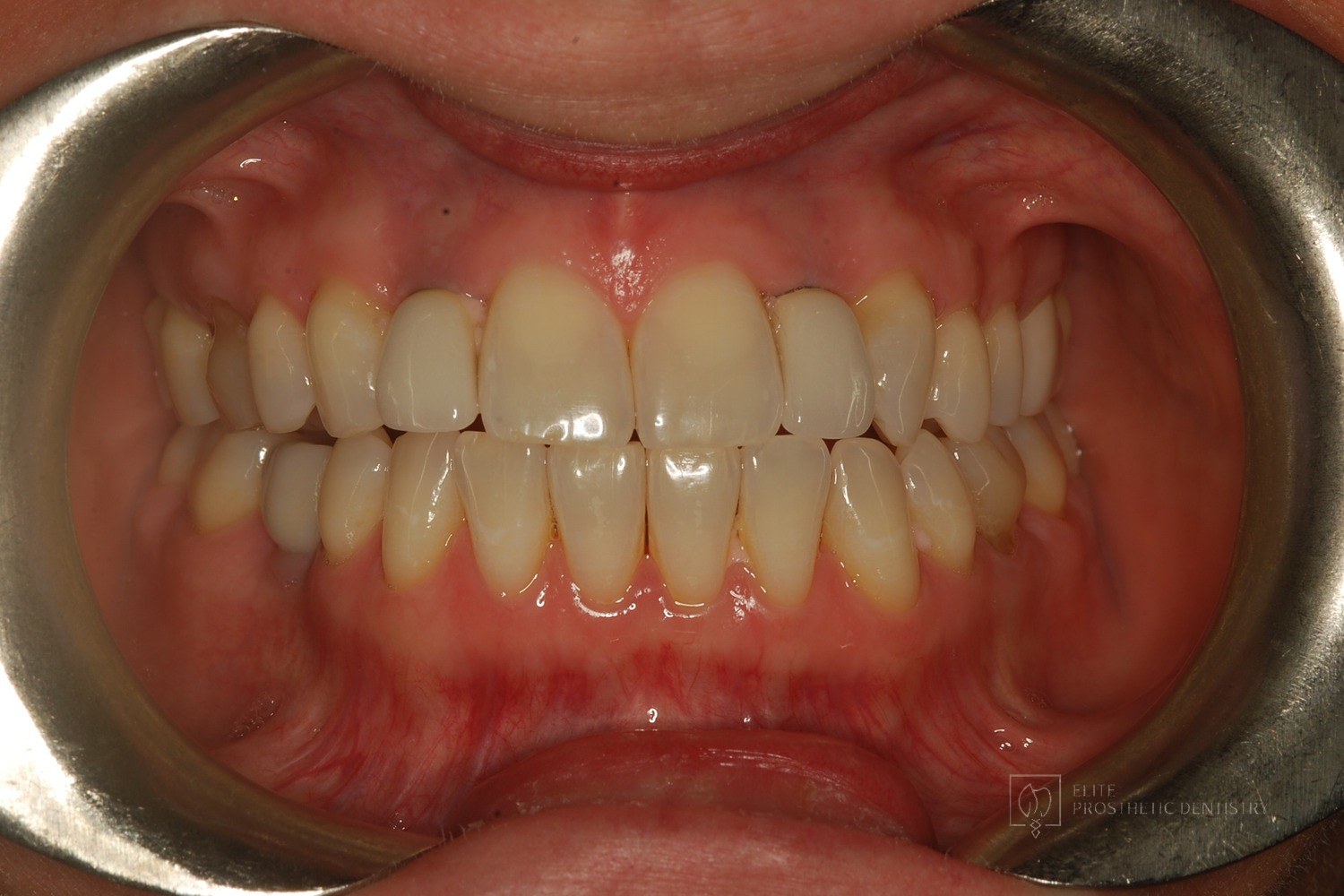
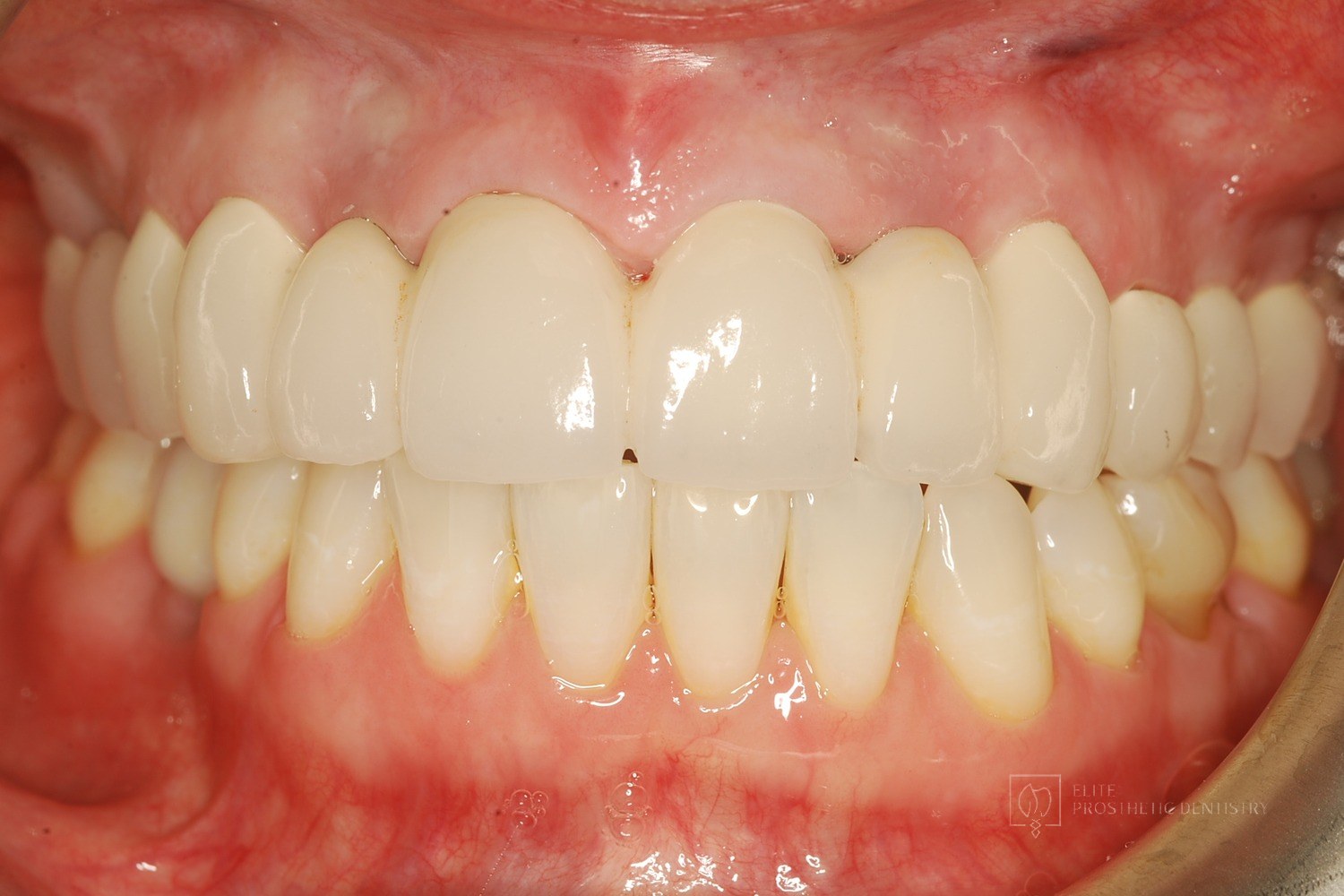
Additional intraoral view
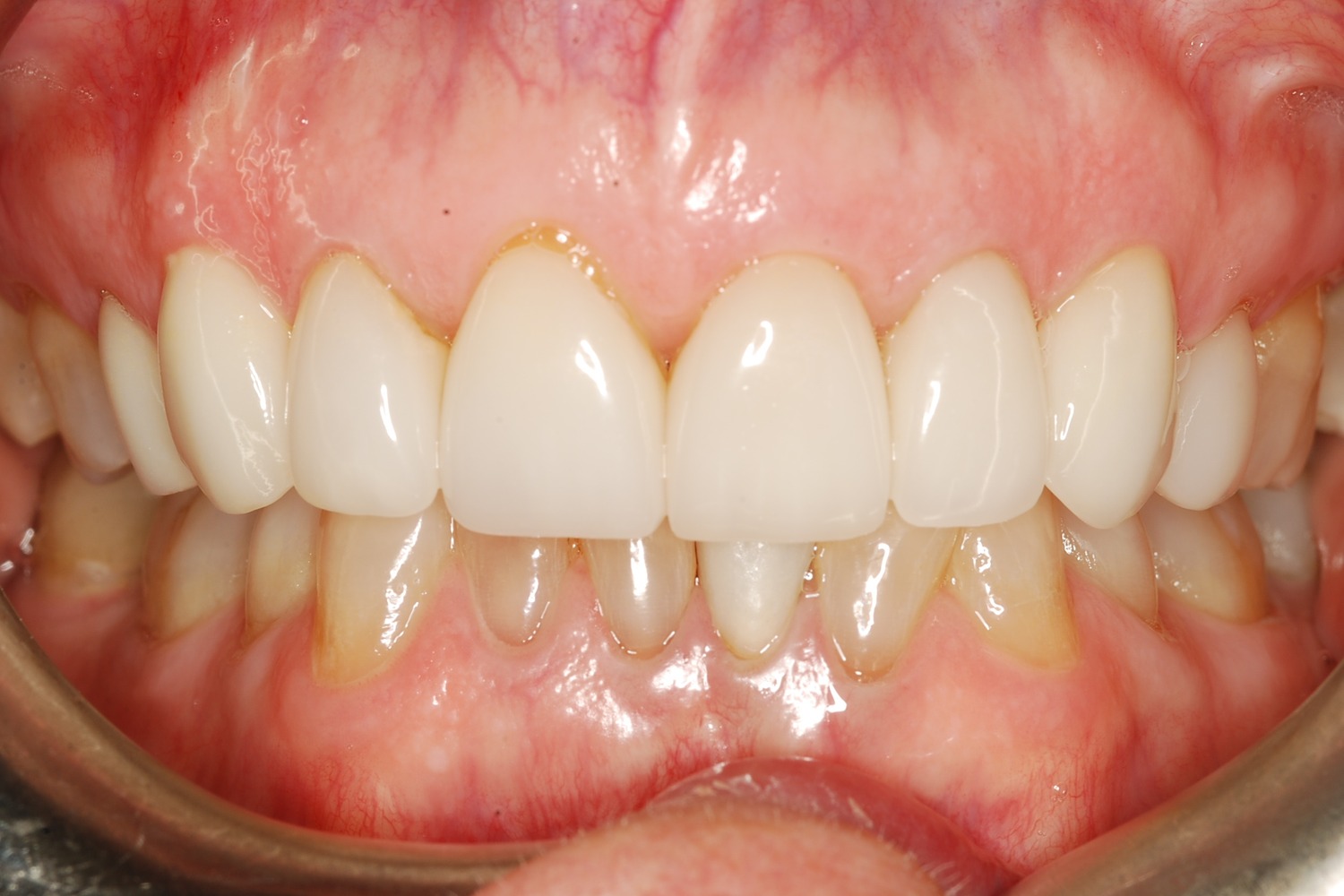 Before
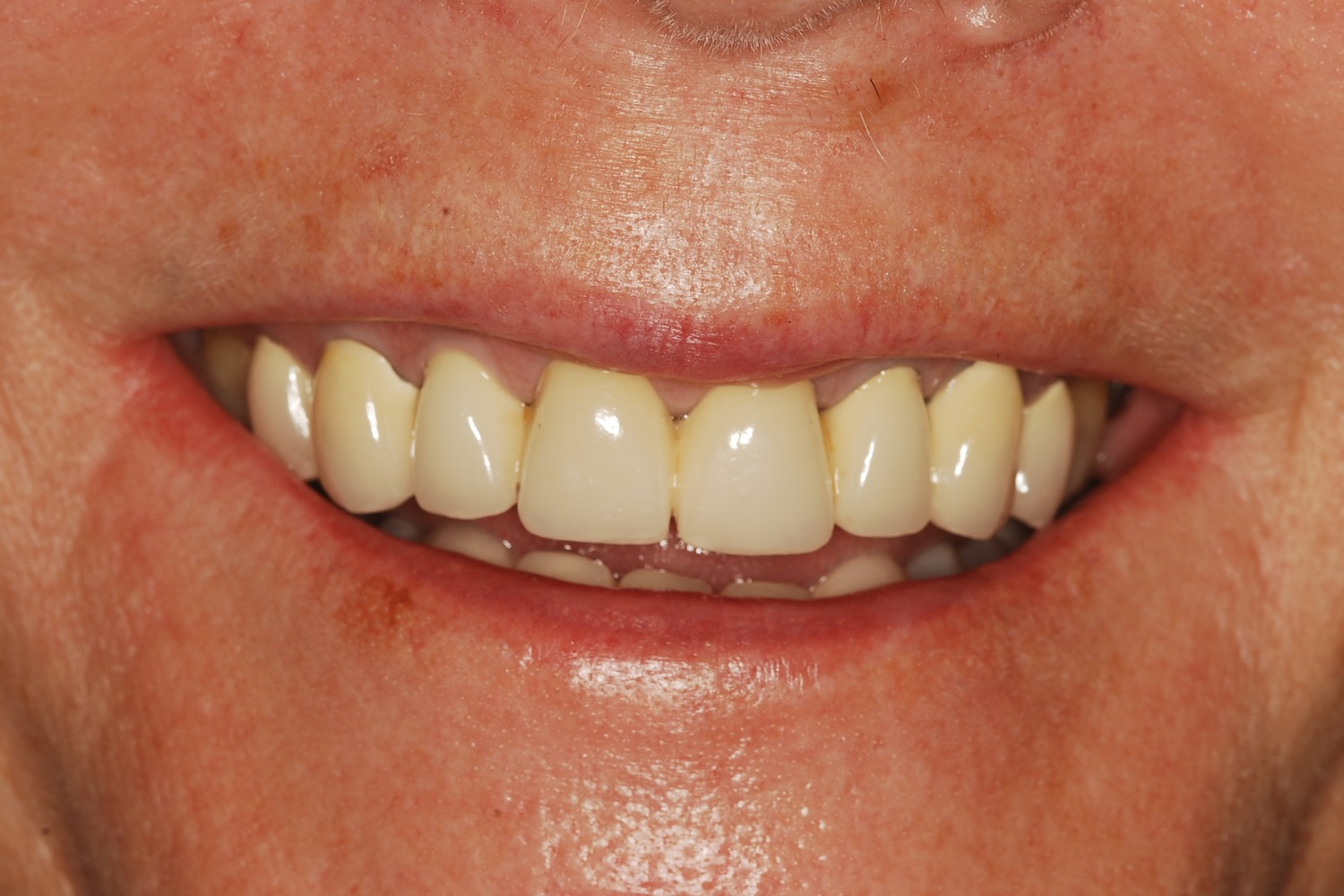 After
After
The presenting condition
The patient came in after being told she needed an implant for a root canal treated tooth with decay and resorption. A deeper specialist evaluation showed the situation was substantially different from a single failing tooth.
Clinical Findings
- →Bone loss from long-term grinding (periodontosis)
- →Inadequate bite with no proper occlusal guidance
- →No contact on the right side in centric or lateral movements
- →Early signs of moderate to severe TMJ involvement
- →Opaque, unnatural-looking existing veneers
- →Insufficient bone to predictably support a new implant
Why this case required prosthodontic-level planning
A general dentist recommending an implant for a failing tooth is not wrong in isolation. It is the surrounding context that matters. When the patient’s bite is collapsed, when the bone is compromised by years of unguided grinding, and when the veneers themselves are not behaving like a stable foundation, dropping an implant into that environment can lock in the underlying instability. A prosthodontic second opinion exists precisely for cases where the recommended treatment may be technically possible but is not the right answer for the whole mouth.
The treatment plan
-
1
Specialist second opinion and full diagnostic workup
Comprehensive evaluation including bite analysis, TMJ assessment, and imaging confirmed that the recommended implant was not the right next step.
-
2
Orthodontic correction of the lower arch
Treatment began with orthodontics to correct the lower teeth and create the alignment needed for a stable bite.
-
3
Coordinated care with an orthodontic specialist
Orthodontic work delivered in close coordination with the orthodontic specialist to ensure the lower-arch correction matched the planned restorative endpoint.
-
4
Custom restorations and lower bridge
Aging veneers replaced with custom crowns and a coordinated lower bridge designed to function with the corrected bite.
-
5
Bite adjustment and protective night guard
Final bite adjustments and a protective night guard to preserve the corrected occlusion and reduce wear from grinding.
-
6
IV sedation for complex appointments
Treatment delivered under IV sedation where appropriate, allowing the more complex appointments to be completed comfortably.
The outcome
The case moved from the patient came in after being told she needed an implant for a root canal treated tooth with decay and resorption to a stable, coordinated long-term result.
Result Highlights
- ✓Unnecessary implant surgery avoided through specialist diagnosis
- ✓Lower arch corrected through coordinated orthodontic work
- ✓Aging veneers replaced with custom restorations
- ✓Bite stabilized with adjustment and protective night guard
- ✓Functional and esthetic improvement delivered under one coordinated plan
Who this case may sound familiar to
This story tends to resonate with patients in a few recognizable situations:
- You have been told you need an implant and you want to make sure that is actually the right answer.
- Your bite does not feel right and the dentist’s plan does not seem to address that.
- Your existing veneers are aging and you suspect the problem is bigger than just one tooth.
- You have signs of grinding or TMJ involvement and you are tired of being treated tooth by tooth.
- You want a specialist evaluation before committing to surgery.
If any of those describe where you are, a consultation with Dr. Marlin can establish the diagnostic picture and the specific options for your case.
Frequently asked questions
When is a second opinion useful before agreeing to an implant?
Whenever the recommendation involves significant surgery, when the failing tooth sits inside a larger bite problem, or when the supporting bone may not be ideal. A prosthodontic second opinion evaluates the whole occlusal system, not just the proposed surgical site.
Why does grinding affect implant decisions?
Long-term grinding can drive bone loss, change the bite, and alter the loading patterns that an implant relies on. Treating the grinding and bite alongside any implant decision protects both the new restoration and the rest of the dentition.
What is TMJ involvement and why does it matter here?
Temporomandibular joint dysfunction can manifest as bite changes, joint pain, muscle fatigue, or asymmetric loading. Cases that show early TMJ involvement often benefit from bite correction and protective splinting before any new fixed restorations are placed.
Why replace older veneers as part of bite correction?
Veneers placed against an unstable or collapsed bite will reproduce that instability. Replacing them within a corrected bite is what makes the new work stable for the long term.
Is sedation available for these longer appointments?
Yes. IV sedation is used routinely for the longer or more complex appointments that comprehensive bite rehabilitation requires.
More about the work behind this case
This case sits at the intersection of full mouth reconstruction, implant reconstruction, and complex restorative dentistry. The diagnostic depth and in-house laboratory control are part of the practice philosophy that supports cases of this complexity.
Elite Prosthetic Dentistry treats patients from across the DMV including Bethesda, Chevy Chase, McLean, Arlington, Potomac, and Great Falls, with a record of out-of-area patients traveling to the practice for complex restorative care.
Related Services
Related Patient Success Stories
Explore similar patient success stories demonstrating our expertise in advanced prosthetic dentistry.
 Before
  After
After How Aging, Failing Dentistry Was Replaced with a Coordinated Full-Mouth Implant and Crown Reconstruction
The patient presented with throbbing upper-molar pain, long-standing infections, multiple root canals and unfinished prior treatment, generalized sensitivity, and several hopeless teeth.
 Before
  After
After How Older Implant Crowns Were Redesigned for a Better Bite and More Natural Appearance
The patient came in after years of living with implant-supported crowns placed more than twenty years earlier that no longer looked or functioned well. CBCT evaluation, reviewed with a radiologist colleague, showed the implants had been placed too far to the buccal in very thin bone and could not support a healthy long-term restoration.
 Before
  After
After How Severe Bone Loss and Bite Dysfunction Were Rebuilt with All-on-6 Implants and a Milled Zirconia Hybrid Prosthesis
The patient presented with severe bone loss, advanced periodontal disease, malocclusion, and a dysfunctional bite that required full-arch rebuilding.