

Loose Dental Implant in McLean, VA
Implant loosening from poor placement? Dr. Marlin uses diagnostic imaging to identify placement errors. McLean implant repair specialist. Get answers.
Loose Dental Implant From Poor Initial Placement in McLean, VA
Some loose implants have nothing to do with infection, abutment screw failure, or bone loss from disease. Instead, they represent a fundamental problem established at the moment of surgical placement: the implant was positioned in the wrong location, at the wrong angle, or at the wrong depth. These placement errors create cascading biomechanical problems that manifest years later as implant loosening. At Elite Prosthetic Dentistry, we diagnose placement-related implant failure through advanced imaging and precision analysis, then develop strategies to salvage or replace your implant appropriately.
The Critical Importance of Implant Positioning
Dental implant placement is not a one-size-fits-all procedure. The ideal position for an implant varies based on anatomy, adjacent tooth position, bone quality, and the type of restoration planned. An implant positioned optimally supports healthy bone, allows proper restorative design, creates an esthetic emergence angle, and distributes bite forces favorably. An implant positioned poorly does none of these things.
How Position Affects Biomechanics
The position of an implant determines how forces flow through the restoration into the fixture and surrounding bone. An implant positioned too far buccal (toward the cheek) creates cantilever forces that concentrate stress. An implant too far lingual (toward the tongue) forces the restoration into an unesthetic emergence angle. An implant too shallow doesn’t provide adequate soft tissue support. An implant too deep creates emergence angle problems and limits restoration design.
These positioning errors don’t cause immediate looseness. The implant may integrate normally and feel stable initially. But over months and years, the non-ideal biomechanics cause progressive bone loss or concentrated stress failures that eventually manifest as mobility.
Diagnosing Placement Problems Through Imaging
Identifying whether an implant’s loosening stems from placement error requires systematic radiographic and clinical analysis.
Periapical Radiograph Analysis
A properly positioned implant has its long axis roughly aligned with the tooth it’s replacing. Comparing current radiographs to pre-implant radiographs, we assess whether the implant is angled correctly relative to adjacent natural teeth. Implants angled lingually, buccally, or tilted mesially or distally are identifiable on radiographs.
Comparative Radiography
We look at the implant’s position relative to adjacent teeth. If a natural tooth has a certain root axis and an implant in the next socket is angled differently, that’s a diagnostic finding. Some variation is acceptable, but significant divergence indicates placement error.
Depth Assessment
The implant should be positioned so its platform (the top of the implant where the abutment attaches) is at or slightly below the bone crest. If radiographs show the implant platform is too shallow or too deep, we’ve identified a depth problem.
Bone Loss Pattern Analysis
Certain patterns of bone loss suggest positioning problems. Bone loss concentrated on one side of an implant suggests the implant is tilted, creating asymmetric loading. Bone loss that accelerated suddenly years after placement suggests the biomechanics have caught up and begun to destroy bone.
Cone Beam Computed Tomography (CBCT) Analysis
For complex cases, CBCT provides 3D visualization that surpasses standard radiography.
3D Angulation Assessment
CBCT shows implant angulation in all planes simultaneously. We assess both the mesiodistal angle (tilt forward or backward) and the buccolingual angle (tilt toward cheek or tongue). We compare these angles to the ideal axis for the tooth position.
Bone Relationship Evaluation
CBCT shows bone volume and density surrounding the implant in three dimensions. We assess whether sufficient bone supports the implant on all surfaces and whether bone loss is concentrated in certain areas.
Adjacent Structure Visualization
We examine the implant’s relationship to sinuses, adjacent tooth roots, and neurovascular structures. Sometimes placement error involves positioning too close to critical structures.
Virtual Treatment Planning
Modern CBCT software allows us to visualize treatment options. If replacement implant therapy is being considered, we can virtually plan new implant positions before surgery.
Common Placement Errors and Their Consequences
Understanding specific placement mistakes helps us identify them in your imaging and communicate clearly about what happened.
Excessive Lingual Inclination
The Problem
An implant tilted too far toward the tongue (lingual direction) creates a restoration that appears to overhang lingually. The crown emergence profile is difficult to achieve esthetically. The implant crown often feels thick or bulky from the tongue’s perspective, and patients may prefer alternative solutions like custom crowns and bridges.
Long-Term Consequences
Lingual tilting concentrates bite forces onto the lingual aspect of the implant, creating asymmetric loading that mimics overloading effects. This uneven stress distribution accelerates bone loss on the lingual surface. Years after placement, significant bone loss on one side of the implant creates loosening that requires intervention.
Treatment Options
Depending on severity, we might use a different abutment design to compensate for the tilt, or we might remove and reposition the implant. Severe lingual tilting often warrants replacement.
Excessive Buccal Inclination
The Problem
An implant tilted toward the cheek (buccal direction) creates a crown that appears to flare outward. This is particularly problematic in the esthetic zone where tooth position is visible. The crown often feels loose or unstable because the root axis of the restoration doesn’t align with the implant’s actual axis.
Long-Term Consequences
Buccal tilting creates the opposite asymmetric loading pattern from lingual tilting: bone loss is concentrated on the buccal surface. Additionally, the restoration is often esthetically compromised and functionally awkward.
Treatment Options
Buccal tilting in esthetic zones almost always warrants implant replacement. Compensating abutments can partially address the biomechanics but don’t solve the esthetic problem.
Excessive Mesial or Distal Tilting
The Problem
An implant tilted forward (mesial tilt) or backward (distal tilt) creates a restoration that doesn’t contact opposing teeth properly. The bite forces are eccentric, concentrating stress in undesirable directions.
Long-Term Consequences
Forward and backward tilting creates cantilever forces that stress the implant fixture and abutment. Bone loss progresses around the entire implant but is most pronounced on the side toward which the implant is tilted.
Treatment Options
Slight mesial tilting can sometimes be compensated for with abutment selection. Severe tilting usually requires replacement.
Implant Placed Too Shallow
The Problem
An implant positioned too close to the alveolar crest (bone surface) doesn’t have adequate bone coverage. The implant shoulder may be exposed or barely covered by soft tissue.
Long-Term Consequences
Shallow placement accelerates bone loss because there’s insufficient bone thickness initially. The implant becomes progressively looser as bone continues to resorb. Additionally, there’s inadequate soft tissue coverage to maintain esthetic and biologic health.
Treatment Options
Shallow placement may benefit from bone graft augmentation to increase bone volume, or replacement in a deeper position with bone grafting. The decision depends on how shallow the placement is and how much bone loss has already occurred.
Implant Placed Too Deep
The Problem
An implant positioned too far into bone creates an implant shoulder that is too far below the bone crest. This eliminates normal soft tissue emergence and makes it difficult to create a crown with ideal esthetic proportions.
Long-Term Consequences
Deep placement makes it hard to achieve proper emergence angles with the crown. The soft tissues around the implant don’t have the proper contours. Long-term bone loss can result from inflammation caused by inadequate soft tissue support.
Treatment Options
Shallow repositioning through surgical exposure might address the problem if the fixture is still in good condition. If bone loss has occurred, replacement is often the better solution.
Excessive Insertion Torque Causing Micro-Fractures
The problem
While technically a placement technique issue rather than a position error, over-tightening an implant during insertion can cause micro-fractures in the implant fixture itself. These cracks weaken the implant.
Long-Term Consequences
Micro-fractures gradually propagate as chewing forces stress the implant. Eventually, the crack propagates through the implant fixture, causing catastrophic failure and loosening. Sometimes a piece of the implant fractures and is lost.
Diagnosis
CBCT can sometimes visualize cracks in implant fixtures. A loosening implant with no bone loss and no infection sign might have a fractured fixture.
Treatment Options
A fractured implant fixture requires removal and replacement. The fixture cannot be salvaged.
How Surgical Planning Has Improved: The Modern Standard
Modern implant placement uses digital surgical planning that has dramatically reduced positioning errors.
CBCT-Based Pre-Surgical Planning
Before implant placement, we take a CBCT scan and visualize the anatomy in three dimensions. We identify bone density and volume. We locate critical anatomic structures (sinuses, nerves, adjacent tooth roots). We then virtually plan the ideal implant position before ever touching bone.
Surgical Guide Fabrication
Using the virtual plan, we fabricate a physical surgical guide that constrains the position and angle of the drill sequence. This guide ensures the implant is positioned exactly as planned.
Intraoperative Navigation
Some offices use computer-guided surgery where the drill follows a virtual plan in real-time, providing continuous feedback about position and angle.
Impact on Failure Rates
Placement errors have declined significantly since these technologies became standard. However, some offices and surgeons still place implants without this level of planning, relying on experience and clinical judgment. This older approach has higher positioning error rates.
Evaluating Your Implant for Placement-Related Problems
When you come to us with a loose implant, we systematically assess whether positioning error contributed.
Clinical Assessment of Crown Emergence
We look at how the crown emerges from the soft tissues. Unusual emergence angles often indicate tilting. We assess whether the crown looks and feels aligned with natural teeth or appears tilted or displaced.
Bite Force Analysis
We check how your teeth meet. Uneven contacts or eccentric bite patterns sometimes indicate implant position error.
Radiographic Comparison
We review any pre-implant radiographs if available and compare them to current images. This before-and-after comparison is diagnostic.
CBCT When Indicated
For complex cases where positioning error is suspected, we recommend CBCT for definitive 3D assessment.
Treatment Decision: Salvage vs. Replacement
Once we’ve identified positioning error as contributing to loosening, the decision becomes: can we salvage the implant or should we plan replacement?
Factors Favoring Salvage
Minor positioning errors with minimal bone loss and minimal functional compromise might be addressed through abutment selection, crown design modification, or limited repositioning.
Factors Favoring Replacement
Severe positioning errors, significant bone loss, poor esthetic or functional compromise, or patient preference for optimization typically favor removal and replacement with better positioning.
The Replacement Implant Advantage
If your implant is replaced, the opportunity to position the new implant optimally is significant. We use CBCT-based planning and surgical guides to ensure the replacement implant is positioned ideally from day one.
Modern surgical techniques have advanced to the point where well-executed implant placement rarely results in positioning errors. The second implant has a high likelihood of long-term success if positioned optimally.
McLean and Implant Standards of Care
McLean residents are sophisticated healthcare consumers with high expectations. Many McLean patients seek second opinions when implant problems arise. The fact that you’re considering specialized evaluation shows you value precision and expertise.
Our McLean office location (15 minutes from central McLean) reflects our commitment to serving this discerning patient population. We invest in the diagnostic and surgical technology that supports optimal implant outcomes.
Preventing Placement Errors in Future Implants
If your current implant is being replaced or if you’re considering additional implants in the future, here’s what you should know about preventing placement errors.
Demand Pre-Surgical Planning
Before implant placement, ensure your surgeon performs CBCT imaging and develops a specific surgical plan for your anatomy. This planning should be documented and discussed with you.
Verify Surgical Guide Usage
Ask whether your surgeon will use a surgical guide. This dramatically reduces positioning errors.
Ask About Surgeon Experience
Implant placement skill improves with volume. Surgeons who place many implants have lower complication rates than those who place implants infrequently.
Seek Prosthodontic Input
Prosthodontists focus on how the final restoration will function. Early collaboration between the surgeon and the prosthodontist who will restore the implant improves positioning decisions.
Choose Technology-Guided Surgery
Computer-guided navigation is the gold standard. This technology was pioneered in orthopedic surgery and is now applied to implant dentistry.
Related Conditions and Treatment Strategies
Your loose implant from positioning error might intersect with several related problems. Poorly placed dental implants is a comprehensive overview of positioning errors and their management. Dental implant bone loss often accompanies positioning error as the non-ideal mechanics progress and stress bone.
Failed implant integration sometimes reflects severe positioning error that prevented initial bone integration. Bone grafting is often necessary before replacement implant placement to optimize anatomy. For McLean patients, we provide dental implants in McLean, bone grafting in McLean, implant repair in McLean, full mouth reconstruction in McLean, implant denture repair in McLean, sedation dentistry in McLean, and full mouth dental implants in McLean.
Precision implant placement describes the systematic approach we use for placement planning and execution. Repairing failing implants encompasses the broader strategies for managing implants with multiple complications. Advanced restorative dentistry ensures your replacement restoration optimizes implant strength.
Dr. Marlin’s Approach to Complex Positioning Problems
Dr. Marlin’s Master of Science degree in Prosthodontics emphasizes how implant position affects the final restoration. His training includes extensive education in surgical planning and collaboration with surgeons on implant positioning.
He has evaluated hundreds of implants placed by other surgeons. This experience gives him deep insight into common positioning errors and their long-term consequences.
Scheduling Your Evaluation
If you suspect your loose implant results from positioning error, bring any records you have from the original surgery, including the operative report. These documents help us understand what was planned and what was actually done.
Request an appointment at our McLean office or our main practice location. We’ll evaluate your implant thoroughly and provide clear recommendations.
Read more about Dr. Marlin’s background and approach to complex implant cases.
Positioning errors create complications, but they’re not permanent. Many of our patients have successfully addressed poorly placed implants through salvage strategies or replacement with optimized positioning. Let us help you restore your smile with precision.
Frequently Asked Questions
Can you tell from an X-ray if an implant was placed at the wrong angle?
Yes. We compare implant angulation to the tooth axis it's replacing and evaluate how it aligns with adjacent natural teeth. Wrong angulation is visible on radiographs, particularly when comparing before and after images with adjacent natural teeth for reference.
If my implant is placed too shallow, does it always become loose?
Not always. Shallow placement affects crown emergence angles and can accelerate bone loss over time. Some shallowly placed implants remain stable but create cosmetic problems or biologic complications. Others develop loosening years later due to accelerated bone loss from the non-ideal position.
Can a poorly placed implant be surgically repositioned, or does it need to be removed and replaced?
Repositioning is possible in some cases but is complex and not always successful. It depends on how much repositioning is needed and the bone anatomy. Removal and replacement is often the more predictable solution, particularly if bone loss has already occurred around the poorly placed fixture.
What causes an implant to be placed at the wrong angle or depth in the first place?
Multiple factors contribute: inadequate surgical planning before placement, poor visualization during surgery, insufficient surgical experience, misuse of surgical guides, and bone anatomy that differs from pre-operative expectations. Modern surgical planning with CBCT imaging has reduced this complication significantly.
If my implant was placed poorly, can I sue the dentist or surgeon who placed it?
That's a legal question best addressed by a dental malpractice attorney. We focus on diagnosing placement problems and providing clinical solutions. Whether a placement error constitutes negligence requires legal expertise we don't provide.
Related Patient Success Stories
Explore similar patient success stories demonstrating our expertise in advanced prosthetic dentistry.

Temporary Crowns Restore Patient's Smile in Just One Day with an Immediate Smile Makeover
A patient from Potomac, Maryland, came to Elite Prosthetic Dentistry with the chief complaint of pain from a failing dental implant and its significant impact on her appearance.
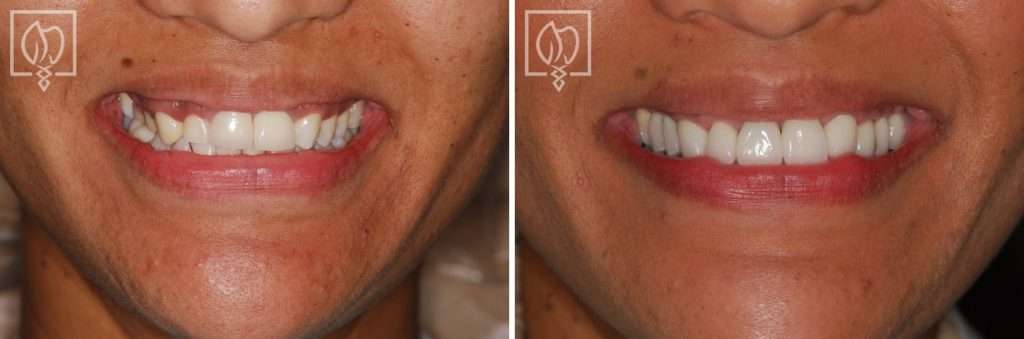
Multi-Faceted Treatment for Patient Unhappy With Her Artificial-Looking Crowns, Teeth and Gums
Many patients come to Elite Prosthetic Dentistry unhappy with the appearance of their smile. However, this particular patient presented with multiple interconnected problems that together created a smile she found deeply unsatisfying.

Treating Kevin’s Collapsed Bite with a Complete Smile Makeover with New Dentures
Dentures are sometimes not created to the ideal aesthetic and functional scheme. When improperly fabricated, dentures can make an individual appear almost a generation older than their actual age. They can have a poor fit that feels loose and unstable when eating or speaking, and they can actually accelerate bone loss over time.
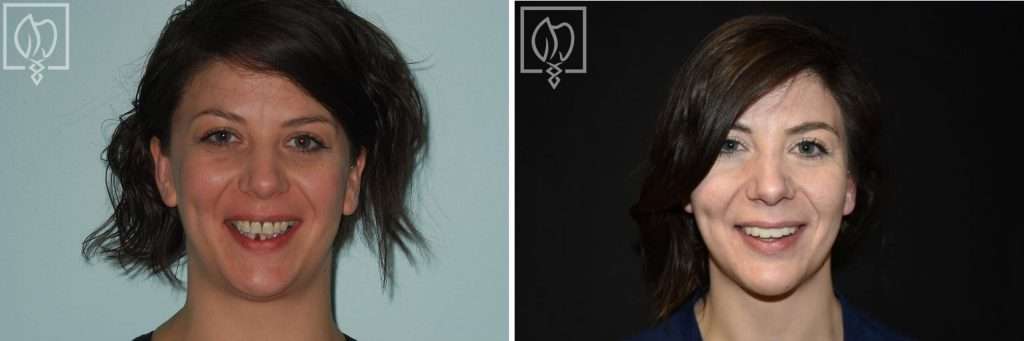
Salvaging Ms. N’s Severely Broken-Down Upper and Lower Teeth from Gum and Bone Disease
Many people in the U.S. suffer from extensive periodontal disease characterized by significant bone loss and shrinkage of the gum tissue. This condition can begin at a very young age and worsen quickly due to hereditary factors and lack of early diagnosis by their dentist.

Rejuvenating Maria’s Severely Worn Down Implant Overdentures
Many times, per year, patients come to us frustrated because their implant prosthesis is so severely worn down that they are very self-conscious and cover up their smile. They look and feel much older than their age as a result of the extensive wear of their appliance(s).
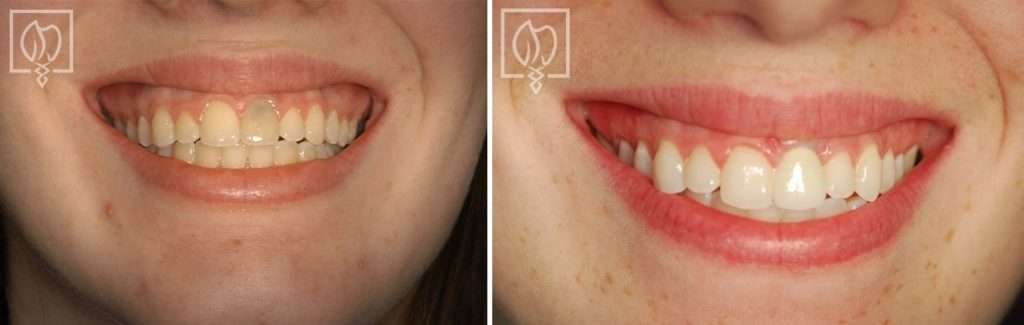
Replacing a Discolored Front Tooth with a Precision Placed Implant
Some of the most challenging restorations occur when fabricating an anterior crown to fit on an implant. Not only does one have the difficulty of matching the single front tooth to the other ones in the high visibility zone, but the dentist must also ensure the position of the underlying implant is precise through accurate preplanning and placement.
Related Articles
Deepen your knowledge with additional insights on this topic.
 Dental Implants
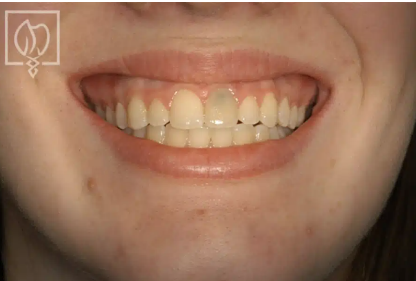
 If a Single Front Tooth is Replaced with an Implant, can it Look Natural?
A single front tooth implant can look completely natural with precision placement, custom abutments, and hand-crafted porcelain crowns. Washington, DC.
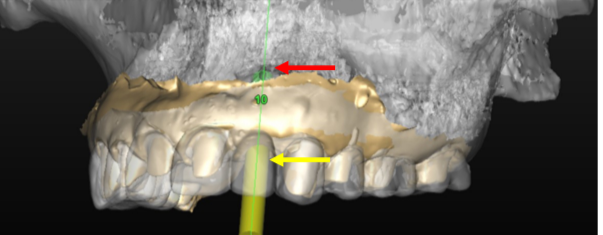 Dental Implants
 What is Precision Implant Placement (PIP)?
Learn what Precision Implant Placement (PIP) is and how meticulous planning ensures optimal implant positioning for long-lasting results in Washington, DC.
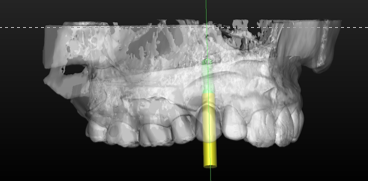 Dental Implants
 What is the ideal Surgical Guide for Precision Implant Placement?
CBCT-based surgical guides allow virtual implant planning for precise positioning in optimal bone, ensuring predictable results in Washington, DC.
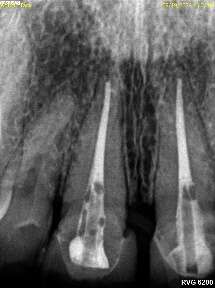 Dental Implants
 When Should an Implant not be Done?
Not every patient is a candidate for dental implants. Learn when healthy roots, fragile bone, or steep angles may make alternatives the better choice.
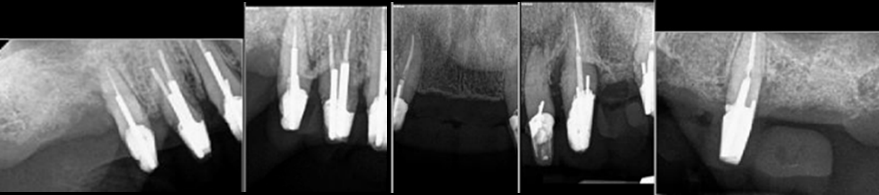 Dental Implants
 What is Staged Implant Therapy?
Staged implant therapy replaces teeth gradually using existing teeth as temporary support. A personalized alternative to All-on-X for full-arch cases.
Unveiling the Four Types of Dental Implants: Which One's for You?
Learn about the four types of dental implants - endosteal, subperiosteal, zygomatic, and mini implants - and which option may be right for your needs.
Our Services in McLean
Beyond loose-dental-implant, McLean patients rely on Dr. Gerald Marlin for a full range of advanced dental care.
More services available in McLean:
loose-dental-implant Near McLean
Dr. Gerald Marlin also provides loose-dental-implant services for patients in these neighboring communities.
Getting Here from McLean
Elite Prosthetic Dentistry is conveniently located near McLean, VA.
McLean is easily accessed via Chain Bridge Road or Lewinsville Road from our office. Located in central Fairfax County.
Address:
4400 Jenifer Street NW, Suite 220
Washington, DC 20015
Phone: (202) 244-2101
Schedule ConsultationSchedule Your Consultation from McLean
McLean residents trust Dr. Gerald Marlin for precision dental care. With 3,900+ implants placed and 40+ years of experience, your smile is in expert hands.