
Implant Denture Repair in Kensington, MD
Expert implant denture repair in Kensington, MD. Dr. Marlin specializes in loose dentures, attachment failures, and All-on-4 repair.
Kensington’s community-oriented residents value quality professional services and clear, straightforward communication. When implant-supported dentures that have provided reliable function require repair, Kensington patients want direct explanation of problems and realistic assessment of repair options.
Dr. Gerald Marlin, a specialty-trained prosthodontist with decades of clinical experience and commitment to direct patient communication, is conveniently located 12 minutes south via Connecticut Avenue NW. His straightforward communication style and diagnostic precision ensure Kensington patients understand their denture problems clearly and receive appropriate, effective repair.
Evidence-Based Success Rates for Denture Repair
Kensington patients benefit from understanding that properly executed denture repairs achieve high success rates supported by clinical experience. Locator cap replacement succeeds in over 95 percent of cases, with most patients achieving complete restoration of retention in a single appointment.
Framework screw tightening resolves rocking and movement problems in the vast majority of bar-retained dentures. Acrylic base replacement provides durable repair typically lasting 15 to 20 years or longer. Framework replacement, when needed, provides stable long-term function.
Success depends on three critical factors: accurate diagnosis identifying actual problems, appropriate treatment selection matched to the diagnosed problem, and quality execution by skilled professionals. Dr. Marlin’s decades of experience achieving consistently high success rates reflects his diagnostic accuracy and repair expertise.
Predictable Locator Attachment Wear Patterns
Most Kensington patients with loose snap-in dentures experience locator attachment cap wear. These synthetic rubber caps gradually compress with each insertion and removal cycle, eventually losing gripping force over years of normal use.
The wear process is highly predictable in its progression. Your denture feels stable initially, providing firm retention. After a few years, subtle looseness develops, barely noticeable at first. Progressive looseness continues. Eventually, obvious looseness develops where the denture shifts during eating.
Dr. Marlin can identify locator cap wear through careful examination and precision testing. If worn caps are causing looseness, replacement restores retention to like-new condition in a single appointment. Patients often remark how dramatic the improvement is after repair.
Strategic Insertion Technique and Wear Reduction
Kensington patients can significantly reduce attachment wear rates through proper insertion and removal technique. Inserting the denture straight downward rather than at angles reduces lateral stress on attachment housings. Removing the denture gently using consistent technique rather than jerking or pulling reduces impact stress on attachments.
Limiting denture removal frequency if possible reduces total insertion cycles over time. Each insertion stresses the system slightly. Minimizing removal frequency extends intervals between replacements.
Chewing with controlled movements rather than forceful grinding reduces overall system stress. Avoiding extremely hard foods, nuts, and ice reduces impact loads that stress attachments. Dentures are designed for normal eating, not for cracking hard objects.
Proper care cannot stop wear completely because wear is inherent to the design. However, strategic care significantly slows wear progression. Kensington patients who follow these guidelines typically extend intervals between attachment replacements substantially.
Estimated Function Timeline After Repair
Kensington patients appropriately wonder how quickly looseness recurs after repair. This question has a variable answer depending on individual wear patterns.
Properly repaired and well-maintained attachment systems should provide years of function before wear becomes noticeable again. New attachment caps provide 2 to 4 years of stable function on average. Some Kensington patients with gentle handling achieve 4 to 5 years before caps need replacement. Others with high wear rates or vigorous chewing patterns might need replacement sooner, sometimes within 2 years.
Dr. Marlin can estimate expected replacement intervals based on your specific wear patterns. Understanding your personal timeline allows you to anticipate maintenance needs and schedule repairs at convenient times.
Framework Screw Integrity and Systematic Checking
Kensington patients with bar-retained dentures sometimes experience problems from loose framework screws. These screws gradually loosen from metal fatigue and stress relaxation caused by repetitive chewing forces concentrated on specific points.
Loose screws allow framework movement manifesting as rocking when chewing, lateral shifting, or clicking sounds. Dr. Marlin uses precision instruments to check framework screw tightness systematically throughout the framework. This examination identifies loose screws before they cause obvious dysfunction.
Tightening loose screws typically takes 20 to 30 minutes and frequently resolves all denture movement issues. However, Dr. Marlin also evaluates what forces caused the looseness. Sometimes underlying issues like bone loss or uneven stress distribution need to be addressed to prevent recurrence.
Acrylic Base Cracks and Multi-Problem Assessment
Kensington residents sometimes notice cracks developing in denture acrylic bases. These cracks develop from thermal cycling, impacts during insertion or cleaning, grinding or clenching during sleep, or accumulated stress from years of use.
Some patients have multiple cracks appearing simultaneously. Multiple cracks sometimes indicate that the denture is under stress from problems beyond just the cracks themselves. Dr. Marlin assesses whether multiple cracks can be sealed without replacement or whether base replacement is more practical.
He investigates what’s causing the stress creating multiple cracks. Is it bone loss affecting support? Is it grinding or clenching? Is it improper insertion technique? Addressing underlying problems prevents cracks from recurring after repair.
Strategic Repair Versus Replacement Decision-Making
Kensington patients sometimes ask whether they should replace dentures completely rather than repairing problems. This question requires careful analysis of individual circumstances.
Dr. Marlin considers the extent of damage, the cost of repair, the expected remaining lifespan of the denture, the patient’s age and health status, and personal preferences when guiding this decision. Replacement makes sense when accumulated damage approaches the cost of new dentures or when repair is no longer practical.
For most Kensington patients, repair of identified problems remains the most practical approach. Complete denture replacement costs significantly more than repair and requires months of adjustment and adaptation.
Denture Tooth Damage and Material Upgrades
Denture teeth occasionally fracture from impacts during cleaning or from accidentally biting hard objects. Some Kensington patients experience chipped teeth or stained teeth from foods or beverages.
Tooth replacement is straightforward. Our laboratory replaces broken or damaged teeth and matches color carefully to create seamless repairs. The replacement is essentially invisible.
Some Kensington patients choose to upgrade to porcelain denture teeth during replacement. Porcelain is significantly more durable than acrylic and more stain-resistant. The tradeoff is that porcelain is more brittle and can shatter if struck, whereas acrylic tends to crack rather than shatter.
Post-Repair Professional Care and Monitoring
Kensington patients should understand that after repair, regular professional evaluation remains important for durability. Annual evaluations monitor repair durability and catch developing problems early before they cause dysfunction.
Framework screw tightness should be checked periodically to catch loosening before problems develop. Attachment components should be inspected for wear to estimate when replacement will be needed. Acrylic repair durability should be monitored. Periodic professional maintenance extends denture life significantly.
Getting Here from Kensington
Kensington residents reach Elite Prosthetic Dentistry in approximately 12 minutes south via Connecticut Avenue NW. The office is located at 4400 Jenifer Street NW, Suite 220, Washington, DC 20015, in the Forest Hills neighborhood.
Convenient parking is available on the building lot. The drive from Kensington is straightforward and convenient.
Advanced Diagnostic Capabilities
Dr. Marlin employs diagnostic techniques that identify problems many dentists miss. Specialized imaging reveals subtle framework cracks invisible to casual examination. Precision testing detects screw looseness not yet causing obvious symptoms. Detailed attachment examination identifies wear in early stages.
This diagnostic precision ensures repair addresses actual problems rather than guessed causes. Treating the correct problem prevents waste of time and money on unnecessary treatment.
In-House Laboratory and Same-Day Repairs
Elite Prosthetic Dentistry’s in-house laboratory provides same-day or next-day repairs for most problems. Laboratory staff coordinate directly with Dr. Marlin, ensuring repairs meet exacting standards.
Complex attachment systems, framework alignment, and acrylic bonding require skilled execution. The same technicians who understand your denture’s history complete repairs. This consistency ensures quality and predictable outcomes.
Preventive Maintenance and Early Intervention
Kensington patients benefit from understanding that annual professional evaluations prevent most major denture problems. Dr. Marlin checks framework screw tightness, evaluates attachment wear through precision testing, inspects acrylic for developing cracks, and assesses bone changes affecting denture fit.
Early intervention prevents progression of small problems into large problems. A denture with early-stage attachment wear detected at the annual appointment can be repaired before obvious looseness develops. Annual maintenance costs a fraction of emergency repair performed after problems have been ignored.
Long-Term Denture Care and Sustainability
Implant dentures typically function reliably for 20 to 30 years with proper care. This extended lifespan requires commitment to maintenance including periodic attachment replacement every 2 to 4 years, annual professional evaluation by Dr. Marlin, and occasional adjustments as bone changes occur.
Denture care at home involves proper insertion and removal technique, soft brush cleaning, proper storage in a moist environment, and avoiding extreme temperatures. Straightforward care significantly extends denture life.
Related Resources
- Implant denture problems and solutions
- Repairing failing implants
- Loose snap-in denture solutions
- Denture relines and repairs
- Removable prosthodontics
- Comfortable denture solutions
- Patient success stories
- Meet Dr. Gerald Marlin, specialty-trained prosthodontist
- Our in-house dental laboratory
- Dental implant information
- Schedule an appointment
Schedule Your Consultation or call (202) 244-2101
Kensington residents with failing or deteriorating implant dentures have expert repair solutions available nearby. Most denture problems are repairable, and many can be fixed without complete replacement. Contact Elite Prosthetic Dentistry to schedule an evaluation and discover whether your denture can be restored to full function.
Frequently Asked Questions
What's the success rate of implant denture repair?
Properly executed denture repairs have high success rates. Locator cap replacement succeeds in over 95 percent of cases. Framework screw tightening resolves rocking in the vast majority of bar-retained dentures. Acrylic base replacement provides durable repair lasting 15 to 20 years. Framework replacement, when needed, provides long-term stability. Success depends on accurate diagnosis, appropriate treatment selection, and quality execution. Dr. Marlin's decades of experience achieving high success rates reflects his diagnostic accuracy and repair expertise.
Will my repaired denture need periodic follow-up care?
Yes. After repair, regular professional evaluation remains important. Annual evaluations monitor repair durability and catch developing problems early. Framework screw tightness should be checked periodically to catch loosening before problems develop. Attachment components should be inspected for wear to determine when replacement is needed. Acrylic repair durability should be monitored. Periodic professional maintenance extends denture life and prevents problems.
How quickly does looseness typically develop after repair?
Properly repaired attachment systems should provide years of function before wear becomes noticeable again. New attachment caps provide 2 to 4 years of function depending on wear patterns. Some patients experience slower wear and might go 4 to 5 years before caps need replacement again. Others with high wear rates might need replacement sooner. Dr. Marlin can estimate expected replacement intervals based on your specific wear patterns.
Is there anything I can do to slow down attachment wear?
Yes. Proper insertion technique where you insert the denture straight down rather than at angles reduces stress on attachments. Removing the denture gently rather than jerking or pulling reduces impact stress. Limiting denture removal frequency if possible reduces insertion cycles. Chewing with controlled movements rather than forceful grinding reduces overall system stress. Avoiding extremely hard foods reduces impact loads. Proper care cannot stop wear completely but can significantly slow wear progression.
What if my denture is cracked in multiple locations?
Multiple cracks sometimes indicate that the denture is under stress from problems beyond just the cracks themselves. These underlying problems should be identified and addressed during repair. Sometimes multiple cracks warrant denture base replacement rather than attempting to repair multiple individual cracks. Dr. Marlin assesses whether multiple cracks can be sealed or whether base replacement is more practical. He investigates what's causing the stress creating multiple cracks.
Related Patient Success Stories
Explore similar patient success stories demonstrating our expertise in advanced prosthetic dentistry.
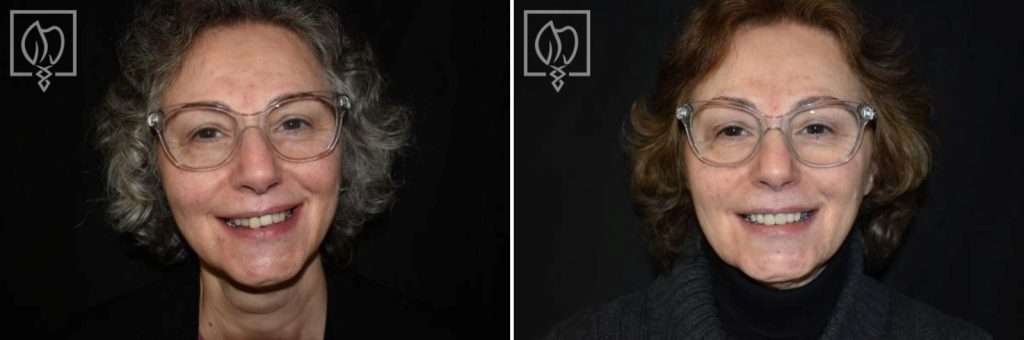
Temporary Crowns Restore Patient's Smile in Just One Day with an Immediate Smile Makeover
A patient from Potomac, Maryland, came to Elite Prosthetic Dentistry with the chief complaint of pain from a failing dental implant and its significant impact on her appearance.
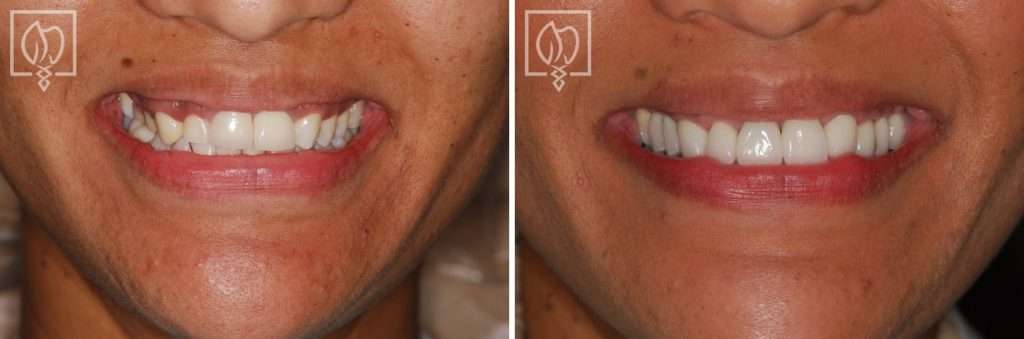
Multi-Faceted Treatment for Patient Unhappy With Her Artificial-Looking Crowns, Teeth and Gums
Many patients come to Elite Prosthetic Dentistry unhappy with the appearance of their smile. However, this particular patient presented with multiple interconnected problems that together created a smile she found deeply unsatisfying.
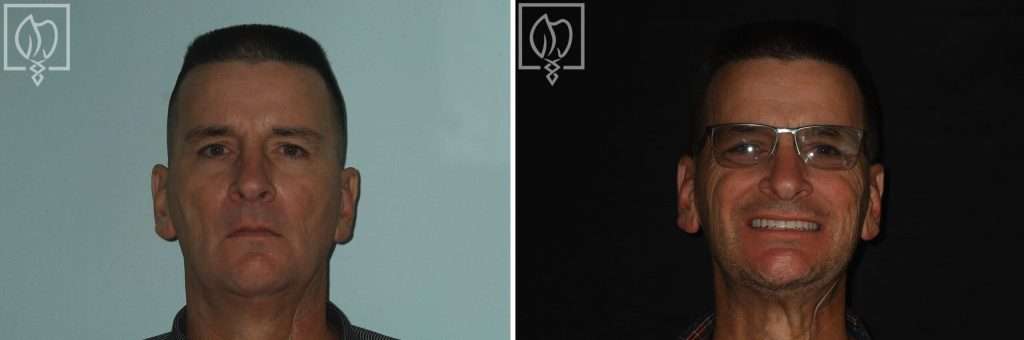
Treating Kevin’s Collapsed Bite with a Complete Smile Makeover with New Dentures
Dentures are sometimes not created to the ideal aesthetic and functional scheme. When improperly fabricated, dentures can make an individual appear almost a generation older than their actual age. They can have a poor fit that feels loose and unstable when eating or speaking, and they can actually accelerate bone loss over time.
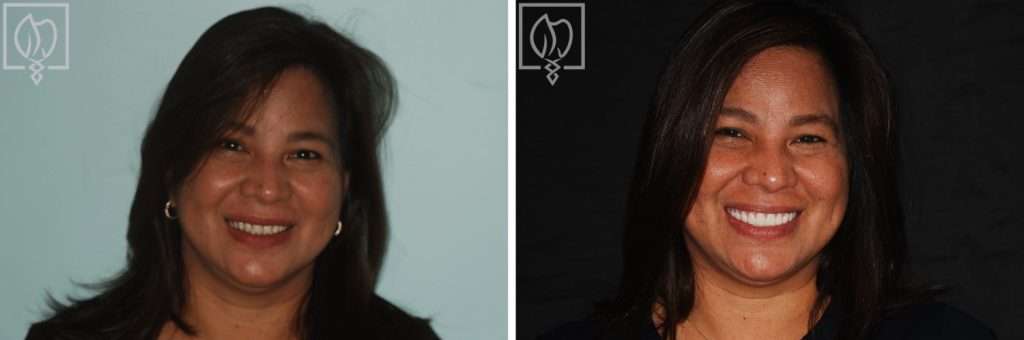
Rejuvenating Maria’s Severely Worn Down Implant Overdentures
Many times, per year, patients come to us frustrated because their implant prosthesis is so severely worn down that they are very self-conscious and cover up their smile. They look and feel much older than their age as a result of the extensive wear of their appliance(s).
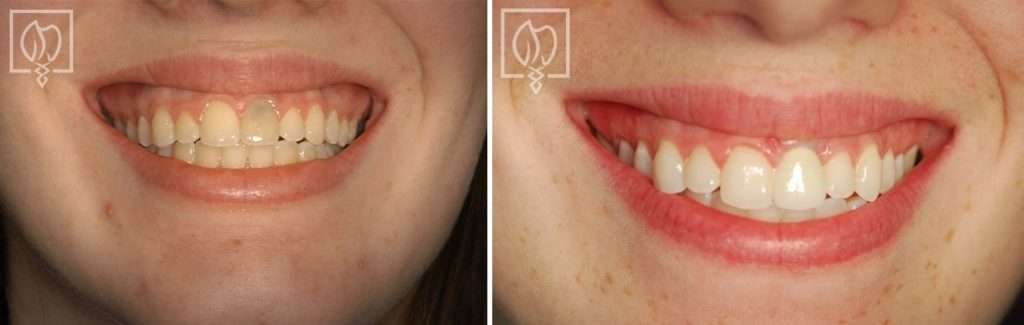
Replacing a Discolored Front Tooth with a Precision Placed Implant
Some of the most challenging restorations occur when fabricating an anterior crown to fit on an implant. Not only does one have the difficulty of matching the single front tooth to the other ones in the high visibility zone, but the dentist must also ensure the position of the underlying implant is precise through accurate preplanning and placement.
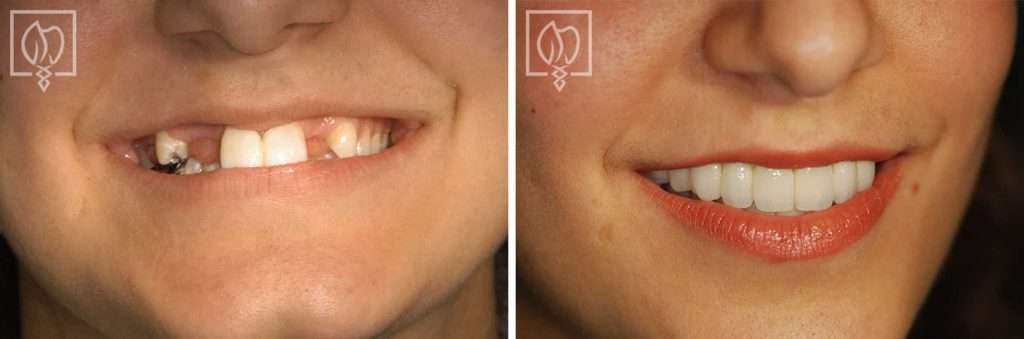
Treating Congenitally Missing Teeth in a Teenager with Dental Implants
A 16-year-old patient from McLean, Virginia, presented with a condition where she was congenitally missing several teeth, meaning they were missing from birth.
Related Articles
Deepen your knowledge with additional insights on this topic.
 Dental Implants
 If a Single Front Tooth is Replaced with an Implant, can it Look Natural?
A single front tooth implant can look completely natural with precision placement, custom abutments, and hand-crafted porcelain crowns. Washington, DC.
 Dental Implants
 What is Precision Implant Placement (PIP)?
Learn what Precision Implant Placement (PIP) is and how meticulous planning ensures optimal implant positioning for long-lasting results in Washington, DC.
 Dental Implants
 What is the ideal Surgical Guide for Precision Implant Placement?
CBCT-based surgical guides allow virtual implant planning for precise positioning in optimal bone, ensuring predictable results in Washington, DC.
 Dental Implants
 When Should an Implant not be Done?
Not every patient is a candidate for dental implants. Learn when healthy roots, fragile bone, or steep angles may make alternatives the better choice.
 Dental Implants
 What is Staged Implant Therapy?
Staged implant therapy replaces teeth gradually using existing teeth as temporary support. A personalized alternative to All-on-X for full-arch cases.
Unveiling the Four Types of Dental Implants: Which One's for You?
Learn about the four types of dental implants - endosteal, subperiosteal, zygomatic, and mini implants - and which option may be right for your needs.
Our Services in Kensington
Beyond implant-denture-repair, Kensington patients rely on Dr. Gerald Marlin for a full range of advanced dental care.
More services available in Kensington:
implant-denture-repair Near Kensington
Dr. Gerald Marlin also provides implant-denture-repair services for patients in these neighboring communities.
Getting Here from Kensington
Elite Prosthetic Dentistry is conveniently located near Kensington, MD.
Kensington residents reach our office 12 minutes south via Connecticut Avenue NW
Address:
4400 Jenifer Street NW, Suite 220
Washington, DC 20015
Phone: (202) 244-2101
Schedule ConsultationSchedule Your Consultation from Kensington
Kensington residents trust Dr. Gerald Marlin for precision dental care. With 3,900+ implants placed and 40+ years of experience, your smile is in expert hands.