
Full Mouth Reconstruction Revision in McLean, VA
McLean reconstruction revision expert. Dr. Marlin treats complex prosthetic failures, implant problems, and bite issues.
McLean Reconstruction Revision: Specialized Expertise for Sophisticated Patients
McLean residents represent highly educated, successful professionals and families. Many McLean residents take major life investments seriously, including dental care quality. When reconstruction fails, McLean patients expect access to specialists explaining clearly what happened and providing expert solutions.
The 15-minute drive to our Georgetown office via Georgetown Pike or Chain Bridge Road connects McLean to specialized prosthodontic expertise. This proximity makes multiple revision appointments manageable without schedule disruption.
Hybrid Reconstruction and Implant-Natural Tooth Integration
Some McLean reconstructions combine natural teeth and implants in hybrid designs. Natural teeth move slightly with bite force through their periodontal ligament. Implants don’t move. This differential movement stresses connection points.
If connections are too rigid, stress concentrates causing failure. Some hybrid designs work beautifully. Others fail. In revision, we assess your specific design determining whether it’s fundamentally sound needing only bite correction or whether it needs redesign.
Systematic Versus Localized Failure Patterns
Understanding whether your failure is systematic or localized determines the revision approach.
Systematic failure affects most or all reconstructed units suggesting a problem affecting the entire system, such as bite imbalance or vertical dimension loss.
Localized failure affects just certain restorations reflecting material failure or trauma. We assess failure patterns and develop revision strategy reflecting that assessment.
Selective Revision and Comprehensive Approaches
Some patients prefer replacing failing teeth gradually. This works if failure is truly localized. However, if failure is systematic, piecemeal replacement usually fails because the causal problem continues affecting new restorations.
We assess whether selective replacement will succeed or whether comprehensive revision is necessary.
Normal Wear and Failure Distinction
Normal wear is gradual, even wear across restorations over years. Failure shows patterns: sequential failures of restorations placed together, contact loss on specific teeth, or progressive looseness.
One loose crown might need recementing. Multiple loose crowns suggests systematic failure. We distinguish during evaluation.
Getting Here from McLean
Georgetown Pike runs directly from McLean south toward Georgetown, approximately 15 minutes away. Chain Bridge Road provides an alternative route. Both are familiar to McLean residents. During off-peak hours, 15 minutes is realistic. During rush periods, allow longer.
Parking is available at our office location.
Bite Mechanics and Reconstruction Success
Bite mechanics is complex but critical to reconstruction success. Your bite involves precise coordination between teeth, jaw joints, and muscles. Proper bite mechanics distributes forces efficiently. Poor bite mechanics concentrates forces destructively.
Some reconstructions fail because bite was never designed with proper mechanics. The reconstruction might have adequate materials but fundamentally flawed bite design. Revision requires redesigning the bite from prosthodontic principles.
Centric Relation and Neuromuscular Harmony
Centric relation is your jaw’s most neutral position when muscles are relaxed. Reconstructions designed around correct centric relation create harmony between your bite and jaw position. Your jaw functions smoothly. Your muscles work efficiently. Your restorations experience appropriate forces.
Reconstructions without proper centric relation create conflict. Your jaw knows its neutral position. If reconstruction requires a different position, your muscles resist creating tension, stress, and eventual failure.
Diagnostic Technology and Precision
Our evaluation uses contemporary technology. Cone beam imaging shows bone anatomy three-dimensionally. Digital bite recordings capture your jaw position with millimeter accuracy. Articulation software analyzes bite mechanics in detail.
This technological precision ensures accurate, comprehensive diagnosis. Treatment planning reflects your situation’s actual complexity, not assumptions.
Material Performance and Selection
Different restorative materials perform very differently under the forces a full mouth reconstruction must withstand. Gold alloys remain among the most durable materials available, rarely fracturing even under heavy bite forces. Their limitation is esthetic: gold is visible, and many McLean patients prefer tooth-colored restorations. Ceramic materials deliver exceptional esthetics but can fracture under excessive or improperly distributed force. Composite materials offer easy adjustability but wear faster than ceramic or metal.
Modern material options have expanded significantly. Monolithic zirconia provides strength approaching metal with reasonable esthetics. Lithium disilicate combines strength and beauty for anterior restorations. Layered zirconia with porcelain overlay offers the best esthetic results for visible teeth while maintaining structural integrity.
In revision, material selection depends on where the restoration sits in your mouth, the forces it must withstand, your esthetic expectations, and the condition of supporting structures. We match materials to function rather than using a single material across every tooth.
The In-House Laboratory Advantage for Complex Revision
Our on-site dental laboratory provides McLean reconstruction revision patients with capabilities that external laboratories cannot match. When revision involves multiple restorations, the ceramist must coordinate shade, contour, and fit across every unit simultaneously.
With our in-house laboratory, the technician fabricating your restorations works directly with Dr. Marlin. They can view your case in person, assess your natural tooth characteristics, and make adjustments chair-side during try-in appointments. If a shade needs modification or a contour requires refinement, the adjustment happens immediately rather than requiring a two-week laboratory round trip.
This direct coordination between prosthodontist and ceramist eliminates the communication gaps that contribute to many reconstruction failures. The technician understands exactly what Dr. Marlin needs, and Dr. Marlin can verify laboratory work at every stage before it reaches your mouth.
For McLean patients accustomed to working with professionals who maintain exacting standards, this level of quality control and direct oversight is expected and appreciated.
Long-Term Patient Relationships
After revision completion, we maintain ongoing relationships. You’re not a completed case but a patient we’ve invested in long-term.
Regular examinations monitor your revision. We catch emerging problems early. We support your success through years and decades.
Comprehensive Treatment Planning
Our treatment planning is thorough and strategic, considering your professional schedule, esthetic expectations, functional demands, and timing preferences.
We present options with clear pros and cons explanations. You make informed decisions aligning with your goals and values.
Professional Expertise and Specialization
McLean residents typically value expertise, precision, and clear communication. They expect specialists understanding their fields deeply.
Dr. Marlin’s prosthodontic expertise combined with clear communication aligns perfectly with McLean professional culture.
Complex Case Assessment Protocol
Comprehensive reconstruction revision requires systematic evaluation distinguishing between isolated problems and systemic failures. Our assessment protocol ensures accurate diagnosis and appropriate treatment planning.
Diagnostic Record Documentation
Understanding the failed reconstruction requires detailed baseline documentation. We obtain cone beam imaging establishing current bone levels, implant positions, and spatial relationships. Periapical radiographs reveal bone density and margin conditions around individual teeth. Intraoral photographs document current restoration condition, color, contacts, and marginal integrity.
We request previous records from the dentist who performed original reconstruction if available. Previous radiographs establish bone levels at time of original reconstruction, revealing whether bone loss has occurred since. Previous treatment notes explain design decisions, material selection, and any complications during original treatment. This historical context guides revision strategy.
However, detailed reconstruction when previous records are unavailable is absolutely possible. Current imaging and examination reveal substantial information about what was attempted originally.
Articulator Mounting and Bite Recording
Accurate bite assessment requires precise articulator mounting based on correct jaw position. We use face-bow transfers capturing your exact jaw geometry and positioning relative to your facial landmarks. Digital bite recordings capture your centric relation position with millimeter accuracy.
Mounting models on a semi-adjustable articulator with correct condylar guidance enables accurate analysis of your bite mechanics. This precise mounting reveals how your existing restorations contact, where contacts are heavy versus light, and where force concentrates destructively.
Diagnostic mounting sometimes reveals that the original reconstruction’s bite design was fundamentally incorrect, explaining failure patterns.
Treatment Sequencing and Phasing
Comprehensive revision often requires multiple phases addressing different problems sequentially. Preliminary phase might involve bite correction, temporary restorations, or treatment of supporting structures. Main phase addresses primary reconstruction problems. Refinement phase involves adjustments and optimization after healing.
Phased treatment allows your tissues to respond to initial corrections before finalizing definitive restorations. This approach often produces better long-term outcomes than attempting complete revision in a single appointment.
We discuss phasing strategy with you in advance, explaining how sequencing serves your long-term success.
Related Resources
- Full Mouth Reconstruction Failure: Overview of why reconstructions fail and revision options
- Full Mouth Reconstruction: Proper reconstruction planning and prosthodontic design
- Dental Implants in McLean: Implant-supported solutions for reconstruction
- Repairing Failing Implants: Solutions for implant problems
- Second Opinion Dentistry: Expert evaluation of your reconstruction
- Meet Dr. Gerald Marlin: His training and approach to complex cases
- In-House Laboratory: How our laboratory enables superior outcomes
- Patient Success Stories: Results from complex reconstruction cases
- Schedule Your Consultation: Begin your reconstruction revision evaluation
Your McLean Reconstruction Revision
If you’re a McLean resident with a failing reconstruction, schedule a comprehensive evaluation with Dr. Marlin. You’ll understand precisely what failed and what realistic revision options exist.
Schedule Your Consultation or call (202) 244-2101 to discuss your reconstruction revision.
Frequently Asked Questions
If my reconstruction has implants and natural teeth mixed together, why do they sometimes create problems?
Natural teeth move slightly with bite force due to their periodontal ligament. Implants don't move. This differential movement creates stress at connection points. If the connection is rigid, this stress concentrates and causes failure. Some hybrid designs work well. Others fail. We assess your specific design and determine whether it's fundamentally sound with better bite correction or whether it needs redesign.
Can you help if the previous reconstruction dentist is no longer reachable?
Absolutely. We don't depend on previous dentist involvement. We evaluate your current condition completely. Imaging, bite analysis, and restoration assessment tell us what was done. We make recommendations based on your current situation, not on contacting the previous dentist. You maintain complete independence in your revision decisions.
How do I know if my reconstruction is experiencing normal wear versus failure?
Normal wear is gradual, even wear across multiple restorations over years. Failure shows patterns: sequential failures of multiple restorations placed together, contact loss on certain teeth, or progressive looseness. One loose crown might be recementing-fixable. Multiple loose crowns from the same reconstruction suggests systematic failure. We distinguish between normal wear and failure patterns through detailed evaluation.
If I want to do reconstruction revision gradually, can we replace a few teeth at a time?
Yes, if the failure is localized. If only certain restorations are failing and others are sound, we might replace the failing components selectively. However, if the failure is systematic (suggesting a bite or design problem affecting all restorations), piecemeal replacement usually fails. We assess whether selective replacement will succeed or whether comprehensive revision is necessary.
What's involved in the follow-up phase after my reconstruction revision is complete?
Follow-up includes regular examinations to confirm the revision is stabilizing properly. We check bite balance, assess any adjustments needed, and monitor healing. Initially, follow-up might be every 3-6 weeks for 6 months. Then it transitions to standard recall schedules. We maintain contact to ensure your revision is thriving.
Related Patient Success Stories
Explore similar patient success stories demonstrating our expertise in advanced prosthetic dentistry.

Temporary Crowns Restore Patient's Smile in Just One Day with an Immediate Smile Makeover
A patient from Potomac, Maryland, came to Elite Prosthetic Dentistry with the chief complaint of pain from a failing dental implant and its significant impact on her appearance.
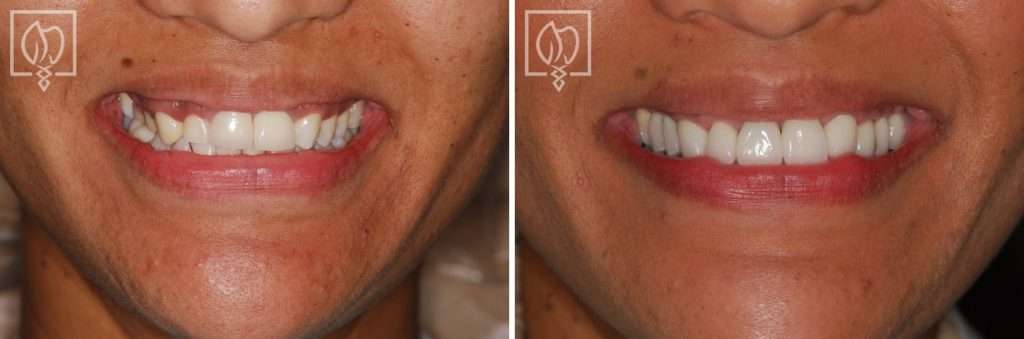
Multi-Faceted Treatment for Patient Unhappy With Her Artificial-Looking Crowns, Teeth and Gums
Many patients come to Elite Prosthetic Dentistry unhappy with the appearance of their smile. However, this particular patient presented with multiple interconnected problems that together created a smile she found deeply unsatisfying.
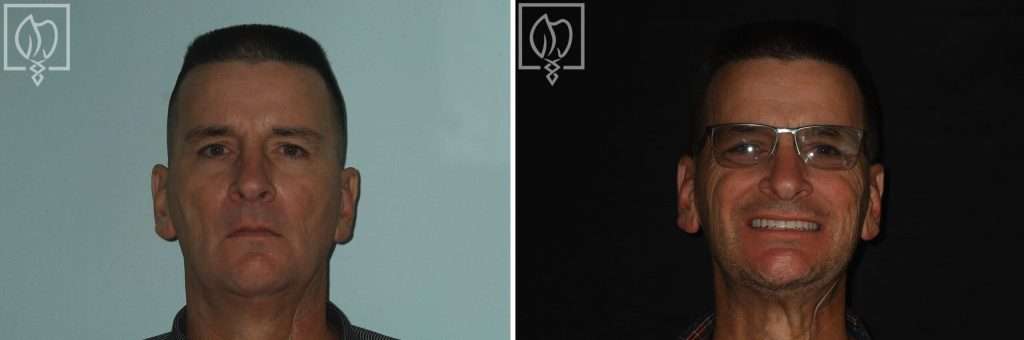
Treating Kevin’s Collapsed Bite with a Complete Smile Makeover with New Dentures
Dentures are sometimes not created to the ideal aesthetic and functional scheme. When improperly fabricated, dentures can make an individual appear almost a generation older than their actual age. They can have a poor fit that feels loose and unstable when eating or speaking, and they can actually accelerate bone loss over time.
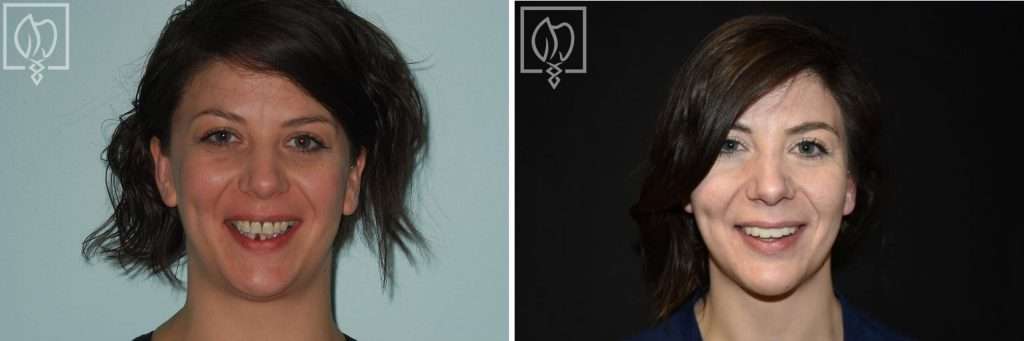
Salvaging Ms. N’s Severely Broken-Down Upper and Lower Teeth from Gum and Bone Disease
Many people in the U.S. suffer from extensive periodontal disease characterized by significant bone loss and shrinkage of the gum tissue. This condition can begin at a very young age and worsen quickly due to hereditary factors and lack of early diagnosis by their dentist.
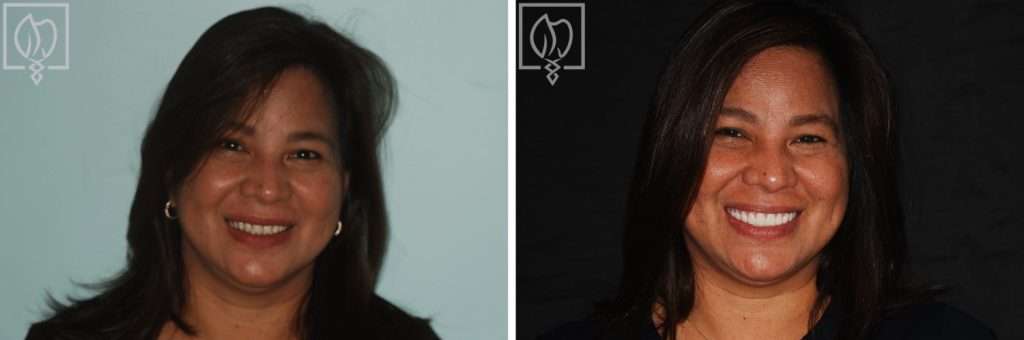
Rejuvenating Maria’s Severely Worn Down Implant Overdentures
Many times, per year, patients come to us frustrated because their implant prosthesis is so severely worn down that they are very self-conscious and cover up their smile. They look and feel much older than their age as a result of the extensive wear of their appliance(s).
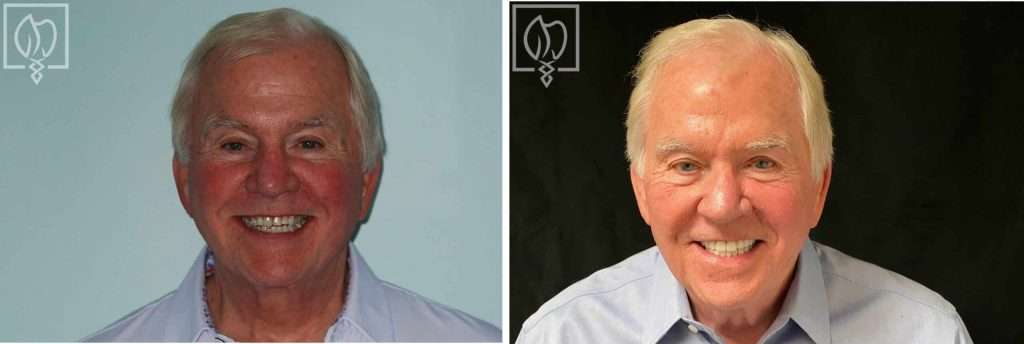
A Smile Transformation in Just Four Months: A Patient’s Dental Crown Restoration for a TV Series
A patient with dental crowns that were in poor shape was going to appear on a streaming video series on a major TV network that was scheduled to begin filming soon. Our patient, John, an author about to embark on a book tour, was anxious as his teeth were not up to his standards to appear on television.
Related Articles
Deepen your knowledge with additional insights on this topic.
 Dental Implants
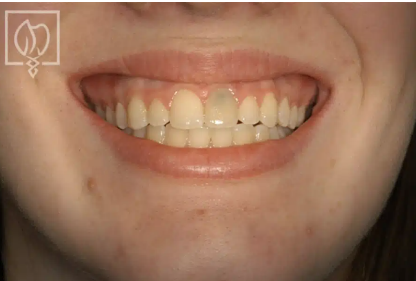
 If a Single Front Tooth is Replaced with an Implant, can it Look Natural?
A single front tooth implant can look completely natural with precision placement, custom abutments, and hand-crafted porcelain crowns. Washington, DC.
 Dental Implants
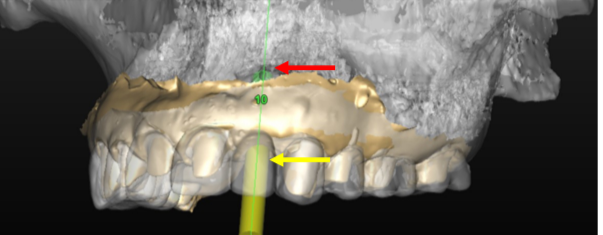
 What is Precision Implant Placement (PIP)?
Learn what Precision Implant Placement (PIP) is and how meticulous planning ensures optimal implant positioning for long-lasting results in Washington, DC.
 Dental Implants
 What is the ideal Surgical Guide for Precision Implant Placement?
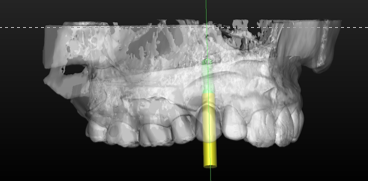
CBCT-based surgical guides allow virtual implant planning for precise positioning in optimal bone, ensuring predictable results in Washington, DC.
 Dental Implants
 When Should an Implant not be Done?
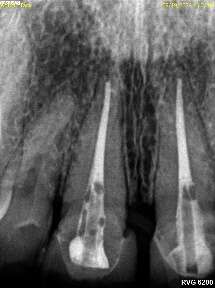
Not every patient is a candidate for dental implants. Learn when healthy roots, fragile bone, or steep angles may make alternatives the better choice.
 Dental Implants
 What is Staged Implant Therapy?
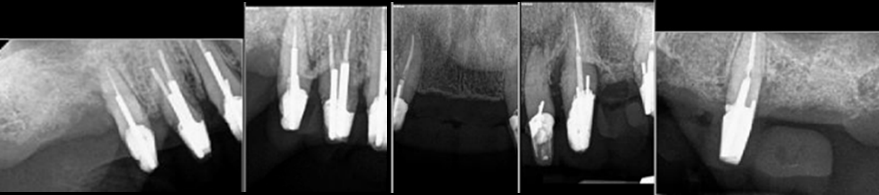
Staged implant therapy replaces teeth gradually using existing teeth as temporary support. A personalized alternative to All-on-X for full-arch cases.
Unveiling the Four Types of Dental Implants: Which One's for You?
Learn about the four types of dental implants - endosteal, subperiosteal, zygomatic, and mini implants - and which option may be right for your needs.
Our Services in McLean
Beyond reconstruction-revision, McLean patients rely on Dr. Gerald Marlin for a full range of advanced dental care.
More services available in McLean:
reconstruction-revision Near McLean
Dr. Gerald Marlin also provides reconstruction-revision services for patients in these neighboring communities.
Getting Here from McLean
Elite Prosthetic Dentistry is conveniently located near McLean, VA.
McLean residents reach our office 15 minutes via Georgetown Pike or Chain Bridge Road
Address:
4400 Jenifer Street NW, Suite 220
Washington, DC 20015
Phone: (202) 244-2101
Schedule ConsultationSchedule Your Consultation from McLean
McLean residents trust Dr. Gerald Marlin for precision dental care. With 3,900+ implants placed and 40+ years of experience, your smile is in expert hands.