

Loose Dental Implant in Spring Valley, DC
Implant loosening from overloading and excessive force. Dr. Marlin assesses bite forces and stress distribution. Spring Valley implant specialist.
Loose Dental Implant From Overloading and Excessive Force in Spring Valley, DC
An implant can be perfectly placed in excellent bone and still loosen if the forces applied to it exceed what bone and implant components can tolerate. This is the scenario of overloading: excessive, repeated forces that stress the implant beyond its biological and mechanical limits. At Elite Prosthetic Dentistry, we assess bite force distribution in patients with loose implants, identify overloading as a contributing factor, and develop bite modification strategies that protect your implant while allowing normal function.
Understanding Implant Biomechanics and Force Distribution
Implants function like natural tooth roots, but they’re not identical to natural teeth in how they respond to force. This is critical for understanding why loose implants develop and how overloading causes problems.
Natural Tooth Force Management
A natural tooth has a periodontal ligament, a layer of elastic tissue between the tooth root and bone. This ligament absorbs shock, distributes force more evenly over time, and has some give when you bite. The ligament’s elasticity means force is dampened and distributed gradually.
Implant Force Dynamics
A dental implant lacks a periodontal ligament. The titanium fixture is rigidly anchored directly to bone with no elastic intermediary. When you bite down on an implant crown, force is transmitted directly and immediately to the implant fixture and surrounding bone with no shock absorption.
This rigidity has advantages: implants don’t move like teeth do, and they feel solid. But this rigidity has consequences: all the force applied to the implant is transmitted directly to bone without the damping effect of a periodontal ligament.
Bone Response to Force
Bone is living tissue that responds to the forces applied to it. This is called the “Mechanostat principle”: bone adapts to the mechanical demands placed on it. Normal, appropriate chewing forces trigger bone remodeling that maintains bone density around the implant. This is why precision implant placement in the optimal position is critical for long-term stability.
Excessive, repeated forces trigger excessive bone remodeling. Osteoclasts (bone-destroying cells) activate and resorb bone faster than osteoblasts (bone-building cells) can replace it. Net bone loss occurs around the implant, and the implant becomes progressively looser. Understanding this process is key to preventing failing implants.
What Constitutes Overloading
Overloading is force that exceeds what an implant and bone can tolerate. The threshold varies based on individual factors.
Normal Chewing Force Range
Normal chewing creates forces in the range of 100-200 pounds per implant. Most implants in healthy bone easily tolerate this force level.
Heavy Grinding and Clenching
Patients who grind their teeth at night or clench heavily create forces exceeding 1000 pounds in extreme cases. These peak forces dwarf normal chewing loads. Repeated excessive stress accelerates bone loss around implants.
Force Direction Matters
Forces applied along the long axis of the implant (straight down) distribute more favorably than forces applied at angles. An implant placed at a tilted angle experiences eccentric loading even from normal bite forces, and is more susceptible to overloading effects.
Single Implant Supporting Long Bridges
A bridge replacing multiple teeth should ideally be supported by multiple implants to distribute force. If a single implant supports a three-tooth bridge, that implant experiences concentrated force. Overloading risk is higher.
Poor Implant Placement
An implant placed too shallow or at a poor angle is mechanically compromised. It’s less tolerant of heavy forces because bone support is inadequate or non-ideal. Overloading accelerates problems in these situations.
Diagnosis of Overloading-Related Loosening
We distinguish overloading from other causes of loosening through systematic evaluation.
Bite Force Assessment
We assess your bite force using bite force gauges or by observing bite patterns on articulating paper (colored carbon paper that shows where your teeth contact). Patients with heavy bite forces show concentrated, dark contacts on certain teeth.
Grinding and Clenching History
We ask directly about grinding (bruxism). Do you wake with jaw soreness? Has your partner noted grinding sounds at night? Do your jaw muscles feel tight? Patients often don’t realize they grind, but we can identify signs of grinding through dental wear patterns.
Dental Wear Pattern Analysis
Grinding and heavy clenching create characteristic wear patterns on teeth. Flattened cusps, faceted surfaces, and chipped teeth all indicate excessive force habits.
Radiographic Bone Loss Pattern
Overloading typically creates symmetric or slightly asymmetric bone loss around an implant. The pattern is more uniform than what’s seen with infection (peri-implantitis), which tends to create localized zones of aggressive loss.
Timeline of Loosening
Overloading causes progressive loosening over months and years. Acute loosening developing suddenly suggests screw failure or acute trauma. Progressive loosening fits with overloading patterns.
Associated Implant Component Failure
Overloaded implants often have backed-out abutment screws because high forces stress the screw connection. If you have a history of abutment screw loosening plus progressive implant mobility, overloading is likely contributing.
Mechanisms by Which Overloading Causes Loosening
Understanding how excessive force leads to implant loosening helps you appreciate why modifying the force is critical.
Accelerated Bone Resorption
As discussed, excessive force triggers accelerated bone loss. This is the primary mechanism by which overloading causes loosening. Bone height decreases, and the implant loses its anchors.
Abutment Screw Stress
Every time you apply heavy force to the implant crown, you stress the abutment screw. The cyclical stress can cause the screw to work loose and back out. Heavy force users have higher rates of abutment screw loosening.
Micromotion at the Bone-Implant Interface
High forces can cause tiny movements at the bone-implant interface. While these movements are microscopic, repeated for thousands of cycles (every chew, every night of grinding), they disrupt bone healing and accelerate resorption.
Implant Component Stress
High forces stress the implant fixture and abutment components themselves. While modern implants are very strong, extreme forces can cause plastic deformation or fracture of components. Implant fracture, while rare, occurs more often in heavily loaded implants.
Treatment Strategies for Overloading-Related Loosening
Once we’ve identified overloading as a factor in your implant loosening, treatment focuses on reducing force and allowing bone to stabilize.
Nightguard Therapy for Grinding
How Nightguards Work
A custom nightguard is a thin acrylic appliance that fits over your teeth. By placing a physical barrier between your upper and lower teeth, it prevents grinding and clenching from creating the extreme forces of direct tooth contact.
Additionally, the nightguard acts as a shock absorber. Even if grinding occurs with the guard in place, forces are distributed more evenly and peaks are dampened.
Custom vs. Over-The-Counter
We recommend custom nightguards made by your dentist from impressions of your teeth. These fit properly, contact your teeth evenly, and are durable. Over-the-counter boil-and-bite guards often fit poorly and don’t provide adequate protection.
Wear Pattern and Adjustment
We fabricate nightguards to have flat contact surfaces that distribute forces evenly across multiple teeth. We adjust the guard until your bite feels balanced and even. After fabrication, we see you for follow-up to verify fit and comfort.
Compliance Matters
Nightguards only work if you wear them consistently. Some patients forget to put in their guard after bathroom trips. Some find them uncomfortable initially and stop wearing them. We discuss the importance of consistent use and work with you on any comfort issues.
Bite Adjustment and Equilibration
Identifying Premature Contacts
Using articulating paper, we identify which teeth contact first when your jaw closes. Ideally, all teeth contact simultaneously with even pressure. Sometimes, certain teeth contact prematurely before others, creating concentrated force on those teeth.
Gentle Reduction
If a tooth has a premature contact (usually on an implant crown), we very carefully reduce the contact surface slightly. This allows other teeth to participate in bearing force, distributing load more evenly.
Importance of Precision
Bite adjustment must be precise. Too much reduction creates open bite and poor contacts. Too little doesn’t solve the problem. We use articulating paper and adjust incrementally.
Dietary Modification
Hard Food Avoidance
Nuts, hard candy, popcorn kernels, and other very hard foods create peak bite forces. Patients with overloading problems should avoid these foods.
Chewing Technique Awareness
We discuss chewing technique. Deliberate chewing on one side of the mouth versus the other affects force distribution. Patients can sometimes reduce implant loading by being mindful of where they chew.
Bridge Design Optimization
Multiple Implant Support
If a bridge is supported by a single implant and overloading is a problem, we discuss whether adding a second implant to support the bridge is feasible. Two implants distributing force is mechanically superior to one implant bearing all force.
Bridge Connector Design
The connector between pontics (artificial teeth) in a bridge affects force distribution. We work with our lab to optimize connector design for ideal force distribution.
Reduction of Implant Load Duration
Temporary Avoidance During Healing
If you’ve recently experienced loosening and undergone treatment (abutment screw retightening, bone loss stabilization), we might recommend temporary dietary modification to reduce implant force while bone remodels and stabilizes. After healing, normal diet can resume.
How Bone Responds to Force Reduction
One encouraging aspect of overloading-related loosening is that bone responds to force reduction.
Bone Remodeling Timeline
When excessive force is eliminated, osteoclasts gradually quiet down, and osteoblasts increase bone formation. Bone remodeling takes months, not weeks. Over 6-12 months of reduced force, bone can partially recover and stabilize the implant.
Partial vs. Complete Recovery
The amount of bone that regenerates depends on how much was lost and how long overloading persisted. Minor bone loss from recent overloading can recover substantially. Severe bone loss from years of overloading may only partially recover. In cases of significant loss, bone grafting may be needed to provide structure for bone remodeling.
Your Role in Recovery
You directly control whether overloading decreases. Consistent nightguard wear, hard food avoidance, and bite awareness are within your control. This empowerment is motivating for many patients: you can help your implant stabilize through behavioral changes.
Assessing Implant Placement Quality in Overloading Situations
Implants placed at non-ideal angles or in poor bone are less tolerant of heavy forces. We assess your implant’s placement quality to understand its reserve capacity for handling force.
Position Relative to Bone
Radiographs show how well bone supports your implant. Implants with generous bone support have more tolerance for excess force. Implants with minimal bone support are more vulnerable.
Angle Assessment
Implants tilted at unfavorable angles concentrate force in non-ideal directions. Straight, well-aligned implants distribute force more favorably. If placement angle is problematic, this information helps explain why your implant is more vulnerable to overloading effects.
Recommendations for Replacement
If your implant has poor placement in addition to overloading-related loosening, replacement in a better position might be worthwhile. The replacement implant would be less vulnerable to overloading effects.
Spring Valley and Force-Related Implant Problems
Spring Valley residents appreciate education about how their habits affect their dental health. The concept of bite forces and grinding is intuitive, and most patients are motivated to modify harmful habits once they understand the consequences.
Our Spring Valley office location (5 minutes from many residents) makes frequent follow-up appointments convenient as we monitor your implant response to force reduction.
Long-Term Monitoring and Prevention
Once overloading is addressed, monitoring ensures your implant stabilizes and remains stable long-term.
Routine Implant Checks
We check your abutment screw tightness at your regular appointments. Overloaded implants have higher risk of screw loosening, so proactive checks catch loosening early.
Bite Assessment
We periodically assess your bite on the implant to ensure contacts remain even and balanced.
Radiographic Comparison
We take radiographs at routine intervals and compare them to previous images. Stabilization of bone levels is a positive sign. Continued bone loss despite force reduction suggests other factors might be contributing.
Nightguard Evaluation
If you’re wearing a nightguard, we examine it periodically for wear patterns that might indicate excessive grinding. We adjust or replace the guard as needed to ensure it’s functioning properly.
Why Choose Elite Prosthetic Dentistry for Overloading-Related Loosening
Dr. Marlin assesses bite forces and force distribution in every patient through comprehensive prosthodontic evaluation. He recognizes overloading as a cause of loosening and understands the biomechanics that make implants vulnerable to excessive force.
We invest in bite analysis technology and articulating papers to precisely identify force distribution patterns. We don’t guess about your bite. We measure and visualize it.
We work collaboratively with our in-house lab partners to optimize bridge and crown design for ideal force distribution. When bone grafting is needed to regenerate lost bone, we coordinate comprehensive treatment. We discuss force-related concerns proactively with patients, not just reactively after problems develop.
Related Services and Comprehensive Care
Overloading-related loosening sometimes involves related problems. Failing implants often have overloading as one of multiple contributing factors. Dental implant bone loss is frequently the result of overloading, and understanding this process helps you understand why force reduction matters.
Poorly placed dental implants are particularly vulnerable to overloading effects and accelerated failure. Precision implant placement emphasizes positioning that maximizes implant tolerance for forces and reduces fracture risk.
For Spring Valley patients, we provide dental implants, bone grafting, full mouth reconstruction, implant denture repair, and sedation dentistry services. For comprehensive management of loose implants, our advanced restorative dentistry team addresses all contributing factors.
Scheduling Your Evaluation
If you suspect overloading is contributing to your loose implant, request an appointment for a comprehensive force analysis. Bring information about your grinding habits if you’re aware of them.
Read more about Dr. Marlin’s approach to complex implant cases.
Overloading is a modifiable risk factor. By reducing excessive force through nightguard therapy and behavioral changes, you directly improve your implant’s stability and long-term prognosis. Let us help you develop a force management strategy that protects your implant while maintaining comfortable function.
Frequently Asked Questions
How much force can a dental implant withstand before it becomes loose?
Implants are designed to withstand normal chewing forces (100-200 pounds of force). However, heavy grinding or clenching can exceed 1000 pounds of force. Implants placed at incorrect angles or with poor bone support are less tolerant of heavy forces. Individual implant tolerance varies based on placement, bone quality, and design.
If I clench or grind my teeth, am I more likely to have implant problems?
Yes. Bruxism (grinding) and clenching (clenching) create exaggerated forces that stress implants beyond normal levels. Over time, repeated excessive stress accelerates bone loss around implants and can loosen abutment screws. Wearing a nightguard to distribute forces more evenly is often the best solution.
Can a bridge that replaces multiple teeth with one implant fail from overloading?
Yes. A long bridge (multiple teeth) supported by a single implant concentrates force onto one fixture. A bridge supported by two implants distributes force more favorably. During planning, we assess implant number and positioning to ensure force distribution is adequate for your situation.
Will widening my bite or changing how I chew help my overloaded implant?
Modifying your chewing pattern is difficult because habits are deeply ingrained. More effective solutions include treating grinding with a nightguard, modifying your bridge design if it's poorly balanced, avoiding hard foods, and sometimes adjusting your bite to direct forces more favorably.
If my implant is loosening from overloading, will treating the overloading problem make it stable again?
If overloading is addressed before severe bone loss occurs, bone remodeling can stabilize the implant over time. Early intervention through nightguard therapy or diet modification can arrest loosening. Advanced bone loss from long-term overloading may cause permanent loosening that requires more complex treatment.
Related Patient Success Stories
Explore similar patient success stories demonstrating our expertise in advanced prosthetic dentistry.

Temporary Crowns Restore Patient's Smile in Just One Day with an Immediate Smile Makeover
A patient from Potomac, Maryland, came to Elite Prosthetic Dentistry with the chief complaint of pain from a failing dental implant and its significant impact on her appearance.
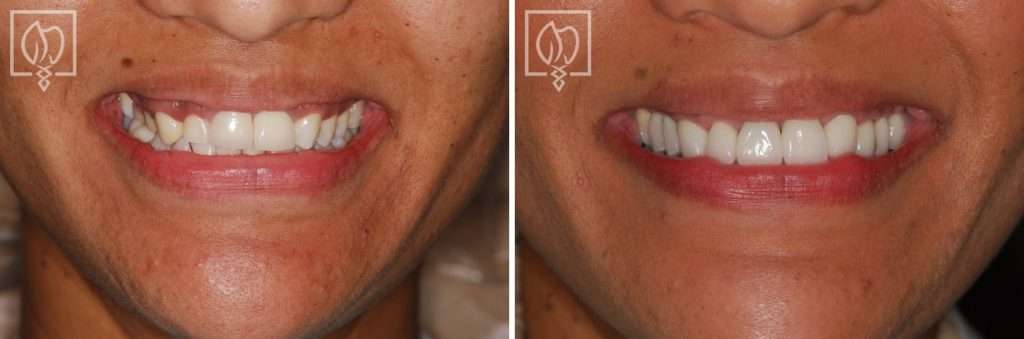
Multi-Faceted Treatment for Patient Unhappy With Her Artificial-Looking Crowns, Teeth and Gums
Many patients come to Elite Prosthetic Dentistry unhappy with the appearance of their smile. However, this particular patient presented with multiple interconnected problems that together created a smile she found deeply unsatisfying.

Treating Kevin’s Collapsed Bite with a Complete Smile Makeover with New Dentures
Dentures are sometimes not created to the ideal aesthetic and functional scheme. When improperly fabricated, dentures can make an individual appear almost a generation older than their actual age. They can have a poor fit that feels loose and unstable when eating or speaking, and they can actually accelerate bone loss over time.

Salvaging Ms. N’s Severely Broken-Down Upper and Lower Teeth from Gum and Bone Disease
Many people in the U.S. suffer from extensive periodontal disease characterized by significant bone loss and shrinkage of the gum tissue. This condition can begin at a very young age and worsen quickly due to hereditary factors and lack of early diagnosis by their dentist.

Rejuvenating Maria’s Severely Worn Down Implant Overdentures
Many times, per year, patients come to us frustrated because their implant prosthesis is so severely worn down that they are very self-conscious and cover up their smile. They look and feel much older than their age as a result of the extensive wear of their appliance(s).
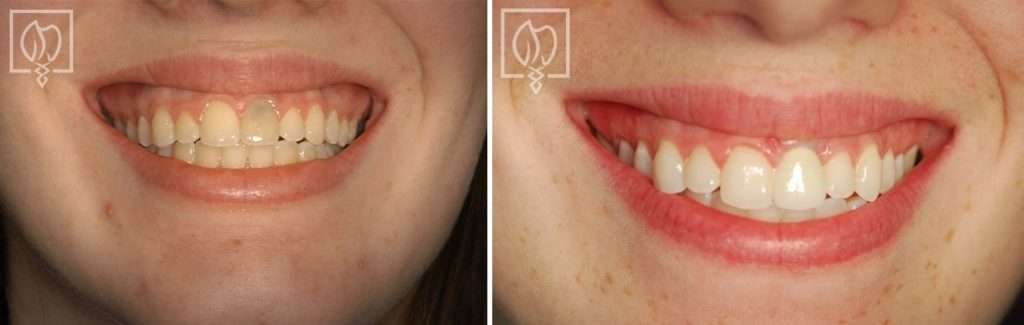
Replacing a Discolored Front Tooth with a Precision Placed Implant
Some of the most challenging restorations occur when fabricating an anterior crown to fit on an implant. Not only does one have the difficulty of matching the single front tooth to the other ones in the high visibility zone, but the dentist must also ensure the position of the underlying implant is precise through accurate preplanning and placement.
Related Articles
Deepen your knowledge with additional insights on this topic.
 Dental Implants
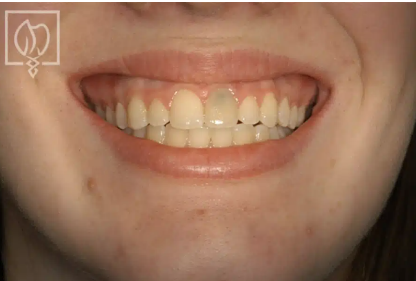
 If a Single Front Tooth is Replaced with an Implant, can it Look Natural?
A single front tooth implant can look completely natural with precision placement, custom abutments, and hand-crafted porcelain crowns. Washington, DC.
 Dental Implants
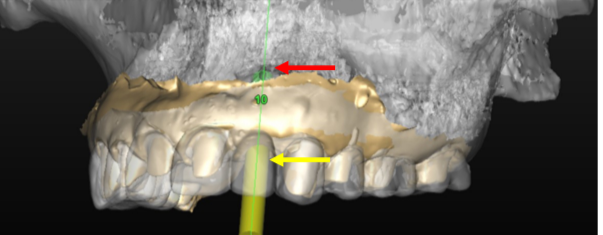
 What is Precision Implant Placement (PIP)?
Learn what Precision Implant Placement (PIP) is and how meticulous planning ensures optimal implant positioning for long-lasting results in Washington, DC.
 Dental Implants
 What is the ideal Surgical Guide for Precision Implant Placement?
CBCT-based surgical guides allow virtual implant planning for precise positioning in optimal bone, ensuring predictable results in Washington, DC.
 Dental Implants
 When Should an Implant not be Done?
Not every patient is a candidate for dental implants. Learn when healthy roots, fragile bone, or steep angles may make alternatives the better choice.
 Dental Implants
 What is Staged Implant Therapy?
Staged implant therapy replaces teeth gradually using existing teeth as temporary support. A personalized alternative to All-on-X for full-arch cases.
Unveiling the Four Types of Dental Implants: Which One's for You?
Learn about the four types of dental implants - endosteal, subperiosteal, zygomatic, and mini implants - and which option may be right for your needs.
Our Services in Spring Valley
Beyond loose-dental-implant, Spring Valley patients rely on Dr. Gerald Marlin for a full range of advanced dental care.
More services available in Spring Valley:
loose-dental-implant Near Spring Valley
Dr. Gerald Marlin also provides loose-dental-implant services for patients in these neighboring communities.
Getting Here from Spring Valley
Elite Prosthetic Dentistry is conveniently located near Spring Valley, DC.
Spring Valley location is easily accessible via Western Avenue or Foxhall Road. Close to our main practice location.
Address:
4400 Jenifer Street NW, Suite 220
Washington, DC 20015
Phone: (202) 244-2101
Schedule ConsultationSchedule Your Consultation from Spring Valley
Spring Valley residents trust Dr. Gerald Marlin for precision dental care. With 3,900+ implants placed and 40+ years of experience, your smile is in expert hands.