
Concerned About Implant Accuracy? Potomac, MD
Concerned about dental implant accuracy in Potomac, MD? Dr. Gerald Marlin uses guided surgery for precise, predictable implant placement.
Surgical Guides for Dental Implants in Potomac, MD
Worried about implant accuracy or placement errors?
Dental implants require precise positioning to function properly and support long-term restorations. Surgical guides help control implant placement before surgery even begins. Elite Prosthetic Dentistry uses guided implant planning to help Potomac patients avoid common placement issues and improve predictability. Led by specialty-trained prosthodontist Dr. Gerald Marlin, we bring together advanced imaging, computer planning, and surgical precision to place implants exactly where they need to be.
Schedule a Consultation Contact Our Team
Why Implant Accuracy Matters
Implant placement errors can lead to serious complications that compromise both your long-term oral health and your smile. An implant placed too deep might become covered by bone and impossible to restore. An implant placed too shallow might protrude through the gums or create an uncomfortable feel. An implant angled incorrectly might not integrate properly, might feel uncomfortable, or might not support a crown that looks or functions correctly. Poor esthetic positioning can result in restorations that look bulky or misaligned, compromising the natural beauty of your smile. Implants placed without considering the final restoration often lead to situations where the implant exists, but it can’t be restored in a way that looks natural or functions properly.
Many Potomac patients seek a second opinion after being told implants will be placed “freehand” without a clear restorative plan. This approach leaves too much to chance and prioritizes surgery without adequate consideration of how the final restoration will look and function. When you place an implant without knowing exactly where the crown needs to be positioned, you’re essentially guessing at where it should go. That’s where guided implant planning makes all the difference.
Consequences of Poor Implant Placement
The consequences of poor implant placement can be significant and lasting. Poor esthetics result when an implant doesn’t align properly with your natural teeth or when the restoration sits too close to your lip line and looks artificial. Difficulty cleaning around the implant develops when it’s positioned in a way that makes oral hygiene nearly impossible. Patients may find themselves unable to floss or use conventional cleaning methods, creating conditions for implant failure. Bite problems emerge when the implant position forces a restoration that doesn’t align with your natural bite, potentially leading to jaw pain or additional tooth damage. Compromised function means you can’t chew naturally or comfortably. In severe cases, poor placement can lead to implant failure, requiring the implant to be removed, the site treated again, and a new implant placed. This means additional cost, additional time, and additional surgery.
The good news is that these complications are largely preventable through careful planning and guided placement.
When a Surgical Guide Is Especially Helpful
Surgical guides become especially valuable in complex situations. Multiple implants or full-arch cases benefit tremendously from guides because ensuring all implants are positioned consistently and correctly becomes much more achievable when using a template rather than relying on surgical judgment alone. Cases with limited bone volume require precise placement to maximize the available bone and avoid extending into critical areas. Proximity to critical anatomy like the inferior alveolar nerve or the maxillary sinus demands careful positioning to avoid catastrophic complications. High esthetic zones such as front teeth require implants positioned perfectly to support natural-looking restorations. Replacing failed or mispositioned implants requires extra precision to correct previous errors and avoid repeating them. Even in cases without these complicating factors, guided implant planning improves predictability and safety for all patients.
How Surgical Guides Improve Implant Placement
A surgical guide is created using digital imaging and restorative planning before surgery. It acts as a physical template during implant placement, helping control depth, angle, and position based on the final restoration. Think of it as a custom blueprint that tells the surgeon exactly where and at what angle each implant should be placed.
The process begins with 3D CBCT imaging of your jaw and teeth. This imaging is imported into specialized computer software where your restorations are virtually planned in three dimensions. We determine exactly where each implant should be positioned to support the ideal crown or bridge. This planning considers your anatomy, your esthetics, and your function. Once the plan is complete and you’ve approved it, a physical surgical guide is fabricated based on the computer plan. The guide is typically made from resin or biocompatible material and fits precisely onto your bone.
During surgery, the guide is secured in place and implants are placed through it, ensuring they match the planned position precisely. This reduces guesswork, improves accuracy, and leads to more predictable outcomes. The restoration phase then proceeds with confidence, knowing the implant is positioned exactly where we planned.
Our Comprehensive Guided Implant Planning Process
Our process is comprehensive and patient-focused from start to finish. It begins with high-resolution 3D imaging that shows us your bone volume, anatomy, and tooth positions in three dimensions. We then engage in restoration-driven implant planning, meaning we start by considering what your final restoration needs to look like, and we position the implant to support that restoration. This is fundamentally different from placing an implant and then trying to figure out how to restore it. We fabricate a custom surgical guide based on this plan, with precise channels that control implant position and angle. We coordinate carefully between our surgical and restorative phases, ensuring your implant placement will support the restoration we’ve planned. Throughout the process, our specialty-trained prosthodontist provides oversight, ensuring the plan makes sense clinically and the execution matches our plan exactly.
Surgical Guide Planning for Potomac Patients at Our DC Office
Elite Prosthetic Dentistry serves Potomac patients from our Washington, DC office near Friendship Heights and Chevy Chase, just 15 minutes from Potomac Village. Guided implant planning allows us to focus on precision, safety, and long-term success for complex restorative cases. We have the technology, expertise, and in-house resources to take this approach from initial planning through final restoration. Our in-house laboratory allows us to fabricate surgical guides quickly and coordinate directly with our restorative team.
Elite Prosthetic Dentistry 4400 Jenifer Street NW, Suite 220 Washington, DC 20015 (202) 244-2101 [email protected] Request a Consultation Contact & Directions
What to Expect With Guided Implant Planning
Guided planning is a thorough, collaborative process. It starts with understanding your anatomy and restorative goals. The surgical guide is designed specifically for your case to support precise placement and predictable outcomes. You’ll begin with a comprehensive consultation where we discuss your concerns, goals, and what you want your smile to look like. We’ll obtain high-resolution 3D imaging to evaluate your bone volume, density, and anatomy in detail. We’ll use computer planning software to show you where implants will be positioned and what your restoration will look like. Many patients appreciate seeing a visual representation of the planned result before surgery occurs. We’ll explain the surgical approach in detail and what to expect during healing. Once you approve the plan, we fabricate your surgical guide with precision. During your surgical appointment, the guide ensures accurate implant placement. After implant placement and a healing period that allows osseointegration, we restore your implants with restorations planned from the beginning.
The Restoration-Driven Approach That Sets Us Apart
What makes our guided implant planning special is that it’s restoration-driven from the start. We don’t place an implant and then figure out how to restore it. We plan the restoration first, and then position the implant to support that restoration. This approach ensures that your implant is positioned ideally for your final smile, rather than being placed in a location where a restoration is possible but not ideal. It’s the difference between working backward from an imperfect situation versus working forward from a well-considered plan.
FAQs About Surgical Guides
Is a surgical guide always required? Not in every case, but it is strongly recommended for most situations. For some very simple cases with straightforward anatomy and a single implant in a non-esthetic area, freehand placement might be acceptable. However, we generally recommend guides for most patients because the added precision and predictability are worth the investment. The difference in outcome quality often justifies the additional planning time.
Does a surgical guide make surgery safer? It helps reduce variability and improve accuracy when properly planned. By controlling implant position precisely, we reduce the risk of placement errors and complications related to poor positioning. Guides don’t change the fundamental surgical risks, but they do reduce the risk of placement-related problems significantly.
Can a guide be used for full-arch implants? Yes. Surgical guides are commonly used for full-arch and multi-implant cases. In fact, full-arch cases are among the best candidates for guided surgery because ensuring all implants are positioned consistently and in proper relationship to each other is critical for success. With multiple implants, any error in one implant can affect how all the others function.
Does insurance cover surgical guides? Coverage varies. Some insurance plans will cover guided implant planning as part of implant treatment, while others won’t. Our team can review your benefits before treatment and discuss your coverage and out-of-pocket costs.
What happens if implants were placed incorrectly? A consultation can determine whether correction or replacement is needed. In some cases, a poorly positioned implant can be worked with and restored successfully despite less-than-ideal positioning. In others, it needs to be removed and replaced. We’ll evaluate your specific situation and discuss what options exist.
How does guided surgery differ from regular implant surgery? The fundamental difference is precision and predictability. Guided surgery uses a custom template to position implants exactly as planned before surgery begins. Regular implant surgery relies on the surgeon’s judgment, experience, and real-time decision-making. Both require skill, but guided surgery offers more control and predictability, particularly in complex cases.
Why Choose a Specialty-Trained Prosthodontist for Guided Implant Planning
A specialty-trained prosthodontist brings unique expertise to guided implant planning that goes beyond what a general dentist typically provides. We understand not just where to place an implant surgically, but where it needs to be placed to support a restoration that looks natural, functions properly, and will last long-term. Our training includes detailed education in bite relationships, esthetics, restorative materials, and how all these factors interact. We work with our surgical team to ensure the implant is placed perfectly to support the restoration we’ve planned. This coordination between surgical placement and restorative design is what separates specialty prosthodontic care from general dentistry. With 3,900+ successful implants placed, we bring extensive experience to every case.
Related Resources
- View patient success stories
- Educational resources
- Patient testimonials
- Am I a candidate?
- Browse smile results
- Learn more: what you should know about dental implants
Concerned About Implant Placement Accuracy?
If you are planning dental implants or seeking a second opinion about implant placement, guided planning may help protect your long-term result. The added precision and predictability can prevent complications and ensure your implants support restorations that look beautiful and function well. Schedule a consultation with Dr. Gerald Marlin to review your options and see whether guided implant planning makes sense for your situation.
Call (202) 244-2101. Serving Potomac, Chevy Chase, Bethesda, and surrounding communities.
Frequently Asked Questions
How far is Elite Prosthetic Dentistry from Potomac?
Our office at 4400 Jenifer Street NW in Washington, DC is approximately 15 minutes from Potomac Village via River Road and Wisconsin Avenue.
Why should Potomac residents choose a prosthodontist for dental implants?
A prosthodontist completes 3 additional years of specialty training beyond dental school, focusing on complex restorations, implants, and esthetic dentistry. This advanced training means Potomac patients receive care backed by deeper expertise.
What should I expect at my first visit?
Your initial consultation includes a comprehensive evaluation, digital imaging when needed, and a personalized discussion about your treatment options. We take the time to understand your goals and concerns.
Related Patient Success Stories
Explore similar patient success stories demonstrating our expertise in advanced prosthetic dentistry.

Temporary Crowns Restore Patient's Smile in Just One Day with an Immediate Smile Makeover
A patient from Potomac, Maryland, came to Elite Prosthetic Dentistry with the chief complaint of pain from a failing dental implant and its significant impact on her appearance.
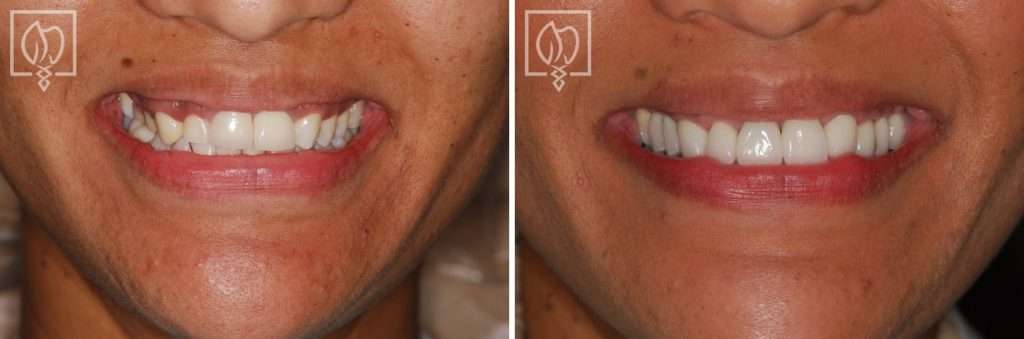
Multi-Faceted Treatment for Patient Unhappy With Her Artificial-Looking Crowns, Teeth and Gums
Many patients come to Elite Prosthetic Dentistry unhappy with the appearance of their smile. However, this particular patient presented with multiple interconnected problems that together created a smile she found deeply unsatisfying.

Treating Kevin’s Collapsed Bite with a Complete Smile Makeover with New Dentures
Dentures are sometimes not created to the ideal aesthetic and functional scheme. When improperly fabricated, dentures can make an individual appear almost a generation older than their actual age. They can have a poor fit that feels loose and unstable when eating or speaking, and they can actually accelerate bone loss over time.

Rejuvenating Maria’s Severely Worn Down Implant Overdentures
Many times, per year, patients come to us frustrated because their implant prosthesis is so severely worn down that they are very self-conscious and cover up their smile. They look and feel much older than their age as a result of the extensive wear of their appliance(s).
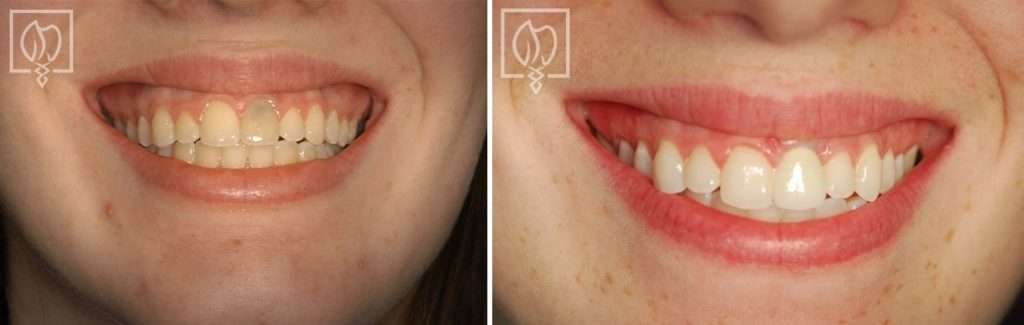
Replacing a Discolored Front Tooth with a Precision Placed Implant
Some of the most challenging restorations occur when fabricating an anterior crown to fit on an implant. Not only does one have the difficulty of matching the single front tooth to the other ones in the high visibility zone, but the dentist must also ensure the position of the underlying implant is precise through accurate preplanning and placement.
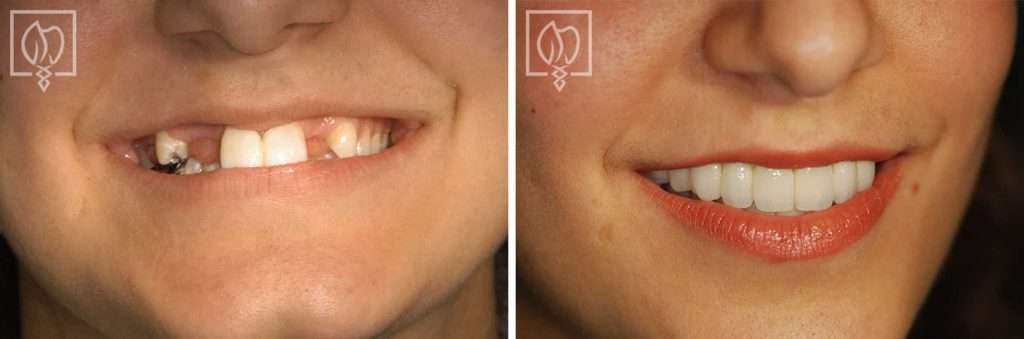
Treating Congenitally Missing Teeth in a Teenager with Dental Implants
A 16-year-old patient from McLean, Virginia, presented with a condition where she was congenitally missing several teeth, meaning they were missing from birth.
Related Articles
Deepen your knowledge with additional insights on this topic.
 Dental Implants
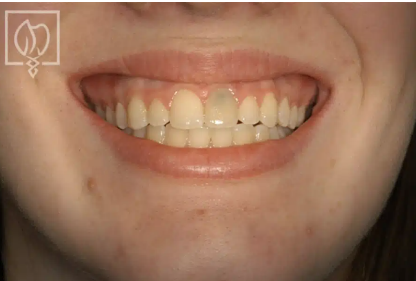
 If a Single Front Tooth is Replaced with an Implant, can it Look Natural?
A single front tooth implant can look completely natural with precision placement, custom abutments, and hand-crafted porcelain crowns. Washington, DC.
 Dental Implants
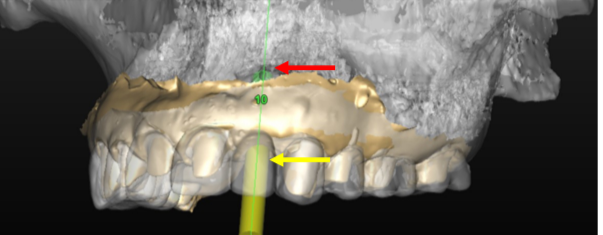
 What is Precision Implant Placement (PIP)?
Learn what Precision Implant Placement (PIP) is and how meticulous planning ensures optimal implant positioning for long-lasting results in Washington, DC.
 Dental Implants
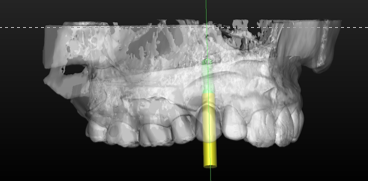
 What is the ideal Surgical Guide for Precision Implant Placement?
CBCT-based surgical guides allow virtual implant planning for precise positioning in optimal bone, ensuring predictable results in Washington, DC.
 Dental Implants
 When Should an Implant not be Done?
Not every patient is a candidate for dental implants. Learn when healthy roots, fragile bone, or steep angles may make alternatives the better choice.
 Dental Implants
 What is Staged Implant Therapy?
Staged implant therapy replaces teeth gradually using existing teeth as temporary support. A personalized alternative to All-on-X for full-arch cases.
Unveiling the Four Types of Dental Implants: Which One's for You?
Learn about the four types of dental implants - endosteal, subperiosteal, zygomatic, and mini implants - and which option may be right for your needs.
Our Services in Potomac
Beyond Dental Implants, Potomac patients rely on Dr. Gerald Marlin for a full range of advanced dental care.
More services available in Potomac:
Dental Implants Near Potomac
Dr. Gerald Marlin also provides dental implants services for patients in these neighboring communities.
Getting Here from Potomac
Elite Prosthetic Dentistry is conveniently located near Potomac, .
Patients from Potomac typically drive east on River Road to Wisconsin Avenue, then south to our office near Friendship Heights.
Address:
4400 Jenifer Street NW, Suite 220
Washington, DC 20015
Phone: (202) 244-2101
Schedule ConsultationSchedule Your Consultation from Potomac
Potomac residents trust Dr. Gerald Marlin for precision dental care. With 3,900+ implants placed and 40+ years of experience, your smile is in expert hands.