
Bone Grafting in North Bethesda, MD
Bone grafting in North Bethesda for dental implants by Dr. Marlin. Restores jaw bone for successful implant placement. decades of expertise.
North Bethesda residents seeking expert dental care choose Dr. Gerald Marlin at Elite Prosthetic Dentistry. Bone loss in the jaw is a natural consequence of tooth loss. When a tooth is removed, the bone that supported it begins to resorb within months. Over years, significant bone volume is lost, which can make dental implant placement impossible without bone grafting.
For North Bethesda professionals who have lost teeth and desire the natural look and function of dental implants, bone grafting is often the solution that makes implant restoration possible. Elite Prosthetic Dentistry, located 12 minutes from North Bethesda at 4400 Jenifer Street NW in Friendship Heights, has spent decades restoring bone and placing implants that function like natural teeth.
Understanding Bone Loss and Why It Matters
When a tooth is lost, the bone that anchored it to the jaw has no function and begins to resorb. This process starts immediately after tooth loss and accelerates over the first year. By five years after tooth loss, approximately 25 percent of the bone width has been lost. The loss continues throughout life, though at a slower rate.
For dentists placing dental implants, this bone loss creates a significant problem. An implant must be anchored in bone of adequate volume and density. If bone has been lost, the implant cannot be placed securely, or cannot be placed at all. This is where bone grafting becomes essential.
Who Needs Bone Grafting
North Bethesda professionals commonly need bone grafting in several situations. A professional who lost a tooth many years ago and did not replace it may have significant bone loss by the time they decide they want an implant. A professional with advanced gum disease may have lost bone around remaining teeth. A professional who has worn dentures for years experiences ongoing bone loss beneath the denture. Occasionally, a professional born with a developmental condition affecting jaw bone volume requires grafting.
In each of these cases, bone grafting restores the bone volume necessary for successful implant placement.
Bone Grafting Materials and Techniques
Autogenous Bone Grafts
Autogenous bone, harvested from your own body, is the gold standard for bone grafting. This bone is taken from another area of your jaw or from areas like the hip, chin, or tibia. Because the bone comes from your body, it is not rejected and integrates perfectly with your existing bone.
The disadvantage is that harvesting bone requires an additional surgical site. For some North Bethesda professionals, this is a reasonable trade-off for the superior healing that autogenous bone provides.
Allogeneic Bone Grafts
Allogeneic bone is processed bone from a tissue bank. It has been sterilized and treated to remove cellular components while preserving the mineral structure. This bone acts as a scaffold for your body’s own bone to grow into and eventually replace.
Allogeneic bone does not require a second surgical site, making it an attractive option for many professionals. It has been used successfully for decades with excellent results.
Alloplastic Materials
Synthetic bone substitutes have been developed to stimulate bone growth. These materials may be combined with growth factors or with bone marrow aspirate to enhance their effectiveness. Modern alloplastic materials have excellent performance records and offer the advantage of no need for bone harvesting.
Guided Bone Regeneration
Bone grafting is often combined with guided bone regeneration, a technique using a membrane to direct the growth of new bone. The membrane prevents soft tissue from growing into the graft site, allowing bone to regenerate more predictably.
The Bone Grafting Procedure
Evaluation and Planning
During your consultation, our practice evaluates the extent of your bone loss using clinical examination and imaging like cone-beam CT scans. We determine how much bone volume is needed for successful implant placement and recommends the most appropriate grafting technique.
The Grafting Procedure
Bone grafting is performed under local anesthesia with sedation available if desired. Our prosthodontic team carefully accesses the area of bone loss, places the graft material, and secures it in position. If guided bone regeneration is part of the plan, a membrane is placed to direct bone growth. The area is then closed with sutures.
The procedure typically takes 30 to 90 minutes depending on the extent of grafting needed.
Healing and Integration
After bone grafting, your body begins the healing process. New bone grows into the graft material over several months. During this time, the graft site must be protected from excessive force or trauma. Our practice provides detailed instructions on care and activity restrictions.
Most patients can resume normal activities within one to two weeks, though more strenuous activity may need to wait longer.
Monitoring Healing
Dr. Marlin monitors your healing with periodic follow-up appointments and imaging. We evaluate how well the bone is integrating and when adequate bone volume has been restored for implant placement.
From Bone Grafting to Implant Placement & Restoration
Once bone grafting is complete and the bone has healed and integrated, implant placement can proceed. Dr. Marlin performs implant placement in our office, and the implant integrates with the newly grafted bone, becoming a permanent anchor for your restoration.
After the implant has integrated over several months, a crown or other restoration is fabricated in our on-site laboratory and placed on the implant.
Bone Graft Materials: Understanding Your Options
The bone graft material selected significantly impacts your healing timeline and outcomes. Our specialty-trained team recommends the material best suited to your specific clinical situation.
Autogenous Bone: Gold Standard Performance
Autogenous bone harvested from your own body contains living cells, growth factors, and minerals, making it superior for healing. Integration is rapid and predictable. The trade-off is requiring a second surgical site for bone harvesting. For North Bethesda professionals who value optimal outcomes, autogenous bone often represents the best choice.
Allogeneic Bone: Proven Success
Processed human bone from tissue banks has decades of successful clinical use. It provides an excellent scaffold for your body’s bone formation without requiring a second surgical site. Many North Bethesda professionals appreciate this option for its convenience and proven track record.
Alloplastic Materials: Modern Innovation
Synthetic bone substitutes combined with growth factors or bone marrow aspirate offer excellent healing outcomes. These materials require no harvesting and integrate predictably. They represent an excellent option for many patients.
Dr. Marlin discusses the advantages and disadvantages of each option, recommending the material most likely to succeed for your specific situation.
Understanding the Bone Graft Healing Timeline
After bone grafting, your body begins a predictable healing sequence. Initial healing occurs over the first two weeks. New bone formation accelerates from one to three months. By three to six months, the graft has integrated into living bone. Complete maturation and remodeling continues throughout the first year.
Your specific healing timeline depends on the material selected, the extent of grafting needed, and your individual healing capacity.
Timeline from Bone Grafting to Final Restoration
The timeline from bone grafting to a completed implant restoration is typically:
- Bone grafting procedure: initial healing 1 to 2 weeks
- Bone integration: 3 to 6 months (occasionally longer)
- Implant placement: single appointment
- Implant integration: 3 to 6 months
- Crown fabrication and placement: 2 to 4 weeks
- Total timeline: 6 to 14 months
Our practice discusses the specific timeline for your situation during your consultation.
Success Rates and Longevity
Bone grafting has very high success rates, with over 90 percent of grafts successfully integrating. Once bone has been successfully grafted and implants have been placed, implant success rates are over 95 percent at 10 years.
With proper care, implants and implant-supported restorations function for decades and often for a lifetime.
Cost and Financing
Bone grafting is an investment in making dental implant restoration possible. Because it requires a surgical procedure and additional materials, the cost is higher than tooth extraction alone. Dr. Marlin provides detailed cost estimates before treatment begins and discusses financing options that make bone grafting accessible.
Related Resources
- Learn more about bone grafting procedures
- Bone Grafting for Dental Implants
- Explore ridge augmentation
- View all locations we serve
- Browse patient success stories
- Patient education resources
- Read patient reviews
- Learn more: why bone preservation matters
- View our smile gallery
Getting Here from North Bethesda
Our office at 4400 Jenifer Street NW is approximately 12 minutes from North Bethesda via Rockville Pike (MD-355) south. The Friendship Heights Metro station on the Red Line is adjacent to our building. Street parking and a nearby public garage are available.
Schedule Your Consultation or call (202) 244-2101.
Frequently Asked Questions
Why is bone grafting needed for dental implants?
Dental implants require adequate bone volume and density to be anchored securely. When bone has been lost due to tooth loss, gum disease, or trauma, bone grafting restores the bone volume necessary for successful implant placement.
Where does the bone graft material come from?
Bone graft material may come from several sources: your own bone harvested from another area of your jaw or body, processed human bone from a tissue bank, or synthetic bone-substitute materials. Dr. Marlin selects the best option for your situation.
How long does bone grafting take?
The bone grafting procedure itself typically takes 30 to 90 minutes. After grafting, several months are usually required for the bone to integrate and become strong enough for implant placement. Dr. Marlin monitors healing with periodic imaging.
Is bone grafting painful?
The bone grafting procedure is performed with local anesthesia, so you feel pressure but not pain. After treatment, some discomfort and swelling are normal and manageable with pain medication and ice. Most patients return to normal activities within one to two weeks.
Will my implants look natural after bone grafting?
Yes. Once bone grafting is complete and implants are successfully placed and restored, your implant-supported restorations look and function like natural teeth. The on-site laboratory ensures your implant crowns match your natural teeth perfectly.
Related Patient Success Stories
Explore similar patient success stories demonstrating our expertise in advanced prosthetic dentistry.
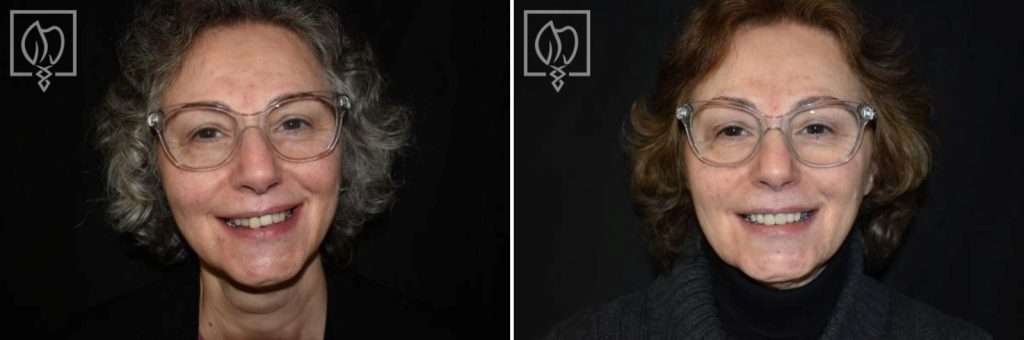
Temporary Crowns Restore Patient's Smile in Just One Day with an Immediate Smile Makeover
A patient from Potomac, Maryland, came to Elite Prosthetic Dentistry with the chief complaint of pain from a failing dental implant and its significant impact on her appearance.
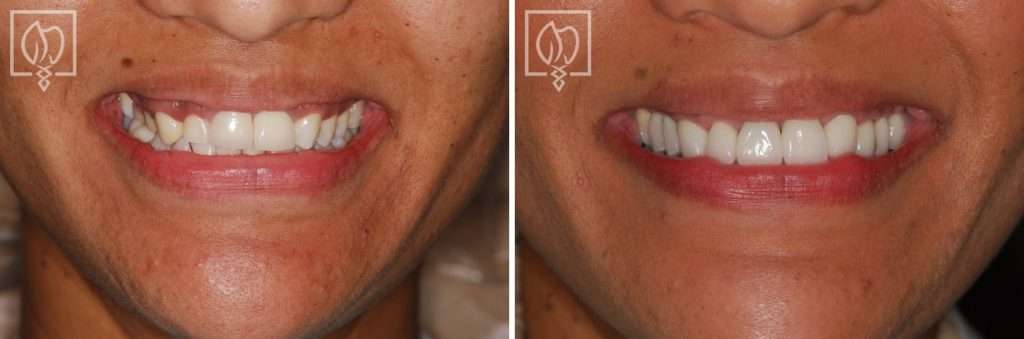
Multi-Faceted Treatment for Patient Unhappy With Her Artificial-Looking Crowns, Teeth and Gums
Many patients come to Elite Prosthetic Dentistry unhappy with the appearance of their smile. However, this particular patient presented with multiple interconnected problems that together created a smile she found deeply unsatisfying.
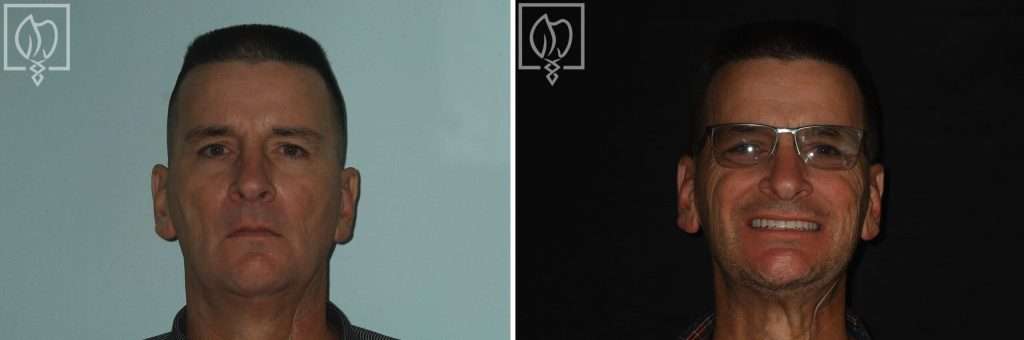
Treating Kevin’s Collapsed Bite with a Complete Smile Makeover with New Dentures
Dentures are sometimes not created to the ideal aesthetic and functional scheme. When improperly fabricated, dentures can make an individual appear almost a generation older than their actual age. They can have a poor fit that feels loose and unstable when eating or speaking, and they can actually accelerate bone loss over time.
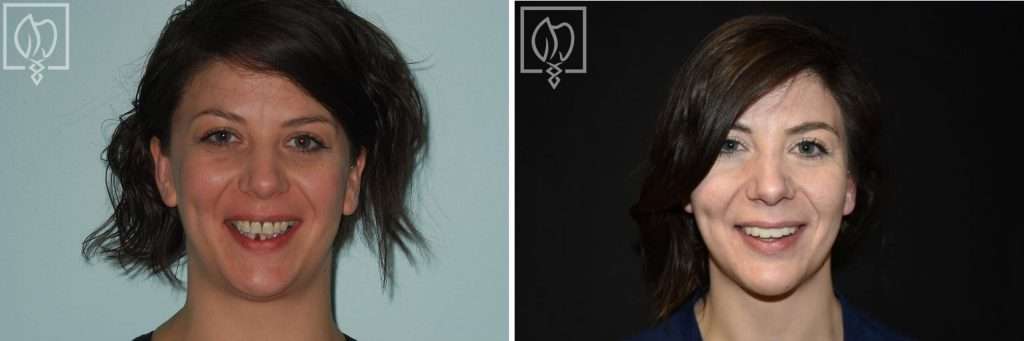
Salvaging Ms. N’s Severely Broken-Down Upper and Lower Teeth from Gum and Bone Disease
Many people in the U.S. suffer from extensive periodontal disease characterized by significant bone loss and shrinkage of the gum tissue. This condition can begin at a very young age and worsen quickly due to hereditary factors and lack of early diagnosis by their dentist.
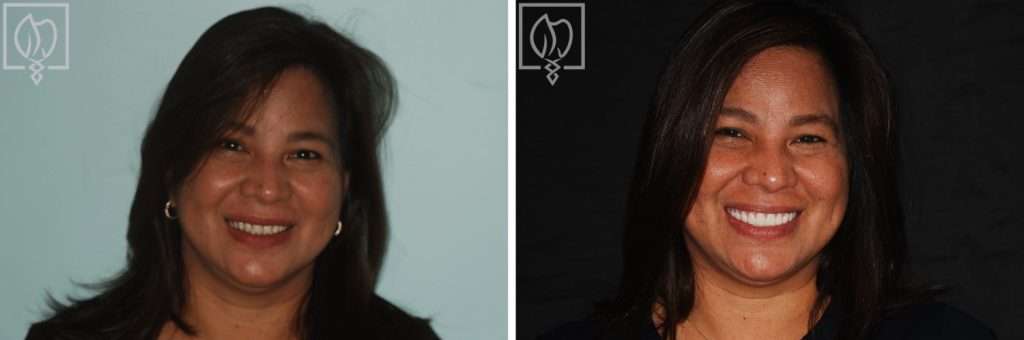
Rejuvenating Maria’s Severely Worn Down Implant Overdentures
Many times, per year, patients come to us frustrated because their implant prosthesis is so severely worn down that they are very self-conscious and cover up their smile. They look and feel much older than their age as a result of the extensive wear of their appliance(s).
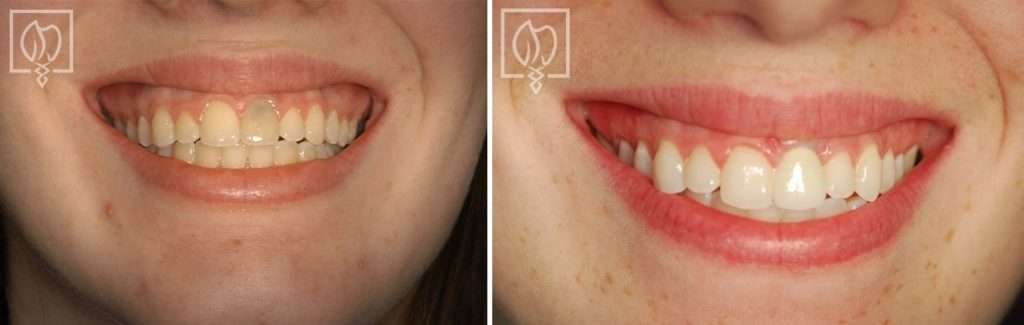
Replacing a Discolored Front Tooth with a Precision Placed Implant
Some of the most challenging restorations occur when fabricating an anterior crown to fit on an implant. Not only does one have the difficulty of matching the single front tooth to the other ones in the high visibility zone, but the dentist must also ensure the position of the underlying implant is precise through accurate preplanning and placement.
Related Articles
Deepen your knowledge with additional insights on this topic.
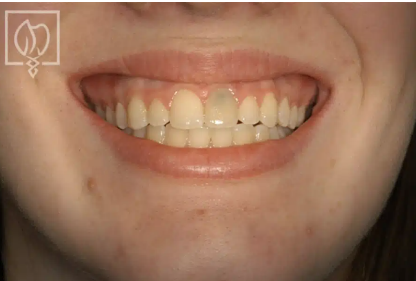 Dental Implants
 If a Single Front Tooth is Replaced with an Implant, can it Look Natural?
A single front tooth implant can look completely natural with precision placement, custom abutments, and hand-crafted porcelain crowns. Washington, DC.
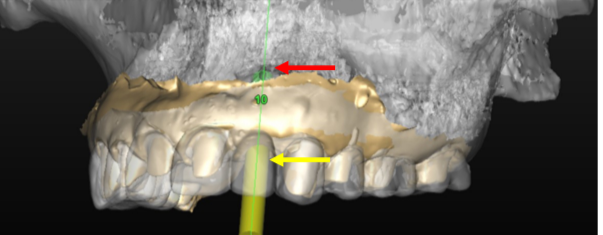 Dental Implants
 What is Precision Implant Placement (PIP)?
Learn what Precision Implant Placement (PIP) is and how meticulous planning ensures optimal implant positioning for long-lasting results in Washington, DC.
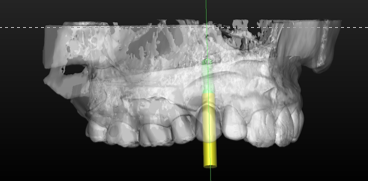 Dental Implants
 What is the ideal Surgical Guide for Precision Implant Placement?
CBCT-based surgical guides allow virtual implant planning for precise positioning in optimal bone, ensuring predictable results in Washington, DC.
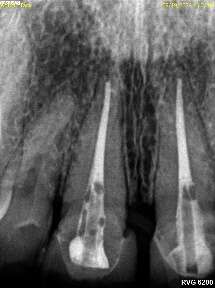 Dental Implants
 When Should an Implant not be Done?
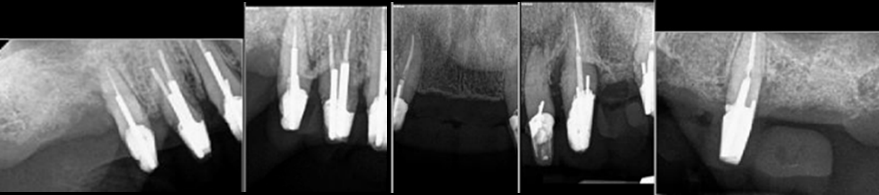
Not every patient is a candidate for dental implants. Learn when healthy roots, fragile bone, or steep angles may make alternatives the better choice.
 Dental Implants
 What is Staged Implant Therapy?
Staged implant therapy replaces teeth gradually using existing teeth as temporary support. A personalized alternative to All-on-X for full-arch cases.
Unveiling the Four Types of Dental Implants: Which One's for You?
Learn about the four types of dental implants - endosteal, subperiosteal, zygomatic, and mini implants - and which option may be right for your needs.
Our Services in North Bethesda
Beyond Bone Grafting, North Bethesda patients rely on Dr. Gerald Marlin for a full range of advanced dental care.
More services available in North Bethesda:
Bone Grafting Near North Bethesda
Dr. Gerald Marlin also provides bone grafting services for patients in these neighboring communities.
Getting Here from North Bethesda
Elite Prosthetic Dentistry is conveniently located near North Bethesda, MD.
Take Rockville Pike (MD-355) south to our Friendship Heights office, located just west of Wisconsin Avenue NW.
Address:
4400 Jenifer Street NW, Suite 220
Washington, DC 20015
Phone: (202) 244-2101
Schedule ConsultationSchedule Your Consultation from North Bethesda
North Bethesda residents trust Dr. Gerald Marlin for precision dental care. With 3,900+ implants placed and 40+ years of experience, your smile is in expert hands.