
Full Mouth Reconstruction Revision in Kensington, MD
Kensington reconstruction revision specialist. Dr. Marlin treats failing reconstructions, bite problems, and complex prosthodontic cases.
Kensington Reconstruction Revision: Specialized Care Close to Home
Kensington’s educated, family-oriented population values quality dental care and clear communication about treatment. The 12-minute drive to our Georgetown office via Connecticut Avenue NW connects Kensington residents to specialized prosthodontic expertise.
Kensington residents often have active, engaged relationships with their healthcare providers. A failing reconstruction should be addressed by someone who can explain clearly what happened, why it failed, and how to prevent recurrence.
Post and Core Systems in Failing Reconstructions
Some reconstructions build heavily on posts and cores, which are internal reinforcement systems placed within teeth to support crowns. Posts and cores can work well when properly designed, cemented, and used in appropriate situations.
Posts and Stress Concentration
Posts create stress concentration in teeth. The stress concentrates at the post apex where the metal post ends and natural tooth begins. If the underlying tooth has bone loss, the post might accelerate failure by concentrating stress right where the tooth is already biomechanically compromised.
Post Removal and Alternative Support
In revision, we assess whether posts are contributing to the failure. Sometimes removing posts and using different support strategies works better. This might involve extracting the tooth and replacing it with an implant. Or it might involve building up the tooth without a post, relying on the remaining tooth structure and careful restoration design.
Other situations benefit from keeping posts in place if the underlying problem is bite-related rather than post-related. In these cases, correcting the bite often protects the posts and teeth.
Root Canal Treated Teeth and Brittleness
Root canal treated teeth are structurally different from natural teeth. Endodontic treatment removes the nerve and blood supply. This chemical and biological change makes the tooth more brittle and more prone to fracture.
Fracture Risk and Bite Force
Root canal treated teeth fracture more easily under stress, particularly under lateral (sideways) forces. If your reconstruction includes root canal treated teeth and your bite has unbalanced contacts or excessive lateral forces, those teeth are at higher risk for fracture.
Reinforcement and Bite Correction
In revision, we assess whether bite problems are stressing root canal treated teeth. Correcting the bite often protects these teeth significantly. Sometimes additional reinforcement is needed. This might involve posts (if they were previously absent), full-coverage restorations (if previously uncovered), or both.
Low-Cost Reconstruction and Quality Compromises
Some reconstructions were completed at very low cost. Sometimes inexpensive treatment is adequate. The materials are fine. The design is appropriate. The technique is sound.
Other times, cost-cutting compromises quality. Poor material selection results in premature wear or fracture. Inadequate preparation design creates structural weakness. Improper cementation results in early cement failure. These quality issues become apparent over time as failure patterns emerge.
Assessing Quality Compromises
In revision, we assess what was done and why it’s failing. We often identify specific quality issues. Poor materials were selected to minimize cost. Preparation designs were inadequate. Cementation technique was suboptimal.
We explain specifically what quality improvements we’re incorporating in your revision and why they matter for longevity.
Crown Margins: The Boundary Between Success and Failure
The margins of your crowns, where the crown meets the tooth preparation edge, play a large role in long-term success. Margins positioned too deep below the gum line create cleaning difficulty and cement problems. Margins that are rough or misfit accelerate cement failure and decay.
Subgingival Margins and Periodontal Health
Margins positioned deep below the gum line are difficult for you to clean. They’re also difficult for your hygienist to access professionally. Plaque accumulates. Cement degrades. Decay develops in the exposed tooth structure beneath the crown.
Margin Roughness and Integrity
Even margins positioned correctly can fail if they’re rough. Rough margins accelerate cement breakdown. They also harbor bacteria and make home care difficult.
Margin Replacement in Revision
In revision, we assess margin position and quality carefully. We might adjust margins through tooth preparation refinement. Or we might replace restorations entirely with properly positioned, properly finished margins. Good margins are often the difference between success and failure.
Missing Teeth and Complex Reconstruction Planning
Some reconstructions involve teeth that are missing, not just failing. Missing teeth complicate reconstruction planning but don’t prevent successful revision.
Missing Posterior Teeth
If posterior teeth are missing, they might become implant sites for revision. Sometimes natural tooth replacement is possible if adequate root-retained structure exists. We assess bone anatomy through cone beam imaging and determine whether implants or other options are feasible.
Missing Anterior Teeth
If anterior teeth are missing and visible in your smile, they should probably be replaced. Missing front teeth affect both esthetics and function. They also affect bite force distribution, potentially contributing to overload of remaining anterior teeth.
Getting Here from Kensington
Connecticut Avenue NW runs directly from Kensington south toward Georgetown. Our office is located approximately 12 minutes south via Connecticut Avenue. This is a straightforward route requiring no confusing turns.
During off-peak hours, 12 minutes is realistic. During rush periods, allow slightly longer. Parking is available at our location. Metro bus service on Connecticut Avenue also provides convenient public transportation access.
Complex Dental Histories and Unified Revision Approaches
Some Kensington patients have complex dental histories spanning many years. Multiple reconstruction attempts. Multiple dentists. Mixed treatment philosophies spanning conservative, aggressive, esthetic-focused, and function-focused approaches.
Assessing Mixed Treatment Philosophy
This complexity requires careful diagnostic assessment. We evaluate each restoration individually. We assess what’s working and what’s not. We understand how previous treatment contributed to current problems.
Rather than continuing the mixed philosophy, we develop a unified revision approach where all restorations follow consistent design principles and bite philosophy.
Material Quality, Longevity, and Durability Expectations
The materials used in your original reconstruction influence its longevity substantially. Premium materials last longer than budget materials. Newer materials often outperform older materials developed decades ago.
Material Cost-Benefit Assessment
In revision, we use the best materials appropriate for your situation. We discuss material options with you. We explain durability differences, maintenance requirements, and cost differences.
Your input on the balance between maximum durability and cost guides material selection. Some patients prioritize maximum longevity and accept higher cost. Others balance cost and durability more evenly.
Bite Correction: Primary Problem or Part of Solution
Some reconstruction failures stem primarily from improper bite mechanics, not from poor restoration quality. In these cases, correcting the bite might address the problem without replacement.
Other failures involve both bite problems and restoration quality issues. In these cases, bite correction is part of the solution, but restoration replacement is also necessary.
Determining Scope of Treatment
We assess whether bite correction alone might improve the situation or whether restoration replacement is necessary. Sometimes bite correction on interim restorations demonstrates that adjusted bite provides relief. This evidence supports proceeding with permanent restorations designed around the corrected bite.
Vertical Dimension Loss and Reconstruction Failure
Vertical dimension is the vertical distance between your upper and lower jaws. Loss of vertical dimension is one of the most common reconstruction failure patterns.
Mechanism of Vertical Dimension Loss
This loss occurs when bite forces concentrate on certain restorations, causing accelerated wear. As restorations wear, the vertical space collapses. Once collapsed, every restoration shifts. The cascade of failure follows.
Vertical Dimension Restoration
Correcting vertical dimension requires re-establishing the proper space. This must account for your facial proportions, jaw joint position, natural tooth position, and neuromuscular adaptation. Getting this right is central to successful revision.
Occlusal Design and Force Distribution
Occlusion is the relationship between your upper and lower teeth. Proper occlusal design distributes bite forces across multiple teeth and contact points. Poor occlusal design concentrates forces in specific locations.
Concentrated forces cause accelerated wear, implant overload, bone loss, and cement failure. Proper occlusal design prevents these problems. This is why occlusal design is absolutely critical to reconstruction longevity.
Prosthodontic Expertise and Complex Failure Patterns
Complex reconstruction failures require specialized expertise. A prosthodontist brings focused training on exactly these problems. This specialized knowledge often determines whether revision succeeds or fails.
Your reconstruction revision deserves specialist-level expertise. Prosthodontic evaluation and treatment ensure you’re working with someone whose entire training and experience focuses on solving exactly your problem.
Material, Design, and Bite Integration
Every material choice affects restoration longevity. Every design choice affects force distribution. Every bite decision affects what materials and designs will succeed.
In revision, we consider these integration points carefully. We develop unified approaches where material selection, restoration design, bite mechanics, and esthetic requirements all work together harmoniously.
Treatment Efficiency and Your Schedule
Kensington residents often have active lives and professional commitments. Reconstruction revision requires multiple appointments over several months. We design efficient treatment protocols that respect your time while maintaining quality and thoroughness.
We also work to schedule appointments to accommodate your availability when possible.
Related Resources
- Full Mouth Reconstruction Failure: Overview of why reconstructions fail and revision options
- Full Mouth Reconstruction: Proper reconstruction planning and prosthodontic design
- Dental Implants in Kensington: Implant-supported solutions for reconstruction
- Repairing Failing Implants: Solutions for implant problems
- Second Opinion Dentistry: Expert evaluation of your reconstruction
- Meet Dr. Gerald Marlin: His training and approach to complex cases
- In-House Laboratory: How our laboratory enables superior outcomes
- Patient Success Stories: Results from complex reconstruction cases
- Schedule Your Consultation: Begin your reconstruction revision evaluation
Your Kensington Reconstruction Revision
If you’re a Kensington resident considering reconstruction revision, schedule an evaluation with Dr. Marlin. You’ll understand precisely what failed, why, and what revision options exist for your specific situation.
Schedule Your Consultation or call (202) 244-2101 to discuss your reconstruction revision.
Frequently Asked Questions
If my reconstruction uses posts and cores to support crowns, are those contributing to failures?
Posts and cores are one method of building up tooth structure to support crowns. They can work well if properly designed and cemented. However, posts create stress concentration in teeth. If the tooth has bone loss or questionable viability, a post might accelerate failure. In revision, we assess whether posts are contributing to problems. Sometimes removing posts and using different support strategies works better. Sometimes posts are fine if we correct other problems.
What's the relationship between root canal treatment and reconstruction failure?
Root canal treated teeth (endodontically treated) are more brittle than natural teeth. They crack more easily. If your reconstruction includes root canal treated teeth, those teeth might be fractured if bite forces are distributed unevenly. In revision, we assess whether bite problems are stressing root canal treated teeth. Correcting the bite often protects these teeth. Sometimes additional reinforcement is needed.
Can you help if my reconstruction was done very cheaply and I'm suspicious the quality was compromised?
We assess reconstruction quality regardless of cost. Sometimes inexpensive treatment is adequate. Other times, compromised quality is evident. Poor material selection, inadequate preparation design, or improper cementation all create failure. We evaluate what was done and why it's failing. Revision incorporates better materials, better design, and better technique.
How important are margins of my crowns (where the crown meets the tooth) in reconstruction failure?
Very important. Margins that are too deep below the gum line create cleaning difficulty and cement problems. Margins that are rough or misfit accelerate cement failure and decay. In revision, we assess margin position and quality. We might adjust margins or replace restorations with properly marginated ones. Good margins are often the difference between success and failure.
What if I'm missing some teeth completely, not just have failing restorations?
Missing teeth complicate reconstruction but don't prevent revision. If you're missing posterior teeth, they might be implant sites for revision. If you're missing anterior teeth and they're visible, they should probably be replaced. We assess what's missing and what options exist given your bone anatomy. This is discussed during your consultation.
Related Patient Success Stories
Explore similar patient success stories demonstrating our expertise in advanced prosthetic dentistry.

Temporary Crowns Restore Patient's Smile in Just One Day with an Immediate Smile Makeover
A patient from Potomac, Maryland, came to Elite Prosthetic Dentistry with the chief complaint of pain from a failing dental implant and its significant impact on her appearance.
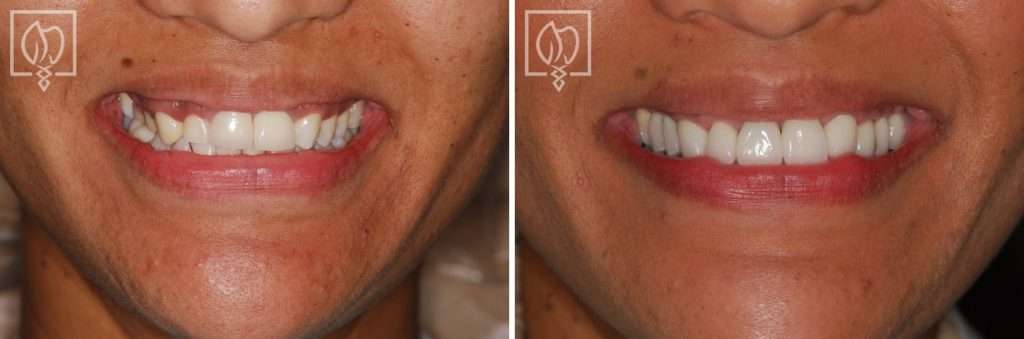
Multi-Faceted Treatment for Patient Unhappy With Her Artificial-Looking Crowns, Teeth and Gums
Many patients come to Elite Prosthetic Dentistry unhappy with the appearance of their smile. However, this particular patient presented with multiple interconnected problems that together created a smile she found deeply unsatisfying.
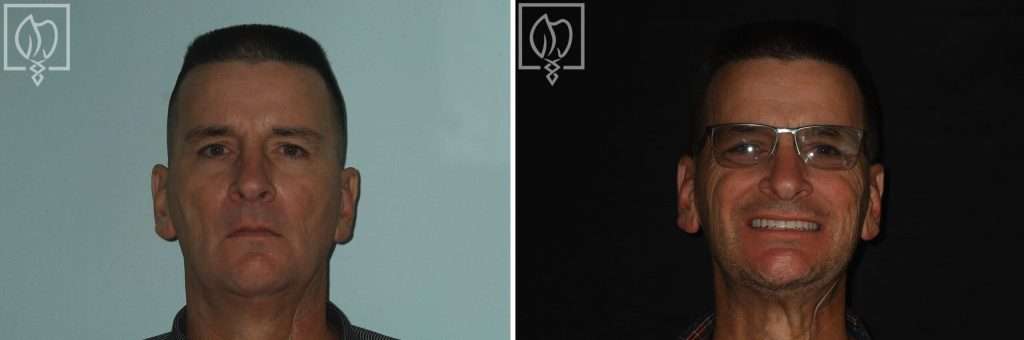
Treating Kevin’s Collapsed Bite with a Complete Smile Makeover with New Dentures
Dentures are sometimes not created to the ideal aesthetic and functional scheme. When improperly fabricated, dentures can make an individual appear almost a generation older than their actual age. They can have a poor fit that feels loose and unstable when eating or speaking, and they can actually accelerate bone loss over time.
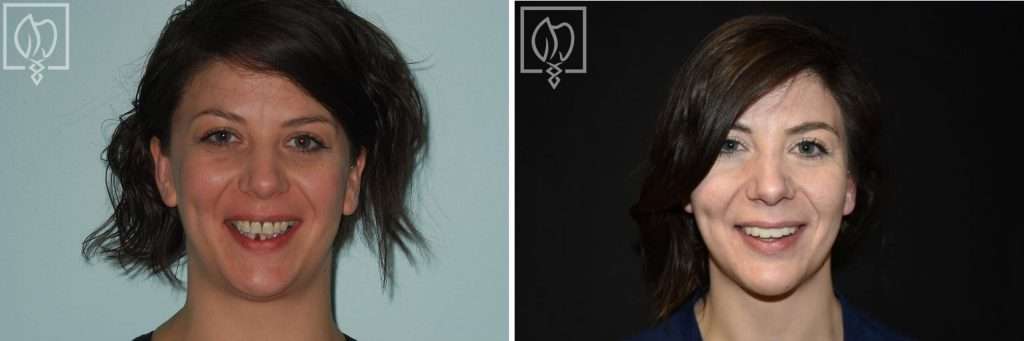
Salvaging Ms. N’s Severely Broken-Down Upper and Lower Teeth from Gum and Bone Disease
Many people in the U.S. suffer from extensive periodontal disease characterized by significant bone loss and shrinkage of the gum tissue. This condition can begin at a very young age and worsen quickly due to hereditary factors and lack of early diagnosis by their dentist.
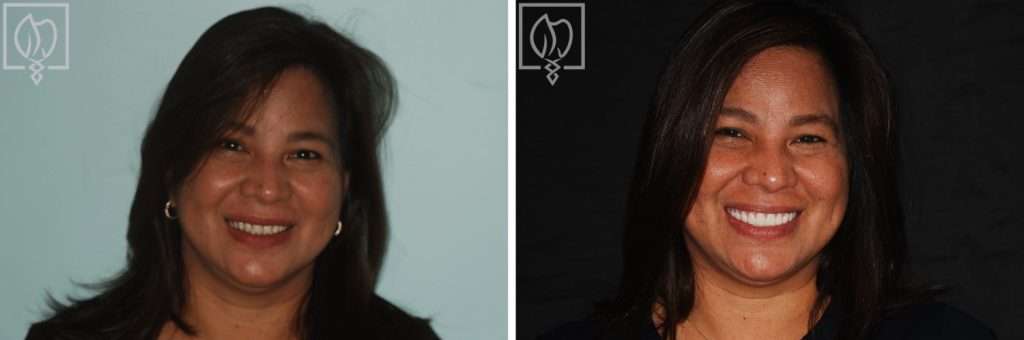
Rejuvenating Maria’s Severely Worn Down Implant Overdentures
Many times, per year, patients come to us frustrated because their implant prosthesis is so severely worn down that they are very self-conscious and cover up their smile. They look and feel much older than their age as a result of the extensive wear of their appliance(s).
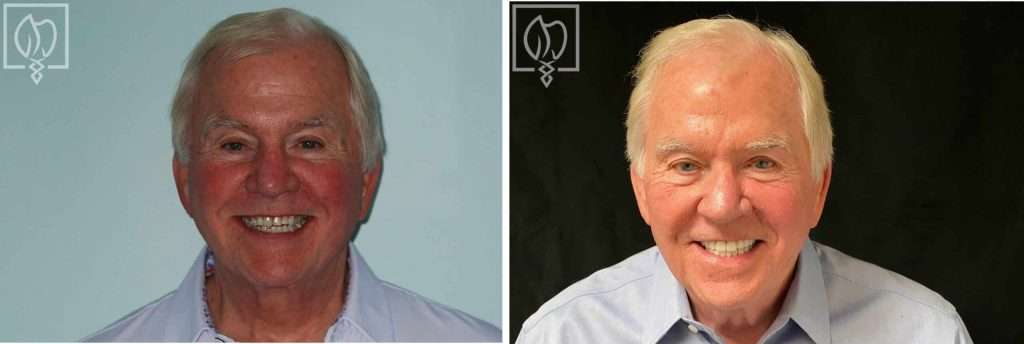
A Smile Transformation in Just Four Months: A Patient’s Dental Crown Restoration for a TV Series
A patient with dental crowns that were in poor shape was going to appear on a streaming video series on a major TV network that was scheduled to begin filming soon. Our patient, John, an author about to embark on a book tour, was anxious as his teeth were not up to his standards to appear on television.
Related Articles
Deepen your knowledge with additional insights on this topic.
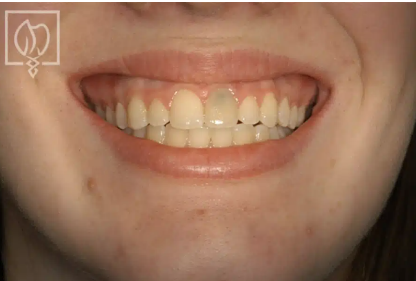 Dental Implants
 If a Single Front Tooth is Replaced with an Implant, can it Look Natural?
A single front tooth implant can look completely natural with precision placement, custom abutments, and hand-crafted porcelain crowns. Washington, DC.
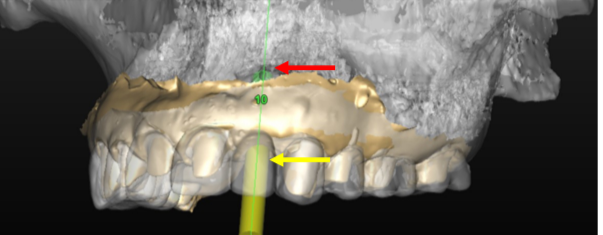 Dental Implants
 What is Precision Implant Placement (PIP)?
Learn what Precision Implant Placement (PIP) is and how meticulous planning ensures optimal implant positioning for long-lasting results in Washington, DC.
 Dental Implants
 What is the ideal Surgical Guide for Precision Implant Placement?
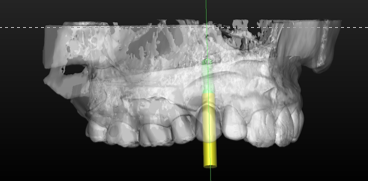
CBCT-based surgical guides allow virtual implant planning for precise positioning in optimal bone, ensuring predictable results in Washington, DC.
 Dental Implants
 When Should an Implant not be Done?
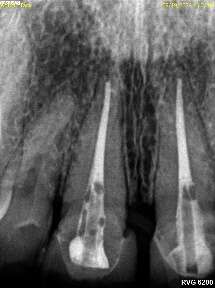
Not every patient is a candidate for dental implants. Learn when healthy roots, fragile bone, or steep angles may make alternatives the better choice.
 Dental Implants
 What is Staged Implant Therapy?
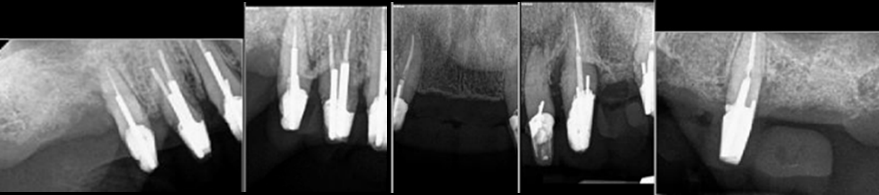
Staged implant therapy replaces teeth gradually using existing teeth as temporary support. A personalized alternative to All-on-X for full-arch cases.
Unveiling the Four Types of Dental Implants: Which One's for You?
Learn about the four types of dental implants - endosteal, subperiosteal, zygomatic, and mini implants - and which option may be right for your needs.
Our Services in Kensington
Beyond reconstruction-revision, Kensington patients rely on Dr. Gerald Marlin for a full range of advanced dental care.
More services available in Kensington:
reconstruction-revision Near Kensington
Dr. Gerald Marlin also provides reconstruction-revision services for patients in these neighboring communities.
Getting Here from Kensington
Elite Prosthetic Dentistry is conveniently located near Kensington, MD.
Kensington residents reach our office 12 minutes via Connecticut Avenue NW
Address:
4400 Jenifer Street NW, Suite 220
Washington, DC 20015
Phone: (202) 244-2101
Schedule ConsultationSchedule Your Consultation from Kensington
Kensington residents trust Dr. Gerald Marlin for precision dental care. With 3,900+ implants placed and 40+ years of experience, your smile is in expert hands.