
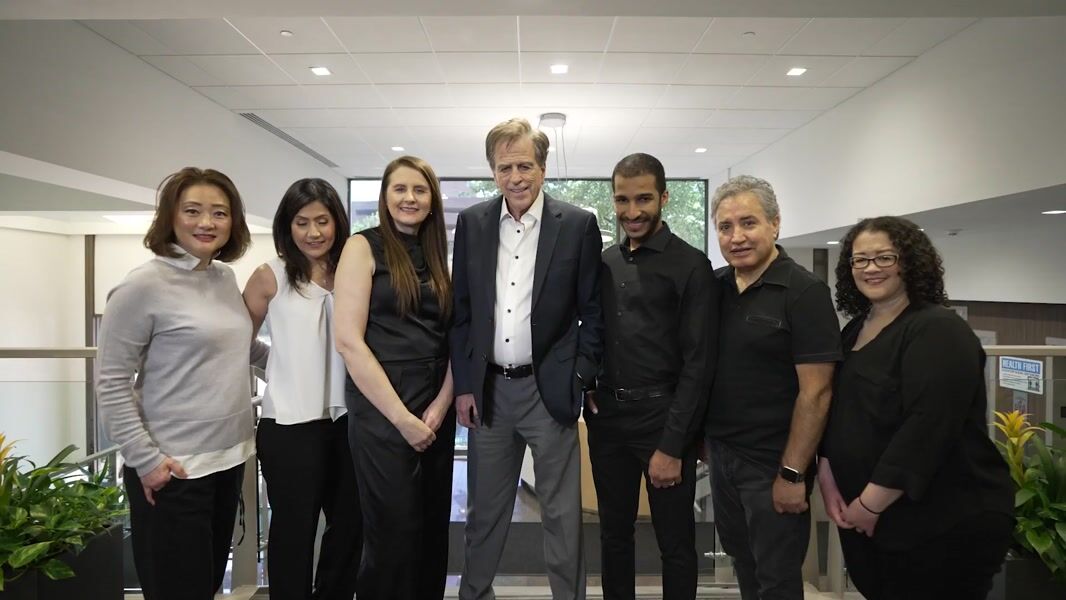
Implant Denture Repair in Rockville, MD
Expert implant denture repair in Rockville, MD. Dr. Marlin repairs loose dentures, attachment failures, and complex implant denture problems.
Rockville’s professional families understand that implant-supported dentures represent significant investment in quality of life and oral function. When problems develop, Rockville residents want expert repair from a prosthodontist with genuine expertise. Dr. Gerald Marlin, a specialty-trained prosthodontist, is conveniently located 15 minutes south via Rockville Pike. His exclusive focus on prosthetic dentistry ensures Rockville patients receive expert evaluation and precise repair.
Rockville residents should understand that implant denture problems are common, predictable, and almost always repairable. Understanding what problems to expect, how often they occur, and when repair versus replacement is appropriate helps Rockville patients plan for denture care and maintain realistic expectations.
Most Common Problem: Locator Attachment Cap Wear
Rockville patients with snap-in implant dentures should expect locator attachment cap wear as the most common problem they will encounter. Understanding this problem, when it develops, and how it’s corrected helps you anticipate maintenance needs.
Locator attachment caps are the female component of the locator system. These specialized plastic or polymer components sit in the denture and engage nubs attached to implants. They provide retention by gripping the nubs. With each insertion and removal, friction wears the internal surfaces of the cap. Over time, this wear reduces cap retention.
The timeline for cap wear varies significantly. Some patients experience noticeable looseness after eighteen months of use. Most patients experience significant looseness within two to four years. A few patients with exceptionally gentle insertion technique and minimal chewing force might achieve five years or more before replacement.
Why does wear happen so predictably? Locator caps are designed to be replaced. They’re consumable components, much like brake pads in automobiles. Just as brake pads wear with normal driving, locator caps wear with normal denture use. This is not a design flaw; it’s intentional engineering. Rather than having the nub wear out and compromise the permanent implant component, the cap wears instead and is replaced, protecting the implant.
When your cap begins to loosen, you notice gradual progression. Initially, you might notice looseness only when you deliberately press on your denture with your tongue. Over weeks, looseness becomes more obvious. You feel the denture rock slightly when you chew on one side. Eventually, looseness becomes obvious during eating and speaking.
Cap replacement is straightforward and successful. Dr. Marlin removes your denture, our in-house laboratory removes the old worn caps and seats new ones, and you receive your denture back with retention completely restored. The procedure typically completes within one business day. Retention returns to like-new condition.
Rockville Patients Often Ask: Repair or Replace?
Rockville residents frequently ask whether they should repair a problem or replace the entire denture. The answer depends on your denture’s age and the complexity of problems.
If your denture is relatively new, perhaps three to ten years old, and has developed a single problem like locator wear, repair is almost always appropriate. Locator cap replacement costs a small fraction of complete denture replacement. Repair solves the problem completely at minimal cost.
If your denture is very old, perhaps twenty to thirty years old, and has developed multiple simultaneous problems, replacement might be more economical. If your locator caps are worn, your framework screws are loose, your acrylic has developed cracks, and your denture fit has changed from bone loss, the cumulative cost of multiple repairs might approach replacement cost. In these situations, replacement might provide superior long-term value.
However, even very old dentures can often be repaired cost-effectively. Dr. Marlin assesses the situation and advises whether repair or replacement is more economical based on your specific problems.
Framework Screw Tightening and Bar-Retained Dentures
Rockville patients with bar-retained dentures experience different maintenance patterns than snap-in patients. Bar-retained systems use metal bars connecting implants to the framework, with retention provided through mechanical engagement rather than snap components.
Framework screws hold the bar to the implant abutments. These screws experience tremendous stress during chewing and gradually work loose. When screws loosen, your denture develops movement and instability. You might feel the denture shift when you chew on a particular side, or you might notice rocking.
Screw tightening is the appropriate solution. Dr. Marlin uses calibrated torque instruments to tighten screws to the manufacturer’s specifications. This procedure typically takes twenty to thirty minutes. Regular screw maintenance prevents framework failure and keeps your denture stable.
Many patients benefit from routine framework screw evaluation at their annual checkup. Early detection of loosening enables prompt tightening before looseness becomes obvious or causes damage.
Denture Rocking: Diagnosis and Solutions
Rockville residents sometimes report that their dentures rock, meaning they move or tip in a rocking motion rather than sitting completely still. Understanding what causes rocking helps you understand what needs repair.
With snap-in dentures, rocking usually indicates uneven bone resorption. Your ridge resorbs at different rates in different areas. If one side resorbs faster than the other, uneven support develops. Combined with locator attachment wear, this uneven support causes rocking.
Identifying whether rocking is primarily from locator wear or from bone loss is important because it determines the appropriate solution. If locator wear is the primary cause, cap replacement solves the rocking. If bone loss is the primary cause, selective relining might be necessary in addition to or instead of cap replacement.
With bar-retained dentures, rocking usually indicates loose framework screws. The bar rocks against the implant connections, creating visible movement.
Dr. Marlin evaluates dentures with rocking carefully to determine the cause and recommend appropriate solutions.
Denture Fit Changes from Long-term Bone Loss
Rockville patients who have worn implant dentures for many years sometimes experience significant fit changes from long-term bone loss. While implants slow bone resorption substantially compared to extraction sites, some loss occurs over time. After twenty to thirty years of denture wear, bone changes can become significant enough that denture fit is noticeably compromised.
Selective relining addresses these fit changes. This procedure updates the tissue-contact surface of your denture to match your current bone contours. Minor fit changes sometimes require only chairside adjustment and selective material addition. More significant changes might require complete laboratory reline.
Relining is far less expensive than denture replacement while improving fit and comfort substantially.
Acrylic Fractures: Prevention and Repair
Rockville residents sometimes experience sudden acrylic fractures when dentures crack or break. These fractures usually result from impact, although sometimes the impact is quite minor.
Fractures usually develop from specific accident mechanisms: dropping the denture, biting down on something hard, impacts from activities like sports. However, acrylic that has been stressed for years sometimes develops internal stress cracks that propagate unpredictably after minor new impact.
Most acrylic fractures can be repaired. Dr. Marlin assesses whether sealing a small crack is sufficient or whether the fracture is large enough to require acrylic replacement. If the denture has developed multiple cracks or if the fracture is very extensive, replacement might be more practical than attempting multiple repair attempts.
Prevention through careful handling is much better than repair. Using protective cases, avoiding drops, and gentle handling prevents many fractures.
Advanced Diagnostic Techniques
Dr. Marlin employs diagnostic techniques that identify problems many general dentists miss. Specialized instruments detect subtle framework looseness or cracks that visual inspection alone would miss. High-resolution imaging reveals problems developing beneath the surface before they become obvious.
This advanced diagnostic approach enables early intervention. Problems detected early often require simpler, less expensive solutions than problems detected late after they’ve progressed.
Annual Evaluation and Preventive Maintenance
Rockville patients benefit significantly from annual denture evaluation that catches developing problems before they become obvious. Dr. Marlin checks framework screw tightness, evaluates locator attachment wear, assesses bone changes, and examines acrylic for developing cracks.
Early detection often enables simple preventive intervention. Many problems develop silently with no obvious symptoms. You might not notice gradual locator wear until looseness becomes obvious and annoying. You might not notice beginning acrylic cracks until they propagate into larger problems.
Annual checkups prevent emergency repairs. They extend denture life. They maintain optimal comfort and function. The modest cost of annual evaluation is investment in denture longevity.
Specialized Expertise Matters
Not all dentists provide implant denture care. General dentists learn basic denture skills but not specialized repair of complex implant dentures. Implant dentures involve sophisticated mechanical systems requiring specialized knowledge to diagnose and manage properly.
Rockville residents deserve care from a prosthodontist with genuine expertise. Dr. Marlin’s exclusive focus on prosthetic dentistry ensures his expertise is devoted entirely to managing situations like yours. His advanced training enables him to recognize subtle problems and recommend appropriate solutions.
Getting Here from Rockville
Rockville residents reach Elite Prosthetic Dentistry in approximately 15 minutes via Rockville Pike south. The office is located at 4400 Jenifer Street NW, Suite 220, Washington, DC 20015. This convenient location makes appointments accessible from throughout Rockville.
Convenient parking is available on our building lot.
Related Resources
- Implant denture problems and solutions
- Repairing failing implants
- Loose snap-in denture solutions
- Denture relines and repairs
- Removable prosthodontics
- Patient success stories
- Meet Dr. Gerald Marlin, specialty-trained prosthodontist
- Our in-house dental laboratory
- Dental implant information
- Schedule an appointment
Schedule Your Consultation or call (202) 244-2101
Rockville residents with failing implant dentures have expert repair solutions available. Most denture problems are repairable with appropriate professional care. Contact Elite Prosthetic Dentistry to schedule an evaluation with a specialty-trained prosthodontist.
Frequently Asked Questions
What's the most common implant denture problem?
Locator attachment cap wear causing progressive looseness is the most common problem. This occurs predictably after 2 to 4 years of use. Cap replacement restores retention completely, making this the most straightforward and successful repair.
Should I replace my denture or repair loose attachments?
Repair loose attachments unless the denture is very old or has multiple simultaneous problems. Locator cap replacement costs a fraction of denture replacement and solves the problem. Only consider replacement when repair is no longer practical.
How often should I visit Dr. Marlin for denture maintenance?
Annual evaluations are ideal. Regular evaluation catches developing problems before they become obvious. Dr. Marlin checks screw tightness, evaluates attachment wear, and assesses bone changes. Annual visits prevent emergency repairs.
What causes denture rocking?
Rocking indicates uneven support or framework movement. With snap-in dentures, uneven bone resorption combined with denture contact at only one point causes rocking. With bar-retained dentures, loose screws create rocking. Diagnosis determines appropriate repair.
Is implant denture repair covered by dental insurance?
Coverage varies. Some plans cover denture repair, others don't. Check your specific plan. Dr. Marlin's office can provide documentation for insurance submission.
Related Patient Success Stories
Explore similar patient success stories demonstrating our expertise in advanced prosthetic dentistry.
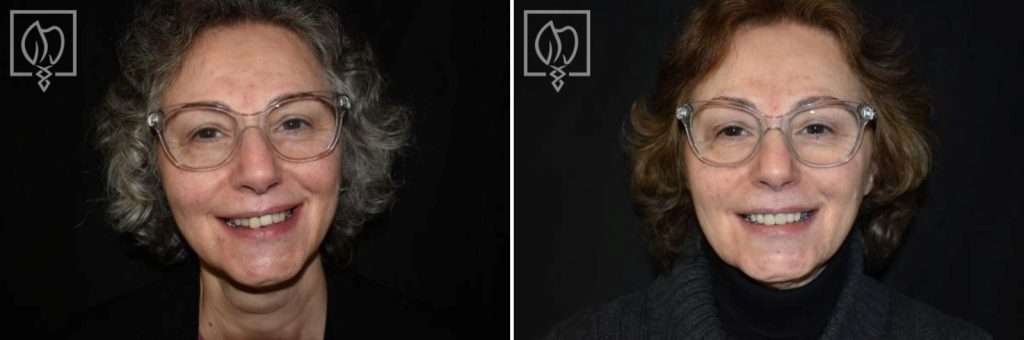
Temporary Crowns Restore Patient's Smile in Just One Day with an Immediate Smile Makeover
A patient from Potomac, Maryland, came to Elite Prosthetic Dentistry with the chief complaint of pain from a failing dental implant and its significant impact on her appearance.
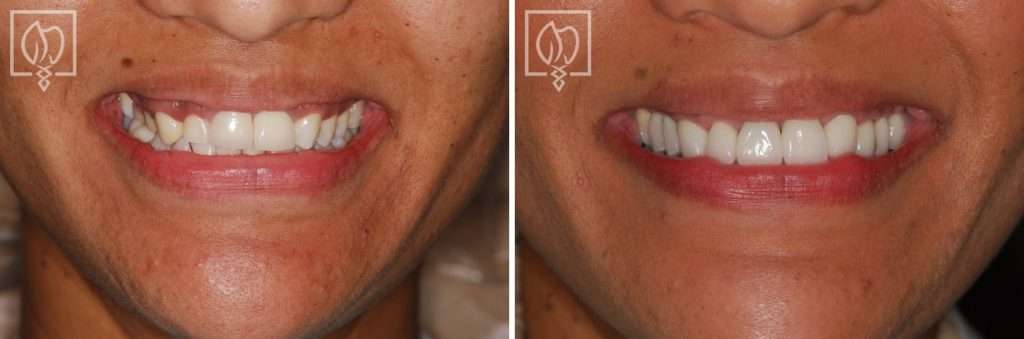
Multi-Faceted Treatment for Patient Unhappy With Her Artificial-Looking Crowns, Teeth and Gums
Many patients come to Elite Prosthetic Dentistry unhappy with the appearance of their smile. However, this particular patient presented with multiple interconnected problems that together created a smile she found deeply unsatisfying.
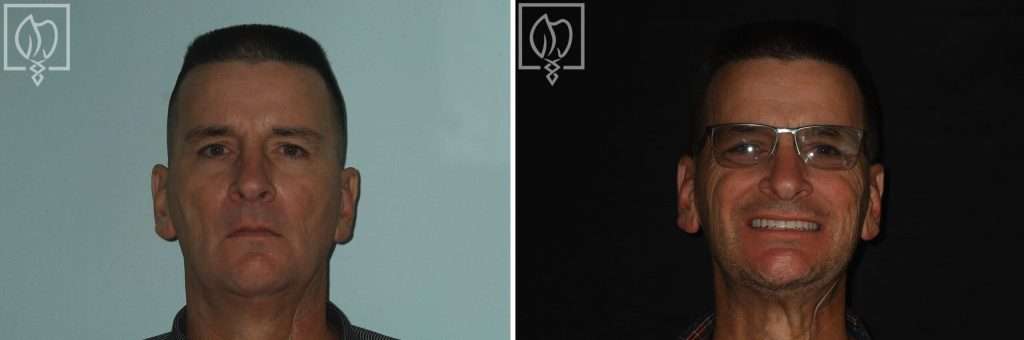
Treating Kevin’s Collapsed Bite with a Complete Smile Makeover with New Dentures
Dentures are sometimes not created to the ideal aesthetic and functional scheme. When improperly fabricated, dentures can make an individual appear almost a generation older than their actual age. They can have a poor fit that feels loose and unstable when eating or speaking, and they can actually accelerate bone loss over time.

Rejuvenating Maria’s Severely Worn Down Implant Overdentures
Many times, per year, patients come to us frustrated because their implant prosthesis is so severely worn down that they are very self-conscious and cover up their smile. They look and feel much older than their age as a result of the extensive wear of their appliance(s).
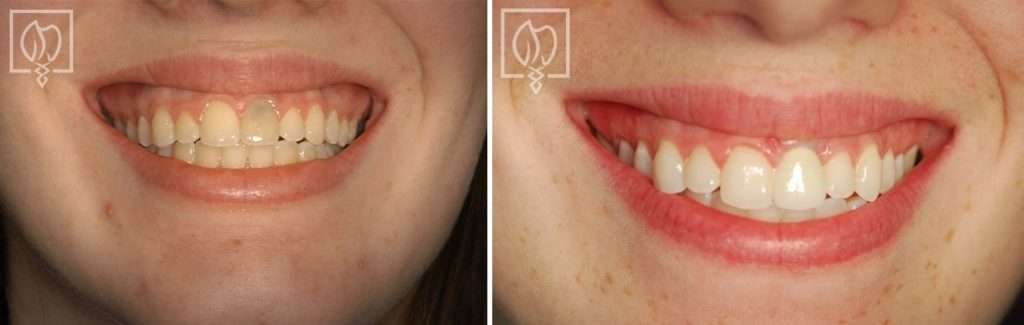
Replacing a Discolored Front Tooth with a Precision Placed Implant
Some of the most challenging restorations occur when fabricating an anterior crown to fit on an implant. Not only does one have the difficulty of matching the single front tooth to the other ones in the high visibility zone, but the dentist must also ensure the position of the underlying implant is precise through accurate preplanning and placement.
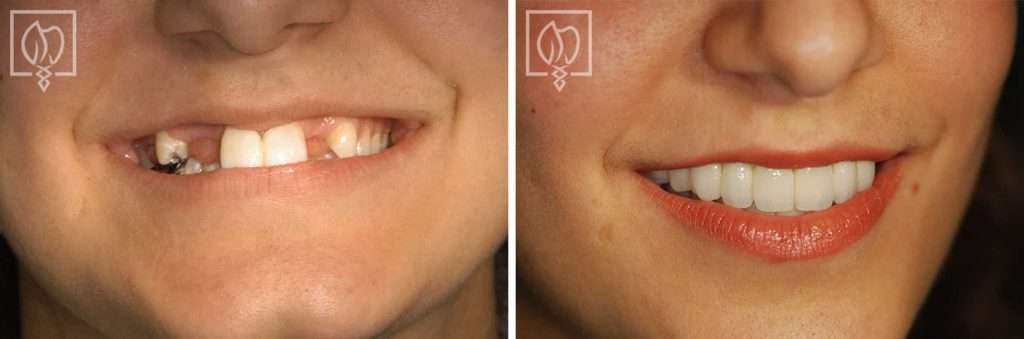
Treating Congenitally Missing Teeth in a Teenager with Dental Implants
A 16-year-old patient from McLean, Virginia, presented with a condition where she was congenitally missing several teeth, meaning they were missing from birth.
Related Articles
Deepen your knowledge with additional insights on this topic.
 Dental Implants
 If a Single Front Tooth is Replaced with an Implant, can it Look Natural?
A single front tooth implant can look completely natural with precision placement, custom abutments, and hand-crafted porcelain crowns. Washington, DC.
 Dental Implants
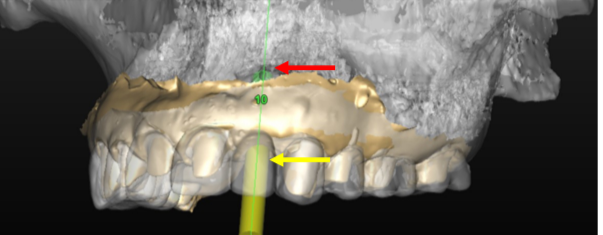
 What is Precision Implant Placement (PIP)?
Learn what Precision Implant Placement (PIP) is and how meticulous planning ensures optimal implant positioning for long-lasting results in Washington, DC.
 Dental Implants
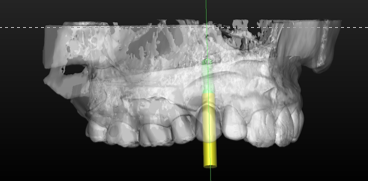
 What is the ideal Surgical Guide for Precision Implant Placement?
CBCT-based surgical guides allow virtual implant planning for precise positioning in optimal bone, ensuring predictable results in Washington, DC.
 Dental Implants
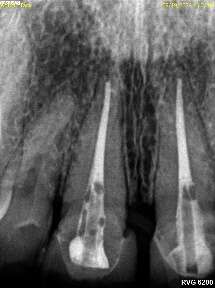
 When Should an Implant not be Done?
Not every patient is a candidate for dental implants. Learn when healthy roots, fragile bone, or steep angles may make alternatives the better choice.
 Dental Implants
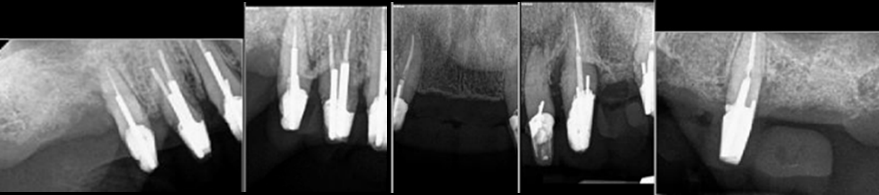
 What is Staged Implant Therapy?
Staged implant therapy replaces teeth gradually using existing teeth as temporary support. A personalized alternative to All-on-X for full-arch cases.
Unveiling the Four Types of Dental Implants: Which One's for You?
Learn about the four types of dental implants - endosteal, subperiosteal, zygomatic, and mini implants - and which option may be right for your needs.
Our Services in Rockville
Beyond implant-denture-repair, Rockville patients rely on Dr. Gerald Marlin for a full range of advanced dental care.
More services available in Rockville:
implant-denture-repair Near Rockville
Dr. Gerald Marlin also provides implant-denture-repair services for patients in these neighboring communities.
Getting Here from Rockville
Elite Prosthetic Dentistry is conveniently located near Rockville, MD.
Rockville residents reach our office 15 minutes via Rockville Pike south
Address:
4400 Jenifer Street NW, Suite 220
Washington, DC 20015
Phone: (202) 244-2101
Schedule ConsultationSchedule Your Consultation from Rockville
Rockville residents trust Dr. Gerald Marlin for precision dental care. With 3,900+ implants placed and 40+ years of experience, your smile is in expert hands.