
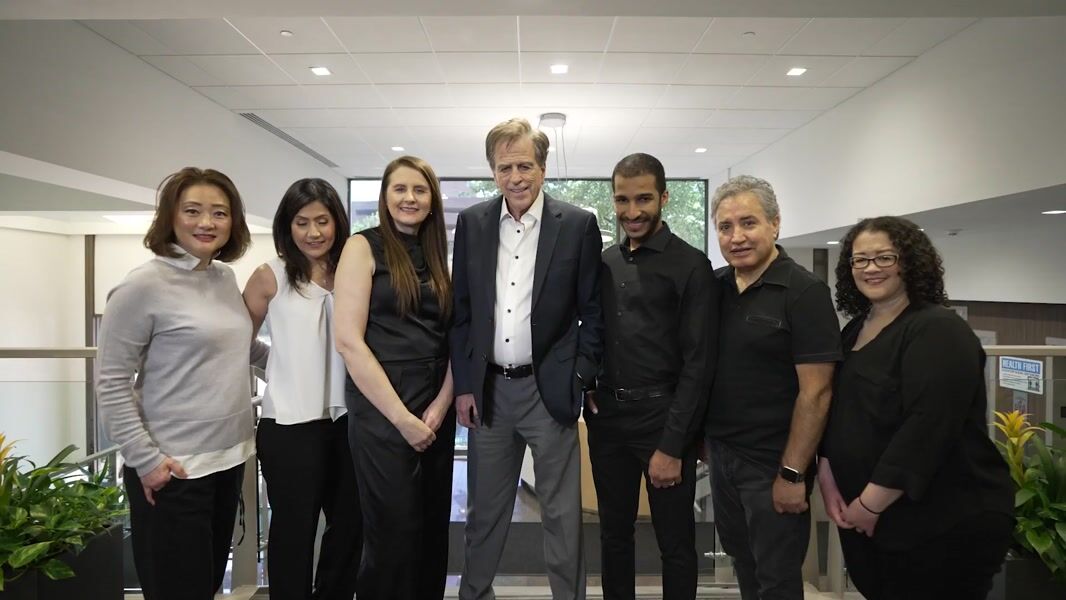
Implant Denture Repair in Arlington, VA
Expert implant denture repair in Arlington, VA. Dr. Marlin specializes in fixing loose implant dentures, rocking dentures, and attachment failures.
Arlington professionals with complex dental restorations often reach a critical moment when their implant-supported dentures begin failing. The denture that restored eating function and smile confidence suddenly feels loose, tips sideways while chewing, or develops cracks in the acrylic base. For Arlington residents, this situation creates immediate concerns about whether the costly prosthesis can be salvaged or requires complete replacement.
Dr. Gerald Marlin, a specialty-trained prosthodontist with decades of clinical experience treating implant denture complications, has helped thousands of patients whose dentures developed problems that general dentists deemed unrepairable. His systematic diagnostic approach identifies the specific failure mechanism in each case, then applies targeted repair techniques that restore function while preserving the denture investment when possible.
Why Arlington Residents Choose Expert Implant Denture Repair
Arlington County residents represent a demographic group that values efficiency and precision. Many have invested significantly in implant dentures after experiencing the limitations of traditional removable prosthetics. They understand that implant-supported dentures provide superior retention, stability, and eating function compared to conventional dentures that rely solely on soft tissue support.
When problems develop, Arlington patients typically explore repair options before considering replacement. A failing implant denture creates genuine functional challenges. Loose dentures make eating uncertain, particularly with harder foods. Rocking dentures create a sensation of instability that affects confidence during meals and social situations. Broken attachment mechanisms progressively worsen until the denture provides inadequate retention.
The challenge is that not all dentists possess the specialized knowledge needed to diagnose and repair these complex systems. Many Arlington residents have consulted with their general dentist, received a diagnosis of “bone loss” and a recommendation to replace the denture. Often, that diagnosis misses the actual problem, leading to unnecessary expense.
Understanding Your Implant Denture System
Before repair becomes possible, understanding your specific denture type clarifies which problems are repairable and what repair strategies apply. Implant dentures come in several configurations, each combining implants with different attachment mechanisms and support frameworks.
Snap-in dentures typically use two to four implants with locator or ball attachments that provide vertical retention. The denture clips over these attachments, gaining retention from mechanical engagement rather than suction or soft tissue adaptation. This design offers a good balance between cost, retention, and ease of cleaning. However, the attachment components wear predictably over time.
Bar-retained dentures use multiple implants connected by a rigid bar that spans across the jaw. The denture rests on top of this bar and is retained by precise mechanical fit. These dentures provide excellent stability for patients concerned about denture movement during eating, but they create different maintenance requirements and failure modes compared to snap-in systems.
All-on-4 dentures represent a specialized design using four strategically angled implants to support a complete upper or lower arch replacement. These dentures maximize bone contact and minimize surgical requirements compared to traditional implant approaches that require many more implants. However, All-on-4 frameworks experience concentrated stress loads and require specific diagnostic and repair approaches.
Common Implant Denture Failure Patterns
Arlington patients frequently present with similar patterns of denture failure. Recognizing these patterns helps you understand whether professional repair is likely to succeed or whether your situation requires a different approach.
The most common pattern involves progressive looseness in snap-in dentures. You notice the denture feels slightly loose when you insert it. Over weeks, the looseness increases until the denture wobbles noticeably. The attachment retention gradually diminishes until one day the denture simply comes out when you bite into an apple or smile widely.
This pattern typically reflects locator attachment wear. The synthetic cap components inside the denture gradually compress and degrade from millions of insertion and removal cycles. Each time you insert and remove the denture, the synthetic material deforms slightly. Over months and years, this accumulated deformation reduces grip. The solution is straightforward: replace the worn synthetic caps. Our on-site laboratory performs this repair in a single appointment, often while you wait.
A different failure pattern presents as denture movement during function. The denture feels stable at rest but rocks or shifts when you chew, particularly on one side. Sometimes you notice the denture feels as though it’s tipping up in the back while you’re eating.
This pattern often reflects multiple possible causes. In bar-retained dentures, it frequently indicates loosened attachment screws. The screws connecting the bar to individual implant abutments gradually loosen from years of chewing forces. This looseness permits millimeters of movement that become quite noticeable functionally. Simple screw tightening often resolves this problem completely.
In snap-in dentures, rocking typically reflects uneven bone resorption combined with denture tissue contact that creates a fulcrum effect. If the denture contacts the supporting tissues at only one point instead of distributing contact evenly, the denture can rock around that contact point. Correction requires denture adjustment or selective relining to redistribute contact pressure evenly.
A third failure pattern involves visible cracking in the denture acrylic. You might notice a fine crack running through the denture, or the denture might actually break into pieces. Acrylic denture base material is durable but not indestructible. Cracks develop from temperature extremes, impacts, repeated stress cycles, or accumulated wear.
Small cracks in non-structural areas sometimes can be repaired and sealed successfully. Large cracks or breaks in structural areas typically require denture base replacement. The acrylic denture teeth and attachment housing can often be preserved and bonded to a new acrylic base, making this repair more economical than complete denture replacement.
Diagnosing Loose Snap-in Dentures
Loose snap-in dentures present the most commonly repairable problem in Arlington patients. Dr. Marlin’s diagnostic process identifies whether attachment wear is the primary issue or whether other factors contribute to looseness.
Locator attachments consist of two components: a male component attached surgically to the implant abutment, and a female component embedded in the denture base. Inside the female component are synthetic rubber caps that provide friction and mechanical grip. When you insert the denture, the female component slides over the male component, and the synthetic caps engage against the sides of the male component, holding the denture in position.
These synthetic caps gradually wear through normal use. The material compresses slightly with each insertion and removal cycle. Saliva and denture cleaning products can degrade the synthetic material over time. Aggressive insertion or removal accelerates wear. Eventually, the caps wear enough that they no longer grip effectively, and the denture feels loose.
Arlington patients often worry that denture looseness indicates bone loss requiring implant replacement or reconstruction. While some bone resorption does occur around implants, it occurs slowly and usually causes minimal denture movement. The more common cause of looseness is simple attachment component wear.
Dr. Marlin can identify the cause of your looseness through careful examination. If locator caps are worn, replacement is the solution. Our laboratory can replace the synthetic caps, restoring full retention. The entire process takes minutes, and the denture functions as if new.
Bar-Retained Denture Complications and Solutions
Arlington patients with bar-retained dentures sometimes experience subtle problems that become more noticeable over time. The bar-retained denture design provides excellent stability and retention, but the bar connection to individual implants requires precise screw tension to maintain proper framework position.
These small screws gradually loosen from chewing forces. Patients often don’t realize looseness has occurred because the denture still appears to fit well and functions reasonably. However, loose screws create microscopic framework movement that can progress to visible denture rocking or shifting.
Dr. Marlin uses specialized instruments to check screw tightness and tighten any loose screws to proper tension. This simple procedure often resolves denture movement problems completely. Many Arlington patients are surprised at how dramatically denture stability improves after screw tightening.
Occasionally, bar-retained dentures develop more significant problems. The bar itself might fracture or the framework might develop stress cracks. These problems typically result from years of concentrated forces at specific points, usually where opposing natural teeth or other factors created uneven load distribution.
Framework repair depends on the extent of damage. Small cracks in titanium frameworks can sometimes be welded successfully. Major breaks or alignment loss typically require framework replacement. Our on-site laboratory has access to specialized equipment and skilled technicians who can evaluate and often repair framework damage.
Acrylic Damage and Denture Base Restoration
Acrylic resin denture bases are durable but vulnerable to cracks from thermal stress, impacts, and accumulated wear. Arlington patients sometimes experience denture acrylic failure from temperature extremes (hot coffee alternating with cold drinks), from night grinding if they clench their teeth, from drops or impacts, or from stress concentration around attachment sites.
Some acrylic cracks are purely cosmetic and don’t affect denture function. Other cracks compromise structural integrity and create risk of catastrophic failure. Dr. Marlin assesses the location and extent of cracking to determine whether repair is appropriate or whether base replacement is necessary.
Small surface cracks in non-structural areas can sometimes be sealed with acrylic resin, making the denture more esthetic without compromising function. Large cracks typically require base replacement. The process involves carefully removing the acrylic teeth and attachment components from the damaged base, then bonding them to a new acrylic base fabricated in our on-site laboratory.
This approach preserves the acrylic teeth and attachment components that are often not the source of the problem. It’s more economical than complete denture replacement while providing long-term durability.
Bone Changes Around Implants
Arlington professionals sometimes ask whether bone loss around implants contributes to their denture problems. This is a legitimate clinical question that deserves a straightforward answer. Significant bone loss may require bone grafting to restore support for implants.
Bone around implants does resorb naturally over decades, though much more slowly than bone around missing teeth. This resorption occurs because implants don’t transmit the same forces to bone as natural tooth roots, and bone adapts by resorbing slightly.
However, the rate of bone resorption around implants is relatively slow. Annual bone loss around implants averages less than 1 millimeter in the first few years after implant placement, then stabilizes at even slower rates. Significant bone changes take many years to develop.
Small amounts of bone resorption don’t create obvious denture movement or looseness. Significant resorption that does affect denture stability manifests as uneven denture contact on tissues, often creating a rocking sensation. This requires denture adjustment or relining, not denture replacement.
Dr. Marlin uses specialized imaging to assess bone changes and determine whether bone changes are the primary problem or whether mechanical component failure is the more significant issue in your specific situation.
Getting Here from Arlington
Arlington residents can reach Elite Prosthetic Dentistry in approximately 15 minutes via I-66 East or the George Washington Parkway, depending on your starting location within Arlington and traffic conditions.
From Central Arlington, take I-66 East toward Washington, DC. Depending on your exact starting location, you might access I-66 from Arlington Boulevard, Clarendon Boulevard, or other major Arlington streets. Follow I-66 East toward Washington. Exit at the appropriate Washington offramp and follow local signage to reach the office.
Alternatively, many Arlington residents prefer the scenic George Washington Parkway route, particularly when traffic is heavy on I-66. The Parkway offers a more leisurely drive through Washington along the Potomac River, with comparable travel time.
The office is located at 4400 Jenifer Street NW, Suite 220, Washington, DC 20015, in the established Forest Hills neighborhood immediately north of Washington, DC. Convenient parking is available on our building lot. The location is easily accessible from anywhere in Arlington County, making denture maintenance appointments quick and convenient for busy professionals.
Advanced Diagnostic Capabilities
Dr. Marlin employs diagnostic techniques that identify problems many general dentists miss. Specialized imaging reveals subtle framework cracks, implant screw looseness, and attachment component shifts that aren’t visible on examination alone. Precision measurement of denture fit and mobility determines whether looseness originates from attachment wear, bone changes, framework movement, or a combination of factors.
This diagnostic precision ensures that repair addresses the actual problem causing your denture’s failure, rather than guessing at causes or addressing surface symptoms. Many Arlington patients come to Dr. Marlin after unsuccessful repairs elsewhere, where dentists treated visible problems without identifying the underlying cause.
The Laboratory Advantage for Same-Day Repair
Elite Prosthetic Dentistry’s in-house laboratory provides Arlington patients with same-day or next-day repair capabilities that aren’t available when dentures are sent to outside laboratories. For simple repairs like locator cap replacement, the work is often completed while you wait.
More complex repairs like acrylic base cracking, denture tooth replacement, or attachment mechanism failure take only several days rather than the weeks typical of outside laboratory services. Laboratory technicians working in our office coordinate directly with Dr. Marlin, ensuring that repairs meet exacting standards and that denture function is fully restored.
Long-Term Care and Maintenance
Arlington professionals often invest in implant dentures expecting them to last for decades. This expectation is realistic with proper care and maintenance. Implant dentures often function reliably for 20 to 30 years or longer.
Normal maintenance includes periodic attachment component replacement every 2 to 4 years, annual professional evaluation by Dr. Marlin, and occasional denture adjustments. These routine maintenance items are part of normal prosthetic care, not signs that your denture is failing.
Dr. Marlin provides specific guidance on care and maintenance practices that prevent or minimize future problems. Gentle handling during insertion and removal protects mechanical components. Proper cleaning with soft brushes prevents buildup that accelerates wear and restricts denture seating. Avoiding extreme temperatures protects acrylic from thermal stress cracking. Protecting your denture from drops and impacts prevents sudden damage.
Related Resources
- Implant denture problems and solutions
- Repairing failing implants
- Comfortable implant denture solutions
- All-on-4 and All-on-6 implant solutions
- Removable prosthodontics
- Sedation dentistry for comfortable treatment
- Patient success stories
- Second opinion evaluations
- Meet Dr. Gerald Marlin, specialty-trained prosthodontist
- Our in-house dental laboratory
- Dental implant information
- Request an appointment
Schedule Your Consultation or call (202) 244-2101
Arlington residents with failing implant dentures have expert solutions available nearby. Most common problems are repairable, and many can be fixed without complete denture replacement. Dr. Marlin’s specialty training, diagnostic precision, and on-site laboratory capabilities make efficient repair possible. Contact our office today to schedule an evaluation and discover whether your denture can be restored to full function.
Frequently Asked Questions
Why does my snap-in implant denture feel loose after a year of wear?
Snap-in dentures rely on locator attachments that gradually lose retention over time as they experience millions of insertion and removal cycles. The synthetic materials in these attachments compress and wear, reducing their grip. Bone around the implants also resorbs slightly over time even with implant support, changing the geometric fit. Additionally, the denture acrylic can develop tiny cracks or the attachment housing can loosen. Dr. Marlin diagnoses whether replaceable locator caps are the solution or whether more extensive repair is needed.
Can loose implant denture attachments be repaired or do I need a new denture?
Many loose implant dentures are repairable without full replacement. If locator attachment retention is the problem, Dr. Marlin can replace the worn synthetic caps that provide grip, typically restoring full retention in minutes. If the attachment housing itself is loose in the denture, the housing can be re-secured or replaced. If the denture acrylic is cracked, the crack can be repaired. Only when multiple systems have failed simultaneously is full replacement necessary. Our on-site laboratory makes repairs quickly, often the same day.
What causes a denture to rock or shift when I eat?
Rocking occurs when denture support is uneven or when implants have shifted slightly due to bone resorption. With bar-retained dentures, the bar connecting implants can develop microscopic movement if implant screws loosen. With All-on-4 dentures, excessive cantilever length can cause rocking if posterior bone has resorbed significantly. Sometimes the denture base itself warps from temperature changes or repeated adjustments. Dr. Marlin uses precision testing to identify the exact cause and determine whether adjustment, screw tightening, or repair is needed.
How often should implant denture attachments be serviced?
Locator attachments typically need replacement every 2 to 4 years depending on wear patterns and how frequently the denture is removed daily. Frequent removers experience faster wear. Bar-retained attachment screws should be checked annually and tightened as needed. The denture acrylic should be inspected annually for cracks or stress fractures. Think of it like vehicle maintenance. Regular preventive service catches problems early before they cause major function loss. Dr. Marlin recommends annual implant denture evaluations to catch wear early.
Is framework damage in an all-on-4 denture repairable?
Minor framework damage, such as small cracks in the titanium framework, can sometimes be welded or repaired by a skilled lab technician. Major framework breaks or alignment loss typically require framework replacement. Our on-site laboratory can assess framework damage and determine repairability. However, framework problems often indicate underlying issues like excessive bone loss or improper load distribution that should be addressed during repair. Dr. Marlin evaluates the entire system to ensure repair addresses root causes, not just symptoms.
Related Patient Success Stories
Explore similar patient success stories demonstrating our expertise in advanced prosthetic dentistry.
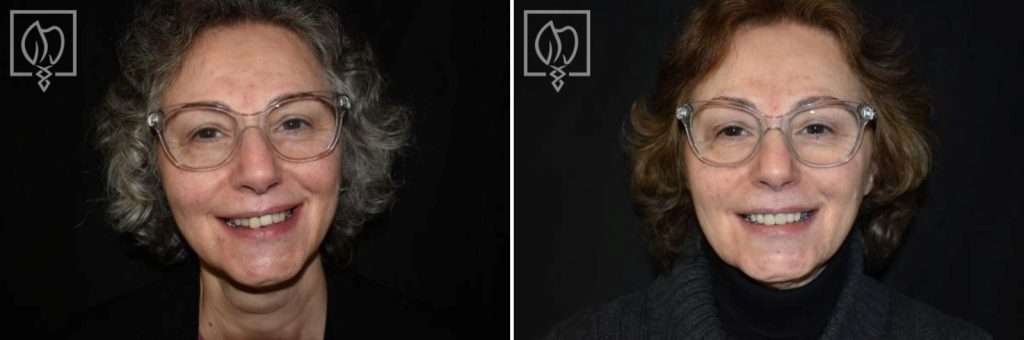
Temporary Crowns Restore Patient's Smile in Just One Day with an Immediate Smile Makeover
A patient from Potomac, Maryland, came to Elite Prosthetic Dentistry with the chief complaint of pain from a failing dental implant and its significant impact on her appearance.
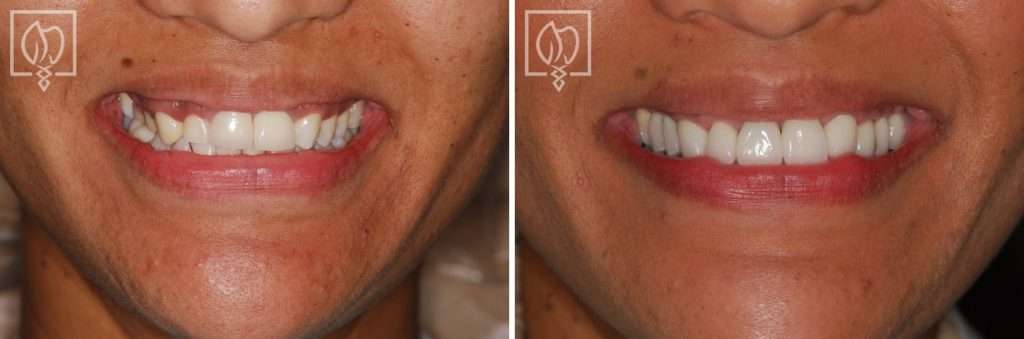
Multi-Faceted Treatment for Patient Unhappy With Her Artificial-Looking Crowns, Teeth and Gums
Many patients come to Elite Prosthetic Dentistry unhappy with the appearance of their smile. However, this particular patient presented with multiple interconnected problems that together created a smile she found deeply unsatisfying.
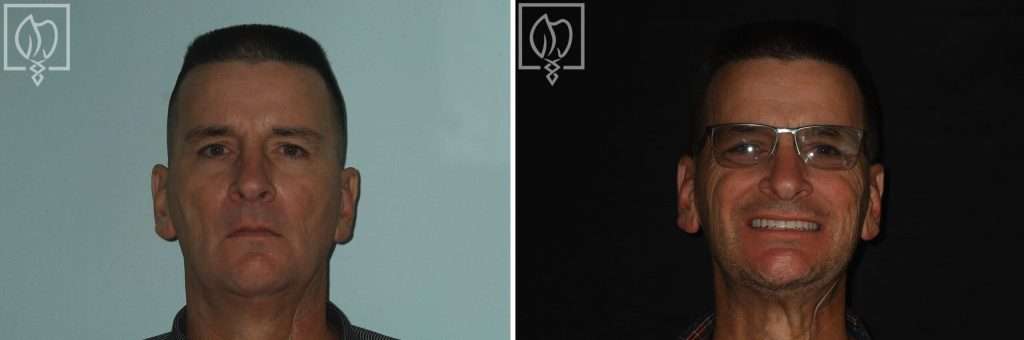
Treating Kevin’s Collapsed Bite with a Complete Smile Makeover with New Dentures
Dentures are sometimes not created to the ideal aesthetic and functional scheme. When improperly fabricated, dentures can make an individual appear almost a generation older than their actual age. They can have a poor fit that feels loose and unstable when eating or speaking, and they can actually accelerate bone loss over time.

Rejuvenating Maria’s Severely Worn Down Implant Overdentures
Many times, per year, patients come to us frustrated because their implant prosthesis is so severely worn down that they are very self-conscious and cover up their smile. They look and feel much older than their age as a result of the extensive wear of their appliance(s).
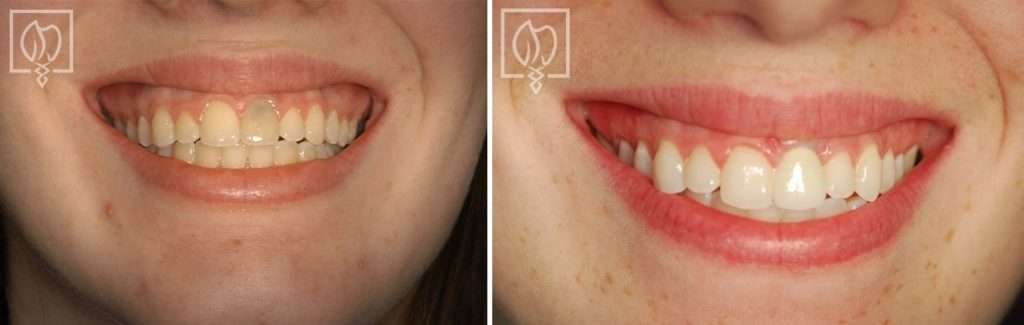
Replacing a Discolored Front Tooth with a Precision Placed Implant
Some of the most challenging restorations occur when fabricating an anterior crown to fit on an implant. Not only does one have the difficulty of matching the single front tooth to the other ones in the high visibility zone, but the dentist must also ensure the position of the underlying implant is precise through accurate preplanning and placement.
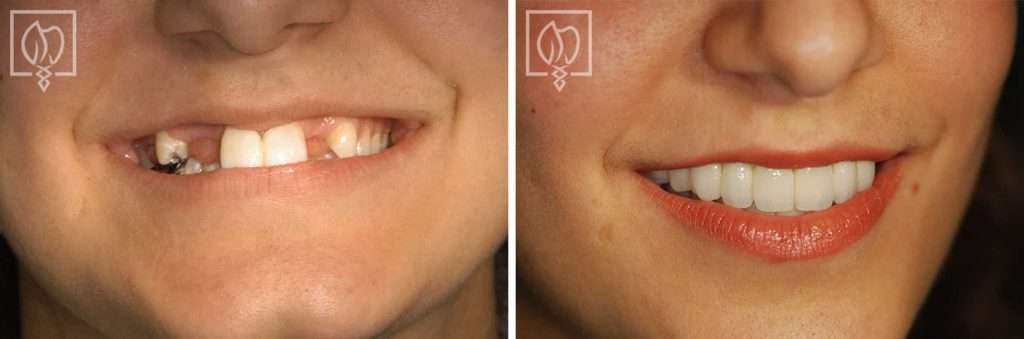
Treating Congenitally Missing Teeth in a Teenager with Dental Implants
A 16-year-old patient from McLean, Virginia, presented with a condition where she was congenitally missing several teeth, meaning they were missing from birth.
Related Articles
Deepen your knowledge with additional insights on this topic.
 Dental Implants
 If a Single Front Tooth is Replaced with an Implant, can it Look Natural?
A single front tooth implant can look completely natural with precision placement, custom abutments, and hand-crafted porcelain crowns. Washington, DC.
 Dental Implants
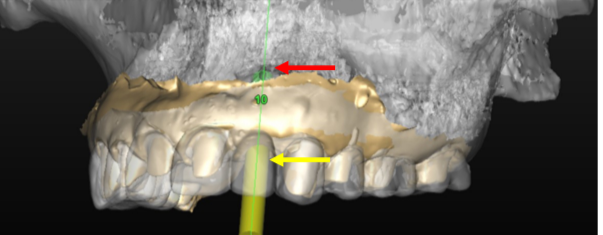
 What is Precision Implant Placement (PIP)?
Learn what Precision Implant Placement (PIP) is and how meticulous planning ensures optimal implant positioning for long-lasting results in Washington, DC.
 Dental Implants
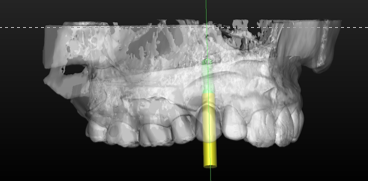
 What is the ideal Surgical Guide for Precision Implant Placement?
CBCT-based surgical guides allow virtual implant planning for precise positioning in optimal bone, ensuring predictable results in Washington, DC.
 Dental Implants
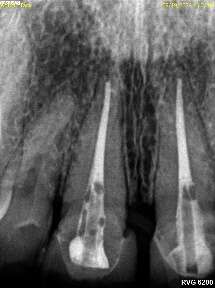
 When Should an Implant not be Done?
Not every patient is a candidate for dental implants. Learn when healthy roots, fragile bone, or steep angles may make alternatives the better choice.
 Dental Implants
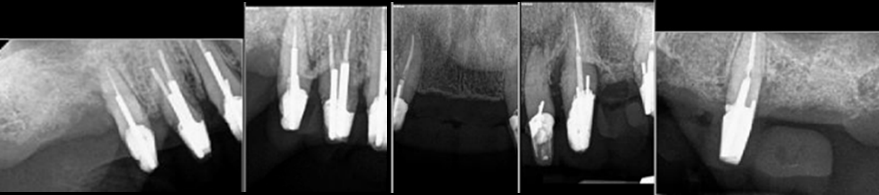
 What is Staged Implant Therapy?
Staged implant therapy replaces teeth gradually using existing teeth as temporary support. A personalized alternative to All-on-X for full-arch cases.
Unveiling the Four Types of Dental Implants: Which One's for You?
Learn about the four types of dental implants - endosteal, subperiosteal, zygomatic, and mini implants - and which option may be right for your needs.
Our Services in Arlington
Beyond implant-denture-repair, Arlington patients rely on Dr. Gerald Marlin for a full range of advanced dental care.
More services available in Arlington:
implant-denture-repair Near Arlington
Dr. Gerald Marlin also provides implant-denture-repair services for patients in these neighboring communities.
Getting Here from Arlington
Elite Prosthetic Dentistry is conveniently located near Arlington, VA.
Arlington residents reach our office 15 minutes via I-66 East or George Washington Parkway from Arlington
Address:
4400 Jenifer Street NW, Suite 220
Washington, DC 20015
Phone: (202) 244-2101
Schedule ConsultationSchedule Your Consultation from Arlington
Arlington residents trust Dr. Gerald Marlin for precision dental care. With 3,900+ implants placed and 40+ years of experience, your smile is in expert hands.