
Full Mouth Reconstruction Revision in Dupont Circle, DC
Dupont Circle full mouth reconstruction revision. Dr. Marlin specializes in complex bite problems, implant complications, and restoration redesign.
Dupont Circle Residents Seeking Reconstruction Solutions
Dupont Circle’s educated, cosmopolitan population attracts professionals who understand that dental function and esthetics matter. A reconstruction failure in this community often triggers anxiety about investing in treatment again. Residents here typically want straightforward answers about what happened and clear options for moving forward.
The Dupont Circle location positions residents 12 minutes from our Georgetown office via Connecticut Avenue NW. This accessibility makes multiple appointments manageable, which matters for revision cases that often require several visits. Connecticut Avenue is a main thoroughfare that many Dupont Circle residents navigate regularly, making the route familiar.
Hybrid Reconstructions and Their Complications
A significant number of reconstruction revisions in our Dupont Circle patient population involve hybrid designs combining natural teeth and implants. These approaches can work well but require careful biomechanical integration. When they fail, it often reflects problems at the interface between natural and implant-supported restorations.
Natural teeth are periodontal teeth. They connect to bone through a periodontal ligament that allows slight movement with bite forces. This movement distributes stress and protects the tooth. Implants are osseous teeth. They integrate directly into bone with no periodic ligament. This rigid connection means implants don’t move.
When natural teeth and implants are connected together in the same restoration, their different movement characteristics create stress. The natural tooth moves slightly. The implant doesn’t. This differential movement concentrates stress at the connection points. Over time, these stresses cause problems.
Revising a hybrid reconstruction might involve adjusting the connection design, adjusting the bite to reduce stress, or transitioning to a fully implant-supported or fully natural tooth reconstruction. The decision depends on your specific situation and your bone anatomy.
Bite Force Magnitude Issues
Some reconstructions fail because your actual bite force exceeds what the reconstruction can handle. Bite force varies substantially between individuals. Some people have naturally high bite forces from muscle development. Others have lower bite forces. Some patients clench or grind, creating forces far exceeding normal biting.
A reconstruction designed for average bite force but placed in someone with significantly higher bite force will fail. The materials will wear faster. Implants will overload. The bone around implants will resorb. Cement might fail from excessive stress.
In revision, we assess your actual bite force. If you clench or grind, we address that through occlusal design that minimizes harmful forces or through a night guard to protect the reconstruction. If your natural bite force is high, we select more durable materials and design the reconstruction to distribute forces effectively.
Implant Overload and Bone Loss Patterns
Implant overload represents one of the most common reasons all-on-4 reconstructions fail. Four implant connection points receiving all bite force across an entire arch represents significant mechanical stress. If the bite is imbalanced or forces are concentrated, some implants bear excessive load.
Overloaded implants show a specific bone loss pattern. Loss occurs primarily on the aspect of the implant facing the direction of excessive force. This bone loss progressively undermines implant stability. Eventually, the implant becomes loose or fails completely.
Preventing recurrent overload in revision requires adjusting bite distribution, sometimes adding implants to share the load, or both. Occasionally, repositioning existing implants through surgical means allows better force distribution.
Getting Here from Dupont Circle
Connecticut Avenue NW runs south from Dupont Circle directly toward Georgetown. Our office is located approximately 12 minutes south on Connecticut Avenue. This is a familiar route for many Dupont Circle residents. During off-peak hours, 12 minutes is realistic. During rush periods, allow slightly longer.
Parking is available at our location. Public transportation is also convenient via Metro bus on Connecticut Avenue.
The Natural Tooth Foundation in Revision
Some reconstructions fail because the natural tooth foundation was flawed from the beginning. Teeth selected for reconstruction might have had insufficient bone support or problems not apparent during the original planning. In revision, we accurately assess which natural teeth can support the reconstruction and which should be removed.
This assessment involves evaluating bone levels, tooth structure, and the longevity of existing restorations on those teeth. A natural tooth with abundant bone, solid structure, and an excellent restoration is an asset to preserve. A natural tooth with minimal bone, extensive restoration, and questionable long-term viability is a liability to remove.
Esthetic Restorations Under Functional Stress
Some Dupont Circle residents pursue reconstructions with emphasis on esthetics. These reconstructions might use materials chosen for esthetic properties rather than optimal durability. Over time, these esthetically ideal but functionally compromised materials wear or fail.
In revision, we often recommend material upgrades that provide slightly less optimal esthetics but substantially better durability. We present this tradeoff explicitly. Some patients accept the compromise. Others prefer maximum esthetics and accept higher maintenance or shorter restoration lifespan.
Temporomandibular Considerations
Dupont Circle includes many professionals under significant stress. Some experience stress-related jaw clenching or grinding. This can contribute to reconstruction failure if the reconstruction design doesn’t accommodate these forces.
In revision, we assess whether your bite is contributing to jaw tension. Sometimes correcting the bite dramatically improves jaw comfort and muscle tension. We might recommend a night guard to protect the reconstruction if clenching or grinding continues.
Communication and Treatment Philosophy
Dupont Circle residents typically value clear communication and detailed explanation. Dr. Marlin provides exactly this. He explains the diagnostic findings, the failure analysis, and the revision options in detail. He respects your intelligence and your time.
He’s also comfortable with patients who want second opinions or who want to proceed cautiously. Some patients request an interim phase of several months longer than standard to absolutely confirm they’re comfortable before permanent restorations are placed. This is fine. Treatment timelines can be customized to your preferences.
The Dupont Circle Advantage
Dupont Circle’s vibrant community and professional population create a patient base that values quality and is willing to work with specialists. These patients understand that comprehensive prosthodontic care isn’t routine dentistry. They expect detailed diagnostic work, clear explanation, and superior outcomes.
Our practice philosophy aligns with these expectations. We provide the depth of expertise, the thoroughness of evaluation, and the attention to detail that sophisticated patients expect.
Comprehensive Diagnostic Assessment
Your evaluation begins with comprehensive imaging and bite analysis. Cone beam CT shows bone levels and implant integration. Detailed bite records capture your exact jaw position. Analysis of bite mechanics reveals force distribution patterns.
We then examine each restoration individually and provide you with a detailed written assessment of our findings. You understand what failed, why it failed, and what the revision will address.
Treatment Planning and Options
Based on our diagnostic assessment, we develop treatment options. Different approaches might be possible, and we present the pros and cons of each. We discuss timeline, cost, and expected outcomes for each option.
Most revision plans include an interim phase where you confirm the new bite and restorations feel correct before we commit to permanent placement. This interim phase is valuable insurance that the revision will succeed.
Clinical Excellence and Expertise
Complex reconstruction failures require specialized prosthodontic expertise. Dr. Marlin brings focused training on exactly these problems. This specialized knowledge often determines whether revision succeeds or fails.
Comprehensive Diagnostic Approach
Our evaluation uses contemporary diagnostic technologies providing precision. Cone beam imaging reveals bone anatomy three-dimensionally. Digital bite recordings capture your jaw position with millimeter accuracy. This technological precision ensures accurate diagnosis and appropriate treatment planning.
Material Science and Restoration Performance
Material selection profoundly affects restoration longevity. Different materials perform differently under various stress conditions and over time. We select materials proven for situations similar to yours, accounting specifically for your bite forces, functional demands, and maintenance capability.
Long-Term Success Philosophy
Our philosophy emphasizes long-term success over short-term convenience. We might recommend approaches requiring more time initially if they result in better long-term outcomes. We prioritize building restorations that work well for years and decades.
Related Resources
- Full Mouth Reconstruction Failure: Overview of why reconstructions fail and revision options
- Full Mouth Reconstruction: Proper reconstruction planning and prosthodontic design
- Dental Implants in Dupont Circle: Implant-supported solutions for reconstruction
- Repairing Failing Implants: Solutions for implant problems
- Second Opinion Dentistry: Expert evaluation of your reconstruction
- Meet Dr. Gerald Marlin: His training and approach to complex cases
- In-House Laboratory: How our laboratory enables superior outcomes
- Patient Success Stories: Results from complex reconstruction cases
- Schedule Your Consultation: Begin your reconstruction revision evaluation
Beginning Your Reconstruction Revision
If you’re a Dupont Circle resident considering reconstruction revision, schedule a comprehensive evaluation with Dr. Marlin. You’ll understand precisely what failed and what options are available.
Schedule Your Consultation or call (202) 244-2101 to discuss your reconstruction revision.
Frequently Asked Questions
If my reconstruction involved hybrid natural teeth and implants, what makes that approach fail?
Hybrid reconstructions combine natural teeth and implants. Problems arise when the implants and natural teeth move differently under load, creating stress at their interface. Natural teeth move slightly with bite force, while implants move not at all. This mismatch can cause teeth to shift or restorations to loosen. Additionally, natural teeth often need more maintenance and might fail while implants remain stable, creating an imbalanced system. Revision might require adjusting the hybrid design or transitioning to a different approach.
Can you treat me if my original dentist is still in practice and I want to keep the relationship?
We maintain complete professional objectivity. Our evaluation is based entirely on your current condition and what needs to happen next. We don't critique the previous dentist to you or communicate with them unless you request we do so. You can maintain your relationship with your previous dentist while receiving revision care from us. Some patients benefit from continuity with their longtime dentist for routine care while we handle the reconstruction revision.
What role does muscle tension or dysfunction play in my reconstruction failure?
Significant muscle tension or dysfunction (temporomandibular disorder) can contribute to reconstruction failure. If your bite is positioned in a way that stresses your jaw muscles or joint, you develop tension, which your body tries to resolve by changing your bite. This creates a cycle where the more your body tries to adapt, the more problems develop. Revision reconstruction that addresses the underlying bite problem often resolves muscle tension, sometimes dramatically.
How do you assess whether remaining natural teeth should be preserved or extracted in revision?
Each remaining natural tooth is evaluated individually. We assess bone level, restoration quality, tooth structure, and load capacity. A natural tooth with excellent bone support, solid structure, and good restoration might be ideal to preserve. A natural tooth with bone loss, extensive restoration, and questionable longevity might be better removed. The decision depends on your overall treatment plan and whether keeping the tooth creates biomechanical stress on the reconstruction.
What should I expect during the interim restoration phase?
You'll wear temporary restorations that correct the identified problems. You'll eat normally, speak normally, and participate in all usual activities. The interim restorations look similar to your eventual permanent ones, though they might not be identical. You'll come in periodically for adjustments if anything feels uncomfortable. After 2-3 months, your tissues will have stabilized and you'll have confirmed that the new bite feels natural. Only then do we proceed to permanent restoration placement.
Related Patient Success Stories
Explore similar patient success stories demonstrating our expertise in advanced prosthetic dentistry.
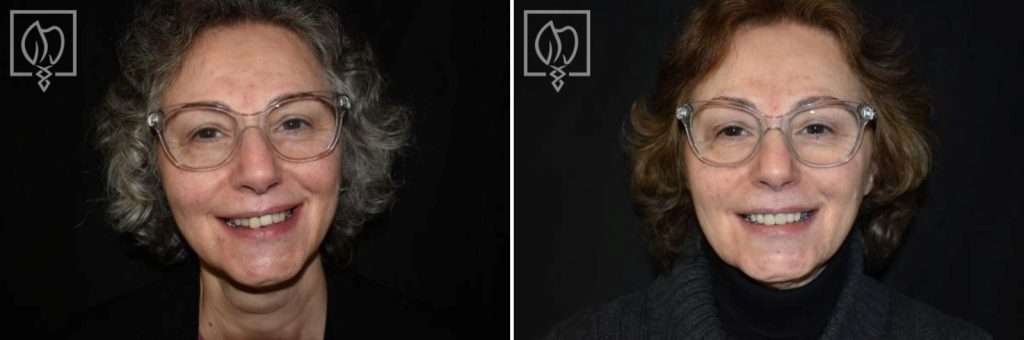
Temporary Crowns Restore Patient's Smile in Just One Day with an Immediate Smile Makeover
A patient from Potomac, Maryland, came to Elite Prosthetic Dentistry with the chief complaint of pain from a failing dental implant and its significant impact on her appearance.
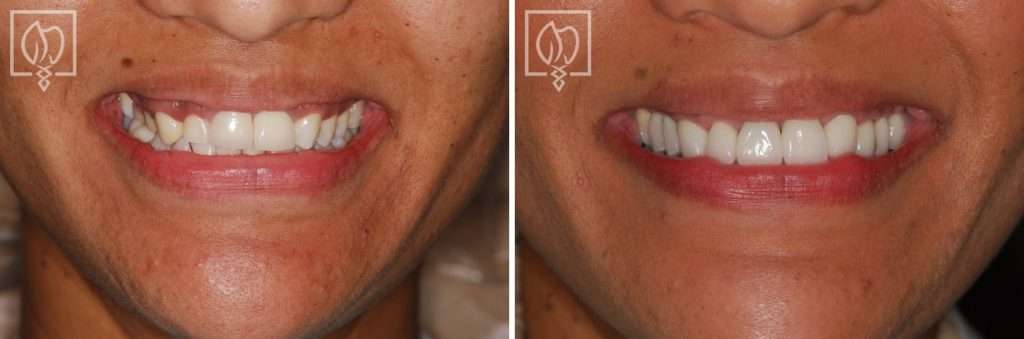
Multi-Faceted Treatment for Patient Unhappy With Her Artificial-Looking Crowns, Teeth and Gums
Many patients come to Elite Prosthetic Dentistry unhappy with the appearance of their smile. However, this particular patient presented with multiple interconnected problems that together created a smile she found deeply unsatisfying.
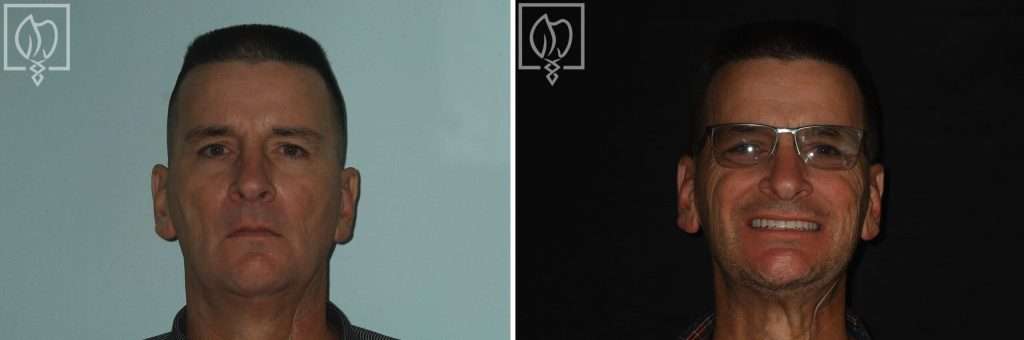
Treating Kevin’s Collapsed Bite with a Complete Smile Makeover with New Dentures
Dentures are sometimes not created to the ideal aesthetic and functional scheme. When improperly fabricated, dentures can make an individual appear almost a generation older than their actual age. They can have a poor fit that feels loose and unstable when eating or speaking, and they can actually accelerate bone loss over time.
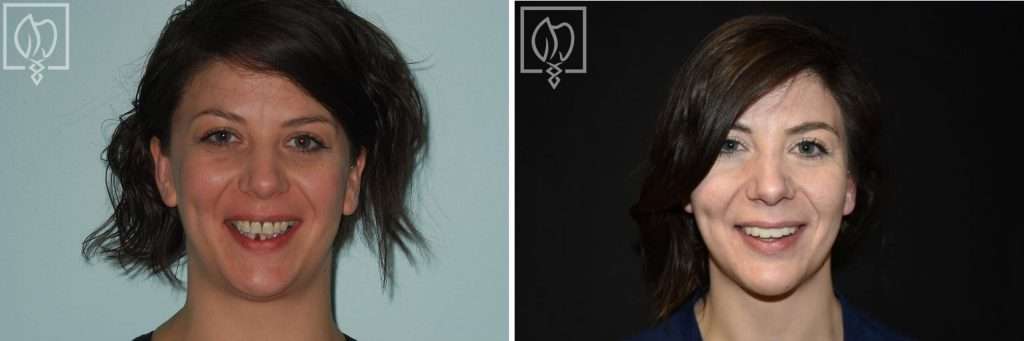
Salvaging Ms. N’s Severely Broken-Down Upper and Lower Teeth from Gum and Bone Disease
Many people in the U.S. suffer from extensive periodontal disease characterized by significant bone loss and shrinkage of the gum tissue. This condition can begin at a very young age and worsen quickly due to hereditary factors and lack of early diagnosis by their dentist.
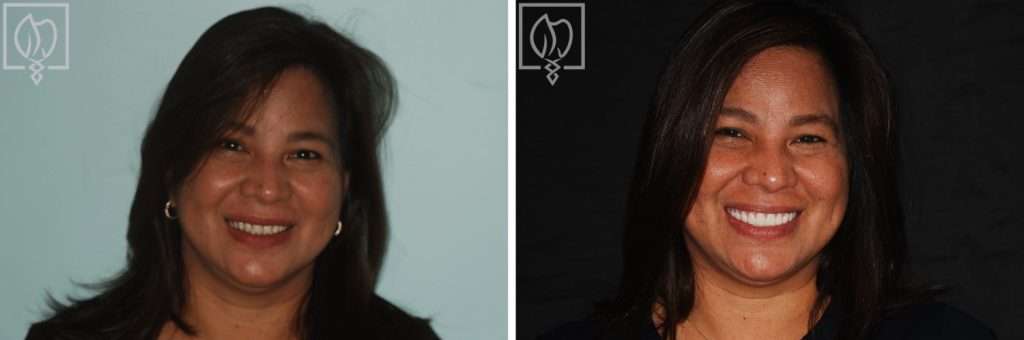
Rejuvenating Maria’s Severely Worn Down Implant Overdentures
Many times, per year, patients come to us frustrated because their implant prosthesis is so severely worn down that they are very self-conscious and cover up their smile. They look and feel much older than their age as a result of the extensive wear of their appliance(s).
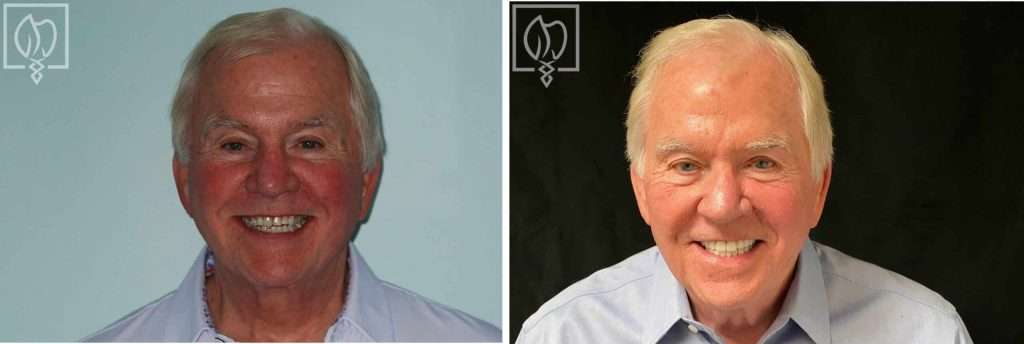
A Smile Transformation in Just Four Months: A Patient’s Dental Crown Restoration for a TV Series
A patient with dental crowns that were in poor shape was going to appear on a streaming video series on a major TV network that was scheduled to begin filming soon. Our patient, John, an author about to embark on a book tour, was anxious as his teeth were not up to his standards to appear on television.
Related Articles
Deepen your knowledge with additional insights on this topic.
 Dental Implants
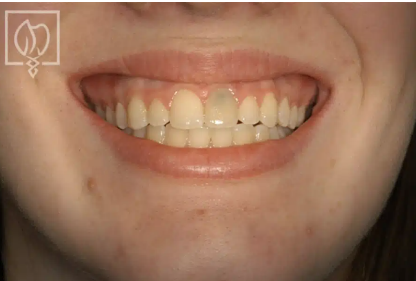
 If a Single Front Tooth is Replaced with an Implant, can it Look Natural?
A single front tooth implant can look completely natural with precision placement, custom abutments, and hand-crafted porcelain crowns. Washington, DC.
 Dental Implants
 What is Precision Implant Placement (PIP)?
Learn what Precision Implant Placement (PIP) is and how meticulous planning ensures optimal implant positioning for long-lasting results in Washington, DC.
 Dental Implants
 What is the ideal Surgical Guide for Precision Implant Placement?
CBCT-based surgical guides allow virtual implant planning for precise positioning in optimal bone, ensuring predictable results in Washington, DC.
 Dental Implants
 When Should an Implant not be Done?
Not every patient is a candidate for dental implants. Learn when healthy roots, fragile bone, or steep angles may make alternatives the better choice.
 Dental Implants
 What is Staged Implant Therapy?
Staged implant therapy replaces teeth gradually using existing teeth as temporary support. A personalized alternative to All-on-X for full-arch cases.
Unveiling the Four Types of Dental Implants: Which One's for You?
Learn about the four types of dental implants - endosteal, subperiosteal, zygomatic, and mini implants - and which option may be right for your needs.
Our Services in Dupont Circle
Beyond reconstruction-revision, Dupont Circle patients rely on Dr. Gerald Marlin for a full range of advanced dental care.
More services available in Dupont Circle:
reconstruction-revision Near Dupont Circle
Dr. Gerald Marlin also provides reconstruction-revision services for patients in these neighboring communities.
Getting Here from Dupont Circle
Elite Prosthetic Dentistry is conveniently located near Dupont Circle, DC.
Dupont Circle residents reach our office 12 minutes via Connecticut Avenue NW
Address:
4400 Jenifer Street NW, Suite 220
Washington, DC 20015
Phone: (202) 244-2101
Schedule ConsultationSchedule Your Consultation from Dupont Circle
Dupont Circle residents trust Dr. Gerald Marlin for precision dental care. With 3,900+ implants placed and 40+ years of experience, your smile is in expert hands.