
Dental Second Opinion in Palisades, DC
Wondering what to expect from a dental second opinion? Understand the process, what to bring, and questions to ask during evaluation in Palisades.
Palisades residents contemplating a dental second opinion often wonder what the process entails. What happens during the appointment? What should you bring? What questions should you ask? Understanding the second opinion process ahead of time reduces anxiety and helps you be prepared.
A dental second opinion consultation is a straightforward process designed to give you clarity. At Elite Prosthetic Dentistry, Dr. Marlin conducts thorough second opinion consultations that leave you with clear understanding of your situation and your treatment options.
Understanding the Purpose of a Second Opinion Consultation
A second opinion consultation has a specific purpose: to provide independent professional evaluation of your dental situation. The provider reviews what you’ve already been told, examines you clinically, and offers their professional perspective on whether proposed treatment is appropriate, whether alternatives exist, and what approach they would recommend.
This is different from a consultation for treatment planning. You’re not necessarily committing to treatment. You’re seeking professional clarity on your situation.
Preparing for Your Second Opinion Appointment
Good preparation makes second opinion consultations more productive. Request your complete records from your previous dentist. This includes radiographs, clinical notes, photographs, and any scans or digital information. Request these in standard digital formats so you can easily share them.
Organize your concerns. Write down what brought you to seek a second opinion. What symptoms are you experiencing? What treatment has been recommended? What aspects of the recommendation concern you? What questions do you have?
Write down your treatment history. When was each tooth treated? What treatment was done? How long ago? Are you experiencing any problems with previous treatment?
This preparation helps the second opinion provider understand your situation thoroughly.
Arriving for Your Appointment
Plan to arrive 10 to 15 minutes early to complete any paperwork or history forms. Bring your records with you. Bring your insurance card and identification if insurance information is relevant. Bring a notepad if you like to take notes during the consultation.
Arrive with questions prepared. Even if you can’t remember them all, having them written down helps ensure you don’t forget important questions during the appointment.
The Clinical Examination Process
During clinical examination, the second opinion provider reviews your medical and dental history. They ask when problems started, what symptoms you’ve experienced, what treatment you’ve received, and what concerns prompted you to seek evaluation.
They conduct clinical examination of your mouth and teeth. They assess tooth structure, evaluate existing restorations, check tissue health, evaluate bite relationships, and look for any obvious problems. They may take radiographs if they don’t have recent radiographs from your previous provider.
They review radiographs and records you’ve provided, assessing them carefully and comparing them to clinical findings. This review helps them understand what your previous dentist found and whether their findings match clinical examination today.
Discussion and Finding Review
After examination, the provider discusses their findings. They explain what they observe clinically. They compare their findings to what your previous dentist found. They discuss whether their perspective aligns with previous recommendations or differs.
They ask clarifying questions if needed. They discuss your concerns directly. They address red flags if any appeared during examination.
This discussion helps you understand what’s happening in your mouth and what the clinical situation is.
Perspective on Your Situation
Based on examination and review of records, the provider offers independent professional perspective. They explain what treatment they believe is necessary, if any. They explain what alternatives exist, whether dental implants, bridges, cosmetic dentistry, or other advanced restorative approaches. They discuss which approach they would recommend and why.
They explain the reasoning behind their perspective. They’re not just telling you what to do. They’re explaining the clinical thinking that supports their recommendations, whether involving precision implant placement, bone grafting, or CAD-CAM restorations.
Addressing Your Specific Concerns
Good second opinion consultations address your specific concerns directly. If you’re worried about a particular tooth, that concern is addressed. If you’re uncertain about proposed treatment, that uncertainty is explored. If you disagree with previous recommendations, that disagreement is discussed and evaluated.
Your concerns are the focus of the consultation. The second opinion provider helps you understand whether your concerns are justified or whether adjusted understanding is needed.
Questions and Answers
Throughout the consultation, you have opportunity to ask questions. Ask about anything that’s unclear. Ask about proposed treatment if recommendations are made. Ask about alternative approaches. Ask about what you should expect if you proceed with treatment. Ask about what you should expect if you choose not to pursue treatment.
Good second opinion providers welcome questions and answer them thoroughly and in terms you understand.
Documentation of Findings
You should receive documentation of the second opinion consultation. This might be a written summary of findings, recommendations, and the reasoning behind those recommendations. This documentation helps you remember what was discussed and serves as a record of the consultation.
Keep this documentation for your records. It’s valuable reference material as you make decisions about your treatment.
Timeline for Treatment Recommendations
If treatment is recommended, ask about timeline. What’s the recommended sequence of treatment? How urgent is treatment? What happens if you wait? Can treatment be phased over time or should it be done quickly?
Understanding timeline helps you plan for treatment and make scheduling decisions.
Cost Discussion
If treatment is recommended, cost should be discussed. Ask for cost estimate for recommended treatment. Ask what’s included and what isn’t included. Ask about payment options or financing availability. Ask whether insurance might cover any recommended treatment.
Understand cost before making treatment decisions.
Seeking Clarity on Disagreements
If the second opinion differs from your previous dentist’s recommendation, ask for clarity on why they disagree. Understanding the reasoning behind different recommendations helps you evaluate which recommendation seems more sound to you. Disagreements might involve implant denture problems management, bone grafting necessity, or cosmetic dentistry approaches.
Sometimes disagreement is based on different philosophies or different risk tolerance. Sometimes it’s based on different clinical observations involving loose dental implants, crown and bridge problems, or multiple restorations failing. Understanding the basis for disagreement helps you make your decision.
Taking Your Recommendations Forward
After your second opinion consultation, you have independent professional perspective. You might take that perspective back to your previous dentist to discuss. You might seek additional input from other providers. You might decide to move forward with recommended treatment. You might decide to monitor your situation rather than pursue treatment.
The second opinion gives you information to make informed decisions. Use that information in whatever way makes sense for your situation.
Trusting the Second Opinion Provider
Choose your second opinion provider carefully. You want someone with relevant expertise and someone who takes time to understand your situation thoroughly. You want someone who answers your questions clearly and listens to your concerns.
Dr. Marlin brings prosthodontist training and years of complex case experience to every second opinion consultation. He takes time to understand your situation and provides clear perspective on your treatment options.
Following Up on Second Opinion
After second opinion consultation, you might have follow-up questions. Good providers are available for clarification. You might schedule a follow-up appointment if additional information is needed.
Don’t hesitate to ask follow-up questions. Second opinion providers want you to leave with clarity and confidence.
The Value of Understanding Your Situation
A key value of second opinion consultation is understanding your situation. You go in with uncertainty or confusion. You leave with clarity. You understand what treatment is necessary, what treatment is elective, what alternatives exist, and what approach seems most sound.
This clarity is valuable regardless of which treatment recommendation you ultimately follow.
Palisades Residents Value Professional Input
Palisades residents often appreciate professional input on important decisions. Getting a second opinion on significant dental decisions aligns with this decision-making approach. You’re making a major decision with input from qualified professionals.
Dr. Marlin’s second opinion consultations provide exactly this level of professional evaluation and clarity.
The Cost of Second Opinion Consultation
A second opinion consultation has cost, typically representing consultation-level evaluation. This cost is investment in clarity before committing to substantial treatment. Most patients find this investment justified.
The consultation fee varies depending on complexity of your situation. Ask about cost when scheduling.
Scheduling Your Second Opinion
To schedule your second opinion consultation, contact Elite Prosthetic Dentistry and describe your situation briefly. Indicate whether you’ll bring records with you or have them sent in advance. Schedule your appointment at a time that works with your schedule.
The consultation typically takes 45 minutes to an hour. Plan accordingly.
Call (202) 244-2101 or request an appointment online. Our office is located at 4400 Jenifer Street NW, Suite 220, Washington, DC 20015, just 5 minutes from Palisades via MacArthur Boulevard.
What Happens Next
After your second opinion consultation, Dr. Marlin provides you with clear recommendations and written documentation. You have opportunity to ask follow-up questions. You have information necessary to make informed decisions about your treatment.
Whether you choose to pursue treatment with Dr. Marlin or with another provider, you’ve made that decision from a place of informed understanding rather than uncertainty.
Palisades Services
Explore Palisades-specific services including second opinion dentistry along with prosthodontist in Palisades, dental implants in Palisades, cosmetic dentistry in Palisades, and full mouth reconstruction in Palisades. Additional services include crown problems in Palisades, reconstruction revision in Palisades, and sedation dentistry in Palisades.
Related Resources for Your Second Opinion Decision
Learn about Dr. Marlin’s background and expertise. Review patient success stories showing how complex cases have been managed. Review request an appointment to schedule your consultation.
Explore unhappy with dental work if you’ve experienced treatment complications. Review crown and bridge problems if your concerns involve restorations. Check loose dental implant or dental implant bone loss for implant issues.
Investigate multiple restorations failing if several restorations are problematic. Explore botched cosmetic dentistry if cosmetic concerns exist. Review fake-looking teeth and failed smile makeover concerns.
Visit our in-house laboratory to understand our technical capabilities. Review CAD-CAM restorations and advanced restorative dentistry options for precision outcomes.
Dr. Gerald Marlin brings clarity to every second opinion consultation, helping Palisades residents understand their treatment options and make informed decisions.
Frequently Asked Questions
What exactly happens during a dental second opinion appointment?
During a second opinion appointment, the provider reviews your records and takes a treatment history. They examine your teeth and mouth clinically, assessing tooth structure, existing restorations, bite relationships, and tissue health. They review radiographs, scans, or treatment plans you've brought. They discuss what you've already been told and what your concerns are. Based on examination and discussion, they provide independent professional perspective on your situation. They explain their findings clearly and answer your questions. You typically leave with documentation of examination and recommendations.
What should I bring to a second opinion appointment?
Bring copies of all records from your previous dentist, including radiographs, clinical photographs, treatment notes, and any scans or digital information. Bring a list of symptoms you've experienced, including when they started, what makes them worse or better, and what you're hoping will improve. Bring your treatment plan or estimate if one was provided. Bring information about any previous treatments on the teeth in question. Bring a list of any medications you're taking. Bring your insurance information if relevant. The more complete information you provide, the more thorough the evaluation.
How long does a second opinion consultation typically take?
A thorough second opinion consultation typically takes 45 minutes to an hour. This allows time for the provider to review your history, conduct clinical examination, review records and imaging, discuss findings with you, and answer your questions. Some consultations might be shorter if your situation is straightforward. Some might be longer if extensive examination is necessary. Plan for at least an hour to allow adequate time for thorough evaluation.
What specific questions should I ask during a second opinion consultation?
Ask why specific treatment is recommended and what would happen if treatment wasn't done. Ask what alternatives were considered and why they weren't recommended. Ask about success rates and longevity of proposed treatment. Ask about risks and potential complications. Ask about recovery and post-operative expectations. Ask for before-and-after examples of similar cases. Ask how frequently the provider performs the recommended treatment. Ask about materials that would be used. Ask for cost estimate if treatment is recommended. Ask about payment options. These questions help you understand thoroughly what's being recommended and why.
What should I expect to leave the consultation with?
You should leave with documentation of examination findings, a clear independent professional perspective on your situation, and answers to your questions. You should understand what treatment is recommended, if any, and why that treatment is being recommended. You should understand what alternatives exist and why those alternatives were or weren't recommended. You should have recommendations in writing. You should be able to take those recommendations to your previous dentist if you wish to discuss them. You should leave with clarity about your treatment options.
Related Patient Success Stories
Explore similar patient success stories demonstrating our expertise in advanced prosthetic dentistry.
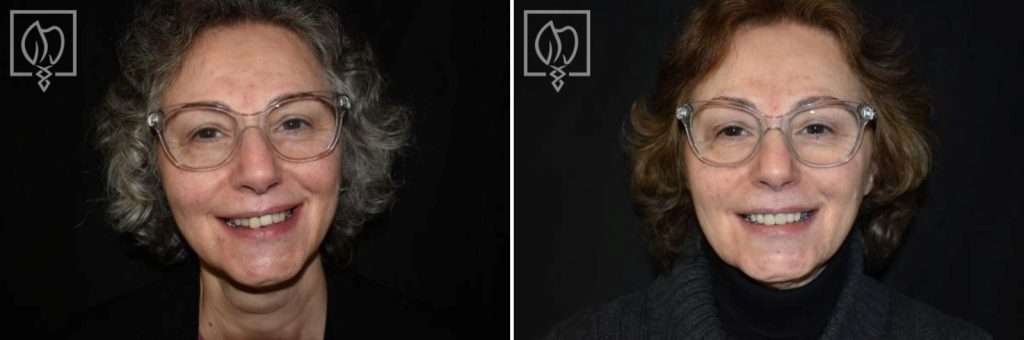
Temporary Crowns Restore Patient's Smile in Just One Day with an Immediate Smile Makeover
A patient from Potomac, Maryland, came to Elite Prosthetic Dentistry with the chief complaint of pain from a failing dental implant and its significant impact on her appearance.
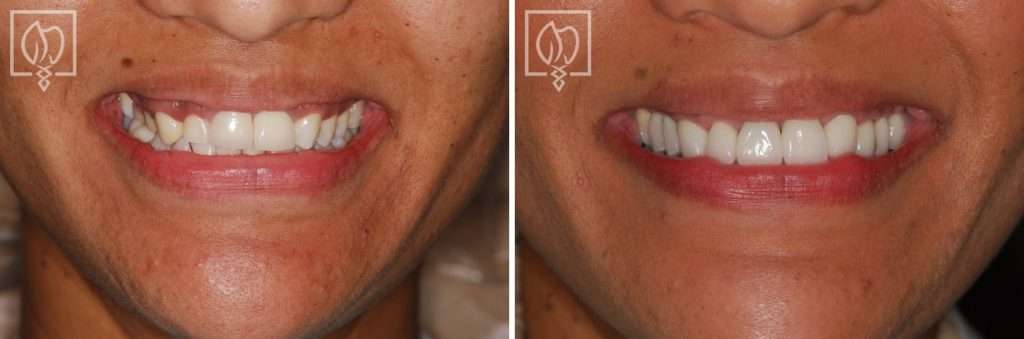
Multi-Faceted Treatment for Patient Unhappy With Her Artificial-Looking Crowns, Teeth and Gums
Many patients come to Elite Prosthetic Dentistry unhappy with the appearance of their smile. However, this particular patient presented with multiple interconnected problems that together created a smile she found deeply unsatisfying.
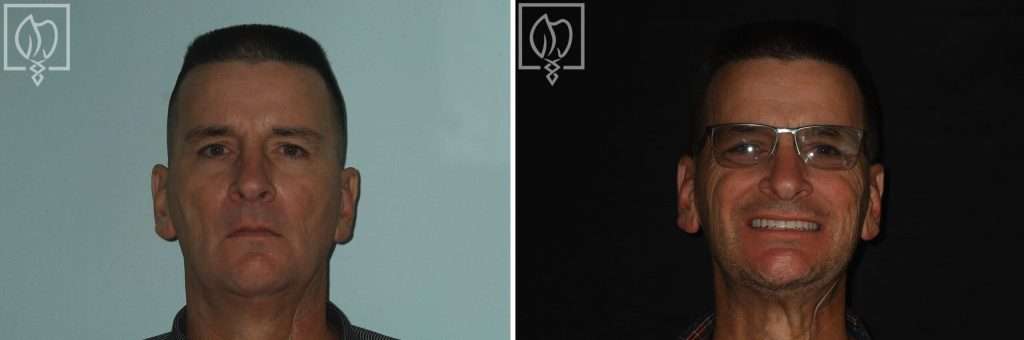
Treating Kevin’s Collapsed Bite with a Complete Smile Makeover with New Dentures
Dentures are sometimes not created to the ideal aesthetic and functional scheme. When improperly fabricated, dentures can make an individual appear almost a generation older than their actual age. They can have a poor fit that feels loose and unstable when eating or speaking, and they can actually accelerate bone loss over time.
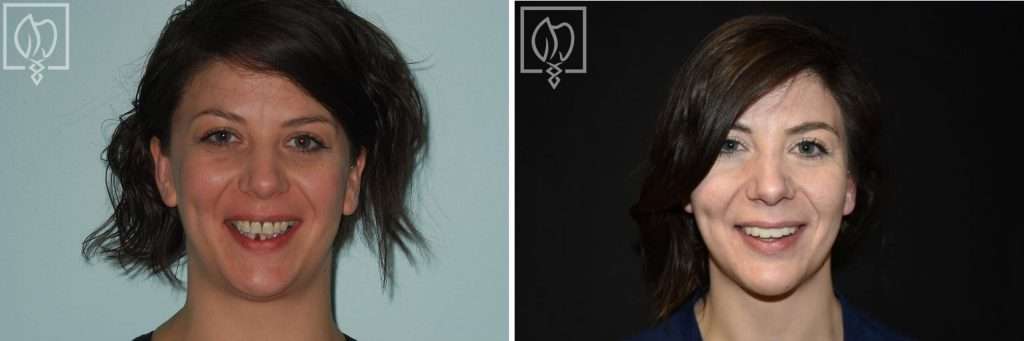
Salvaging Ms. N’s Severely Broken-Down Upper and Lower Teeth from Gum and Bone Disease
Many people in the U.S. suffer from extensive periodontal disease characterized by significant bone loss and shrinkage of the gum tissue. This condition can begin at a very young age and worsen quickly due to hereditary factors and lack of early diagnosis by their dentist.
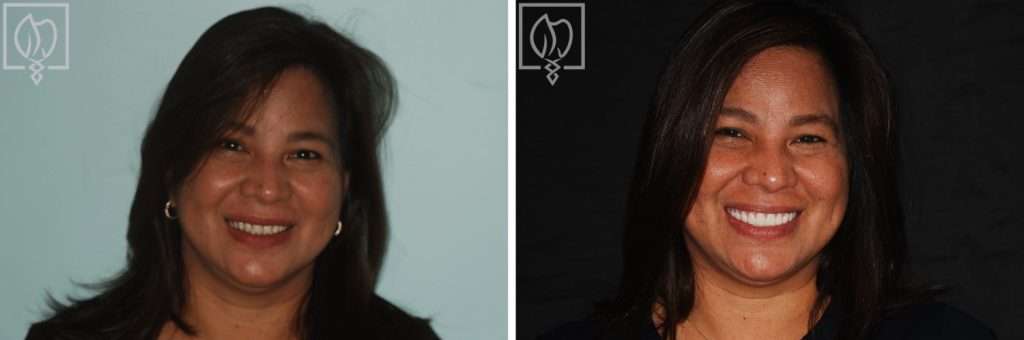
Rejuvenating Maria’s Severely Worn Down Implant Overdentures
Many times, per year, patients come to us frustrated because their implant prosthesis is so severely worn down that they are very self-conscious and cover up their smile. They look and feel much older than their age as a result of the extensive wear of their appliance(s).
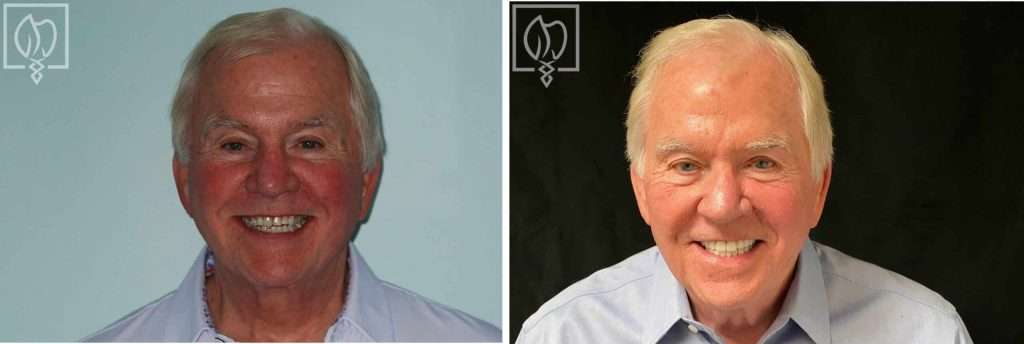
A Smile Transformation in Just Four Months: A Patient’s Dental Crown Restoration for a TV Series
A patient with dental crowns that were in poor shape was going to appear on a streaming video series on a major TV network that was scheduled to begin filming soon. Our patient, John, an author about to embark on a book tour, was anxious as his teeth were not up to his standards to appear on television.
Related Articles
Deepen your knowledge with additional insights on this topic.
The Patient's Guide to Implant, Cosmetic and Restorative Dentistry
Comprehensive guide to implant, cosmetic & restorative dentistry: quality care, selecting a prosthodontist, dental labs, insurance & smile makeovers.
 Choosing a Prosthodontist
 What is a Prosthodontist?
A prosthodontist is a dental specialist with advanced training in crowns, implants, dentures, and complex restorations. Washington, DC specialist.
4 Ways You Can Benefit from Our In-House Dental Lab
4 Ways You Can Benefit from Our In-House Dental Lab. When it comes to finding a new prosthodontist, you’ve got a checklist of criteria.
 Choosing a Prosthodontist
 What is the Difference Between a Dentist and a Prosthodontist?
Prosthodontists complete three additional years of specialty training beyond dental school. Learn when you need a specialist versus a general dentist.
Don't Wait 'Til It's Too Late: Complete Your Virtual Dental Consultation
Schedule a virtual dental consultation from the comfort of your home. Early evaluation prevents costly problems. Washington, DC prosthodontist.
 Choosing a Prosthodontist
 Emergency Dentistry: The Benefits of an In-House Laboratory
There are few things as shocking and overwhelming as a dental emergency. Your mouth is in pain. Elite Prosthetic Dentistry in Washington, DC.
Our Services in Palisades
Beyond dental-second-opinion, Palisades patients rely on Dr. Gerald Marlin for a full range of advanced dental care.
More services available in Palisades:
dental-second-opinion Near Palisades
Dr. Gerald Marlin also provides dental-second-opinion services for patients in these neighboring communities.
Getting Here from Palisades
Elite Prosthetic Dentistry is conveniently located near Palisades, DC.
MacArthur Boulevard directly to our practice location in Washington, DC.
Address:
4400 Jenifer Street NW, Suite 220
Washington, DC 20015
Phone: (202) 244-2101
Schedule ConsultationSchedule Your Consultation from Palisades
Palisades residents trust Dr. Gerald Marlin for precision dental care. With 3,900+ implants placed and 40+ years of experience, your smile is in expert hands.