
Denture Options Compared: Immediate, Conventional, and Implant-Supported
Comparing traditional dentures and implant-supported overdentures for tooth replacement. Cost, stability, candidacy, and daily life implications explained.
Tooth replacement through dentures involves choosing between two fundamentally different approaches: traditional dentures resting on gum tissue, or implant-supported overdentures anchored to dental implants. Your choice determines daily function, lifestyle implications, and long-term commitment.
Traditional Dentures: Foundation and Function
Traditional dentures rest entirely on your gum tissue and bone ridge. The denture base covers the roof of your mouth and extends to cover most of your palate, distributing bite forces across the tissue-supported foundation. Your mouth’s muscle attachments and tongue movements help stabilize the denture, though complete stability is limited compared to implant-supported options.
When you bite down, you’re distributing force across gum tissue rather than bone anchors. This tissue-supported approach works adequately for many patients, especially those with good bone volume and stable ridge anatomy. Over time, however, bone resorbs beneath traditional dentures, causing gradual loosening requiring periodic adjustments and relines.
Daily eating and speaking function within traditional dentures depends on your adaptation and technique. Most patients eat normally after several weeks of adjustment, though some modify diet preferences to avoid very hard or sticky foods. Speech normalizes quickly as your mouth adapts to the denture presence.
Implant-Supported Overdentures: Stability and Daily Life
Implant-supported overdentures attach to dental implants surgically placed in your jawbone. Typically, 2 to 4 implants per arch provide anchors to which the denture clips or snaps. The implants bear the denture weight and maintain stability, fundamentally changing how the restoration functions.
When you bite down, forces distribute through the implant bodies to the bone, not through soft tissue. This biomechanical difference creates dramatic functional improvements. Your denture remains stable during eating, speaking, and laughing without shifting or dropping. Many patients report that implant-supported dentures function nearly like natural teeth.
Eating with implant-supported dentures feels more normal than traditional dentures. You’ll chew with greater confidence and can eat virtually any food without modification. Speaking remains natural without denture clicking or movement. Social situations are less self-conscious because the denture remains firmly in place.
Cost and Financial Implications
Traditional dentures cost substantially less than implant-supported options. A complete upper traditional denture typically costs 2000 to 4000 dollars depending on materials and customization. A complete lower costs similarly, with total treatment for both arches ranging from 4000 to 8000 dollars. This upfront cost is significantly lower than implant-supported approaches.
Implant-supported dentures involve surgical implant placement (2000 to 3000 dollars per implant) plus the denture (3000 to 5000 dollars). A case using four implants per arch involves 8000 to 12000 dollars in implant costs plus denture fabrication, totaling 15000 to 25000 dollars for both arches. The cost differential is substantial.
However, long-term value differs. Traditional dentures require relines every 3 to 5 years (500 to 1000 dollars per reline) and eventual complete replacement every 7 to 10 years. Implant-supported dentures adjust less frequently, typically requiring single component adjustments rather than complete relines. Over 20 years, total cost including replacements and adjustments may be similar between approaches.
Bone Loss and Implant Candidacy
Significant bone loss from previous tooth loss may limit implant-supported candidacy. Implants require adequate bone height and width for secure placement. Patients with severe bone loss may need bone grafting before implants, adding 3 to 6 months to timeline and 1000 to 3000 dollars to cost.
Dr. Marlin evaluates bone through imaging and clinical examination. Some patients with marginal bone choose traditional dentures without grafting. Others invest in bone grafting to enable implant support, valuing improved stability and function. Your specific bone anatomy guides feasibility and candidacy.
Adaptation and Adjustment Timeline
Both traditional and implant-supported dentures require adaptation. Traditional dentures typically require more adjustments during initial healing as tissues remodel beneath the denture. Frequent adjustment appointments during weeks one and two are common.
Implant-supported dentures require fewer adjustments during healing because implant anchoring doesn’t change as tissues heal. However, initial osseointegration (bone growth around implants) requires 3 to 6 months before the denture can be delivered, extending overall timeline.
Most patients adapt to either approach within 3 to 4 weeks of delivery.
Maintenance and Long-Term Care
Both require excellent home care including daily cleaning and denture storage. Both require regular professional appointments for assessment and adjustment.
Traditional denture maintenance focuses on monitoring bone changes and reline scheduling. Implant-supported denture maintenance focuses on attachment component integrity and implant stability. Both require professional care every 6 to 12 months.
Choosing Your Approach
Your choice depends on bone anatomy, candidacy for implants, budget, and functional priorities. Patients prioritizing maximum stability and normal function often choose implant-supported dentures despite higher cost. Patients prioritizing lower upfront cost choose traditional dentures while accepting some functional compromise.
Dr. Marlin explains your specific bone anatomy, implant candidacy, and what each approach would accomplish for your situation. Your informed decision determines your treatment path.
Getting Here from Palisades
From Palisades, the drive to our office is 8 to 10 minutes via MacArthur Boulevard NW eastbound. This convenient proximity makes initial consultation, implant surgery (if needed), and adjustment appointments manageable around your schedule.
Schedule your comprehensive consultation to discuss your bone anatomy and which denture approach best matches your situation and goals. Call (202) 244-2101 or visit 4400 Jenifer Street NW, Suite 220, Washington, DC 20015.
Frequently Asked Questions
What's the biggest functional difference between traditional dentures and implant-supported dentures?
Traditional dentures rest entirely on gum tissue and may shift during eating or speaking. Implant-supported dentures attach to dental implants anchored in bone, remaining stable during all activities. Many patients report that implant-supported dentures feel more like natural teeth.
How much does implant-supported differ in cost from traditional dentures?
Traditional dentures cost significantly less upfront. Implant-supported dentures involve 2 to 6 implants plus the denture, increasing total cost substantially. However, implant-supported dentures often last longer and require fewer adjustments, potentially offering better long-term value.
Can I qualify for implant-supported dentures if I have bone loss?
Significant bone loss may require bone grafting before implant placement. Dr. Marlin evaluates your bone through imaging and determines candidacy. Some patients with minimal bone choose traditional dentures; others invest in bone grafting to enable implant-supported restorations.
Do implant-supported dentures require more maintenance than traditional dentures?
Both require daily cleaning and home care. Implant-supported dentures require careful cleaning around implant attachment points. Both require regular professional appointments. The maintenance difference is minimal; the functional difference is substantial.
What should I expect for daily life with implant-supported dentures versus traditional dentures?
With implant-supported dentures, you'll eat more normally, speak with confidence, and won't experience shifting during conversation. With traditional dentures, you'll manage most eating and speaking comfortably but may adapt your diet and speech patterns slightly. Both allow normal social function and appearance.
Related Patient Success Stories
Explore similar patient success stories demonstrating our expertise in advanced prosthetic dentistry.
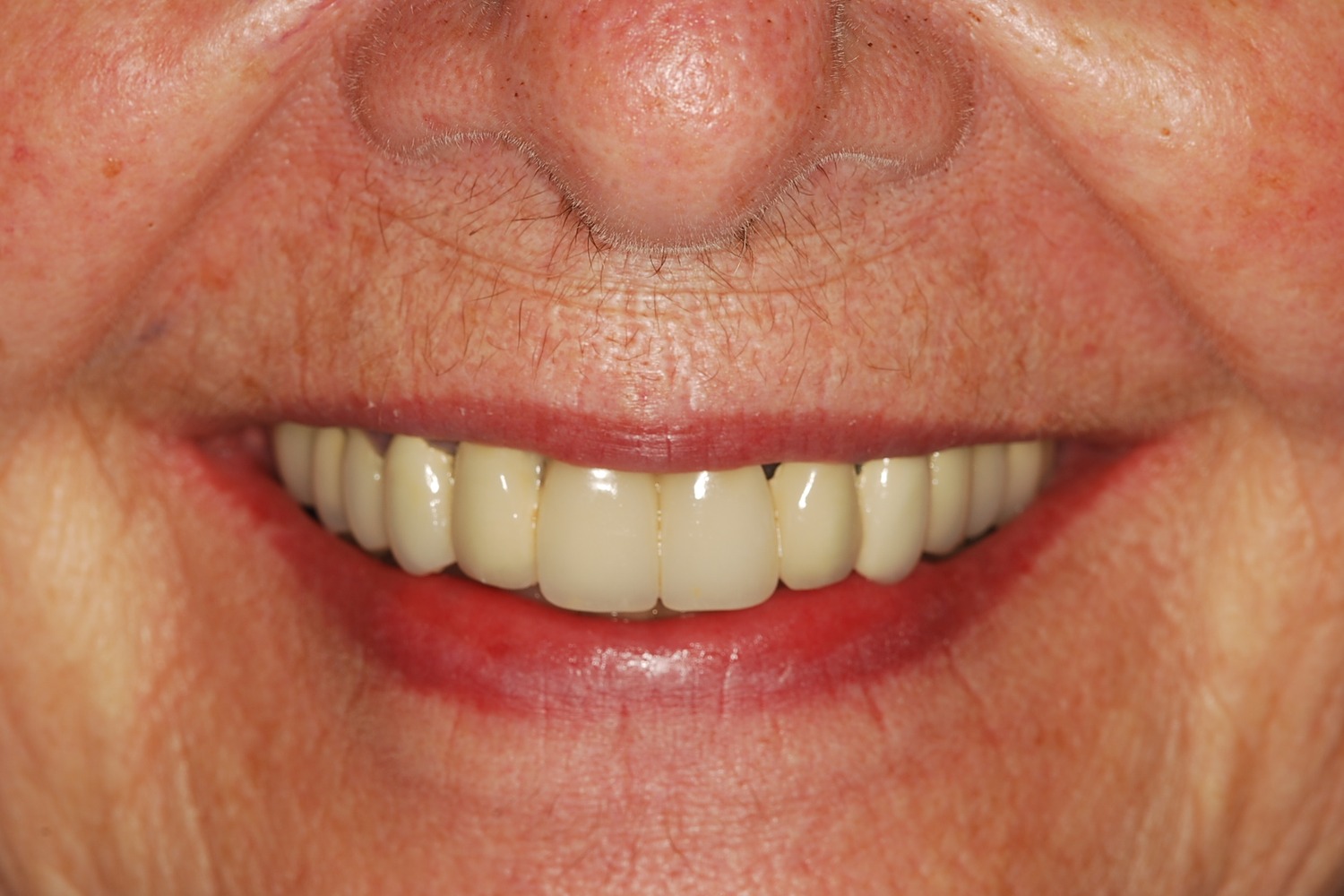 Before
 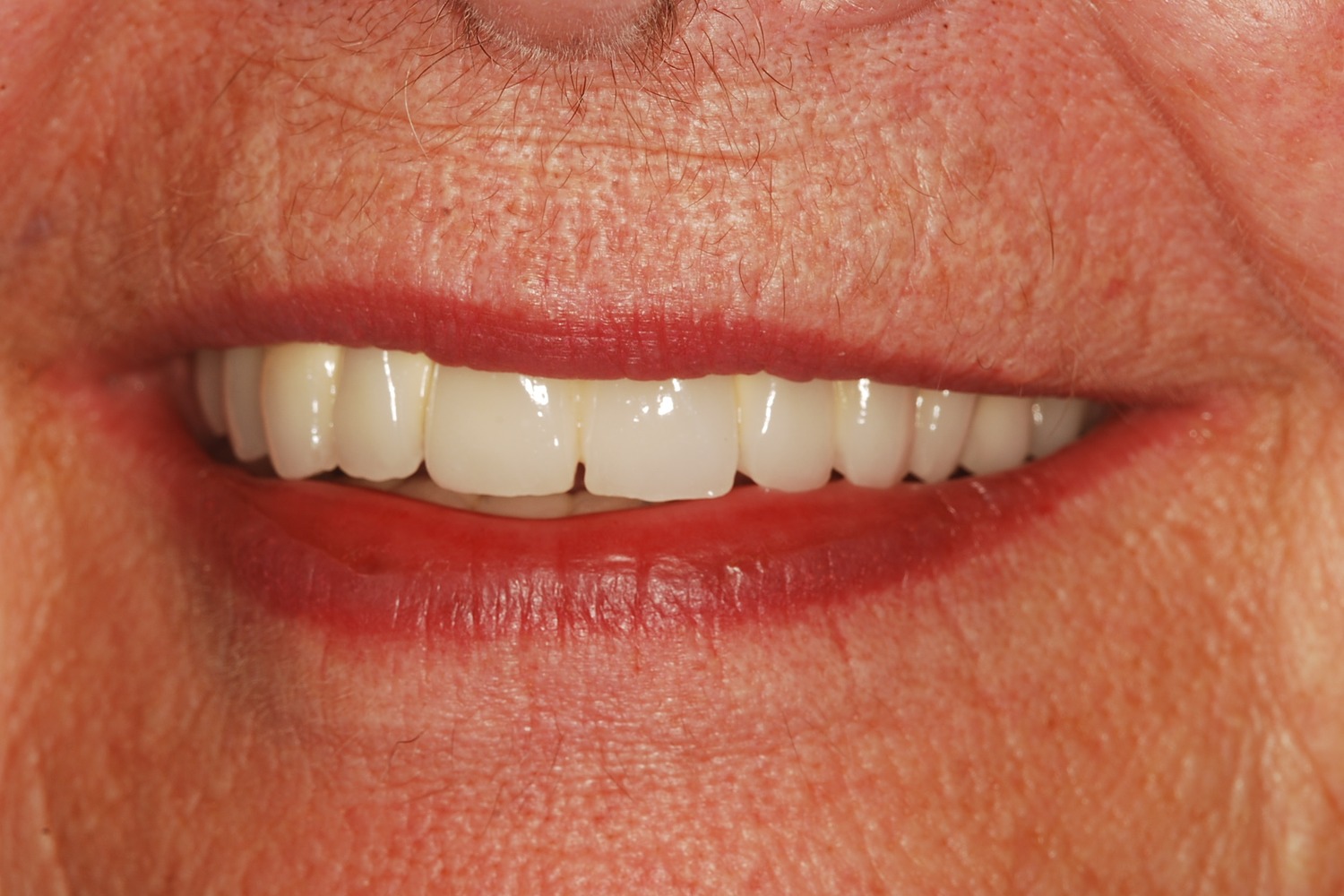 After
After How a Loose Upper Bridge and Aging Crowns Were Rebuilt with Staged Implant and Crown Reconstruction
The patient was referred by her general dentist after years of aging dentistry no longer holding up. A loose upper bridge and crowns over twenty years old combined with the effects of advanced periodo
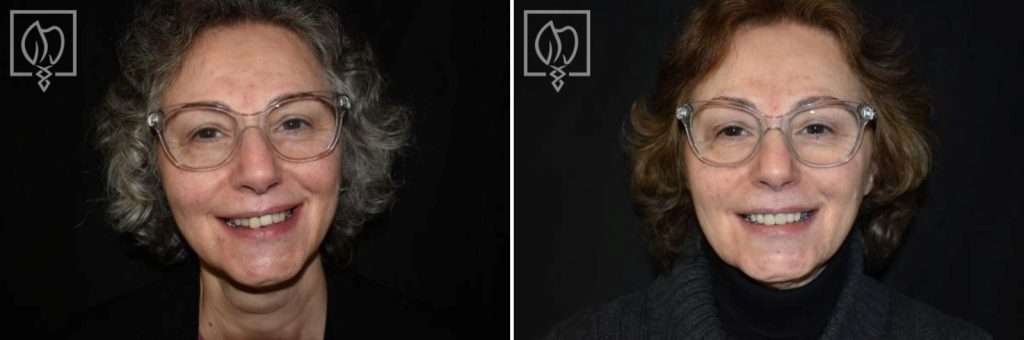
Temporary Crowns Restore Patient's Smile in Just One Day with an Immediate Smile Makeover
A patient from Potomac, Maryland, came to Elite Prosthetic Dentistry with the chief complaint of pain from a failing dental implant and its significant impact on her appearance.
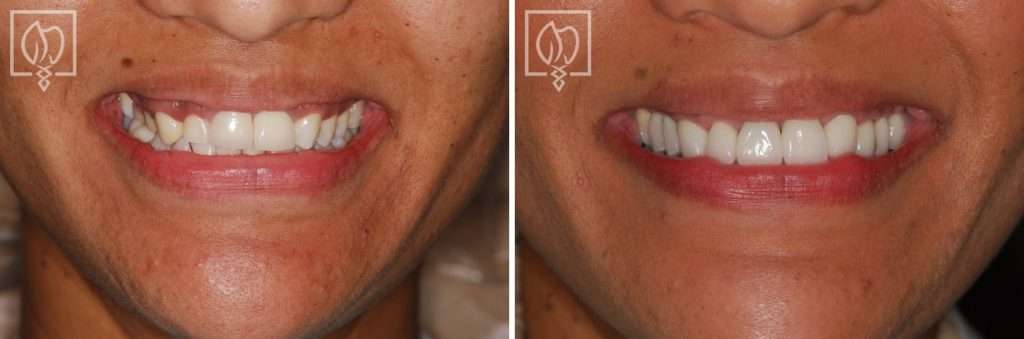
Multi-Faceted Treatment for Patient Unhappy With Her Artificial-Looking Crowns, Teeth and Gums
Many patients come to Elite Prosthetic Dentistry unhappy with the appearance of their smile. However, this particular patient presented with multiple interconnected problems that together created a smile she found deeply unsatisfying.
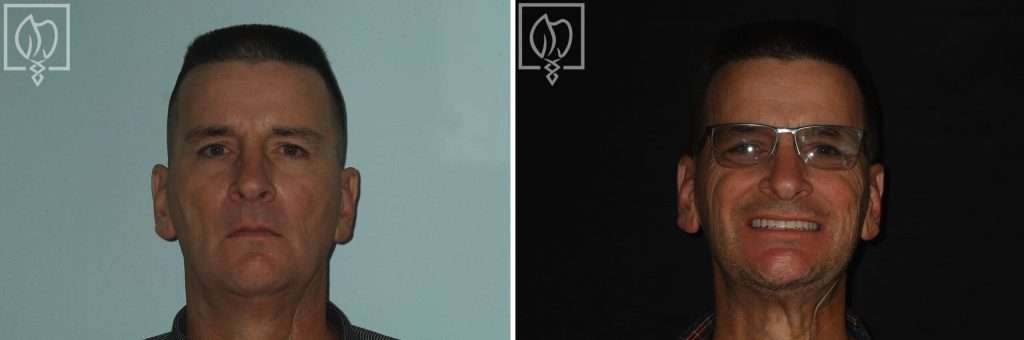
Treating Kevin's Collapsed Bite with a Complete Smile Makeover with New Dentures
Dentures are sometimes not created to the ideal aesthetic and functional scheme. When improperly fabricated, dentures can make an individual appear almost a generation older than their actual age. They can have a poor fit that feels loose and unstable when eating or speaking, and they can actually accelerate bone loss over time.
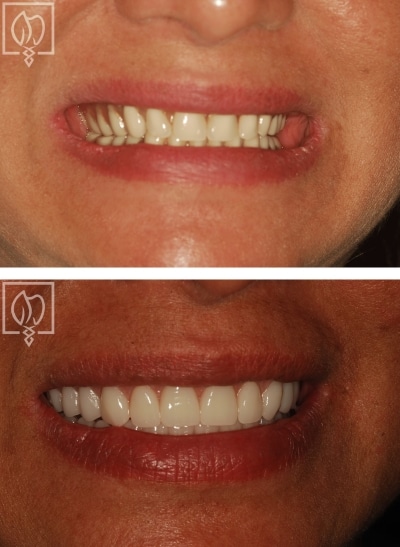
Rejuvenating Maria's Severely Worn Down Implant Overdentures
Many times, per year, patients come to us frustrated because their implant prosthesis is so severely worn down that they are very self-conscious and cover up their smile. They look and feel much older than their age as a result of the extensive wear of their appliance(s).
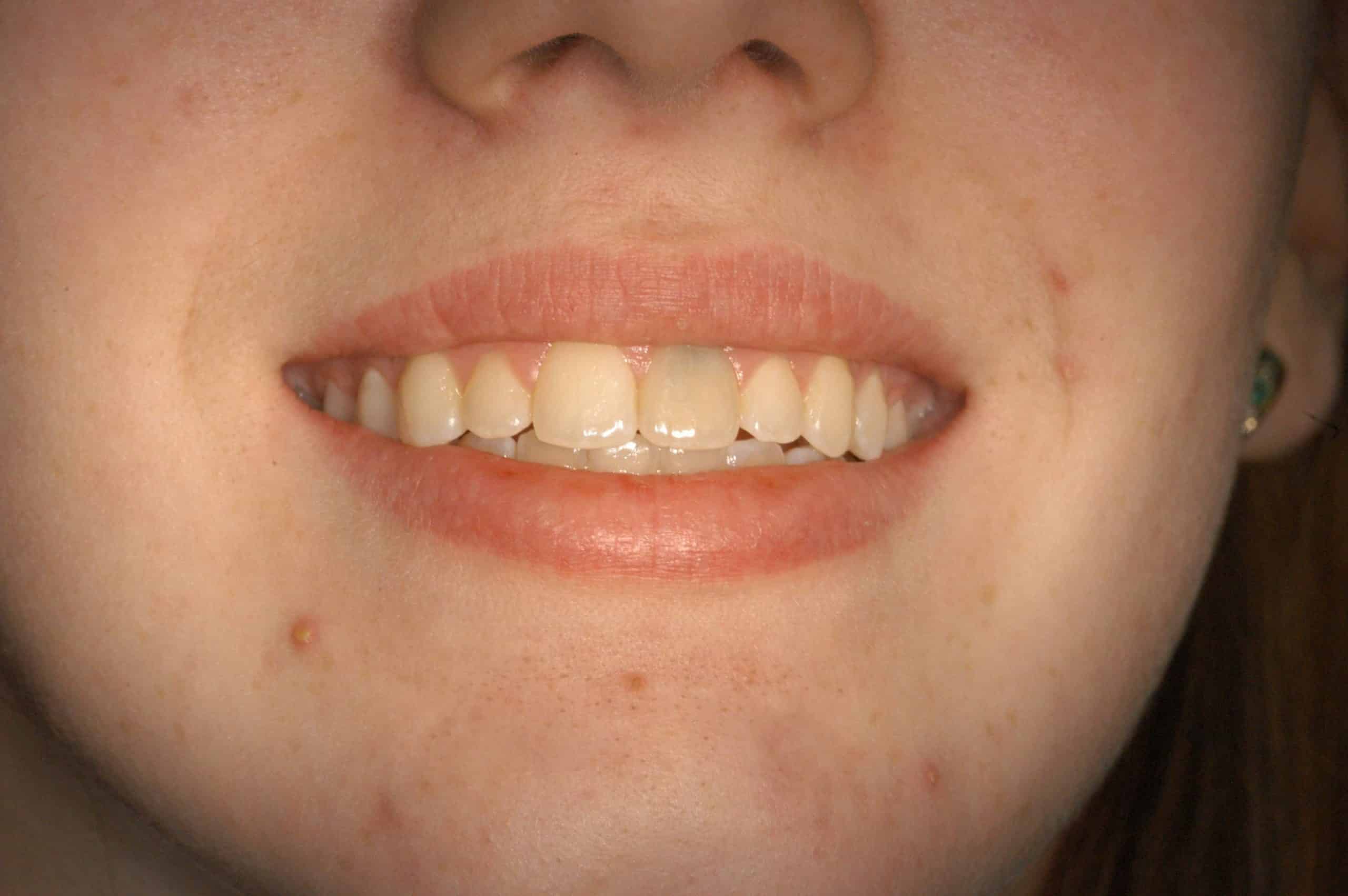
Replacing a Discolored Front Tooth with a Precision Placed Implant
Some of the most challenging restorations occur when fabricating an anterior crown to fit on an implant. Not only does one have the difficulty of matching the single front tooth to the other ones in the high visibility zone, but the dentist must also ensure the position of the underlying implant is precise through accurate preplanning and placement.
Related Articles
Deepen your knowledge with additional insights on this topic.
Our Services in Palisades
Beyond Dentures, Palisades patients rely on Dr. Marlin for a full range of advanced dental care.
More services available in Palisades:
Dentures Near Palisades
Dr. Marlin also provides dentures services for patients in these neighboring communities.
Getting Here from Palisades
Elite Prosthetic Dentistry is conveniently located near Palisades, DC.
From Palisades, drive east on MacArthur Boulevard NW through Foxhall toward Friendship Heights. The practice is at 4400 Jenifer Street NW, Suite 220, approximately 8 to 10 minutes from Palisades' main residential areas.
Address:
4400 Jenifer Street NW, Suite 220
Washington, DC 20015
Phone: (202) 244-2101
Request a ConsultationRequest a Specialist Consultation from Palisades
Palisades residents come to Dr. Marlin for specialist prosthodontic care. With 3,900+ implants placed and restored over 40+ years, evaluation, planning, and execution are handled with the depth complex cases require.