
Dental Second Opinion in McLean, VA
Unhappy with completed dental work? Get a prosthodontist's evaluation of your results and options in McLean, Virginia.
McLean residents who’ve completed dental treatment but aren’t satisfied with results face a difficult situation. You’ve invested time and money. You expected improvement. Instead, you’re dealing with complications, cosmetic disappointment, or functional problems.
A second opinion helps clarify what’s happening. Sometimes problems are adjustments that resolve with time. Sometimes they’re legitimate problems that warrant correction. A prosthodontist’s evaluation provides objective assessment of whether completed work was done properly and what options exist for improvement.
Common Reasons for Post-Treatment Second Opinions
Patients seek post-treatment second opinions for varied reasons. Cosmetic results don’t match expectations creating fake-looking teeth or unnatural looking crowns. Crowns or restorations look gray, translucent, or don’t blend with natural teeth. Work was too white or too bright. Restorations don’t look natural or appear fake.
Others experience functional problems. Crowns feel high or uncomfortable when biting. Restorations chip or break repeatedly. Areas under loose dental crowns continue hurting. Bite feels wrong after treatment. Speech or eating is affected.
Some patients experience longevity problems. Crowns are failing after a few years when they should last much longer. Temporary crowns have become permanent. Bonded work is separating. Underlying decay is developing around restorations from veneer fell off or failing veneers situations.
All these scenarios warrant professional evaluation to determine what’s happening and what options exist for repairing failing implants or addressing multiple restorations failing.
Evaluating Cosmetic Disappointment
When cosmetic treatment disappoints you, it’s worth understanding why. Sometimes cosmetic work looks fine but differs from what you visualized. Sometimes cosmetic work has legitimate problems that warrant revision.
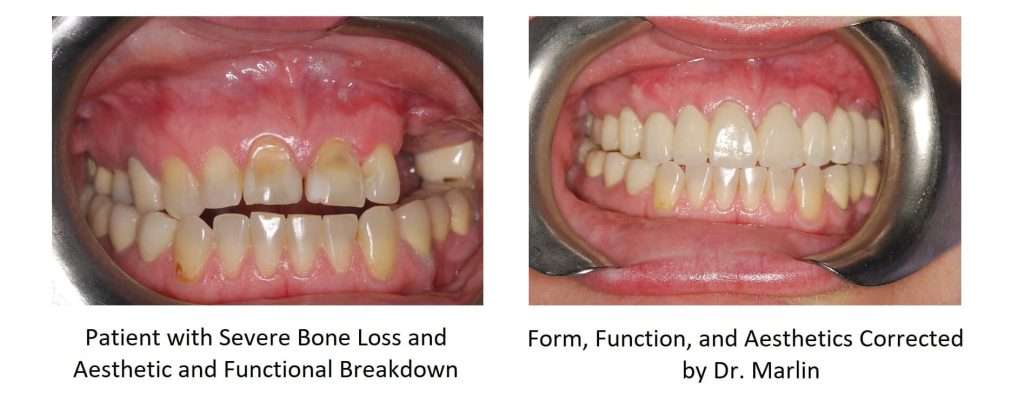
Dr. Marlin’s evaluation assesses whether cosmetic results match quality standards, whether they can be improved, and what alternatives exist. If current restorations are salvageable through modification, that’s discussed. If replacement is necessary, that’s discussed. If different approach would have been superior, that becomes clear.
This objective evaluation helps you understand whether your dissatisfaction is valid or whether adjusted expectations are needed.
Identifying Functional Problems in Restorations
When crowns or restorations feel wrong functionally, objective evaluation is necessary. Does the restoration genuinely sit too high? Is the contact with adjacent teeth appropriate? Is the restoration contoured correctly? Is bite alignment affected by the restoration?
A second opinion provider uses tools like bite registration, radiographs, and clinical examination to objectively assess whether the restoration is causing problems. Sometimes problems are real. Sometimes other factors are at play.
Examining Premature Failure of Restorations
If crowns or restorations are failing prematurely, understanding why is important. Was the restoration inadequately retained and cementing failed? Was the restoration damaged by trauma? Is bite stress causing failure? Is decay developing under the restoration?
A prosthodontist’s evaluation identifies the cause of failure. Understanding the cause clarifies whether the restoration was done incorrectly or whether environmental factors caused failure.
Assessing Quality of Restoration Work
A prosthodontist evaluates completed restorations against quality standards. Is the crown margin positioned appropriately at the gumline? Is the internal contour correct, allowing good gum contact? Is the restoration contoured and textured to match adjacent teeth? Is the color and shade accurate?
This detailed assessment determines whether completed work meets quality standards. Sometimes work is excellent despite your concerns. Sometimes problems are identified objectively.
Bite Problems After Extensive Treatment
When extensive treatment changes your bite, some adjustment is normal. Your brain is learning new bite position, new tooth contact, new muscle patterns. Adjustment typically takes days or weeks.
However, persistent bite problems lasting weeks or months suggest something isn’t right. A second opinion evaluates whether treatment altered your bite excessively, whether multiple teeth need adjustment to achieve stable bite, or whether comprehensive treatment modification is necessary.
Understanding Restoration Longevity Expectations
Different restorations have different expected longevities. Well-done crowns last 10+ years. Bonded restorations last 5 to 10 years. Implant crowns last many years if implants are stable. Veneers last 10+ years with proper care.
If your restorations are failing much sooner than expected, that’s concerning. A second opinion identifies whether failure is due to how restorations were done or whether other factors are involved.
Addressing Esthetic Concerns with Smile Design
When cosmetic treatment doesn’t achieve desired results, it’s sometimes because smile design wasn’t addressed comprehensively. Tooth color matters, but so do tooth shape, alignment, gum display, and how teeth relate to smile arc.
A prosthodontist’s evaluation assesses whether cosmetic treatment addressed smile design comprehensively. Was alignment evaluated? Was shade matching meticulous? Was gum display considered? Would different approach have improved results?
The Role of Digital Planning in Cosmetic Evaluation
Modern cosmetic dentistry often involves digital planning where patients can preview cosmetic changes before treatment. If completed cosmetic work doesn’t match your digital preview, that’s worth investigating.
Dr. Marlin uses digital evaluation to assess whether completed work matches intended results or whether discrepancies exist. Understanding discrepancies helps determine whether treatment can be modified to better match desired results.
Material Selection and Longevity
Restorations are made from different materials with different properties and longevity. Crowns might be porcelain-fused-to-metal, zirconia, all-ceramic, or composite resin. Each has different esthetic properties, different longevity, different cost.
A second opinion evaluates whether material selection was appropriate for your situation. Sometimes different material would have been superior. Sometimes material selection was optimal but installation was problematic.
Addressing Pain or Sensitivity After Treatment
Some post-treatment sensitivity is normal and resolves within days or weeks. However, persistent pain or excessive sensitivity weeks after treatment suggests problems. Pain might indicate endodontic issues under the crown, might indicate the crown is too high, or might indicate other problems.
A prosthodontist’s evaluation identifies what’s causing pain and what options exist for resolution. Sometimes conservative management works. Sometimes restoration needs adjustment or replacement.
The Importance of Objective Assessment
Your feelings about completed work matter. If you’re unhappy, that’s important information. However, objective assessment determines whether unhappiness is due to legitimate problems or whether adjusted expectations are needed.
A second opinion provides this objective assessment. Dr. Marlin examines completed work clinically, reviews radiographs, and provides professional perspective on quality and functionality. This objective assessment, combined with your subjective concerns, paints complete picture of your situation.
Options for Correcting Problematic Restorations
If problems are identified in completed work, options exist. Some problems can be corrected through restoration modification. Some require partial replacement. Some require complete replacement. Some require addressing underlying problems before restorations can be revised.
A second opinion outlines specifically what options exist and what each option involves. You understand what correction would entail before committing to it.
Transition to Better Long-Term Solutions
Sometimes completed work is problematic enough that different approach would be superior. A second opinion evaluates whether current restoration approach should be maintained and corrected, or whether different approach would be better long-term.
For example, if a failing bridge would be superior as dental implants, that transition might be discussed with bone grafting or precision implant placement planning. If cosmetic dentistry should have addressed multiple teeth rather than a few, broader revision through smile makeover might be recommended to address failed smile makeover results.
Addressing Complications Directly
If complications have developed after treatment, they warrant direct attention. Infection under a crown, extensive decay around margins, structural failure of restoration, or bite problems all deserve professional evaluation and correction.
A second opinion identifies what complications have developed and what treatment is necessary to resolve them. Don’t ignore developing complications. Address them proactively.
Moving Forward With Confidence
After receiving a second opinion, you understand objectively what happened with your previous treatment. You understand what problems exist, if any. You understand what options exist for moving forward.
This clarity allows you to make informed decisions about whether correction treatment is necessary, what that treatment should involve, and what provider you want to trust with that correction.
McLean Residents Deserve Excellent Results
McLean’s professional population invests in quality care. If that investment hasn’t delivered results you expected, second opinion evaluation is justified. You deserve to understand what happened and what options exist.
Dr. Marlin’s evaluation provides this understanding and helps you move forward with confidence.
Scheduling Your Post-Treatment Second Opinion
To evaluate completed dental work that concerns you, schedule a consultation with Dr. Marlin. Bring copies of your records from your previous dentist if available, including radiographs and treatment notes.
During consultation, Dr. Marlin examines your completed work thoroughly, discusses your concerns, and provides objective professional assessment. You’ll understand what problems exist, if any, and what options exist for addressing them.
Call (202) 244-2101 or request an appointment online. Our office is located at 4400 Jenifer Street NW, Suite 220, Washington, DC 20015, approximately 15 minutes from McLean via Route 66.
McLean Services
Explore McLean-specific second opinion services like prosthodontist in McLean, dental implants in McLean, cosmetic dentistry in McLean, and full mouth reconstruction in McLean. Additional services include crown problems in McLean, veneer problems in McLean, cosmetic dentistry revision in McLean, and sedation dentistry in McLean.
Related Resources for Treatment Concerns
Explore unhappy with dental work for comprehensive information on addressing treatment complications. Review crown and bridge problems if your concerns involve crowns or bridges. Check loose dental crown or pain under dental crown issues.
Investigate failing veneers if cosmetic concerns involve veneer work. Explore botched cosmetic dentistry if cosmetic results are problematic. Review fake-looking teeth if cosmetic results appear unnatural.
Learn about multiple restorations failing if several restorations are problematic. Investigate full mouth reconstruction failure if extensive treatment hasn’t met expectations. Check failed All-on-4 situations or repairing failing implants.
Learn about Dr. Marlin’s expertise in complex cases. Review patient success stories showing optimal treatment outcomes. Explore our in-house laboratory capabilities for restoration quality.
Dr. Gerald Marlin evaluates completed dental work with fresh perspective, identifying problems and clarifying options for moving forward.
Frequently Asked Questions
What problems should prompt me to seek a second opinion about completed dental work?
Seek a second opinion if treatment isn't functioning as expected, if you experience discomfort or pain that your provider says is normal, if cosmetic results disappoint you, if crowns or restorations feel wrong when you bite, if restorations are failing prematurely, if you're experiencing problems your dentist can't resolve, or if you simply don't feel confident in completed work. Many patients wait months or years before seeking second opinion, hoping problems resolve. Don't wait. Evaluation sooner helps identify solutions faster.
How can I tell if dental work was done incorrectly versus if I just need to adjust to it?
Some adjustment is normal after extensive treatment. Your bite feels different, teeth feel slightly sensitive, your speech changes momentarily. These issues typically resolve in days or weeks. However, persistent problems lasting weeks or months suggest something isn't right. If crowns or restorations feel high when you bite, if they're uncomfortable, if they're chipping or breaking, if they look unnatural, if underlying teeth hurt, or if you feel something is fundamentally wrong, these aren't normal adjustment issues. Seek evaluation to determine whether work was done correctly.
Can I get my money back if completed work is found to be substandard?
That depends on your specific situation and your dentist's policies. Some dentists offer touch-up or correction treatment as part of quality assurance. Others might need to retreat areas. Discussion and negotiation with your provider is necessary. A second opinion helps determine objectively whether completed work has problems worth addressing. Sometimes objective evaluation shows work is adequate despite your concerns. Other times it confirms your concerns. Either way, you have clearer understanding of what's happening.
What options exist if I don't like the cosmetic results of my dental treatment?
Options depend on what you don't like about results. If crowns are too white, too gray, or don't match adjacent teeth, they can be replaced with better shade matching. If crowns are shaped wrong or don't look natural, they can be recontoured or replaced. If veneers have chipped or discolored, they can be repaired or replaced. If your entire smile makeover didn't achieve desired results, comprehensive revision might be necessary. A second opinion evaluates what's wrong with current results and what options exist for improvement.
How often do crowns or major restorations need to be replaced?
Well-done crowns and restorations can last 10, 15, or 20 years with proper care. However, crowns sometimes develop problems much sooner. If your crowns are failing prematurely, that might indicate they weren't done optimally, or they're being stressed beyond what they can handle. A second opinion evaluates whether problems result from how crowns were done or whether environmental factors are causing premature failure.
Related Patient Success Stories
Explore similar patient success stories demonstrating our expertise in advanced prosthetic dentistry.
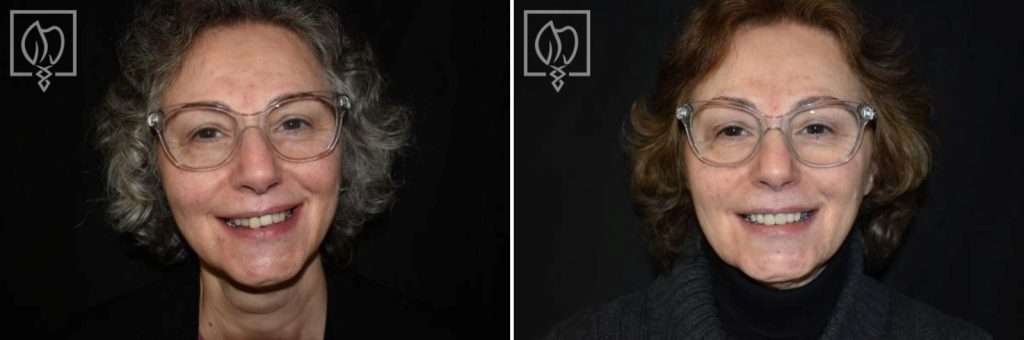
Temporary Crowns Restore Patient's Smile in Just One Day with an Immediate Smile Makeover
A patient from Potomac, Maryland, came to Elite Prosthetic Dentistry with the chief complaint of pain from a failing dental implant and its significant impact on her appearance.
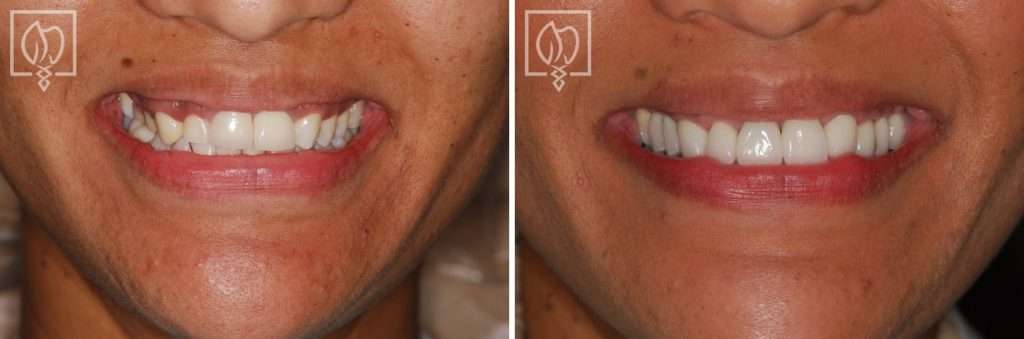
Multi-Faceted Treatment for Patient Unhappy With Her Artificial-Looking Crowns, Teeth and Gums
Many patients come to Elite Prosthetic Dentistry unhappy with the appearance of their smile. However, this particular patient presented with multiple interconnected problems that together created a smile she found deeply unsatisfying.
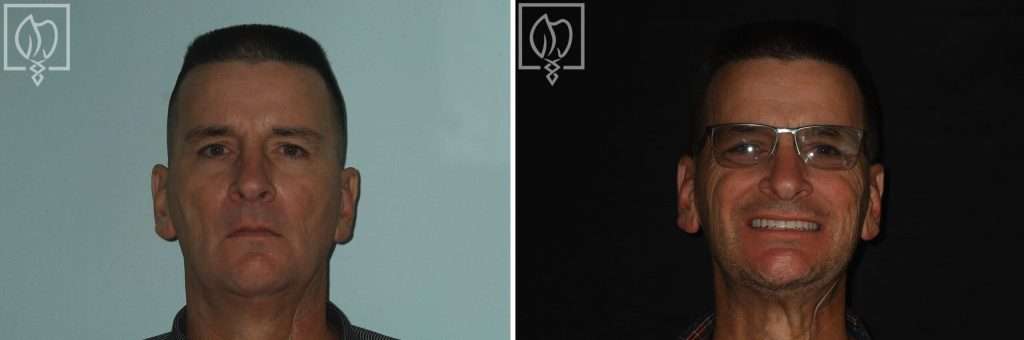
Treating Kevin’s Collapsed Bite with a Complete Smile Makeover with New Dentures
Dentures are sometimes not created to the ideal aesthetic and functional scheme. When improperly fabricated, dentures can make an individual appear almost a generation older than their actual age. They can have a poor fit that feels loose and unstable when eating or speaking, and they can actually accelerate bone loss over time.
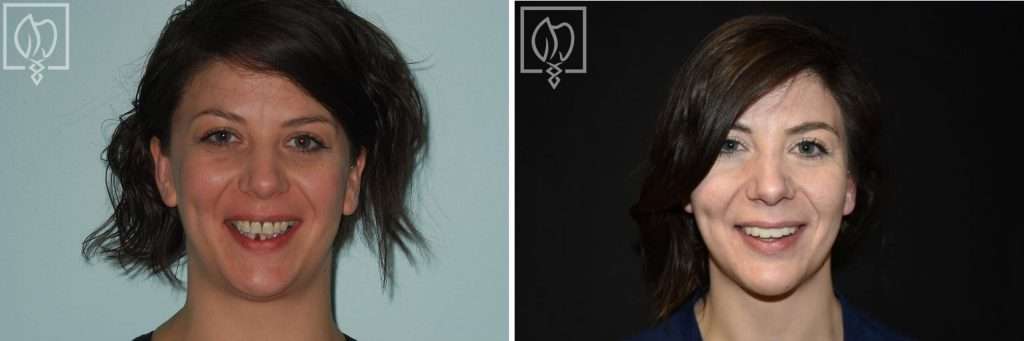
Salvaging Ms. N’s Severely Broken-Down Upper and Lower Teeth from Gum and Bone Disease
Many people in the U.S. suffer from extensive periodontal disease characterized by significant bone loss and shrinkage of the gum tissue. This condition can begin at a very young age and worsen quickly due to hereditary factors and lack of early diagnosis by their dentist.
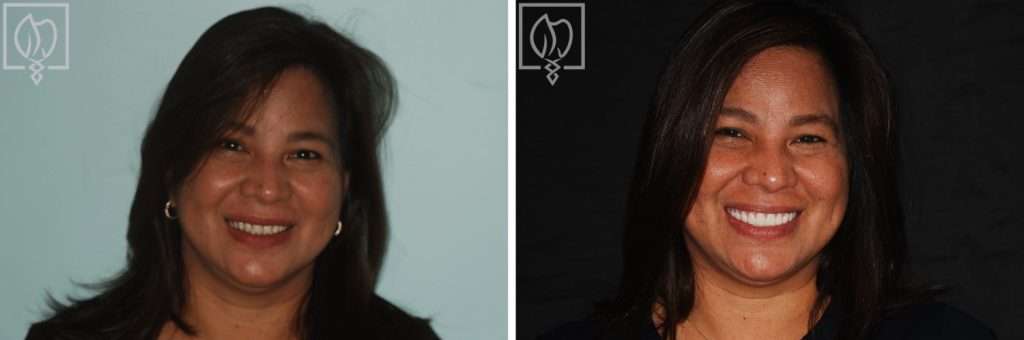
Rejuvenating Maria’s Severely Worn Down Implant Overdentures
Many times, per year, patients come to us frustrated because their implant prosthesis is so severely worn down that they are very self-conscious and cover up their smile. They look and feel much older than their age as a result of the extensive wear of their appliance(s).
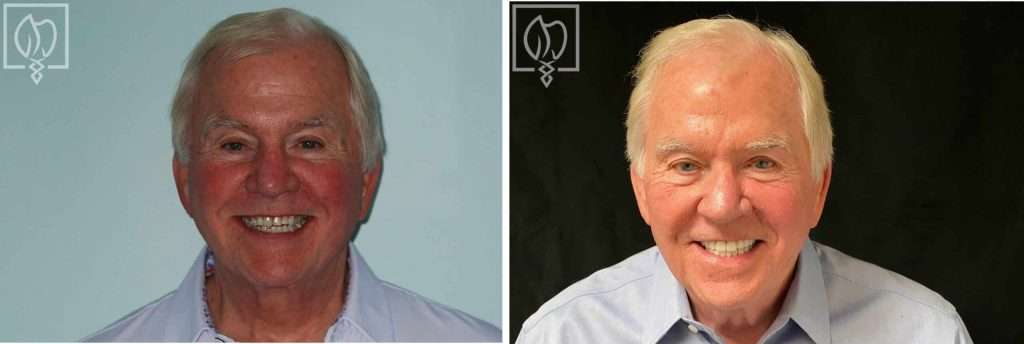
A Smile Transformation in Just Four Months: A Patient’s Dental Crown Restoration for a TV Series
A patient with dental crowns that were in poor shape was going to appear on a streaming video series on a major TV network that was scheduled to begin filming soon. Our patient, John, an author about to embark on a book tour, was anxious as his teeth were not up to his standards to appear on television.
Related Articles
Deepen your knowledge with additional insights on this topic.
The Patient's Guide to Implant, Cosmetic and Restorative Dentistry
Comprehensive guide to implant, cosmetic & restorative dentistry: quality care, selecting a prosthodontist, dental labs, insurance & smile makeovers.
 Choosing a Prosthodontist
 What is a Prosthodontist?
A prosthodontist is a dental specialist with advanced training in crowns, implants, dentures, and complex restorations. Washington, DC specialist.
4 Ways You Can Benefit from Our In-House Dental Lab
4 Ways You Can Benefit from Our In-House Dental Lab. When it comes to finding a new prosthodontist, you’ve got a checklist of criteria.
 Choosing a Prosthodontist
 What is the Difference Between a Dentist and a Prosthodontist?
Prosthodontists complete three additional years of specialty training beyond dental school. Learn when you need a specialist versus a general dentist.
Don't Wait 'Til It's Too Late: Complete Your Virtual Dental Consultation
Schedule a virtual dental consultation from the comfort of your home. Early evaluation prevents costly problems. Washington, DC prosthodontist.
 Choosing a Prosthodontist
 Emergency Dentistry: The Benefits of an In-House Laboratory
There are few things as shocking and overwhelming as a dental emergency. Your mouth is in pain. Elite Prosthetic Dentistry in Washington, DC.
Our Services in McLean
Beyond dental-second-opinion, McLean patients rely on Dr. Gerald Marlin for a full range of advanced dental care.
More services available in McLean:
dental-second-opinion Near McLean
Dr. Gerald Marlin also provides dental-second-opinion services for patients in these neighboring communities.
Getting Here from McLean
Elite Prosthetic Dentistry is conveniently located near McLean, VA.
Route 66 eastbound from McLean to our Washington DC office location.
Address:
4400 Jenifer Street NW, Suite 220
Washington, DC 20015
Phone: (202) 244-2101
Schedule ConsultationSchedule Your Consultation from McLean
McLean residents trust Dr. Gerald Marlin for precision dental care. With 3,900+ implants placed and 40+ years of experience, your smile is in expert hands.