
Full Mouth Reconstruction Revision in Cleveland Park, DC
Cleveland Park reconstruction revision specialist. Dr. Marlin treats failing all-on-4 implants, bite collapse, and complex prosthodontic failures.
Cleveland Park Reconstruction Revision: Expert Care for Complex Cases
Cleveland Park residents accessing our Georgetown office 8 minutes away enjoy convenient access to specialized prosthodontic care for complex reconstruction failures. This neighborhood attracts longtime District residents with complex dental histories spanning decades, sometimes including multiple reconstruction attempts.
The complexity characterizing many Cleveland Park patients stems from their longevity in the area and experience with various dentists over time. Multiple reconstructions, multiple treatment approaches, and varying philosophies create diagnostic challenges but also valuable information. Understanding what was tried previously, why each attempt succeeded or failed, and what each attempt taught us provides critical context for successful revision strategy.
Learning from Multiple Failed Attempts
When patients have experienced multiple reconstruction failures, understanding what each failure teaches is crucial. Success on the third or fourth attempt becomes possible when we learn from prior failures. Failure provides information. Each failure reveals what doesn’t work, constraining options and pushing toward solutions that do.
Honesty is central. We acknowledge previous attempts failed. We assess specifically why they failed. We develop plans addressing those specific failure modes. We explain clearly what’s different about this revision and why we expect success.
We also acknowledge genuinely difficult cases. If previous skilled dentists made thoughtful decisions that still didn’t succeed, this suggests biomechanical complexity or biological factors making your case inherently challenging. Our revision plan accounts for this. We might be more conservative. We might recommend more frequent follow-up. We might design restorations more resilient even if less ideally esthetic.
Biological Factors Affecting Reconstruction
Some reconstruction failures reflect biological factors beyond dentist control. You might have bone biology resisting stable implant integration. You might have healing characteristics leading to faster bone loss. You might have salivary issues affecting healing. You might have systemic factors (osteoporosis, diabetes, medications) affecting dental healing.
These biological factors don’t make you a poor reconstruction candidate. They make you a candidate needing designs accounting for your biological characteristics. An implant in aggressive bone loss needs more conservative positioning than one in stable bone. Reconstruction in someone with rapid wear needs material choices resisting wear better than standards.
Esthetic Failures and Material Durability Trade-offs
Some Cleveland Park residents have experienced esthetic restoration failures. Front teeth fractured, discolored, or shifted. Back teeth fractured under esthetic materials chosen for appearance but insufficient for durability.
Revising esthetic reconstructions requires honesty about esthetics-function relationships. Maximum-esthetics materials might not be optimal for your bite force. Maximum-smile-impact positioning might create biomechanical problems. Color shades might fade faster than expected.
In revision, we sometimes recommend materials or designs slightly less esthetic but substantially more durable. We discuss tradeoffs explicitly. Some patients prefer maximum durability and accept slightly less ideal esthetics. Others prefer esthetics and accept higher maintenance. Your revision strategy reflects your priorities.
Transitioning Between Treatment Modalities
Some Cleveland Park patients have experienced multiple reconstruction modalities: natural tooth restorations, implant restorations, hybrid approaches combining natural teeth and implants, or removable dentures at various points. Each modality offers advantages and disadvantages.
Transitioning requires careful planning. Moving to implants requires adequate sites. Moving to natural teeth requires having teeth to restore. Moving to removable dentures represents substantial esthetic and functional change.
These transitions sometimes succeed when thoroughly assessed. We confirm the new modality addresses why the previous one failed. We don’t recommend transitions without clear evidence they’ll succeed.
Esthetic Restoration Complexity and Anterior Concerns
Esthetic failures specifically affecting anterior teeth (color shifts, position changes, shape modifications) require particular attention. Anterior esthetics affect smile appearance and patient confidence. Posterior esthetic concerns affect bite function more directly.
In revision, we address both anterior esthetic goals and posterior functional requirements. These sometimes involve tradeoffs we discuss explicitly.
Getting Here from Cleveland Park
Connecticut Avenue NW runs directly from Cleveland Park south into Georgetown. Our office is located approximately 8 minutes south on Connecticut Avenue, making navigation straightforward. No complex turns. During peak traffic, allow slightly longer, but this remains one of the more direct routes in the area.
Parking is available at our location. Metro bus service on Connecticut Avenue also provides convenient access.
Historical Records and Assessment
We request historical records from previous treatment when available. X-rays show bone levels and restoration positioning. Charts note problems. Laboratory prescriptions reveal materials used and design parameters.
However, incomplete records don’t prevent effective revision planning. Your current condition tells us much about what happened previously. Wear patterns reveal force distribution. Failure patterns reveal biomechanical problems. Remaining structures reveal what survived and why.
Comprehensive Evaluation for Complex Cases
Our evaluation for complex revisions is thorough. Cone beam imaging assesses bone levels, implant integration, and spatial relationships. Detailed bite records capture your exact jaw position. Models mounted on proper face-bow reveal bite mechanics. Individual restoration examination assesses material, condition, wear patterns, and structural integrity.
We synthesize this into comprehensive assessment: what failed, why it failed, what must change. We document findings clearly.
Treatment Options for Difficult Cases
Previous failures might reveal new treatment options unavailable previously. Newer implant designs might suit your bone anatomy better. Newer materials might address previous failures. Newer design approaches might create more resilient reconstructions.
We might also recommend more conservative designs than original reconstruction. Fewer implants with more natural teeth might be more stable. Slightly smaller bite force distribution might be more sustainable. Sometimes resilience involves being less ambitious.
Cleveland Park Values and Revision Philosophy
Cleveland Park residents typically value quality, stability, and long-term outcomes. Your revision should reflect these values. We develop revision plans prioritizing stability and longevity even if that means slightly less perfect esthetics or more conservative scope.
Dr. Marlin’s approach aligns with these values. He explains thoroughly. He respects your intelligence. He provides honest assessment even when the answer is complex.
Professional Expertise and Specialization
Complex cases require specialized prosthodontic expertise. A prosthodontist brings focused training on bite mechanics, materials science, implant prosthodontics, and complex case planning. This specialized knowledge determines whether revision succeeds or fails.
TMJ Considerations in Reconstruction Revision
Your jaw joint (temporomandibular joint or TMJ) plays a critical role in bite mechanics and overall reconstruction success. Reconstruction failures sometimes involve TMJ dysfunction contributing to or resulting from poor bite mechanics.
Condylar Position Assessment
Proper condylar positioning is foundational to successful reconstruction. When your jaw closes in centric relation, your condyles should seat properly in the temporomandibular joints in their most forward and superior position. Restorations designed around correct condylar position create harmony between your bite and joint position.
However, if your original reconstruction was designed around incorrect condylar position, your jaw was forced into an unnatural relationship with your joints. This creates conflict. Your jaw naturally seeks its true centric relation position. Your muscles work against restorations requiring a different position, creating tension and dysfunction.
In revision, we establish your true centric relation position using deprogramming and precise recording techniques. Restorations designed around your actual jaw position eliminate this conflict.
Muscle Palpation and Function Assessment
Temporalis, masseter, and pterygoid muscles coordinate to open, close, and position your jaw. Muscle tension and dysfunction sometimes accompany bite problems. During examination, we palpate your muscles assessing tension patterns and functional characteristics.
Muscles working against poor bite mechanics develop chronic tension and trigger points. Correcting bite mechanics through revision often reduces muscle tension and discomfort dramatically. Some patients report improved jaw comfort and reduced headaches as bite mechanics normalize.
Deprogramming and Decompression Techniques
Some reconstruction failures involve muscles and joints adapted to incorrect bite mechanics for so long that they’ve become dysfunctional. Before finalizing revision restorations, deprogramming helps reset jaw position to a more neutral relationship.
Deprogramming involves wearing an anterior repositioning splint for a period, allowing muscles to relax and jaw position to stabilize in a more correct relationship. This deprogrammed position forms the basis for revision restoration design.
This approach prevents designing restorations around adapted dysfunction that would perpetuate problems.
Related Resources
- Full Mouth Reconstruction Failure: Overview of why reconstructions fail and revision options
- Full Mouth Reconstruction: Proper reconstruction planning and prosthodontic design
- Dental Implants in Cleveland Park: Implant-supported solutions for reconstruction
- Repairing Failing Implants: Solutions for implant problems
- Second Opinion Dentistry: Expert evaluation of your reconstruction
- Meet Dr. Gerald Marlin: His training and approach to complex cases
- In-House Laboratory: How our laboratory enables superior outcomes
- Patient Success Stories: Results from complex reconstruction cases
- Schedule Your Consultation: Begin your reconstruction revision evaluation
Your Cleveland Park Reconstruction Revision
If you’re a Cleveland Park resident considering reconstruction revision after previous attempts, schedule a comprehensive evaluation. You’ll understand clearly what happened previously, what we’re recommending for this revision, and why we expect success.
Schedule Your Consultation or call (202) 244-2101 to begin your reconstruction revision evaluation.
Frequently Asked Questions
If my reconstruction involved bone grafting originally, how does that affect revision planning?
Previous bone grafting indicates that bone deficiencies were recognized and addressed. However, bone grafts can resorb over time, sometimes substantially. We assess current bone levels with cone beam imaging to determine if grafted bone has been maintained or if additional augmentation is needed. Previous grafting experience is actually valuable because we understand your bone biology and can plan augmentation more effectively if needed.
What happens if I want to transition from a removable denture-based reconstruction to a fixed reconstruction, or vice versa?
Transitioning between denture and fixed options is possible but represents substantial change. Moving from removable to fixed requires adequate implants or natural teeth to support fixed restorations. Moving from fixed to removable requires designing dentures that will function properly. We assess feasibility thoroughly. Sometimes the answer is that fixed is superior and worth the additional cost and complexity. Sometimes removable is actually the better solution despite what patients often assume.
Can you help if I don't remember details about my original reconstruction?
Absolutely. Some patients have incomplete records or forgotten details about their original treatment. We evaluate your current condition thoroughly, which tells us a great deal about the original reconstruction. The wear patterns, failure patterns, and remaining structures provide diagnostic information. We might request records from your previous dentist if you have contact information, but lack of historical records doesn't prevent us from developing an appropriate revision plan.
How important is the laboratory in achieving a successful revision?
Profoundly important. Our laboratory is on-site, allowing direct collaboration between Dr. Marlin and laboratory technicians during fabrication and adjustment. Most prosthodontic practices send work to external labs, which limits the ability to make real-time modifications. Our laboratory can adjust restorations immediately, test different materials, and solve problems during the fabrication process. This collaboration is often the difference between revision success and revision failure.
What if I've already had multiple failed reconstruction attempts?
Multiple failures don't mean success is impossible. They mean we need to understand what each failure revealed and how to avoid repeating those mistakes. Some patients have had two or even three failed reconstructions before achieving success. The pattern across multiple failures sometimes makes the diagnosis clearer than a single failure would. We develop a revision plan that accounts for all previous problems.
Related Patient Success Stories
Explore similar patient success stories demonstrating our expertise in advanced prosthetic dentistry.
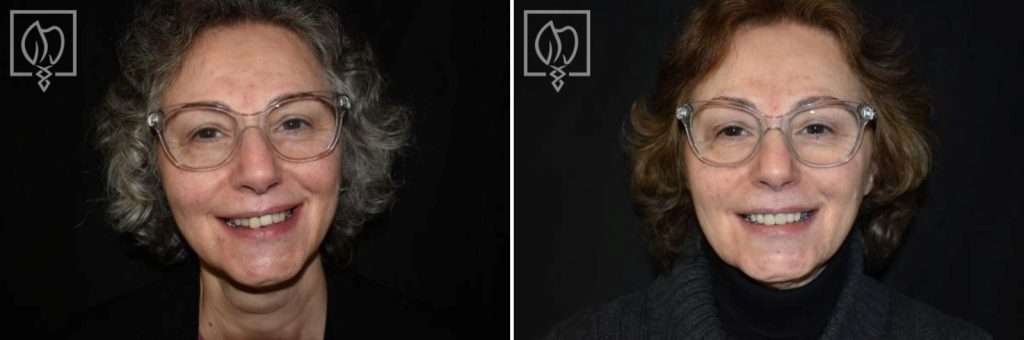
Temporary Crowns Restore Patient's Smile in Just One Day with an Immediate Smile Makeover
A patient from Potomac, Maryland, came to Elite Prosthetic Dentistry with the chief complaint of pain from a failing dental implant and its significant impact on her appearance.
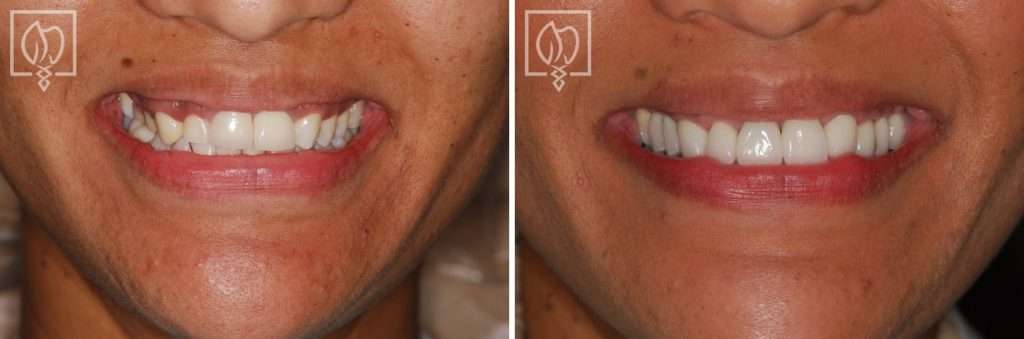
Multi-Faceted Treatment for Patient Unhappy With Her Artificial-Looking Crowns, Teeth and Gums
Many patients come to Elite Prosthetic Dentistry unhappy with the appearance of their smile. However, this particular patient presented with multiple interconnected problems that together created a smile she found deeply unsatisfying.
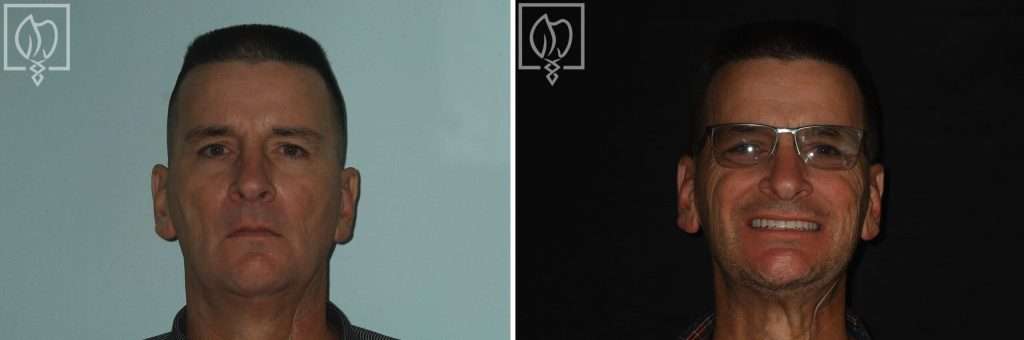
Treating Kevin’s Collapsed Bite with a Complete Smile Makeover with New Dentures
Dentures are sometimes not created to the ideal aesthetic and functional scheme. When improperly fabricated, dentures can make an individual appear almost a generation older than their actual age. They can have a poor fit that feels loose and unstable when eating or speaking, and they can actually accelerate bone loss over time.
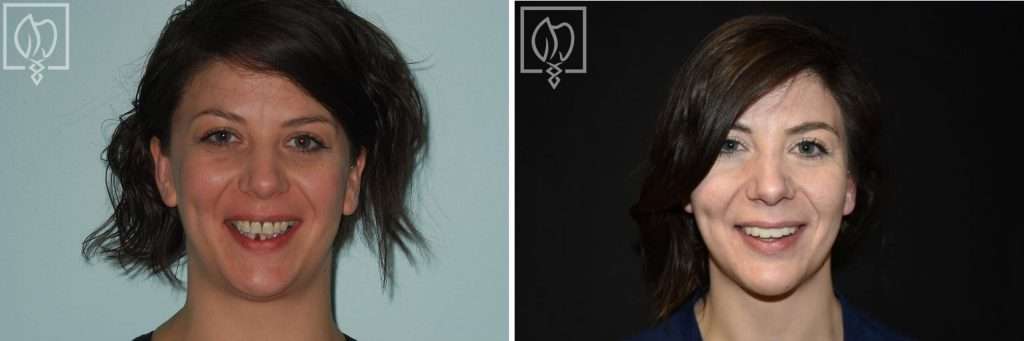
Salvaging Ms. N’s Severely Broken-Down Upper and Lower Teeth from Gum and Bone Disease
Many people in the U.S. suffer from extensive periodontal disease characterized by significant bone loss and shrinkage of the gum tissue. This condition can begin at a very young age and worsen quickly due to hereditary factors and lack of early diagnosis by their dentist.
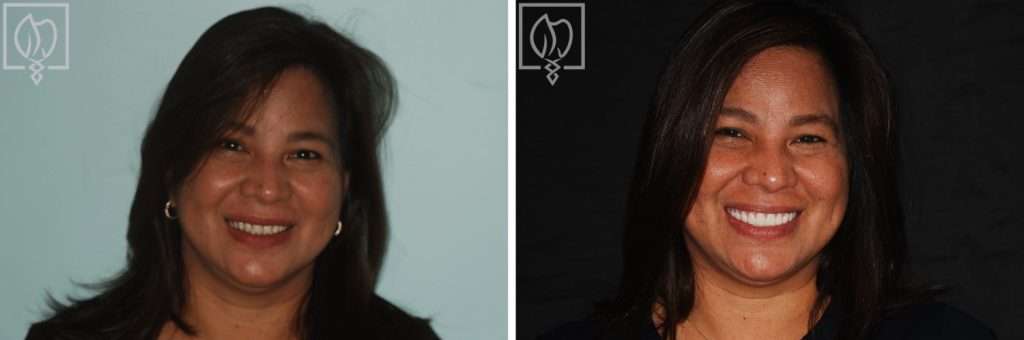
Rejuvenating Maria’s Severely Worn Down Implant Overdentures
Many times, per year, patients come to us frustrated because their implant prosthesis is so severely worn down that they are very self-conscious and cover up their smile. They look and feel much older than their age as a result of the extensive wear of their appliance(s).
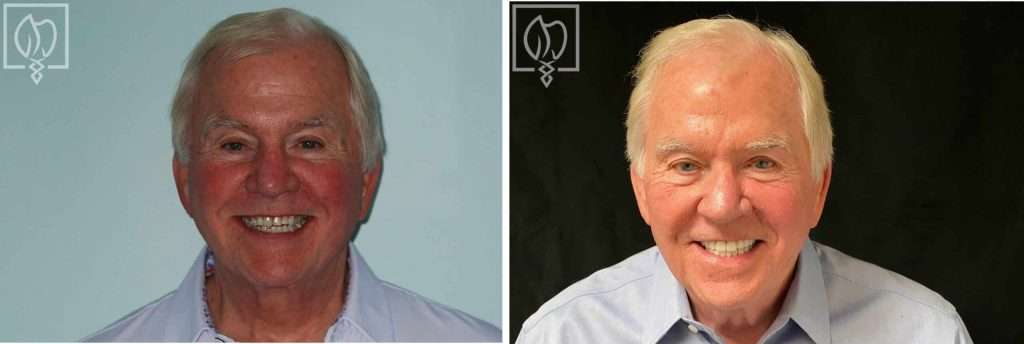
A Smile Transformation in Just Four Months: A Patient’s Dental Crown Restoration for a TV Series
A patient with dental crowns that were in poor shape was going to appear on a streaming video series on a major TV network that was scheduled to begin filming soon. Our patient, John, an author about to embark on a book tour, was anxious as his teeth were not up to his standards to appear on television.
Related Articles
Deepen your knowledge with additional insights on this topic.
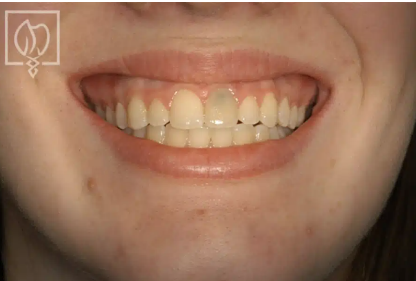 Dental Implants
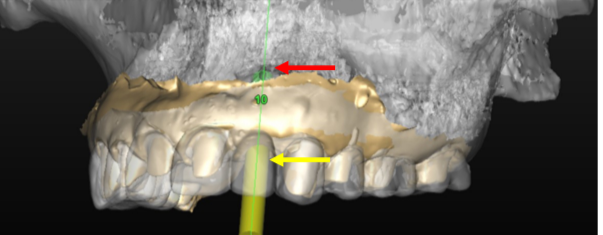
 If a Single Front Tooth is Replaced with an Implant, can it Look Natural?
A single front tooth implant can look completely natural with precision placement, custom abutments, and hand-crafted porcelain crowns. Washington, DC.
 Dental Implants
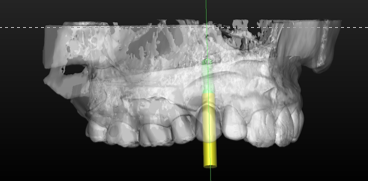
 What is Precision Implant Placement (PIP)?
Learn what Precision Implant Placement (PIP) is and how meticulous planning ensures optimal implant positioning for long-lasting results in Washington, DC.
 Dental Implants
 What is the ideal Surgical Guide for Precision Implant Placement?
CBCT-based surgical guides allow virtual implant planning for precise positioning in optimal bone, ensuring predictable results in Washington, DC.
 Dental Implants
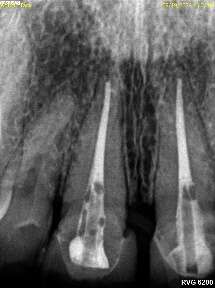
 When Should an Implant not be Done?
Not every patient is a candidate for dental implants. Learn when healthy roots, fragile bone, or steep angles may make alternatives the better choice.
 Dental Implants
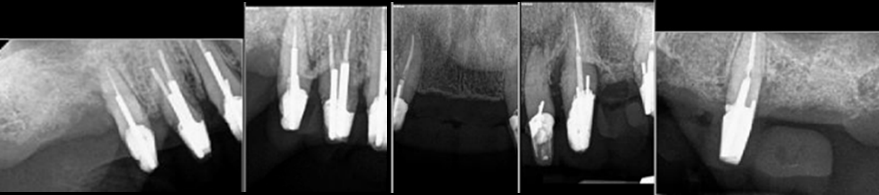
 What is Staged Implant Therapy?
Staged implant therapy replaces teeth gradually using existing teeth as temporary support. A personalized alternative to All-on-X for full-arch cases.
Unveiling the Four Types of Dental Implants: Which One's for You?
Learn about the four types of dental implants - endosteal, subperiosteal, zygomatic, and mini implants - and which option may be right for your needs.
Our Services in Cleveland Park
Beyond reconstruction-revision, Cleveland Park patients rely on Dr. Gerald Marlin for a full range of advanced dental care.
More services available in Cleveland Park:
reconstruction-revision Near Cleveland Park
Dr. Gerald Marlin also provides reconstruction-revision services for patients in these neighboring communities.
Getting Here from Cleveland Park
Elite Prosthetic Dentistry is conveniently located near Cleveland Park, DC.
Cleveland Park residents reach our office 8 minutes via Connecticut Avenue NW
Address:
4400 Jenifer Street NW, Suite 220
Washington, DC 20015
Phone: (202) 244-2101
Schedule ConsultationSchedule Your Consultation from Cleveland Park
Cleveland Park residents trust Dr. Gerald Marlin for precision dental care. With 3,900+ implants placed and 40+ years of experience, your smile is in expert hands.