
Loose Dental Implant in Arlington, VA
What happens at each appointment for loose implant diagnosis and treatment? Arlington prosthodontic specialist explains the timeline.
Loose Dental Implant Treatment Timeline and Evaluation in Arlington, VA
One of the most common questions we hear from patients with loose implants is: what happens next? How many appointments will this take? How long until it’s resolved? At Elite Prosthetic Dentistry, we believe in clear communication about what you’ll experience at each stage of diagnosis and treatment. Here’s the reality of loose implant management, appointment by appointment, from initial evaluation through resolution.
The Initial Consultation Appointment: Establishing Diagnosis
Your first appointment is comprehensive and diagnostic. This is when we establish what’s wrong and outline your path forward.
What Happens at the Initial Appointment
Medical History and Implant History
We begin with detailed history. We want to know about your overall health, medical conditions, medications, allergies, and previous surgeries. We ask specifically about your implant: when was it placed, which tooth is involved, when did you notice looseness, has it been loose for days or months, and what symptoms you’re experiencing.
We ask about your habits: do you grind your teeth, do you clench, do you have a nightguard, do you smoke? This history informs our assessment.
Visual Examination
We examine your loose implant directly. We look at the crown, the emergence angle, the health of tissues around the implant, and the overall esthetic integration. We assess whether the crown or the implant itself appears to be the problem.
Mobility Testing
Using dental instruments, we apply gentle, controlled force to your implant crown at different angles. We note where movement occurs and how much movement is present. This clinical test often tells us whether the crown is loose, the abutment is loose, or the fixture is loose.
Bite Force Assessment
We evaluate your bite using articulating paper and assess how your teeth meet. We look for signs of heavy grinding or unusual bite patterns that might contribute to implant problems.
Radiographic Imaging
We take standard periapical radiographs of your implant. These 2D images show bone levels around the implant, allow comparison to prior radiographs if available, and help us assess implant position and any obvious defects.
Preliminary Diagnosis
Based on clinical findings and radiographs, we usually reach a preliminary diagnosis. Is the problem an abutment screw, bone loss, infection, or something else? This diagnosis guides next steps.
Treatment Discussion
We explain what we found, why we think the looseness occurred, and what the next steps are. If treatment can proceed immediately (abutment screw tightening), we discuss that. If further imaging is needed, we schedule it. If the problem is complex, we discuss investigation and planning.
Duration and Outcome
A thorough initial appointment takes 45-60 minutes. You leave understanding your diagnosis, the likely cause, and what comes next.
Appointment 2: Advanced Imaging and Detailed Planning
If your problem requires advanced imaging, your second appointment occurs within 1-2 weeks.
CBCT Imaging Appointment
When CBCT Is Necessary
We recommend CBCT when:
- Diagnosis is unclear from standard radiographs
- Bone loss pattern suggests something specific like infection or failed placement
- Implant fracture is suspected
- Surgical treatment is being considered
- Detailed 3D information about bone anatomy is needed
What CBCT Shows
3D imaging reveals bone levels in all dimensions, implant angulation precisely, bone quality and density, any fractures or defects in the implant, and bone anatomy in detail. This information is significantly more detailed than standard radiographs.
Analysis and Planning
After CBCT is obtained, we review it thoroughly. We might use surgical planning software to virtually plan replacement implant placement if that’s being considered. We share images with you and explain findings.
Updated Diagnosis and Plan
With CBCT data, our diagnosis is often more precise. We explain exactly what the problem is and exactly what treatment is recommended.
Duration and Outcome
CBCT imaging takes 10-15 minutes. Analysis and discussion take 20-30 minutes. You leave with a detailed plan for next steps.
Appointment 3: Treatment Phase
Once diagnosis is confirmed, treatment begins. The nature of your appointment depends on your specific problem.
Scenario A: Loose Abutment Screw Tightening
If your problem is a backed-out abutment screw, treatment is often performed at the initial appointment or at an urgent follow-up if it’s identified as needing quick attention.
Screw Access
For screw-retained crowns, we access the screw through the hole in the top of the crown.
For cemented crowns, we might remove the crown entirely.
Screw Removal and Cleaning
We carefully remove the screw and thoroughly clean both the screw and the fixture threads.
Threadlocker Application
We apply a thin layer of medium-strength threadlocker compound to the screw threads.
Re-Torquing
We re-insert the screw and tighten it with a calibrated torque wrench to the manufacturer’s specified torque value.
Restoration and Verification
We restore the access hole with tooth-colored material, check your bite, and verify the crown is completely stable.
Duration: 30-45 minutes. Result: Your loose implant is now stable.
Scenario B: Loose Crown From Failed Cement
If your crown is loose because cement has failed, treatment involves crown removal and re-cementation.
Crown Removal
We carefully remove the crown using specialized instruments to avoid damaging the underlying abutment.
Abutment Cleaning
We clean the abutment surface thoroughly to remove old cement and any debris.
Re-Cementation
We apply fresh permanent cement to the abutment and replace the crown, ensuring proper seating and removing excess cement.
Bite Verification
We check your bite to ensure forces distribute properly.
Duration: 30-45 minutes. Result: Your crown is re-secured and stable.
Scenario C: Investigation for Bone Loss or Infection
If radiographs suggest bone loss or infection, we might schedule an appointment focused on investigation and treatment planning.
Discussion of Findings
We explain the radiographic findings and what they suggest about the underlying problem.
Additional Examination
We might perform additional clinical tests, assess your general health status, review your medical history in more detail.
Treatment Planning
We discuss whether the problem can be treated conservatively or whether surgical intervention is needed. For peri-implantitis, we discuss antibiotic therapy. For bone loss without infection, we discuss monitoring or surgical options.
Referrals if Needed
If your situation requires oral surgery expertise, we discuss referral to a specialist surgeon.
Duration: 45-60 minutes. Result: Clear plan for addressing the underlying problem.
Scenario D: Assessment for Possible Implant Removal and Replacement
If your implant is severely compromised and replacement is being considered, a planning appointment is scheduled.
Removal Discussion
We discuss the removal procedure, what to expect, healing timeline, and bone assessment afterward.
Replacement Planning
We discuss replacement implant size, position, and timing. We explain the healing period between removal and replacement.
Bone Grafting Discussion
If bone loss or deficiency is present, we discuss whether bone grafting would be beneficial before replacement placement.
Timeline Overview
We provide a complete timeline from removal through restored replacement implant.
Duration: 45-60 minutes. Result: Clear understanding of the path forward.
Appointment 4 (If Needed): Surgical Treatment
If your loose implant requires surgical intervention, this appointment is when that procedure occurs.
Scenario A: Implant Removal and Site Assessment
Surgical Approach
We surgically expose the implant site. For severely loose implants, removal is straightforward. For well-integrated implants that need removal for other reasons, we use careful technique to preserve bone.
Implant Removal
We remove the implant fixture using specialized instruments designed to remove implants without excessive bone trauma.
Site Inspection and Bone Assessment
After removal, we visually inspect the bone socket. We assess bone quality, quantity, and whether bone grafting would be beneficial.
Bone Graft Placement (If Indicated)
If grafting is needed, we place bone graft material and potentially a barrier membrane to guide bone healing.
Site Closure
We close the surgical site with sutures that dissolve on their own or are removed at a follow-up appointment.
Post-Operative Instructions
We provide detailed post-operative care instructions including restrictions on eating, activity, and oral hygiene around the surgical site.
Duration: 45-60 minutes for extraction alone; up to 90 minutes if bone grafting is included.
Healing: Initial healing is 2 weeks (suture removal). Bone remodeling continues for 4-8 weeks.
Scenario B: Surgical Implant Stabilization or Bone Grafting
If your implant can be saved through surgical intervention (adding bone graft, treating infection, removing damaged tissue), we perform this procedure.
Surgical Access
We create an incision to expose the implant and surrounding bone.
Problem Treatment
We remove infected tissue, apply antimicrobial therapy, place bone graft if needed, or use other techniques appropriate for your specific problem.
Closure
We close the surgical site with sutures.
Post-Operative Care
We provide instructions for healing and follow-up.
Duration: 60-90 minutes depending on procedure complexity.
Healing: 2-4 weeks initial healing; 4-8 weeks for bone remodeling to complete.
Appointment 5: Follow-Up and Healing Assessment
After surgical treatment or other significant intervention, a follow-up appointment assesses healing and verifies your implant is responding appropriately.
Healing Verification
We examine the surgical site to verify normal healing. We assess for any complications like infection, excessive swelling, or dehiscence (opening of the wound).
Suture Removal (If Applicable)
If non-absorbable sutures were placed, we remove them at 2 weeks post-operative.
Radiographic Assessment
We take radiographs to verify healing is progressing and to assess bone stability if bone graft was placed.
Activity Clearance
We provide guidance on resuming normal activities, eating normal foods, and resuming oral hygiene around the treated area.
Timeline for Next Steps
If replacement implant placement is planned, we confirm the timeline. Initial healing is adequate for implant placement at 4-8 weeks post-extraction.
Duration: 20-30 minutes. Result: Confirmation of normal healing and clearance to proceed.
Appointment 6: Replacement Implant Placement (If Removal and Replacement Is Plan)
If your original implant was removed, the replacement implant is typically placed at 4-8 weeks post-removal, depending on bone healing.
Pre-Operative Imaging
We use CBCT to plan the replacement implant position precisely. We develop a surgical guide if indicated.
Surgical Placement
Using the surgical plan and potentially computer-guided surgery, we place the replacement implant at the optimal position.
Bone Quality Assessment
We directly assess bone quality during surgery and modify placement approach if needed.
Initial Healing Prescription
We provide post-operative instructions including careful activity and diet restrictions.
Duration: 45-60 minutes.
Healing Timeline: 4-6 months healing before the implant is ready for restoration.
Appointment 7: Implant Integration Verification (4-6 Months After Placement)
Once the replacement implant has healed, we verify integration before beginning restoration.
Clinical Mobility Testing
We check that the implant is completely immobile. Any mobility suggests poor integration and delays restoration.
Radiographic Assessment
We take radiographs to verify bone contact and bone level stability around the new implant.
Restoration Planning
If integration is complete, we plan the final restoration. We discuss abutment options, crown design, and esthetic goals.
Duration: 30-45 minutes.
Outcome: Clearance to proceed with restoration of the implant.
Appointment 8: Restoration and Crown Fabrication
Now that the replacement implant has integrated, we restore it with a crown.
Abutment Selection
We select the appropriate abutment based on implant position, bone anatomy, and esthetic requirements.
Impression
We take a precise impression of the implant and abutment for laboratory fabrication of the crown.
Temporary Restoration
We place a temporary crown to protect the implant and abutment while the permanent crown is fabricated.
Laboratory Instructions
We send detailed instructions to our in-house laboratory (or external lab if specialized) regarding crown design, esthetic requirements, and bite specifications.
Duration: 45-60 minutes.
Lab Timeline: 1-2 weeks for crown fabrication.
Appointment 9: Crown Delivery and Adjustment
Once the permanent crown is fabricated, we deliver it and ensure proper fit, esthetics, and function.
Temporary Crown Removal
We remove the temporary crown and clean the abutment.
Crown Try-In
We try in the permanent crown and assess fit and esthetics with you. We make any esthetic adjustments before final cementation.
Bite Assessment
We verify your bite. We might make minor adjustments to ensure forces distribute properly.
Cementation
We cement the crown permanently using permanent cement.
Final Verification
We verify the crown is completely stable, properly contoured, and functional. We confirm your bite feels normal.
Duration: 45-60 minutes.
Outcome: Your replacement implant is fully restored and functional.
Follow-Up Maintenance: Long-Term Monitoring
After your implant is restored, periodic appointments ensure long-term health.
6-Month Post-Restoration Check
We verify the crown and implant are stable, check your bite, and assess oral health.
Annual Examinations
We recommend annual or biannual implant checks. We assess abutment screw tightness, verify bone stability through radiographs, check for signs of problems, and maintain your oral health.
Radiographic Monitoring
We take radiographs annually or biannually to monitor bone levels and detect any early signs of problems.
Timeline Summary: From Initial Appointment to Restored Implant
For different scenarios, here’s what you can expect:
Simple Loose Abutment Screw: 1 Appointment
- Diagnosis and treatment same day
- Immediate resolution
Loose Crown: 1-2 Appointments
- Diagnosis at appointment 1
- Crown re-cementation at appointment 1 or 2
- 1-2 weeks total
Implant Bone Loss or Infection (Non-Surgical): 3-4 Appointments Over 6-8 Weeks
- Diagnosis appointment 1
- CBCT imaging appointment 2
- Treatment initiation appointment 3
- Follow-up appointment 4
- Resolution: 6-8 weeks
Implant Removal and Replacement: 8-9 Appointments Over 5-7 Months
- Initial diagnosis: appointment 1
- Advanced imaging: appointment 2
- Removal surgery: appointment 3
- Healing follow-up: appointment 4
- Replacement implant placement: appointment 5 (4-8 weeks after removal)
- Integration verification: appointment 6 (4-6 months after placement)
- Restoration and crown: appointment 7-9
- Total timeline: 5-7 months
Arlington and Your Implant Journey
Arlington residents appreciate clear information and transparent communication about healthcare timelines. Our Arlington location is 15 minutes from central Arlington, making regular appointments manageable.
We understand that implant problems are disruptive. We communicate clearly about what you can expect at each stage so you can plan your time accordingly.
Why Choose Elite Prosthetic Dentistry for Your Loose Implant
Dr. Marlin manages hundreds of implant complications and specializes in implant dentistry. His experience means he diagnoses accurately, plans treatment efficiently, and executes treatment skillfully. His prosthodontic expertise ensures comprehensive care.
We have in-house laboratory capabilities, which accelerates restoration fabrication when your implant is ready for a crown. We don’t wait for external labs. We control the timeline through in-house resources.
We maintain relationships with leading oral surgeons for cases requiring surgical expertise, including bone grafting and complex implant repair procedures. When your situation requires surgery, we coordinate seamless care.
We communicate transparently about timelines, costs, and what to expect. No surprises, no hidden steps, no unexpected delays.
Related Services and Comprehensive Care
Your loose implant journey might involve several services we provide. Failing implants encompasses the broader strategies we use for complex cases. Dental implant bone loss is a common underlying problem requiring specialized management.
Bone grafting is often part of preparing sites for replacement implants. Precision implant placement is relevant for your replacement implant to ensure optimal outcomes.
For Arlington-area patients, we offer dental implants in Arlington, bone grafting in Arlington, full mouth reconstruction in Arlington, implant denture repair in Arlington, sedation dentistry in Arlington, and full mouth dental implants in Arlington.
In-house lab capabilities accelerate crown fabrication for your restored implant. Advanced restorative dentistry ensures optimal function and esthetics. Second opinion dentistry is available if you want another perspective on treatment recommendations.
Scheduling Your Initial Appointment
Request an appointment today. Tell us about your loose implant situation. We’ll assess urgency and schedule appropriately.
Read more about Dr. Marlin’s background and approach to complex implant management.
Your loose implant has a clear diagnostic and treatment pathway. From first appointment through restored, stable implant, we’ll guide you through each step with clarity and expertise.
Frequently Asked Questions
How many appointments will I need to diagnose and treat my loose implant?
Diagnosis typically requires 1-2 appointments. Simple problems like loose abutment screws can be treated in the diagnostic appointment. Complex problems require additional appointments for imaging, planning, or surgical treatment. Most situations are resolved in 2-4 appointments over 1-3 months.
Can you tell me what's wrong with my implant during the first appointment?
Usually, yes. We perform clinical examination and take radiographs during your first appointment. In most cases, this is sufficient to diagnose the problem and outline treatment. Some complex cases require CBCT imaging or further investigation before a complete diagnosis.
Will the first appointment be a full examination or just a consultation?
Your first appointment includes a complete examination. We take your history, examine your implant clinically, take radiographs, and assess your bite and oral health. We provide diagnosis and initial treatment recommendations during this appointment. This full evaluation is the foundation for all subsequent treatment.
What should I expect to pay, and when will costs become clear?
We provide fee estimates during your first appointment once diagnosis is confirmed. Payment plans are available for multi-appointment treatments. We discuss costs transparently before beginning treatment.
If my implant needs to be removed and replaced, how long is the entire process?
Initial diagnosis takes 1-2 weeks. Removal can occur at the second appointment. The bone site heals for 4-8 weeks. Replacement implant placement occurs at approximately the 6-week mark. Restoration of the replacement takes 4-6 additional months. Total timeline from initial appointment to restored implant is typically 5-7 months.
Related Patient Success Stories
Explore similar patient success stories demonstrating our expertise in advanced prosthetic dentistry.

Temporary Crowns Restore Patient's Smile in Just One Day with an Immediate Smile Makeover
A patient from Potomac, Maryland, came to Elite Prosthetic Dentistry with the chief complaint of pain from a failing dental implant and its significant impact on her appearance.
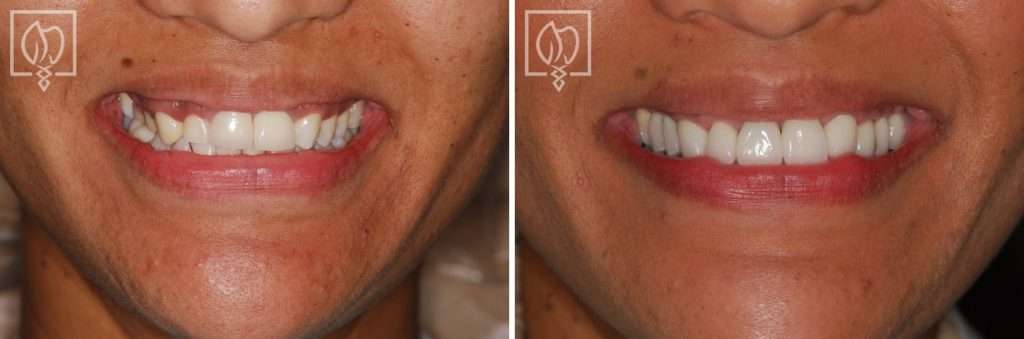
Multi-Faceted Treatment for Patient Unhappy With Her Artificial-Looking Crowns, Teeth and Gums
Many patients come to Elite Prosthetic Dentistry unhappy with the appearance of their smile. However, this particular patient presented with multiple interconnected problems that together created a smile she found deeply unsatisfying.
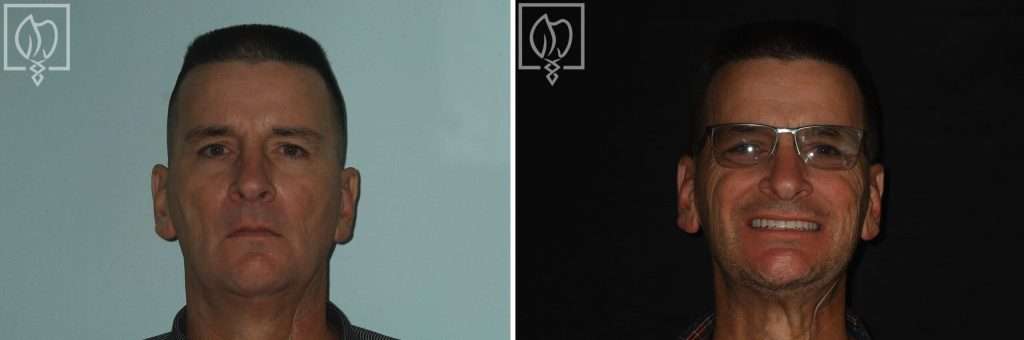
Treating Kevin’s Collapsed Bite with a Complete Smile Makeover with New Dentures
Dentures are sometimes not created to the ideal aesthetic and functional scheme. When improperly fabricated, dentures can make an individual appear almost a generation older than their actual age. They can have a poor fit that feels loose and unstable when eating or speaking, and they can actually accelerate bone loss over time.
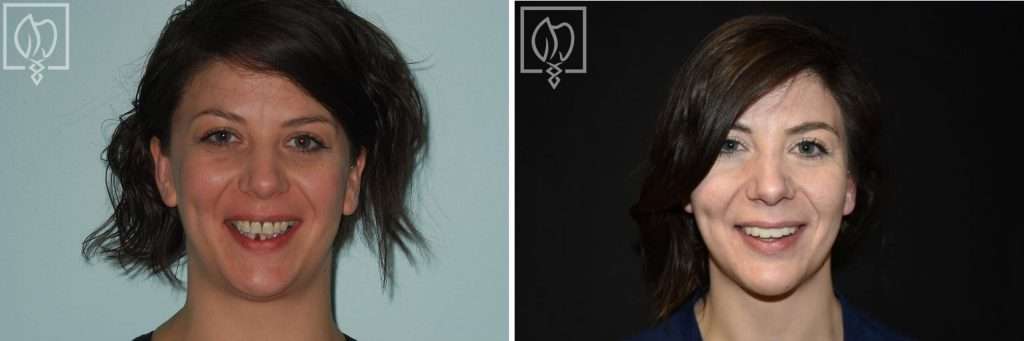
Salvaging Ms. N’s Severely Broken-Down Upper and Lower Teeth from Gum and Bone Disease
Many people in the U.S. suffer from extensive periodontal disease characterized by significant bone loss and shrinkage of the gum tissue. This condition can begin at a very young age and worsen quickly due to hereditary factors and lack of early diagnosis by their dentist.
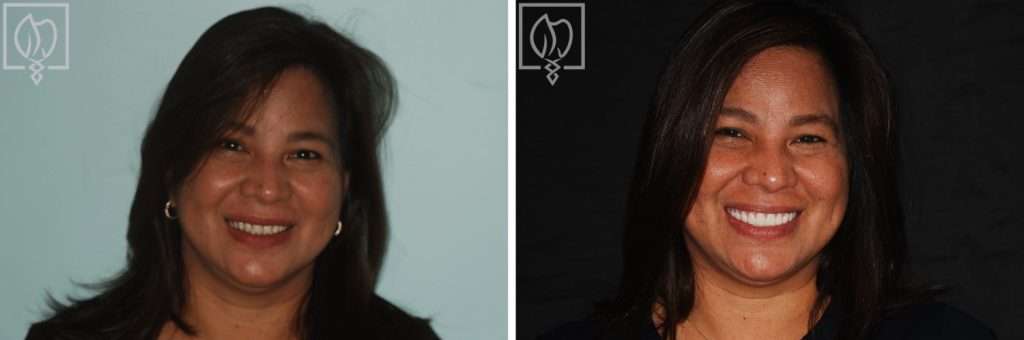
Rejuvenating Maria’s Severely Worn Down Implant Overdentures
Many times, per year, patients come to us frustrated because their implant prosthesis is so severely worn down that they are very self-conscious and cover up their smile. They look and feel much older than their age as a result of the extensive wear of their appliance(s).
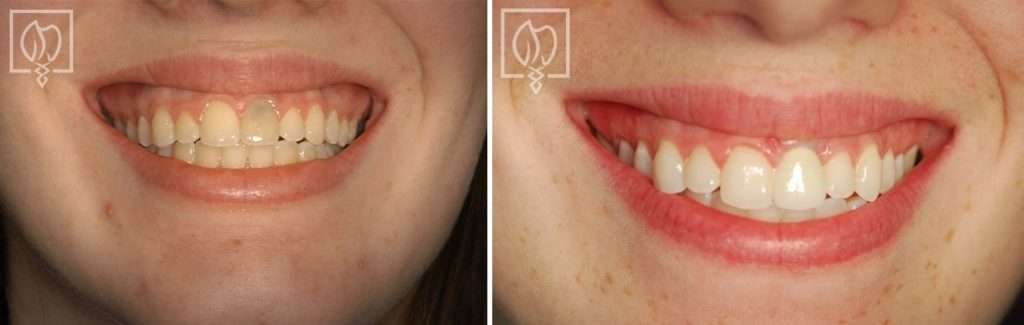
Replacing a Discolored Front Tooth with a Precision Placed Implant
Some of the most challenging restorations occur when fabricating an anterior crown to fit on an implant. Not only does one have the difficulty of matching the single front tooth to the other ones in the high visibility zone, but the dentist must also ensure the position of the underlying implant is precise through accurate preplanning and placement.
Related Articles
Deepen your knowledge with additional insights on this topic.
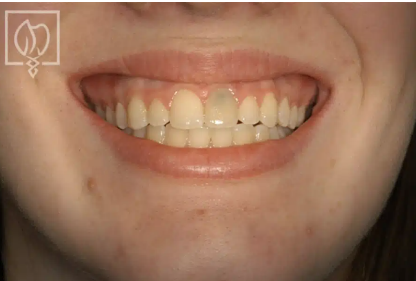 Dental Implants
 If a Single Front Tooth is Replaced with an Implant, can it Look Natural?
A single front tooth implant can look completely natural with precision placement, custom abutments, and hand-crafted porcelain crowns. Washington, DC.
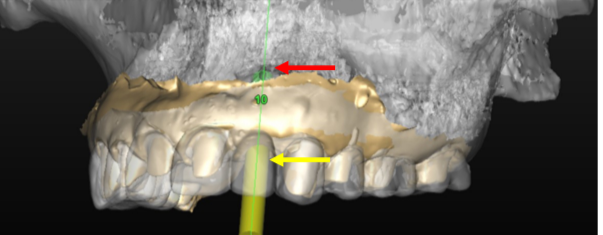 Dental Implants
 What is Precision Implant Placement (PIP)?
Learn what Precision Implant Placement (PIP) is and how meticulous planning ensures optimal implant positioning for long-lasting results in Washington, DC.
 Dental Implants
 What is the ideal Surgical Guide for Precision Implant Placement?
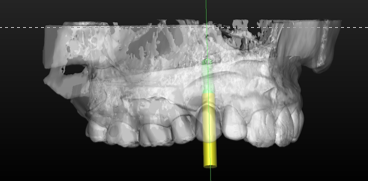
CBCT-based surgical guides allow virtual implant planning for precise positioning in optimal bone, ensuring predictable results in Washington, DC.
 Dental Implants
 When Should an Implant not be Done?
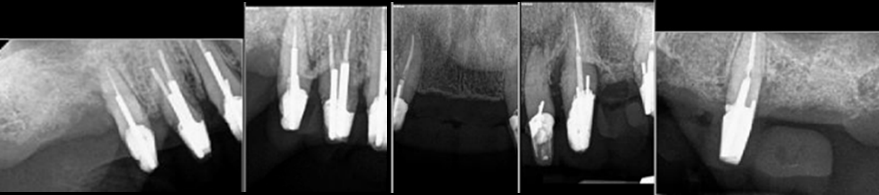
Not every patient is a candidate for dental implants. Learn when healthy roots, fragile bone, or steep angles may make alternatives the better choice.
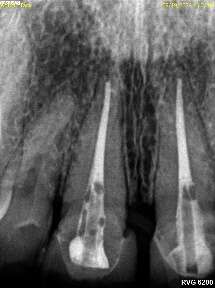
 Dental Implants
 What is Staged Implant Therapy?
Staged implant therapy replaces teeth gradually using existing teeth as temporary support. A personalized alternative to All-on-X for full-arch cases.
Unveiling the Four Types of Dental Implants: Which One's for You?
Learn about the four types of dental implants - endosteal, subperiosteal, zygomatic, and mini implants - and which option may be right for your needs.
Our Services in Arlington
Beyond loose-dental-implant, Arlington patients rely on Dr. Gerald Marlin for a full range of advanced dental care.
More services available in Arlington:
loose-dental-implant Near Arlington
Dr. Gerald Marlin also provides loose-dental-implant services for patients in these neighboring communities.
Getting Here from Arlington
Elite Prosthetic Dentistry is conveniently located near Arlington, VA.
Arlington is easily accessed via Arlington Boulevard or Lee Highway. Convenient location for Northern Virginia patients.
Address:
4400 Jenifer Street NW, Suite 220
Washington, DC 20015
Phone: (202) 244-2101
Schedule ConsultationSchedule Your Consultation from Arlington
Arlington residents trust Dr. Gerald Marlin for precision dental care. With 3,900+ implants placed and 40+ years of experience, your smile is in expert hands.