

Loose Dental Implant: Causes, Risks & Specialist Repair
Loose dental implants require immediate evaluation. Learn causes, diagnosis, and treatment options from a specialist prosthodontist in Washington DC.
What to Do About a Loose Dental Implant
If you’ve noticed your dental implant moving, clicking, or feeling unstable, you need an evaluation by a prosthodontist immediately. This is not a situation to monitor or hope resolves on its own. A loose implant represents a mechanical or biological failure that will almost certainly worsen without intervention.
The good news is that diagnosis and treatment options have advanced significantly. A prosthodontist can determine exactly why your implant is loose, whether the problem involves the crown, the abutment, the implant fixture itself, or the bone supporting it. Depending on what’s happening, treatment ranges from simple screw tightening to guided bone regeneration to, in some cases, implant removal and replacement.
The bad news is that every week you delay evaluation, more bone may be lost and your treatment options may become more complex and costly. This is why mobility requires prompt specialist assessment.
Why a Loose Implant Is Never Normal
A dental implant that has successfully integrated with bone should feel exactly like a natural tooth: completely rigid with no movement whatsoever. The implant fixture is a titanium screw anchored directly into jawbone. Once osseointegration is complete (typically 3-6 months after placement), there should be zero mobility when the tooth is tested clinically or grasped with your fingers.
Any detectable movement, clicking, or wobbling indicates one of three problems: either the prosthetic components (crown and abutment) are loose, the implant is mechanically failing at its connection to bone, or bone loss is occurring around the implant itself. None of these conditions resolve spontaneously or improve without treatment.
The level of mobility you perceive matters. If you feel a small click when you bite on the implant, this might be a loose abutment screw. If the entire tooth seems to wobble when you push on it with your tongue or finger, the implant fixture itself may be loose in bone. These represent different severity levels and require different diagnostic approaches.
The critical point is this: unlike natural teeth, which have some slight physiologic mobility from the periodontal ligament, dental implants should have zero mobility once integrated. Your sensitivity to movement in your implant is not oversensitivity, it’s accurate detection of a problem.
Is It the Crown, the Abutment, or the Implant? Three Different Types of Looseness
Understanding which component is loose is the foundation of diagnosis. The three-part structure of a dental implant (fixture, abutment, crown) means looseness can occur at different levels, each with different implications.
Crown looseness occurs when the crown (the visible tooth) has separated from the abutment (the connector piece). This might happen if cement has failed, the crown has cracked, or the screw holding the crown has loosened. When you grasp the crown and wiggle it, it moves independently. The abutment itself and the implant fixture remain stable. This is the best-case scenario because it usually involves straightforward replacement or recementation.
Abutment looseness involves the connector piece between the implant fixture and the crown becoming loose. This might happen if the abutment screw has backed out or the connection between abutment and fixture has failed. When tested, the abutment moves relative to the implant fixture. This is still a mechanical problem that can often be resolved by tightening the abutment screw or replacing the abutment if it’s damaged.
Implant fixture looseness is the most serious scenario: the titanium screw itself is moving in the bone. This indicates either failed osseointegration, bone loss around the implant, or both. When tested clinically, movement occurs at the level of the implant body itself. This requires bone evaluation through advanced imaging and usually involves significantly more complex treatment.
A experienced prosthodontist can distinguish between these three types through clinical examination. You’ll be tested at different levels to identify exactly where movement is occurring. This distinction completely changes the treatment approach and prognosis.
Causes of Implant Looseness: The Underlying Pathology
A loose implant doesn’t happen by accident. Something has failed or is failing in the system that should be keeping it stable. Understanding the cause is essential because treatment must address the cause, not just the symptom.
Peri-implantitis is the most common cause of implant looseness years after successful placement. This is a bacterial infection around the implant that progressively destroys bone, similar to periodontitis around natural teeth but more aggressive. Peri-implantitis can be triggered by cement left under the gum line during crown placement, poor oral hygiene, smoking, overloading of the implant, or failure to maintain the gum tissues around the implant.
Failed osseointegration means the implant never actually fused with bone properly, or the fusion was lost over time. This might be discovered early (during uncovering) or late (after the crown has been placed). It can result from contamination during surgery, premature loading before the implant was ready, insufficient bone density, smoking during the integration period, uncontrolled diabetes, or certain medications.
Mechanical failure at the abutment-implant connection can occur if the screw wasn’t tightened properly, the screw was overtightened and damaged the implant, or repeated vibration has caused loosening. Some implant systems are more prone to screw loosening than others depending on design and materials.
Overloading happens when the implant is subjected to forces greater than it or the bone around it can handle. This might occur if the bite is misaligned, if the implant was placed in inadequate bone, if multiple implants are missing and one implant is doing too much work, or if you have a habit of clenching or grinding your teeth.
Inadequate bone volume or quality at the time of placement sets the implant up for failure. If the implant was placed in bone that was too thin, too soft, or compromised by previous disease or extractions, osseointegration may not achieve full stability. This problem compounds over time.
Cement residue left around the implant during crown placement is a common cause of late implant looseness. When cement isn’t fully removed from the gum tissues and subgingival space, it triggers a chronic inflammatory response that destroys bone and leads to peri-implantitis. This is particularly common when crowns are cemented rather than screw-retained.
Smoking dramatically impairs bone healing and increases infection risk. If you’ve smoked before, during, or after implant placement, your implant’s stability is compromised at every stage.
Urgency Assessment: When to Call Immediately vs. Schedule Within a Week
If your implant is loose, you need professional evaluation. But the degree of urgency depends on what you’re experiencing.
Contact us for an urgent appointment (same week) if:
- The implant is visibly or obviously mobile
- The implant clicks or moves when you touch it
- You feel sudden new looseness that wasn’t there before
- The area is swollen, warm, or increasingly painful
- You see pus or discharge around the implant
- The implant or crown fell out
Schedule a regular appointment within the week if:
- You notice subtle mobility that’s new but not dramatic
- You suspect looseness but aren’t certain
- You see very minor swelling or bleeding around the implant
- You have a history of implants and notice this one feels different
Don’t wait weeks. Every week of delay while an implant is loose typically means more bone loss, and bone loss determines whether your implant can be saved or needs removal.
How We Diagnose Loose Implants: Clinical and Imaging Assessment
Diagnosis requires both hands-on clinical examination and advanced imaging.
Clinical mobility testing is the foundation. During your examination, Dr. Marlin will grasp your implant crown or abutment and test it in different directions to assess mobility. He’ll compare the mobility to your other implants and natural teeth to quantify what’s happening. He’ll also probe the gum tissues around the implant to assess inflammation, measure pocket depth, and check for bleeding or discharge.
CBCT (Cone Beam Computed Tomography) imaging provides a three-dimensional view of the implant’s position relative to bone. This imaging reveals bone loss around the implant, which might not be visible on regular X-rays. We can measure exactly how much bone remains, compare it to previous scans, and determine whether bone loss is stable or progressive.
Periapical and occlusal radiographs show bone levels in two dimensions and are useful for monitoring trends over time if you have previous images for comparison.
Percussion testing involves gently tapping on the implant to see if it produces pain or confirms mobility.
Visual assessment of the gum tissues reveals color, swelling, recession, and signs of inflammation or infection.
Together, these diagnostic tools tell us whether your implant is loose due to abutment loosening, bone loss, failed osseointegration, or another cause. This diagnosis determines everything about your treatment.
Treatment Options by Cause: Matching Treatment to the Problem
Treatment is never one-size-fits-all. The underlying cause of looseness determines the appropriate solution.
Loose abutment screw: If the screw connecting the abutment to the implant fixture has loosened, we remove the crown, access the screw, and tighten it to the manufacturer’s specified torque. The crown is then recemented or rescrewed. This is the simplest scenario. However, if the screw repeatedly loosens, we may need to replace it or switch to a different abutment design.
Damaged abutment: If the abutment is cracked or the screw hole is stripped, we remove and replace the abutment with a new one. This requires temporary removal of your crown but is still a relatively straightforward procedure.
Early peri-implantitis with salvageable bone: If bone loss is moderate and caught early, we may be able to stop the progression through surgical access, thorough cleaning and decontamination of the implant surface, removal of cement or plaque, and in some cases, application of bone regenerative materials. This is followed by strict plaque control and possibly modification of your bite.
Advanced bone loss requiring bone grafting: When significant bone has been lost but the implant is otherwise stable, we perform bone grafting procedures to regenerate lost bone volume. This creates a biological foundation for long-term stability. It requires surgical access, placement of bone graft material, and a healing period, but it can salvage implants that would otherwise need removal.
Failed osseointegration: If the implant was never integrated or has lost integration over time, removal is typically necessary. However, removal is not the end of your implant story. After removal, we assess your remaining bone, allow healing, perform bone grafting if needed to restore volume, and place a new implant with attention to the factors that caused the first implant to fail.
Implant malposition contributing to looseness: If the implant’s position is causing overloading or making the prosthetics unstable, we may need to correct the crown geometry, adjust the bite, or in some cases, remove and replace the implant in a better position using guided surgery.
Why a Prosthodontist for Loose Implant Evaluation
General dentists place many implants and manage routine implant cases successfully. However, loose implants exist in the territory where general dentistry meets restorative complexity and surgical intervention. A prosthodontist brings specialized training that directly addresses the problem.
Prosthodontists have completed years of advanced training in the biomechanics of implants, the diagnosis and treatment of implant failures, bone regeneration techniques, and complex restorative solutions. We see loose implants regularly. We understand not just the crown and abutment but the biological and mechanical principles that govern osseointegration and long-term stability.
When you have a loose implant, you need someone who can diagnose the root cause accurately, explain your realistic options, and execute treatment with precision. A prosthodontist coordinates with your original surgeon (if necessary), manages the restorative aspects, and often performs bone regeneration and other surgical interventions directly.
Additionally, if your implant was placed by a surgeon or general dentist and is now having problems, you need an independent specialist evaluation. A prosthodontist brings objectivity and can offer solutions that might not be available elsewhere.
The Path Forward
A loose implant is a signal that something requires your attention. It’s not a death sentence for your implant, but it’s also not something that improves without treatment.
The first step is diagnosis. We’ll perform a thorough clinical examination and advanced imaging to understand exactly what’s causing the looseness. From there, we’ll explain your options honestly, including the realistic timeline and outcomes for each approach.
Many loose implants can be saved if caught early. Even implants that need removal aren’t the end of your implant journey. Either way, you deserve clarity, expertise, and a treatment plan designed to solve the underlying problem, not just address the symptom.
Request an appointment to have your loose implant evaluated by a specialist. If you have previous imaging or records from your original implant placement, bring them with you.
For more information about implant complications and solutions, see our pages on repairing failing implants, dental implant bone loss, bone grafting, and second opinions on failed dental implants.
Your Best Smile Is Within Reach
Schedule a consultation with Dr. Gerald Marlin to discuss your treatment options and take the first step toward a healthier, more confident smile.
Frequently Asked Questions
Is a loose dental implant an emergency?
Any implant mobility you can feel or hear warrants evaluation within days. While not all loose implants require emergency care, mobility indicates either bone loss or mechanical failure that will worsen without treatment. Delaying diagnosis risks permanent damage and more complicated treatment.
Can a loose implant be saved with just tightening?
Sometimes. If looseness is purely mechanical (a loose abutment screw), tightening may resolve the issue. However, if the looseness involves the implant fixture itself, bone loss or osseointegration failure is occurring and tightening alone won't stop the problem. Proper diagnosis determines whether conservative treatment is adequate.
What causes an implant to become loose years after placement?
Delayed looseness usually involves peri-implantitis, a progressive infection around the implant that destroys supporting bone. This can be triggered by cement residue left in the gum, overloading the implant, poor oral hygiene, or continued smoking. Bone loss develops silently until mobility becomes noticeable.
How do I know if it's the crown that's loose versus the implant itself?
A loose crown will click or shift without feeling like the entire tooth is moving. A loose implant feels like the entire fixture is wobbling, sometimes with a deeper feeling of movement. Your dentist can distinguish this clinically by testing mobility at different levels and imaging the implant position.
Does a loose implant always need to be removed?
Not necessarily. Early intervention, proper diagnosis, and treatment of the underlying cause can save many loose implants. Complete removal is reserved for cases where bone loss is severe, osseointegration has catastrophically failed, or infection cannot be controlled. Most loose implants caught early are salvageable.
Can I wait to address looseness if it doesn't hurt?
No. Pain is often a late sign of implant problems. A loose implant without pain is actually more dangerous because it indicates progressive bone loss that's advancing without your awareness. Early intervention when looseness is detected minimizes bone loss and treatment complexity.
What's the difference between a loose implant and natural bone loss?
Some bone loss around implants is normal in the first year as tissues remodel. However, progressive or accelerated bone loss years later indicates pathology. A prosthodontist can measure bone levels on CBCT imaging, compare them to previous images, and determine whether loss is within normal range or requires intervention.
Related Patient Success Stories
Explore similar patient success stories demonstrating our expertise in advanced prosthetic dentistry.

Temporary Crowns Restore Patient's Smile in Just One Day with an Immediate Smile Makeover
A patient from Potomac, Maryland, came to Elite Prosthetic Dentistry with the chief complaint of pain from a failing dental implant and its significant impact on her appearance.
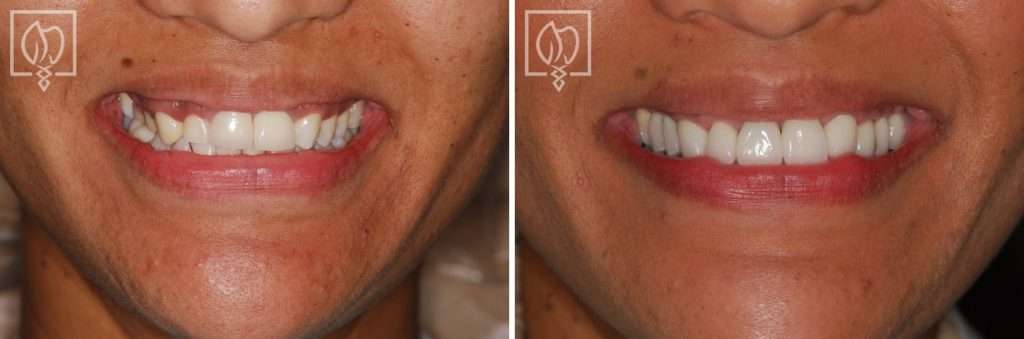
Multi-Faceted Treatment for Patient Unhappy With Her Artificial-Looking Crowns, Teeth and Gums
Many patients come to Elite Prosthetic Dentistry unhappy with the appearance of their smile. However, this particular patient presented with multiple interconnected problems that together created a smile she found deeply unsatisfying.

Treating Kevin’s Collapsed Bite with a Complete Smile Makeover with New Dentures
Dentures are sometimes not created to the ideal aesthetic and functional scheme. When improperly fabricated, dentures can make an individual appear almost a generation older than their actual age. They can have a poor fit that feels loose and unstable when eating or speaking, and they can actually accelerate bone loss over time.
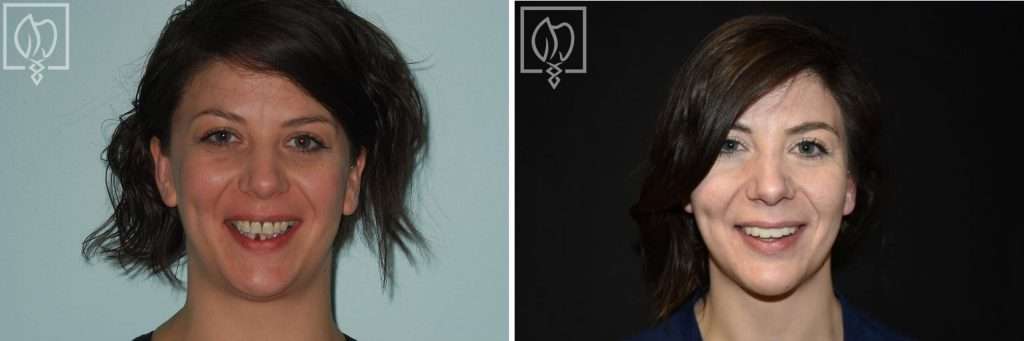
Salvaging Ms. N’s Severely Broken-Down Upper and Lower Teeth from Gum and Bone Disease
Many people in the U.S. suffer from extensive periodontal disease characterized by significant bone loss and shrinkage of the gum tissue. This condition can begin at a very young age and worsen quickly due to hereditary factors and lack of early diagnosis by their dentist.

Rejuvenating Maria’s Severely Worn Down Implant Overdentures
Many times, per year, patients come to us frustrated because their implant prosthesis is so severely worn down that they are very self-conscious and cover up their smile. They look and feel much older than their age as a result of the extensive wear of their appliance(s).
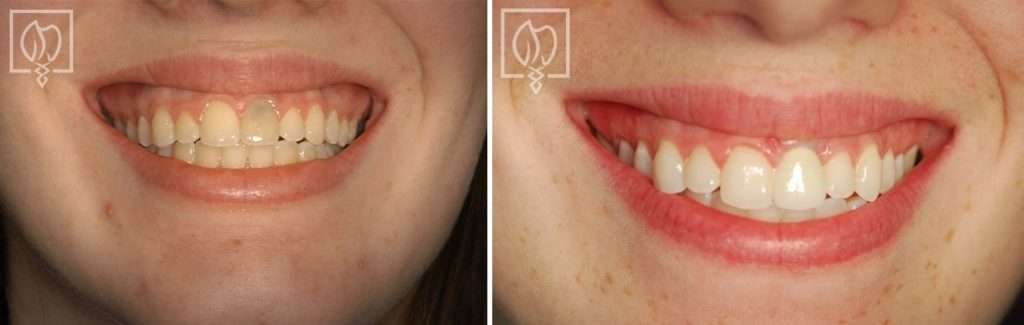
Replacing a Discolored Front Tooth with a Precision Placed Implant
Some of the most challenging restorations occur when fabricating an anterior crown to fit on an implant. Not only does one have the difficulty of matching the single front tooth to the other ones in the high visibility zone, but the dentist must also ensure the position of the underlying implant is precise through accurate preplanning and placement.
Related Articles
Deepen your knowledge with additional insights on this topic.
 Dental Implants
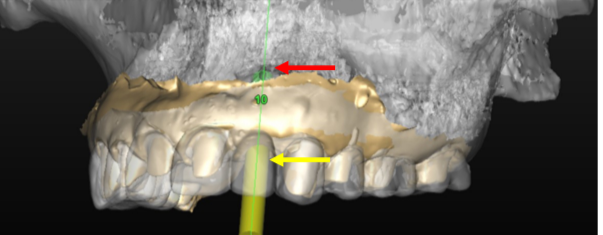
 If a Single Front Tooth is Replaced with an Implant, can it Look Natural?
A single front tooth implant can look completely natural with precision placement, custom abutments, and hand-crafted porcelain crowns. Washington, DC.
 Dental Implants
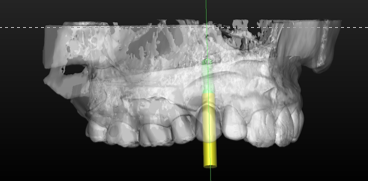
 What is Precision Implant Placement (PIP)?
Learn what Precision Implant Placement (PIP) is and how meticulous planning ensures optimal implant positioning for long-lasting results in Washington, DC.
 Dental Implants
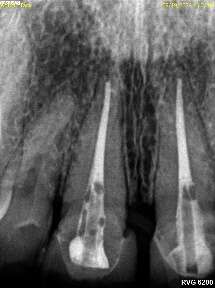
 What is the ideal Surgical Guide for Precision Implant Placement?
CBCT-based surgical guides allow virtual implant planning for precise positioning in optimal bone, ensuring predictable results in Washington, DC.
 Dental Implants
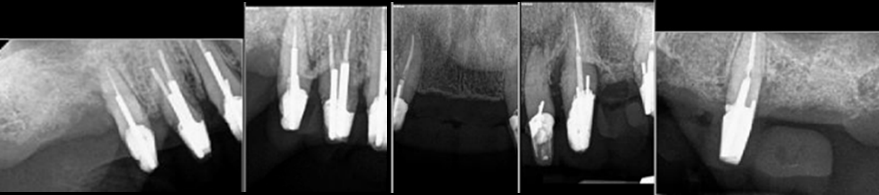
 When Should an Implant not be Done?
Not every patient is a candidate for dental implants. Learn when healthy roots, fragile bone, or steep angles may make alternatives the better choice.
 Dental Implants
 What is Staged Implant Therapy?
Staged implant therapy replaces teeth gradually using existing teeth as temporary support. A personalized alternative to All-on-X for full-arch cases.
Unveiling the Four Types of Dental Implants: Which One's for You?
Learn about the four types of dental implants - endosteal, subperiosteal, zygomatic, and mini implants - and which option may be right for your needs.
Loose Dental Implant: Causes, Risks & Specialist Repair Near You
Dr. Gerald Marlin provides loose dental implant: causes, risks & specialist repair services to patients throughout the Washington, DC metropolitan area. Select your community to learn more.
Ready to Transform Your Smile?
With 40+ years of experience and 3,900+ dental implants placed, Dr. Gerald Marlin delivers results that last. Schedule your consultation today.