
Implant-Supported Denture Problems: Expert Solutions
Implant denture problems, loose overdenture, attachment wear. Dr. Marlin solves snap-in denture issues. Prosthodontist DC.
Implant-Supported Denture Problems: Causes and Specialist Solutions
An implant-supported denture combines the stability and retention advantages of implants with the removability and affordability advantages of dentures. When well-designed and well-maintained, implant-supported dentures provide excellent function and quality of life.
However, implant dentures can develop problems that compromise retention, comfort, or function. Understanding what these problems are, why they occur, and what solutions are available helps you make informed decisions about your implant denture treatment.
Why Implant Dentures Fail or Become Problematic
Attachment System Wear and Degradation
The attachment system is the mechanical connection between the implant abutment and the denture base. All attachment systems (locator, ball, bar, etc.) are subject to wear. As attachments wear, they lose retention force, causing the denture to become progressively looser.
When the denture becomes loose, several problems develop: you cannot chew effectively because the denture moves during function, the denture may shift when you speak, you may feel self-conscious about the loose fit, or compensatory muscle tension develops as you try to stabilize the loose denture.
Attachment wear is inevitable with use, but the rate of wear depends on how aggressively the attachments are used, the patient’s bite force, and whether parafunction (grinding) is present. Patients with heavy bite force or bruxism experience faster wear.
Implant Position Problems
If implants were not positioned optimally when they were originally placed, the denture framework will not fit properly. Implants that are angled excessively, positioned too close together, or positioned unevenly create a denture design that cannot function optimally.
When implants are positioned incorrectly, the denture may have inadequate retention even with new attachments, or the denture base may not seat fully on the implant framework, creating gaps or movement.
Denture Base Processing Defects
The denture base itself can develop problems: the acrylic material may warp from processing errors or from material fatigue over time, the denture base may become loose on the internal framework, or the denture base may develop cracks or fractures.
Processing defects are laboratory fabrication problems and should be addressed by the laboratory that fabricated the denture. However, some defects become apparent only after extended wear, at which point they may require denture replacement rather than simple repair.
Tissue Resorption and Fit Changes
The tissues underneath your denture (bone and soft tissue) gradually resorb (shrink) over time. This is a normal biological process that occurs even with implant support, though it progresses more slowly than with unsupported dentures.
As tissues resorb, the denture base loses contact with tissues, changing the fit and retention. Eventually, the denture becomes loose and requires reline (thickening the tissue side of the denture to restore contact with resorbed tissues).
Insufficient Number of Implants
If the denture was originally designed with too few implants (sometimes dictated by budget constraints or bone availability), the denture may not have adequate retention and stability. Two-implant overdentures in the lower arch are more prone to problems than four-implant systems.
When insufficient implants were placed, the denture design is compromised from the beginning. Adding additional implants can often significantly improve retention and stability.
Framework Design and Support Issues
The internal framework that connects the implant attachments to the denture base can have design or fabrication problems. An inadequately designed or incorrectly fabricated framework creates movement, instability, or improper force distribution.
Framework problems are often discovered only after denture placement, when the denture fails to function as expected despite properly functioning implants and attachments.
Attachment Systems Explained
Understanding the different attachment systems helps you understand the advantages and maintenance needs of your specific system.
Locator Attachments
Locator attachments are the most commonly used system. They consist of a female receptor built into the denture base and a male housing screwed onto the implant abutment. The denture snaps on and off with modest force, and the attachment provides good retention without excessive retention force that would make removal difficult.
Locator attachments have excellent retention characteristics and are reliable. However, they wear out over time and require replacement (typically every three to five years). The housing wears, creating less secure retention. When wear becomes significant, the housing is simply removed and a new housing is placed.
Ball Attachments
Ball attachments (also called stud attachments) consist of a rounded male component on the implant abutment and a female receptor in the denture base. The ball mechanism provides good retention and is simple in design.
Ball attachments wear similarly to locator attachments. The female receptor wears, creating loose fit. However, ball attachments are sometimes more difficult to replace than locator attachments, depending on the specific implant abutment system.
Bar Attachments (Dolder Bar and Kennedy Bar)
Bar attachments use a round or oval bar splinting the implants together, with the denture base containing female guide channels that slide onto the bar. The bar provides mechanical support and retention.
Bar attachments have good longevity and provide excellent stability. However, they are less common than locator systems and are more complex to fabricate. They are often used when implants are positioned close together or when maximum stability is desired.
Choice of Attachment System
The choice of attachment system depends on the number and position of your implants, your functional demands, your ability to manipulate the denture for insertion and removal, and your budget. A specialist prosthodontist evaluates these factors and recommends the attachment system most appropriate for your situation.
Evaluation of Problematic Implant Dentures
When an implant denture develops problems, professional evaluation determines the cause and appropriate solution.
Clinical and Radiographic Assessment
We examine your implants with radiographs to verify they are healthy and osseointegrated, assess the position and angulation of the implants, determine whether bone levels around implants are appropriate or whether bone loss is present.
We examine your denture for proper fit, verify that attachments are snapping securely, assess the denture base for warping or defects, and evaluate the denture’s stability during function.
Attachment System Evaluation
We assess the condition of your attachment system, determine whether attachments are worn and require replacement, and verify that attachments are properly seated and functioning.
Implant and Framework Assessment
We evaluate whether implants are positioned adequately, whether the internal framework is intact and properly supporting the denture base, and whether the overall design of the denture is appropriate for your implants.
Functional Assessment
We assess how the denture functions during chewing, verify that your bite is balanced, and identify any functional problems that require correction.
Solutions for Implant Denture Problems
Attachment Replacement
When attachment wear is the primary problem causing looseness, replacing the worn attachment often resolves the problem completely. Attachment replacement is a simple chairside procedure that restores retention and allows your existing denture to function optimally again.
Some patients have attachment replacement done annually or as needed to maintain denture security.
Denture Reline
When tissue resorption has changed the fit of your denture, reline (adding material to the tissue side to restore contact with resorbed tissues) restores fit and retention. A reline can be done as a temporary soft reline (lasting 6 months to 1 year) or as a permanent hard reline (lasting several years).
Adjustment and Equilibration
When loose dentures or functional problems result from occlusal issues or minor fit problems, adjustment and equilibration often resolves the problems without major revision.
New Denture Fabrication
When attachment wear cannot be solved by simple attachment replacement, when the denture base is defective or severely worn, when tissue resorption is extensive, or when the original denture design was inadequate, a new denture fabricated with updated design and materials often provides superior results.
Additional Implant Placement
When the original implant number is inadequate, adding additional implants improves retention, stability, and distributes forces more favorably. Converting from a two-implant to a four-implant system, for example, dramatically improves retention and allows superior denture design.
Conversion to Fixed or Hybrid Design
If you desire non-removable teeth and have adequate implants and bone support, converting from a snap-in denture to a fixed or semi-fixed hybrid prosthesis is sometimes possible. This approach provides superior retention and eliminates the need for denture maintenance, though it requires more implants and is more expensive.
Maintenance Protocol for Long-Term Success
Implant denture longevity depends on proper maintenance:
Daily care: Clean your denture and attachments daily using a soft brush and denture cleaner. Gently brush the implant/attachment interface to remove plaque and food debris.
Regular professional evaluation: Schedule annual professional examination to assess implant health, evaluate attachment wear, and identify any problems early.
Attachment replacement: Plan for attachment replacement every three to five years as part of your maintenance protocol rather than waiting for them to become noticeably loose.
Radiographs and imaging: Annual radiographs monitor bone levels around your implants and verify that implant health is stable.
Prompt attention to problems: If your denture becomes loose, does not seat properly, or is uncomfortable, contact your prosthodontist immediately rather than waiting for regular scheduled care.
Your Next Step
If your implant-supported denture is experiencing problems, do not assume the implants have failed or that extensive surgery is necessary. Schedule a comprehensive evaluation with a specialist prosthodontist to determine what specifically is causing your problems and what solution will provide the best long-term outcome.
Many implant denture problems are readily solved with attachment replacement, reline, or other conservative approaches. More complex problems may require new denture fabrication or additional implant placement. Whatever your situation, professional evaluation clarifies your options and allows you to make informed decisions about moving forward.
Your implant denture is an investment in quality of life. When maintained properly, it should serve you reliably for many years.
Your Best Smile Is Within Reach
Schedule a consultation with Dr. Gerald Marlin to discuss your treatment options and take the first step toward a healthier, more confident smile.
Frequently Asked Questions
Why do implant-supported dentures sometimes fail when they seemed successful initially?
Implant-supported dentures can fail for several reasons: attachment systems wear out over time and lose retention (locators, ball attachments, and bar systems all have limited lifespan), implants may shift or settle slightly, changing the relationship between the denture base and the attachments; the denture base itself can become loose or warped from processing defects or material fatigue; tissue underneath the denture resorbs (bone and soft tissue shrink), changing the fit; or insufficient implants were placed originally, creating inadequate support and retention. Additionally, poor maintenance (not replacing worn attachments on schedule) accelerates problems. Implant dentures are not maintenance-free; they require regular professional care and periodic replacement of worn components.
What is the difference between a snap-in denture and other types of implant denture attachments?
Snap-in dentures (the most common type) typically use locator, ball, or bar attachments that connect the denture base to the implant abutments. These are called 'snap-in' because they can be removed and reinserted by the patient. Other designs include fixed hybrid prostheses that are permanently attached and cannot be removed, or telecopically attached dentures that use friction-fit cylinders. Snap-in dentures are popular because patients can remove them for cleaning, but the removable design means attachment systems that wear out require periodic replacement. Fixed designs eliminate the need for component replacement but require more implants and are more expensive. Telecopically attached designs offer good retention with removability but require precise milling and are less common. The choice between these options depends on the number of implants available, your bone structure, and your preferences.
How often do attachment systems need to be replaced?
The lifespan of attachment systems varies by type and by usage. Locator attachments typically last three to five years under normal use, sometimes longer in patients with light bite force and no parafunction. Ball attachments may last two to four years. Bar systems may last five to seven years. Patients with heavy bite force, bruxism, or patients who wear their dentures excessively long hours daily may see faster wear. The first sign that attachment wear is occurring is usually that the denture becomes looser or does not snap in and out as firmly as it used to. Regular professional evaluation (typically every one to two years) allows early detection of attachment wear so replacement can be scheduled before the denture becomes too loose to wear comfortably.
Can implant dentures be replaced or upgraded to a different type after years of use?
Yes, implant dentures can be upgraded to different designs if your situation changes or if you want different functionality. For example, if you have a snap-in denture that is becoming loose due to attachment wear, you could consider replacing the attachments, replacing the denture with a new design using updated attachments, or converting to a fixed hybrid prosthesis if you have adequate implants. Additionally, if you had limited implants initially, additional implants can sometimes be placed, allowing you to use a higher-quality design. Upgrading or changing your implant denture design requires evaluation of your current implant status, bone support, and functional goals, but the option exists to modify your treatment as your needs change.
What is maintenance like for implant-supported dentures?
Implant denture maintenance includes: daily cleaning of the denture and implant attachments (similar to regular denture care), regular professional cleaning and inspection at least annually (some patients need more frequent visits), replacement of worn attachment components as they deteriorate (typically every 3 to 7 years depending on the system), regular radiographs and examination to monitor bone levels around implants, and prompt attention to any problems like loose dentures or difficulty inserting the denture. Additionally, some systems require periodic tightening of implant-supported crowns or occasional adjustment of attachments. This maintenance regimen is more demanding than with regular dentures but far less demanding than caring for natural teeth. Patients who maintain diligent care with implant dentures have excellent long-term success.
Is it common for implant dentures to be uncomfortable, and what causes discomfort?
Implant denture discomfort is not uncommon and can have multiple causes: the denture framework may have tissue impingement (areas of the denture that press too hard against tissues), the denture occlusion may be uneven creating pressure points, implants may be malpositioned creating framework fit problems, or the denture base itself may be warped or poorly processed. Additionally, if too few implants were placed initially, the denture may have too much movement, creating discomfort during chewing. Some discomfort is normal immediately after denture placement, but discomfort that persists beyond two weeks or that develops months after successful wear should be addressed. This usually requires professional adjustment, reline, or in some cases, denture replacement.
Are there differences in quality between implant dentures fabricated by different laboratories?
Yes, significant quality differences exist between laboratories. Commercial dental laboratories that process high volume often use standard protocols without customization for individual patients. An in-house laboratory with direct prosthodontist oversight can provide superior fit, customized occlusal design, and better overall execution. Additionally, the precision of attachment system installation varies between laboratories. Improperly positioned or incompletely seated attachments create fit and retention problems that appear to be implant problems but actually result from laboratory fabrication quality. When possible, choosing an in-house laboratory or at minimum ensuring that your prosthodontist directly oversees laboratory work improves the likelihood of successful, comfortable implant dentures.
Related Patient Success Stories
Explore similar patient success stories demonstrating our expertise in advanced prosthetic dentistry.

Temporary Crowns Restore Patient's Smile in Just One Day with an Immediate Smile Makeover
A patient from Potomac, Maryland, came to Elite Prosthetic Dentistry with the chief complaint of pain from a failing dental implant and its significant impact on her appearance.
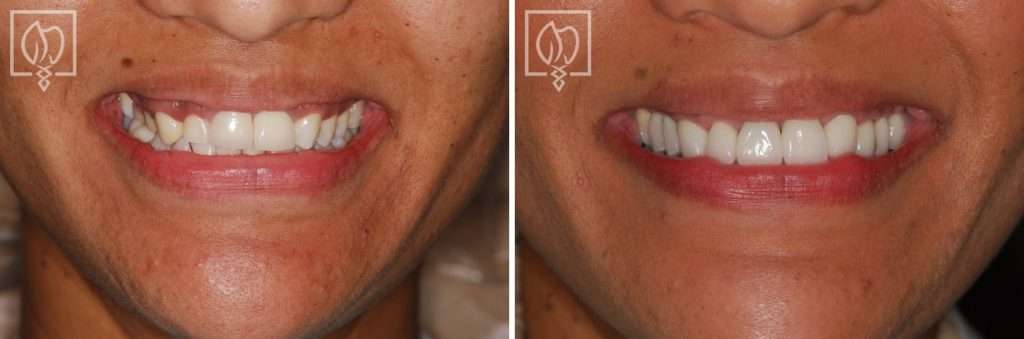
Multi-Faceted Treatment for Patient Unhappy With Her Artificial-Looking Crowns, Teeth and Gums
Many patients come to Elite Prosthetic Dentistry unhappy with the appearance of their smile. However, this particular patient presented with multiple interconnected problems that together created a smile she found deeply unsatisfying.

Treating Kevin’s Collapsed Bite with a Complete Smile Makeover with New Dentures
Dentures are sometimes not created to the ideal aesthetic and functional scheme. When improperly fabricated, dentures can make an individual appear almost a generation older than their actual age. They can have a poor fit that feels loose and unstable when eating or speaking, and they can actually accelerate bone loss over time.

Rejuvenating Maria’s Severely Worn Down Implant Overdentures
Many times, per year, patients come to us frustrated because their implant prosthesis is so severely worn down that they are very self-conscious and cover up their smile. They look and feel much older than their age as a result of the extensive wear of their appliance(s).
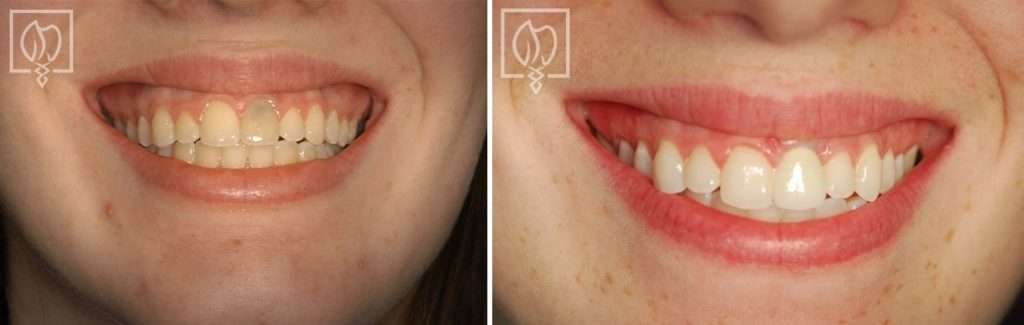
Replacing a Discolored Front Tooth with a Precision Placed Implant
Some of the most challenging restorations occur when fabricating an anterior crown to fit on an implant. Not only does one have the difficulty of matching the single front tooth to the other ones in the high visibility zone, but the dentist must also ensure the position of the underlying implant is precise through accurate preplanning and placement.
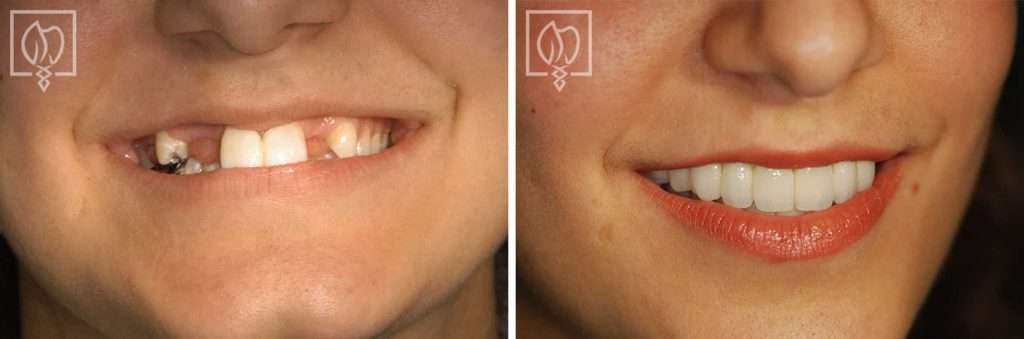
Treating Congenitally Missing Teeth in a Teenager with Dental Implants
A 16-year-old patient from McLean, Virginia, presented with a condition where she was congenitally missing several teeth, meaning they were missing from birth.
Related Articles
Deepen your knowledge with additional insights on this topic.
 Dental Implants
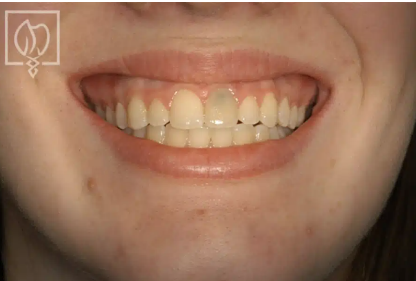
 If a Single Front Tooth is Replaced with an Implant, can it Look Natural?
A single front tooth implant can look completely natural with precision placement, custom abutments, and hand-crafted porcelain crowns. Washington, DC.
 Dental Implants
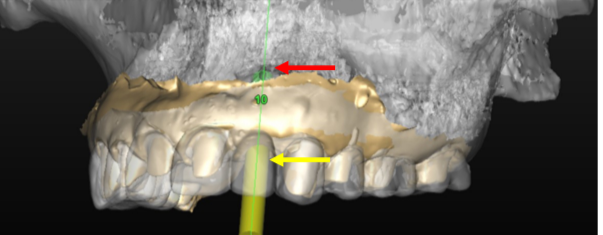
 What is Precision Implant Placement (PIP)?
Learn what Precision Implant Placement (PIP) is and how meticulous planning ensures optimal implant positioning for long-lasting results in Washington, DC.
 Dental Implants
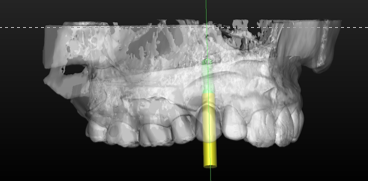
 What is the ideal Surgical Guide for Precision Implant Placement?
CBCT-based surgical guides allow virtual implant planning for precise positioning in optimal bone, ensuring predictable results in Washington, DC.
 Dental Implants
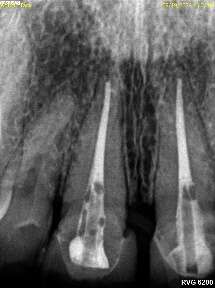
 When Should an Implant not be Done?
Not every patient is a candidate for dental implants. Learn when healthy roots, fragile bone, or steep angles may make alternatives the better choice.
 Dental Implants
 What is Staged Implant Therapy?
Staged implant therapy replaces teeth gradually using existing teeth as temporary support. A personalized alternative to All-on-X for full-arch cases.
Unveiling the Four Types of Dental Implants: Which One's for You?
Learn about the four types of dental implants - endosteal, subperiosteal, zygomatic, and mini implants - and which option may be right for your needs.
Implant-Supported Denture Problems: Expert Solutions Near You
Dr. Gerald Marlin provides implant-supported denture problems: expert solutions services to patients throughout the Washington, DC metropolitan area. Select your community to learn more.
Ready to Transform Your Smile?
With 40+ years of experience and 3,900+ dental implants placed, Dr. Gerald Marlin delivers results that last. Schedule your consultation today.